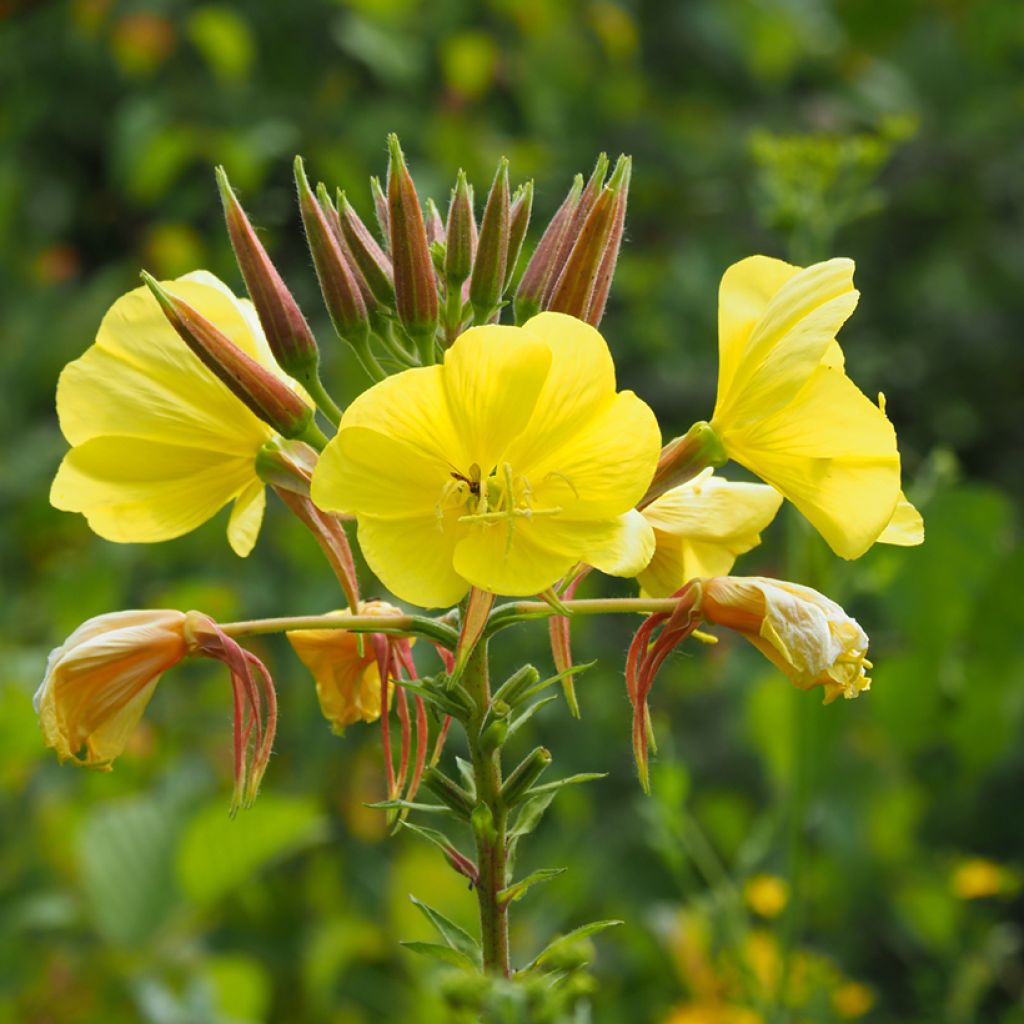
Oenothera biennis
Oenothera biennis
Oenothera biennis
Evening Primrose
Back-to-school special offer!
Get €10 off for every €50 you spend! And get up to €40 off on a single order.
How does it work?
1. Shop your favourites
Add your favourite plants to your basket. For every €50 you spend (excluding delivery charges, store credit and the plastic-free option), you’ll receive a €10 voucher.
€50 spent = €10 voucher
€100 spent = €20 voucher
€150 spent = €30 voucher
€200 spent = €40 voucher
2. Place your order
Once your basket reaches one of the spending thresholds, place your order. You can even choose your delivery date!
3. Receive your voucher
As soon as your order has been shipped, you’ll receive an email containing your personal voucher code and its value.
4. Use it on your next order
Your voucher is valid for 90 days from the date you receive it. It can be used once only, on a new order worth at least the value of the voucher, excluding delivery charges.
Please note: Vouchers can be combined with other offers, but cannot be split or refunded.
Home or relay delivery (depending on size and destination)
Important: You may be charged customs duties by your country’s customs authorities upon delivery.
Schedule delivery date,
and select date in basket
This plant carries a 6 months recovery warranty
More information
We guarantee the quality of our plants for a full growing cycle, and will replace at our expense any plant that fails to recover under normal climatic and planting conditions.
Would this plant suit my garden?
Set up your Plantfit profile →
Description
Oenothera biennis, the biennial Evening Primrose, also known as Fever Plant, Field Primrose or German Rampion, is a tall biennial plant introduced from North America that has become familiar in our landscapes. It is easily spotted in summer during evening walks, in uncultivated areas where its flowers shine with an almost fluorescent yellow colour and a pleasant scent. The biennial Evening Primrose is cultivated in vegetable gardens for its fleshy root which is edible once cooked, or in ornamental gardens where it generously self-seeds if left to nature. Sow directly in the ground in spring or late summer. Grow in sunny, well-prepared ordinary soil.
Oenothera biennis is a biennial herbaceous plant belonging to the Onagraceae family. It is native to central and eastern North America and naturalised worldwide. It is cultivated in gardens for its ornamental qualities, as a vegetable, or for its medicinal and culinary properties. This plant provides the precious evening primrose oil extracted from its seeds. It is used in cosmetics and herbal medicine.
The biennial Evening Primrose forms a large clump of angular, upright, and ramified stems over the course of two years, measuring between 70 cm (28in) and 1.30 m (4ft) in height when flowering, depending on the richness and depth of the soil. In the first year, it only forms a basal rosette. Its leaves are quite long, light green, marked with an almost white vein. The lamina is entire, lanceolate in shape, flexible, and covered with fine hairs. The flowering period extends from June to September in the second year. The cup-shaped flowers consist of 8 lemon yellow to sulfur yellow petals. They open in the late afternoon and wither at sunrise. New buds bloom each evening. Pollination is carried out by nocturnal pollinators. The fruit of this evening primrose measures 2 to 3 cm (1in) in length and contains seeds that ripen when the plant reaches the end of its life and dries up. If the fruits are not destroyed, the evening primrose self-seeds abundantly. Note that the seeds are sought after by certain birds such as tits, finches, accentors, and goldfinches...
The biennial Evening Primrose provides us with the most beautiful spectacle when its flowers open for the night. Their unfolding is visible to the naked eye. In ornamental gardens, it can be sown in a flowery meadow, alongside viper's bugloss, field scabious, and mulleins, for example. The Evening Primrose, also known as 'gardener's ham,' is sometimes cultivated as a vegetable in the fertile soil of the vegetable garden, as its large taproots reportedly have the colour of ham and a slightly sweet and peppery flavour with hints of smoked meat. The roots should be harvested at the end of the first year of growth, before the plant exhausts its reserves in flowering. The leaves that form the basal rosette in the first year of growth can also be consumed, added to soups and stews. The older leaves can be eaten in salads, like frisée lettuce, after being deprived of light. This certainly piques our curiosity and why not pair it with Mertensia maritima, the plant with an oyster-like taste.
Report an error about the product description
Flowering
Foliage
Plant habit
Botanical data
Oenothera
biennis
Onagraceae
Evening Primrose
North America
Planting and care
Sow the biennial Evening Primrose directly in situ in spring or late summer. Sowing in a seed tray is also possible.
Direct sowing: in a well-prepared and refined garden soil, keeping a distance of 40-50 cm (16-20in) between plants. Evening primrose loves sun and well-drained, moist to dry soils. If the goal of cultivation is root harvest, it is preferable to grow the plant in a rich, deep, and moist soil. However, in ornamental gardens, it will thrive in a wide range of soils, even fairly poor and dry ones.
Sowing in a seed tray or pot:
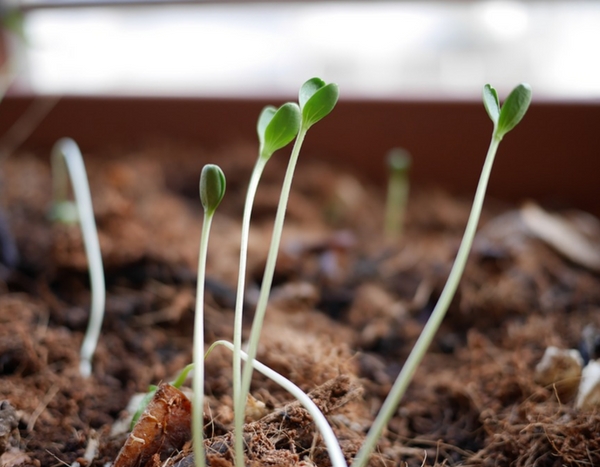
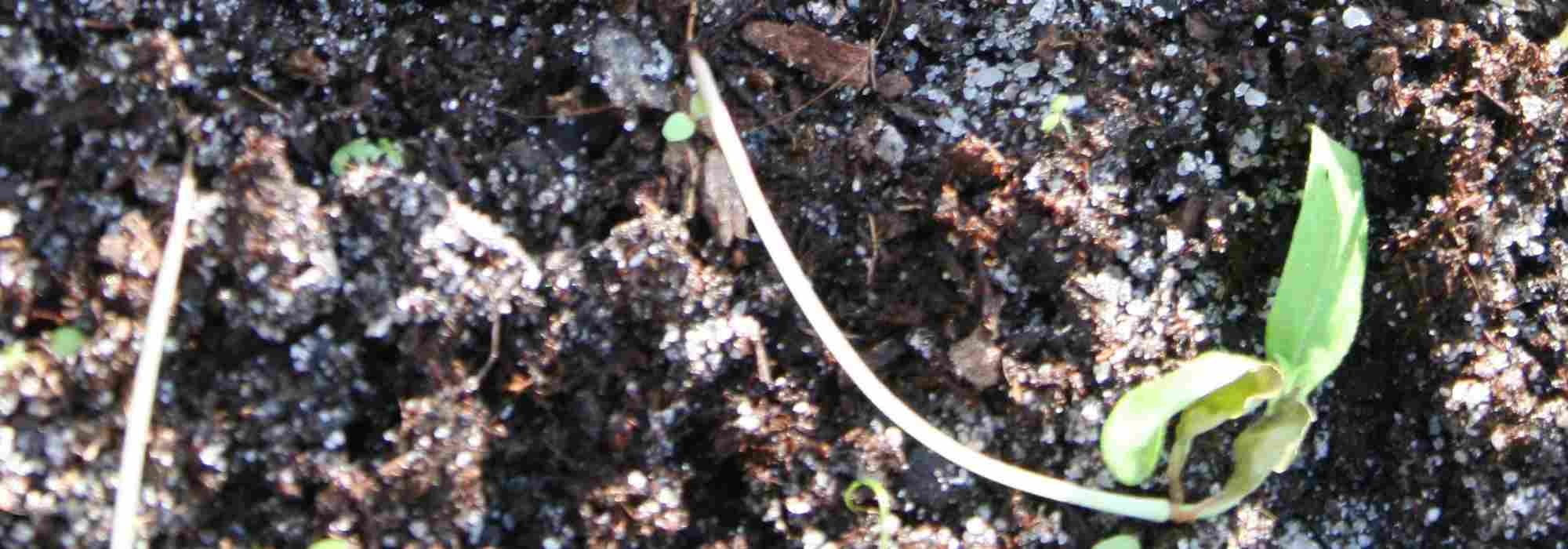
Sow from February to May at room temperature between 18 and 20°C (64.4 and 68°F) on the surface of a good seed compost that you keep moist but not excessively. Apply a light covering of vermiculite, but do not completely cover the seeds as they need some light to germinate. You will see your young shoots appearing between 14 and 21 days. When the seedlings are strong enough to handle, transplant them to a cooler place for two weeks to gradually acclimatize them.
Plant in open ground once the risk of frost has completely passed, making sure to space your plants at least 40 cm (16in) apart.
Sowing period
Intended location
Planting & care advice
-
-

-
-
-
-

-
-
This item has not been reviewed yet - be the first to leave a review about it.
Recently viewed products
Haven't found what you were looking for?
Hardiness is the lowest winter temperature a plant can endure without suffering serious damage or even dying. However, hardiness is affected by location (a sheltered area, such as a patio), protection (winter cover) and soil type (hardiness is improved by well-drained soil).

The flowering period indicated on our website applies to countries and regions located in USDA zone 8 (France, the United Kingdom, Ireland, the Netherlands, etc.)
It will vary according to where you live:- In zones 9 to 10 (Italy, Spain, Greece, etc.), flowering will occur about 2 to 4 weeks earlier.
- In zones 6 to 7 (Germany, Poland, Slovenia, and lower mountainous regions), flowering will be delayed by 2 to 3 weeks.
- In zone 5 (Central Europe, Scandinavia), blooming will be delayed by 3 to 5 weeks.
In temperate climates, pruning of spring-flowering shrubs (forsythia, spireas, etc.) should be done just after flowering.
Pruning of summer-flowering shrubs (Indian Lilac, Perovskia, etc.) can be done in winter or spring.
In cold regions as well as with frost-sensitive plants, avoid pruning too early when severe frosts may still occur.
The planting period indicated on our website applies to countries and regions located in USDA zone 8 (France, United Kingdom, Ireland, Netherlands).
It will vary according to where you live:
- In Mediterranean zones (Marseille, Madrid, Milan, etc.), autumn and winter are the best planting periods.
- In continental zones (Strasbourg, Munich, Vienna, etc.), delay planting by 2 to 3 weeks in spring and bring it forward by 2 to 4 weeks in autumn.
- In mountainous regions (the Alps, Pyrenees, Carpathians, etc.), it is best to plant in late spring (May-June) or late summer (August-September).
The harvesting period indicated on our website applies to countries and regions in USDA zone 8 (France, England, Ireland, the Netherlands).
In colder areas (Scandinavia, Poland, Austria...) fruit and vegetable harvests are likely to be delayed by 3-4 weeks.
In warmer areas (Italy, Spain, Greece, etc.), harvesting will probably take place earlier, depending on weather conditions.
The sowing periods indicated on our website apply to countries and regions within USDA Zone 8 (France, UK, Ireland, Netherlands).
In colder areas (Scandinavia, Poland, Austria...), delay any outdoor sowing by 3-4 weeks, or sow under glass.
In warmer climes (Italy, Spain, Greece, etc.), bring outdoor sowing forward by a few weeks.
Shipping country and language
Your country of residence may be:
Your country of residence is:
For a better user experience on our website, you can select:
Your shipping country:
-
 Austria
-
 Belgium
-
 Bosnia & Herzegovina
-
 Bulgaria
-
 Croatia
-
 Cyprus
-
 Czechia
-
 Denmark
-
 Estonia
-
 Finland
-
 France
-
 Germany
-
 Greece
-
 Hungary
-
 Iceland
-
 Ireland
-
 Italy
Italy
-
 Latvia
-
 Liechtenstein
-
 Lithuania
-
 Luxembourg
-
 Malta
Malta
-
 Netherlands
-
 Poland
-
 Portugal
-
 Romania
-
 Serbia
-
 Slovakia
-
 Slovenia
-
 Spain
Spain
-
 Sweden
-
 Switzerland
Language:
-
French
-
 English
-
Spanish
-
Italian
-
German
-
Portuguese
-
Dutch
-
Finnish
My Account
Hello
My wish lists
My cart
Log in / Register
Existing customer?
This form is protected by reCAPTCHA - the Google Privacy Policy and Terms of Service apply.
New customer?
Create an account to track your orders, access our customer service and, if you wish, make the most of our upcoming offers.