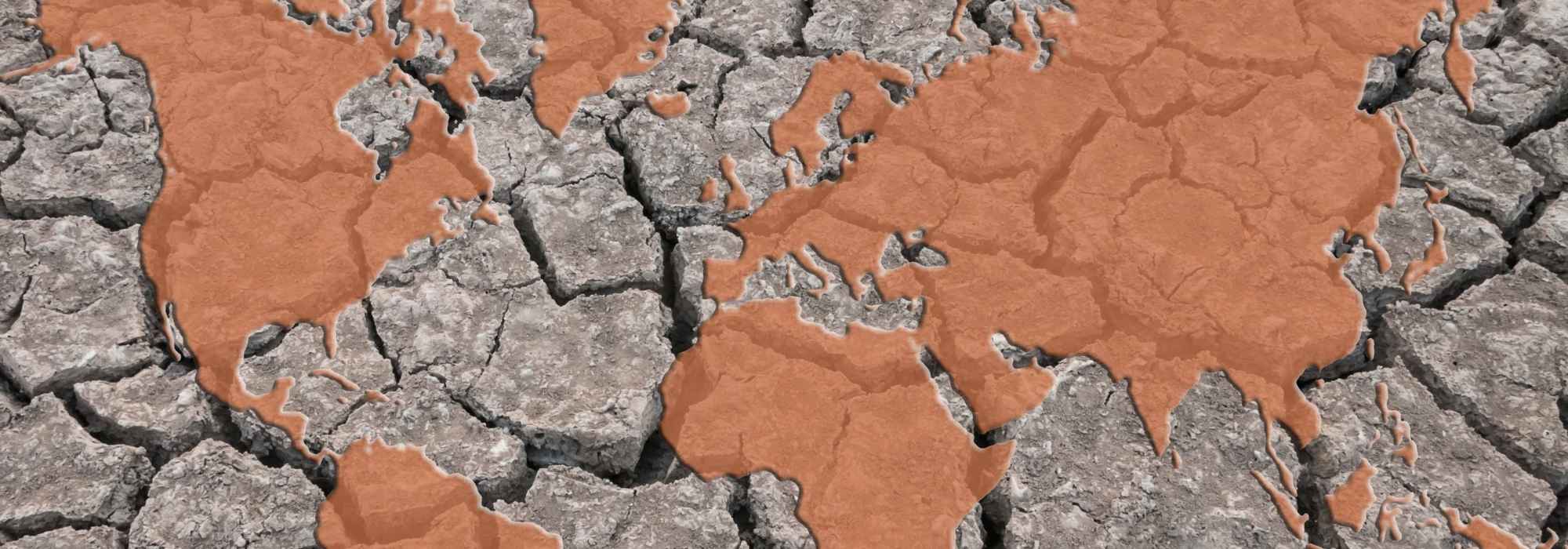
HWFD or Heat Wave Flash Drought: what is it?
A new climate reality
Contents
The repeated heatwaves of summer 2026 taught us new bioclimatological terms, until then unknown to most of us. With heat domes, megafires and firestorms, daily weather bulletins kept referring to the heat wave flash drought, sweeping over our gardens and damaging field crops, bocage, orchards and vegetable plots, our gardens… in short vegetation as a whole.
We felt it especially in July 2026, the warmest month ever recorded in France, surpassing the August 2003 heatwave. So what exactly is this HWFD, and how did it manifest in nature? Can it be anticipated? We attempt to answer these questions in this article.
→ Find all our articles on climate change and heat or cold waves affecting plants on our page Garden weather alerts.
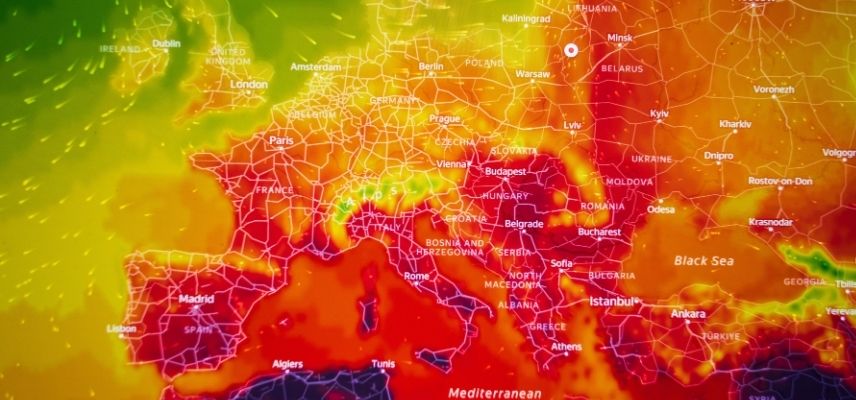
When Europe is suffocating…

What is the Heat Wave Flash Drought or HWFD?
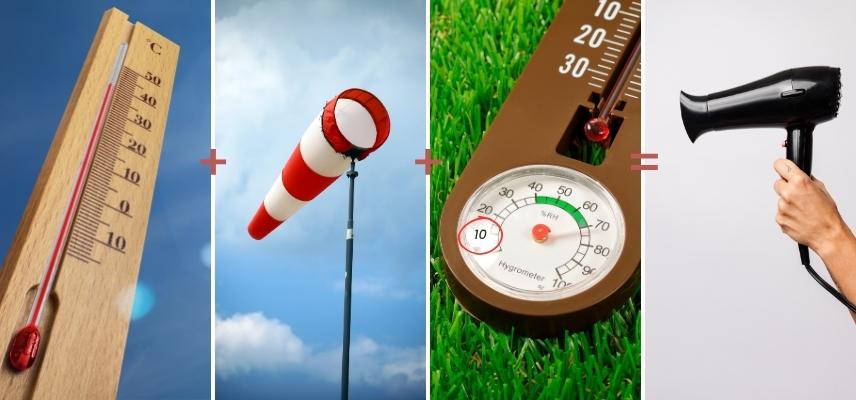
The Heat Wave Flash Drought when applied to temperatures sounds like an alarm and a crisis situation. This meteorological term denotes a heatwave associated with several factors. Several conditions and thresholds must be met to refer no longer to a heatwave but to a hair‑dryer effect :
- daytime temperature levels equal to or above 42°C*;
- hot, dry winds of at least 40 km/h*, causing very rapid or instantaneous drying of vegetation (the Sirocco from the Sahara, the Autan in the south‑west or the Mistral in Provence);
- reduced humidity at 10% or less.
This explosive climatic cocktail triggers a flash drought, an extreme hot blast with dramatic consequences for most plants already suffering from historic drought, including increased fire risk as vegetation literally becomes fuel.
N.B.: * These thresholds vary by region and vegetation type, but from 35°C with a dry wind at 30 km/h, damage can be significant.
This meteorological term describes a windy, ultra‑dry heatwave, not to be confused with a heat dome, where warm air stagnates without significant wind and air may remain humid. In both cases temperatures are extreme, but the HWFD adds violent wind that dramatically accelerates the dehydration of vegetation.
Read also
Heatwave: 10 tips to protect your plantsEffects on vegetation
In summer 2026, with record heat in France (up to 42°C during daytime in the west, and up to 30.6°C at night in July in Pyrénées-Orientales), we experienced an extreme situation for most living organisms.
Thermal stress from the Heat Wave Flash Drought has dramatic consequences:
- Different plant cells first slow down, then plants stop growing in response to this stress. When heat persists, photosynthesis, a vital process for plant life, can no longer take place. Result: most plants not adapted to such high temperatures drop their foliage to reduce evapotranspiration and suspend all photosynthesis. This is also seen during heatwaves.
But with the HWFD, the hot wind prevents this strategy from working: water evaporates too quickly, and plant tissues literally burn in place, within a few hours.
This therefore impacts yields of agricultural and vegetable production, with pollination stopping abruptly. In our gardens, all sensitive plants are severely weakened, flowering is brought to an abrupt halt, and flowers and leaves scorch, especially on young plants. Even trees, normally resilient, succumb to the combined effects of drought and hot, windy conditions.
This meteorological phenomenon occurs over soils already very dry, with rainfall almost absent across the territory. Water stress combined with hot atmospheric gusts further weakens vegetation, which cannot take up sufficient quantities of water and so buffer the shock.
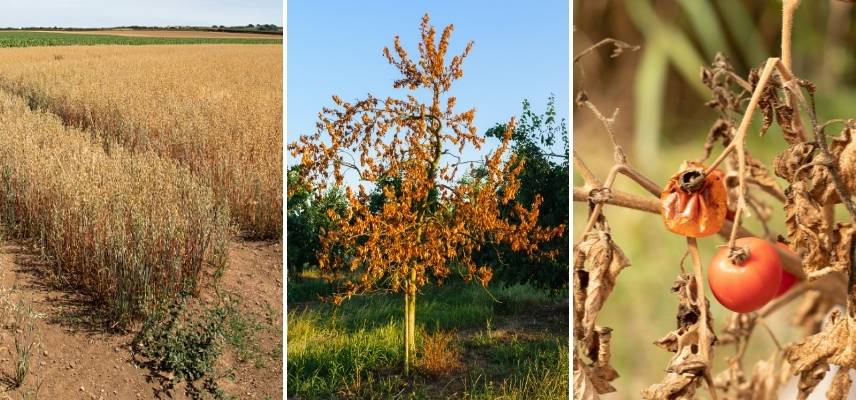
Crops (here barley), trees and shrubs, vegetables: the heat wave flash drought spares no plant
What to do in case of a heat wave flash drought in the garden or vegetable patch?
Unlike a “classic” heatwave where heat builds up gradually, the HWFD arrives more abruptly and, with episodes often occurring in daytime, plants dry out within a few hours.
Several tactics must therefore be put in place immediately to limit this devastating effect as much as possible (priority actions to trigger as soon as this phenomenon is announced and in weather alert bulletins):
- Physically protect sensitive plants immediately :
- Prioritise all young plants and recent plantings, and all “soft”, non-woody plants such as leafy vegetables, cucurbits and aromatic herbs like basil, which are among the most affected;
- Set up shade sails or stretch large white sheets over crops or sensitive plants where possible, at least 50 cm above plants;
- Place small crates over vegetable beds: remove them in the evening to avoid nocturnal condensation;
- Cover greenhouses/tunnels: if you have them, close windward openings and moisten the soil inside (misting) to compensate for dry air;
- Bring pots in: move container plants to shelter (against a wall, under an awning) to protect them from the wind.
- Strategic watering :
- Water thoroughly early in the morning (before 7 am, ideally before sunrise) to saturate the soil. Avoid watering during the event: water would evaporate instantly. Watering must be done at the base of plants only (watering can, drip irrigation or oyas);
- Technique of “wet hoeing”: After watering, hoe superficially to break soil crust and limit evaporation (like a quick mulch).
Damage (leaves blackening, stems wilting) is often irreversible after 12 hours’ exposure.
Further reading
To anticipate these events, check alerts on Vigilance Météo France.
To find definitions of all climatology terms, also visit the Météo France glossary, which teaches us a great deal!
In France, agroclimatologist Serge ZAKA, who describes himself as a storm chaser, has featured frequently in the media in recent years: he analyses and issues warnings about these new meteorological phenomena.
Books on the subject have proliferated over the past few years. Among them, the IPCC‑related book Urgence climat — Le rapport incontestable expliqué à tous, by Sylvestre Huet (Tallandier, 2023), is one of the key works for understanding the climate emergency.
- Subscribe!
- Contents
This form is protected by reCAPTCHA - the Google Privacy Policy and Terms of Service apply.

































Comments