
After the drought, should you rethink your autumn planting?
Wait for the rain and choose suitable species
Contents
After this summer’s drought, autumn is disrupting our usual gardening habits. Does this mean we should give up on autumn planting? Certainly not! Wait until the rain has thoroughly rehydrated the soil before planting. Take advantage of this pause to observe which plants have withstood the summer and choose species better suited to your garden.

The key points to remember
|
Read also
The best times to plantThis autumn, be a little patient before planting
You can’t wait to get back to autumn planting! But after the exceptional drought this summer, it is best not to rush… According to Météo-France, September 2026 recorded an average rainfall deficit of nearly 70% across France, worsening the lack of water already present in the soil. In many regions, the soil is therefore likely to remain dry at depth, even after the first autumn showers.
Ideally, wait until several spells of rain have sufficiently rehydrated the soil before planting your trees, shrubs and perennials, even if you are itching to get your spade out. Firstly, you will then be able to work the soil much more easily and with less effort. Secondly, the roots of your new plants will be able to develop in better conditions.
The good news is that autumn rain, even if it is slow to arrive, should gradually improve the situation! Depending on your region, you can therefore plant in October, November or even later as long as the soil is neither frozen nor waterlogged, and the plants you have chosen are suited to it. This year, let the rain give the green light to your planting rather than relying on the usual calendar!
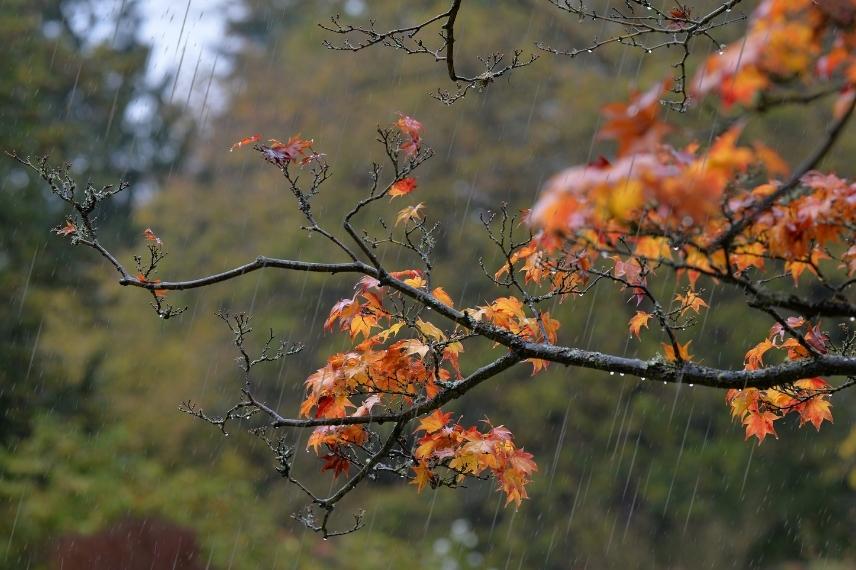
Wait until several spells of rain have sufficiently rehydrated the soil before planting.
After drought, assess your plants before replanting.
The drought this summer has put gardens under severe strain, but it also provides some valuable lessons! Before you start planting your new autumn plants, take the time to observe your beds. Which plants stood up well to the lack of water? Which ones suffered despite your watering? Did any of them die back completely?
Also look at where the worst-affected plants are growing: in full sun, at the foot of a south-facing wall or in soil that dries out quickly? These observations will help you identify the plants best suited to your garden, as well as the areas where you will need to rethink your choices because the soil becomes too dry.
However, take care not to condemn a plant with dried-up foliage too quickly! For woody plants, lightly scrape the bark with your fingernail: if it is green underneath, the stem is still alive and there is still hope that it will recover; if it is brown and dry, that part is unfortunately dead. Some perennials may also go dormant during periods of intense heat and start growing again when conditions become favourable, so wait a few weeks after the rains return before pulling everything up.
Is drought the only culprit? A lack of watering during the first two summers after planting may also explain why a young plant, with roots that are not yet well established, failed to survive.
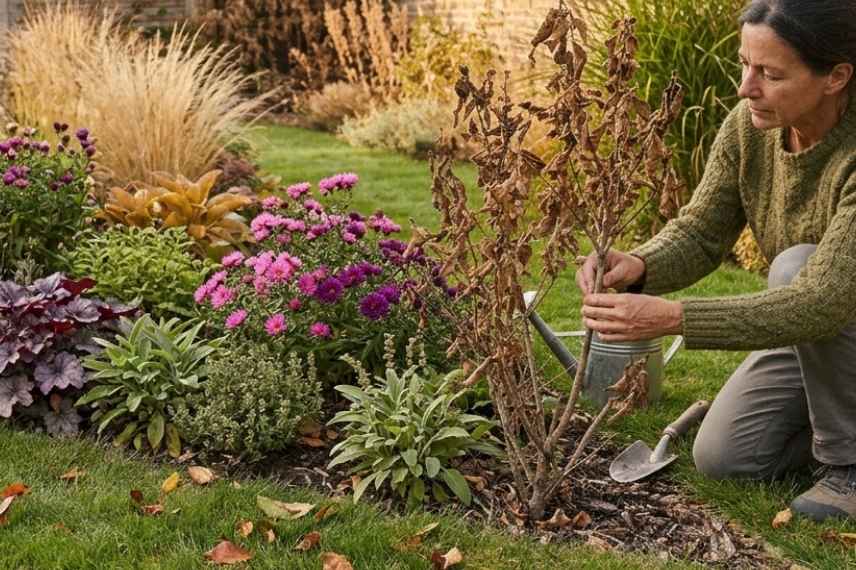
Take stock of the plants that did or did not survive the drought (AI-generated image)
Read also
How to plant a tree?Autumn planting: choose plants better adapted to drought!
What if you took advantage of this autumn to make a few changes to your borders? Rather than replacing a dead plant with the same species, choose plants that are more resistant to a lack of water, particularly in areas that suffered badly this summer.
In sunny borders, why not try drought-tolerant perennials, such as yarrow, catmint or Russian sage? Lavender and rock roses are also good candidates for dry, well-drained soils. To brighten up a dry shady corner, consider hardy geraniums such as Geranium macrorrhizum.
But beware: a plant that withstands drought in summer will not necessarily tolerate severe frosts in winter! Some Mediterranean species are sensitive to cold and, above all, to stagnant moisture in winter. In cold regions or clay soil, it is therefore better to choose species that combine drought resistance with good hardiness, such as perennials resistant to dry conditions and cold or shrubs resistant to dry conditions and cold.
The idea is not to turn your entire garden into a dry garden, but to gradually adapt your planting to your soil, aspect and regional climate.

Drought-tolerant plants to plant in autumn: yarrow, Russian sage, catmint and Geranium macrorrhizum.
Help your new plantings recover after drought
This summer’s drought reminded us: even plants that need little water require support while they become established. Before adding lots of new plants, make sure you can water them during their first few years. We always recommend keeping a close eye on watering during the first two springs and summers if rainfall is scarce. It is sometimes better to plant fewer specimens, but give each one every chance to develop a good root system!
When planting, thoroughly rehydrate the rootballs, water generously, then spread a good layer of organic mulch (fallen leaves, shredded branches…) over the moist soil, without covering the root collar. This mulch will limit evaporation and help retain moisture around the young roots.
In sandy soils, adding well-rotted compost when planting can also improve the soil’s water retention and help new plants become established.
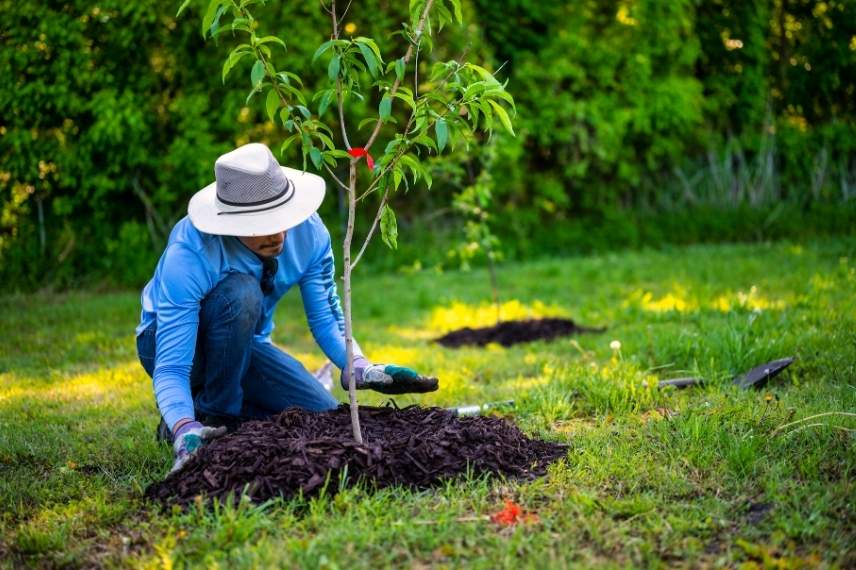
Spread a good layer of organic mulch over the soil without covering the root collar, to help retain moisture around the young roots.
Frequently asked questions about autumn planting after drought
What should you do if you have already bought your plants but the soil is still too dry?
There is no need to rush! Keep your plants in their pots until conditions are more favourable, in a spot sheltered from the wind, preferably in partial shade, and regularly check the moisture of the rootballs to prevent them from drying out.
Should you postpone some planting until spring?
Yes, particularly for plants that are sensitive to the cold, but only in regions with harsh winters. If the rain is slow to arrive and winter is approaching, it is better to wait until spring before ordering and planting them, making sure they receive adequate watering during their first two summers.
Can spring-flowering bulbs be planted after a very dry autumn?
Yes! Tulips, daffodils and other spring-flowering bulbs can be planted as soon as the soil has been sufficiently softened by the rain, provided it is not waterlogged. There is no point forcing planting into soil that is still hard and dry.
- Subscribe!
- Contents
This form is protected by reCAPTCHA - the Google Privacy Policy and Terms of Service apply.


































Comments