How to help trees and shrubs recover after a dry summer?
Our tips to help them recover
Contents
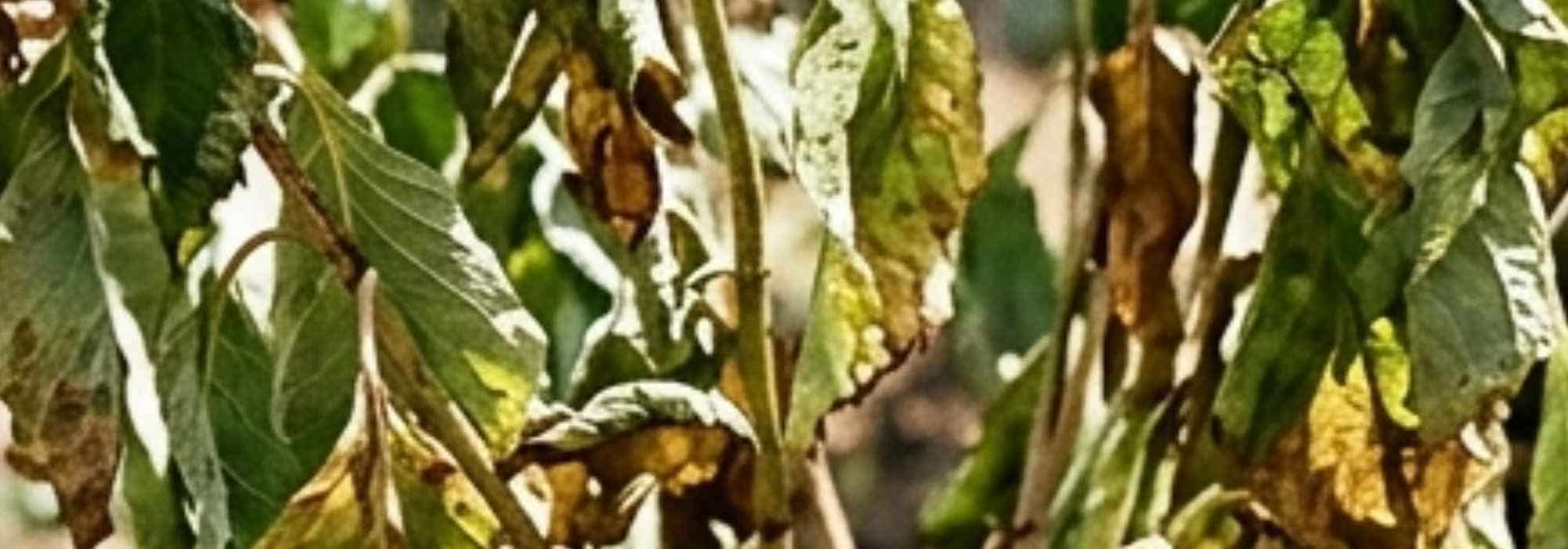
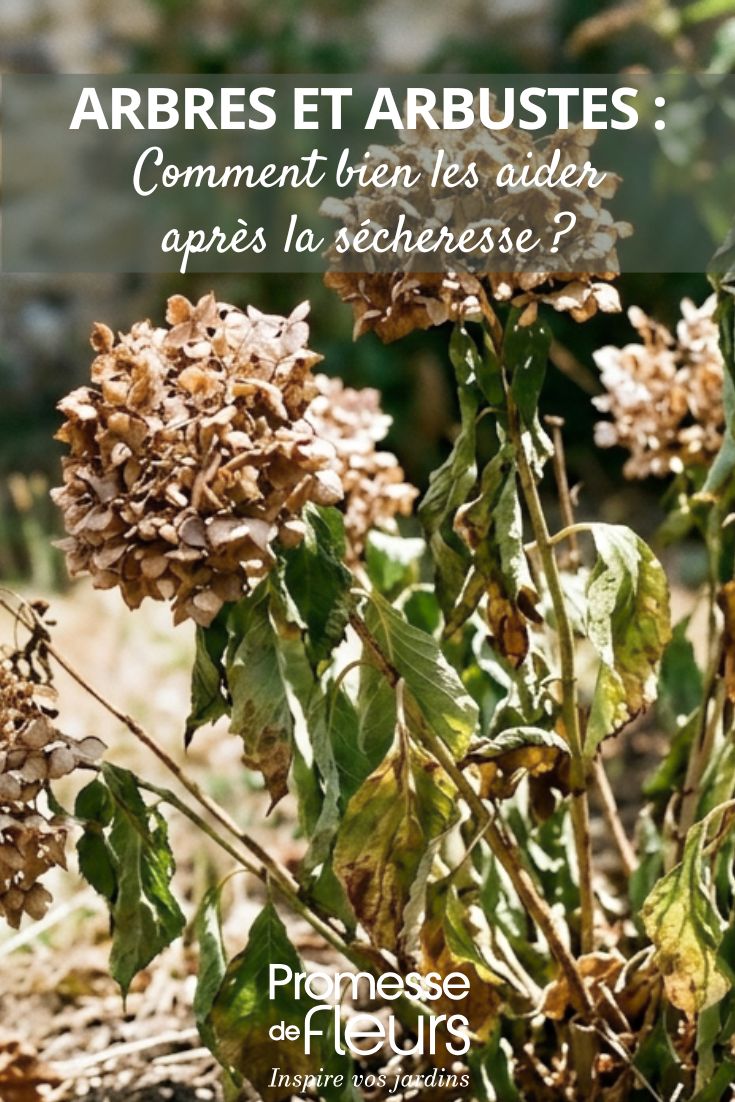
A dry summer puts trees and shrubs under severe strain. Even well-established plants can show signs of fatigue after several weeks of heat and lack of water: yellowed or scorched foliage, halted growth, premature leaf drop or desiccated twigs. Although this may look dramatic to the gardener, these reactions are often survival mechanisms aimed at limiting the plant’s water loss.
In late summer and autumn, with the return of milder temperatures and, sometimes, the first rains, the garden enters a period favourable to recovery. It’s the perfect time to give your trees and shrubs a helping hand to start off on the right foot (or the right root) and to prepare them to face winter in good condition.

Has my tree or my shrub really suffered from drought?
Assess the damage
Before taking any action, take time to observe your plantings. Dull foliage, leaves that yellow then fall prematurely, twigs that appear dry: these are classic signs of water stress. Nothing alarming in itself: some species naturally shed part of their foliage in summer to reduce evaporation, while others retain an almost normal appearance despite a significant lack of water. Not all plants respond in the same way.
Also use this inspection to spot any pest or disease attacks. A weakened plant becomes more susceptible to pests and opportunistic fungi.
Remove dead wood
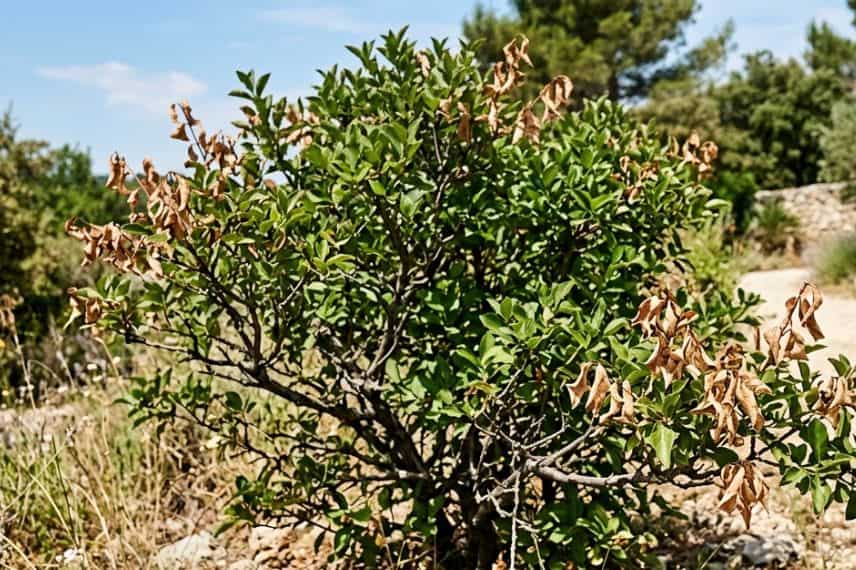
You can remove only dead wood and broken twigs. However, postpone pruning until autumn or late winter, so as not to further weaken tree or shrub.
To check whether a twig is still alive, a very simple test: lightly scrape the bark with your fingernail.
→ If you see green beneath, sap is still flowing and branch is still alive.
→ If it’s brown or blackish, that piece of wood is dead and can be removed later.
Another clue: gently bend a young twig. If it stays flexible, all is well. If it snaps cleanly, it is dried out.
Olivier explains all this in a video :
Watering: yes, but do it properly
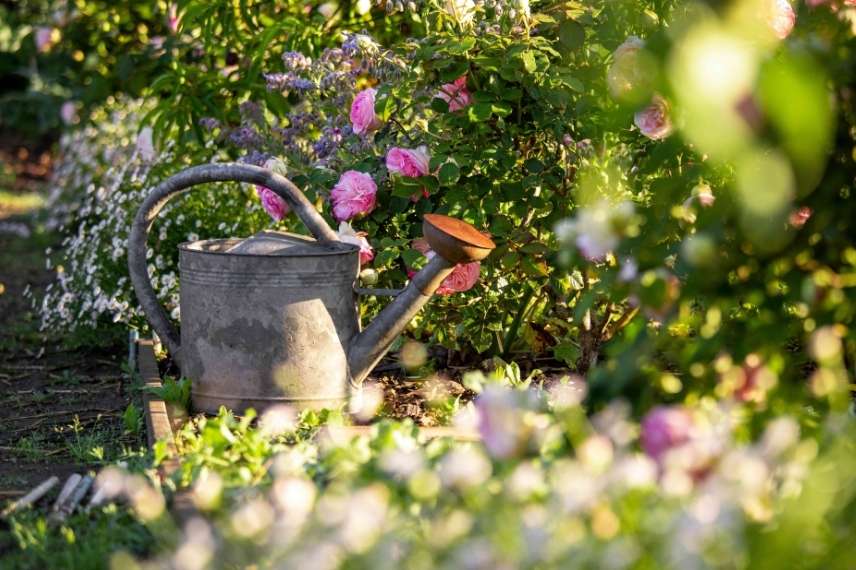
- Prefer deep, infrequent watering rather than a multitude of small, superficial waterings, which will encourage the tree to root deeply rather than at the surface.
- Allow around 5 to 10 litres of water at the base of a young tree or a large shrub, poured slowly to give the water time to penetrate deeply; repeat 1 to 2 times a week depending on soil type: free-draining, poor soil retains less water than heavy soil.
- Also take into account the nature of the plant: young trees and shrubs, whose root system is still underdeveloped, are more sensitive to lack of water and require more frequent watering than well-established plants. Likewise, some varieties tolerate drought better than others.
- Always water early in the morning or in the evening, never in the middle of the day in full sun.
- Preferably use rainwater, which is less hard than tap water.
Hoe to aerate and thoroughly water soil
After several weeks of drought, soil compacts and forms a crust that prevents water from infiltrating properly. Moreover, dried-out soil often becomes hydrophobic: water runs off the surface without reaching roots. A simple hoeing, carried out after rain or watering, breaks this crust and helps moisture reach roots. Also consider forming a watering basin with the soil.
Install or renew mulch
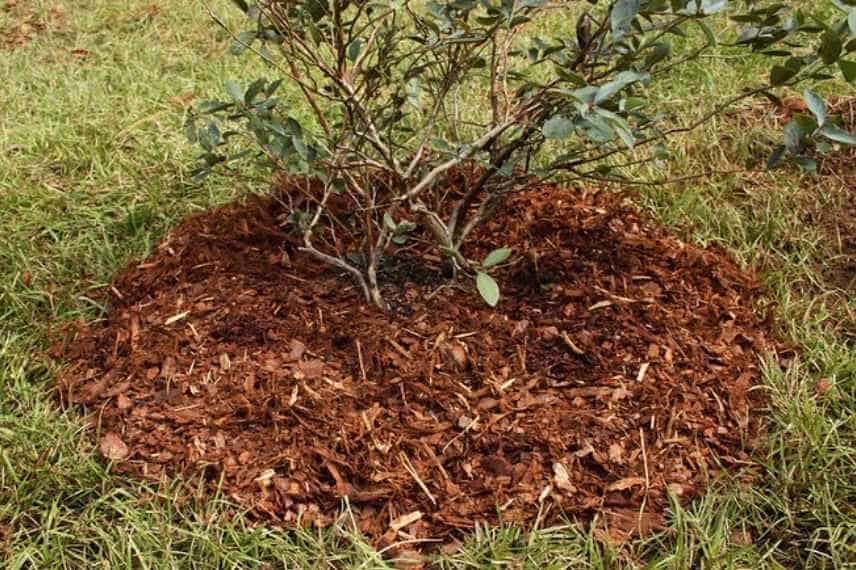
Mulch remains one of the best allies to help trees and shrubs recover. Reduces water evaporation, maintains a more stable temperature at root level and gradually improves soil structure as it decomposes.
Spread a 5 to 10 cm layer of organic mulch such as wood chips, RCW, dead leaves or bark, leaving a few centimetres clear around the trunk to avoid excess moisture at the collar.
Feed the soil rather than the plant
After a difficult summer, apply well-rotted compost or an organic amendment in late summer or early autumn. Spread it at the base of the plant beneath the mulch. Lightly fork the soil to incorporate it superficially before replacing the mulch.
As it breaks down gradually, it feeds micro-organisms, improves soil structure and increases its capacity to retain water. A living soil thus favours root development and naturally helps plants regain vigour. You can renew this application in early spring.
Avoid nitrogen-rich fertilisers: these would stimulate production of tender young shoots, making them more susceptible to cold and leaving them no time to harden off before winter.
Resist the temptation to replace too quickly
A shrub that looks very damaged in late summer is not necessarily lost. Some species take several weeks, even several months, to rebuild their foliage or to produce new buds.
As long as there is green beneath the bark, nothing is lost! It is therefore best to wait until the following spring before concluding that a plant has died for good. This patience prevents uprooting plants that could reshoot thanks to their reserves or to roots that are still alive.
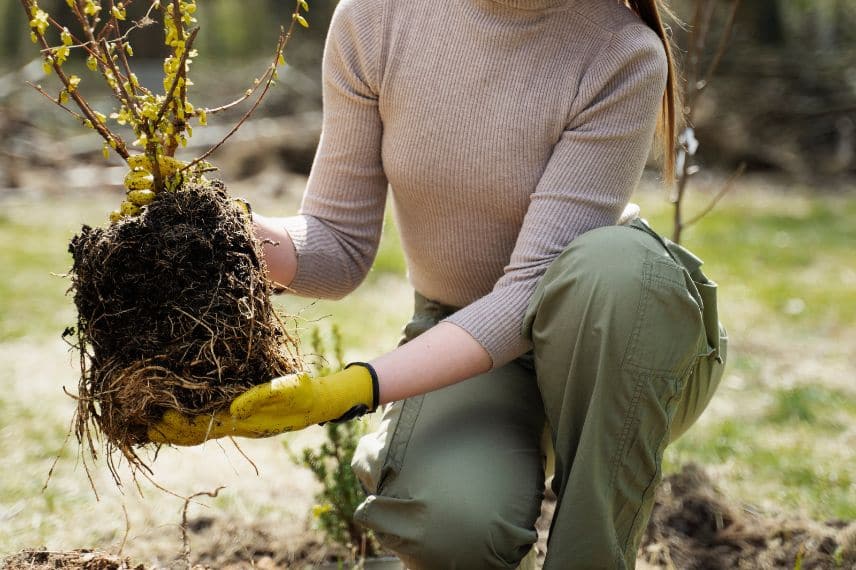
However, if the wood is completely dry and the roots are dead, then you can replace the plant without regret.
Anticipate upcoming dry summers
Helping your trees and shrubs recover today is good. Preparing them to withstand heatwaves tomorrow is even better. A few simple practices help limit damage during future heatwaves :
- Choose plants suited to your soil and climate rather than relying solely on plants labelled ‘drought‑resistant’. Our tool Plantfit helps you select plants best suited to your garden.
- Never leave soil bare: permanent mulch or dense planting reduce evaporation year‑round.
- Water deeply and infrequently rather than shallowly and often, to encourage roots to seek water deeper down. However, young plants require careful attention during their first two summers.
- Create shade with trees, large shrubs or shade sails to protect the youngest or most vulnerable plants.
- Gradually adapt your garden to a changing climate: over time replace the most sensitive plants with species better suited to drought episodes and diversify plantings to boost garden resilience.
- Subscribe!
- Contents
This form is protected by reCAPTCHA - the Google Privacy Policy and Terms of Service apply.

































Comments