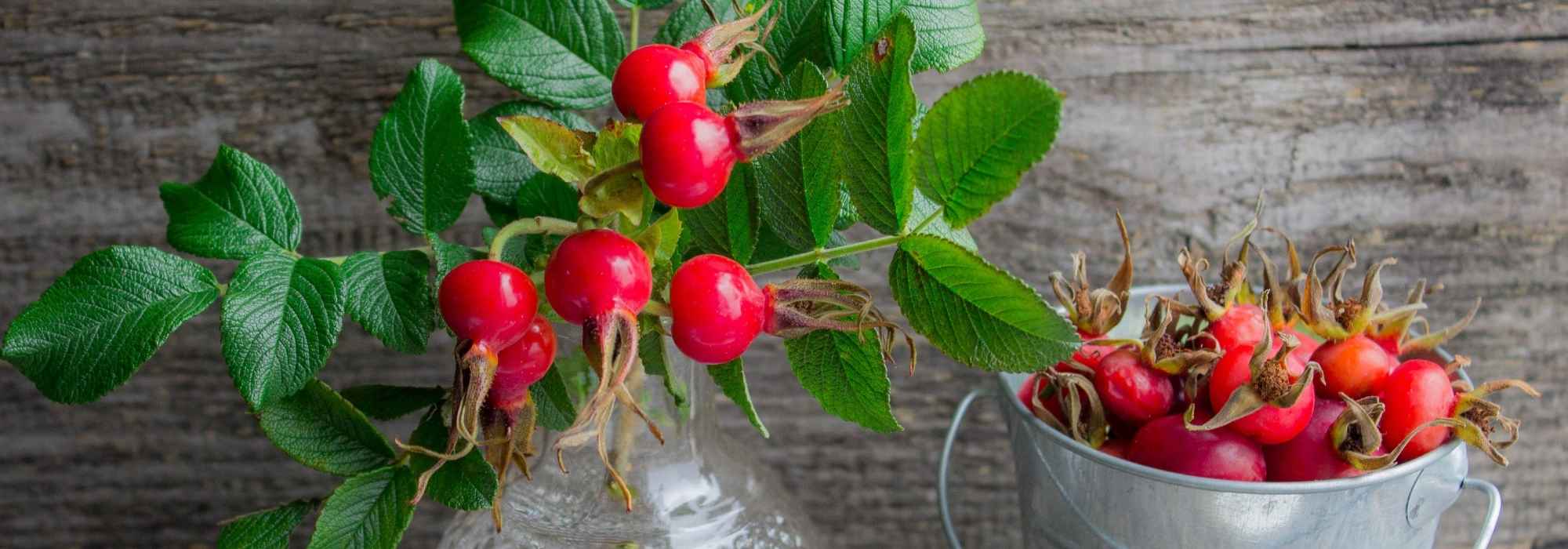
Rose hips: multiple uses, from table to garden
Discover the different ways to use them
Contents
Rose hips, the fruits of spent roses, can be used in many ways, and not just to decorate the garden with their vibrant colour: from making bouquets to providing choice food for certain birds, as well as featuring in delicious recipes, discover the thousand and one uses of rose hips!
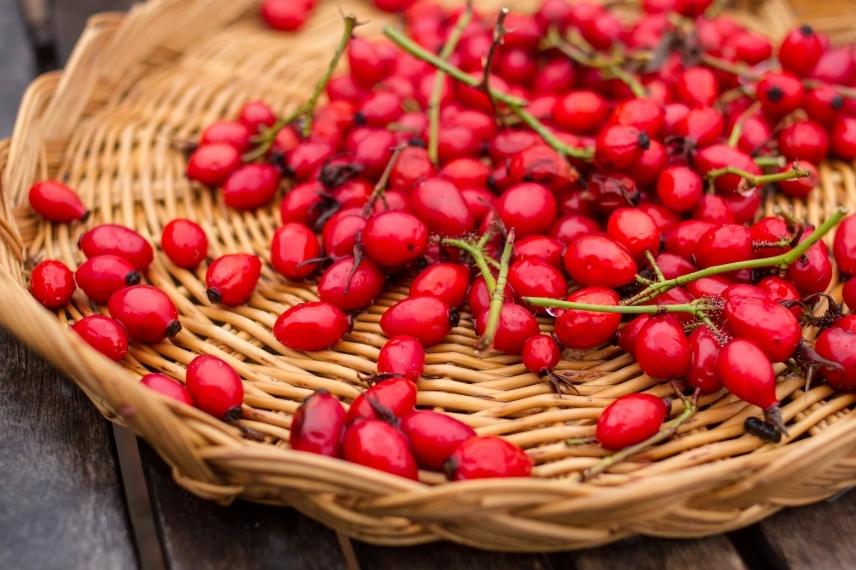
It’s autumn! The rose hip harvest gives us plenty of creative ideas.

What to remember
|
Read also
How to dry your own rosehips?What are rose hips?
When we have allowed some roses to set fruit, watching the rose hips turn red in autumn, just as nature sheds its leaves, is a real pleasure. This complicated term, which has several spellings (rose hip or rosehip), is the botanical term for the red fruits of dog roses and wild roses. When, on this type of rose, we allow the flower to develop into a fruit, it becomes this beautiful red appendage that brightens the cold autumn landscape and often persists into early winter.
They are mainly found on botanical roses, Rosa canina, Rosa glauca and Rosa rugosa, with a shape that may be more or less elongated or fleshy.
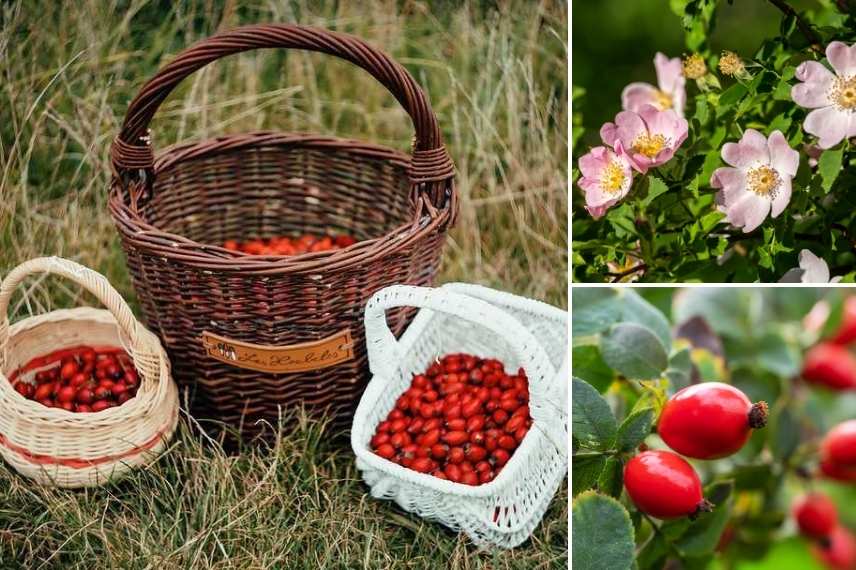
Rose hips develop on botanical and wild roses, such as the dog rose.
Rose hips… to enhance your bouquets
Create beautiful bouquets with rose hips, which blend wonderfully with the warm autumnal hues of Hydrangea macrophylla, physalis (Chinese lanterns) and other shrubs bearing ornamental fruit, such as guelder roses, spindles, Berberis, Cotoneaster and other Pyracantha. Flowers become scarcer from the end of October onwards. Complete a bouquet with the last dahlias, asters, stonecrops and knotweeds of the season, also making use of original containers such as pumpkins. Later still, as winter approaches, ivy fruits and other berries such as snowberries will lend their poetic charm to unique homemade bouquets. They also brighten up a dried bouquet.
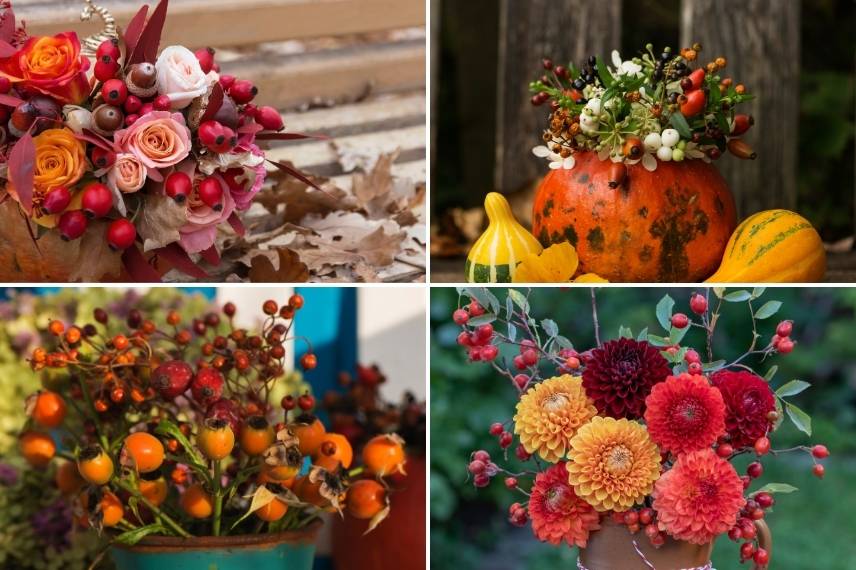
Autumn and winter bouquets can rely on rose hips for original displays: cheerful mixtures to make us forget the less sunny days…
Rose hips… for Christmas decorations
The magic of Christmas is very much about red tones. Rose hips can therefore feature in a great many creative ideas for the festive season at the end of the year. On their own in a pretty vase, simply decorated with a string of fairy lights, they make a real impact. Just placed on a windowsill or on the mantelpiece, alongside dried fruit and a few dried branches, they look just as magical. Used to decorate candles or homemade kraft gift parcels, and also as floral material for creating a Christmas wreath, all you need to do is let your imagination guide you and light up the festive season in the most beautiful way!

Combined with a few fruits, lichen and other red berries from the end of the year, rose hips embrace the traditional codes of Christmas.
→ We have plenty of ideas for decorating your home for Christmas with rose hips in our tutorials: Make a Christmas wreath with rose hips and Oh oh oh! How to create a natural Christmas decoration with rose hips.
Rose hips… as jam or jelly
Although their skin is tough, the pulp inside rose hips is surprisingly tangy and, above all, very rich in vitamin C (almost 20 times more than an orange). Why not invite them into the kitchen?
Jelly is the most common use for them, although rose hips are complicated to prepare: they first need to be cooked at a low temperature to soften them (unless you pick them when over-ripe, meaning once they have been softened and made tender by the first autumn frost – even better!), then passed through a food mill to extract their divine pulp, removing the hairs (the infamous itching hairs) and the seeds, which are actually the true fruit. You can mix them with apples or quinces for a delicious variation.
A coulis is prepared in much the same way, with this preliminary work putting some people off. It will add flavour to panna cotta, rice pudding and other milky desserts. To make a syrup, the fruit, sugar and water are normally measured in equal quantities. Using a conical sieve and a food mill is essential to remove the infamous itching hairs.
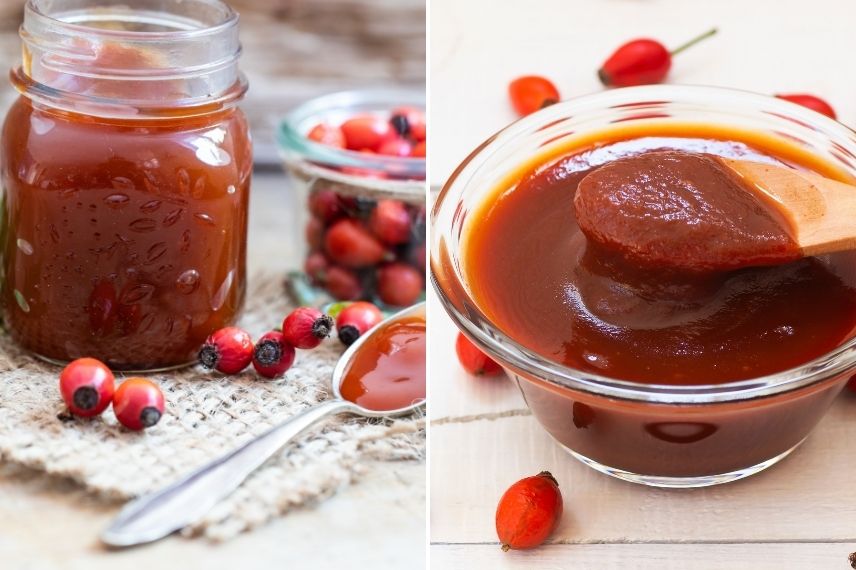
The consistency of rose hip jam is perfect for spooning over pancakes or spreading on breakfast toast!
→ Discover our tutorial: How to make rose hip jam: from picking to recipe.
Rose hips… in herbal tea
Using rose hips to make a herbal tea is a lovely idea. Herbal tea does indeed preserve a good proportion of the vitamin C when infused at a maximum temperature of 80°C, unlike jam, which requires more intense cooking. They also require very little preparation, and you can use either fresh fruit or fruit that has been dried beforehand. Much better than shop-bought dog rose herbal tea bags, this hot infusion is comforting on cold autumn days.
Simply dry the dog rose berries (see our article How to dry your own rose hips) or pick and use them fresh, leaving them to infuse for ten minutes in a cup of boiling water, as you would with lime or camomile.
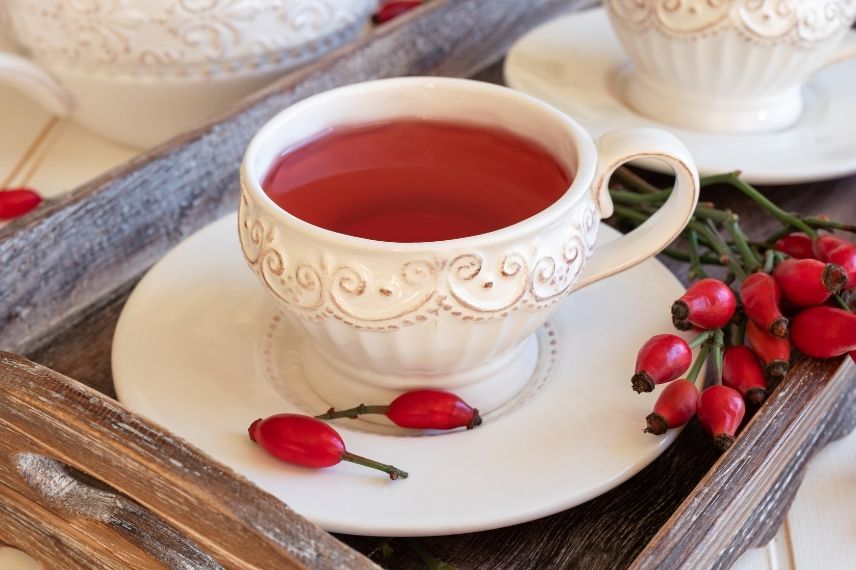
An original and delicious rose hip herbal tea for chilly weather
→ Read also: How to dry your own rose hips, Physalis herbal tea: an autumn-coloured infusion and How to make an infusion from Aronia berries.
Rose hips… in chutney
For a savoury version, think of using your rose hips to prepare a sauce to serve with white poultry, game, duck or duckling, rather like a reduced cranberry jus. Cook them with a little shallot or red onion, balsamic vinegar (white or red) and honey or sugar to obtain a syrupy consistency. It becomes a sweet-and-sour condiment, mixed with plums, apples and spices (cinnamon, ginger and peppercorns), or not.
The difficulty, once again, is to remove all the hairs and keep only the pulp.
Rose hips… as a beauty treatment
To make an oil macerate that is good for the skin (rich in essential fatty acids, antioxidant and soothing), macerate ripe rose hips, after lightly crushing them with a pestle and heating them to 50 °C, in a good-quality oil (preferably organic), such as olive, jojoba, argan or grapeseed oil.
My advice: for all these original recipes, from the kitchen to the bathroom, wait, as you would with medlars, until the fruits have experienced the first autumn frost. This will make them more flavoursome, sweeter and easier to work with.
→ To find out everything you need to know about plant macerates and oils, read our article: Making plant oils.
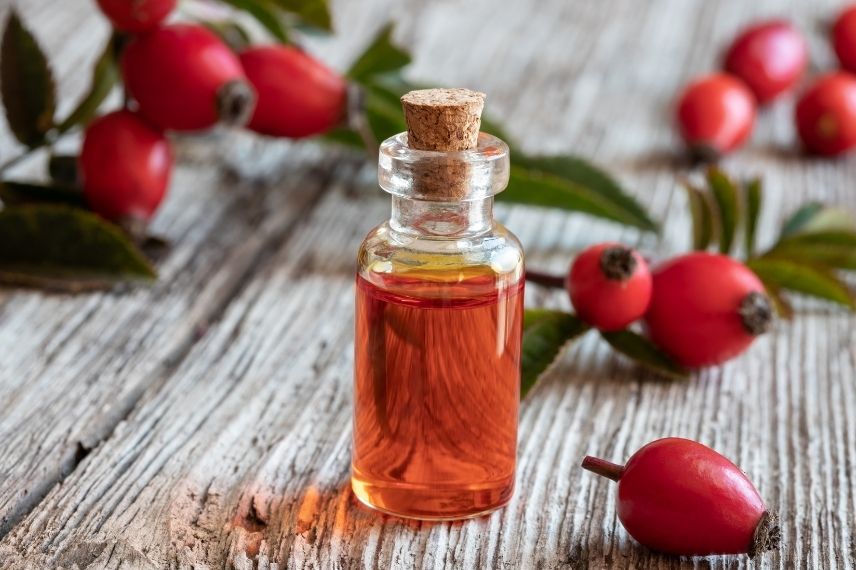
A rose hip macerate that is easy to make, good for the skin and joints.
Rose hips… for garden wildlife
For fruit-eating birds, rose hips make excellent autumn and winter food. Especially for blackbirds and thrushes. Tits and robins also enjoy the fruit once it has become thoroughly over-ripe. As for goldfinches and European greenfinches, which eat seeds, they will seek out the seeds they relish at the heart of the fruit.
Small rodents, badgers and squirrels enjoy them just as much. So always leave a few rose hips on your roses.
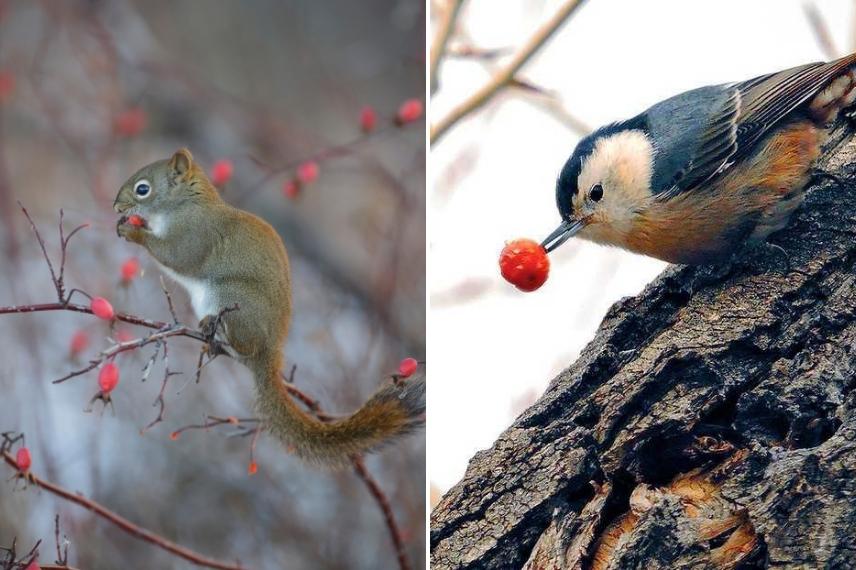
A berry like any other for garden wildlife
- Subscribe!
- Contents
This form is protected by reCAPTCHA - the Google Privacy Policy and Terms of Service apply.

































Comments