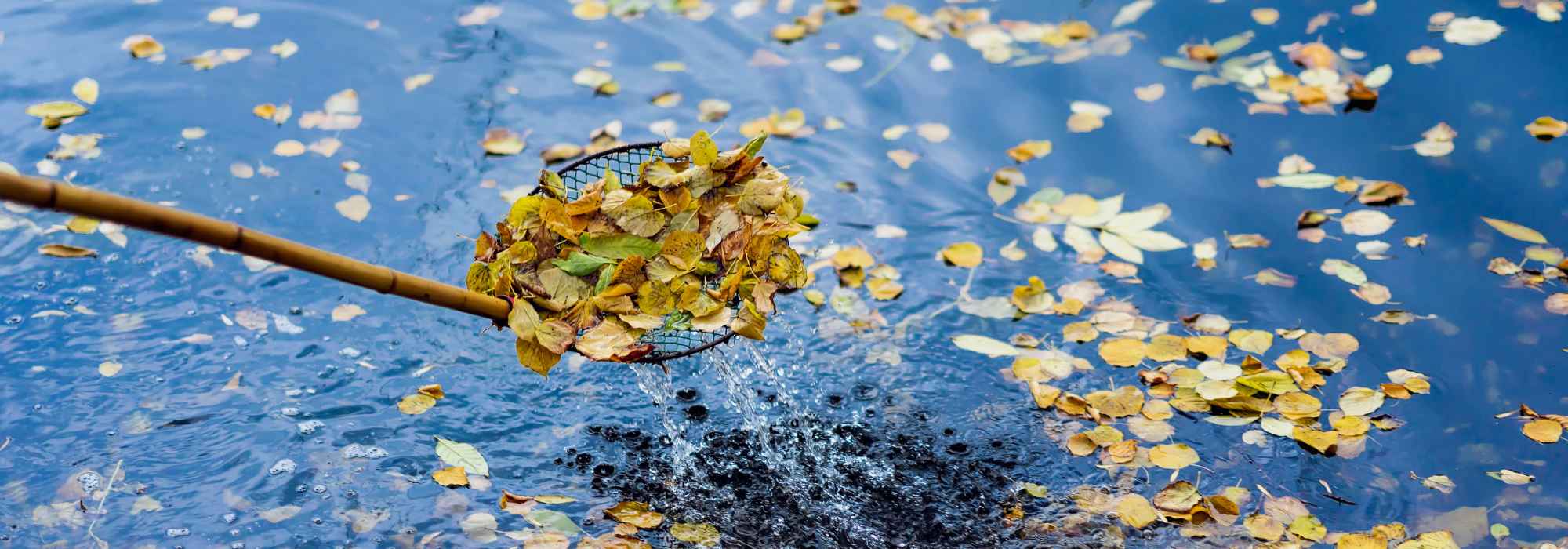
Should you clean a pond in autumn?
The right steps for maintaining your pond and protecting wildlife before winter
Contents
In autumn, dead leaves accumulate on the surface of your pond and aquatic plants start to die back. It’s tempting to give it a thorough clean before winter! But is that really a good idea? Yes, it’s a good idea to give your pond a light clean in autumn, removing dead leaves and excess plant growth without disturbing aquatic wildlife or emptying the pond. Here’s how to prepare your pond for winter while preserving this little ecosystem teeming with life.
The essentials
|
Read also
Maintaining a garden pond in autumnWhy clean a pond in autumn?
Over the weeks, dead leaves and faded plants eventually sink to the bottom of the water. There, they decompose slowly and contribute to the formation of silt. Nothing unusual so far: this is how a pond works naturally!
But when this organic matter builds up in excessive quantities, its decomposition uses up oxygen and can accelerate the build-up of silt in the pond, to the detriment of aquatic life.
October and November are generally the best months to maintain a natural pond, before the cold weather sets in. At this time of year, your work is usually less disruptive to wildlife than in spring, during the breeding season.
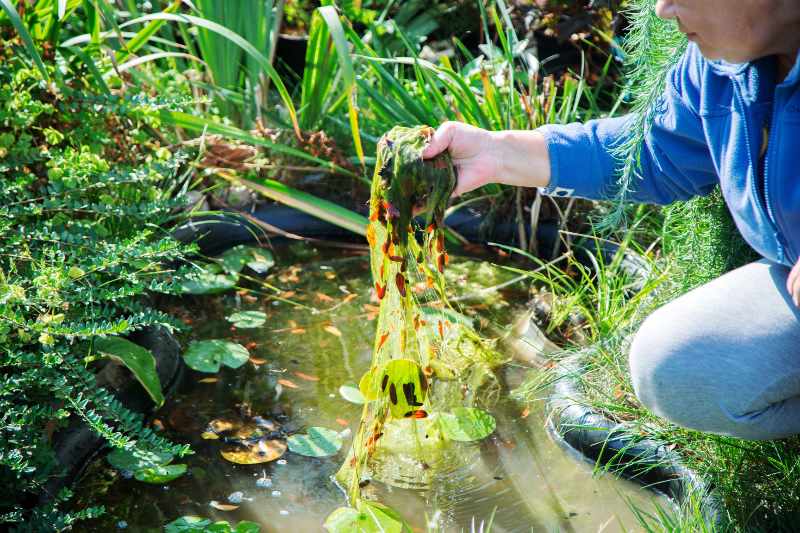
In autumn, remove clumps of algae and excess plants to limit their decomposition in the water, without disturbing the pond’s small inhabitants.
How do you look after a pond in autumn?
There’s no need to empty your pond or scrub its bottom! To get your pond ready for winter, a few well-targeted jobs are enough to limit the build-up of organic matter.
Remove fallen leaves and plant debris
If your pond is under a tree, you’ll know the problem: as soon as you’ve cleared the leaves, more have already fallen!
Use a pond net once or twice a week to remove fallen leaves, twigs and floating plant debris before they sink.
If your pond is surrounded by trees, you can also temporarily put a net over the water while the leaves are falling. Make sure it is taut and kept out of the water to avoid trapping small animals.
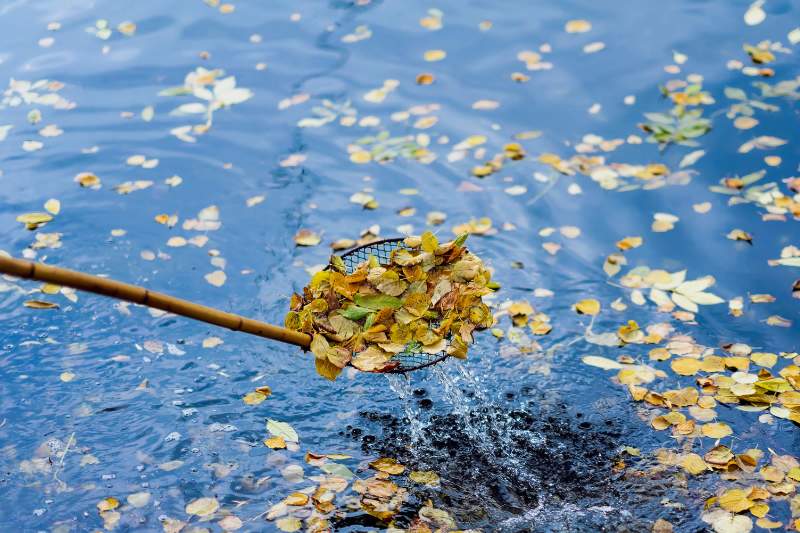
In autumn, regularly remove fallen leaves with a pond net before they sink and decompose at the bottom of the pond.
Thin out overly vigorous aquatic plants
Aquatic plants are essential to a pond’s balance. But some, such as bulrushes and reeds, can sometimes get a little too comfortable!
Make the most of autumn to thin out clumps that have become too vigorous, especially when they are greatly reducing the area of open water. You can also remove rotting leaves and stems that might decompose in the water.
However, don’t cut back all the vegetation. Keep any healthy aquatic plants and a few dry stems along the banks: they provide valuable shelter for insects and small wildlife over winter.
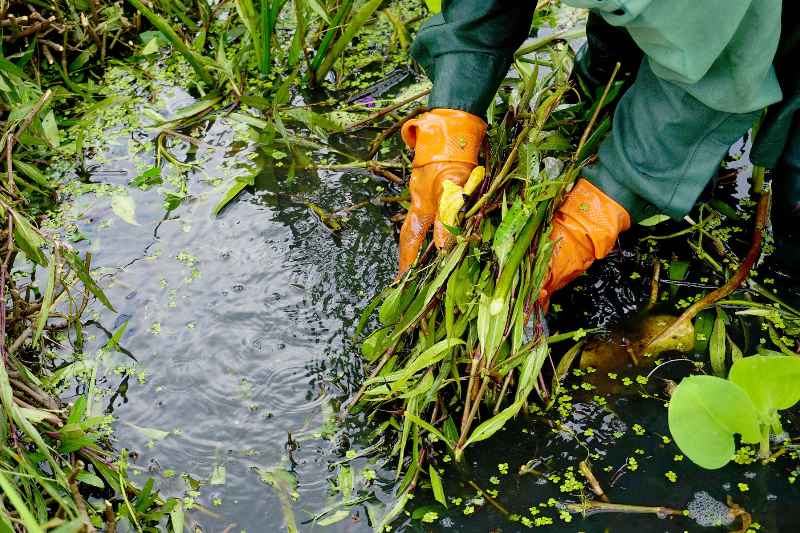
In autumn, thin out aquatic plants that have become too vigorous, while keeping enough vegetation to shelter small wildlife.
Remove excess silt only if necessary
Can you see a layer of silt at the bottom of your pond? Don’t worry! Silt is a natural feature of ponds and provides a home for many small organisms.
However, if it builds up to the point where it greatly reduces the depth of the water, partially dredging the pond may become necessary to prevent it from gradually silting up.
Please note: you don’t need to dredge a pond every autumn! Depending on how it develops, this may only be necessary after many years—sometimes ten to twenty years, or even longer.
If you do need to intervene, remove silt from a limited area and leave the rest of the bottom undisturbed. If the pond is heavily silted, it’s best to spread the work over several years.
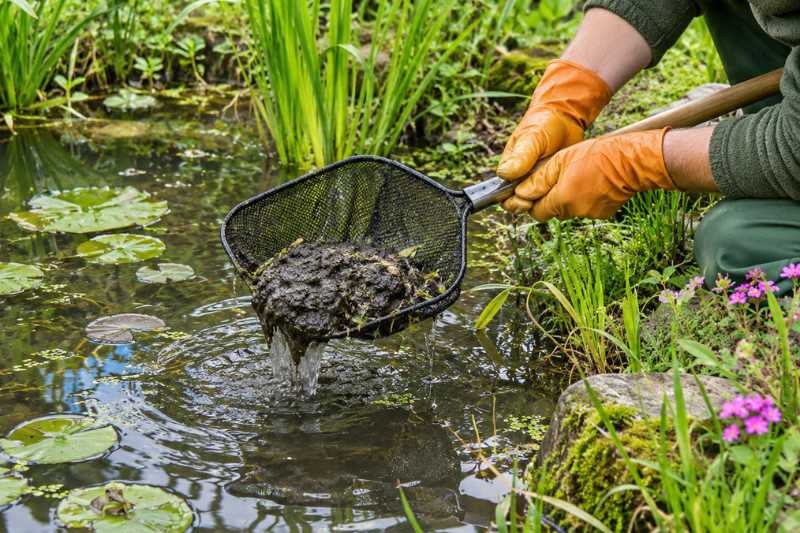
If too much silt has built up at the bottom of your pond, remove only some of it, taking care to preserve the aquatic plants and small wildlife. (AI-generated image)
Read also
Creating a natural pond in your gardenHow do you clean a pond without disturbing its aquatic wildlife?
Before dipping your net into the water, take a few moments to observe your pond. A frog sitting still near the bank, a newt hidden among the vegetation, a dragonfly larva clinging to a plant… There is often far more life than you might imagine!
To protect these little inhabitants, clean your pond gradually, without emptying it or disturbing the entire bottom. Also avoid cleaning products, which can harm aquatic organisms.
Here’s a simple tip: gently shake the plants you remove over the water, then leave them on the bank for 24 to 48 hours, allowing small organisms to make their way back into the pond. Before disposing of them, check that no animals are still hiding among them.
And if your pond still looks a little wild after you have finished, that’s absolutely fine! The important thing is to preserve its different habitats, not to achieve perfectly clear water.
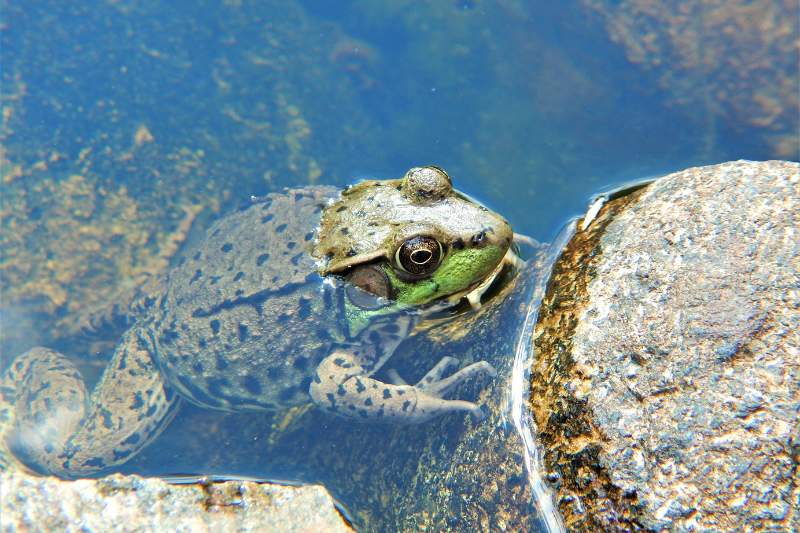
Frogs and other small animals find shelter in natural ponds. In autumn, clean your pond gently to preserve their hiding places before winter.
Frequently asked questions about pond care before winter
Should you switch off a pond pump before the frosts?
A natural pond generally does not need a pump. If yours has one, check the manufacturer’s recommendations before winter. Depending on the equipment, water depth and risk of frost, you may need to clean the pump and filter, then protect them from frost. Find our advice on maintaining a pond or water feature in winter.
Which aquatic plants should you bring indoors before winter?
Hardy aquatic plants can generally stay in the pond over winter. However, some tender exotic plants, such as less hardy papyrus, need to be overwintered somewhere frost-free. Check their hardiness before the first frosts. Find out how to overwinter pond plants.
What should you do if your pond is at risk of freezing over in winter?
A sufficiently deep natural pond can withstand ice forming on the surface. Avoid breaking the ice suddenly, as this could disturb the wildlife. The risk of a small, shallow pond freezing completely needs more attention. Depending on its layout, a suitable pond de-icer may be useful.
- Subscribe!
- Contents
This form is protected by reCAPTCHA - the Google Privacy Policy and Terms of Service apply.

































Comments