What is a hoe used for?
Hoe are you, then?
Contents
Used since time immemorial all over the world, the hoe is a highly versatile tool. The tool is simple yet effective: a handle with a steel blade fixed to it. The conventional hoe, initially confined to agricultural work, gradually found its way into gardens around the 19th century. With a hoe, you can take turns to loosen the soil, hoe, weed, dig planting holes or trenches, earth up… In short, as a Provençal proverb puts it: “If you are sad and lacking in enthusiasm, go to your field and take your hoe.” Whatever state of mind we may be in, let us take our hoe and get to work in the garden!

What is a hoe?
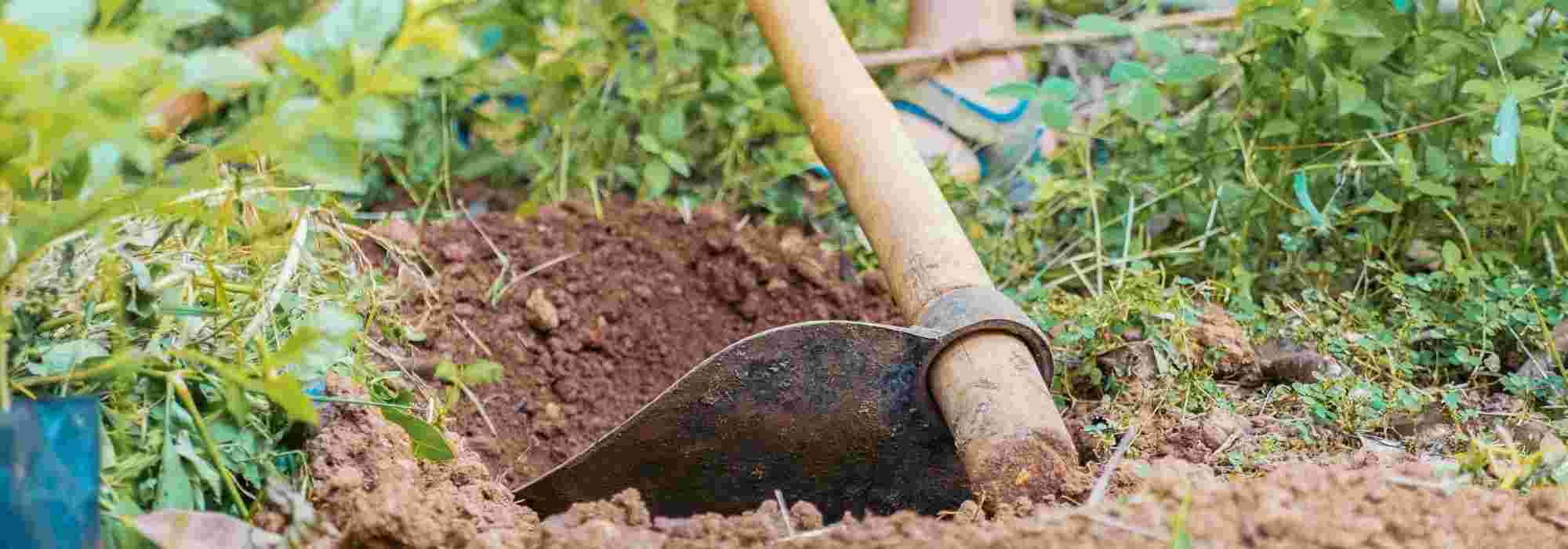
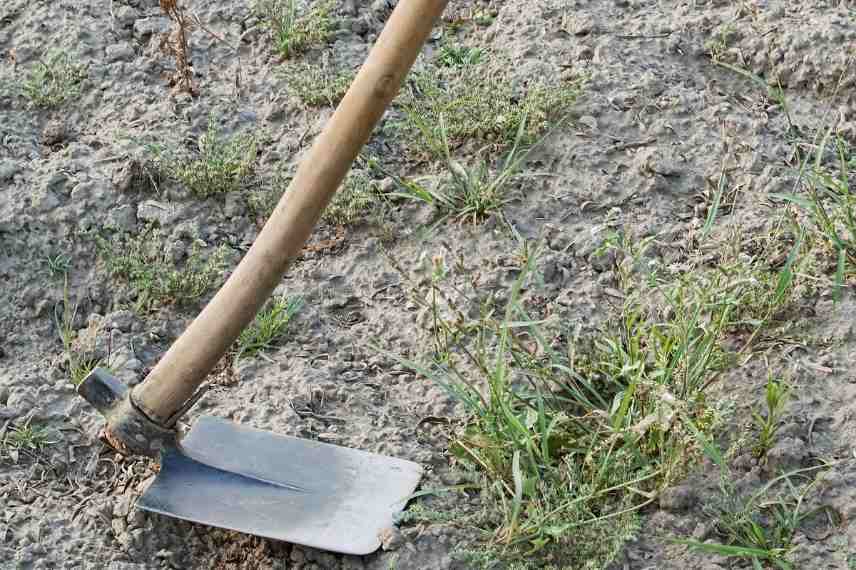
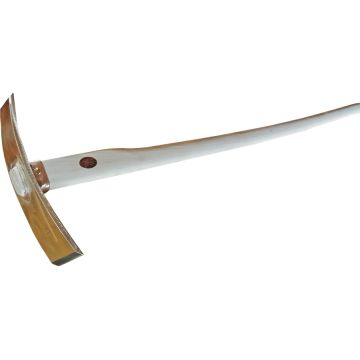
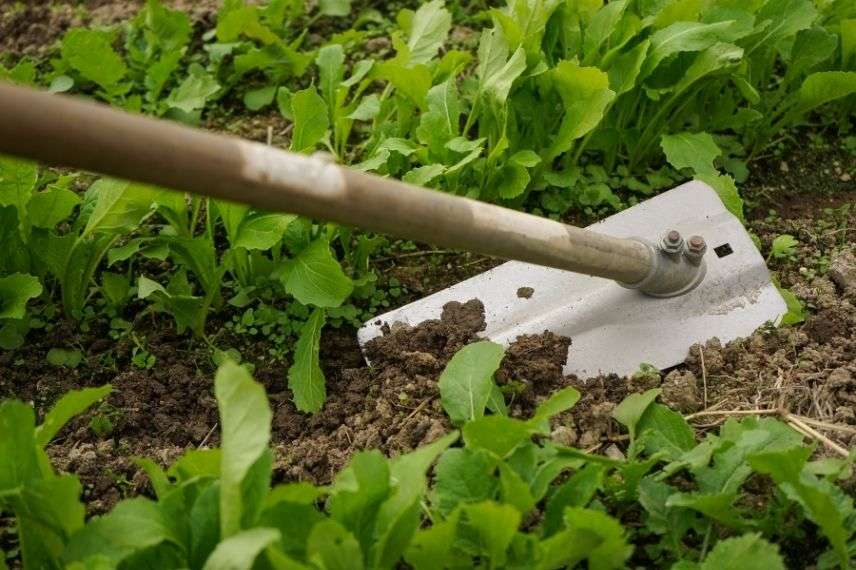
A hoe is an agricultural and garden tool with a handle, generally made of wood, to which a forged steel blade is attached, perpendicular to the handle.
A hoe may have a solid or hooked blade: Traditional hoe with a solid blade & Hoe with a serrated blade. The handle and blade can be any size, as is the case, for example, in Africa, depending on how the tool is used: digging, hoeing, working the soil, planting… Most often, hoes have a wooden ash handle measuring around 1.10-1.20 m. The correct handle height should be between the ground and your bent elbow when you are standing. If the handle is not the right size, the user may tire unnecessarily or injure their back.
Hoe blades can be heavy, light, wide, narrower… A wide, heavy hoe blade, around 20 cm wide, will work the soil more efficiently than a narrow, lightweight one, such as the Duopro hoe with a 12cm-wide blade, but the gardener will tire more quickly. It is up to you to decide… In addition, narrow blades can get into every corner, while wider ones are used for heavier work.
For your information, a “wheel hoe” is a type of wheeled cultivator used in market gardening. This tool has a wheel at the front, a blade just behind it and two long handles for pushing it. The term “Dutch hoe” is also used for hand tools whose blade curves forwards: this tool can only be used for hoeing and weeding.
Did you know? The hoe is a very ancient agricultural tool. It has been used for cultivation since the Neolithic period and is found throughout the world. The tool itself has changed very little in terms of its shape and use, although, from being essentially an agricultural implement, it began to appear in gardens in the 19th century. Only the materials and construction have improved.
In addition, even in France, this tool has countless names derived from regional dialects: hoyau, bêchoir, féchou, écobue, bêchard, bessoche, déchaussoir, sarcle or essade (and many others…) for hoes with solid blades, and bigot or mègle for hoes with hooked (serrated) blades.
Read also
Hoe: how to choose?What is a hoe used for?
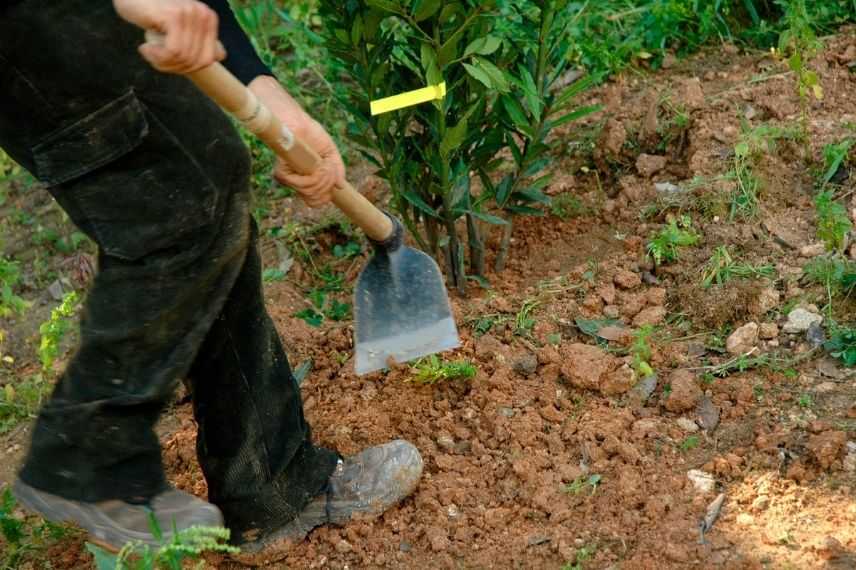
Depending on the shape and size of the blade, and even the length of the handle, a hoe can be used for a huge range of different jobs in the garden. This is particularly true in Africa, South America and South-East Asia, where most hand-held agricultural tools are ultimately just hoes with different shapes and designs. Here, unfortunately, this type of tool is not available in such a wide variety. We will therefore focus only on a conventional hoe: a solid blade approximately 20cm wide, mounted on an ash-wood handle about 1.20m long. Here is what a hoe is used for in our gardens:
- Working the soil to loosen and aerate it;
- Digging furrows, trenches and planting holes, and starting a pond;
- Hoeing and weeding adventive plants;
- Earthing up certain plants and vegetables;
- Cutting through large roots and even clearing ground by cutting through young shoots of shrubs or perennials.
Like a pickaxe, a hoe can work where other tools would barely manage to break through the top layer of soil. This is largely thanks to its weight and the way it is used.
Discover other Hoes and pick axes
View all →
Available in 1 sizes
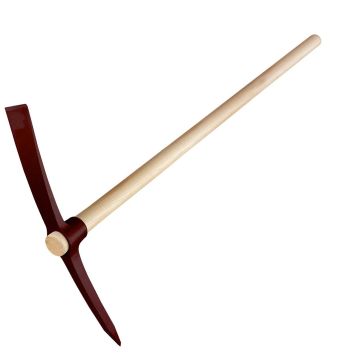
Available in 1 sizes
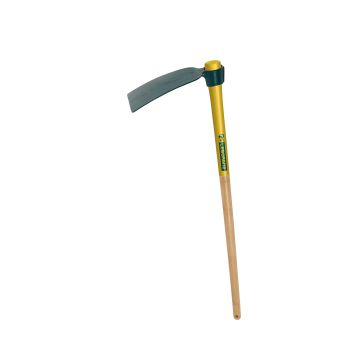
Available in 1 sizes
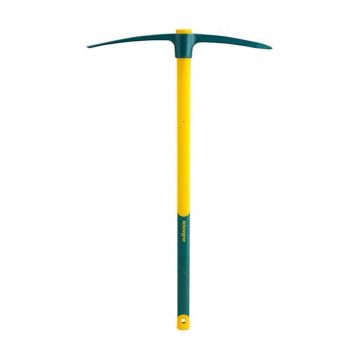
Available in 1 sizes
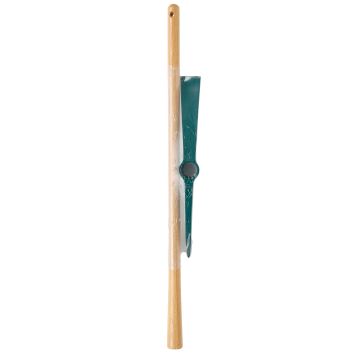
Available in 1 sizes
Available in 1 sizes
How to use a hoe?
Put simply, using a hoe falls somewhere between using a pickaxe and a hand hoe.
- Grip the handle with both hands.
- Raise the tool: above your head for very lightweight hoes, or just to hip height for heavier ones and when carrying out relatively light work.
- Then let it fall more or less forcefully onto the ground: take care of your back!
- Once it is on the ground, you can use the blade to strike the soil with small blows if you only want to loosen it, or more forcefully to dig a hole or a trench.
- Subscribe!
- Contents
This form is protected by reCAPTCHA - the Google Privacy Policy and Terms of Service apply.

































Comments