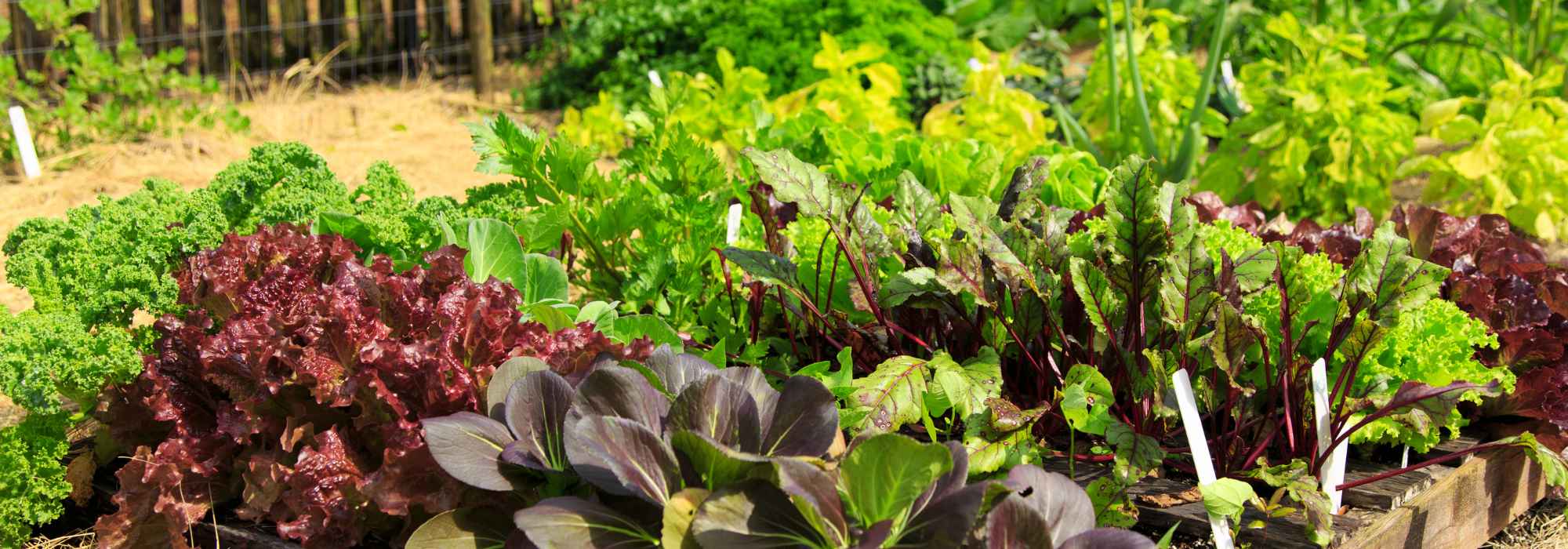
How to create an ultra-productive organic vegetable garden in a small space?
Our tips for increasing the yield of a very small kitchen garden
Contents
To harvest as many organic vegetables as possible from a small kitchen garden, you first need to make the most of the space and follow one crop on from another. Fast-growing vegetables, thoughtful combinations, vertical growing, succession sowing and intensive soil enrichment all help increase harvests without enlarging the kitchen garden. Here is how to organise and grow a few square metres efficiently, without pesticides or synthetic chemical fertilisers.
The key points to remember
|
How to Plan a Small Kitchen Garden to Make the Most of Every Square Metre?
To have a small productive vegetable garden, you need to think carefully about its layout first and foremost. The aim is to make the most of the available space and devote as much room as possible to vegetables, without hindering their growth. All while keeping care to a minimum for the gardener that you are!
Choose a sunny, accessible location
Ideally, 6 to 8 hours of direct sunlight per day are needed to encourage the growth of vegetables such as tomatoes, courgettes and cucumbers. On the other hand, a partially shaded garden is suitable for leafy vegetables such as lettuce, Swiss chard, spinach and radishes. This partially shaded position can also be a real advantage during heatwaves. Otherwise, plan shading solutions for areas exposed to the full force of the summer sun.
Your vegetable garden should also be located close to a water source. Try to install your water butts near your vegetable garden to avoid tiring and time-consuming trips back and forth. Otherwise, plan automatic watering systems such as drip irrigation or ollas.
Organise your crops without wasting space
Growing beds 1 to 1.20 m wide, accessible from both sides, allow you to care for your vegetables without trampling the soil. Plan paths about 40 to 50 cm wide for easy movement.
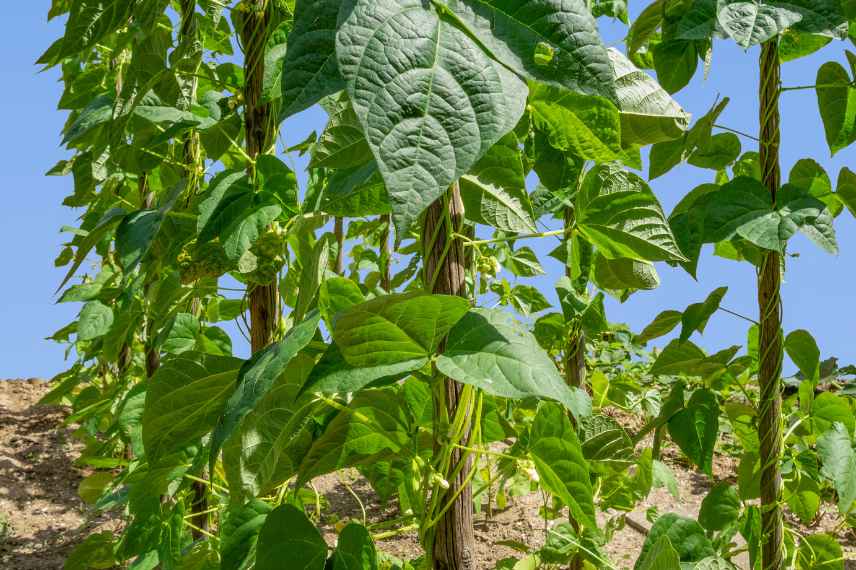
Growing climbing French beans saves a considerable amount of space in the vegetable garden.
Grow vegetables vertically
Training vegetables up suitable, sturdy structures helps you save ground space. In addition, growing upwards helps to improve the light levels and air circulation around the vegetables’ foliage. With a little imagination, you can recycle threaded rods, reinforcing bars and mesh, trellises, bamboo canes…
Some vegetables are particularly well suited to vertical growing:
- Climbing French beans and sugar snap peas on wigwams or structures up to 2 m tall.
- Cucumbers and gherkins.
- Tomatoes along a stake.
- Squashes on trellises.
Which vegetables should you choose for a highly productive small kitchen garden?
In a small vegetable garden, give priority to vegetables with rapid growth, a long harvesting period or the ability to regrow after harvesting.
| Vegetable | Variety | Advantages in a small space | Advice |
| Tomatoes | Cherry tomato ‘Gardeners Delight’ and ‘Sungold’, ‘Roma’ tomato, ‘Saint-Pierre’ | Continuous harvesting throughout the summer, until the first frosts. | Choose indeterminate varieties that require staking |
| Climbing French beans | ‘Fortex’ ‘Phénomène’ | Abundant vertical harvest from a small footprint | Pick the pods very regularly, every 2 to 3 days. |
| Bush courgettes | ‘Verte non coureuse des maraîchers’ | High yield from a footprint of just 1 m² | Allow 1 m² per plant |
| Cut-and-come-again lettuce | ‘Lollo Rossa’ ‘Salad Bowl’ | Several harvests are possible, picking the leaves individually | Harvest the leaves gradually |
| Radishes | ‘Radis de 18 jours’ | Very short growth cycle of 3 to 5 weeks | Stagger sowings every two weeks |
| Swiss chard | ‘Poirée verte à carde blanche’ | Harvests over several months | Pick the outer leaves |
| Climbing cucumbers | ‘Marketer’ ‘Vert long anglais’ | Takes up little ground space | Grow on a trellis |
| Spinach | ‘Géant d’hiver’ ‘Matador’ | Rapid growth of around 2 months; a vegetable that enjoys partial shade | Stagger sowings
|
Cherry tomatoes are particularly worthwhile because they produce over a long period. Bush courgettes are also highly productive, provided you set aside 1 m² for each plant. Some squash varieties, such as butternut squash, also adapt very well to growing on a trellis.
Read also
Watering the vegetable garden: our tipsHow to grow more vegetables in the same space?
The best way to increase the yield of a small vegetable garden is to use the soil intelligently throughout the seasons, without creating too many simultaneous plantings.
Succession planting throughout the year
Succession planting involves quickly replacing a harvested vegetable with another. For example, you can sow radishes or spinach in spring, plant dwarf French beans at the beginning of summer, or plant tomatoes and peppers, followed by lamb’s lettuce, mizuna or Chinese cabbage at the end of the season, if the climate and harvest dates allow.
To limit periods when no crops are growing, prepare a few young plants in pots before the space becomes available.
The idea is to ensure that no area remains empty and unproductive.
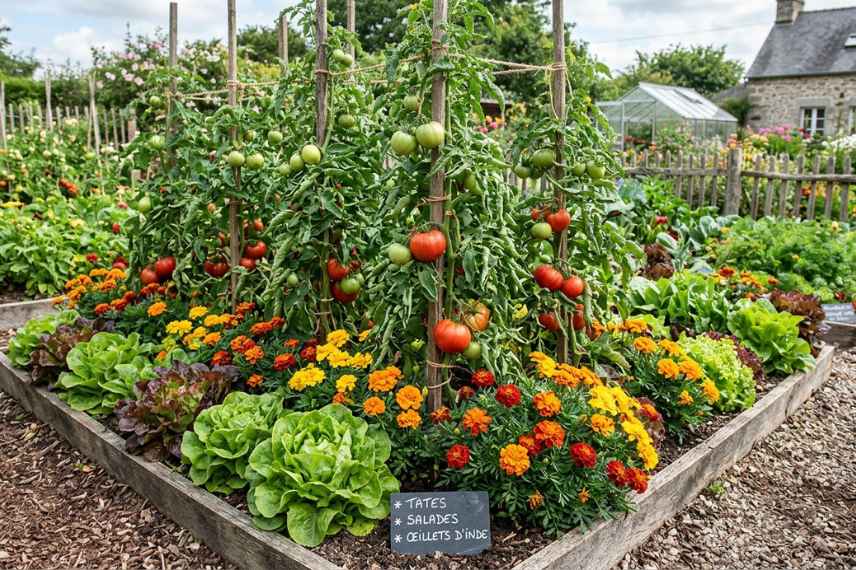
Intercropping fast-growing vegetables between tomato plants makes it possible to double the yield from the same row. (AI-generated image)
Staggering sowings for regular harvests
Rather than sowing all your radishes or lettuces at once, make small sowings every two to three weeks when conditions are favourable.
This method avoids excessively large harvests all at the same time and allows you to make gradual use of the available space.
Pairing complementary vegetables
Intercropping allows you to make temporary use of the space between plantings.
For example, sow radishes between young lettuces: the radishes will be harvested before the lettuces take up all the available space. You can also plant a few early lettuces between young tomato plants, provided you harvest them before their foliage develops. The combination of radishes, carrots and lettuce also works very well. Sown at the same time, the radishes are harvested after 4 weeks, freeing up space for the carrots, which develop their roots more slowly, while the lettuces occupy the leafy layer.
Choosing vegetables that can be harvested repeatedly
Swiss chard, cut-and-come-again lettuces, herbs (basil, parsley, chives…) and kale can be harvested gradually without pulling up the plants.
Pick the most developed leaves while leaving the centre and enough foliage for new shoots to grow.
How can you naturally maintain a small intensive kitchen garden?
A fertile soil, regular watering and good mulching are essential for maintaining abundant harvests throughout the growing season.
Feed the soil with compost
Apply mature compost to the surface, adjusting the quantities according to the fertility of the soil and the needs of the vegetables. Tomatoes and courgettes are notably more demanding than radishes.
Avoid excessive applications: more compost does not necessarily mean more vegetables.
Also limit deep cultivation of the soil and avoid walking on cultivated areas to preserve their structure.
Mulch to retain moisture
A mulch of straw, healthy fallen leaves or dried grass clippings reduces evaporation and limits the development of competing weeds.
Apply it once the soil has warmed up sufficiently for summer crops. Avoid placing it directly against the root collar of the plants.
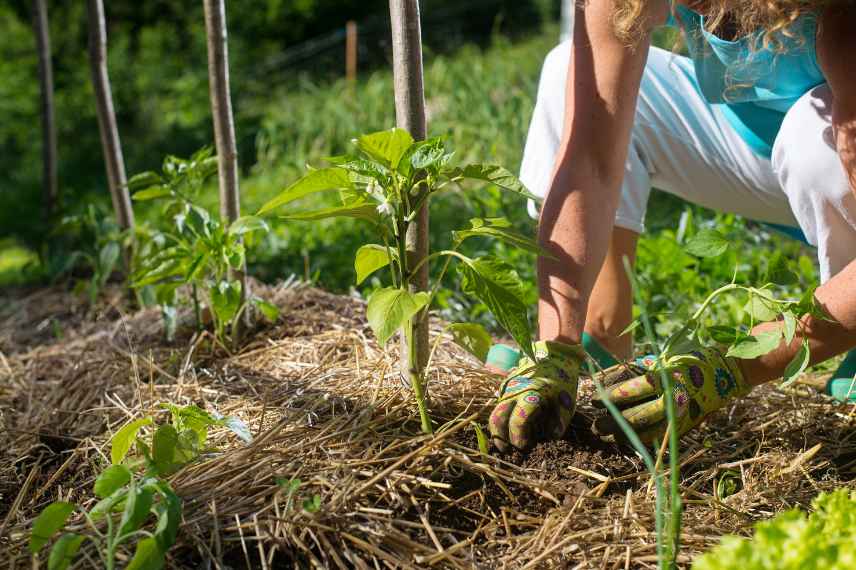
Mulching helps retain moisture and limit watering in a small kitchen garden
Water efficiently
Water at the base of the vegetables without wetting the foliage, according to the actual moisture level of the soil. A drip irrigation system or porous hose makes regular watering easier. In summer, water in the morning and pay particular attention to fruiting vegetables during flowering and fruit formation. During heatwaves, watering in the evening is often preferable.
What mistakes should you avoid in a small vegetable garden?
- Planting too closely is one of the main mistakes. Vegetables then lack light, water and nutrients. Follow the spacing recommended for each variety and use intercalary crops only when space allows.
- Growing too many bulky vegetables or those with a long growing period, such as cabbages, potatoes and leeks…
- Neglecting watering.
- Leaving beds empty for several weeks after the harvests.
FAQ about Small Organic Kitchen Gardens
Can you feed a family with a 10 m² vegetable garden?
A 10 m² vegetable garden can provide a regular supply of fresh vegetables, but it is generally not enough to make a family self-sufficient. It mainly helps to supplement your shopping with seasonal harvests.
Can you grow vegetables without turning the soil?
Yes, you can grow vegetables in a small garden without deep digging. Simply maintain the soil structure with a broadfork, add organic matter to the surface and avoid walking on the soil. However, soil that is initially very compacted may require suitable preparation.
Should you practise crop rotation?
Crop rotation remains useful, but it is difficult to organise strictly over just a few square metres. Grow a variety of vegetables, avoid repeatedly planting the same family in the same place and monitor for persistent diseases.
Can you harvest all year round?
Yes, some crops can still be harvested in winter, particularly lamb’s lettuce and hardy spinach. A polytunnel or fleece can extend the harvesting period, but growth slows considerably as temperatures and light levels fall.
- Subscribe!
- Contents
This form is protected by reCAPTCHA - the Google Privacy Policy and Terms of Service apply.

































Comments