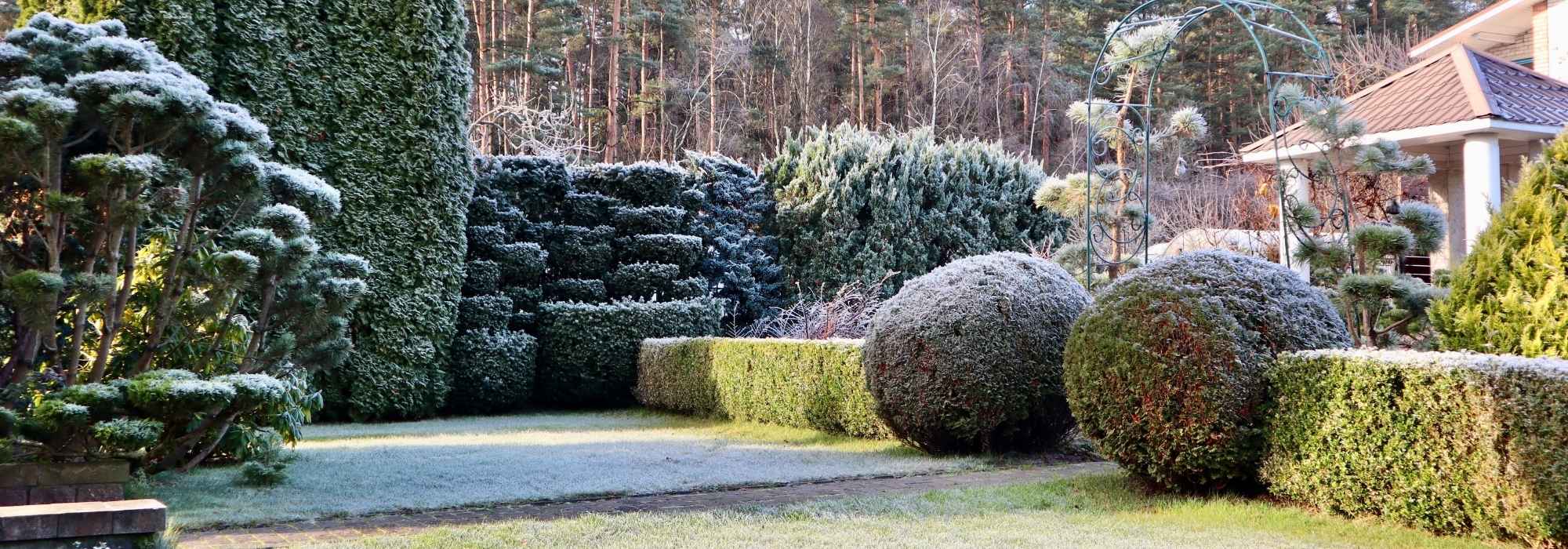
The garden in winter: which projects to prepare before spring?
What if winter were the best time to dream up your future garden!
Contents
Winter is an excellent time to think about and plan future garden projects. You can take your time before spring returns to design a new border, lay out paths, install various structures, rethink a patio, choose new shrubs, plan a hedge or (re)organise your vegetable garden. By considering the plants’ eventual size, aspect and requirements in advance, you’ll also avoid design mistakes and rushed purchases. Here’s why the colder months are the ideal time to imagine your future garden!

The essentials of winter garden projects
|
Why and how to design a new garden border in winter?
Winter is a good time to plan future projects, and in particular, to create one or more new borders. Between December and January, we have more time to think things through in the warmth, while plants are dormant and the garden and vegetable patch demand less of our attention. It is also a time when we are less tempted by the spring’s impulsive purchases!
Another reason to start thinking about a new border or garden project at this time of year is that the garden’s structure is much easier to see now the leaves have fallen and many of the colours have disappeared. What remains are the clearly visible shapes and forms in the garden, which can reveal gaps or mistakes that need correcting.
Finally, with scorching summers becoming more common, many of us want to consider a border that is more drought-resistant. In short, there are plenty of reasons to get started, especially as winter is an ideal time for planting.
Ideally, start by getting out books and magazines, or browsing the web for plenty of ideas. A shady border, one in full sun, a more drought-resistant garden such as a gravel garden, a border on that awkward slope you no longer want, planting around a pond… Make a list of your needs and wishes, and jot them down in a notebook.
Then take a look around the garden to see where the shadows fall – they are long at this time of year – and to spot any windy corridors. Ideally, do this from November onwards, as fallen leaves make an excellent guide. This will help you choose the ideal spot for your new border, taking the microclimates in the garden into account. Take measurements, then, once back indoors, draw a scale plan to show the mature size of the plants and avoid getting planting densities wrong.
N.B.: our online Style and Inspiration section is full of ideas for plant combinations, garden moods and solutions to specific challenges… Take a look! You’ll also find advice and inspiration in our articles: How to create a beautiful shrub border; How to create a beautiful perennial border; What can you do to enhance a sloping garden?; How to ruin your garden design in 7 lessons; 3 ideas for beautiful winter borders; I’m planning my first garden: where do I start? and Planting densities: everything you need to know.
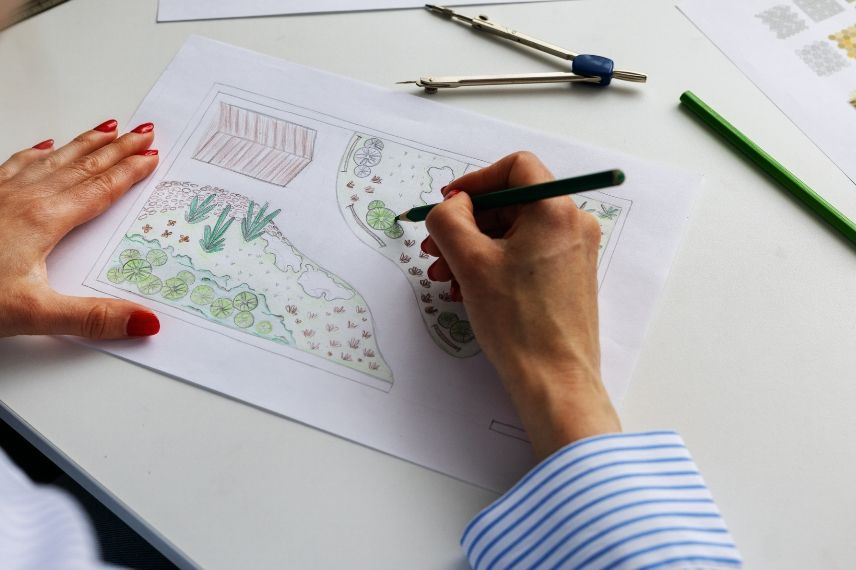
A rough or more fully developed sketch, a master plan is essential for helping you visualise the area or areas to work on in winter.
How can you redesign your patio in winter?
Of the projects you can tackle over winter, the terrace is one of the easier areas of the garden to revamp. It may need better shade, in which case you could consider adding a structure such as a pergola, or a lighter arrangement with a trellis along one side and a vigorous climbing plant to cover it well. Visit DIY stores, compare prices and ask for help from experienced DIYers if you don’t feel confident taking on a major project on a large terrace. If there is enough space, plant a handsome shrub or small tree for shade at the ideal time of year.
If it simply isn’t leafy enough for your taste, consider adding a few more pots, choosing plants suited to container growing and hardy in your area. Give preference to evergreen plants if you can see the terrace from indoors, mixing them with a few small ornamental shrubs, flowering perennials and/or ornamental grasses. Don’t overcrowd a small terrace; choose three plants that will make an impact all year round, or during the season when you spend the most time on the terrace.
The pots themselves also play a part in the terrace’s appearance. They could even make a lovely Christmas present, with Christmas just around the corner!
→ Our Terrace and balcony design section and some of our articles should help: How do you design a small terrace? ; Miniature shrubs in pots: our reliable favourites for beautifying balconies and terraces ; How do you design a terrace in a windy climate? ; How to revamp your terrace after winter ; 9 ideal plants for adding greenery to a contemporary terrace.
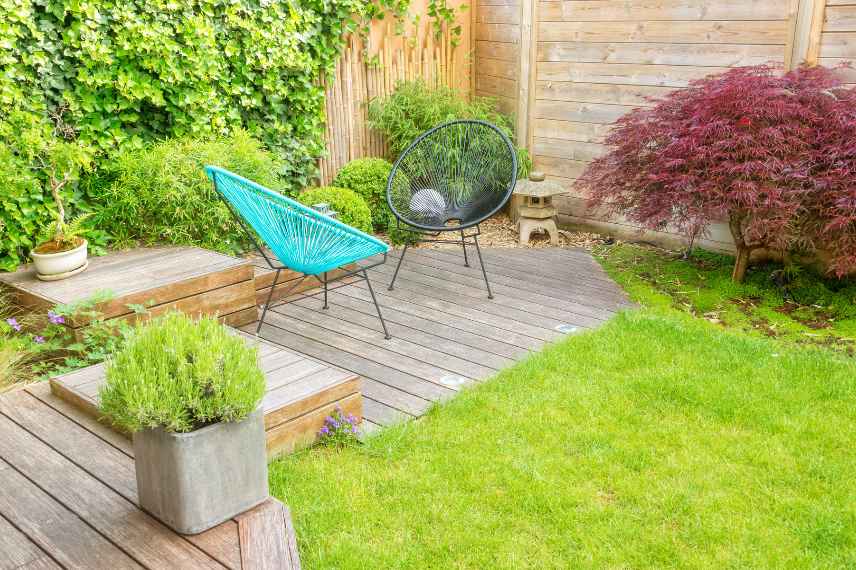
You can easily plan a terrace or a small relaxation area in winter, as long as the ground is neither frozen nor waterlogged.
How to reorganise or create your vegetable garden before spring?
The vegetable garden is another major winter project, when there is less to do in the ornamental garden and… the vegetable garden! You might create one because it was missing from your garden, reorganise an existing vegetable garden whose limitations became clear during scorching summers, or simply make it more attractive and prepare for sowing and planting.
You could:
- Build a cold frame or a hot bed to get started with vegetable growing when space is limited.
- Create raised beds: 2, 3, 4 or more, depending on the space available. Winter makes it easier to choose the right spot for your vegetable garden, but be sure to take summer sunshine into account. I share a few tips in How to make raised vegetable beds.
- Turn a patch of waste ground into a vegetable garden, or create more practical paths.
- Build a raised, homemade lasagne bed to make it easier to grow certain hungry vegetables.
- Provide some shade with a few climbing plants, so your very sunny vegetable garden no longer suffers in summer.
- Put up a greenhouse (or even build one yourself from recycled materials) to raise seedlings and extend the growing season over more months.
- Plan or expand a composting area in the garden, ideally close to the vegetable garden.
- Make a scarecrow or insect hotels in preparation for spring.
- And if your vegetable garden is well established and you carefully mulched and improved the soil in autumn, use your gardening journal to plan crop rotation for next spring!
For all these lovely projects, take inspiration from your reading, including all the articles on permaculture, and of course start making a list and ordering the seeds you will need from February onwards. Winter is the perfect time for this, and shops and online retailers have their widest range at this time of year!
→ Take a look at our advice too: Starting your first vegetable garden; How to choose the right spot for your vegetable garden; How to turn waste ground into a productive vegetable garden; Starting a vegetable garden: what budget should you allow for a successful project?; How to prepare the soil for your new vegetable garden; Starting a permaculture vegetable garden: the book, as well as How to choose a garden greenhouse and Garden greenhouses: what does the law say?
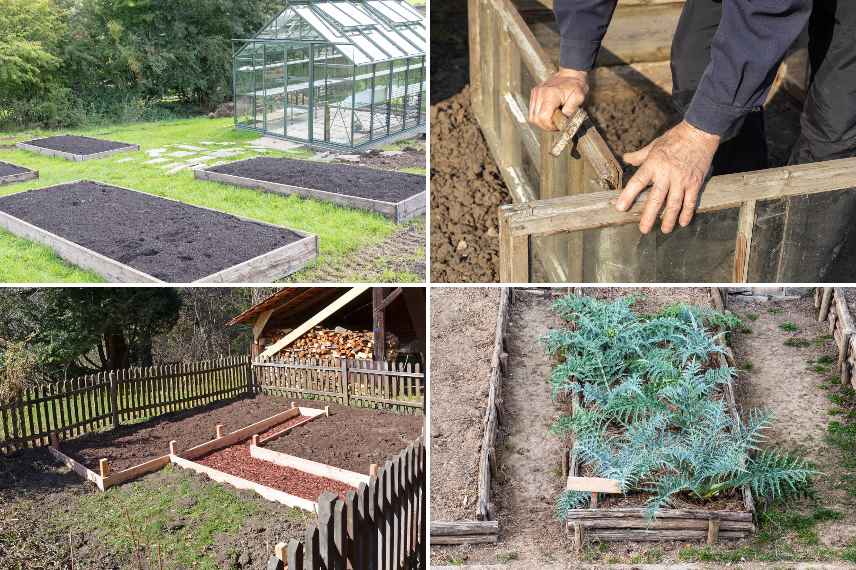
There’s no shortage of winter projects in the vegetable garden: create raised beds, redesign or divide up the area, add attractive edging or build a cold greenhouse!
Which plants can you plant in winter already?
Outside periods of frost, winter is an entirely suitable time for planting. Deciduous trees and shrubs are dormant, so they cope well with being transported and planted, and the soil retains its moisture. From November to March, it is the ideal time to plant bare-root plants, including roses, and fruit trees to expand your orchard. Bare-root plants are less expensive than those grown in containers (often 20 to 50% cheaper, depending on the plant) and establish very well, even when young, provided they are planted soon after delivery.
It is also a good time to move any trees and shrubs that need it (perhaps their position turns out to be too exposed in summer, they are not thriving, or they have grown too large).
Three precautions are essential: never plant in frozen or waterlogged soil, puddle bare roots and always water at planting time, even in winter (this helps firm the soil around the roots). Prepare the planting hole in advance, ideally a few days beforehand. This gives you time to loosen and aerate the soil, check its drainage during a wet spell and expose it to the elements (air, rain and frost). It also saves time on planting day, when a window of good weather comes along.
Finally, the months from November to February are the best time to plant a hedge, as a wide range of bare-root plants is available then. Start your hedge in winter and it will be well established before the first hot weather. Here are a few examples in this table:
| Type of hedge | Examples of plants | Ideal planting period (outside periods of frost) |
|---|---|---|
| Classic evergreen | Photinia, Portugal laurel (Prunus lusitanica), yew | November-March |
| Flowering | Deutzia, spiraea, mock orange, Japanese quince | November-March |
| Informal and wildlife-friendly | Hawthorn, blackthorn, hazel, common dogwood | October-March |
| Evergreen flowering, not very hardy | Grevillea, oleander (Nerium oleander), Pittosporum, Escallonia | From March onwards, in regions with a mild climate |
→ Read also: The best times to plant; Fast-growing evergreen hedge shrubs; How to plant and maintain a living willow hedge
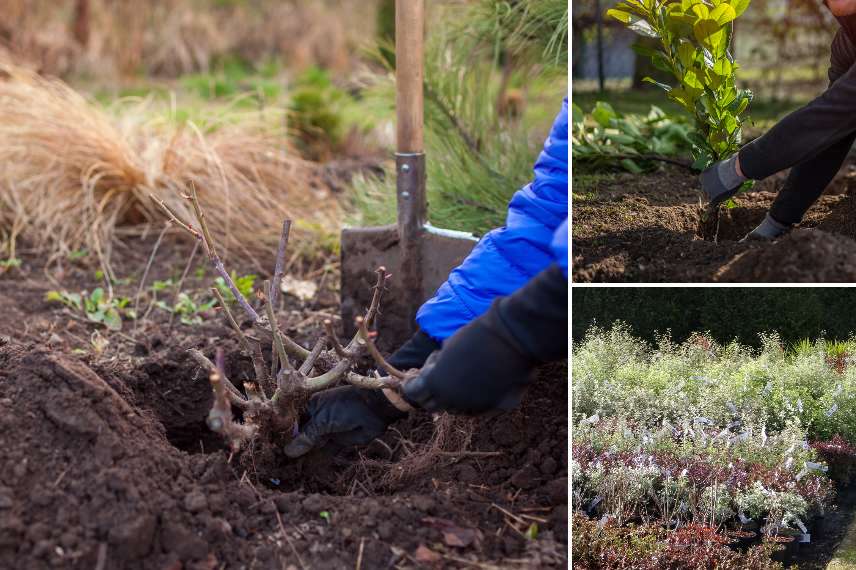
Roses, hardy shrubs and bare-root plants: winter is a good excuse to get out into the garden after taking your time to browse what different suppliers have to offer.
What features should you plan or prepare for in your garden in winter?
Beyond creating new borders, there are other garden projects that are best tackled in the cold season. This is the time when you can finally turn your attention to major, often structural projects, as some would say, such as all the hard landscaping: paths, a garden shed or a pond. Tradespeople and suppliers are less busy than in spring, and delivery times are shorter. Planning these projects in advance means you can get started as soon as the weather allows, sometimes in the depths of winter, and then plant up straight afterwards.
- Paths and walkways can be planned in winter: mark out the routes with stakes and string or sawdust, test the widths (80 cm to 1.20 m maximum, so you can wheel a barrow along comfortably) and observe the natural routes you actually take through the garden. Digging and levelling should be done when the ground is not frozen or waterlogged.
- A garden shed calls for some advance planning: usable dimensions, material (wood, metal or resin), the type of foundation needed (a concrete slab, pads or a platform), distance from the property boundary, and so on.
- An ornamental pond is best planned in winter: choose a partially shaded position to limit algae, allow sufficient depth for aquatic plants (at least 60 to 80 cm for a balanced pond), plan the edging and include safety zones for children. If you dig it when the ground is not frozen, you can plant it up as soon as spring arrives.
There are plenty of other projects to plan during the cold season too: putting up a wattle fence to enclose a wildlife area, fencing a garden, building a wooden shelter, a garden hut or a dead hedge using autumn prunings, rethinking the garage entrance, adding a maze to a formal garden, creating a dry stream in a Japanese garden, building garden steps, constructing terraces, a dry-stone wall or stone paving for paths in gardens in the south of France, and much more.
→ Read also: How to lay a paved garden path; Garden edging: options, advantages and disadvantages; How to create beautiful borders in the garden
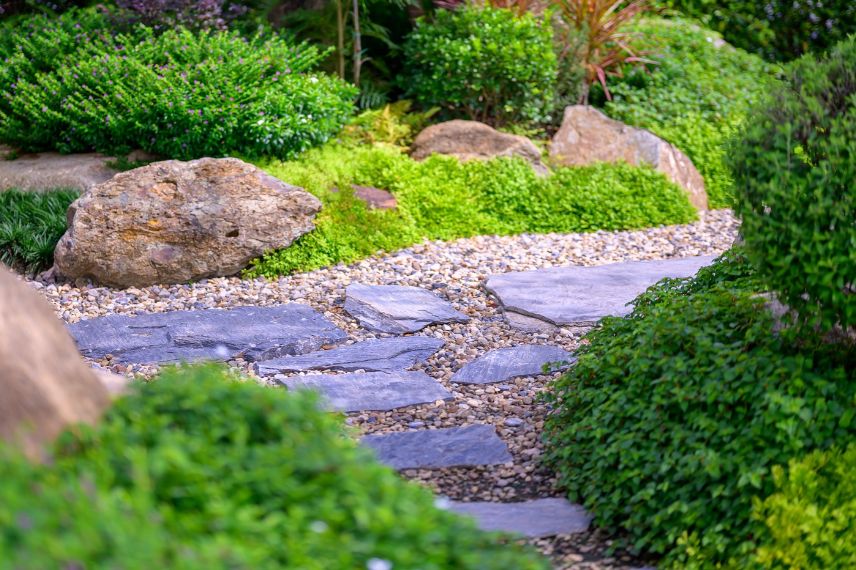
Redoing a path is one of those worthwhile projects to plan in winter, when the garden gives us a welcome window of opportunity!
Frequently asked questions about garden projects you can tackle in winter
What budget should you allow for a project planned in winter?
Winter has one major advantage: bare-root plants often cost 20 to 50% less than container-grown plants, and nurseries frequently offer discounts before Christmas. For landscaping work (a patio, shelter or pond), always ask for several quotes during the quieter season so you can compare them more easily.
Should you order your plants in winter?
Yes, it is actually recommended: bare-root plants and fruit trees are only available in season, usually from November to February-March, and the most sought-after varieties sell out quickly. Planning ahead also allows you to order the right quantities, taking the plants’ mature size into account.
How can you visualise a future landscaping project on site?
Use stakes, string, flour, a garden hose or a marking spray to lay out the design, then observe it over several days at different times. This method helps avoid regrets by showing you the actual proportions of a future border or path.
Should you hire a professional for a major landscaping project?
It is advisable whenever a project involves earthworks, foundations (for a shelter or pergola) or civil engineering work (a pond or drainage). Winter is a quieter time for landscape gardeners, making it ideal for comparing several quotes. Work can then start as soon as the milder days arrive at the end of winter, often on more attractive terms than in spring.
- Subscribe!
- Contents
This form is protected by reCAPTCHA - the Google Privacy Policy and Terms of Service apply.


































Comments