Planting botanical irises involves two different techniques, depending on their storage organ: bulbous irises (Iris reticulata, Iris danfordiae, Iris hollandica) are planted 8-10 cm deep in well-drained soil, while rhizomatous irises (Iris germanica and botanical species such as Iris pallida) are planted at ground level, with the rhizome exposed to the sun. Both are planted from summer to autumn, in full sun and light soil where water never sits. There are also a few exceptions, which we mention here to help you get it right.
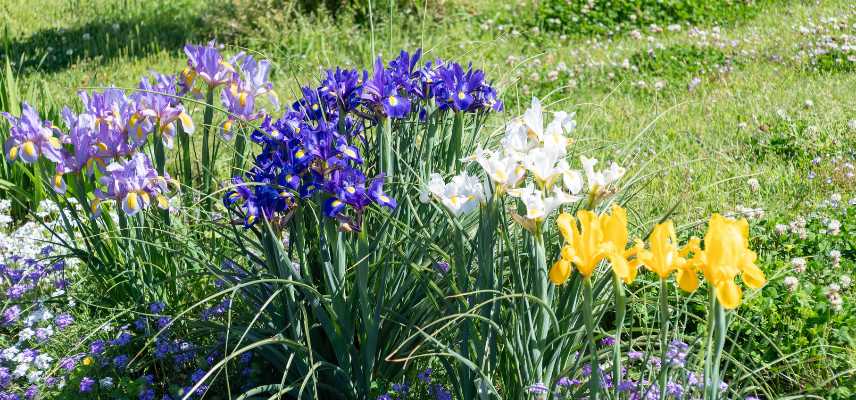
The essentials of planting botanical irises
| - Plant bulbs 8-10 cm deep; rhizomes are usually planted with their tops at ground level. - Plant from July to October, depending on the storage organ, avoiding frost and drought. - Full sun (at least 6 hours a day) and well-drained soil, even if poor or chalky, for the most common irises. - Spacing: 10-15 cm between bulbs, 30-50 cm between rhizomes. |
When should you plant bulbous and rhizomatous irises?
Like all spring-flowering bulbs, botanical irises, both bulbous and rhizomatous, should be planted well before their flowering period.
The planting time actually depends on the storage organ: plant rhizomatous irises from late June to early September, when the still-warm soil allows the roots to establish before winter, and bulbous irises in autumn, from September to November.
In cold climates or mountainous areas, always bring planting forward by a month to give plants time to establish before the frosts. Avoid heatwaves when planting rhizomes, and avoid planting bulbs in waterlogged or frozen soil. Iris hollandica bulbs can also be planted in early spring in mild regions.
Where and in what kind of soil should you plant them?
For the vast majority of botanical irises, the soil must be well drained and the position very sunny. The combination of these two factors determines their flowering and longevity.
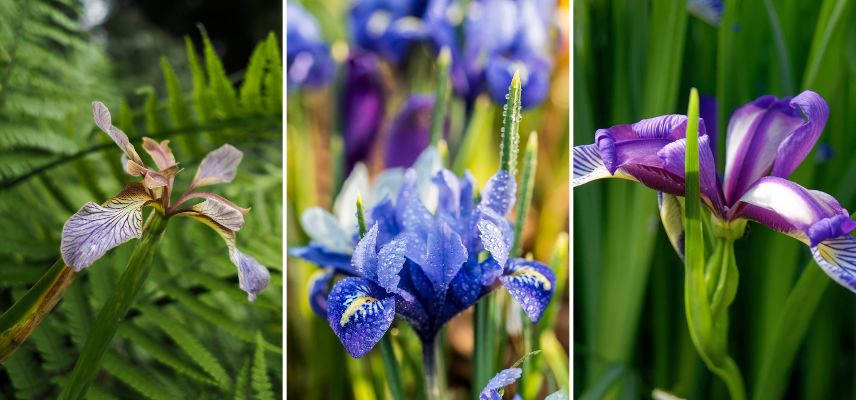
Position : choose a bed, border or rock garden that receives at least 6 hours of sun a day. There are, however, exceptions: some rhizomatous irises tolerate or prefer partial shade (Iris foetidissima, Iris unguicularis, Iris kaempferi, Iris cristata, Iris graminea...). Early-flowering bulbous irises, which flower as early as February-March, can be planted among deciduous perennials or grasses, where they won't get in anyone's way.
Soil type: most bulbous or rhizomatous botanical irises grow in light, well-drained soil. Iris pumila even thrives in poor, stony soil. Here too, there are exceptions: some irises need cool, humus-rich soil (water irises, including water irises such as Iris pseudacorus and its varieties, and Iris cristata, among others), or even constantly damp or submerged conditions (Iris laevigata, Iris versicolor).
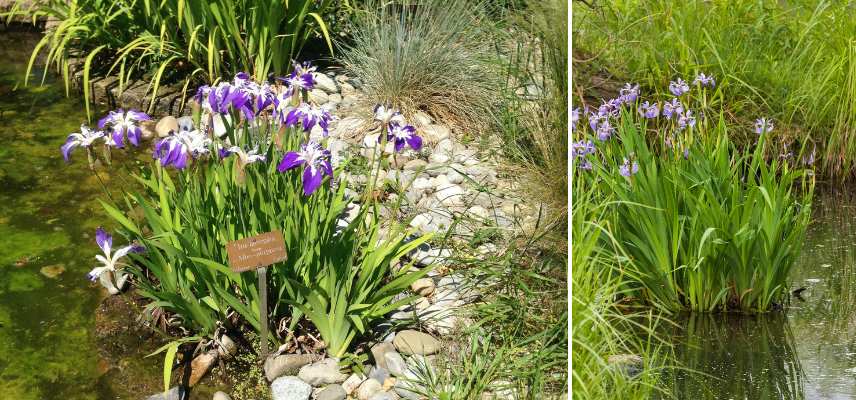
As for the soil pH , rhizomatous irises tolerate chalky soil and all prefer neutral to slightly acidic soil, while some bulbous irises, such as Iris ensata, cannot tolerate chalk.
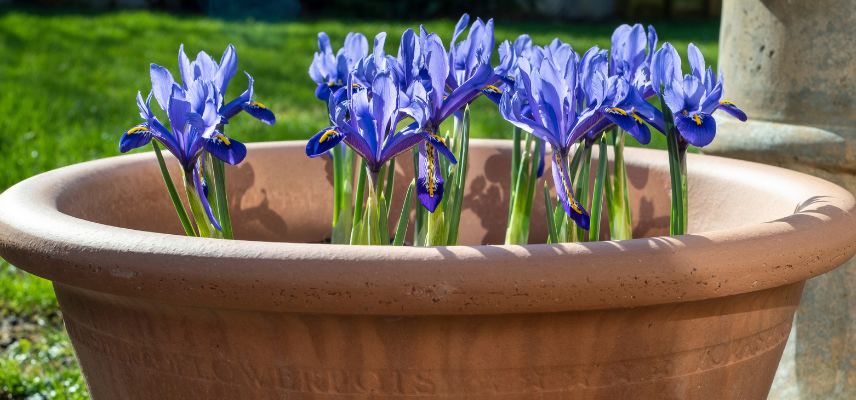
You can also plant them in pots or containers if your garden soil is unsuitable, ideally choosing small dwarf irises such as Iris reticulata, which look lovely in a small container. Many botanical irises that remain medium-sized can also be grown this way, as long as the potting compost is well drained.
How to plant bulbous irises?
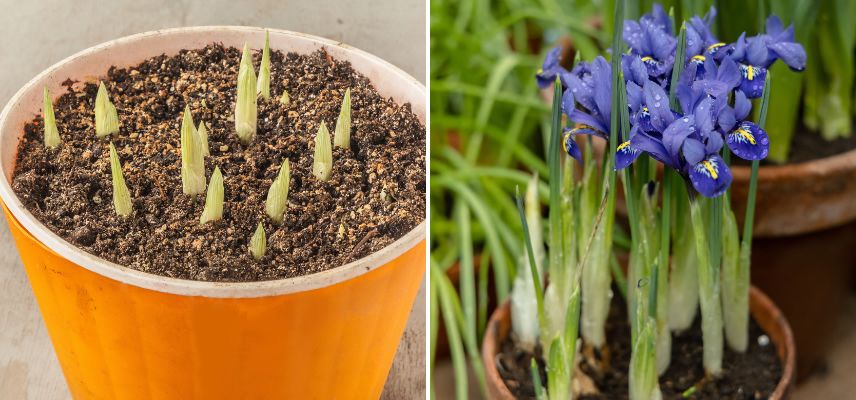
Plant bulbs 8-10 cm deep, or twice their height, with the pointed end facing upwards, in soil that has been loosened beforehand. Always plant them in small groups of at least 7 to 10 bulbs of the same variety. Here we are talking about Dutch irises and early bulbous irises, the most common in our gardens.
- Dig the soil to a depth of 20 cm and break it down to a fine tilth; add sand to the bottom of the hole if the soil retains water.
- Dig holes 8-10 cm deep, or twice the height of the bulb (10-12 cm for Iris hollandica in light soil).
- In clay soil, incorporate coarse sand or gravel when planting, or plant the irises on a mound or in a raised bed.
- Place the bulbs with their pointed ends facing upwards, 10-15 cm apart. Plant them in groups of 10 to 20 for a lovely display from the first flowering.
- Backfill with soil, firm it lightly and water once to settle it.
N.B.: water irises are submerged or planted at different depths. For more detailed information on planting these irises, see our article How to plant and care for water irises?
Also see our guides: How to plant Iris reticulata?, How to plant Dutch iris bulbs?
How to plant rhizomatous irises?
Place the rhizome on the soil without burying it: its top should be level with the surface and exposed to the sun, which is essential for flowering.
1- Prepare the soil to a depth of 25-30 cm. Do not add fresh manure or nitrogen fertiliser; a small amount of well-rotted compost and a handful of bone meal at planting time are beneficial.
2- Dig a shallow hollow and form two small ridges at the sides.
3- Place the rhizome on the ridges, with the roots spread downwards and the buds facing outwards. Position the leaves so that the rhizomes receive as much sun as possible. Don't bury them too deeply.
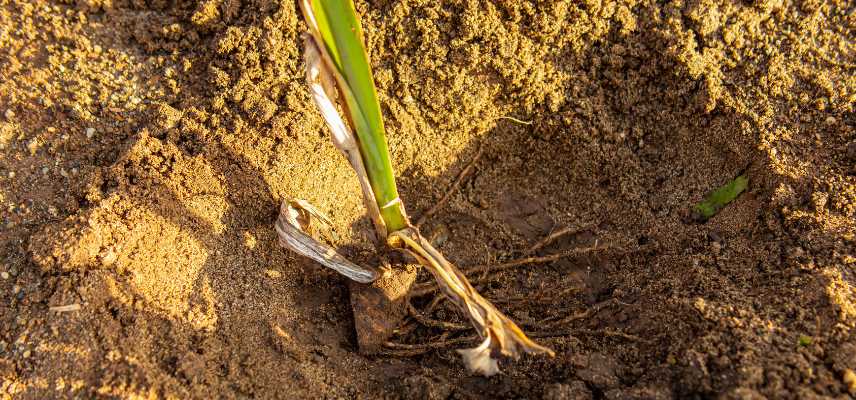
4- Cover with fine soil, leaving the top of the rhizome level with the surface, or even slightly visible, and firm it down well.
5- Water moderately, then continue to water over the following weeks to prevent the rhizome from drying out and help it establish. Continue watering moderately during the first year.
6- Space rhizomes 30 cm apart for botanical species such as Iris douglasiana or stinking iris, and up to 50 cm apart for Iris germanica and large hybrids.
What care do botanical irises need after planting?
Irises need very little care, whether botanical or horticultural varieties, which is very handy! Too much water is more harmful to them than too little. Take particular care to remove leaves or anything else that would block the rhizomes from getting as much sun as possible and create unwanted damp conditions around rhizomatous irises.
If frost has lifted them out of the ground, simply cover them with a mixture of sand and light soil, or top-dress with leaf-mould in spring. Only water if spring is very dry. If needed, apply a thin mineral mulch (gravel) rather than a thick organic mulch, and don't apply nitrogen-rich fertiliser.
After flowering, remove the faded flower stems and let the foliage turn yellow naturally before cutting it back close to the base: this allows the plant to replenish its reserves. For rhizomatous irises, divide the clumps every 4 to 5 years in late summer to encourage flowering again in crowns that have become straggly.


































Comments