
Oenanthe javanica Flamingo
Oenanthe javanica Flamingo
Oenanthe javanica Flamingo
Water dropwort
Pretty young plant, well developed. Planted in a natural pond as a purifying plant, the foliage slowly takes on pinkish hues that fade quite quickly if the sun is lacking. Good tillering. Waiting for the regrowth.
Nathalie, 29/06/2021
Back-to-school special offer!
Get €10 off for every €50 you spend! And get up to €40 off on a single order.
How does it work?
1. Shop your favourites
Add your favourite plants to your basket. For every €50 you spend (excluding delivery charges, store credit and the plastic-free option), you’ll receive a €10 voucher.
€50 spent = €10 voucher
€100 spent = €20 voucher
€150 spent = €30 voucher
€200 spent = €40 voucher
2. Place your order
Once your basket reaches one of the spending thresholds, place your order. You can even choose your delivery date!
3. Receive your voucher
As soon as your order has been shipped, you’ll receive an email containing your personal voucher code and its value.
4. Use it on your next order
Your voucher is valid for 90 days from the date you receive it. It can be used once only, on a new order worth at least the value of the voucher, excluding delivery charges.
Please note: Vouchers can be combined with other offers, but cannot be split or refunded.
Home or relay delivery (depending on size and destination)
Important: You may be charged customs duties by your country’s customs authorities upon delivery.
Schedule delivery date,
and select date in basket
This plant carries a 12 months recovery warranty
More information
We guarantee the quality of our plants for a full growing cycle, and will replace at our expense any plant that fails to recover under normal climatic and planting conditions.

Would this plant suit my garden?
Set up your Plantfit profile →
Description
L’Œnanthe javanica 'Flamingo' est une plante vivace des marais, berges, fossés et prairies humides originale par son feuillage de céleri marginé de rose et blanc au printemps. Sa souche émet des tiges rampantes qui s'enracinent facilement. En été paraissent des ombelles de petites fleurs blanches ou rosées qui ajoutent à son charme. Cette variété se cultive au soleil ou à mi-ombre, dans une terre riche toujours humide ou sous quelques centimètres d’eau, au bord d’un bassin.
L’œnanthe de Java appartient aux Apiacées, comme la carotte, le fenouil et le céleri. C’est une vivace herbacée : ses tiges feuillées disparaissent sous l’effet du gel, puis de nouvelles pousses repartent de la souche au printemps. Cette espèce est originaire d’Asie, depuis la Sibérie orientale et l’Extrême-Orient russe jusqu’à l’Himalaya, à l’Indonésie et aux Philippines. Elle pousse dans les marais, les prés humides, sur les rives et jusque dans l’eau peu profonde.
‘Flamingo’ a conservé son tempérament vigoureux, mais s’en distingue par une végétation plus basse et surtout un beau feuillage panaché. Ses tiges creuses et souples courent sur le sol humide ou flottent à la surface de l’eau. Elles émettent des racines au niveau des nœuds et élargissent la touffe, qui atteint 20 à 30 cm de hauteur, jusqu’à 40 cm en fleurs, pour 50 à 80 cm d’envergure. Elle peut couvrir davantage si son extension n'est pas limitée. Les feuilles, une à deux fois divisées, sont composées de segments lobés et dentés qui rappellent ceux du céleri. Leur fond vert grisé est irrégulièrement bordé de blanc crème, puis largement teinté de rose sur les jeunes pousses. Le soleil intensifie ces colorations ; à mi-ombre, le vert domine. La floraison a lieu de juillet à septembre ; de fines tiges portent de petites ombelles formées d'ombellules de fleurs à cinq pétales. L’espèce botanique type possède une longue histoire de culture comme légume-feuille en Asie orientale, sous les noms de seri au Japon et de minari en Corée. Cette plante possède une rusticité de l’ordre de -15 °C. Une exposition abritée des vents froids et desséchants préserve les jeunes pousses et les parties émergées. Sa croissance rapide est intéressante pour garnir une rive, mais elle demande une surveillance dans une terre marécageuse inoccupée : les tiges enracinées s’arrachent facilement tant qu’elles sont jeunes, ou se contiennent dans un panier aquatique. Œnanthe vient du grec ainos qui signifie vin et anthos, fleur, allusion à l'odeur de vin des fleurs de la plante.
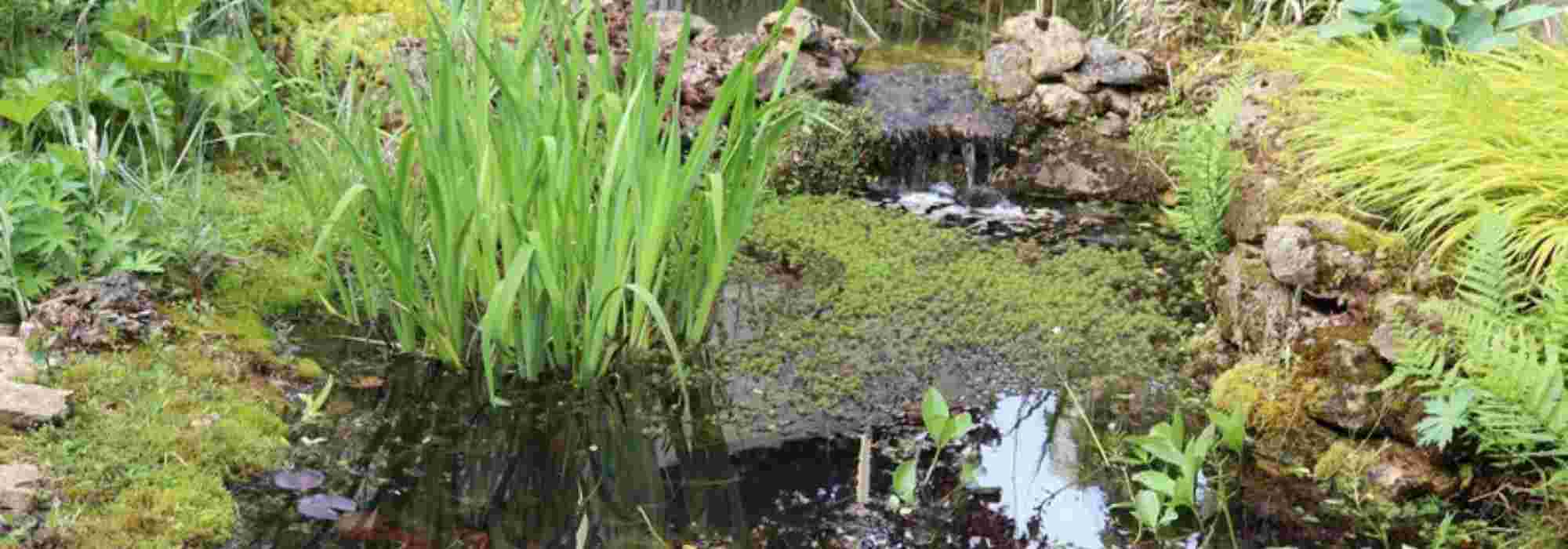
Dans un jardin d’eau, cette œnanthe 'Flamingo' peut accompagner des iris d’eau, des populages et des joncs, notamment l’Iris laevigata ‘Snowdrift’, le Caltha palustris var. alba et le Juncus effusus ‘Spiralis’. Tous apprécient une terre détrempée ou une faible profondeur d’eau, mais leurs ports différents évitent l’effet d’une scène aquatique uniforme. On les installe sur la berge d’un petit bassin, le long d’un ruisseau ou entre les pierres qui bordent une petite mare naturelle. L'Houttuynia cordata 'Chamelon', une petite vivace panachée de crème, de rose et de vert, formera un beau duo avec ce céleri d'eau.
Report an error about the product description
Flowering
Foliage
Plant habit
Botanical data
Oenanthe
javanica
Flamingo
Apiaceae
Water dropwort
Oenanthe ‘Pink Flamingo’, Oenanthe japonica ‘Flamingo’
Cultivar or hybrid
Planting and care
Oenanthe javanica ‘Flamingo’ is planted from February to April, or from September to October; spring is preferable in a cold climate. It tolerates full sun and partial shade. The sun colours the foliage more in soil saturated with water. It grows in a fertile soil, rich in humus, loamy or clayey, waterlogged or marshy, whether acid, neutral or alkaline. In light soil, incorporate clay soil and well-rotted compost to retain water better. In a pond, plant it in a basket filled with aquatic compost, with the stump at water level or submerged 5 to 10 cm below the water surface. Stems that grow beyond the intended area are pulled up during the season. Division is carried out in spring.
Planting period
Intended location
Care
Planting & care advice
-
-
-
-
-
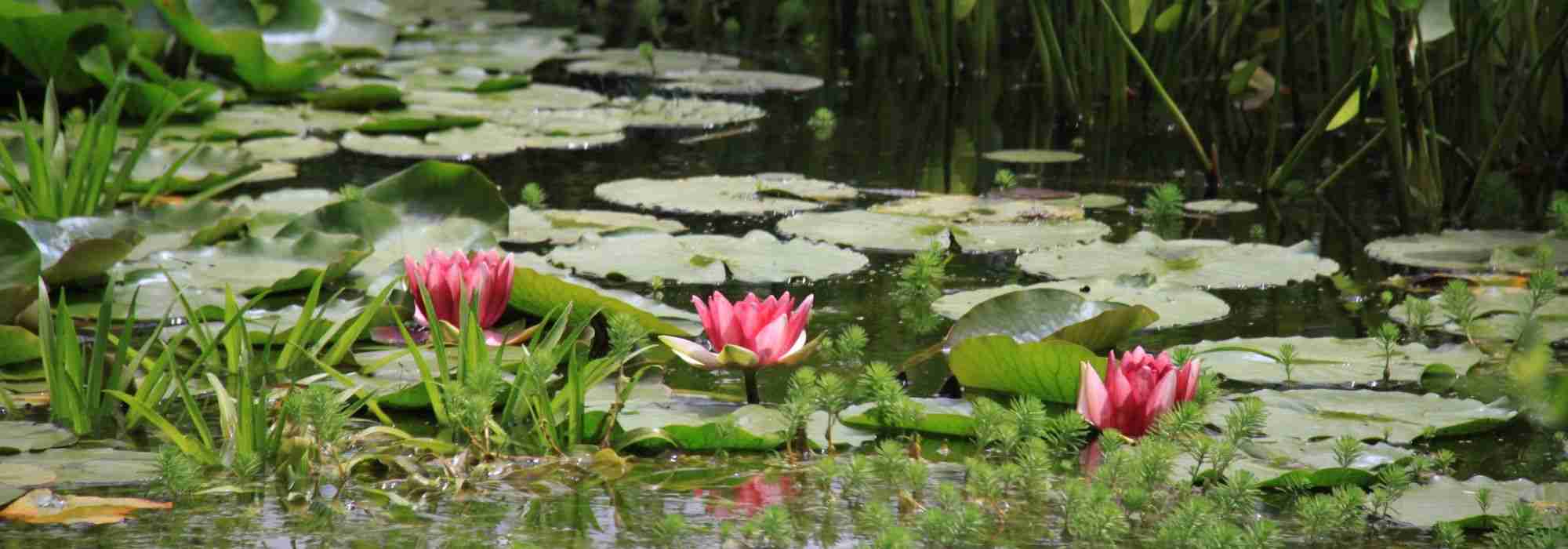
-
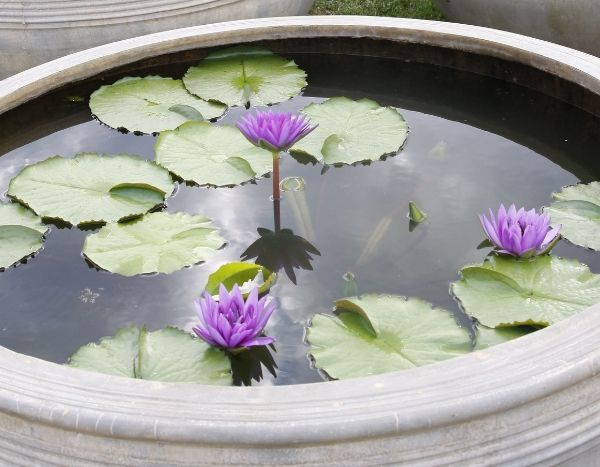
-
-
-
, onOrder confirmed
Reply from on Promesse de fleurs
Recently viewed products
Haven't found what you were looking for?
Hardiness is the lowest winter temperature a plant can endure without suffering serious damage or even dying. However, hardiness is affected by location (a sheltered area, such as a patio), protection (winter cover) and soil type (hardiness is improved by well-drained soil).

The flowering period indicated on our website applies to countries and regions located in USDA zone 8 (France, the United Kingdom, Ireland, the Netherlands, etc.)
It will vary according to where you live:- In zones 9 to 10 (Italy, Spain, Greece, etc.), flowering will occur about 2 to 4 weeks earlier.
- In zones 6 to 7 (Germany, Poland, Slovenia, and lower mountainous regions), flowering will be delayed by 2 to 3 weeks.
- In zone 5 (Central Europe, Scandinavia), blooming will be delayed by 3 to 5 weeks.
In temperate climates, pruning of spring-flowering shrubs (forsythia, spireas, etc.) should be done just after flowering.
Pruning of summer-flowering shrubs (Indian Lilac, Perovskia, etc.) can be done in winter or spring.
In cold regions as well as with frost-sensitive plants, avoid pruning too early when severe frosts may still occur.
The planting period indicated on our website applies to countries and regions located in USDA zone 8 (France, United Kingdom, Ireland, Netherlands).
It will vary according to where you live:
- In Mediterranean zones (Marseille, Madrid, Milan, etc.), autumn and winter are the best planting periods.
- In continental zones (Strasbourg, Munich, Vienna, etc.), delay planting by 2 to 3 weeks in spring and bring it forward by 2 to 4 weeks in autumn.
- In mountainous regions (the Alps, Pyrenees, Carpathians, etc.), it is best to plant in late spring (May-June) or late summer (August-September).
The harvesting period indicated on our website applies to countries and regions in USDA zone 8 (France, England, Ireland, the Netherlands).
In colder areas (Scandinavia, Poland, Austria...) fruit and vegetable harvests are likely to be delayed by 3-4 weeks.
In warmer areas (Italy, Spain, Greece, etc.), harvesting will probably take place earlier, depending on weather conditions.
The sowing periods indicated on our website apply to countries and regions within USDA Zone 8 (France, UK, Ireland, Netherlands).
In colder areas (Scandinavia, Poland, Austria...), delay any outdoor sowing by 3-4 weeks, or sow under glass.
In warmer climes (Italy, Spain, Greece, etc.), bring outdoor sowing forward by a few weeks.
Shipping country and language
Your country of residence may be:
Your country of residence is:
For a better user experience on our website, you can select:
Your shipping country:
-
 Austria
-
 Belgium
-
 Bosnia & Herzegovina
-
 Bulgaria
-
 Croatia
-
 Cyprus
-
 Czechia
-
 Denmark
-
 Estonia
-
 Finland
-
 France
-
 Germany
-
 Greece
-
 Hungary
-
 Iceland
-
 Ireland
-
 Italy
-
 Latvia
-
 Liechtenstein
-
 Lithuania
-
 Luxembourg
-
 Malta
-
 Netherlands
-
 Poland
-
 Portugal
-
 Romania
-
 Serbia
-
 Slovakia
-
 Slovenia
-
 Spain
-
 Sweden
-
 Switzerland
Language:
-
French
-
 English
-
Spanish
-
Italian
-
German
-
Portuguese
-
Dutch
-
Finnish
My Account
Hello
My wish lists
My cart
Log in / Register
Existing customer?
This form is protected by reCAPTCHA - the Google Privacy Policy and Terms of Service apply.
New customer?
Create an account to track your orders, access our customer service and, if you wish, make the most of our upcoming offers.