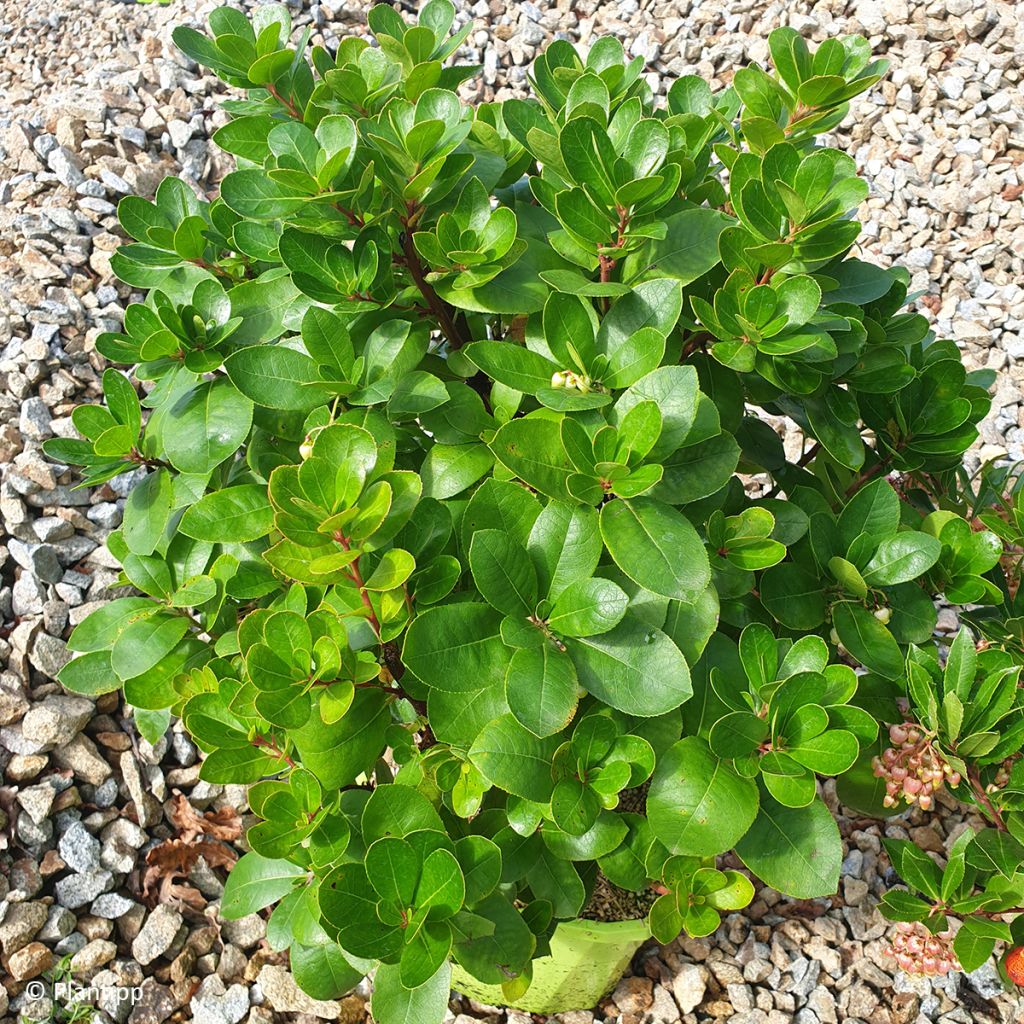
Arbutus unedo Peace and Love - Strawberry tree
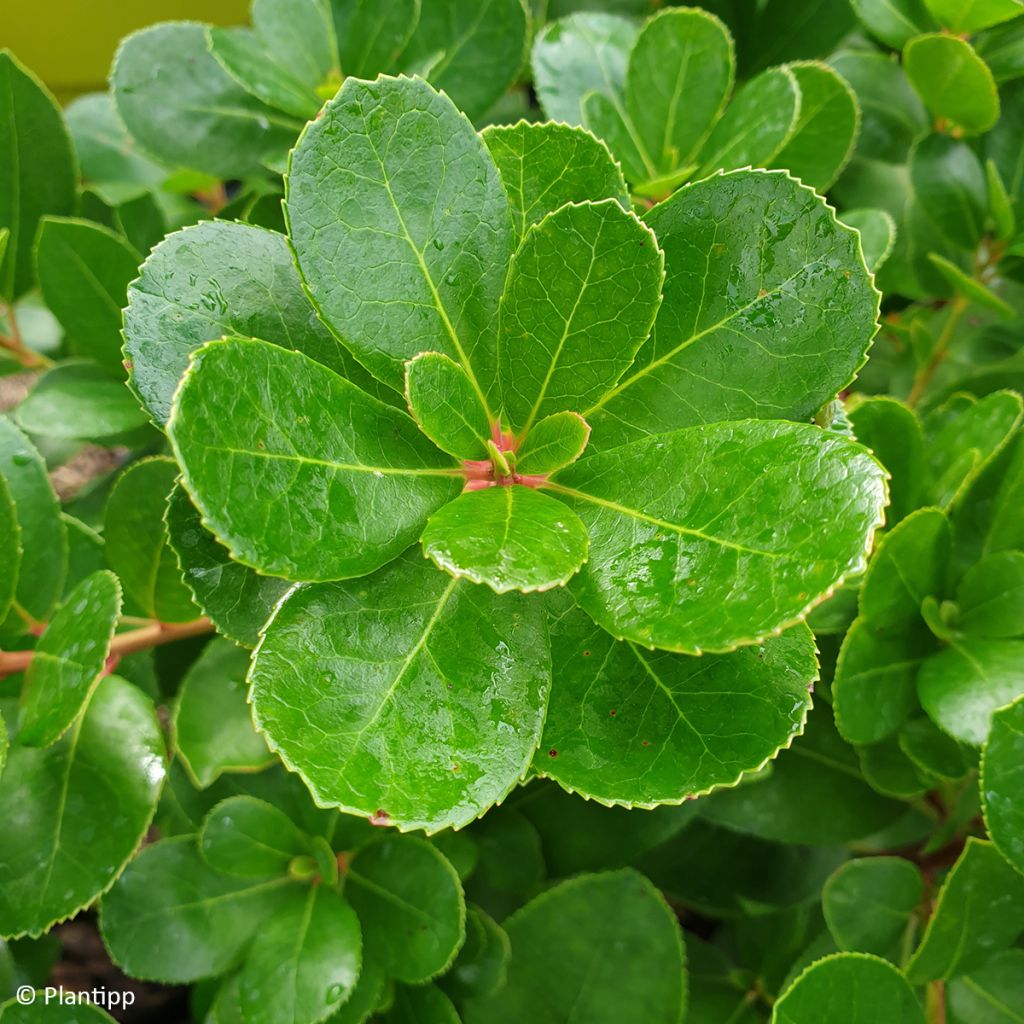
Arbutus unedo Peace and Love - Strawberry tree
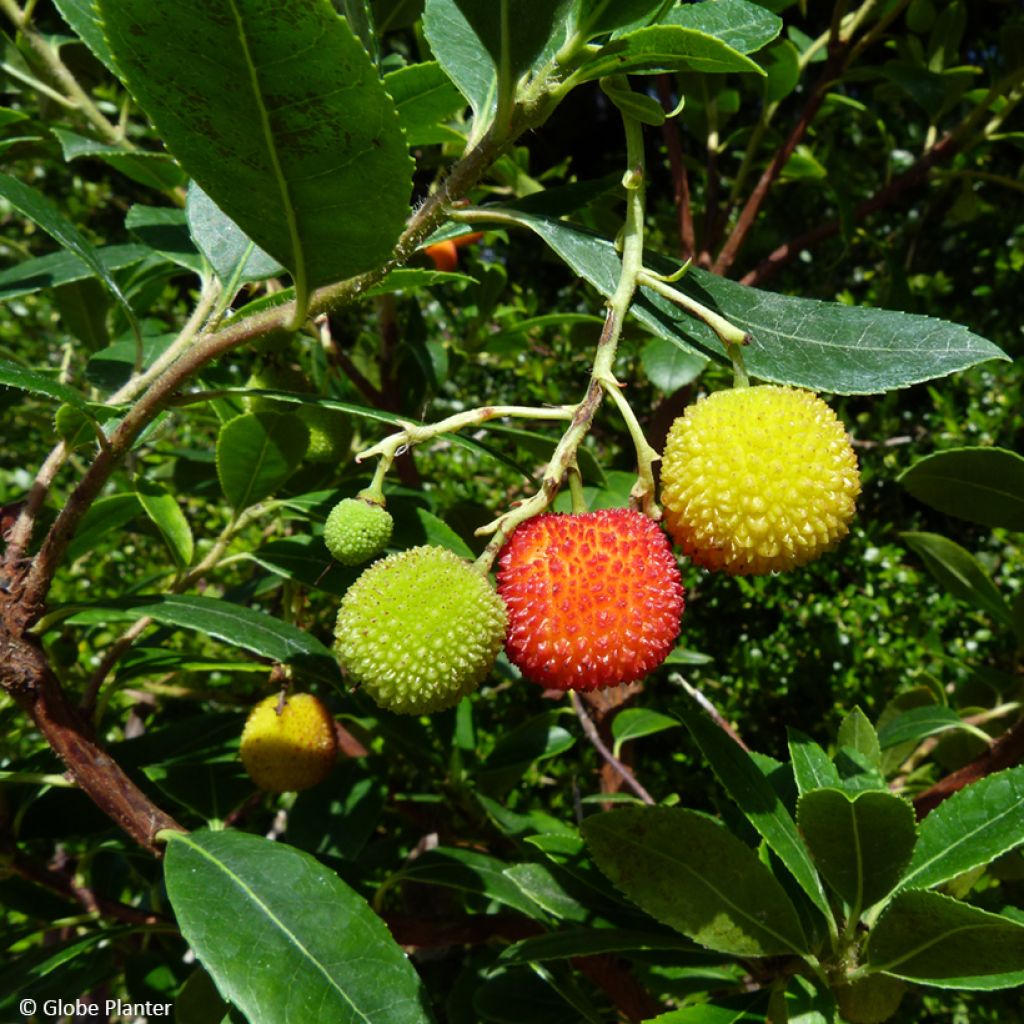
Arbutus unedo Peace and Love - Strawberry tree
Arbutus unedo Peace and Love - Strawberry tree
Arbutus unedo 'Levap' Peace and Love
Strawberry tree, Madrone
Back-to-school special offer!
Get €10 off for every €50 you spend! And get up to €40 off on a single order.
How does it work?
1. Shop your favourites
Add your favourite plants to your basket. For every €50 you spend (excluding delivery charges, store credit and the plastic-free option), you’ll receive a €10 voucher.
€50 spent = €10 voucher
€100 spent = €20 voucher
€150 spent = €30 voucher
€200 spent = €40 voucher
2. Place your order
Once your basket reaches one of the spending thresholds, place your order. You can even choose your delivery date!
3. Receive your voucher
As soon as your order has been shipped, you’ll receive an email containing your personal voucher code and its value.
4. Use it on your next order
Your voucher is valid for 90 days from the date you receive it. It can be used once only, on a new order worth at least the value of the voucher, excluding delivery charges.
Please note: Vouchers can be combined with other offers, but cannot be split or refunded.
Home or relay delivery (depending on size and destination)
Important: You may be charged customs duties by your country’s customs authorities upon delivery.
Schedule delivery date,
and select date in basket
This plant carries a 24 months recovery warranty
More information
We guarantee the quality of our plants for a full growing cycle, and will replace at our expense any plant that fails to recover under normal climatic and planting conditions.
Would this plant suit my garden?
Set up your Plantfit profile →
Description
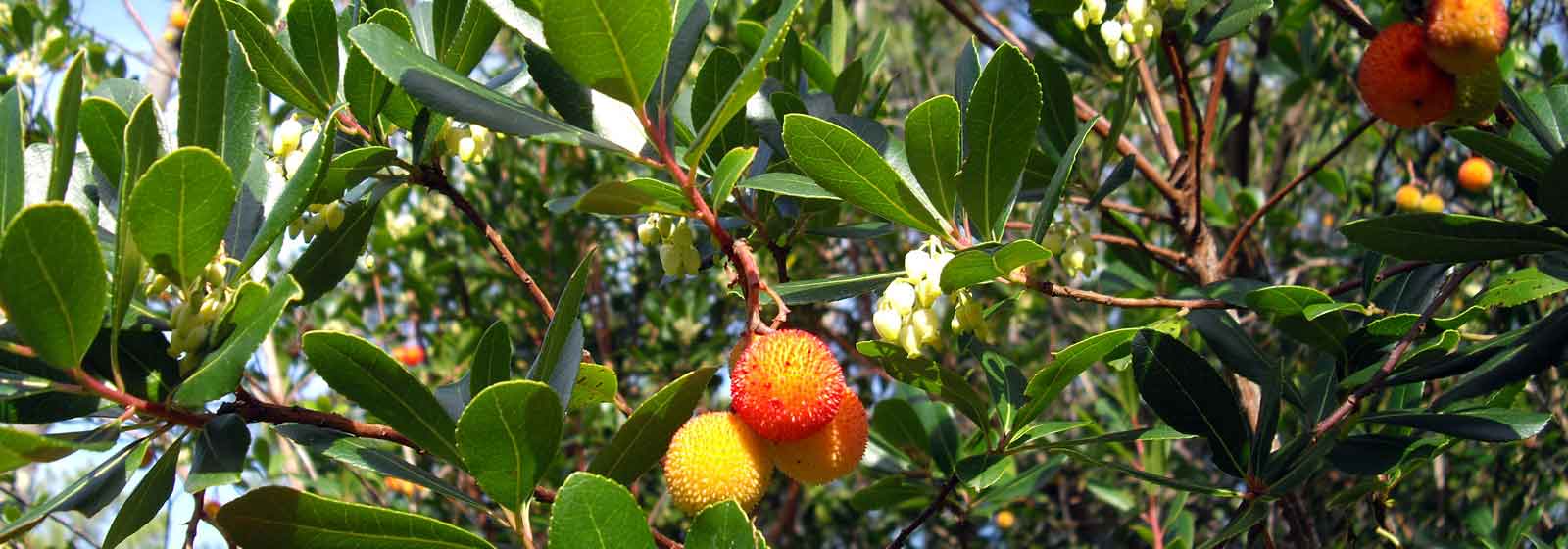
Arbutus unedo Peace and Love is a variety of strawberry tree notable for its compact habit, reddish stems, and unusual, rounded and dense, evergreen foliage. It is highly ornamental, displaying rosy young shoots throughout the seasons, autumn flowering in pinkish-white bell-shaped flowers, and decorative red berries that brighten up winter. This small Mediterranean tree thrives both in the ground and in containers on a terrace. It adds an original and colourful touch to small gardens, low hedges, or large sunny borders. This charming strawberry tree is hardy down to -12°C.
Arbutus unedo Peace and Love is an ornamental cultivar of the common strawberry tree, belonging to the Ericaceae family. Native to the Mediterranean basin and Western Europe, the botanical species Arbutus unedo is commonly known as the "strawberry tree." It naturally occurs in regions such as Portugal, Spain, southern France, Italy, Greece, and some coastal areas of Ireland. It is capable of living for several decades. This Peace and Love cultivar was selected in 2008 by the Dutch nursery Van Vliet New Plants, under the protected name ‘Levap’PBR. It differs from the typical species by its more compact habit, rounded and glossy leaves, and rosy young shoots. The plant eventually reaches 2.5 to 3 m in height and 2 to 2.5 m in spread when planted in the ground. In pots, its dimensions remain more modest. The evergreen foliage consists of ovate to rounded, 3 to 5 cm long, glossy dark green leaves, densely arranged on reddish stems. The autumn flowering, from September to December, takes the form of pendulous pinkish-white bell-shaped flowers, grouped in panicles. These lightly scented flowers are pollinated by bees. The fruits, known as arbutus berries, are spherical berries 1 to 2 cm in diameter, with a granular surface, turning from yellow to bright red over a year. Edible but with a mild flavour, they are often used in jams or liqueurs. The strawberry tree's deep taproot system gives it excellent drought and fire resistance.
The Latin name "unedo" comes from Pliny the Elder, who reportedly said "unum tantum edo" ("I eat only one"), due to the fruit's peculiar flavour and texture.
The Peace and Love strawberry tree is a gem for dry Mediterranean gardens or sunny, sheltered terraces. It forms a beautiful trio with Teucrium fruticans ‘Azureum’, with its silvery foliage and small blue flowers, and Callistemon rigidus. For a different style, dare to contrast it with a Phlomis purpurea: its upright habit, fuzzy foliage, and purple flowers will structure the composition. In moist soil, a carpet of Carex oshimensis ‘Everillo’ will bring soft, evergreen light to its base.
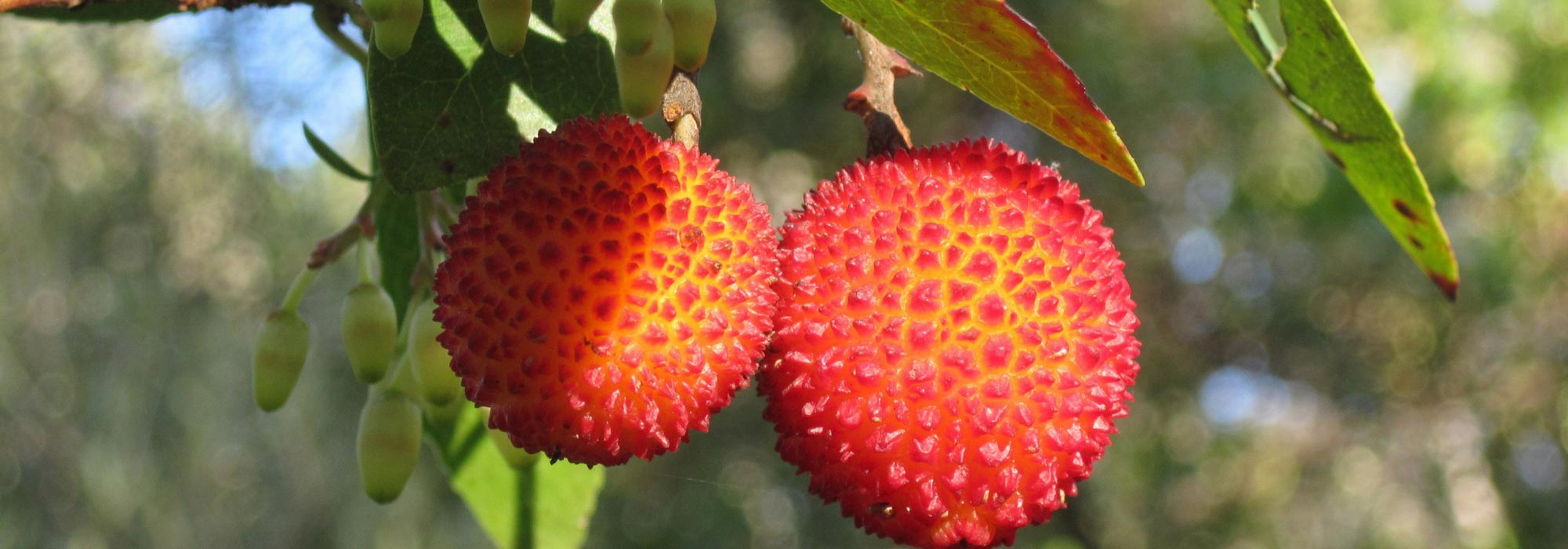
Arbutus unedo Peace and Love - Strawberry tree in pictures
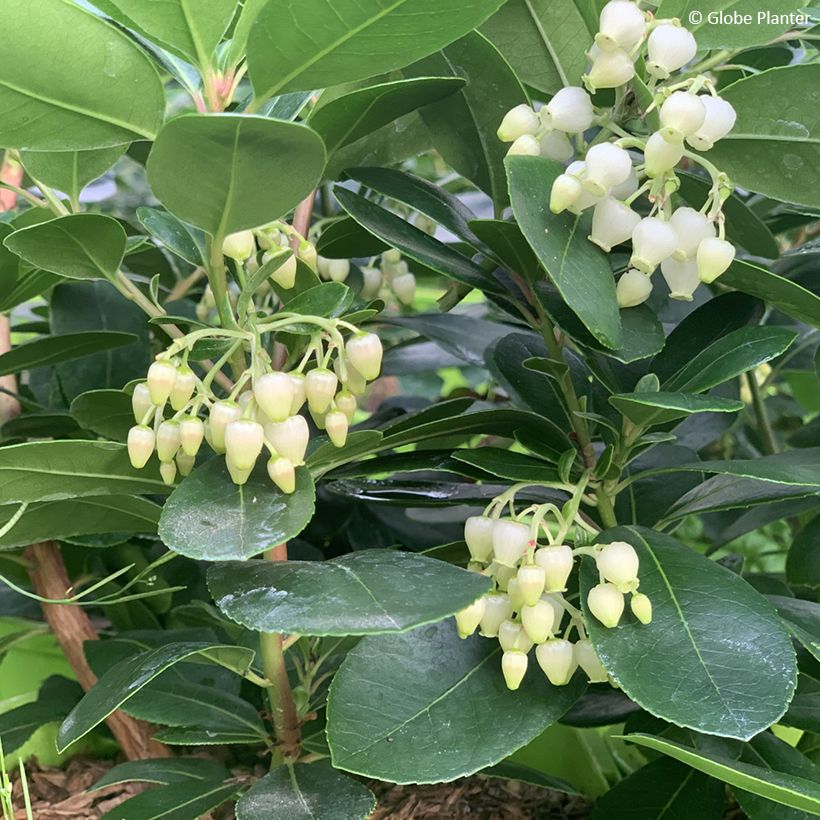
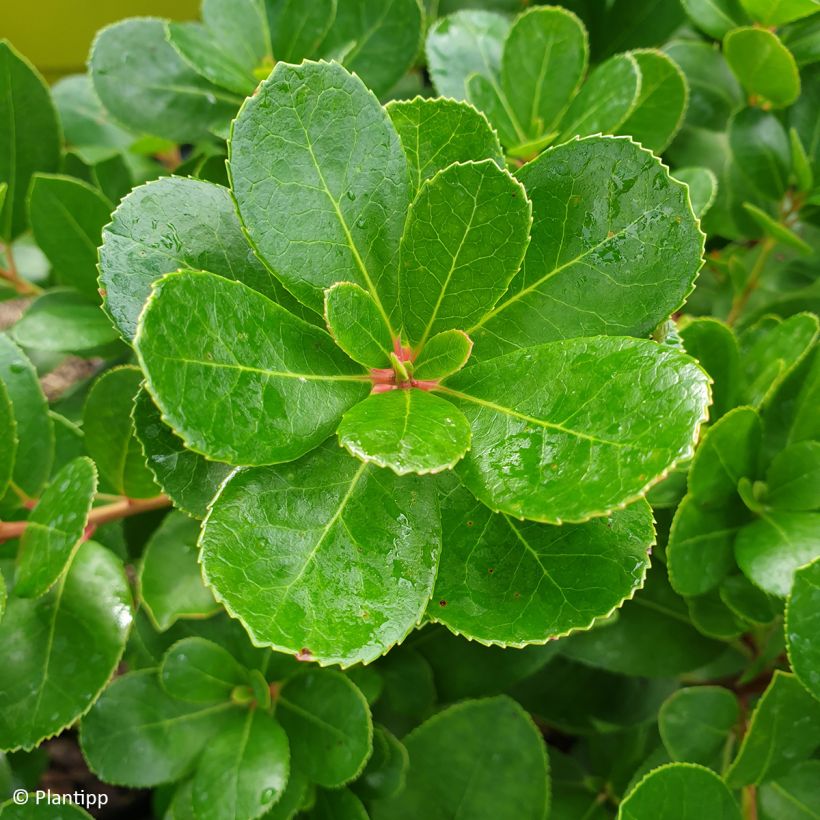
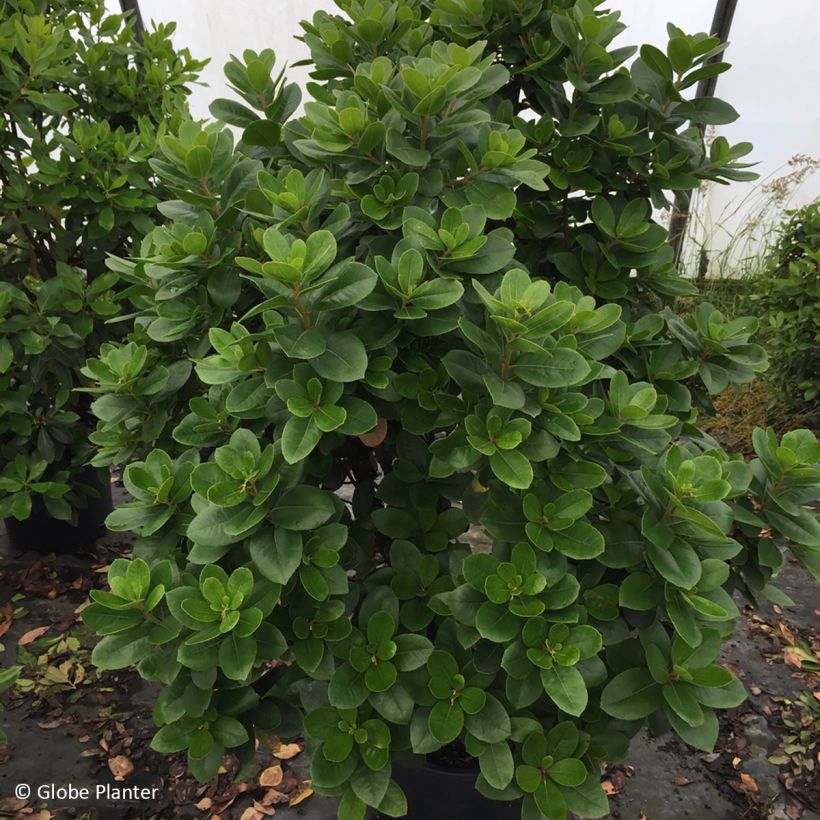
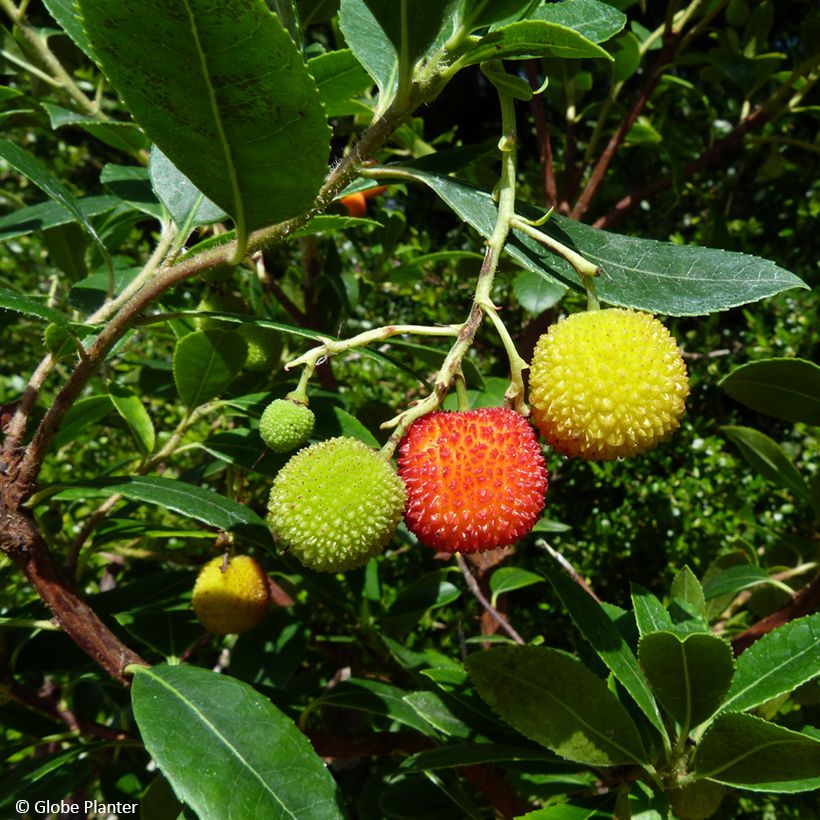
Plant habit
Flowering
Foliage
Botanical data
Arbutus
unedo
'Levap' Peace and Love
Ericaceae
Strawberry tree, Madrone
Arbutus unedo Peace & Love 'Levap'PBR EU 20212968
Cultivar or hybrid
Planting and care
Arbutus unedo Peace & Love, hardy down to -12°C in well-drained soil, should be planted in spring in temperate regions or in autumn in a Mediterranean climate. It thrives in slightly acidic soil but adapts to any light soil without excessive active lime. This bush prefers a sunny position in cool climates but will tolerate partial shade in hot climates.
Choose a sheltered spot away from cold winds. In the first few years, protect it from heavy frosts with mulch and winter fleece. Once well-established, after 2 or 3 years, this bush will no longer need summer watering, even in dry soil and hot climates. Be sure to choose its garden location carefully, as it dislikes being transplanted. For hedges, space the plants about 1m apart. It may be susceptible to aphid attacks and foliar spot disease.
Container cultivation: place your Peace and Love strawberry bush in a large container at least 40 to 50 cm deep, with drainage holes at the bottom. Prepare a light substrate using horticultural compost, sand, and garden soil, adding a few handfuls of gravel or clay pebbles at the base of the pot. Position the pot in a bright, sunny spot, sheltered from wind and heavy frosts. Water regularly in the first year, then more moderately, allowing the surface of the substrate to dry out between waterings. In winter, protect the root ball from frost with a thick layer of mulch and winter fleece, and move the pot closer to a sheltered wall if temperatures drop below -5°C. Repotting every 3 to 4 years will keep the plant in top condition.
Planting period
Intended location
Care
Planting & care advice
-
-

-
-
-

-
-
-

This item has not been reviewed yet - be the first to leave a review about it.
Recently viewed products
Haven't found what you were looking for?
Hardiness is the lowest winter temperature a plant can endure without suffering serious damage or even dying. However, hardiness is affected by location (a sheltered area, such as a patio), protection (winter cover) and soil type (hardiness is improved by well-drained soil).

The flowering period indicated on our website applies to countries and regions located in USDA zone 8 (France, the United Kingdom, Ireland, the Netherlands, etc.)
It will vary according to where you live:- In zones 9 to 10 (Italy, Spain, Greece, etc.), flowering will occur about 2 to 4 weeks earlier.
- In zones 6 to 7 (Germany, Poland, Slovenia, and lower mountainous regions), flowering will be delayed by 2 to 3 weeks.
- In zone 5 (Central Europe, Scandinavia), blooming will be delayed by 3 to 5 weeks.
In temperate climates, pruning of spring-flowering shrubs (forsythia, spireas, etc.) should be done just after flowering.
Pruning of summer-flowering shrubs (Indian Lilac, Perovskia, etc.) can be done in winter or spring.
In cold regions as well as with frost-sensitive plants, avoid pruning too early when severe frosts may still occur.
The planting period indicated on our website applies to countries and regions located in USDA zone 8 (France, United Kingdom, Ireland, Netherlands).
It will vary according to where you live:
- In Mediterranean zones (Marseille, Madrid, Milan, etc.), autumn and winter are the best planting periods.
- In continental zones (Strasbourg, Munich, Vienna, etc.), delay planting by 2 to 3 weeks in spring and bring it forward by 2 to 4 weeks in autumn.
- In mountainous regions (the Alps, Pyrenees, Carpathians, etc.), it is best to plant in late spring (May-June) or late summer (August-September).
The harvesting period indicated on our website applies to countries and regions in USDA zone 8 (France, England, Ireland, the Netherlands).
In colder areas (Scandinavia, Poland, Austria...) fruit and vegetable harvests are likely to be delayed by 3-4 weeks.
In warmer areas (Italy, Spain, Greece, etc.), harvesting will probably take place earlier, depending on weather conditions.
The sowing periods indicated on our website apply to countries and regions within USDA Zone 8 (France, UK, Ireland, Netherlands).
In colder areas (Scandinavia, Poland, Austria...), delay any outdoor sowing by 3-4 weeks, or sow under glass.
In warmer climes (Italy, Spain, Greece, etc.), bring outdoor sowing forward by a few weeks.
Shipping country and language
Your country of residence may be:
Your country of residence is:
For a better user experience on our website, you can select:
Your shipping country:
-
 Austria
-
 Belgium
-
 Bosnia & Herzegovina
-
 Bulgaria
-
 Croatia
-
 Cyprus
-
 Czechia
-
 Denmark
-
 Estonia
-
 Finland
-
 France
-
 Germany
-
 Greece
-
 Hungary
-
 Iceland
-
 Ireland
-
 Italy
Italy
-
 Latvia
-
 Liechtenstein
-
 Lithuania
-
 Luxembourg
-
 Malta
Malta
-
 Netherlands
-
 Poland
-
 Portugal
-
 Romania
-
 Serbia
-
 Slovakia
-
 Slovenia
-
 Spain
Spain
-
 Sweden
-
 Switzerland
Language:
-
French
-
 English
-
Spanish
-
Italian
-
German
-
Portuguese
-
Dutch
-
Finnish
My Account
Hello
My wish lists
My cart
Log in / Register
Existing customer?
This form is protected by reCAPTCHA - the Google Privacy Policy and Terms of Service apply.
New customer?
Create an account to track your orders, access our customer service and, if you wish, make the most of our upcoming offers.