Eremophila nivea
Eremophila nivea
Eremophila nivea
Eremophila nivea
Eremophila nivea
Eremophila nivea
Eremophila nivea
Eremophila nivea
Chinnock
My eremophila has settled in well in Le Castelet (83); it is sheltered from the wind and needed plenty of water in my bone-dry soil. It is a very beautiful, elegant plant, far more generous than I had hoped.
Therese , 23/10/2025
Back-to-school special offer!
Get €10 off for every €50 you spend! And get up to €40 off on a single order.
How does it work?
1. Shop your favourites
Add your favourite plants to your basket. For every €50 you spend (excluding delivery charges, store credit and the plastic-free option), you’ll receive a €10 voucher.
€50 spent = €10 voucher
€100 spent = €20 voucher
€150 spent = €30 voucher
€200 spent = €40 voucher
2. Place your order
Once your basket reaches one of the spending thresholds, place your order. You can even choose your delivery date!
3. Receive your voucher
As soon as your order has been shipped, you’ll receive an email containing your personal voucher code and its value.
4. Use it on your next order
Your voucher is valid for 90 days from the date you receive it. It can be used once only, on a new order worth at least the value of the voucher, excluding delivery charges.
Please note: Vouchers can be combined with other offers, but cannot be split or refunded.
Home or relay delivery (depending on size and destination)
Important: You may be charged customs duties by your country’s customs authorities upon delivery.
Schedule delivery date
and select date in basket
This plant carries a 24 months recovery warranty
More information
We guarantee the quality of our plants for a full growing cycle, and will replace at our expense any plant that fails to recover under normal climatic and planting conditions.
Would this plant suit my garden?
Set up your Plantfit profile →
Description
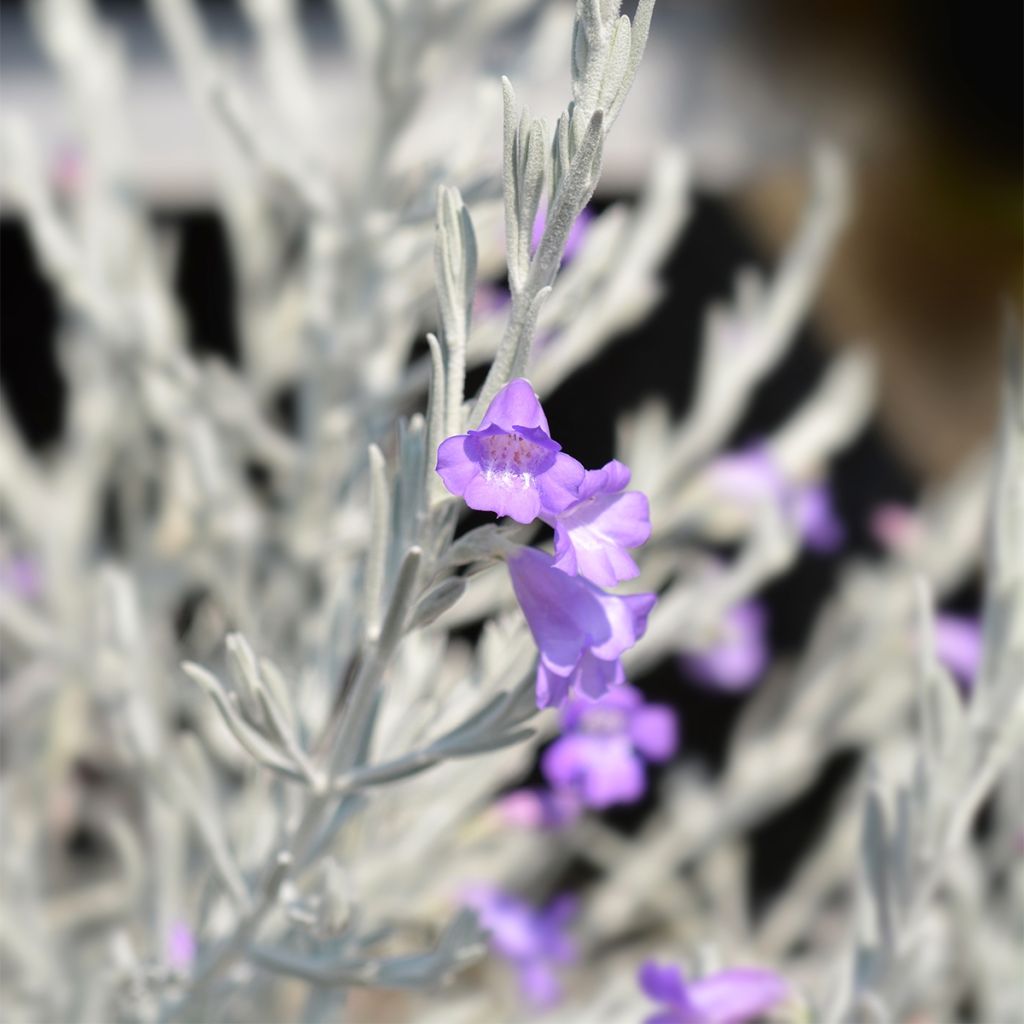
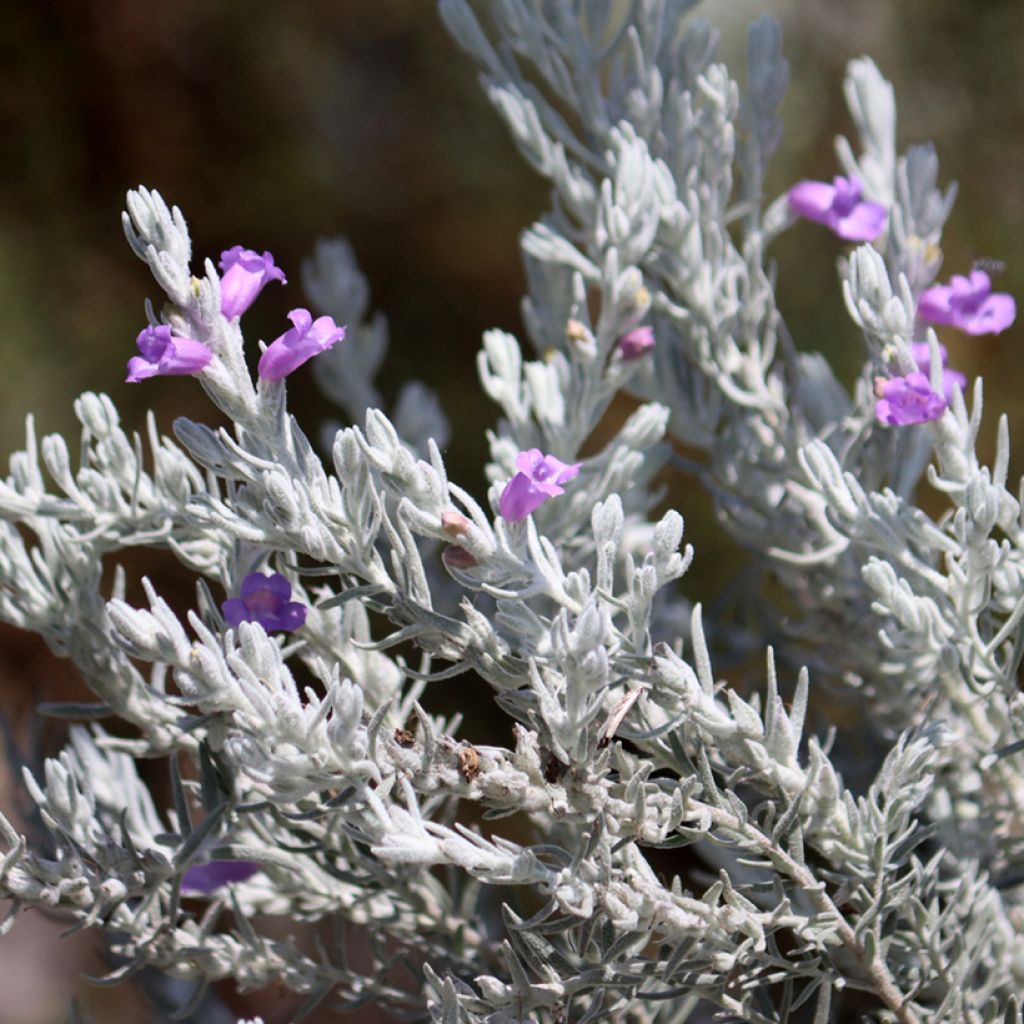
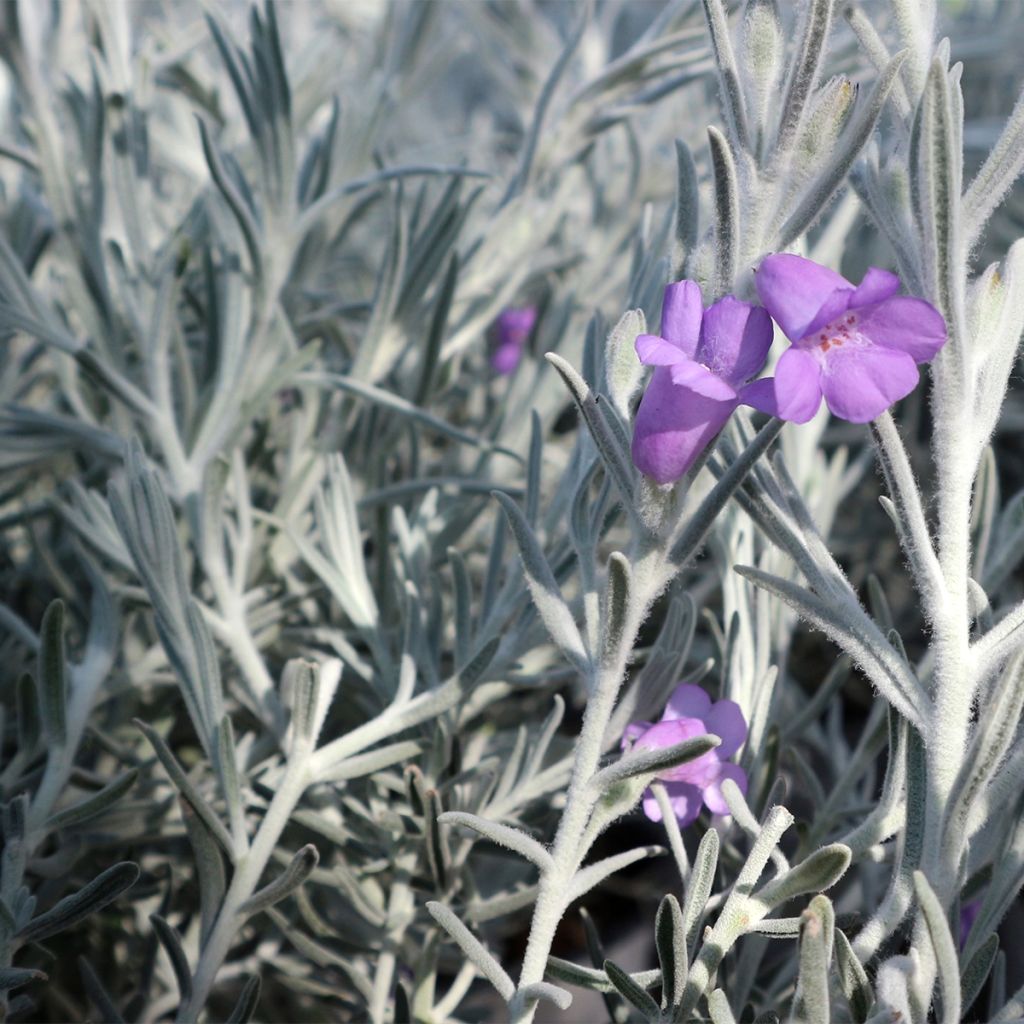
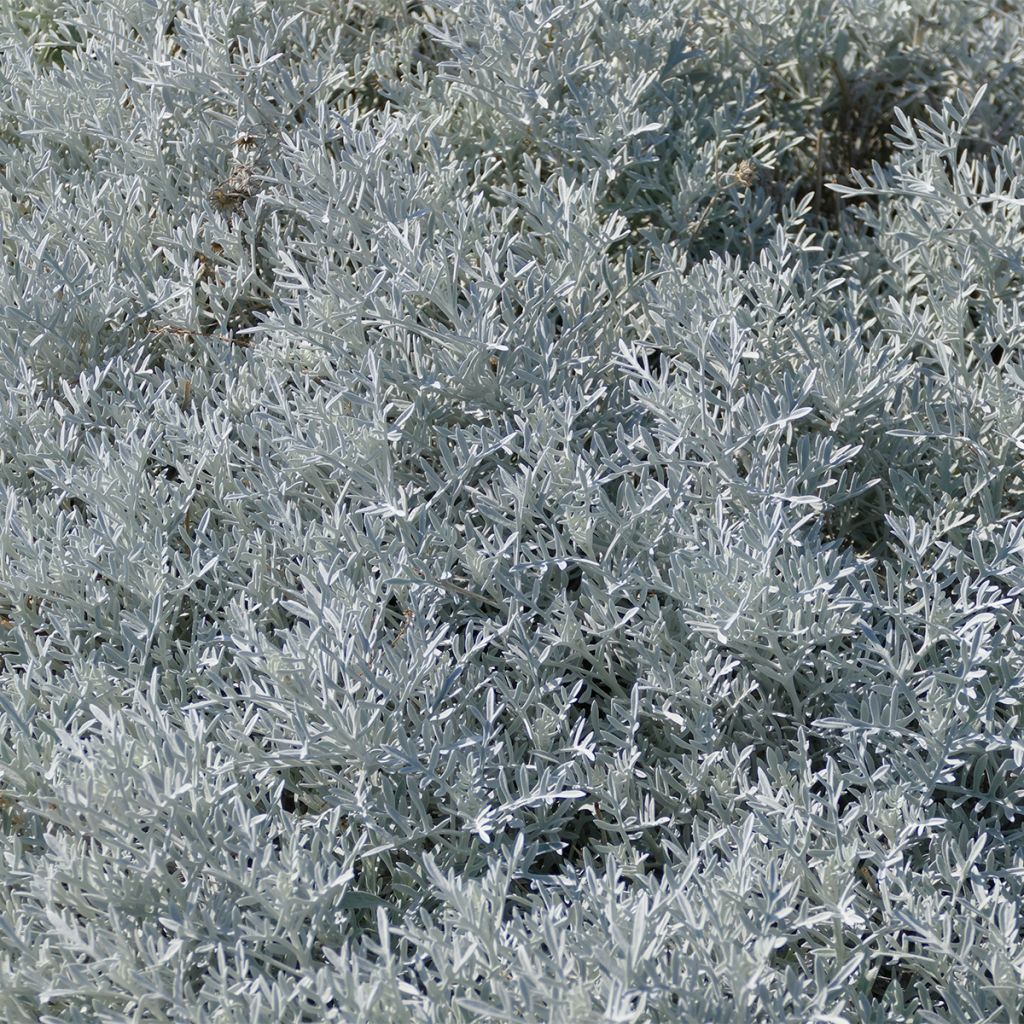
Eremophila nivea is commonly known as the Silky Eremophila due to its almost white evergreen foliage. It is a perennial Australian bush for a semi-arid climate that charms with the brightness of its vegetation and its beautiful purple flowering in late winter. It forms a beautiful, dense, very unusual bush, that stands out from afar. Its low hardiness, as well as the sensitivity of its foliage to humid climates, make its cultivation in open ground unpredictable. Growing it in a large pot is possible, which allows for winter protection and also protects it from frequent rains during the summer.
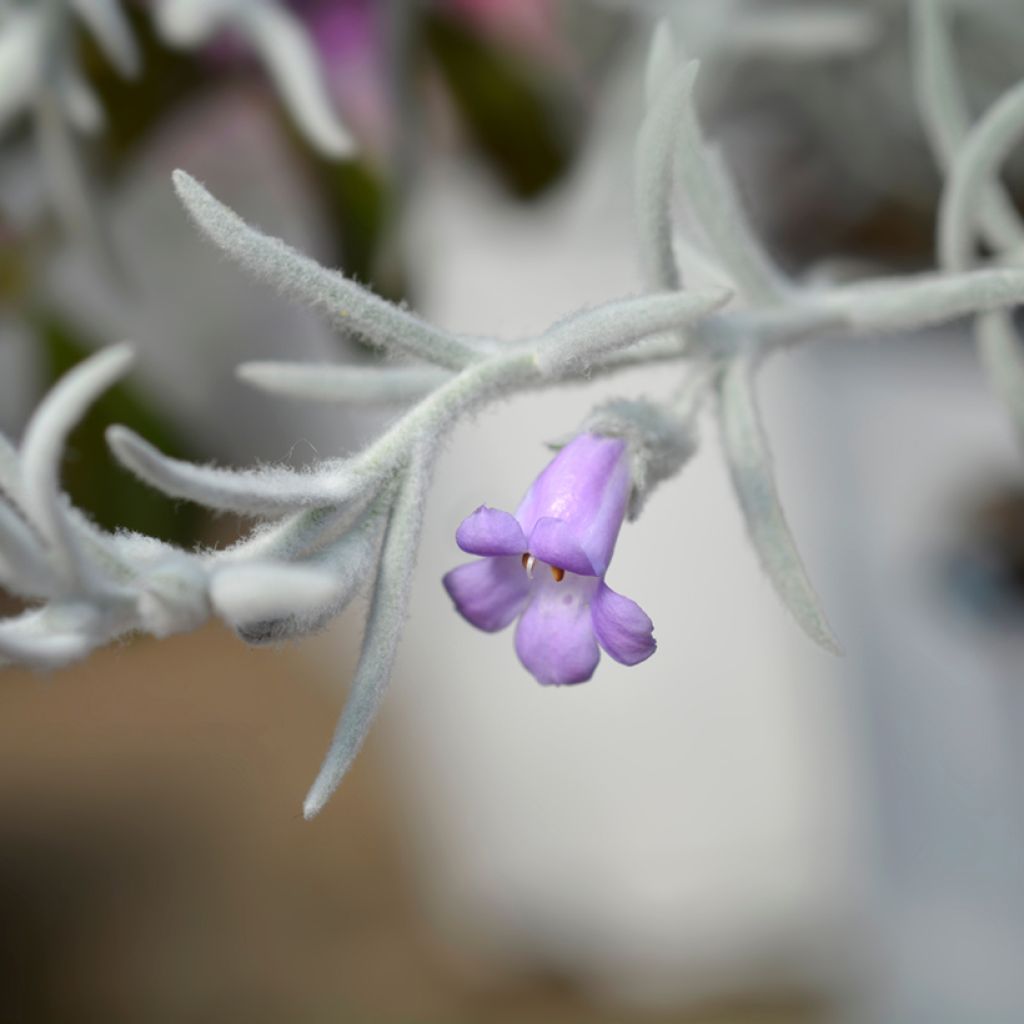
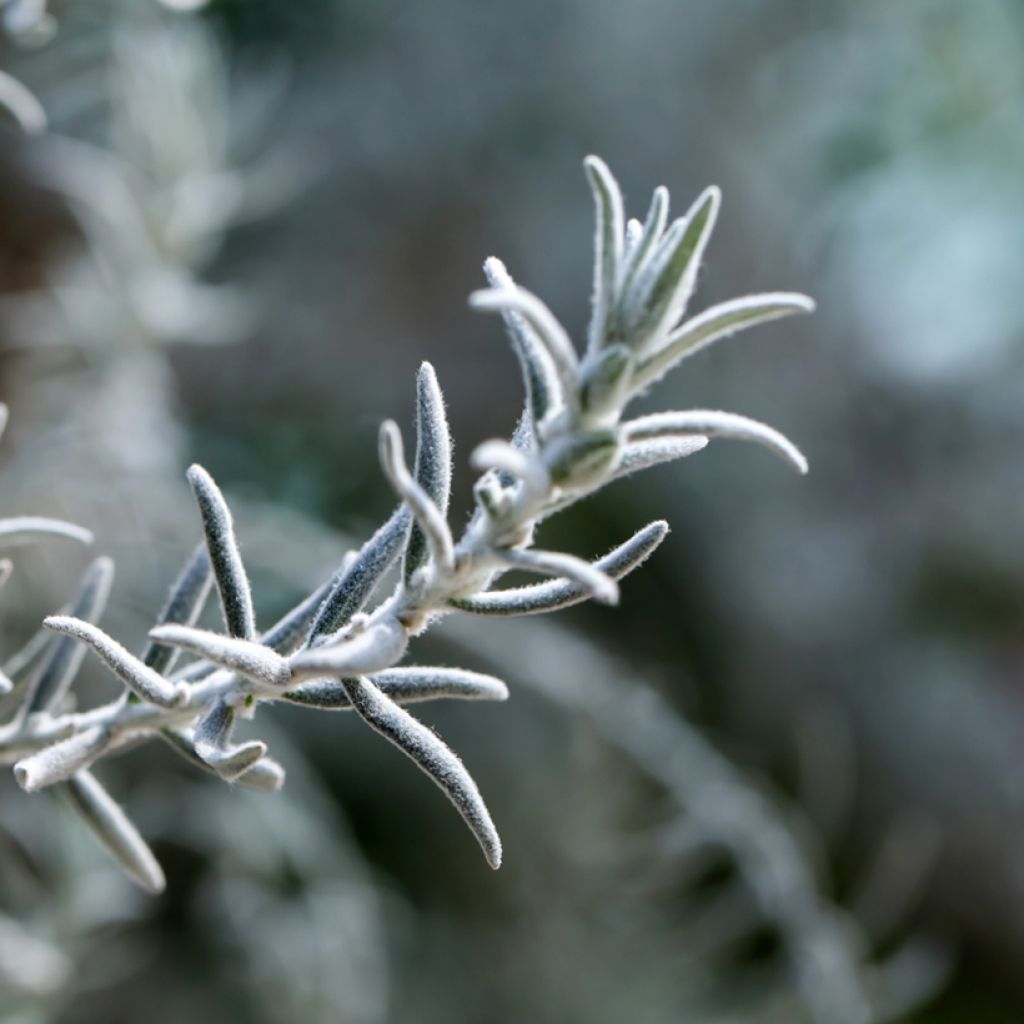
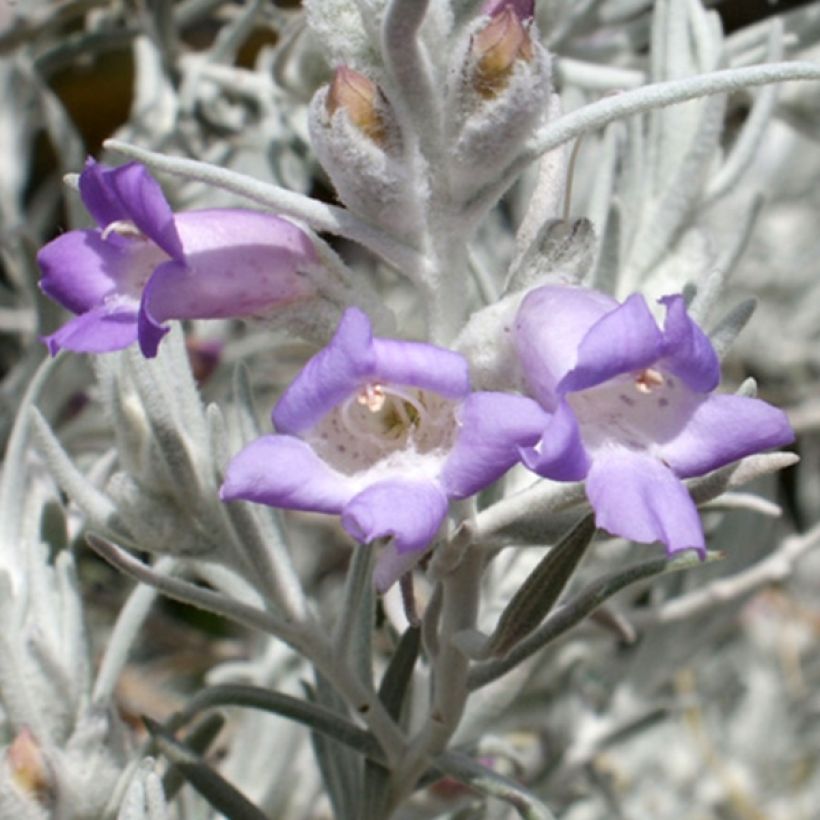
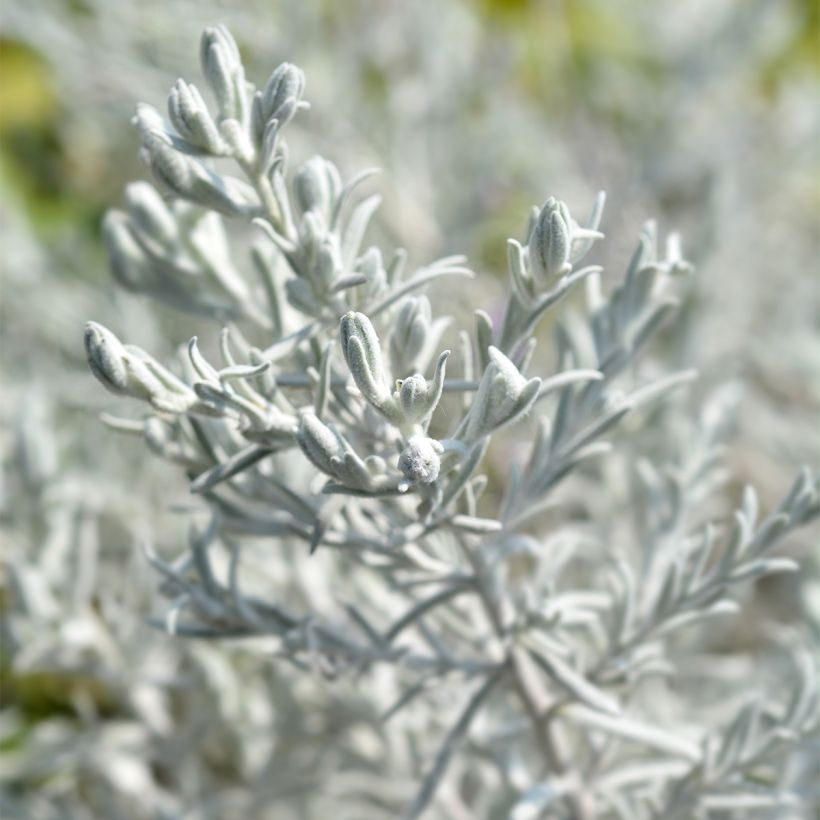
Eremophila nivea is a bush from the Scrophulariaceae or Myoporaceae family according to classifications. It is native to the west of southern Australia, governed by a mild winter, hot and arid summer climate. In nature, it is found on clay-sandy or sandy-loam soils with a neutral to slightly chalky pH. This species is endangered in its native lands. It is a plant perfectly adapted to water scarcity that does not tolerate temperatures below -4 or -5 °C. The Silky Eremophila quickly forms a large bush about 1.40 m (4 ft 7 in) high and 1.20 m (3 ft 11 in) wide in open ground. In a pot, the plant will remain smaller in size. It is entirely covered with a light grey to white felting, made up of intermingled hairs, which allows it to limit water loss very effectively. On the other hand, this characteristic promotes the accumulation of moisture and the proliferation of fungi in humid conditions. The foliage is evergreen. The stems are erect, brittle, and covered with narrow, linear leaves measuring 8 mm (0.3 in) to 1.8 cm (0.7 in) long and arranged alternately. The main flowering takes place in March-April, then again more modestly at the end of summer. Small tubular flowers 2 cm (0.8 in) long open into lobes, hidden a little in the axils of the leaves. They are lavender mauve on the outside, white, speckled with yellow-brown and hairy on the inside. After pollination, small dry, woody, oval-shaped fruits form, which are difficult to spot in the vegetation. Eremophila seeds are very difficult to germinate, as their dormancy requires specific conditions.
Eremophila nivea can be used in groups in rockeries and on slopes, but also as a low hedge to border a path for example. Create an evergreen border with staggered flowering by mixing the foliage and scents of lavenders (blue, white, pink), rosemary (creeping or erect), Atriplex, shrubby salvias, Leucophyllum frutescens, rockroses, catmints, and dryland spurges (E.characias, E. cyparissias). Its association with the Myrtle-leaf Milkwort, the Azure Teucrium fruticans, and evergreen ceanothuses that flower in late winter and spring in dry gardens is very successful.
Report an error about the product description
Eremophila nivea in pictures
Plant habit
Flowering
Foliage
Botanical data
Eremophila
nivea
Scrophulariaceae (Myoporaceae)
Chinnock
Australia
Planting and care
Eremophila nivea should be planted in spring or in September-October, preferably on the Mediterranean coast. It thrives in a very sunny location and requires well-drained soil, ideally sandy-loamy with a slight limestone tendency. Planting on slopes, in rockeries, or in a gravel bed is essential in climates that are more humid than the Mediterranean coast. This bush can withstand sea spray and is hardy down to -4 or -5 °C (24.8 or 23 °F) at its peak, after 2 or 3 years of cultivation, provided that the soil it is planted in is dry enough. It is a plant adapted to a semi-arid climate and does not tolerate heavy frosts, especially if the soil is heavy and wet. Its foliage is susceptible to fungal diseases, so rainy climates or watering the foliage are strongly discouraged. Apart from that, this Eremophila has the same cultivation requirements as cistus and lavender. Once well established, it has excellent tolerance to water scarcity. You can apply a little low-phosphorus fertilizer in autumn. Prune lightly after flowering to maintain a compact habit.
Beware of attacks by Australian scale insects in gardens where this pest is established.
Pot cultivation: Plant in a well-drained substrate, a mix of potting soil, gravel, sand, and garden soil. Use a large container with drainage holes at the bottom and create a drainage layer composed of gravel, broken pottery shards, or clay pellets. Apply organic fertilizer in autumn. A plant grown in a pot should be regularly and deeply watered, but with enough time between waterings to allow the soil to dry out a bit. Shelter your potted plant in winter, protecting it from frost, in a bright but unheated location. Avoid wetting the foliage and protect it from repeated rains that could promote disease development.
Planting period
Intended location
Care
Planting & care advice
-

-
-
-

-
-
-

-

-
, onOrder confirmed
Reply from on Promesse de fleurs
Recently viewed products
Haven't found what you were looking for?
Hardiness is the lowest winter temperature a plant can endure without suffering serious damage or even dying. However, hardiness is affected by location (a sheltered area, such as a patio), protection (winter cover) and soil type (hardiness is improved by well-drained soil).

The flowering period indicated on our website applies to countries and regions located in USDA zone 8 (France, the United Kingdom, Ireland, the Netherlands, etc.)
It will vary according to where you live:- In zones 9 to 10 (Italy, Spain, Greece, etc.), flowering will occur about 2 to 4 weeks earlier.
- In zones 6 to 7 (Germany, Poland, Slovenia, and lower mountainous regions), flowering will be delayed by 2 to 3 weeks.
- In zone 5 (Central Europe, Scandinavia), blooming will be delayed by 3 to 5 weeks.
In temperate climates, pruning of spring-flowering shrubs (forsythia, spireas, etc.) should be done just after flowering.
Pruning of summer-flowering shrubs (Indian Lilac, Perovskia, etc.) can be done in winter or spring.
In cold regions as well as with frost-sensitive plants, avoid pruning too early when severe frosts may still occur.
The planting period indicated on our website applies to countries and regions located in USDA zone 8 (France, United Kingdom, Ireland, Netherlands).
It will vary according to where you live:
- In Mediterranean zones (Marseille, Madrid, Milan, etc.), autumn and winter are the best planting periods.
- In continental zones (Strasbourg, Munich, Vienna, etc.), delay planting by 2 to 3 weeks in spring and bring it forward by 2 to 4 weeks in autumn.
- In mountainous regions (the Alps, Pyrenees, Carpathians, etc.), it is best to plant in late spring (May-June) or late summer (August-September).
The harvesting period indicated on our website applies to countries and regions in USDA zone 8 (France, England, Ireland, the Netherlands).
In colder areas (Scandinavia, Poland, Austria...) fruit and vegetable harvests are likely to be delayed by 3-4 weeks.
In warmer areas (Italy, Spain, Greece, etc.), harvesting will probably take place earlier, depending on weather conditions.
The sowing periods indicated on our website apply to countries and regions within USDA Zone 8 (France, UK, Ireland, Netherlands).
In colder areas (Scandinavia, Poland, Austria...), delay any outdoor sowing by 3-4 weeks, or sow under glass.
In warmer climes (Italy, Spain, Greece, etc.), bring outdoor sowing forward by a few weeks.
Shipping country and language
Your country of residence may be:
Your country of residence is:
For a better user experience on our website, you can select:
Your shipping country:
-
 Austria
-
 Belgium
-
 Bosnia & Herzegovina
-
 Bulgaria
-
 Croatia
-
 Cyprus
-
 Czechia
-
 Denmark
-
 Estonia
-
 Finland
-
 France
-
 Germany
-
 Greece
-
 Hungary
-
 Iceland
-
 Ireland
-
 Italy
Italy
-
 Latvia
-
 Liechtenstein
-
 Lithuania
-
 Luxembourg
-
 Malta
Malta
-
 Netherlands
-
 Poland
-
 Portugal
-
 Romania
-
 Serbia
-
 Slovakia
-
 Slovenia
-
 Spain
Spain
-
 Sweden
-
 Switzerland
Language:
-
French
-
 English
-
Spanish
-
Italian
-
German
-
Portuguese
-
Dutch
-
Finnish
My Account
Hello
My wish lists
My cart
Log in / Register
Existing customer?
This form is protected by reCAPTCHA - the Google Privacy Policy and Terms of Service apply.
New customer?
Create an account to track your orders, access our customer service and, if you wish, make the most of our upcoming offers.