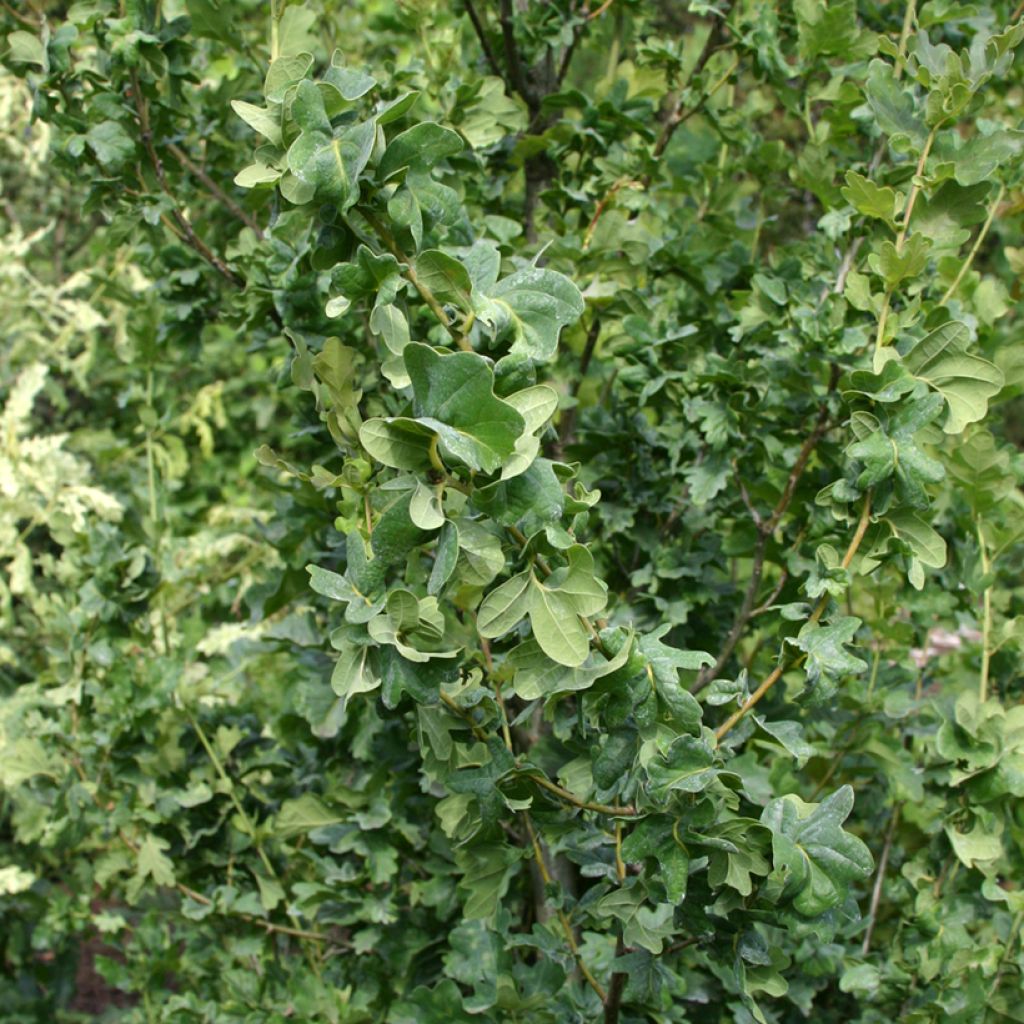
Quercus robur Facrist - English oak
Quercus robur Facrist - English oak
Quercus robur Facrist
English oak, Pedunculate oak
Back-to-school special offer!
Get €10 off for every €50 you spend! And get up to €40 off on a single order.
How does it work?
1. Shop your favourites
Add your favourite plants to your basket. For every €50 you spend (excluding delivery charges, store credit and the plastic-free option), you’ll receive a €10 voucher.
€50 spent = €10 voucher
€100 spent = €20 voucher
€150 spent = €30 voucher
€200 spent = €40 voucher
2. Place your order
Once your basket reaches one of the spending thresholds, place your order. You can even choose your delivery date!
3. Receive your voucher
As soon as your order has been shipped, you’ll receive an email containing your personal voucher code and its value.
4. Use it on your next order
Your voucher is valid for 90 days from the date you receive it. It can be used once only, on a new order worth at least the value of the voucher, excluding delivery charges.
Please note: Vouchers can be combined with other offers, but cannot be split or refunded.
Home or relay delivery (depending on size and destination)
Important: You may be charged customs duties by your country’s customs authorities upon delivery.
Schedule delivery date
and select date in basket
This plant carries a 24 months recovery warranty
More information
We guarantee the quality of our plants for a full growing cycle, and will replace at our expense any plant that fails to recover under normal climatic and planting conditions.
Would this plant suit my garden?
Set up your Plantfit profile →
Description
Quercus robur 'Facrist' is a form of Pedunculate Oak resulting from a spontaneous hybridisation between the 'Fastigiata' and 'Cristata' varieties. This tree develops the columnar habit of the 'Fastigiata' and the twisted leaves of the 'Cristata'. It forms a small, narrow tree, more suitable for many gardens than the species. Its crown becomes rounded with age, but maintains an elongated shape. The quite small leaves are highly variable, divided into 2 or more rounded lobes. They are twisted and curled. This variety can be planted alone, in groups, in rows or as a hedge, to create a windbreak. The Pedunculate Oak requires light to thrive, as well as a deep, slightly chalky, fertile and moist soil.
The Pedunculate Oak, also known as the Common Oak or English Oak, belongs to the Fagaceae family. It is native to a large part of temperate Europe. This venerable tree appreciates sub-oceanic to oceanic climates, or continental climates, without excessive heat and relatively humid. It is very common in plains and low-altitude hills. In its natural habitat, it can reach a height of 50m with a spread of 25 to 30m, while its trunk can measure up to 2m in diameter. With a fairly exceptional longevity, this oak can live up to 2000 years according to some estimates.
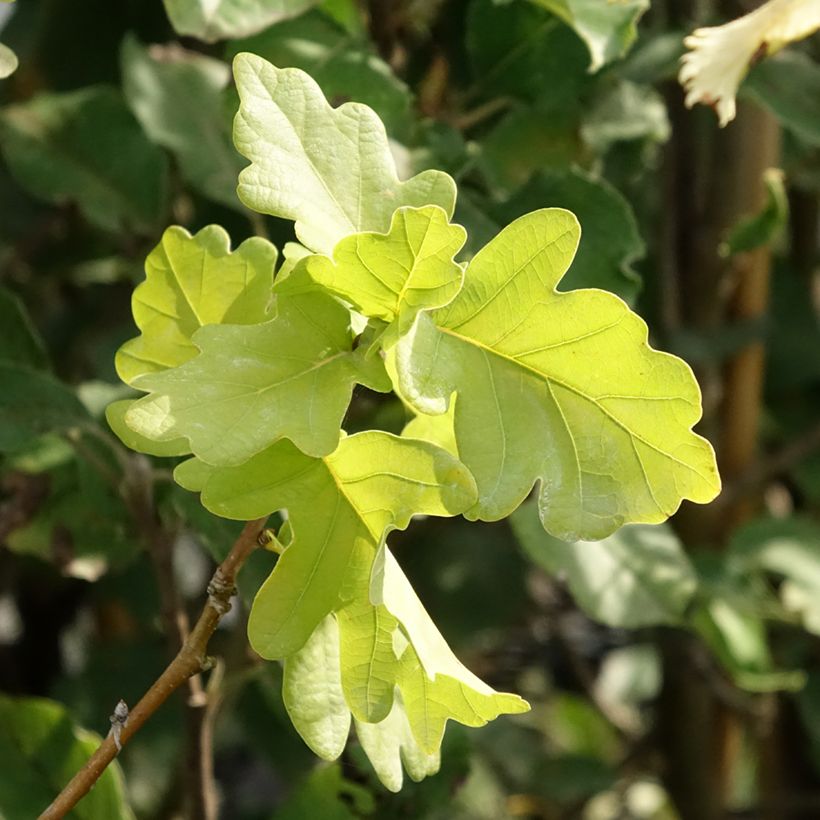
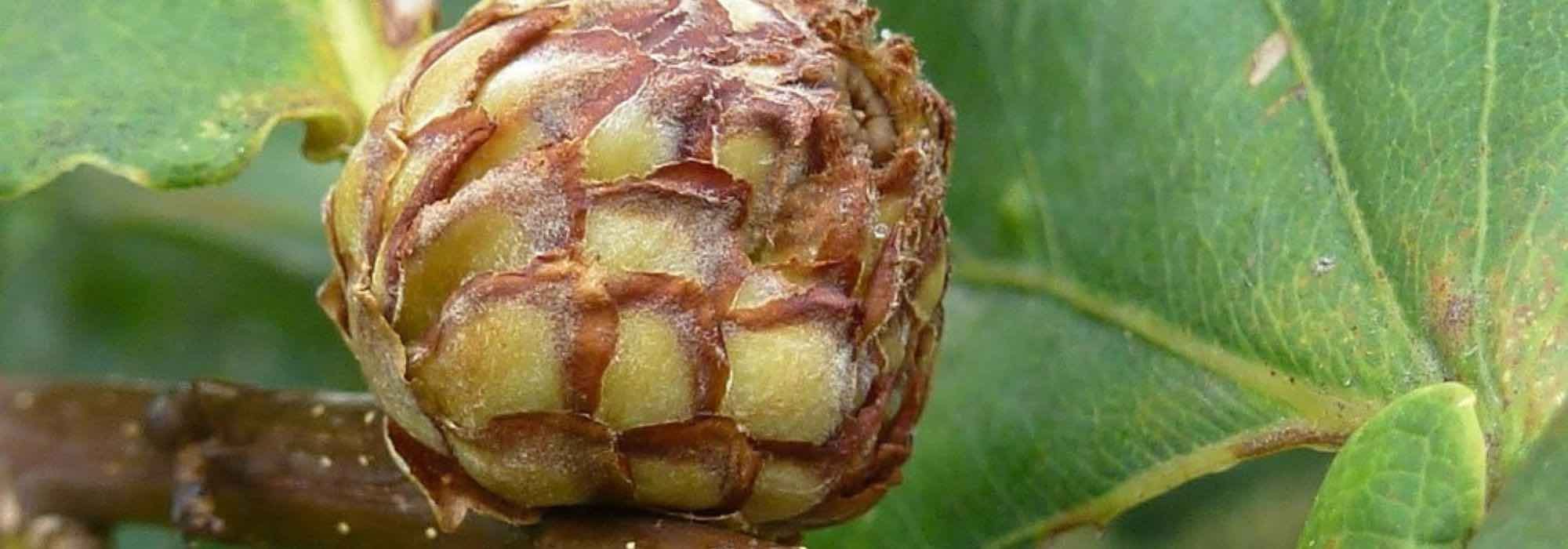
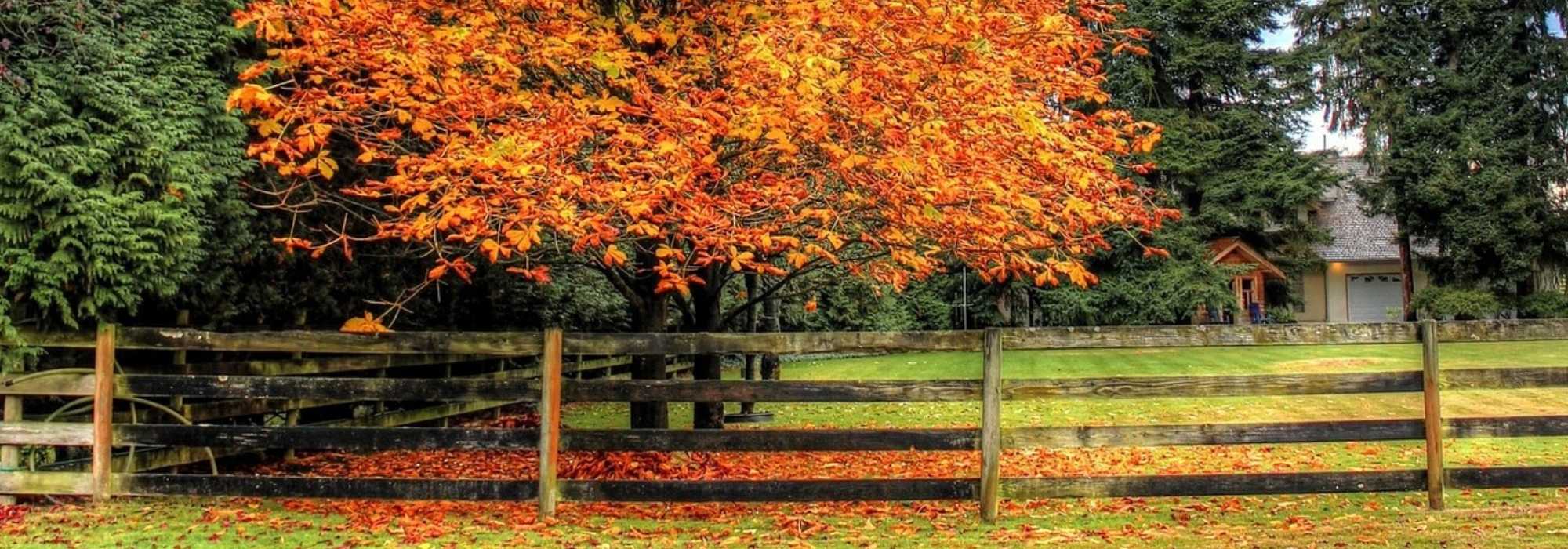
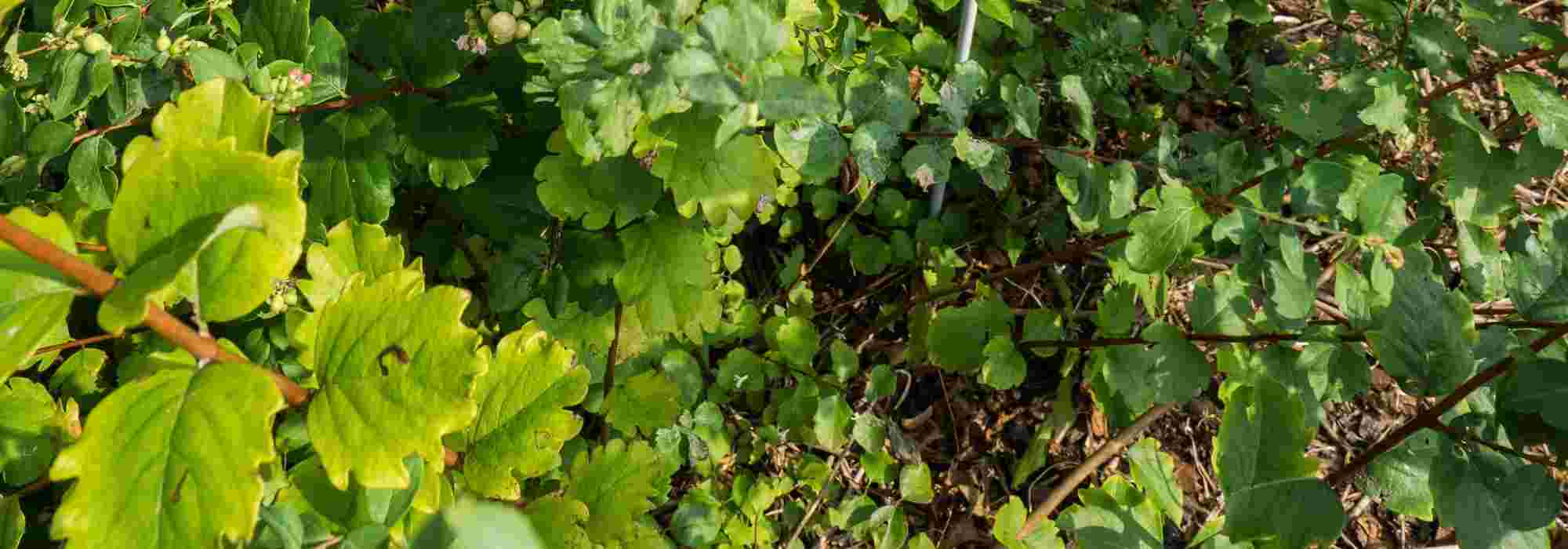
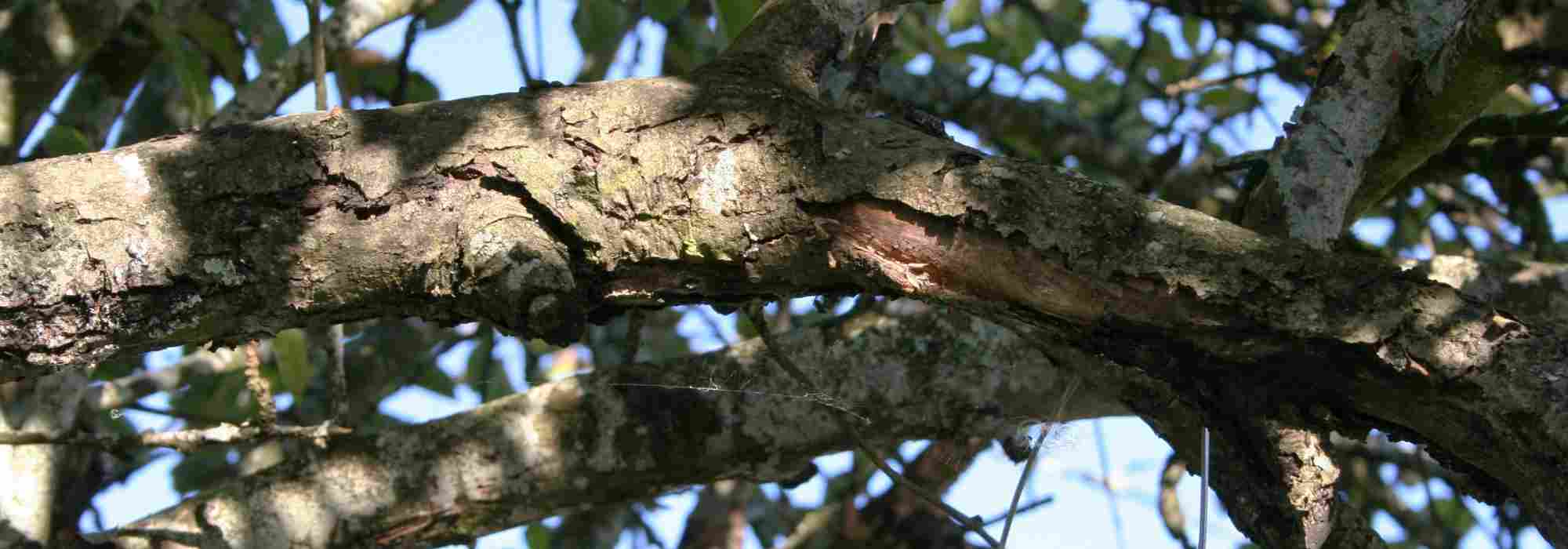
The 'Facrist' cultivar reaches a height of about 6 to 10m at maturity, with a spread of 2 to 3m. The growth of this oak is moderately fast. Its habit is fastigiate, well-branched, supported by robust branches that are rather upright. The short trunk is initially green and smooth, but becomes grey, thick, and deeply fissured. Over time, the crown takes on an elongated ovoid shape. The young branches are smooth and reddish-brown. The leaf, measuring between 3 and 7cm in length, is relatively small and has an obovate to ovoid shape. Densely clustered along the branches, they show great variability. Many leaves are divided into two unequal parts along the main vein down to the petiole. Other leaves are divided into three or several small leaflets. The margins of the leaf are coarsely lobed with rounded lobes. Additionally, the leaves are twisted and curled. They are dark green in summer, turning yellow and then brown, quite late in autumn, and remain attached to the branches for a few weeks before falling. The flowering of this Fastigiata oak takes place in April-May, shortly after the appearance of the foliage, on the annual shoots. The female flowers are placed in a cupule carried by a long peduncle: this distinctive characteristic is the origin of the species name, pedunculata. The male inflorescences are elongated, pendulous catkins, tinged with yellow. They are produced on older branches. The female flowers are followed by ovoid and elongated acorns, measuring 1.5 to 3cm in length. They are often grouped in pairs or threes and attached to a long peduncle. A cupule covered with scales covers one-third of the acorn. The colour changes from green to brown at maturity, in September and October. The root system of this tree is deep and powerful, with both a taproot and extensive spreading roots, ensuring a solid and long-lasting anchorage in deep and compact soils.
The 'Facrist' oak is a beautiful ornamental tree that can fit into many gardens, as it remains small and has a narrow habit. It can be planted alone at the edge of a garden open to the countryside, in rows along a large avenue, or in a large grove with other native species. This tree also pruduces abundant leaf litter, which is beneficial for the growth of certain plants that germinate under its canopy. This oak can also find a place in a dense hedge, combined with hornbeams, beeches, or even hazelnuts, for example. Its acorns provide food for small animals such as squirrels and jays.
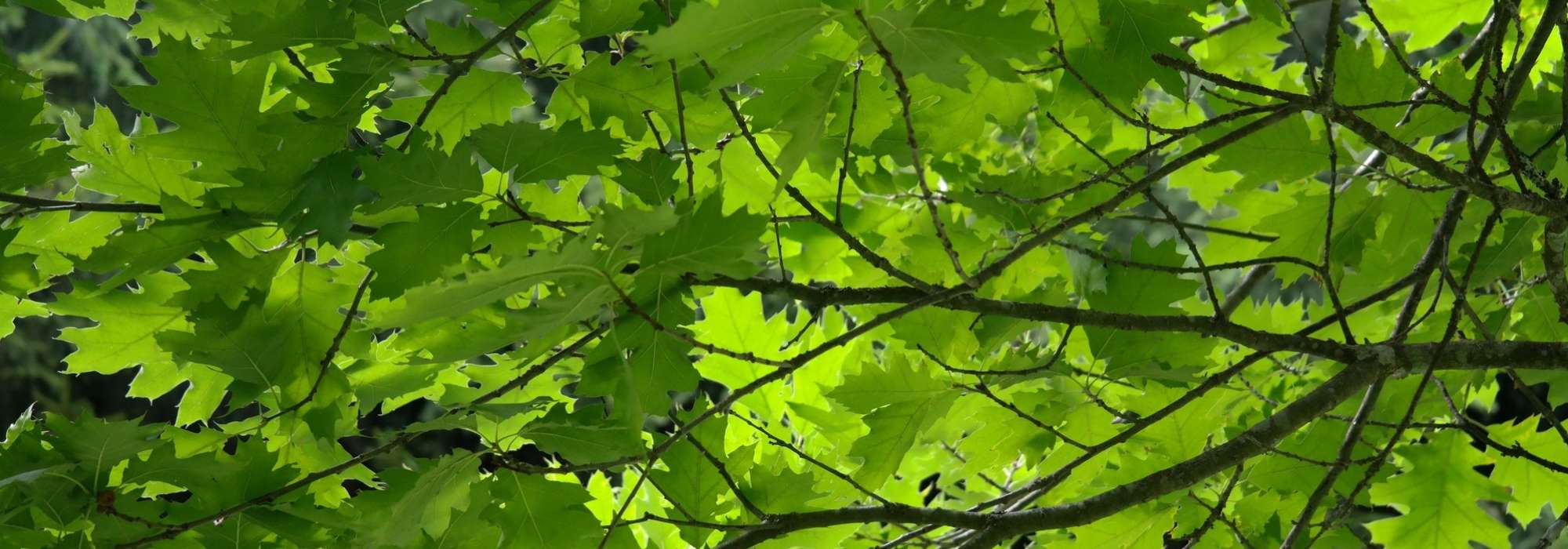
Quercus robur Facrist - English oak in pictures
Plant habit
Flowering
Foliage
Botanical data
Quercus
robur
Facrist
Fagaceae
English oak, Pedunculate oak
Cultivar or hybrid
Planting and care
Quercus robur Facrist grows in ordinary but deep soil, preferably clayey, slightly calcareous, neutral or slightly acidic. Once established, this tree with deep roots can withstand normal summers and does not require any watering. This oak succeeds in almost all locations. It appreciates moist but well-drained soil, where its growth will be faster. It prefers very sunny and open exposures. Place a sturdy stake to help it start, follow the watering schedule, and then let nature take its course. Once established, this tree requires very little maintenance, except for removing dead wood. It is not very susceptible to diseases, but it can be affected by powdery mildew.
Planting period
Intended location
Care
Planting & care advice
-
-

-
-
-
-
-
-

This item has not been reviewed yet - be the first to leave a review about it.
Recently viewed products
Haven't found what you were looking for?
Hardiness is the lowest winter temperature a plant can endure without suffering serious damage or even dying. However, hardiness is affected by location (a sheltered area, such as a patio), protection (winter cover) and soil type (hardiness is improved by well-drained soil).

The flowering period indicated on our website applies to countries and regions located in USDA zone 8 (France, the United Kingdom, Ireland, the Netherlands, etc.)
It will vary according to where you live:- In zones 9 to 10 (Italy, Spain, Greece, etc.), flowering will occur about 2 to 4 weeks earlier.
- In zones 6 to 7 (Germany, Poland, Slovenia, and lower mountainous regions), flowering will be delayed by 2 to 3 weeks.
- In zone 5 (Central Europe, Scandinavia), blooming will be delayed by 3 to 5 weeks.
In temperate climates, pruning of spring-flowering shrubs (forsythia, spireas, etc.) should be done just after flowering.
Pruning of summer-flowering shrubs (Indian Lilac, Perovskia, etc.) can be done in winter or spring.
In cold regions as well as with frost-sensitive plants, avoid pruning too early when severe frosts may still occur.
The planting period indicated on our website applies to countries and regions located in USDA zone 8 (France, United Kingdom, Ireland, Netherlands).
It will vary according to where you live:
- In Mediterranean zones (Marseille, Madrid, Milan, etc.), autumn and winter are the best planting periods.
- In continental zones (Strasbourg, Munich, Vienna, etc.), delay planting by 2 to 3 weeks in spring and bring it forward by 2 to 4 weeks in autumn.
- In mountainous regions (the Alps, Pyrenees, Carpathians, etc.), it is best to plant in late spring (May-June) or late summer (August-September).
The harvesting period indicated on our website applies to countries and regions in USDA zone 8 (France, England, Ireland, the Netherlands).
In colder areas (Scandinavia, Poland, Austria...) fruit and vegetable harvests are likely to be delayed by 3-4 weeks.
In warmer areas (Italy, Spain, Greece, etc.), harvesting will probably take place earlier, depending on weather conditions.
The sowing periods indicated on our website apply to countries and regions within USDA Zone 8 (France, UK, Ireland, Netherlands).
In colder areas (Scandinavia, Poland, Austria...), delay any outdoor sowing by 3-4 weeks, or sow under glass.
In warmer climes (Italy, Spain, Greece, etc.), bring outdoor sowing forward by a few weeks.
Shipping country and language
Your country of residence may be:
Your country of residence is:
For a better user experience on our website, you can select:
Your shipping country:
-
 Austria
-
 Belgium
-
 Bosnia & Herzegovina
-
 Bulgaria
-
 Croatia
-
 Cyprus
-
 Czechia
-
 Denmark
-
 Estonia
-
 Finland
-
 France
-
 Germany
-
 Greece
-
 Hungary
-
 Iceland
-
 Ireland
-
 Italy
Italy
-
 Latvia
-
 Liechtenstein
-
 Lithuania
-
 Luxembourg
-
 Malta
Malta
-
 Netherlands
-
 Poland
-
 Portugal
-
 Romania
-
 Serbia
-
 Slovakia
-
 Slovenia
-
 Spain
Spain
-
 Sweden
-
 Switzerland
Language:
-
French
-
 English
-
Spanish
-
Italian
-
German
-
Portuguese
-
Dutch
-
Finnish
My Account
Hello
My wish lists
My cart
Log in / Register
Existing customer?
This form is protected by reCAPTCHA - the Google Privacy Policy and Terms of Service apply.
New customer?
Create an account to track your orders, access our customer service and, if you wish, make the most of our upcoming offers.