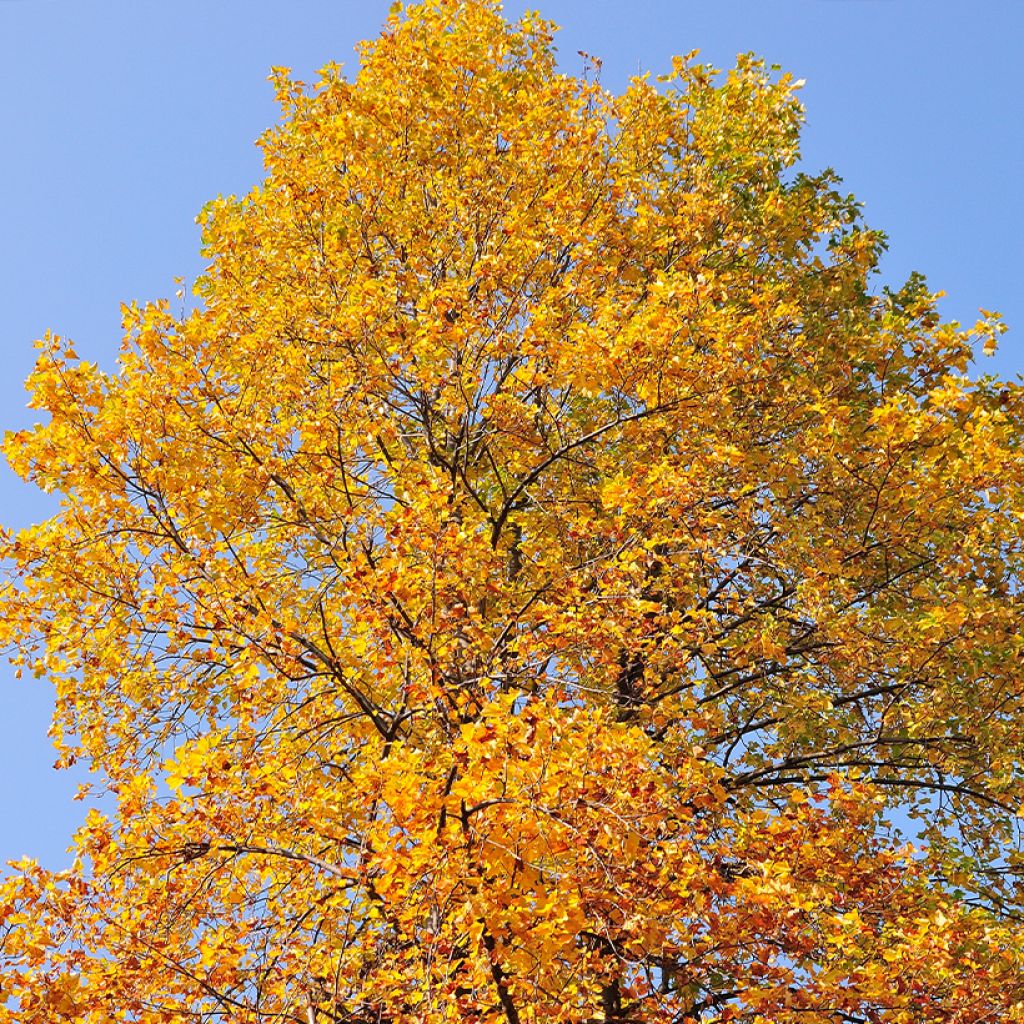
Platanus orientalis - Oriental plane
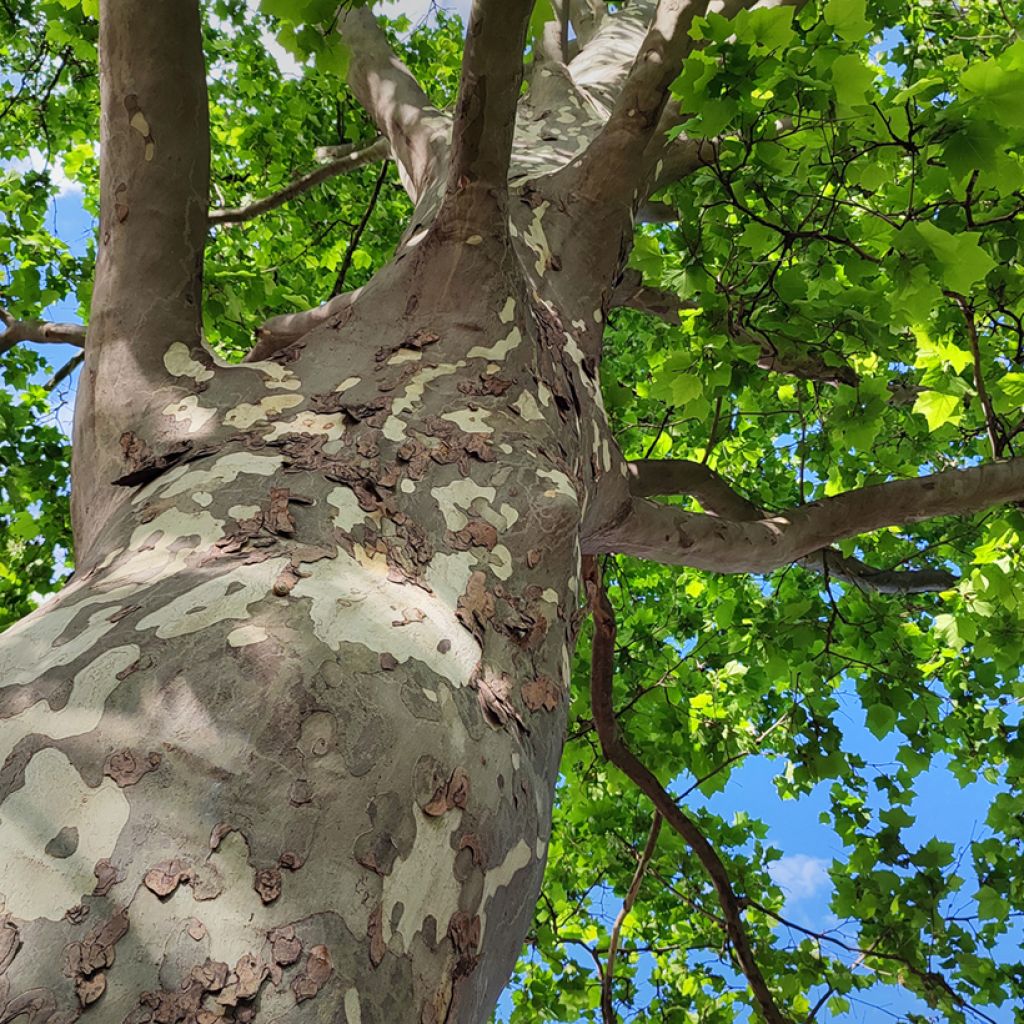
Platanus orientalis - Oriental plane
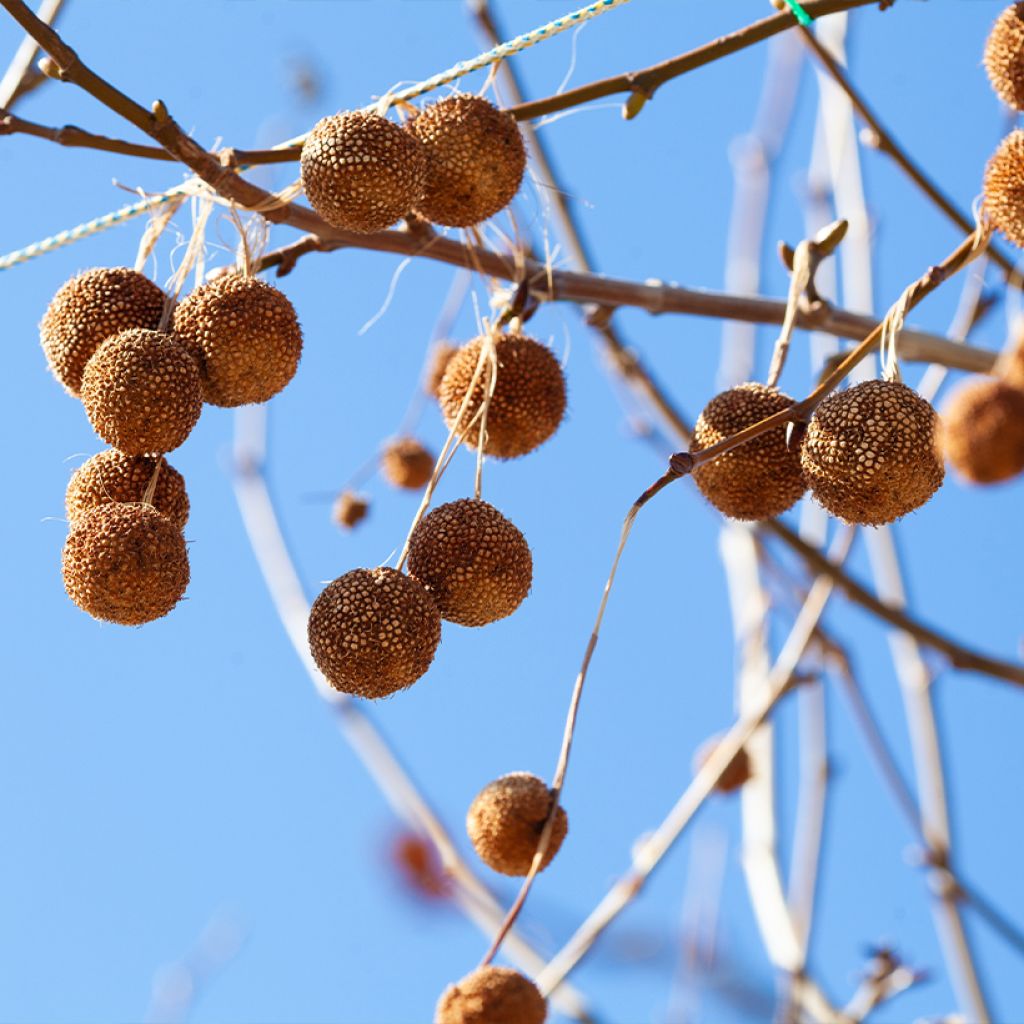
Platanus orientalis - Oriental plane

Platanus orientalis - Oriental plane
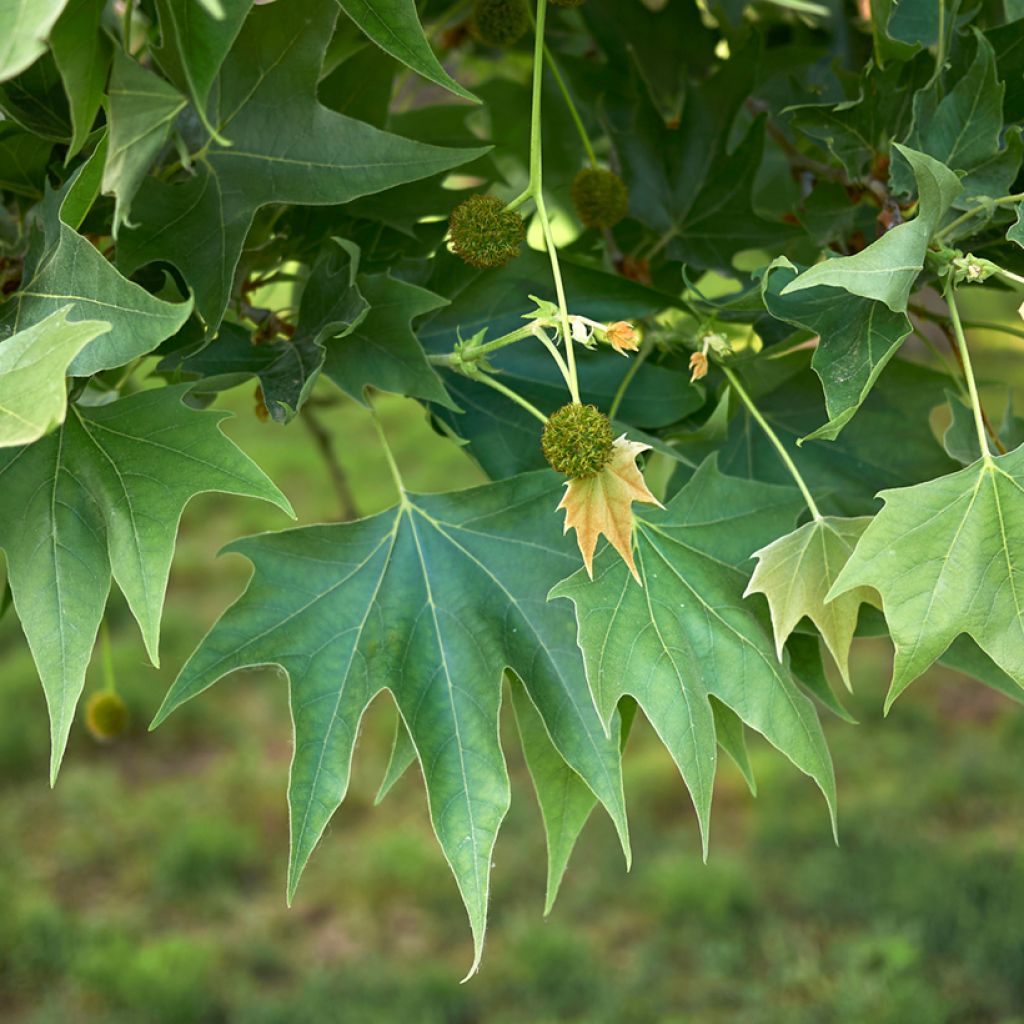
Platanus orientalis - Oriental plane
Platanus orientalis - Oriental plane
Platanus orientalis - Oriental plane
Platanus orientalis - Oriental plane
Platanus orientalis
Oriental plane, chinar tree, eastern plane
Back-to-school special offer!
Get €10 off for every €50 you spend! And get up to €40 off on a single order.
How does it work?
1. Shop your favourites
Add your favourite plants to your basket. For every €50 you spend (excluding delivery charges, store credit and the plastic-free option), you’ll receive a €10 voucher.
€50 spent = €10 voucher
€100 spent = €20 voucher
€150 spent = €30 voucher
€200 spent = €40 voucher
2. Place your order
Once your basket reaches one of the spending thresholds, place your order. You can even choose your delivery date!
3. Receive your voucher
As soon as your order has been shipped, you’ll receive an email containing your personal voucher code and its value.
4. Use it on your next order
Your voucher is valid for 90 days from the date you receive it. It can be used once only, on a new order worth at least the value of the voucher, excluding delivery charges.
Please note: Vouchers can be combined with other offers, but cannot be split or refunded.
Why not try an alternative variety in stock?
View all →
Available in 1 sizes

Available in 1 sizes

Available in 3 sizes
This plant carries a 24 months recovery warranty
More information
We guarantee the quality of our plants for a full growing cycle, and will replace at our expense any plant that fails to recover under normal climatic and planting conditions.
Would this plant suit my garden?
Set up your Plantfit profile →
Description
The Oriental Plane, in Latin Platanus orientalis, is a majestic deciduous tree, valued for its great resilience, longevity, and broad spreading crown that provides generous shade in parks and public gardens. This species, visually similar to the London Plane (Platanus acerifolia), is sought after for its lower susceptibility to canker and its ability to adapt to various environments, including very dry climates and urban areas.
Belonging to the Platanaceae family, the Oriental Plane is native to southeastern Europe and western Asia, where it has thrived for centuries. Its natural range extends from Mediterranean regions (Greece, Turkey) to the Indian subcontinent, particularly Iran, Afghanistan, and northern India. The Oriental Plane is often found growing wild along watercourses, river valleys, and alluvial zones, where the soil is deep, rich, and moist. These environments allow it to develop its robust root system and spreading habit. Due to its tolerance for varied soils, it has been widely planted in other regions, especially in parks and urban areas across many parts of the world. Its natural range reflects its ability to adapt to different climates, particularly warm, dry Mediterranean climates, as well as more temperate ones.
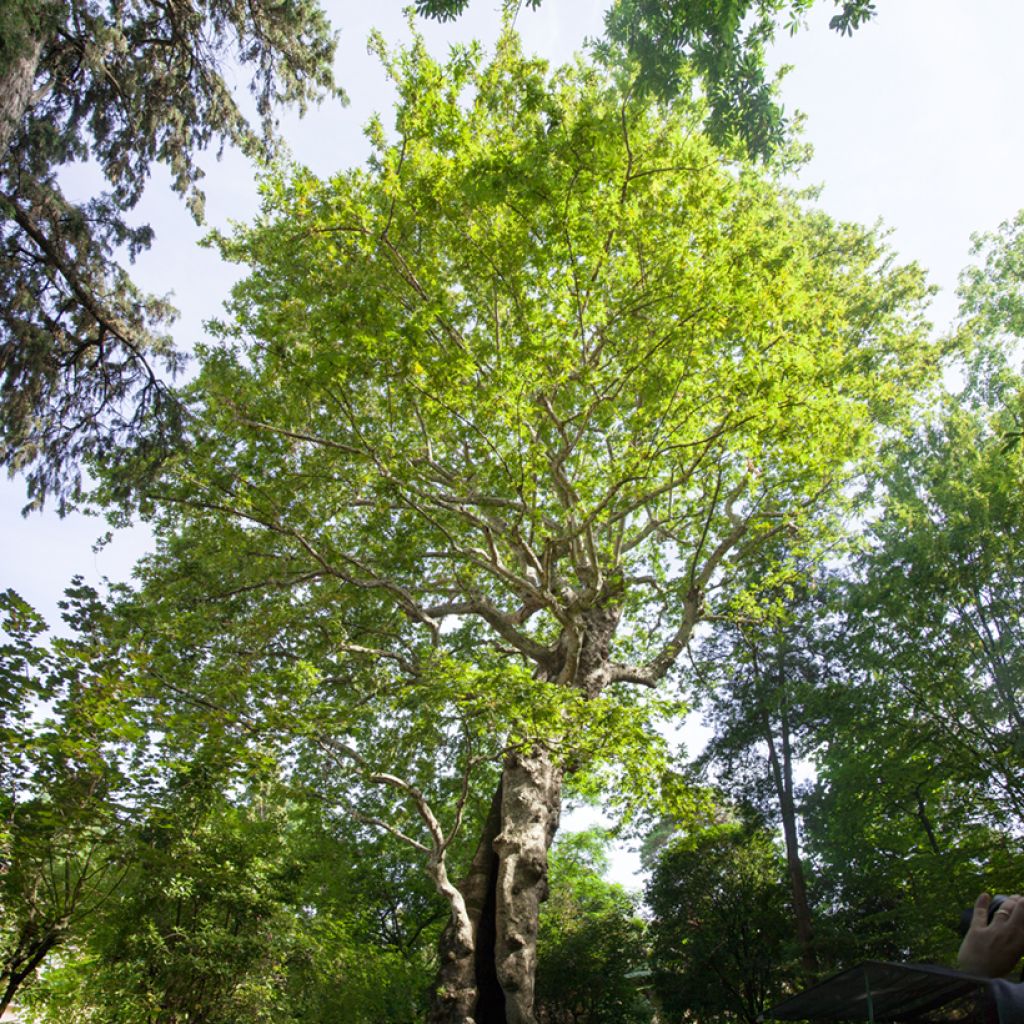
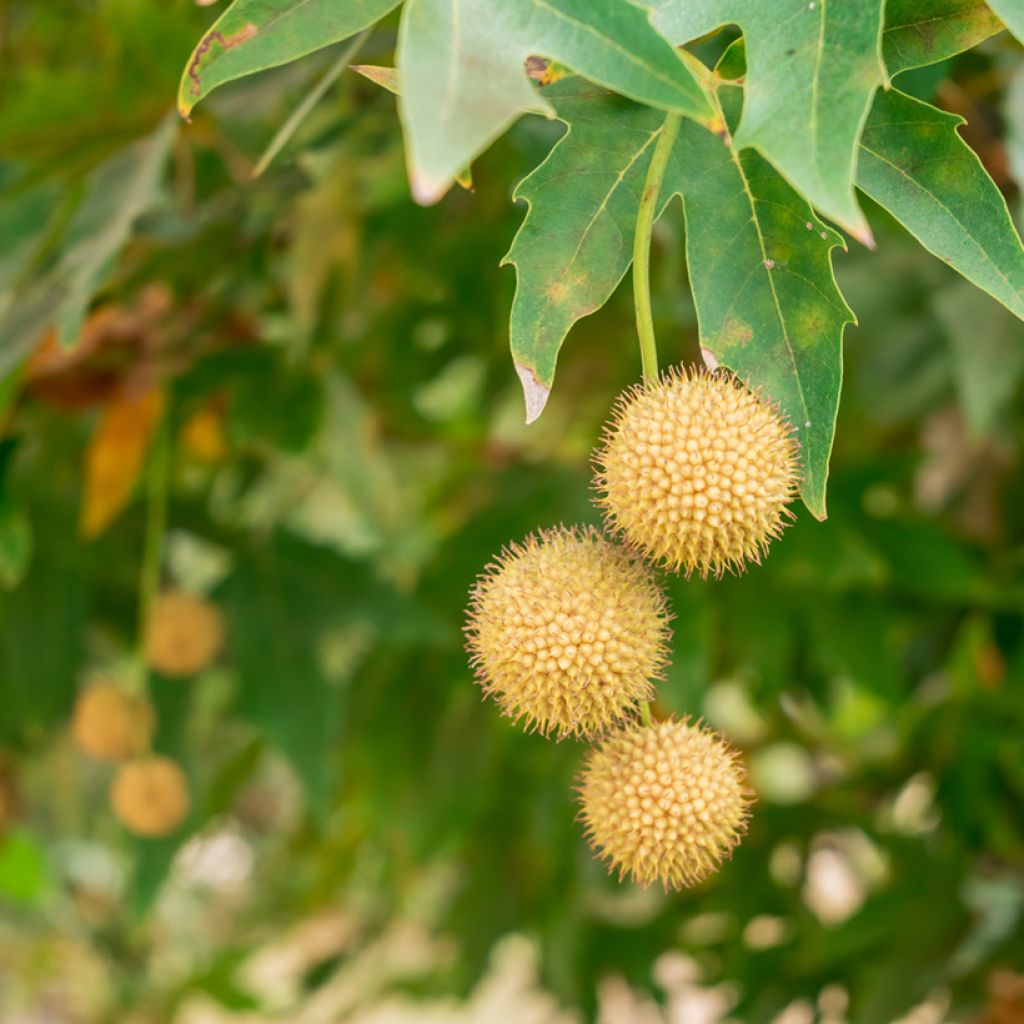
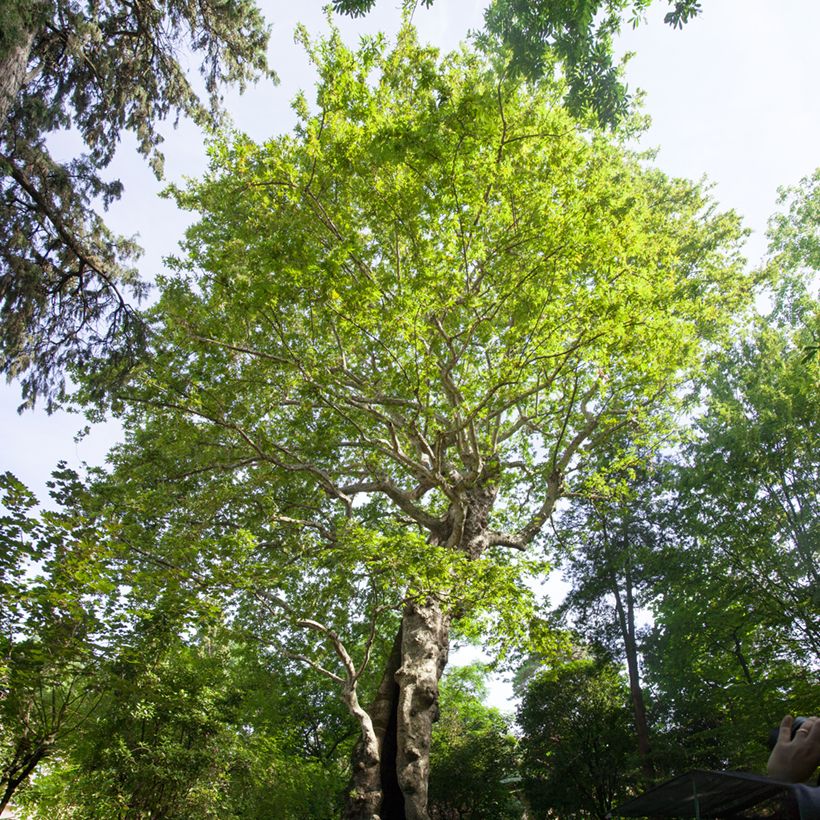
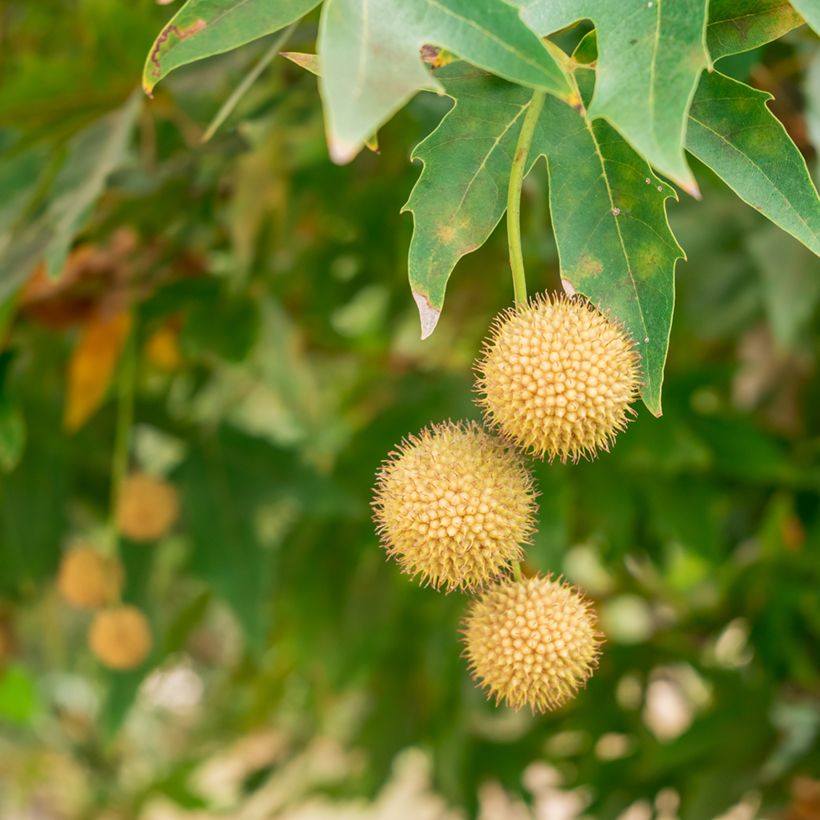
Platanus orientalis is a deciduous tree that can reach a height of 30 m or more. Its growth is rapid when young: on average, it can grow 50 to 80 cm per year under favourable conditions, particularly in well-drained, organically rich soil with good sun exposure. Alluvial soils, where it grows naturally, promote its development. However, even though its growth is fast, the tree develops a sturdy structure. Its deeply lobed leaves resemble those of the maple, measure between 10 and 25 cm wide and are dark green, turning yellow in autumn. The bark is smooth and greyish, peeling in patches to reveal creamy and green tones, giving the tree a distinctive mottled appearance. The inconspicuous, monoecious flowers appear in spring and are followed by brownish spherical fruits, hanging in clusters of 3 to 6, which often persist throughout winter.
In landscaping, the Oriental Plane is used to create shaded areas in parks and large gardens. It pairs beautifully with species such as Small-leaved Lime (Tilia cordata), English Oak (Quercus robur), Horse Chestnut (Aesculus hippocastanum), and Manna Ash (Fraxinus ornus), which share similar cultivation requirements. All these trees offer a lovely diversity of forms, flowers, and foliage.
The Oriental Plane holds a special place in the history and culture of many regions. For example, in Greece, it is often associated with village squares, providing welcome shade during hot summer days. Remarkable specimens, centuries old, are protected as natural monuments, testifying to the importance of this tree in cultural and natural heritage.
Report an error about the product description
Platanus orientalis - Oriental plane in pictures
Plant habit
Flowering
Foliage
Botanical data
Platanus
orientalis
Platanaceae
Oriental plane, chinar tree, eastern plane
Southern Europe, West Asia
Planting and care
The Oriental Plane tree is best planted in autumn in any properly prepared and sufficiently deep soil. It tolerates limestone, clay, and cold exceptionally well, except for late frosts which affect new shoots, and remarkably withstands hot, dry summers once established. Its tolerance to dry soils is greater than that of Platanus x acerifolia, though it requires deeper soil in return.
Stake and prune young plants to maintain an attractive habit and protect them from strong winds. Once mature, the plane tree can be pruned if necessary and thinned in winter to reduce wind resistance, outside frost periods.
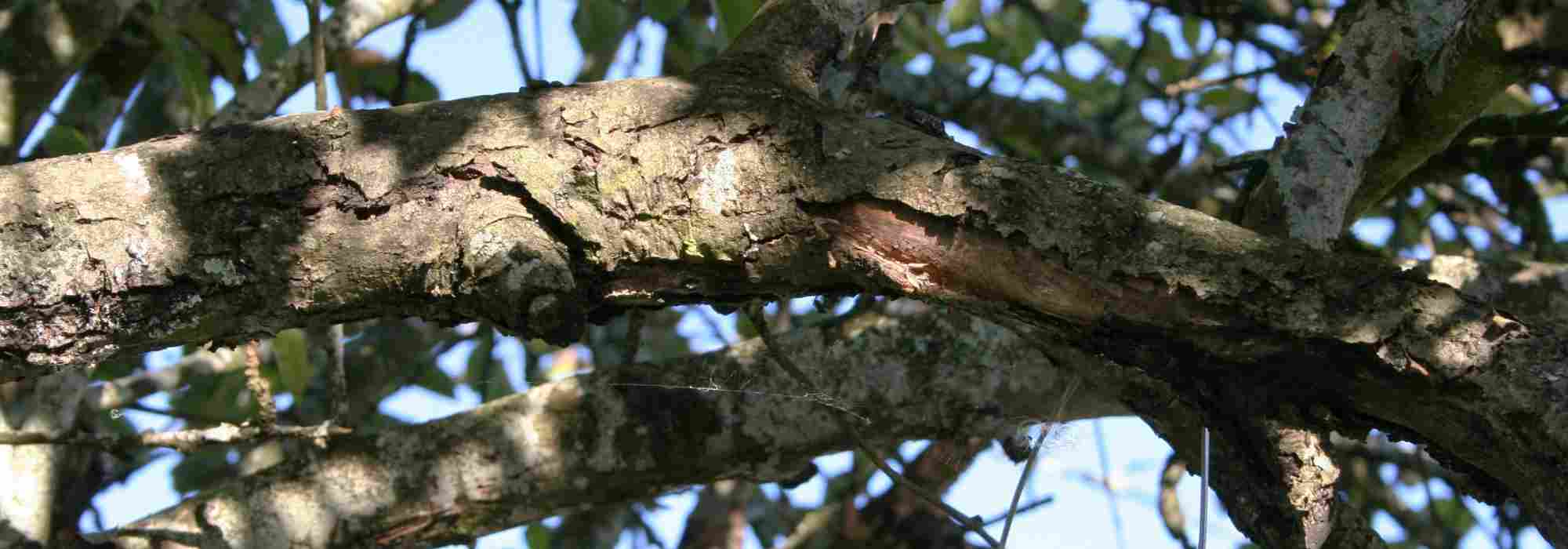
The plane tree may be affected by various diseases and parasitic pests: Canker Stain, which is fatal and requires swift felling; Anthracnose, causing brown to black spots without serious harm to the tree; and the Plane Tree Bug, a tiny sap-sucking insect that feeds on leaf juice, leading to discoloured patches (visible in winter in large numbers under bark plates where it shelters). The Plane Tree Bug is considered a likely vector for these two diseases. Natural solutions exist, such as using nematodes. Avoid severe and repeated pruning, which leaves many wounds that serve as entry points for fungi and bacteria.
.
Planting period
Intended location
Care
Planting & care advice
-

-
-
-

-
-
-

-

This item has not been reviewed yet - be the first to leave a review about it.
Recently viewed products
Haven't found what you were looking for?
Hardiness is the lowest winter temperature a plant can endure without suffering serious damage or even dying. However, hardiness is affected by location (a sheltered area, such as a patio), protection (winter cover) and soil type (hardiness is improved by well-drained soil).

The flowering period indicated on our website applies to countries and regions located in USDA zone 8 (France, the United Kingdom, Ireland, the Netherlands, etc.)
It will vary according to where you live:- In zones 9 to 10 (Italy, Spain, Greece, etc.), flowering will occur about 2 to 4 weeks earlier.
- In zones 6 to 7 (Germany, Poland, Slovenia, and lower mountainous regions), flowering will be delayed by 2 to 3 weeks.
- In zone 5 (Central Europe, Scandinavia), blooming will be delayed by 3 to 5 weeks.
In temperate climates, pruning of spring-flowering shrubs (forsythia, spireas, etc.) should be done just after flowering.
Pruning of summer-flowering shrubs (Indian Lilac, Perovskia, etc.) can be done in winter or spring.
In cold regions as well as with frost-sensitive plants, avoid pruning too early when severe frosts may still occur.
The planting period indicated on our website applies to countries and regions located in USDA zone 8 (France, United Kingdom, Ireland, Netherlands).
It will vary according to where you live:
- In Mediterranean zones (Marseille, Madrid, Milan, etc.), autumn and winter are the best planting periods.
- In continental zones (Strasbourg, Munich, Vienna, etc.), delay planting by 2 to 3 weeks in spring and bring it forward by 2 to 4 weeks in autumn.
- In mountainous regions (the Alps, Pyrenees, Carpathians, etc.), it is best to plant in late spring (May-June) or late summer (August-September).
The harvesting period indicated on our website applies to countries and regions in USDA zone 8 (France, England, Ireland, the Netherlands).
In colder areas (Scandinavia, Poland, Austria...) fruit and vegetable harvests are likely to be delayed by 3-4 weeks.
In warmer areas (Italy, Spain, Greece, etc.), harvesting will probably take place earlier, depending on weather conditions.
The sowing periods indicated on our website apply to countries and regions within USDA Zone 8 (France, UK, Ireland, Netherlands).
In colder areas (Scandinavia, Poland, Austria...), delay any outdoor sowing by 3-4 weeks, or sow under glass.
In warmer climes (Italy, Spain, Greece, etc.), bring outdoor sowing forward by a few weeks.
Shipping country and language
Your country of residence may be:
Your country of residence is:
For a better user experience on our website, you can select:
Your shipping country:
-
 Austria
-
 Belgium
-
 Bosnia & Herzegovina
-
 Bulgaria
-
 Croatia
-
 Cyprus
-
 Czechia
-
 Denmark
-
 Estonia
-
 Finland
-
 France
-
 Germany
-
 Greece
-
 Hungary
-
 Iceland
-
 Ireland
-
 Italy
Italy
-
 Latvia
-
 Liechtenstein
-
 Lithuania
-
 Luxembourg
-
 Malta
Malta
-
 Netherlands
-
 Poland
-
 Portugal
-
 Romania
-
 Serbia
-
 Slovakia
-
 Slovenia
-
 Spain
Spain
-
 Sweden
-
 Switzerland
Language:
-
French
-
 English
-
Spanish
-
Italian
-
German
-
Portuguese
-
Dutch
-
Finnish
My Account
Hello
My wish lists
My cart
Log in / Register
Existing customer?
This form is protected by reCAPTCHA - the Google Privacy Policy and Terms of Service apply.
New customer?
Create an account to track your orders, access our customer service and, if you wish, make the most of our upcoming offers.