
WE’RE OPEN ALL SUMMER: Discover our current offers!
Share your pictures?
New arrival

Punica granatum Asmar - Pomegranate

Punica granatum Asmar
Pomegranate

Be the first to leave a review

Why not try an alternative variety in stock?

17
17,50 € 2L/3L pot

Available in 2 sizes

4
From 14,90 € 1.5L/2L pot
6
From 39,50 € 7.5L/10L pot

Available in 2 sizes

9
From 37,50 € 7.5L/10L pot
7
From 20,50 € 3L/4L pot

Available in 2 sizes

4
From 59,00 € 7.5L/10L pot
4
6,50 € Seeds
2
17,50 € 2L/3L pot
6
From 24,50 € 3L/4L pot
10
From 20,50 € 3L/4L pot

This plant carries a 12 months recovery warranty

More information

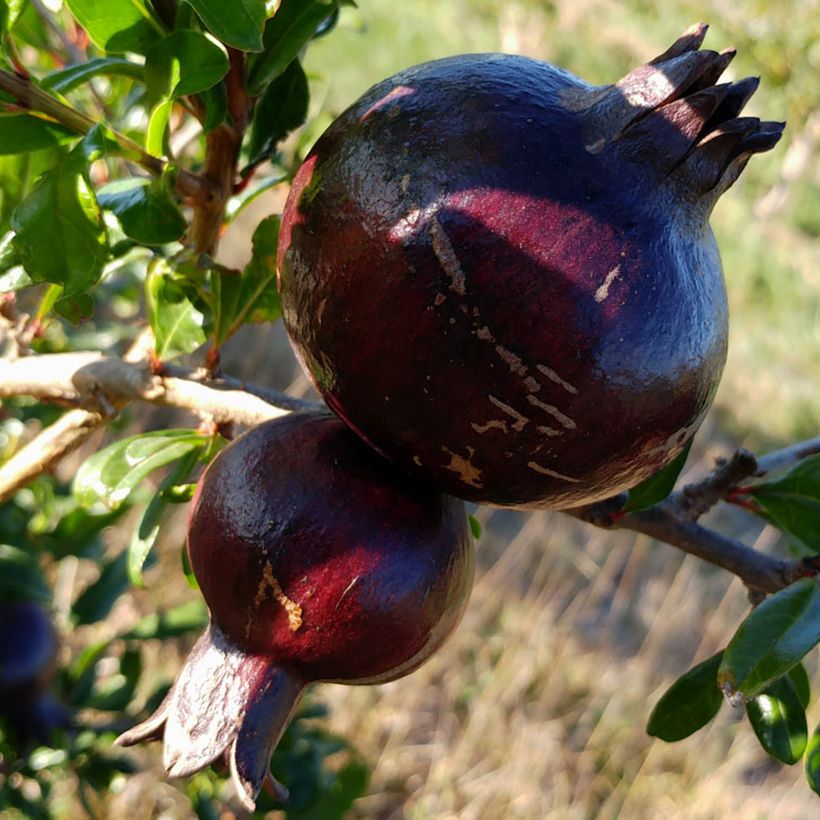
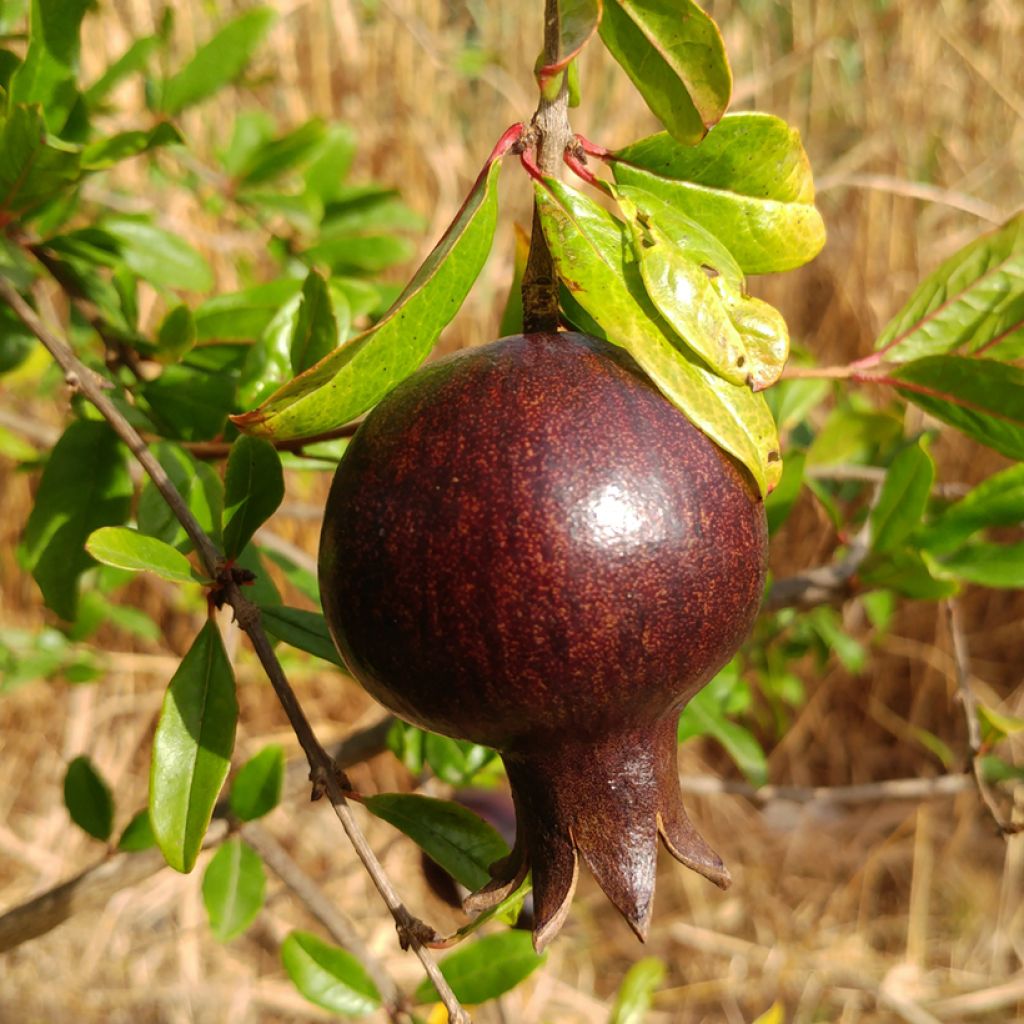
This pomegranate is a small tree or large deciduous shrub distinguished by its fruits with almost black skin, containing red seeds or arils. It has good hardiness (down to about –12 °C) and excellent drought tolerance. Its orange-red to dark red flowers are produced from May to July, and its fruit ripens in October–November. It is resistant to the main diseases of pomegranate if grown in a dry climate. It can be planted all year round (except during frost), but preferably in autumn, for a harvest from the 4th or 5th year.
Flavour
Sour
Height at maturity
3.50 m
Spread at maturity
2 m
Exposure
Sun
Hardiness
Hardy down to -12°C
Self-fertilising
Best planting time October to November
Recommended planting time March to May, September to November
J
F
M
A
M
J
J
A
S
O
N
D
Flowering time May to July
J
F
M
A
M
J
J
A
S
O
N
D
Harvest time October to November
J
F
M
A
M
J
J
A
S
O
N
D

Description

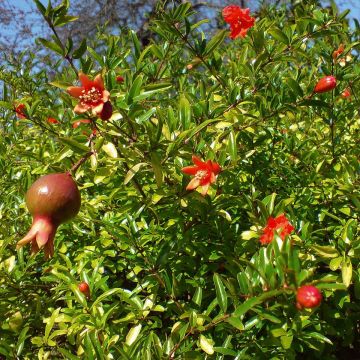
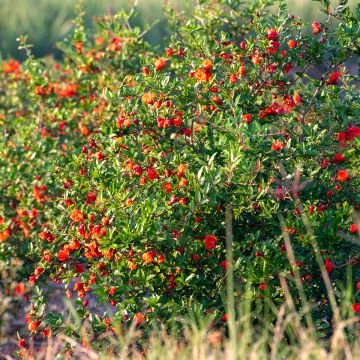
Pomegranate Punica granatum ‘Asmar’ is an ornamental and productive variety with almost black fruits, which stands out for its pomegranates with a very dark violet skin. This small tree or large deciduous shrub also charms with its intense red flowering, relative hardiness (down to –12 °C) and good drought tolerance once established. In warm climates, it can be grown in open ground or in a large container, in an informal hedge or a domestic orchard. This variety requires a long, hot summer to ripen its fruits, in late October or early November in Mediterranean climates. 

Pomegranate (Punica granatum) belongs to the Lythraceae family. This species is native to western and central Asia, particularly from northern Iran to Turkmenistan and northwestern India. Its natural habitat is arid or semi-arid lowland areas. 
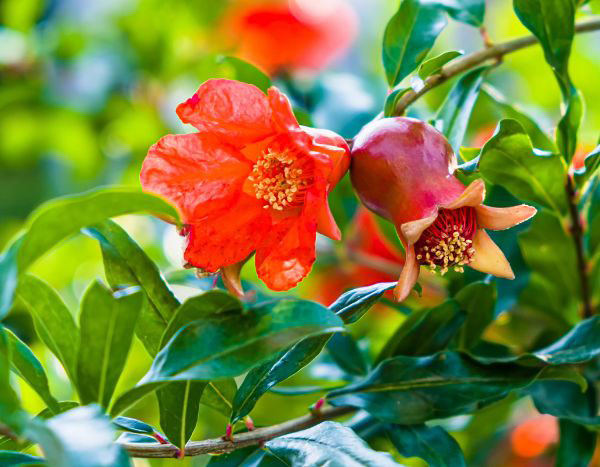
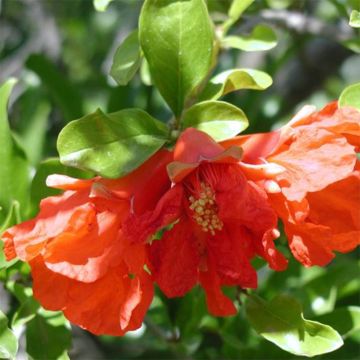
The cultivar ‘Asmar’ was spotted in a nursery in the Vaucluse region and then spread across Europe; its exact date of origin is unknown, but it is a recent selection of black-fruited varieties. The mature form of ‘Asmar’ is a multi‑trunked shrub, with a bushy, rounded habit, reaching approximately 3.50 m in height and 2 m in width over 10-12 years. The stems are sometimes thorny, their smooth grey‑brown bark becoming dark and fissured with age. The foliage is deciduous, consisting of opposite, simple, oval to lanceolate leaves, 3 to 7 cm long, 1 to 2 cm wide. They are glossy green in spring and summer, then turn golden in autumn before falling. Flowering occurs from May to July with single flowers, solitary or in small groups, 4 to 6 cm in diameter, with crumpled red to dark red petals, borne by a leathery cup-shaped calyx. 

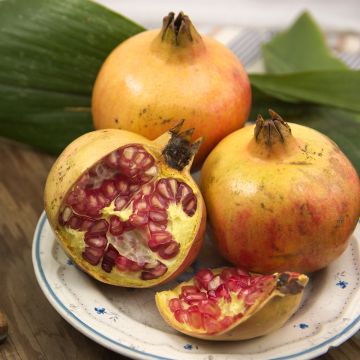
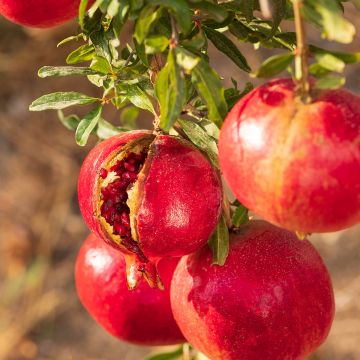
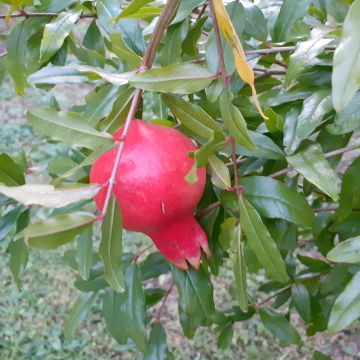
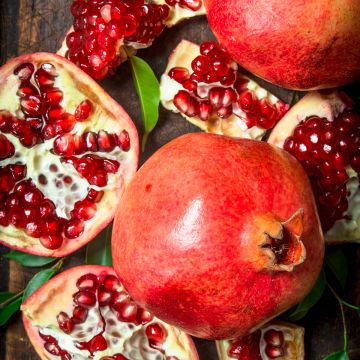
The pomegranates of ‘Asmar’ are spherical fruits 6 to 8 cm in diameter. At maturity, their skin is almost black, and they contain bright red seeds or arils. The skin is thick, leathery and glossy; the interior is compartmented and contains numerous red arils with white semi-hard seeds. This intermediate texture is more pleasant than that of hard-seeded varieties such as 'Provence'. The pulp is tangy and slightly sweet, refreshing, with a balanced aromatic profile. Yields are good in warm climates, and the dark skin colour indicates a high anthocyanin content in the fruit.

Harvest period and method
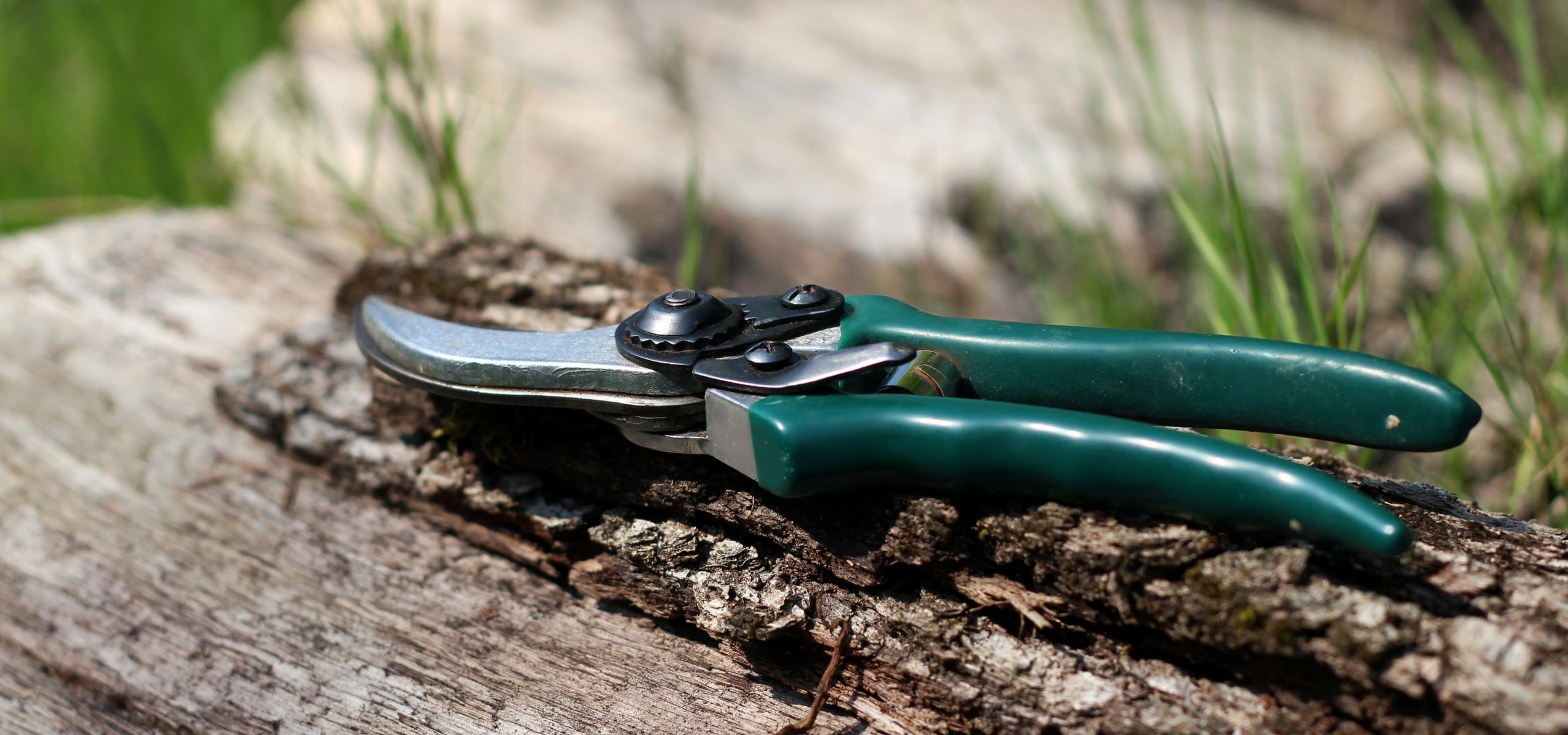
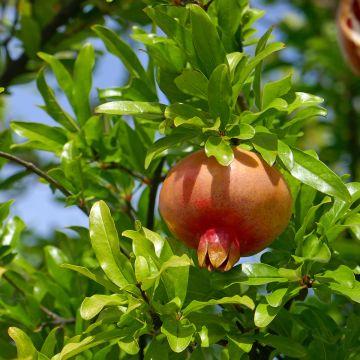
Fruit can be harvested from October to November, depending on climatic conditions. Pomegranates are ripe when the skin becomes shiny, begins to crack or takes on a uniform colour, and the lobes of the terminal calyx (persistent at the top of the fruit) curl inward. Pick with secateurs, leaving a piece of the stalk.

Fruit storage
In a cool, dry place, the fruits keep for several weeks, or even a few months. The thick skin of ‘Asmar’ promotes good keeping, but avoid temperatures that are too low (close to freezing) or overly humid conditions, which encourage mould.

Culinary uses
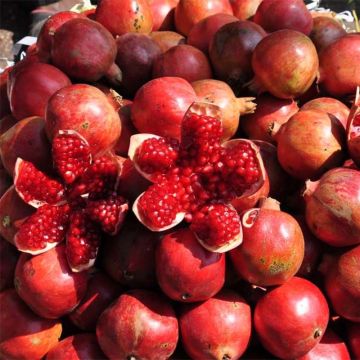
‘Asmar’ pomegranates are prized for their very red, slightly tangy juice. The seeds can be eaten in salads, in jams, syrups or as an accompaniment to savoury dishes. Their flesh is crunchy, refreshing and rich in antioxidants.

Use in the garden: planting and maintenance
Plant pomegranate ‘Asmar’ in full sun in deep, well-drained soil, preferably chalky or clay-sandy. Once well rooted, it tolerates summer drought well. Regular watering in hot weather improves fruit quality. Prune lightly at the end of winter to remove dead wood, balance the branches and stimulate fruiting. Not very susceptible to diseases, this fruit tree remains healthy if the climate is dry and hot. 
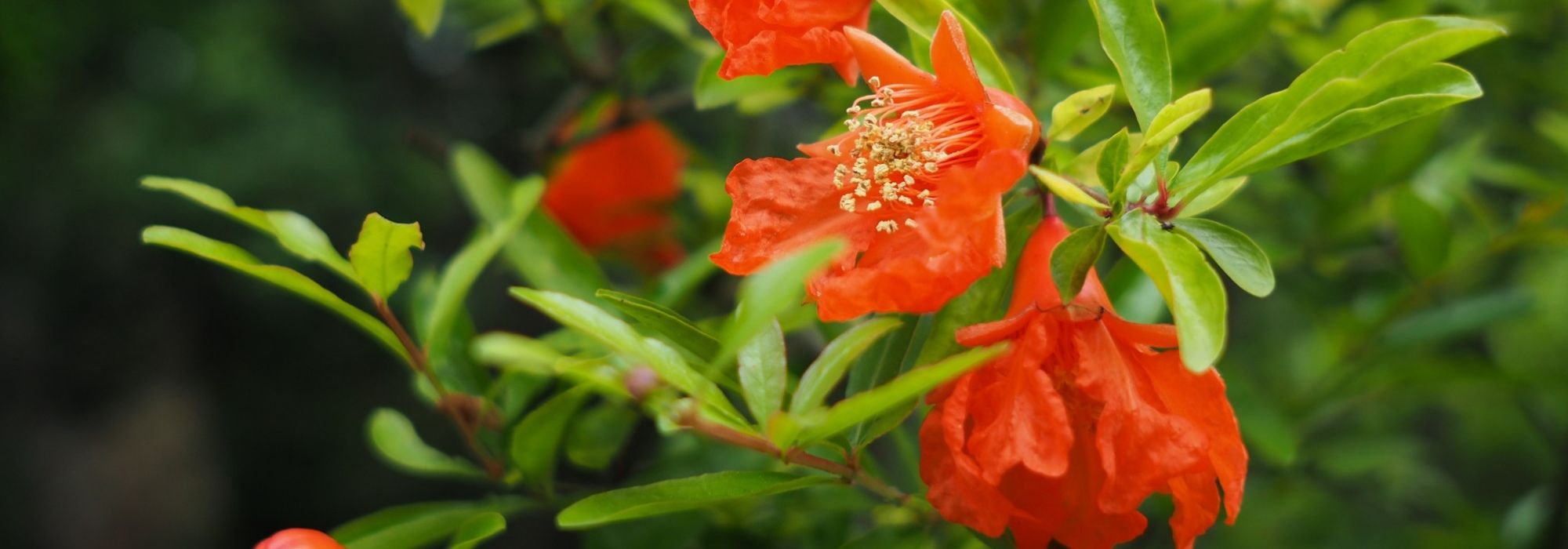
A symbol of abundance like its emblematic ancestor of ancient civilisations, pomegranate 'Asmar' is a beautiful tree to plant as a specimen in a warm position. Hardy down to -12°C, it will grow without problem in the olive zone. But its black pomegranates reach their full potential in the most southern regions. It can also be used in a large Mediterranean fruit hedge, combined with a mulberry 'Giant Fruit' or a fig tree 'Grise de Tarascon' for example.

The city of Granada, a crossroads of Arab and Andalusian civilisations in southern Spain, owes its name to the presence of the pomegranate tree, brought by the Moors and widely planted in the mythical gardens of the Alhambra palace. This tree also adorned the Hanging Gardens of Babylon, and the Romans discovered it in Carthage, naming it 'Apple of Carthage'.

Report an error about the product description

Flowering pomegranate: planting, pruning and care
Family sheet
by Eva 10 min.
Flowering pomegranate: planting, pruning and care
Read article

Punica granatum Asmar - Pomegranate in pictures

Punica granatum Asmar - Pomegranate (Harvest) Harvest

Plant habit

Height at maturity 3.50 m
Spread at maturity 2 m
Growth rate slow

Fruit

Fruit colour black
Fruit diameter 7 cm
Flavour Sour
Use Table, Jam, Patisserie
Harvest time October to November

Flowering

Flower colour red
Flowering time May to July
Inflorescence Solitary
Flower size 3 cm
Bee-friendly Attracts pollinators

Foliage

Foliage persistence Deciduous
Foliage colour green

Botanical data

Genus

Punica

Species

granatum

Cultivar

Asmar

Family

Punicaceae

Other common names

Pomegranate

Origin

Cultivar or hybrid

Product reference24868

Planting and care

We recommend planting Punica granatum 'Asmar in spring, when frosts are no longer a risk, in cool regions, but in autumn in hot, dry climates. Plant it in a very sunny, sheltered position, in deep, loose soil, even chalky soil. While it resists drought very well once established and adapts to arid conditions, it will only reach its full size and bear fruit abundantly in soil that is sufficiently moist in depth. It also tolerates sea spray well. Water in summer for the first two years. It will appreciate a compost feed and a thick layer of dead leaves, especially during the first two winters in slightly cold regions.

The pomegranate has no specific problems; it is a very robust species. Some scale insects may establish themselves without great damage to the tree (treat with white oil in winter in that case).


Planting period

Best planting time October to November
Recommended planting time March to May, September to November

Intended location

Suitable for Meadow
Type of use Border, Free-standing, Container, Orchard
Region concerned Mediterranean olive zone, South West
Hardiness Hardy down to -12°C (USDA zone 8a) Show map
Ease of cultivation Amateur
Exposure Sun
Soil pH Any
Soil type Chalky (poor, alkaline and well-drained), Silty-loamy (rich and light), Stony (poor and well-drained) well-draining

Care

Pruning instructions Pruning the pomegranate is not essential, but it helps maintain a pleasant shape. Remove dead and crossing branches. Also, remove offshoots that form at the base of the tree. Be careful not to prune too severely, as fruiting occurs on old wood, on the outer branches from previous years.
Pruning Pruning recommended once a year
Pruning time March
Soil moisture Tolerant
Disease resistance Good
Overwinter Can be left in the ground

This item has not been reviewed yet - be the first to leave a review about it.

Leave a review →

Recently viewed products

Haven't found what you were looking for?