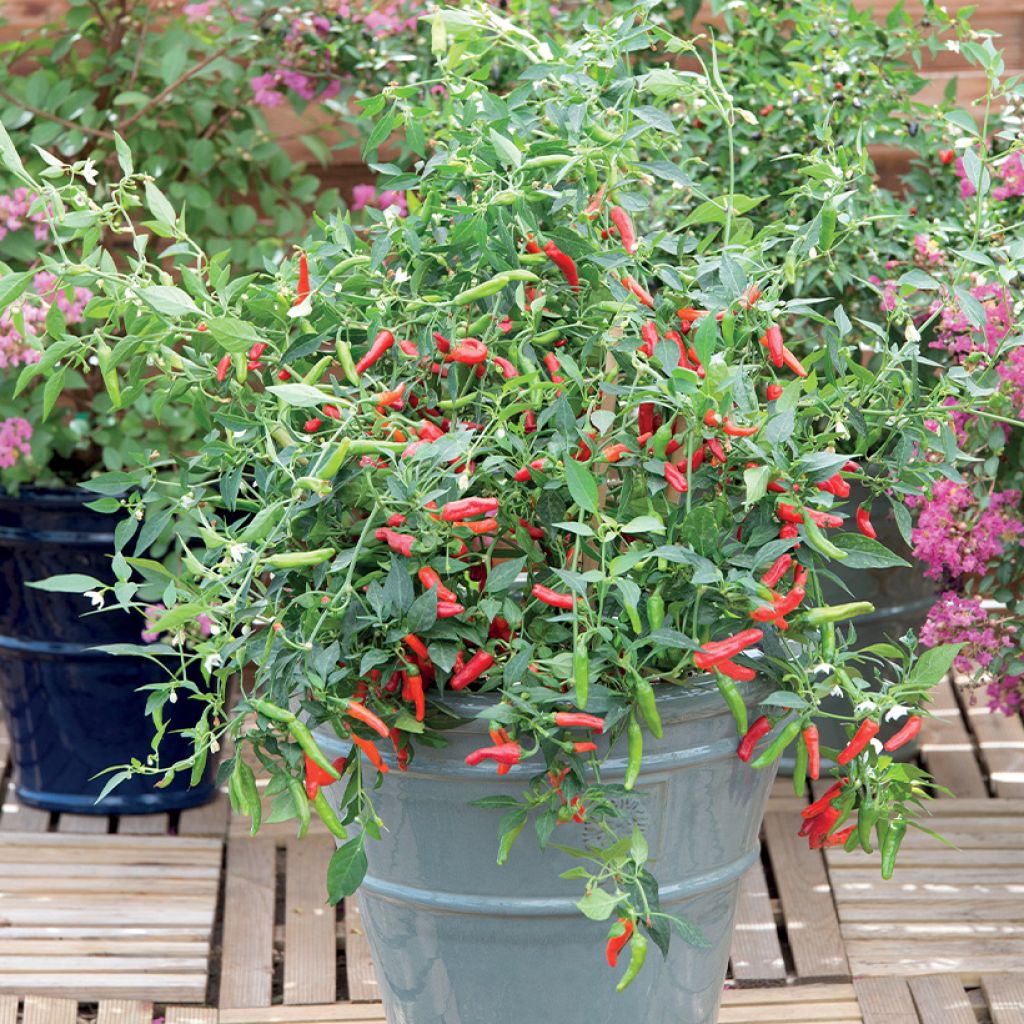
Hot Pepper Pikito plants - Capsicum frutescens
Hot Pepper Pikito plants - Capsicum frutescens
Capsicum frutescens Pikito
Hot pepper, Tabasco pepper, Spur pepper
Back-to-school special offer!
Get €10 off for every €50 you spend! And get up to €40 off on a single order.
How does it work?
1. Shop your favourites
Add your favourite plants to your basket. For every €50 you spend (excluding delivery charges, store credit and the plastic-free option), you’ll receive a €10 voucher.
€50 spent = €10 voucher
€100 spent = €20 voucher
€150 spent = €30 voucher
€200 spent = €40 voucher
2. Place your order
Once your basket reaches one of the spending thresholds, place your order. You can even choose your delivery date!
3. Receive your voucher
As soon as your order has been shipped, you’ll receive an email containing your personal voucher code and its value.
4. Use it on your next order
Your voucher is valid for 90 days from the date you receive it. It can be used once only, on a new order worth at least the value of the voucher, excluding delivery charges.
Please note: Vouchers can be combined with other offers, but cannot be split or refunded.
This plant carries a 6 months recovery warranty
More information
We guarantee the quality of our plants for a full growing cycle, and will replace at our expense any plant that fails to recover under normal climatic and planting conditions.
Description
The Pikito Chilli Pepper is a variety with small elongated fruits that turn from green to red when ripe. Of medium strength (which can already be a lot for some), they are estimated at 40,000 SHU or Scoville Heat Units on a scale ranging from 0 to 15,000,000 for pure capsaicin, with a very hot chilli pepper typically around 80,000 SHU. The plant is characterised by its compact and bushy habit, perfectly suited for container growing on a sunny balcony. It produces over 75 chilli peppers, 5 to 6 cm long per plant. Plant plug plants in March - April for a harvest from late July to October.
Chilli Pepper is a condiment that, like its close relative the bell pepper, belongs to the Solanaceae family. Archaeological evidence shows that chilli peppers were already consumed by the Incas in 7500 BC and cultivated since 3000 BC. Chilli peppers are perennial in tropical climates and grown as annuals in our latitudes, unless they are potted to be sheltered in the warm during winter. They produce small, white or purple flowers with anthers or seeds of different colours depending on the species.
Discovered by the Spaniards in the 16th century, its use quickly spread worldwide. All regions of the world incorporate it into their culinary traditions to the extent that one can imagine that Indian, Indonesian, or African cuisines have always used chilli peppers. All have been captivated by this bright red fruit that "bites when you bite it"; a characteristic that earned it the name capsicum. There are five major species, often recognisable by the colour of their flowers among other features. Forming a bush with an upright habit and lanceolate leaves, they produce small flowers that develop into hollow fruits containing seeds and varying in colour depending on the varieties.
Chilli peppers are naturally rich in vitamin C, about twice as much as lemons or oranges. It is a very volatile substance that significantly decreases as the chilli pepper dries. The content further diminishes when ground into powder. They are also very rich in vitamin A, a more stable nutrient whose content tends to increase as the fruit dries.
Chilli peppers are notably known for containing an alkaloid with no taste or odour but extremely potent: capsaicin, whose strength is conventionally measured using the Scoville scale, which has 11 levels: neutral, mild, warm, hot, strong, fiery, burning, scorching, torrid, volcanic, and explosive. Taste and strength of the chilli pepper are two completely independent notions. The strength measured by the Scoville scale does not activate taste buds but heat receptors on the skin or mucous membranes, causing a sharp burning sensation. The capsaicin content distinguishes the chilli pepper from the bell pepper. Studies have shown that, when used in dishes, hot chilli peppers also act as a bactericide. Naturally, chilli pepper plants without predators produce fruits with little capsaicin. On the other hand, plants exposed to numerous enemies of any kind will produce fruits rich in this substance. It is an effective defence mechanism for the plant.
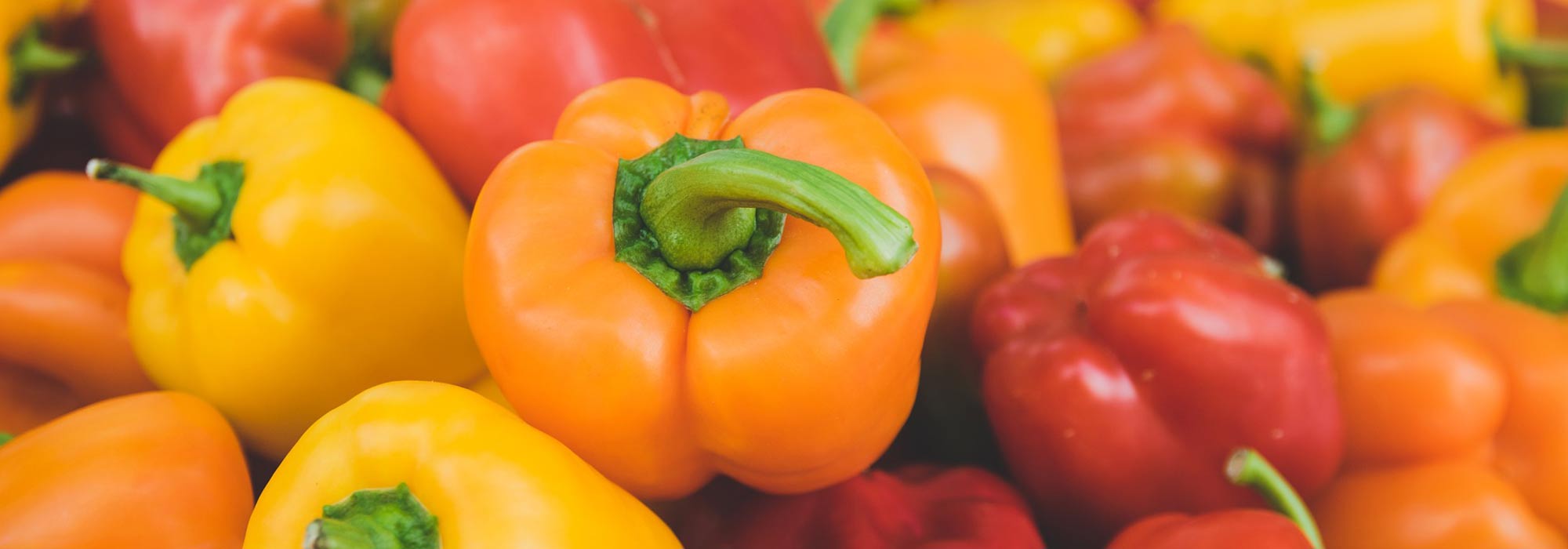
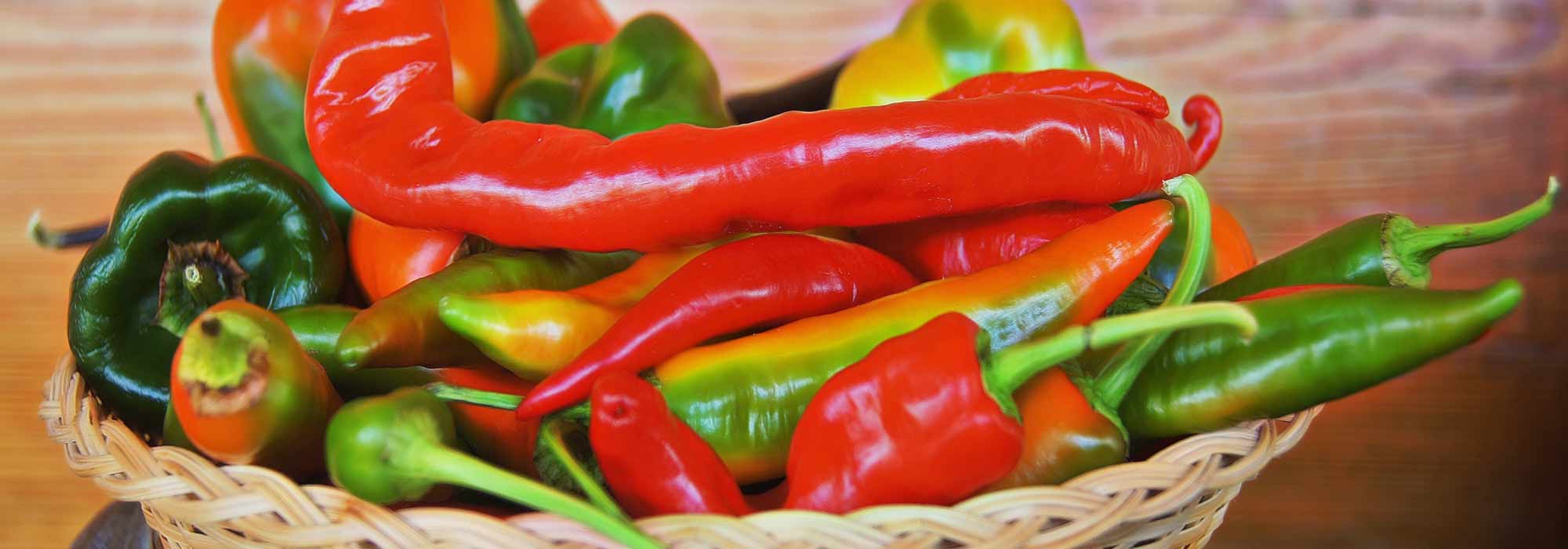
We normally distinguish between bell peppers and chilli peppers. The bell pepper is a term for a pepper with little to no capsaicin. Both can be prepared as purées or preserves, as accompaniments or main dishes. Chilli peppers are so widely used worldwide that 'spicy dish' becomes synonymous with 'hot dish', despite the wide variety of spices available.
Harvesting: the time of harvest is determined by the colour of the variety when ripe, as well as your preference for the chilli pepper's strength or aroma. Some varieties develop a fruit with an enchanting aroma that disappears at maturity. Others are enjoyed while still green, whereas some only when ripe. Pick them with a small knife or by hand as needed, taking care to leave 1 to 2 cm of the stalk. Note that chilli peppers continue to ripen after being picked.
Storage: chilli peppers can be stored for several days in the vegetable compartment of the refrigerator. Depending on your yield, you may want to store your chilli peppers for longer. There are several methods: Firstly, drying can be done in various ways, either in the sun by cutting the chilli peppers in half lengthwise. Air-drying indoors is only possible if the conditions are dry enough, otherwise the fruits will become soft. They can be dried whole in the oven on a low temperature grill (around 50°C) for several hours. Once thoroughly dry, you can either grind them into powder using a blender or leave them braided or in garlands in the house as decorative elements. You can choose a preservation method where the chilli pepper remains fresh. You can choose to marinate them in oil with herbs, pickle them in vinegar, or turn them into purée. There are abundant recipes for these methods. As a last resort, you can also freeze your chilli peppers. In all cases, wash and dry them carefully and wear gloves. Some chilli pepper varieties are so strong that an intense burning sensation can occur on the hands during handling. Do not touch your eyes after handling chilli peppers without thoroughly washing your hands.
Gardener's Tip: pair your chilli pepper plant(s) with tomatoes, basil, or aubergines. Solanaceae plants complement each other. To combat red spider mites, plant radishes nearby. Successful experiments have been conducted with chilli pepper infusions in Vietnam on parasites. The resulting herbal tea becomes a potent natural insecticide that has a deleterious effect on the parasites' digestive system. Simply boil a handful of chilli peppers in 2 to 3 litres of water and let the mixture steep for a week. As a precaution, wear gloves and protective eyewear when spraying.
Harvest
Plant habit
Foliage
Botanical data
Capsicum
frutescens
Pikito
Solanaceae
Hot pepper, Tabasco pepper, Spur pepper
Cultivar or hybrid
Annual
Planting and care
Growing Bell Peppers and Chillies requires warmth. Planting should be done in spring, in March-April.
Initially, allow the plug plants to grow by transplanting them into trays or pots of 8 to 13 cm in diameter, filled with compost. Place them in a warm and bright spot. Water regularly.
In the ground: Planting in the ground should be done when the soil is sufficiently warmed up and the risk of frost is avoided, around mid-May. Choose a very sunny exposure and a sheltered location. Bell Peppers and Chillies thrive in very rich, light, and well-drained soils. In the previous autumn, add well-rotted compost.
Space the young plants 50 cm apart in all directions. Dig a hole (3 times the volume of the root ball), add well-rotted compost to the bottom of the planting hole, place the root ball and cover with soil. Firmly press down and water.
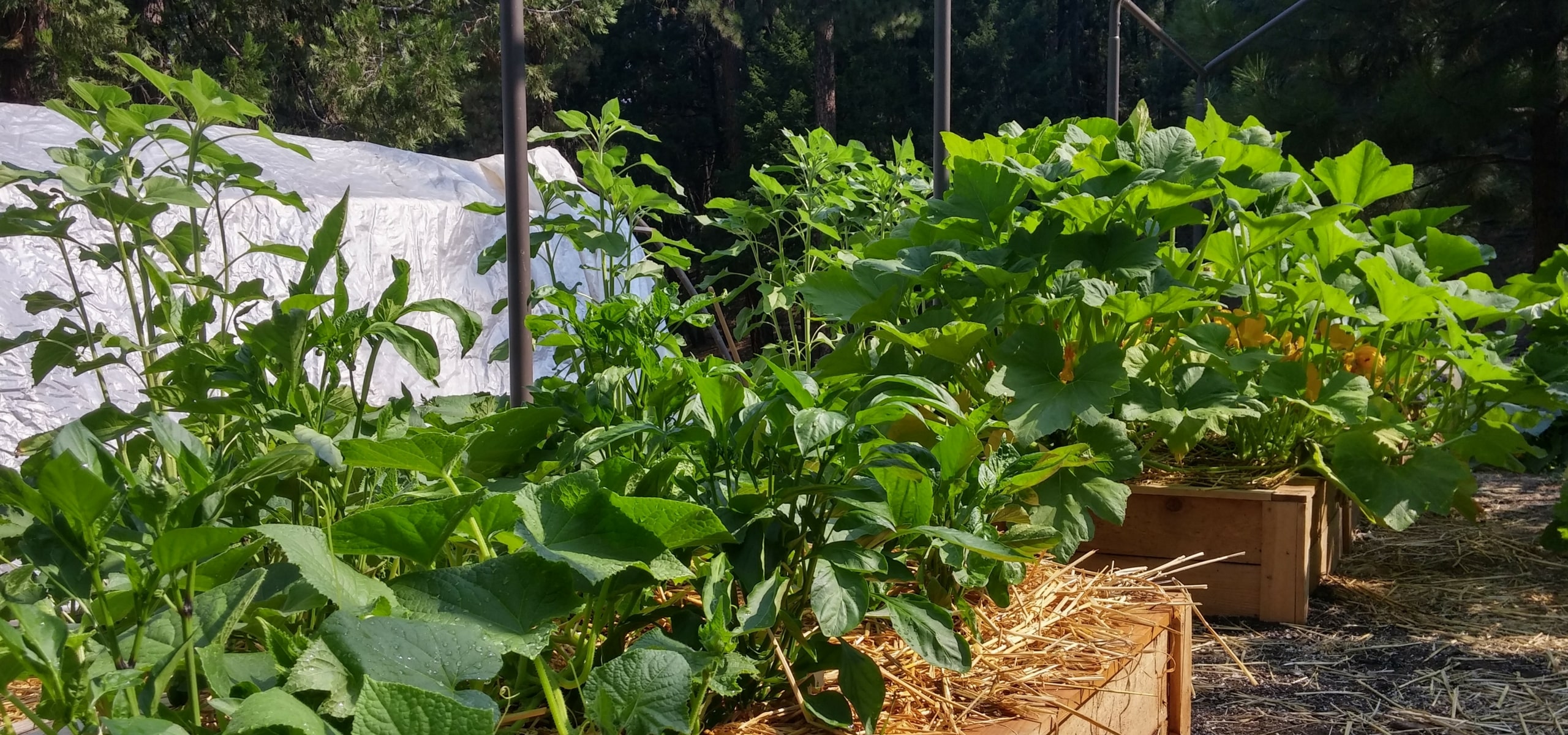
At the beginning of cultivation, set up a removable tunnel to gain a few degrees, especially in cooler regions. Gently hoe and weed as the roots are shallow. Then, apply a mulch.
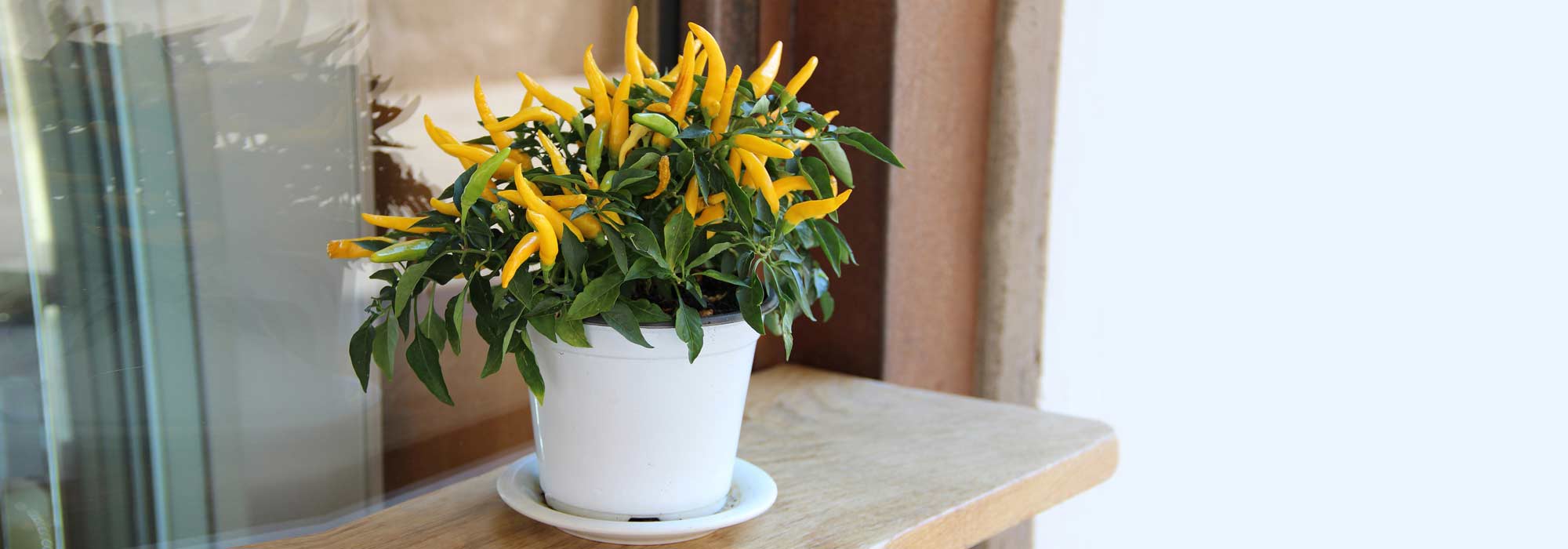
In a pot: choose a pot at least 30 cm deep. Place a layer of gravel or clay balls at the bottom of the pot to aid drainage. Fill the pot with a mixture of compost and well-rotted compost. Place the root ball and cover with soil. Firmly press down and water. Place the pot in the sun. Regularly add compost.
Install stakes. Water regularly at the base of the plants.
It is advisable to pinch Chilli and Bell Pepper plants, especially in cooler regions. When the plants have 10 to 15 fruits, cut the ends of the stems one leaf above the last fruit.
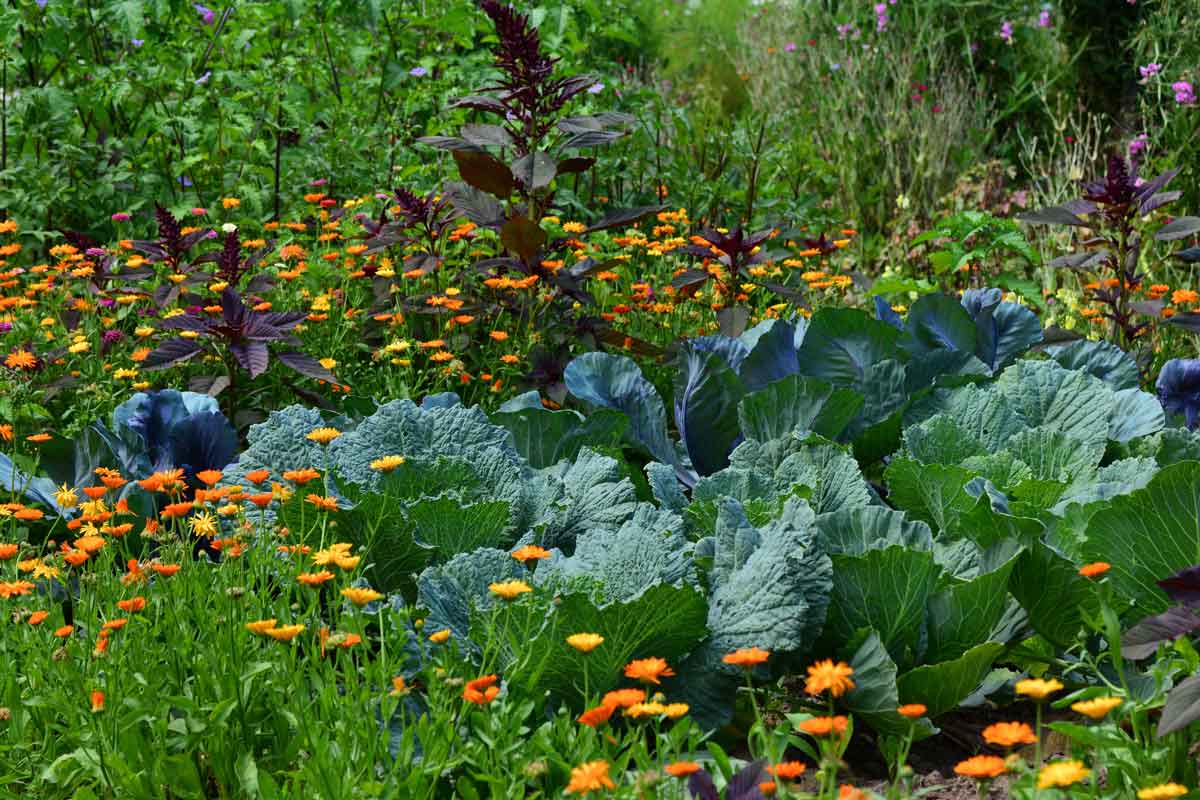
In the vegetable garden, plant flowers nearby to attract pollinating insects. In terms of crop rotation, wait 3 years before growing these Solanaceae again.
Cultivation
Care
Intended location
Planting & care advice
-
-

-
-
-
-
-
-
This item has not been reviewed yet - be the first to leave a review about it.
Recently viewed products
Haven't found what you were looking for?
Hardiness is the lowest winter temperature a plant can endure without suffering serious damage or even dying. However, hardiness is affected by location (a sheltered area, such as a patio), protection (winter cover) and soil type (hardiness is improved by well-drained soil).

The flowering period indicated on our website applies to countries and regions located in USDA zone 8 (France, the United Kingdom, Ireland, the Netherlands, etc.)
It will vary according to where you live:- In zones 9 to 10 (Italy, Spain, Greece, etc.), flowering will occur about 2 to 4 weeks earlier.
- In zones 6 to 7 (Germany, Poland, Slovenia, and lower mountainous regions), flowering will be delayed by 2 to 3 weeks.
- In zone 5 (Central Europe, Scandinavia), blooming will be delayed by 3 to 5 weeks.
In temperate climates, pruning of spring-flowering shrubs (forsythia, spireas, etc.) should be done just after flowering.
Pruning of summer-flowering shrubs (Indian Lilac, Perovskia, etc.) can be done in winter or spring.
In cold regions as well as with frost-sensitive plants, avoid pruning too early when severe frosts may still occur.
The planting period indicated on our website applies to countries and regions located in USDA zone 8 (France, United Kingdom, Ireland, Netherlands).
It will vary according to where you live:
- In Mediterranean zones (Marseille, Madrid, Milan, etc.), autumn and winter are the best planting periods.
- In continental zones (Strasbourg, Munich, Vienna, etc.), delay planting by 2 to 3 weeks in spring and bring it forward by 2 to 4 weeks in autumn.
- In mountainous regions (the Alps, Pyrenees, Carpathians, etc.), it is best to plant in late spring (May-June) or late summer (August-September).
The harvesting period indicated on our website applies to countries and regions in USDA zone 8 (France, England, Ireland, the Netherlands).
In colder areas (Scandinavia, Poland, Austria...) fruit and vegetable harvests are likely to be delayed by 3-4 weeks.
In warmer areas (Italy, Spain, Greece, etc.), harvesting will probably take place earlier, depending on weather conditions.
The sowing periods indicated on our website apply to countries and regions within USDA Zone 8 (France, UK, Ireland, Netherlands).
In colder areas (Scandinavia, Poland, Austria...), delay any outdoor sowing by 3-4 weeks, or sow under glass.
In warmer climes (Italy, Spain, Greece, etc.), bring outdoor sowing forward by a few weeks.
Shipping country and language
Your country of residence may be:
Your country of residence is:
For a better user experience on our website, you can select:
Your shipping country:
-
 Austria
-
 Belgium
-
 Bosnia & Herzegovina
-
 Bulgaria
-
 Croatia
-
 Cyprus
-
 Czechia
-
 Denmark
-
 Estonia
-
 Finland
-
 France
-
 Germany
-
 Greece
-
 Hungary
-
 Iceland
-
 Ireland
-
 Italy
Italy
-
 Latvia
-
 Liechtenstein
-
 Lithuania
-
 Luxembourg
-
 Malta
Malta
-
 Netherlands
-
 Poland
-
 Portugal
-
 Romania
-
 Serbia
-
 Slovakia
-
 Slovenia
-
 Spain
Spain
-
 Sweden
-
 Switzerland
Language:
-
French
-
 English
-
Spanish
-
Italian
-
German
-
Portuguese
-
Dutch
-
Finnish
My Account
Hello
My wish lists
My cart
Log in / Register
Existing customer?
This form is protected by reCAPTCHA - the Google Privacy Policy and Terms of Service apply.
New customer?
Create an account to track your orders, access our customer service and, if you wish, make the most of our upcoming offers.