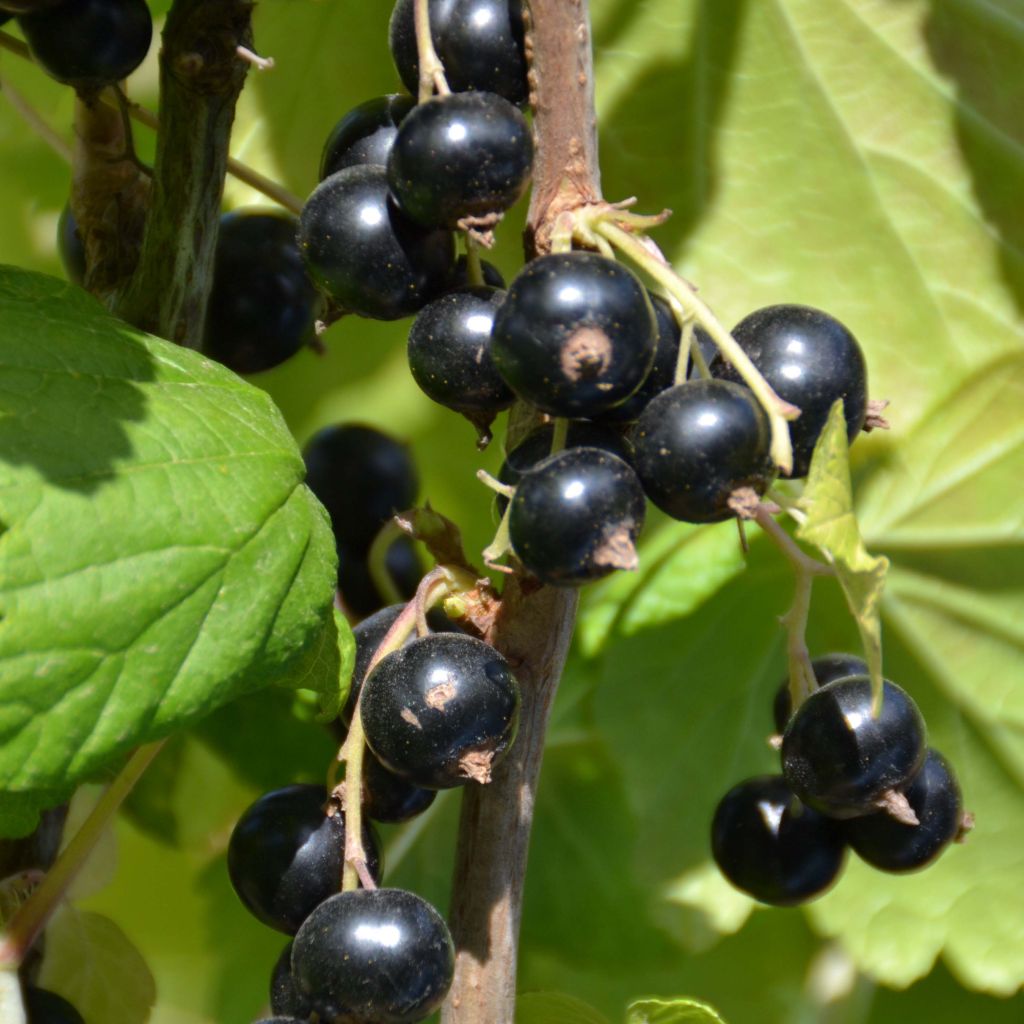
Blackcurrant Perles d'Auvergne - Georges Delbard
Blackcurrant Perles d'Auvergne - Georges Delbard
Ribes nigrum Perles d'Auvergne® 'delcaresnoi'
Blackcurrant
Perfect – received a lovely shrub with lots of branches, and it has established well – even fruit this year.
GEORGES, 30/06/2024
Back-to-school special offer!
Get €10 off for every €50 you spend! And get up to €40 off on a single order.
How does it work?
1. Shop your favourites
Add your favourite plants to your basket. For every €50 you spend (excluding delivery charges, store credit and the plastic-free option), you’ll receive a €10 voucher.
€50 spent = €10 voucher
€100 spent = €20 voucher
€150 spent = €30 voucher
€200 spent = €40 voucher
2. Place your order
Once your basket reaches one of the spending thresholds, place your order. You can even choose your delivery date!
3. Receive your voucher
As soon as your order has been shipped, you’ll receive an email containing your personal voucher code and its value.
4. Use it on your next order
Your voucher is valid for 90 days from the date you receive it. It can be used once only, on a new order worth at least the value of the voucher, excluding delivery charges.
Please note: Vouchers can be combined with other offers, but cannot be split or refunded.
Why not try an alternative variety in stock?
View all →
Available in 6 sizes
Available in 2 sizes
Available in 1 sizes
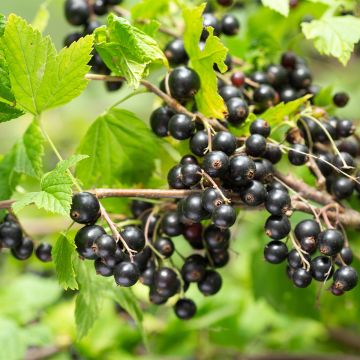
Available in 2 sizes
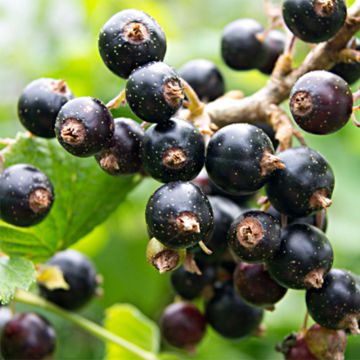
Available in 3 sizes
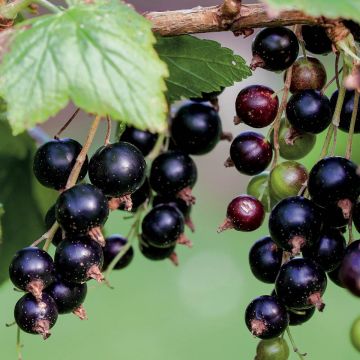
Available in 3 sizes
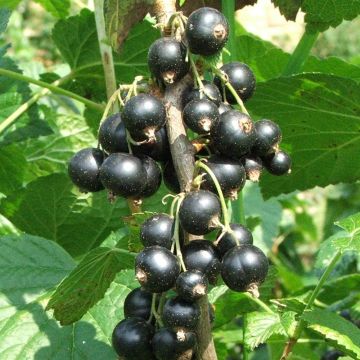
Available in 3 sizes
Available in 1 sizes
Available in 1 sizes
Available in 1 sizes
This plant carries a 12 months recovery warranty
More information
We guarantee the quality of our plants for a full growing cycle, and will replace at our expense any plant that fails to recover under normal climatic and planting conditions.
Description
The Perles d'Auvergne® Blackcurrant Bush 'delcaresnoi’ is a brand new variety selected for its high disease resistance. It will appeal to blackcurrant lovers, as its fruit is very rich in aroma. This early variety is self-fertile. Blackcurrants have a high concentration of vitamin C, but they are appreciated more cooked than when eaten raw. They are the perfect ingredient for tasty recipes. Planting is preferably done in autumn, or in spring with regular watering.
The Blackcurrant (Ribes nigrum) Bush belongs to the Grossulariaceae family, like Gooseberries. It is a deciduous shrub native to regions ranging from the Pyrenees to Central Asia. Cultivated since the 16th century, the Blackcurrant Bush grows spontaneously in the cool woods of northeastern Europe. The Blackcurrant Bush forms a vigorous bush, with an upright habit and few branches, reaching a height of 1.2 metres (4 feet) with a spread of 80 cm (32in). The plant reaches its adult size in three years. It is a very hardy bush, resistant down to -20°C (-4°F) but sensitive to drought in summer. The leaves, deciduous, are large, flat, with three to five lobes and toothed edges, bright green and pleasantly fragrant when crushed. Leaves, fruits, and buds are intensely fragrant, due to the presence of glands containing essential oils, used in perfumery. The bark is smooth and reddish on young branches and darkens with age. Fruits appear on 2-year-old branches and become less common on 4-year-old and older branches. Harvesting is done when the fruits are fully black and start falling on the ground. Wait for the fruits to fully ripen before harvesting.
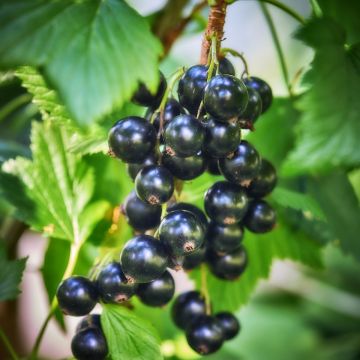
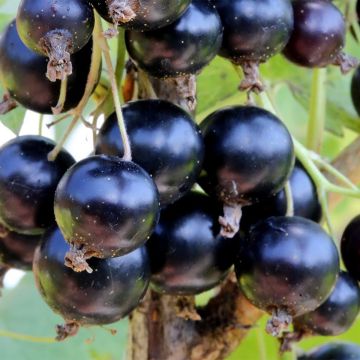
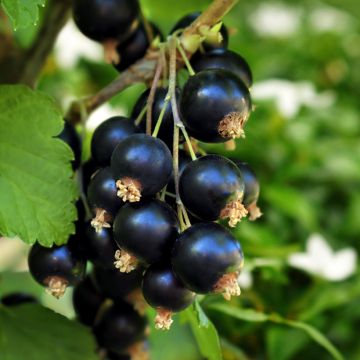
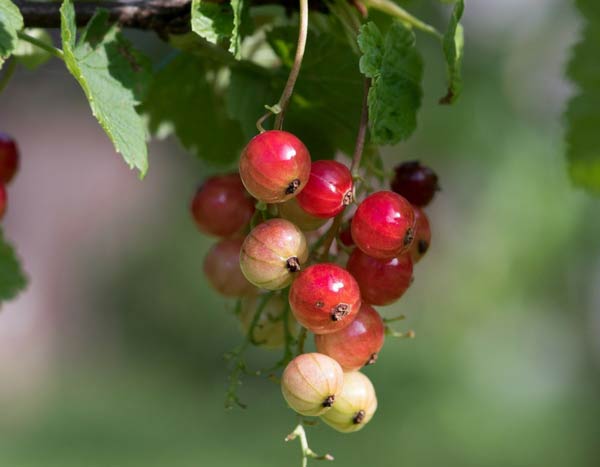
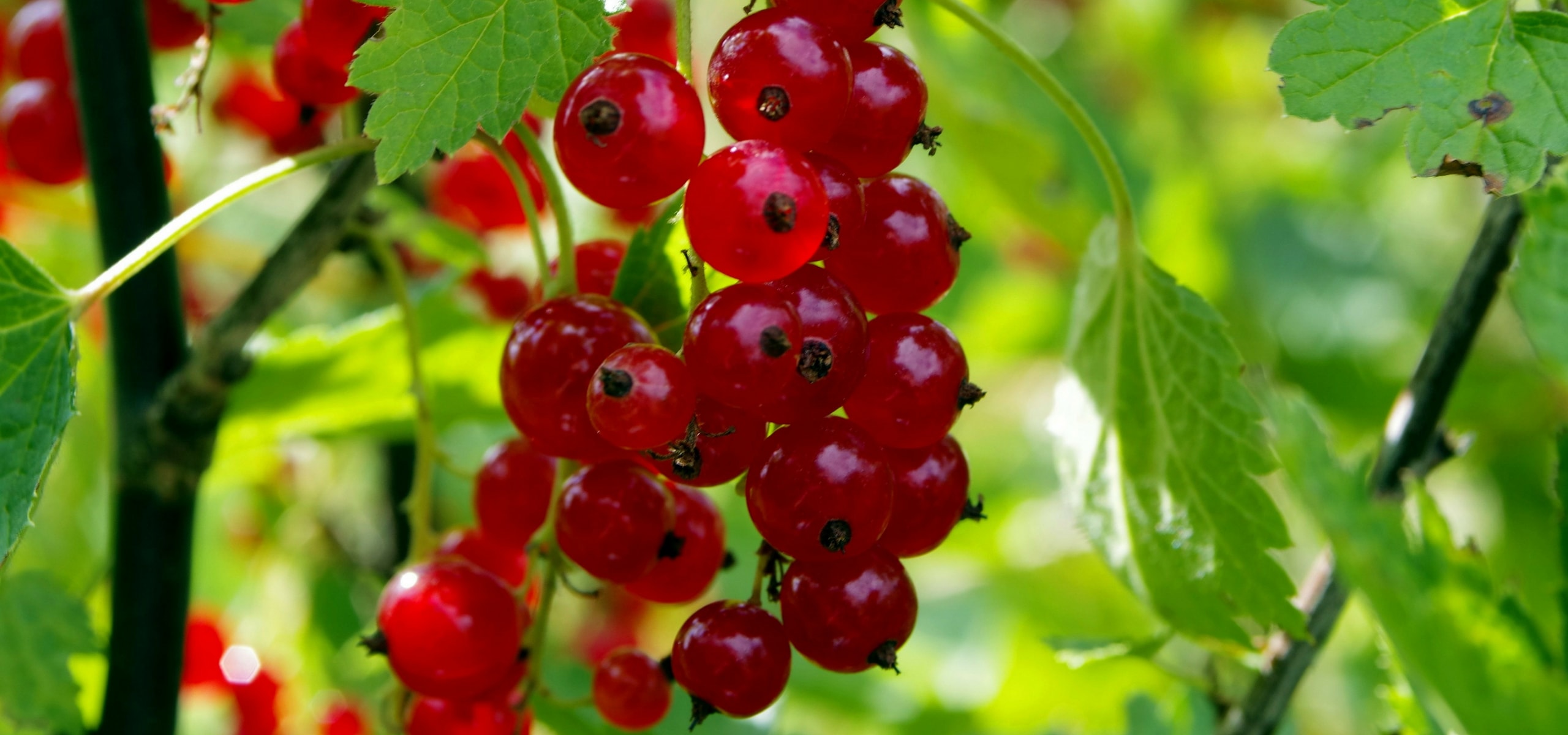
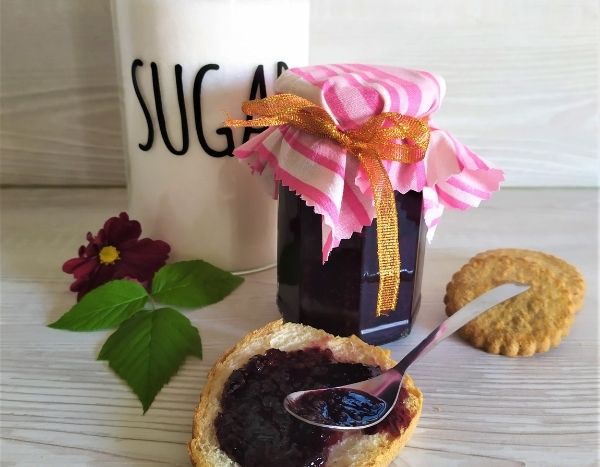
The Perles d'Auvergne® variety is a brand new selection from the Georges Delbard nursery. The fruits are large black berries arranged in clusters. Blackcurrants are rich in tannins and vitamins C and C2. This variety has a particularly strong taste, and it will be delicious in juice, syrup, jams or jellies, and pastries. It is also used in the production of liqueurs and nectars. Blackcurrants can be well preserved when dried or frozen, providing a supply of fruit for the winter.
While Perles d'Auvergne® is a self-fertile variety and resistant to mildew, the productivity of the bush can be increased by planting another variety nearby. Alternating varieties and species, when space allows, is a good way to promote pollination and reduce the risk of diseases. In the garden, create a small edible hedge by mixing Blackcurrant Bushes, Gooseberries, and Raspberry bushes, for example, or plant the Blackcurrant Bush within a flowering shrub border.
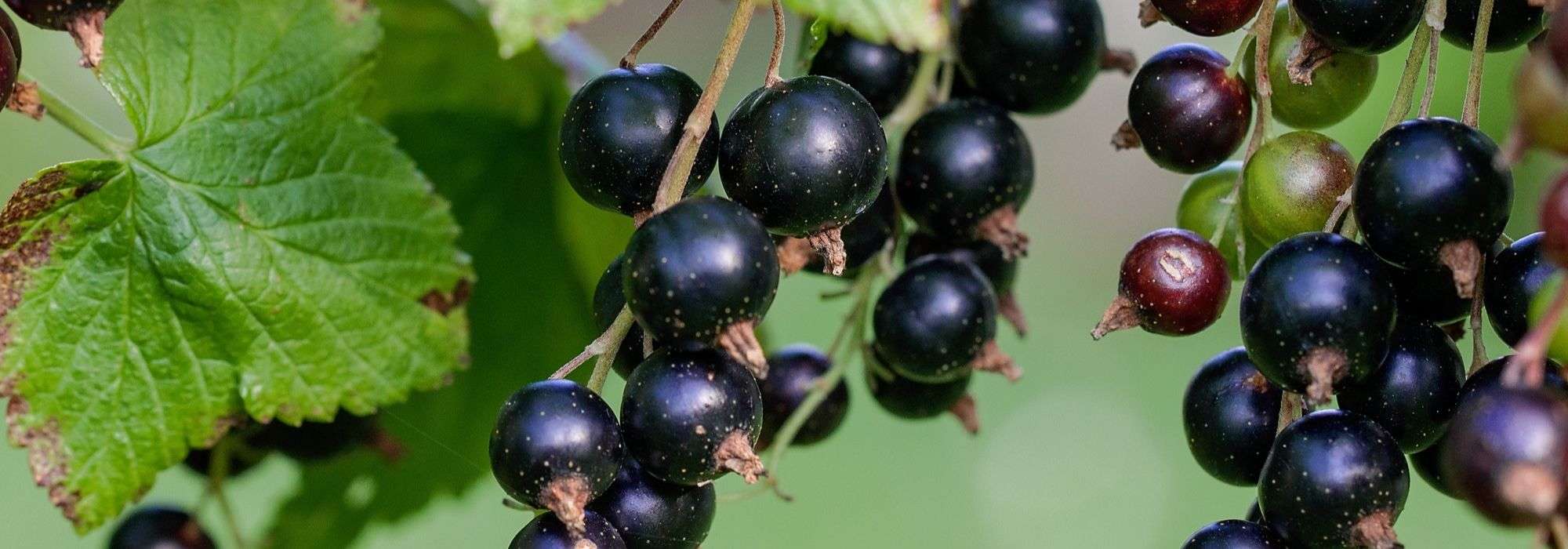
Blackcurrant Perles d'Auvergne - Georges Delbard in pictures
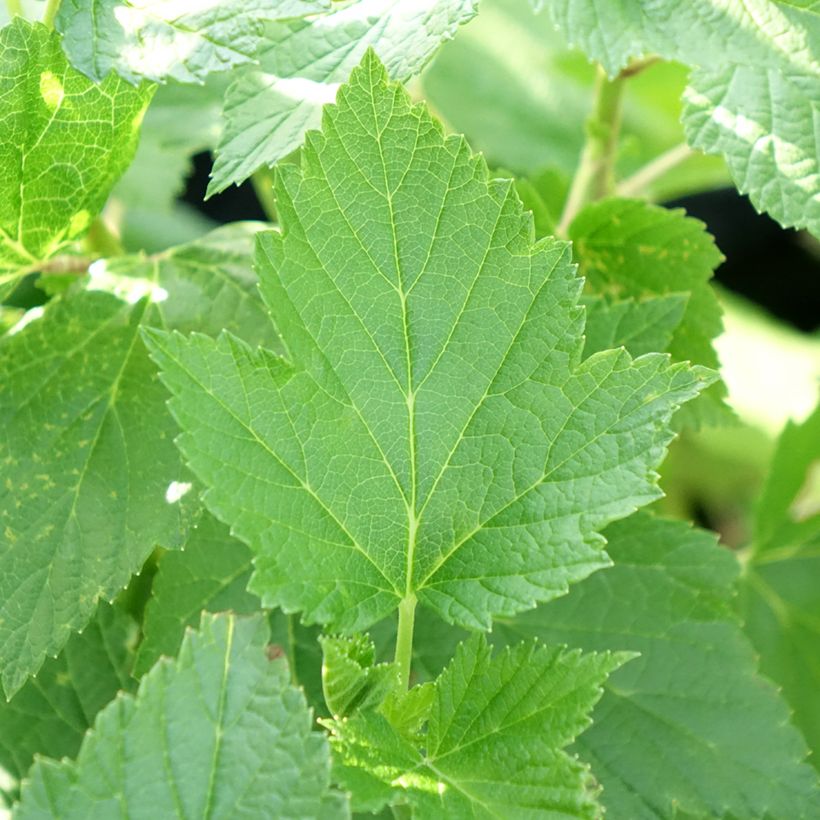

Plant habit
Fruit
Flowering
Foliage
Botanical data
Ribes
nigrum
Perles d'Auvergne® 'delcaresnoi'
Grossulariaceae
Blackcurrant
Cultivar or hybrid
Planting and care
Plant the Blackcurrant bush preferably in autumn or alternatively in spring with regular watering, in ordinary, deep, even heavy and clayey soil. It appreciates moist soils as long as they are not permanently wet. Non-direct sunlight or partial shade, in a place sheltered from strong winds, will yield good results. The Blackcurrant does not like heat and drought.
If you are planting multiple Blackcurrant bushes, space them 1m (3ft) apart in all directions. Soak the root ball in water for a few moments before planting. Dig a hole, incorporate compost and crushed horn into the soil, place the young plant burying the collar and cover with soil. Water regularly during the first year after planting, and then only in case of high temperatures. Apply mulch at the base to retain moisture during summer. Add some compost every year, in spring or autumn. Avoid excessive soil disruption as the Blackcurrant bush has shallow roots.
It is an accommodating bush, and Perles d´Auvergne® is a mildew-resistant variety. It has a few enemies, such as aphids, which can be eliminated by spraying soapy water or a garlic decoction. In June-July, protect the harvest with nets to deter birds from indulging.
It is important, in a blackcurrant plantation as in any plantation, to alternate the varieties when space allows: pollination will be favoured, even for self-fertile varieties, and the risk of disease will be limited.
Planting period
Intended location
Care
Planting & care advice
-
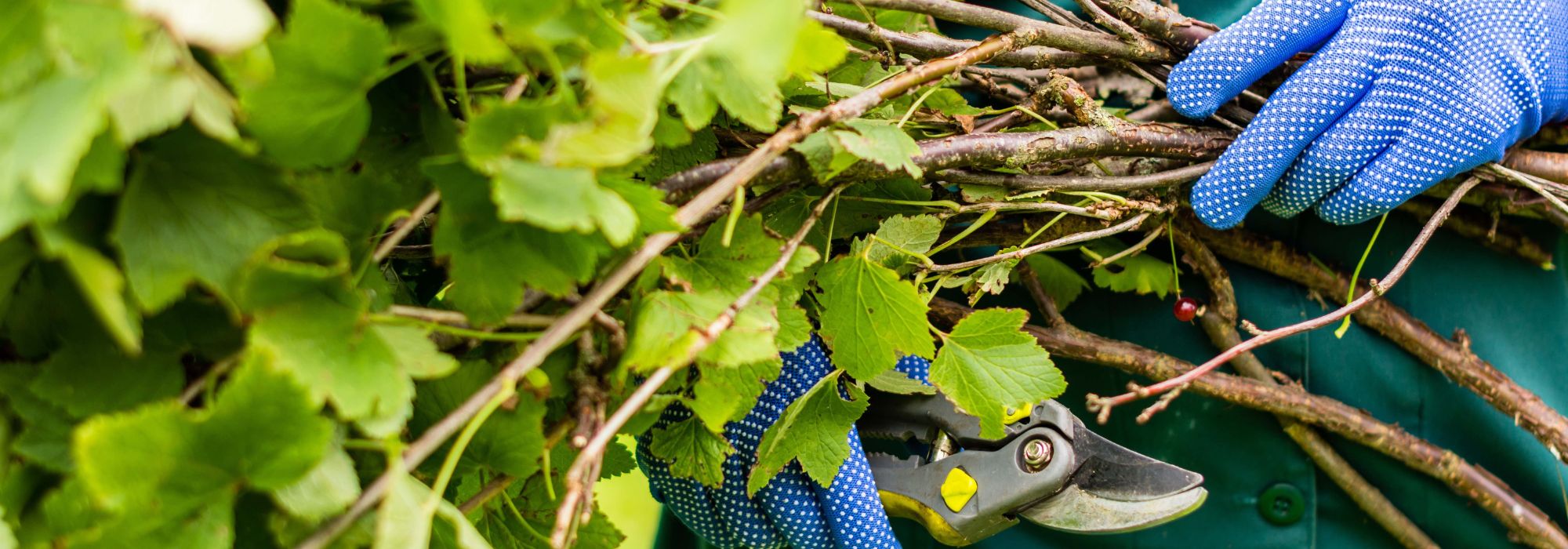
-
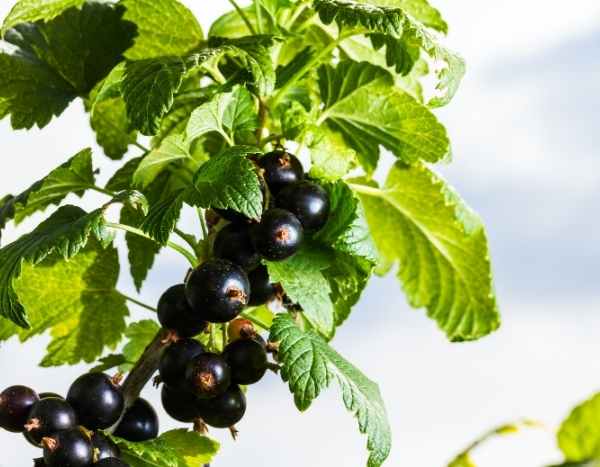
-
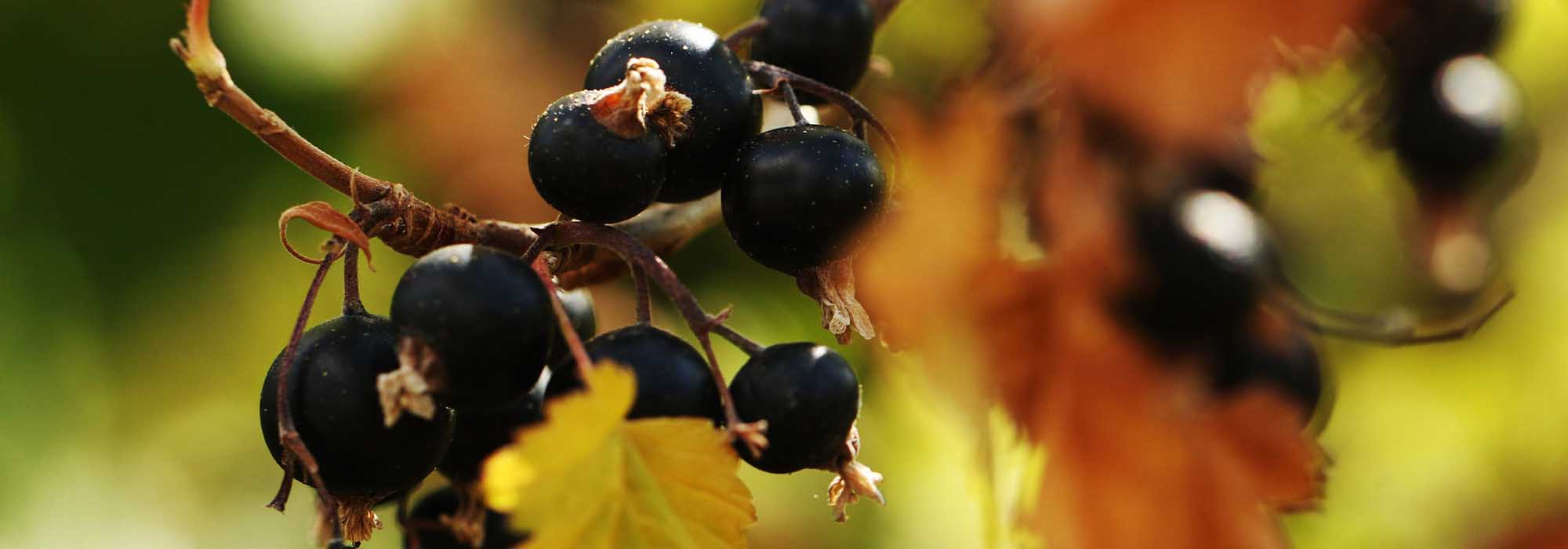
-
-
-
-
-
-
, onOrder confirmed
Reply from on Promesse de fleurs
Recently viewed products
Haven't found what you were looking for?
Hardiness is the lowest winter temperature a plant can endure without suffering serious damage or even dying. However, hardiness is affected by location (a sheltered area, such as a patio), protection (winter cover) and soil type (hardiness is improved by well-drained soil).

The flowering period indicated on our website applies to countries and regions located in USDA zone 8 (France, the United Kingdom, Ireland, the Netherlands, etc.)
It will vary according to where you live:- In zones 9 to 10 (Italy, Spain, Greece, etc.), flowering will occur about 2 to 4 weeks earlier.
- In zones 6 to 7 (Germany, Poland, Slovenia, and lower mountainous regions), flowering will be delayed by 2 to 3 weeks.
- In zone 5 (Central Europe, Scandinavia), blooming will be delayed by 3 to 5 weeks.
In temperate climates, pruning of spring-flowering shrubs (forsythia, spireas, etc.) should be done just after flowering.
Pruning of summer-flowering shrubs (Indian Lilac, Perovskia, etc.) can be done in winter or spring.
In cold regions as well as with frost-sensitive plants, avoid pruning too early when severe frosts may still occur.
The planting period indicated on our website applies to countries and regions located in USDA zone 8 (France, United Kingdom, Ireland, Netherlands).
It will vary according to where you live:
- In Mediterranean zones (Marseille, Madrid, Milan, etc.), autumn and winter are the best planting periods.
- In continental zones (Strasbourg, Munich, Vienna, etc.), delay planting by 2 to 3 weeks in spring and bring it forward by 2 to 4 weeks in autumn.
- In mountainous regions (the Alps, Pyrenees, Carpathians, etc.), it is best to plant in late spring (May-June) or late summer (August-September).
The harvesting period indicated on our website applies to countries and regions in USDA zone 8 (France, England, Ireland, the Netherlands).
In colder areas (Scandinavia, Poland, Austria...) fruit and vegetable harvests are likely to be delayed by 3-4 weeks.
In warmer areas (Italy, Spain, Greece, etc.), harvesting will probably take place earlier, depending on weather conditions.
The sowing periods indicated on our website apply to countries and regions within USDA Zone 8 (France, UK, Ireland, Netherlands).
In colder areas (Scandinavia, Poland, Austria...), delay any outdoor sowing by 3-4 weeks, or sow under glass.
In warmer climes (Italy, Spain, Greece, etc.), bring outdoor sowing forward by a few weeks.
Shipping country and language
Your country of residence may be:
Your country of residence is:
For a better user experience on our website, you can select:
Your shipping country:
-
 Austria
-
 Belgium
-
 Bosnia & Herzegovina
-
 Bulgaria
-
 Croatia
-
 Cyprus
-
 Czechia
-
 Denmark
-
 Estonia
-
 Finland
-
 France
-
 Germany
-
 Greece
-
 Hungary
-
 Iceland
-
 Ireland
-
 Italy
Italy
-
 Latvia
-
 Liechtenstein
-
 Lithuania
-
 Luxembourg
-
 Malta
Malta
-
 Netherlands
-
 Poland
-
 Portugal
-
 Romania
-
 Serbia
-
 Slovakia
-
 Slovenia
-
 Spain
Spain
-
 Sweden
-
 Switzerland
Language:
-
French
-
 English
-
Spanish
-
Italian
-
German
-
Portuguese
-
Dutch
-
Finnish
My Account
Hello
My wish lists
My cart
Log in / Register
Existing customer?
This form is protected by reCAPTCHA - the Google Privacy Policy and Terms of Service apply.
New customer?
Create an account to track your orders, access our customer service and, if you wish, make the most of our upcoming offers.