Further reading…
Making a garden resilient, stronger in the face of the repeated heatwaves our countries now suffer, is one of the challenges of the Chaparral garden, which draws on flora from extreme climates, such as those found in New Mexico or California. The multiple heatwaves of summer 2026 confirm this reality and will certainly steer us towards undemanding plants that are also hardy in our winters. Discover this new type of garden, inherently waterwise, low-maintenance and very promising.
What is a chaparral?
Chaparro is a Spanish word referring to several oak species (Quercus ilex, holm oak, but also Quercus coccifera and sometimes cork oak). The term also covers less well-known species such as Castela tortuosa, a shrub native to arid areas of Mexico and southern United States.
Chaparral is nothing more than an area of scrub and shrubs, forming a specific ecosystem in Mediterranean climates. It generally resembles a stand of holm oaks, in other words a garrigue or maquis, terms and landscapes more familiar to us. The name in Spanish denotes a biome found mainly from Mexico to California, and in Europe around the Mediterranean such as Andalusia or Sardinia. These areas are wooded, populated by shrubs and undershrubs able to withstand very hot conditions.
Plants able to grow in chaparral are often sclerophyllous (small, leathery leaves covered by a protective cuticle), sharing unique adaptations to this dry environment: deep roots, grey-green leaves that reflect light, and essential oils that limit evaporation.
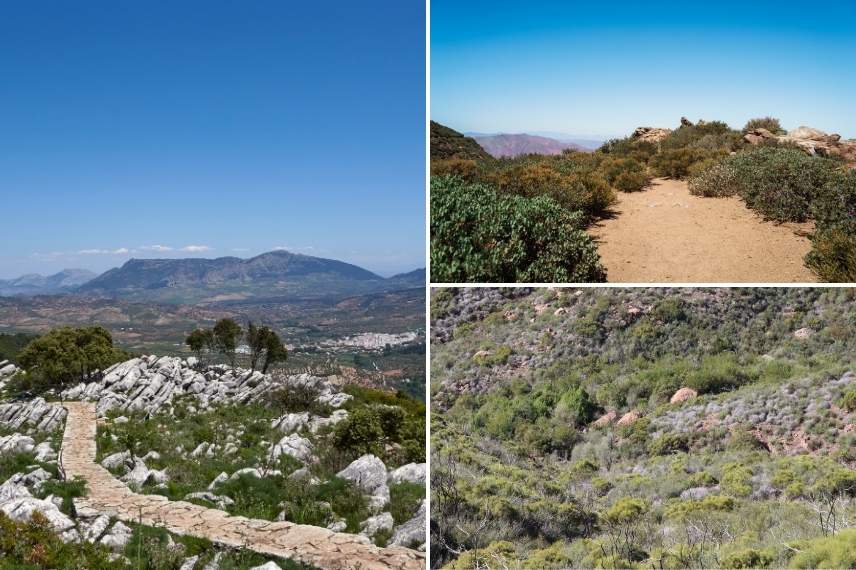
We imagined three scenes to reproduce, in spirit, this ultra-resilient type of landscape. You can create a single area of the garden that receives particularly strong summer sun, or treat the whole garden in this style, provided you live in temperate valleys or mild zones of the country.
Adapting the chaparral to a dry exotic garden
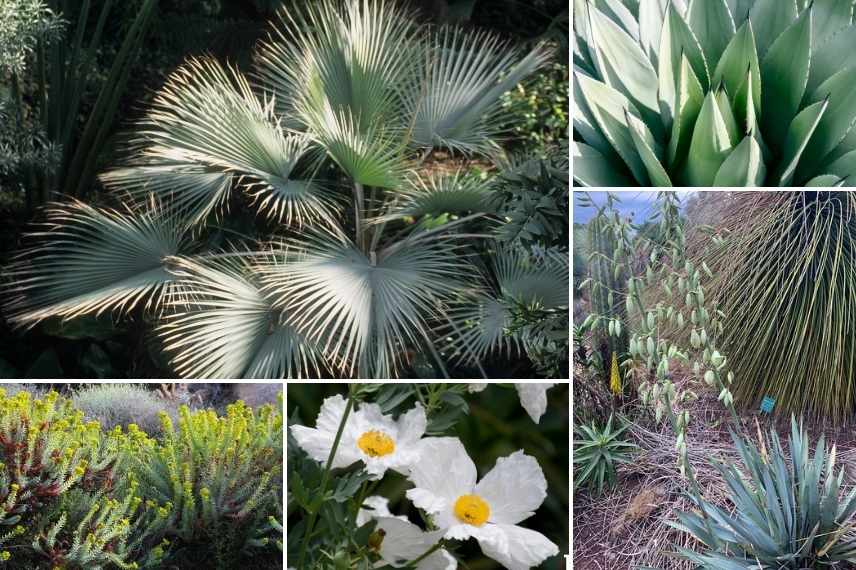
A dry garden can create a sublime scene with exceptional plants.
Here we play with a palette of blue-tinged foliage using plants surprisingly resistant to short frosts in winter, not exceeding −10°C. The tree poppy, a Californian and Mexican plant with wonderful white flowers, and the Mexican blue palm for an original backdrop, have proven able to withstand very dry summers. Once well established, Romneya poses no real hardiness issues. A Yucca pallida joins them to form that superb silvery-blue base, accompanied by an agave hardy enough such as Agave parryi or Agave montana.
A Mediterranean perennial, Euphorbia pithyusa, a Balearic spurge that stays low, and a Mexican-origin plant, Mathiasella bupleuroides 'Green Dream' with jade-green flowers, naturally fit among these plants. We bring in chartreuse and blue-green tones for a duet of colours evoking Mediterranean aridity.
NB: this blue planting can easily be part of a blue garden, located in the sunniest, driest part of the garden!
Transport yourself to Lanzarote
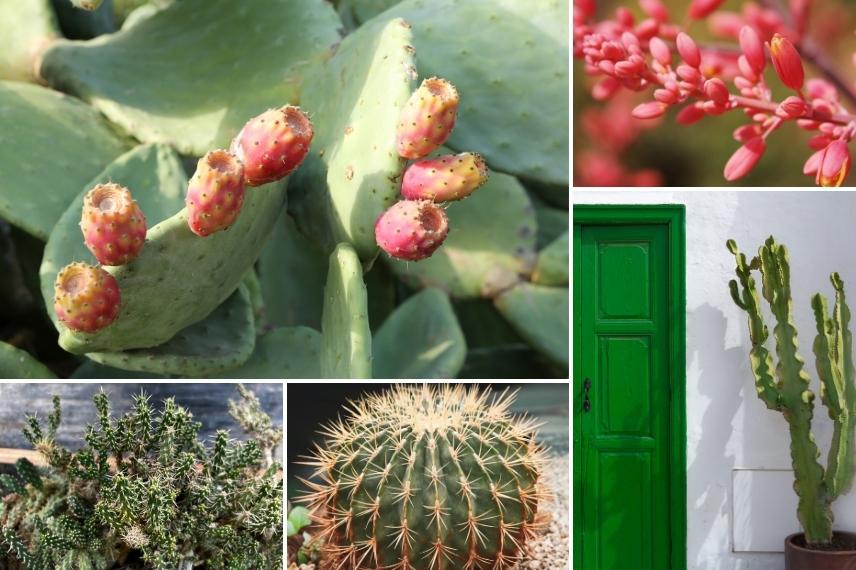
Lanzarote's cactus gardens are exceptionally photogenic. On this volcanic archipelago grow sclerophyllous plants with small leathery leaves adapted to drought, and spiny cacti. Drawing inspiration from them, while carefully selecting cacti cold-hardy enough for our winters, allows creation of a unique area within a dry garden, ready to face repeated summer heat spikes. Ensure perfect drainage, as this type of garden cannot tolerate any standing moisture in winter.
A prickly pear, well adapted to sea spray, is interesting for its slightly greater hardiness (down to around −15°C for some) and its unique habit with large spiny pads. Plant them liberally; choices include Opuntia scheeri or Opuntia engelmannii var. rastrera, among many others. In this distinctive setting, succumb to oddity of Cylindropuntia kleiniae, a cousin of opuntias, quite cold-hardy and producing a beautiful magenta summer bloom. Complement the area with a Hesperaloe parviflora and an Echinocactus grusonii, the golden barrel cactus often seen on the island.
This type of garden is intended for warm, mild regions of the country with less severe winters and dry summers.
Use pumice or black volcanic stones to simulate island soils and to ensure drainage. Finishing touch? a whitewashed house with green shutters to reproduce another characteristic of this island close to African coasts.
... or to landscape a poor, unproductive slope
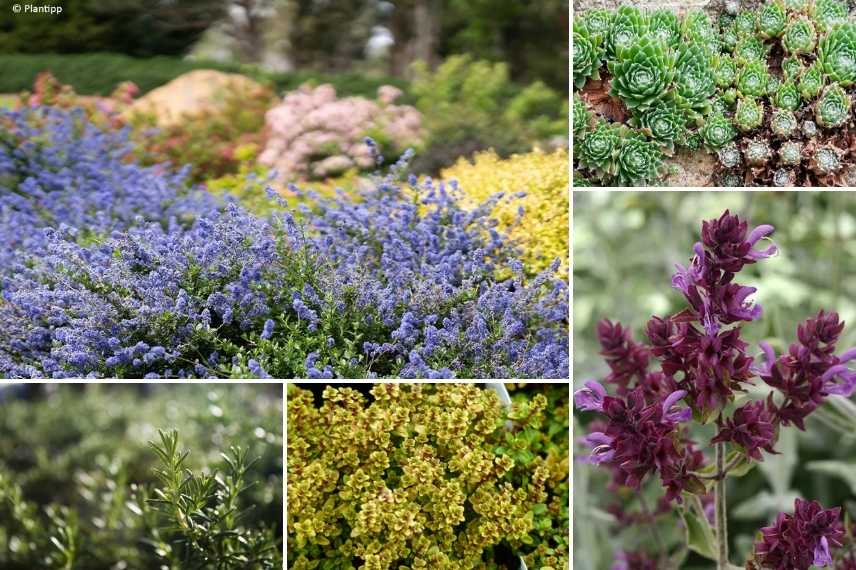
A south-facing, dry and unproductive slope can also be transformed into a resilient space by imitating the chaparral, an ecosystem adapted to extreme conditions.
To turn poor soil into a semi-desert rockery, favour low, hardy shrubs such as cistus (Cistus), a California lilac like the ceanothus ' Pacific Wave' or its groundcover form (C. thyrsiflorus 'Repens'), a prostrate rosemary and some sempervivums. These plants, with deep roots and leathery or fleshy leaves, tolerate drought and poor soils perfectly. Add a golden thyme, and some sages (such as Canary Island sage 'Lancelot'), aromatic plants that will scent the garden while attracting pollinators.
Once established, these plants require little watering and maintenance. Their dense foliage will protect soil from erosion and limit growth of weeds that are unwanted on the slope. A mineral mulch will help conserve moisture and enhance the slope's natural appearance. A few ochre or orange boulders placed here and there will also help evoke Californian or Andalusian maquis while enhancing the area.
Discover our selection of succulents and perennials on our "Dry garden" page online, and our inspiration in the trend booklet 2026!
Since Beth Chatto, the dry garden movement has increasingly been seen among landscapers and in gardening magazines and books. We cover it in detail in Designing a dry exotic garden, Laying out a gravel garden, the Californian-style garden and the garrigue garden, as well as strong trends recently seen at the Chelsea Flower Show in London, such as the antipodal garden and the sand garden.
Find all garden trends for 2026 in: What are the five major trends for 2026?
Making a garden resilient, stronger in the face of the repeated heatwaves our countries now suffer, is one of the challenges of the Chaparral garden, which draws on flora from extreme climates, such as those found in New Mexico or California. The multiple heatwaves of summer 2026 confirm this reality and will certainly steer us […]
Had enough of that crystal-clear water that reveals pond bottom? Find the ballet of your fish in healthy water painfully lacking in dramatic suspense? This guide is for you. Here is the foolproof method to sabotage your aquatic ecosystem, encourage filamentous algae proliferation and turn your garden into a disaster zone even dragonflies will carefully avoid.
Location: choose worst possible spot
To ruin your pond from the start, location is crucial. Insist on a spot exposed to full sun from morning till night, with no shade whatsoever. Excessive heat will reduce oxygen levels and turn pond into a boiling pea soup where only algae will thrive. To perfect the disaster, place pond directly under a weeping willow or an old resinous tree. Massive build-up of fallen leaves and acidic needles will create a layer of toxic sediment at the bottom, ideal for acidifying water and clogging pump in record time.
Also make sure to dig perfectly vertical, smooth banks, with no depth shelves. That guarantees marginal plants will never take root and any creature falling in will stay trapped on the bottom.
Filtration: be minimalist (or completely absent)
Filtration is often considered the lungs of a pond; so atrophy it as much as possible. Opt for a grossly undersized filter, rated for a volume half of yours, to ensure water remains perpetually loaded with suspended particles. To save a few pennies on electricity, feel free to switch the system off every night. This fatal gesture will annihilate beneficial bacteria colonies that need a constant oxygen flow to convert ammonia into nitrates. Finally, if you must clean filter sponges, use chlorinated tap water rather than pond water, to be sure of obliterating every trace of biological life in the filter.
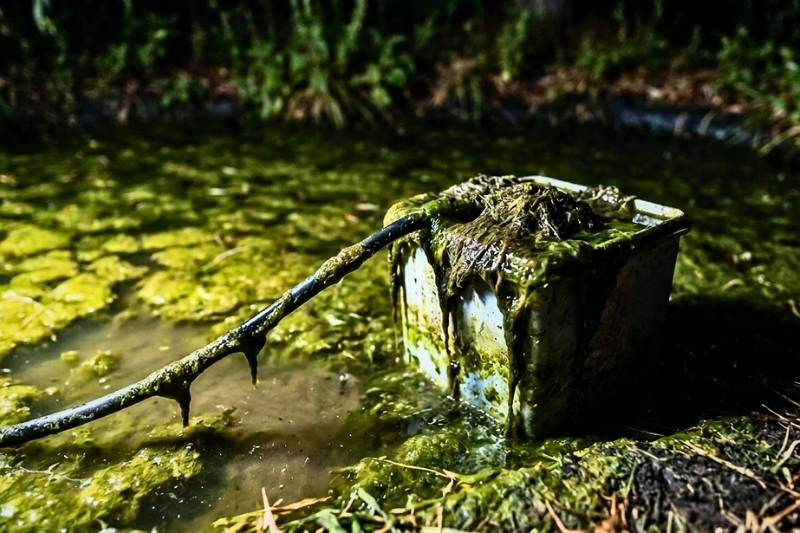
For fauna and flora: aim for chaos!
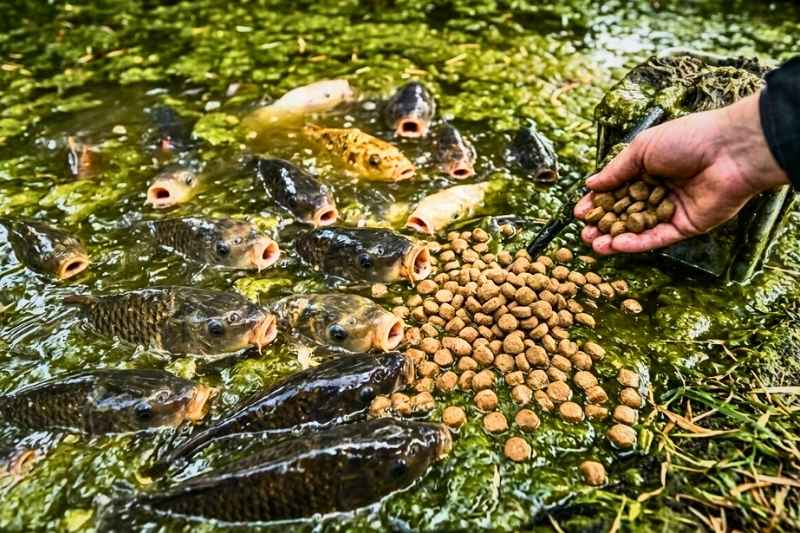
An overstocked pond is a doomed pond, so do not hesitate: introduce twenty Koi carp where wisdom would suggest only two. These magnificent fish are genuine waste factories that will saturate water with organic matter faster than you can say “eutrophication”. On feeding, be generous and overfeed them several times a day, even if food floats uneaten. These decaying pellets are perfect fertiliser for feeding algae. As for oxygenating plants, ignore them completely, since they might have the audacity to purify water and compete with your beloved green algae.
To perfect this chaos, do not hesitate to add invasive exotic species to your pond (EEE – species classified as invasive). These newcomers will choke your pond in fifteen days while eradicating local biodiversity for a complete ecological disaster.
Maintenance: procrastinate with passion
Secret of a failed pond lies in total ignorance of water's chemical parameters. Never use a test kit: pH, GH (water hardness) or nitrites are abstract concepts to you? Good. When water level falls in summer, top up abruptly with icy, chlorine-rich tap water, ideally in mid-afternoon to provoke a memorable thermal shock for your charges. Let muck accumulate at pond bottom for years without ever using a vacuum or natural products. This black sludge, seat of anaerobic fermentations, will eventually release foul-smelling gases that give your garden that much-sought-after marsh aroma.
Winter: art of the finishing blow
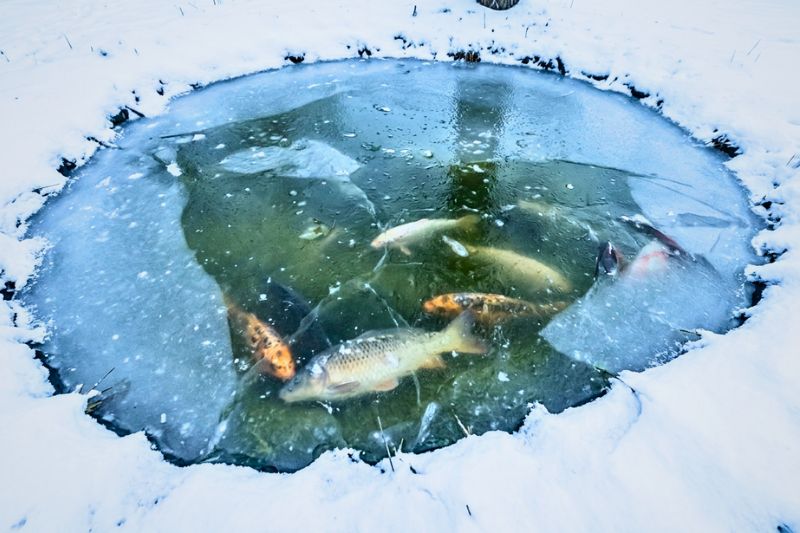
When frost sets in, let pond surface seal airtight under a thick layer of ice without ever installing an anti-freeze dome or an aerator. This method is radical: it prevents gas exchanges, trapping decomposition gases beneath the surface while depriving what little life remained of oxygen. And if you see fish struggling under the ice, do not resist temptation to give heavy blows to the frozen surface. The shock waves thus created are extremely effective at bursting fish swim bladders.
Real advice for serious readers
If you read this article in horror, you have grasped the essential! For a successful pond, simply do the exact opposite of everything just mentioned! A good location, robust filtration, sensible stocking of fish and regular maintenance will turn your pond, pool or water garden into an inexhaustible source of joy and a major boon for biodiversity.
For more genuine advice, read these articles and fact sheets:
- Creating my garden pond by Virginie Douce
- Create a natural pond
- Maintaining a garden pond through the seasons
- Find all our aquatic and marginal plants on our site.
- And all our books on pond and water garden design
Had enough of that crystal-clear water that reveals pond bottom? Find the ballet of your fish in healthy water painfully lacking in dramatic suspense? This guide is for you. Here is the foolproof method to sabotage your aquatic ecosystem, encourage filamentous algae proliferation and turn your garden into a disaster zone even dragonflies will carefully […]
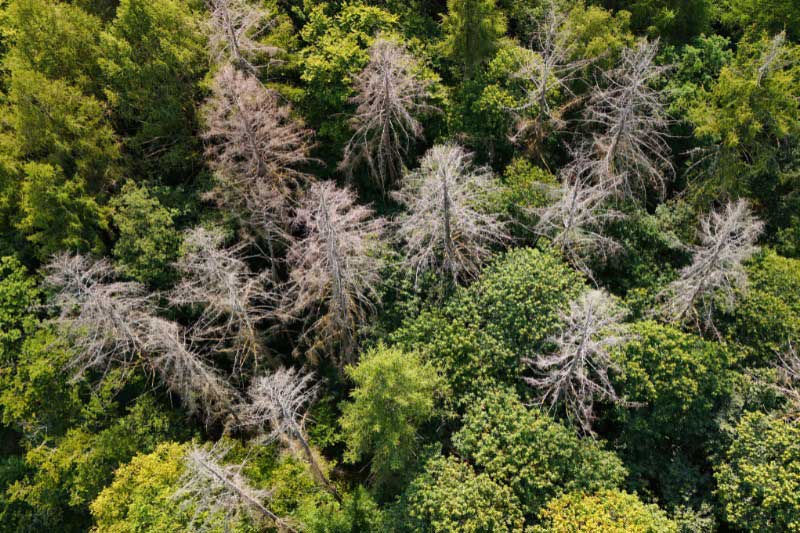
Beeches, oaks, but also hornbeams and chestnuts are already losing their leaves in summer well before autumn arrives, in August, but sometimes as early as mid‑July. This unusual phenomenon gives forests an early autumn appearance… and our gardens a prematurely autumnal look, with a carpet of dead leaves already covering the ground. Two heatwaves, a significant water deficit and parched soil have weakened these trees, causing premature leaf drop. A visible symptom of water stress and climate disruption, browning is now observed each summer with increasing frequency. Which species are most sensitive? Sun‑scorched leaves on trees, leaf yellowing in summer — does this early browning mean the tree will die? And above all, what can be done to mitigate these effects? We explain.
Why do tree leaves turn yellow in the middle of August?
August 2025 spared little vegetation. In many regions, notably Nouvelle‑Aquitaine, trees began to defoliate well ahead of time. This phenomenon is not due to an early season but to physiological stress caused by extreme climatic conditions.
In summer, foliage would normally display a deep green, fuelled by chlorophyll that captures solar energy and enables the tree to build reserves via photosynthesis. But repeated heatwaves, combined with ever drier soils, deeply disrupt this cycle.
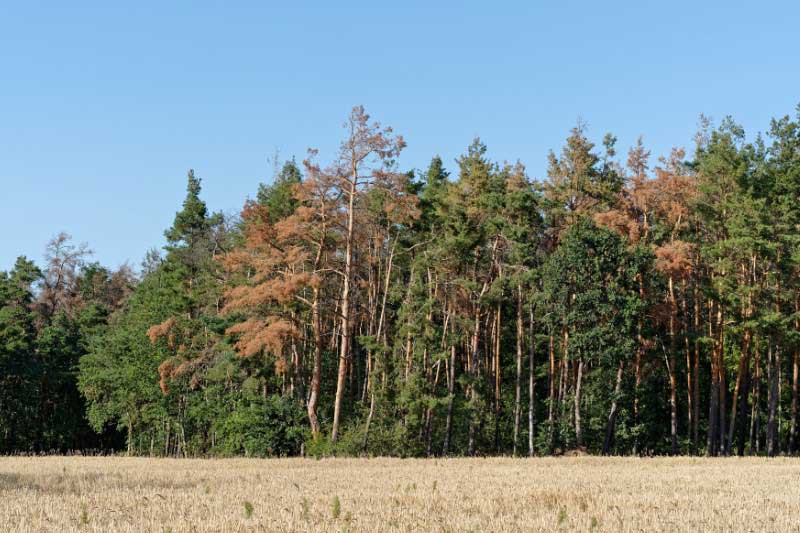
The figures are telling: over the 2021–2023 period, an estimated 8% of trees in French forests (living or standing dead for less than five years) were physiologically affected — some 186 million trees out of 2,270 million. This is not an isolated incident: IGN (National Institute of Geographic and Forest Information) also reports a 54% increase in tree mortality between 2012 and 2022.
And this is only the beginning. Projections indicate that by 2050, summer droughts will last on average two to four months, compared with two months currently, having more lasting effects on soils. If warming continues, some regions could face up to 39 additional drought days per year, and in the south soils could remain dry for seven to eight consecutive months.
In France, native species, adapted for millennia to a temperate climate, struggle to keep pace with this disruption. Some adapt partially, others show clear signs of exhaustion.
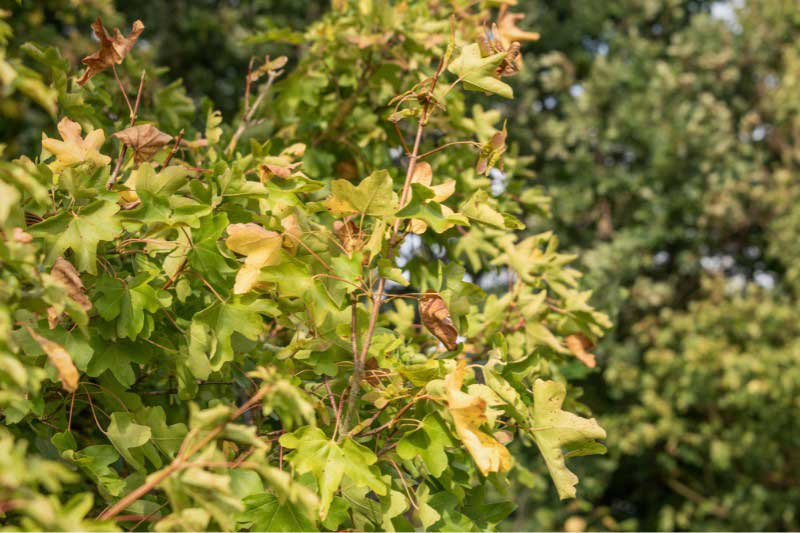
Lack of water, combined with very high temperatures, forces trees to close their stomata to limit water loss. This survival reflex halts photosynthesis and leads to a rapid loss of vigour. Leaves deprived of water and nutrients brown, dry out and fall. The phenomenon of leaves yellowing in summer is not natural: it is a defence mechanism to reduce evaporative surface area. This is known as water stress.
Certain species, such as beech, are particularly vulnerable: they suffer leaf scorch, bark lesions and even micro‑cracks that block sap rise or cause embolisms (air bubbles). All these troubles interrupt water functioning, compromise photosynthesis — and weaken the tree in the long term.
What happens after premature leaf drop?
When a tree loses its leaves as early as summer, it enters a kind of early dormancy, as if self‑protecting in a critical situation. This defence mechanism reduces its water and energy needs, but has medium‑ and long‑term consequences.
1. Photosynthesis stopped = reserves not replenished
Normally, leaves remain active until autumn to produce sugars via photosynthesis. These sugars reinforce root reserves, essential to survive winter and restart in spring. Summer defoliation prevents this process. The tree therefore enters the cold season with insufficient reserves, making it more vulnerable to disease, frost or pest attacks.
2. Growth halted
Without leaves, the tree can no longer grow in height or diameter. Over several successive seasons this results in slowed development, a thinner crown and a progressive decline in vitality.
3. Risk of long‑term weakening
If the stress episode is isolated, the tree can recover, especially if well established. But if stress recurs (as increasingly happens), the tree has no time to rebuild its reserves and weakens progressively. This process can take several years before leading to total decline.
4. Delayed consequences visible in spring
A tree that lost its leaves in August may appear alive in winter but fail to leaf out in the following spring, or do so only partially. This lack of foliage then reflects internal exhaustion, often irreversible.
Does this mean the tree will die?
Not necessarily, but it is worrying. Early browning and defoliation are signs of acute stress, not an irreversible sentence. However, if these episodes repeat year after year, they can cause lasting weakening, loss of carbon reserves, reduced resistance to pests and an increased risk of mortality.
Most sensitive species
Not all species respond the same way to these extreme climatic episodes. Some are more vulnerable than others:
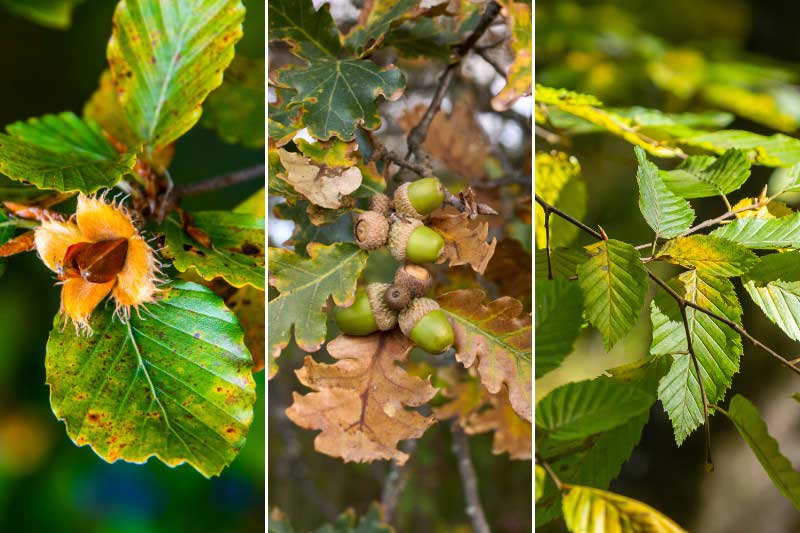
- The beech (Fagus sylvatica): one of the most affected species. Native to humid, temperate climates, it quickly suffers from lack of water and heat stress. Browning of its foliage is common in summer, even in dense forest. Leaf deficit — the proportion of missing foliage compared with normal — rose from about 15% between 1997 and 2003 to nearly 35% between 2017 and 2023. This increase illustrates a worrying trend, even if the species sometimes shows the ability to recover when conditions improve.
- Oaks (Quercus robur, Q. petraea): among them, the pedunculate oak (Quercus robur) proves more sensitive to summer water stress, while the sessile oak and downy oak display better resistance. However, repeated weakening makes them more vulnerable to pests such as jewel beetles or certain pathogenic fungi. They account for nearly 25% of France’s forest area — a significant share.
- The hornbeam (Carpinus betulus) and the chestnut (Castanea sativa): these too show weakness from the end of summer, with premature leaf drop during prolonged drought.
- Conifers such as spruce: poorly adapted to dry summers, they suffer marked weakening, often exploited by pests such as bark beetles.
This reflects a general deterioration affecting all tree categories. It is estimated that one third of oaks (sessile and pedunculate), two thirds of beeches, 60% of firs at low and mid altitudes, and 90% of spruces may no longer be able to develop in their current zones by 2050.
What can be done?
Faced with this situation, several actions can be considered:
- Plant species better adapted to conditions
In the current context, it makes sense to rethink species choices without abandoning local vegetation. Some species show better tolerance to repeated summer droughts. It is advisable to favour resilient but diverse species, and adapt plantings to local pedoclimatic conditions: soil type, aspect, water‑holding capacity, altitude…
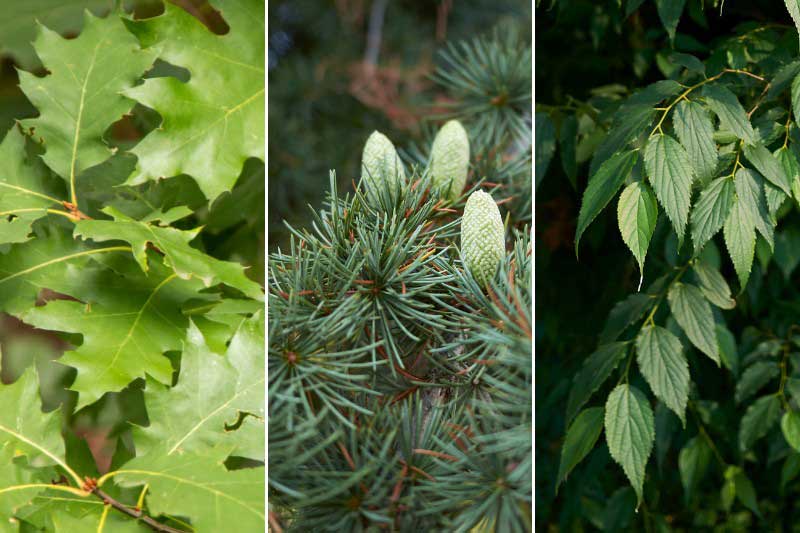
Among species better suited to dry conditions are downy oak, the Atlas cedar, and the European nettle tree, as well as Mediterranean species such as Aleppo pine or the holm oak. These species can resist heat when planted in suitable exposures and climates. Species such as Japanese pagoda tree (Styphnolobium japonicum) or the Siberian elm (Ulmus pumila) also show good adaptive capacity.
- Encourage plant biodiversity: diversifying species is an effective strategy to strengthen overall resilience. Mixed stands (species with different root systems and needs) cope better with climatic hazards.
- Preserve the soil: living soil rich in organic matter retains water better. Mulch, leave dead leaves in place and avoid soil compaction — simple but effective measures.
- Limit interventions during stress periods: avoid heavy pruning, transplanting or applications of nitrogenous fertilisers in mid‑summer. Do not rush to prune or fell a stressed tree: with time and improved conditions it can sometimes recover.
Beeches, oaks, but also hornbeams and chestnuts are already losing their leaves in summer well before autumn arrives, in August, but sometimes as early as mid‑July. This unusual phenomenon gives forests an early autumn appearance… and our gardens a prematurely autumnal look, with a carpet of dead leaves already covering the ground. Two heatwaves, a […]
Terraces, courtyards, patios and small bohemian balconies are the new stars of summer! This very colourful "boho" trend that has invaded our interiors and wardrobes also appears in our summer green retreats. It matches the sunny cheerfulness of a season when we spend a lot of time outdoors.
Let’s take inspiration from the gypsy world to prepare bright alcoves on balconies, terraces and inner courtyards from the first fine days, with planting ideas and decorative elements. We explore this Boho Patio in three scenes easy to recreate at home!
Boho Patio codes
The bohemian atmosphere dresses itself in vivid, deep and variegated colours that answer one another, but also in associations of warm tones in the blooms: intense reds, deep violets, Indian pinks and spicy oranges, not forgetting bicoloured flowers. Bluish, golden or purplish foliage helps to reinforce this playful mood, bringing red or variegated splashes.
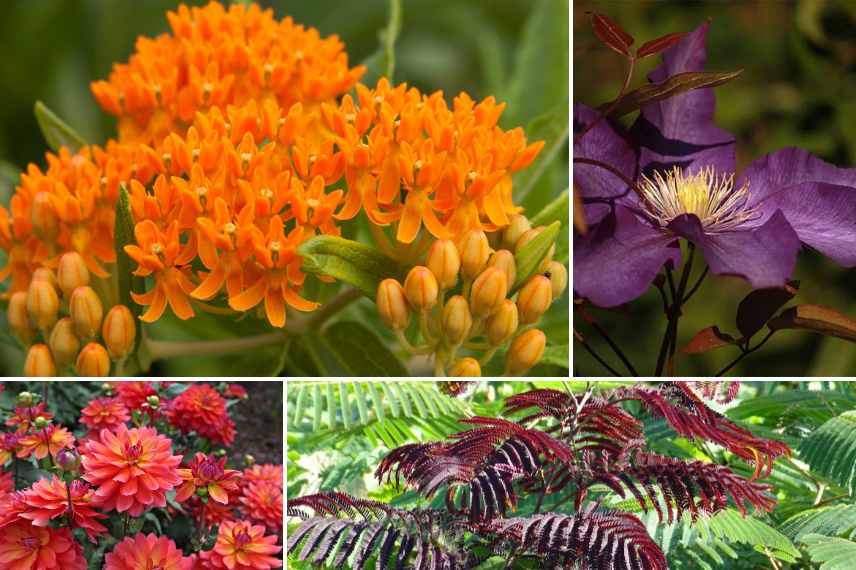
This mixed-up planting borrows from gypsy culture a festive, hybrid universe that laughs at convention and pairs a whole spectrum of colours, provided they are warm and bright.
This style is also based on improvisation, like manouche music, and on bold accents. This temperament appears in the garden in temporary scenes created especially for the summer months, and in the accumulation of mismatched small objects (side tables, stools, small cushions, etc.).
On the décor side, important for dining and relaxation areas, have fun with mismatched pairings: rustic furniture repainted turquoise or green, rattan chairs, fabric pouffes, Provençal floral and ethnic patterns juxtaposed with strong colours: turquoise, pink, orange and bright yellow. The advantage of this bohemian décor is that you can mix disparate objects and accessories, using what you already have at home or stored in the attic, to give them a second life: bring out granny’s lace and embroidery for the summer, macramé and trimmings, old rattan armchairs, baskets and fruit crates, airy curtains. In a joyful mix of materials, the décor is done!

On a sun-drenched terrace
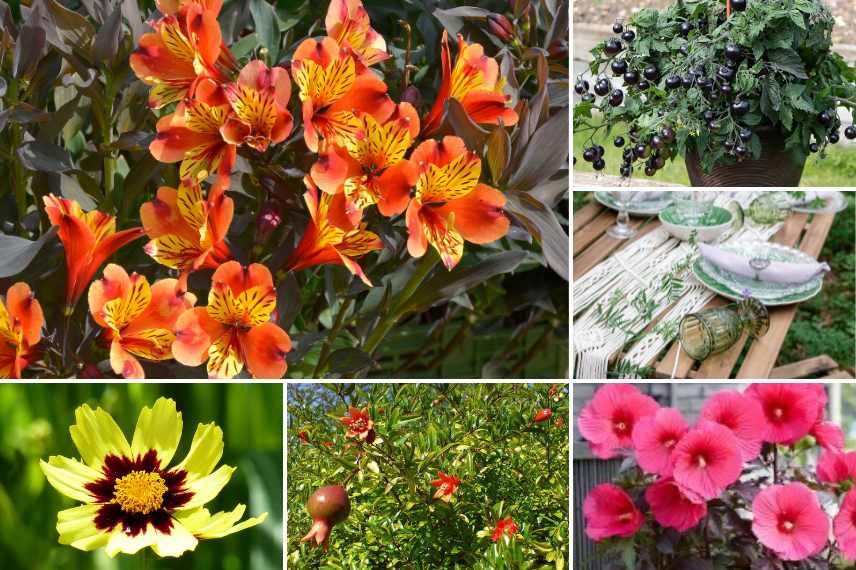
Terrace or balcony are often west- or south-facing. They can be radically transformed into an ultra-cheerful cocoon with sun-tolerant plants that do well in pots. Explore a plant colour palette ranging from saffron yellow to violet for a truly bohemian vibe.
Alstroemerias 'Indian Summer', orange and yellow contrasting against bronze foliage, will look stunning alongside Coreopsis 'Cosmic Eye', a bright yellow spotted with purple, or the pretty all-yellow 'Full Moon Madness'. Add other long-flowering plants such as a common Rose mallow 'Pink Passion' with giant flowers and dark purple foliage, and provide more foliage interest with a pomegranate that can be grown in a pot, such as Punica granatum 'Nana', whose brilliant flowers will pair beautifully with the other perennials. For snacking at aperitif time, invite, for example, the surprising cherry tomatoes 'Akoya', whose fruits turn almost black.
In a semi-shaded urban patio
Small city courtyards benefit from focusing on colour and variegated or golden foliage to lift them out of the shade. In a semi-shaded patio receiving enough light and warmth in summer, opt for sunny flowers and a few "indestructibles":
Hosta 'The King', Hakonechloa macra and an Aucuba japonica 'Crotonifolia' for their golden and variegated foliage (Aucuba will reward you with pretty red berries a little earlier) together with the bold flowers of Hibiscus syriacus 'Hibisa rosada', and the Peruvian lily 'Duc d'Anjou'.
The bohemian spirit will also be present in accessories, essential in less bright areas and in smaller spaces.
Beyond plants, bring colour without fearing the boldest mixes. Dare genre-mixing: antique rug + Italian ceramics + small disparate or oversized objects and a cosy bench, etc. Here, the evening atmosphere will be especially worked on: lanterns, paper lanterns and candles, and don’t forget a crochet throw in these patios that are often cooler at night.

Garden refuge as an improvised alcove
This bohemian trend can also be expressed in a corner of the garden used as an improvised summer retreat.
In front of a shed, garden shelter or at the foot of a fine tree from which a rattan chair is hung, set up a summer hideaway using bohemian codes. A temporary terrace, improvised with clip-together wooden decking tiles readily available from DIY stores, is easy to install. In summer it becomes a true green cocoon perfect for relaxing on a garden sofa made of a few stacked pallets or large pouffes, in a fairground style.
Here, a few colourful annuals join the party: multicoloured zinnias and orange calendulas (marigolds) sown in pots in spring, or beds of African marigold 'Mango Tango' around the area, as well as sun-loving perennials such as the charming Delosperma 'Ocean Sunset Orange Glow'. Count on two striking pots of dahlias with evocative names, the fiery 'Bohemian Spartacus' and the more restrained compact 'Melody Gipsy', for a long and remarkable display. Sunflowers 'Mongolian Giant' will bring pep and height, while a pot of basil 'Everleaf Emerald Tower' will be handy for salads at barbecues or sunny lunches.
Gather your most colourful pots, bring in lace, hangings, vintage crockery and cushions: job done!

Discover other plants ideal for composing this bohemian green décor on a terrace in our "Boho Patio" selection online and in our trend booklet!
Feeling the bohemian spirit? Find our advice on creating a bohemian garden, and our inspirational sequences: Catalane and Peach Raspberry.
This Boho Patio trend also draws on recycling second‑hand objects. Explore our topics to let your creativity run free: Decor idea: plants in unusual containers; How to make a planter from a pallet?; Recycling in the garden and How to use and properly integrate terracotta pots in the garden?
Terraces, courtyards, patios and small bohemian balconies are the new stars of summer! This very colourful “boho” trend that has invaded our interiors and wardrobes also appears in our summer green retreats. It matches the sunny cheerfulness of a season when we spend a lot of time outdoors. Let’s take inspiration from the gypsy world […]
Here’s a distinctive trend emerging in outdoor spaces, and not only among landscapers fond of conceptual gardens or in coastal areas! While a sand garden is particularly suited to coastal gardens, it proves to be an undemanding, on-trend garden, halfway between a gravel garden and a dry garden, perfectly in tune with current climate upheavals.
We invite you to discover it in three scenes that demonstrate its aesthetic appeal and sunny atmosphere!
Sand garden: a landscaping trend between frugality and aesthetics
Far from the image of the traditional Japanese zen garden with raked gravel or pale sand, the sand garden imposes itself as a new version of the garden. It retains a sense of serenity but transposes it into a warmer register, where maintenance and watering are reduced to an absolute minimum. It answers a need created by climate change: how to introduce more Mediterranean plants into northern regions? Even if rising temperatures allow it, the problem of waterlogged winter soils, often fatal to these plants, remains. The sand garden is one solution, providing effective drainage.
It is a functional garden, still experimental globally, which showcases plants that ripple in the wind, like a reminder of a sea that is not always present. It also emphasises contrasting materials and textures, often using Corten steel as a support, woven willow in tontines or sculptures, large stones or retaining walls.
Undemanding plants grow in a substrate made up of a thick layer of sand. They therefore need to draw water from deep down to survive. For this reason we choose the most drought-tolerant plants and xerophilous plants, those whose taproot systems mean they will withstand heatwave summers.
We also seek to enhance the golden aspect of the sand using a palette of warm tones available to us, both in plants and materials. Plants will generally be low-growing, mat-forming or supple, also incorporating some greyed foliage to reinforce the impression of warmth.
A holiday feel
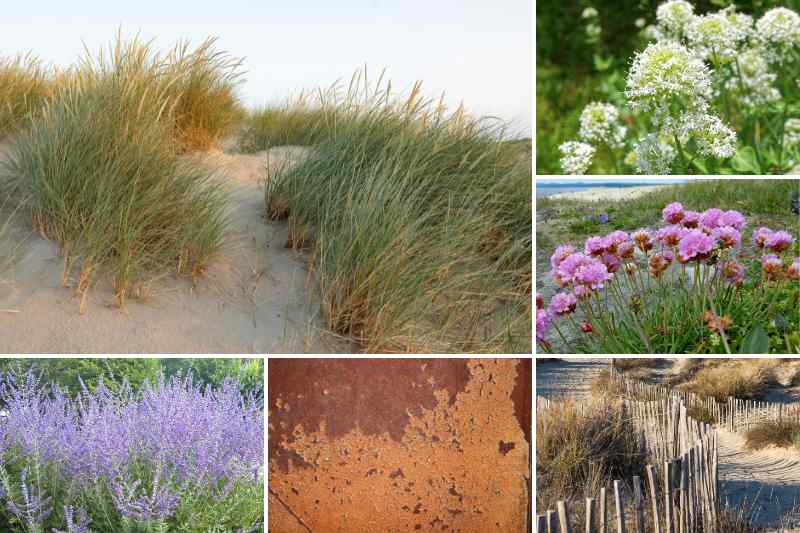
Coastal gardens, and especially those located right on the coastline, are difficult to plant because of the omnipresence of sand on site. They are perfectly suited to the constraints of a sand garden. In a beach-return spirit, the focus is fully on the sand-and-beach duo, taking inspiration from the dune ecosystem.
Essential plants: valerian, Lagurus ovatus and oyat (Ammophila arenaria), Armeria maritima 'Vesuvius' (sea thrift), sandwort, Erigeron glaucus 'Sea Breeze' or Erigeron karvinskanius, sand carnations, Perovskia, blue fescue, sea holly (Eryngium maritimum), milk thistle, etc.
To bring back vegetal blond tones, use wooden slats as decking, mini sand fences, and pair with coppery accents such as a brazier, useful for summer evenings.
Our tip: take care not to multiply beach clichés. Restrict decoration to sand alone, without superfluous additions of pebbles, shells or other seaside trimmings to avoid caricature. Plants create the scene, not the other way round!
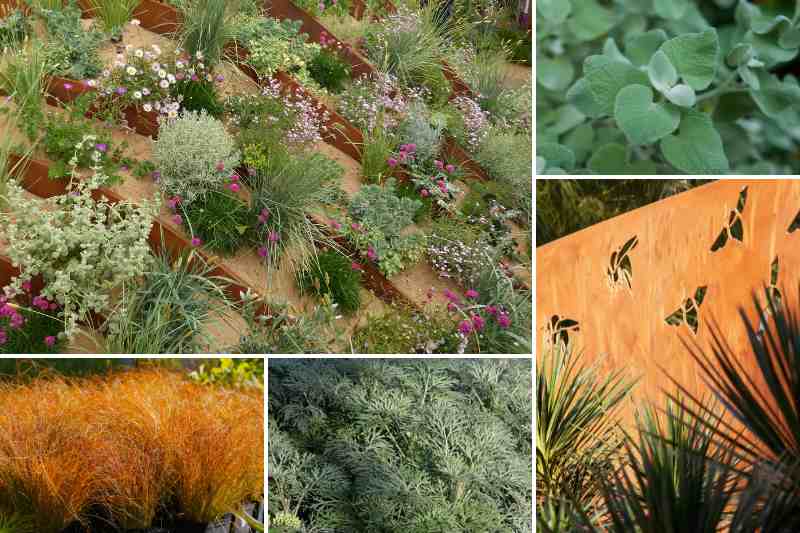
Contemporary sand garden
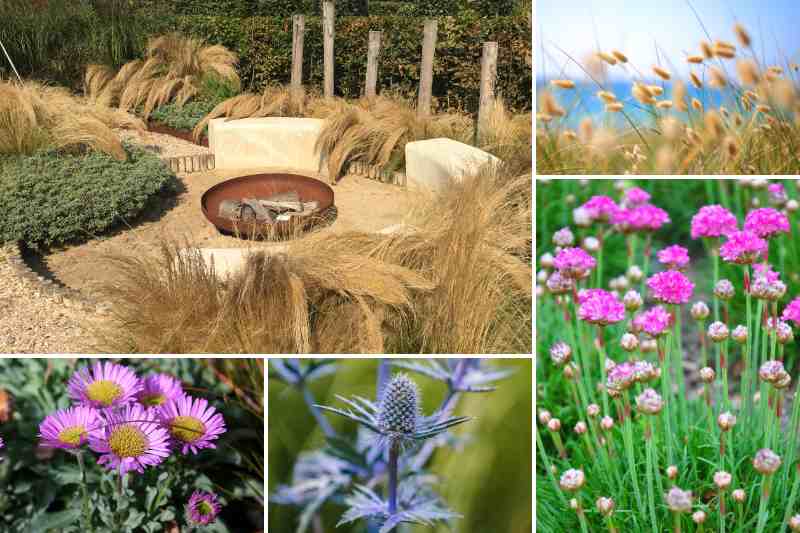
At the opposite end from the dune garden that naturally links to its environment, the idea of undemanding plants and sand also evokes minimalism and the mineral feel of modernist gardens. The sobriety of the sand, combined with an appropriate plant palette, allows creation of a sand garden that suggests a coast not necessarily nearby, in perfect harmony with contemporary architecture.
Here, colour is conceived in monochrome, or in white/black, white/mauve or purple and green duos, to name a few pertinent combinations. Plants are chosen for their prostrate habit, their original textures or the shapes of their inflorescences. Greyed tones for foliage are also favoured to blend well with often anthracite outdoor furniture. Corten steel, used for boards or attractive windbreaks, stands out as a material that enhances the sand’s sheen, as does brick, which can serve as a path.
Essential plants: silver santolina, Artemisia 'Powis Castle', Ballota pseudodictamnus, medium to tall grasses such as coppery Carex (Carex testacea), the movement of Hordeum jubatum, graphic silhouettes (Cordylines, Yuccas) on flat ground, and low to medium plants as on a shaped sand mound (sea thrift, creeping gypsophila, wild thyme, etc.).
South African atmosphere
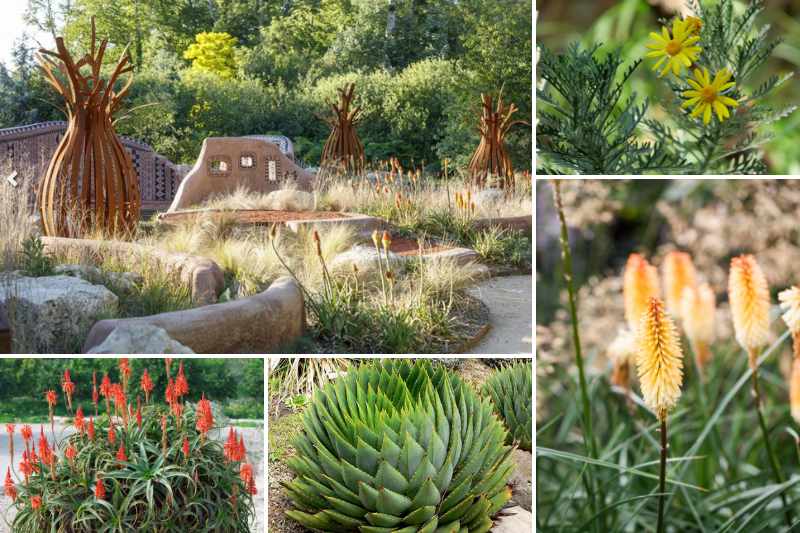
One attractive idea with the sand garden is to travel to an arid, heat-baked world. You can plant stunning perennials and ultra-resilient grasses and lean towards a Californian vibe, or, as here, a South African feel.
Let’s take inspiration from Léon Kluge’s work, the world-renowned South African landscaper, at Domaine de Chaumont-sur-Loire in France: few plants for a spectacular effect in this full-sun garden. The scene draws from the African bush, where red sand and oversized stylised baobab sculptures mainly make up the decor, with waves of Stipa tenuifolia and torch lilies. At home, imagine tall red-willow tontines or large woven willow spheres to add volume and blend into this atmosphere.
Key plants: succulents and light grasses (Aloes, Euphorbia myrsinites, Stipas, Sesleria argentea, Lomandra longifolia), and perennials with sunny yellow to orange blooms (Kniphofias, Euryops pectinatus, bulbines, Leonotis leonurus, gazanias…). Plants native to South Africa, Patagonia or Tasmania are favoured, some tolerating down to -8°C in sheltered conditions.
The naturalistic garden and the English garden also draw on this avant-garde technique, and we could just as well have developed scenes in these two worlds, which lend themselves to experimentation currently being carried out notably across the Channel.
Find our selection of plants suited to the Sand Garden spirit on our online nursery as well as on our inspiration page in the 2026 Trend Book !
Do you enjoy these distinctive atmospheres? Discover other inspiring scenes in related worlds:
Here’s a distinctive trend emerging in outdoor spaces, and not only among landscapers fond of conceptual gardens or in coastal areas! While a sand garden is particularly suited to coastal gardens, it proves to be an undemanding, on-trend garden, halfway between a gravel garden and a dry garden, perfectly in tune with current climate upheavals.We […]
For centuries, vegetables have travelled across continents, carried by explorers, merchants, and botanists. Aubergines, potatoes, celery, cabbages, carrots, and other parsnips… The vegetables so familiar in our everyday cooking often come from the antipodal cells, or at least from distant territories. We learn in our history classes that tomatoes and corn were brought to us from America. But what do we really know about the epic journey of our vegetables?
From Antiquity to modern hybridizations, vegetables from Asia and the Near East or native to America, I invite you on a spatio-temporal journey to the four corners of our planet. You may discover what the oldest vegetable in the world is, which vegetables are the most consumed today worldwide, and some tasty tales about their history and how they reached us!

Origin of vegetables: the continents that gave birth to them
Three major regions of the world are the source of most of the vegetables that make up our diet today: the Near East, Asia, and the Americas. It is important to note that when we refer to this origin, we are talking about the geographical areas where these vegetables were cultivated, not where the vegetable was recorded as a wild plant. This sometimes explains the discrepancies we notice regarding the origin of certain vegetables (a good example being the unresolved debate about the aubergine, which is said to be either Chinese or Indian).
Here are the origins of some of the most commonly used vegetables today, by continent and major regions of the world:
- America: tomato (Mexico and Central America), bean, squash and courgette (Mexico), potato (Peru and Bolivia), pepper (Central America), sweet potato (Peru), corn (Mexico)
- Asia: aubergine and cucumber (India), spinach (Persia), garlic, shallot and onion, carrot, cucumber, turnip, crosne (Japan)
- Near East: pea* (Fertile Crescent), radish, lentil, chickpea, rocket, and cabbage, which was likely domesticated there.
- Middle East: carrot (Afghanistan), onion (Iran and Afghanistan)
*(often accepted as one of the oldest vegetables in the world, its cultivation dating back 7,000 to 10,000 years)
Europe and Africa are also the cradle of several vegetables in our daily lives. Cabbage, fennel, Swiss chard, parsnip, broad bean, and many salads like lamb's lettuce (from Sicily and Sardinia), escarole or chicory for Europe, beetroot and artichoke coming from North Africa.
While all these vegetables were brought back by the great expeditions of the 15th and 16th centuries or by the Arab conquest (the Silk Road and the Incense Route concerned not food, but spices, fabrics, and precious woods), they underwent a slow evolution, being domesticated and then hardened in regions with climates very different from their areas of origin.
Vegetables through time: a brief timeline of an announced success
The consumption of vegetables is documented in numerous ancient writings and manuscripts across different cultures and eras, but also through paintings and still lifes from the Renaissance onwards. Archaeologists have thus identified the pantry of our distant ancestors, historians have investigated their introduction, and naturalists and botanists have studied their acclimatization in our countries.
As we learn it in school, nomadic man did not cultivate; he was a hunter-gatherer. When he settled down, around 10,000 BC, he began to domesticate certain animals… and to plant! The first centres of settlement in the Near East, what is called the Fertile Crescent (corresponding to Iran, Iraq, and Turkey) report the cultivation of cereals such as barley (Hordeum vulgare), then wheat, oats, and rye. Considered the first cultivated food, barley was indeed on the menu of our Mediterranean ancestors.
Ancient Egypt, which has left us numerous testimonies of its dietary practices in its temples, tombs, and papyri, cultivated cabbage and cucumber, as well as chickpeas and, more surprisingly, radishes, as well as the nut sedge (papyrus) which was consumed. It was a predominantly vegetarian people.
Closer to us, in ancient Rome, we were able to identify the vegetables that the inhabitants of Pompeii ate: peas, broad beans, and lentils encountered in Egypt, thus many legumes, but vegetables such as cabbage, leek, onions, and asparagus also already appeared. All these vegetables are mentioned by Columella, a Roman agronomist, and by Pliny the Elder in his Natural History.

Later still, in the Middle Ages, many manuscripts recount the vegetables that graced the tables: mostly leafy vegetables, such as spinach, orache, and borage, root vegetables (chervis, parsnip, carrots, turnips…) and so-called perpetual or perennial vegetables. There is still much evidence of legumes such as chickpeas and lentils. The beetroot makes its appearance, and Charlemagne attempts to impose it in the vegetable garden. He includes it in his Capitulare de Villis and recommends it as a vegetable crop for the Empire. Medieval cuisine often consisted of all these vegetables, consumed in the form of soups, broths, pies, and stews, with meats, game, and fish reserved for the noble classes.
The Age of Discoveries in the 15th and 16th centuries further enriched this mapping of vegetables. The discovery of the Americas by Christopher Columbus in 1492 led to the introduction of many new vegetables to Europe, such as tomatoes, potatoes, corn, peppers, and squash, to name just a few. These vegetables from the New World literally fascinated our old continent. They graced the tables of monarchs and European courts, ensuring the splendour of banquets during the Renaissance, and later integrated into European cuisines in the modern era.
Subsequently, we witnessed the acclimatization of these vegetables growing in warm climates, adapting them to our regions, our humidity, and our four seasons. The greenhouses that developed from the 18th century onwards allowed for an unprecedented boom in market gardening. Farmers gradually began to produce many types of vegetables throughout the year, increasing both diversity and productivity.
Aubergine, carrot, and artichoke: three domesticated vegetables under the microscope
Alexandra has already explored the fascinating history of certain vegetables in My Vegetable Garden Comes from Afar, such as potatoes, tomatoes, or squashes. I will complete this list by discussing here the aubergine, carrot, and artichoke, three vegetables rich in flavour and colour... well... not all at the beginning!
- Aubergine
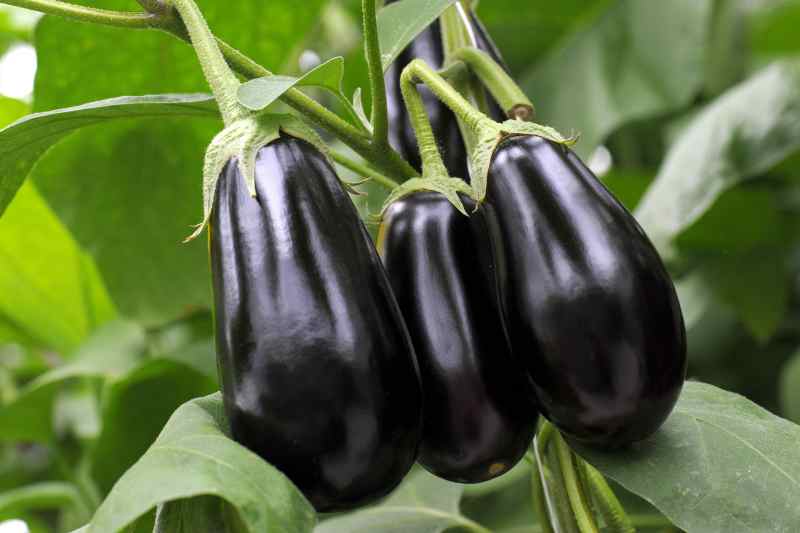
The Aubergine (Solanum melongena L), long referred to as the madman's apple or the apple of Sodom in the 14th century, had a rather poor reputation before becoming this much-loved summer vegetable in Mediterranean, Lebanese, and Asian cuisine. It was said to be dangerous, as it was associated, as was the tomato, with belladonna, which belongs to the same botanical family, the nightshades. It was attributed with fevers, epileptic fits, and those who ate it were even said to lose their sanity.
Aubergines were thus, like some other vegetables, initially considered ornamental plants in Europe, but soon gained popularity as food in southern Europe. They are documented in cultivation around 500 BC in India and Burma. The white aubergines are believed to be the oldest cultivated forms. In India, Burma, and China, mentions of light or white varieties can be found in ancient texts, as early as the 5th century.
They are still called "eggplants" in English because they resembled… chicken eggs!
It was the Arabs who discovered it in the Middle Ages and brought it from Asia, likely from India in the 15th century. They named it "al-bâdinjân", introduced it into the Mediterranean basin, and quickly adopted it through their trade with the Arab world. The aubergine passed through North Africa, then Spain, and into other Maghreb countries. However, it was the Italians who truly popularised it in the 19th century. It would then be more consumed in Spain and Italy, as well as in Greece. The aubergine would not appear in markets in northern France until the mid-19th century.
The aubergine remains widely consumed in the Middle East, where it is the star of iconic dishes like baba ghanoush in Lebanon, or Imam bayildi in Turkey, for example. In Turkey, where aubergine jam is a specialty, it is also consumed sweet, and in Andalusia, cooked with honey as a dish, the aubergine regains its status as a fruit, as botanically it is indeed one.
The aubergine is now among the top 7 most cultivated vegetables in the world, with over 60 million tonnes produced annually. The global production of aubergine is primarily Chinese and Indian, with China accounting for about 63% of global production and India about 24%. It remains predominantly consumed in Asia. Today, there are no fewer than 341 varieties of aubergines listed in the official catalogue!
- Carrot
Iran is credited with a developed culture of the carrot (Daucus carota), but it is in Afghanistan that it is said to have appeared in the 10th century, quite recently in fact. It was initially produced in Europe, mainly in Spain, and after crossing the Pyrenees, it arrived in France, then Italy in the 14th century.
Yellow, white, and red carrots, ancestors of the orange carrot, delighted the royal tables of Europe in this colour until the Renaissance. Like other vegetables or fruits that gradually changed colour, the carrot originally had whitish hues. It was the Dutch who, in the 17th century, through numerous hybridizations, transformed this pale carrot into an increasingly orange one.
We now find yellow and purple carrots on the stalls, a curious turnaround! Fashion and trends...

- Artichoke
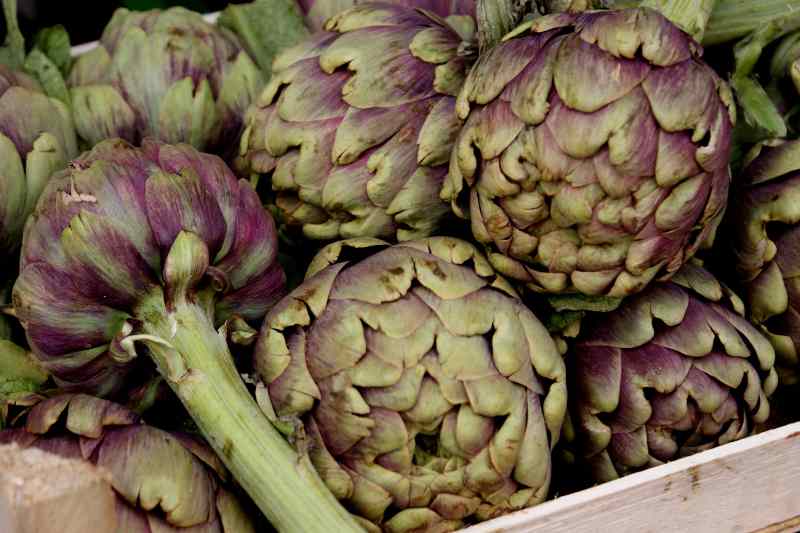
The artichoke (Cynara scolymus), a symbol of Brittany for us, originates... from the Mediterranean basin, specifically North Africa. It is nothing other than a domesticated wild thistle! It was probably already consumed in Antiquity by the Egyptians and the Berbers, in its wild form, the cardoon (Cynara cardunculus).
It is from this species that the cultivated artichoke is obtained through selection. It reached Italy in the 1st century under the Roman Empire, where it was mainly used, like in Greece, for its medicinal properties. It was during the Renaissance, around 1644, that it was truly popularised and cultivated in aristocratic gardens, particularly in Naples and Sicily. It was then credited with digestive and even aphrodisiac properties. It appeared in France thanks to Catherine de Medici, who introduced it to royal gardens in the 16th century. Louis XIV adored this vegetable… La Quintinie cultivated five different varieties.
It was not until the early 19th century that the artichoke became popular, thanks to the creation of the famous large Camus de Bretagne. It thus became a significant market gardening crop in Brittany, Provence, and the Loire Valley. There are several varieties, such as the Gros vert de Laon, the purple artichoke of Provence, or the poivrade—which appeared later—a small tender variety often consumed raw or in oil. The artichoke remains an emblematic vegetable of Mediterranean cuisine, found stuffed, in barigoule, or Roman-style.
Italy, Spain, and Egypt are now among the three main producers of artichokes in the world, far ahead of France.
The 'new vegetables'
While we often think that all our vegetables are ancient, some have only recently appeared in our gardens and on our stalls, particularly with the globalization of food, the rise of organic produce, and new consumption habits (gluten-free, vegetarianism).
Among the vegetables that have recently arrived in our gardens and markets are exotic vegetables, but not only...
- Chayote (or christophine), a cucurbit from Central America, widely used in Caribbean and Reunion cuisines, now well acclimatisated and cultivated in France, in the mild Atlantic zone or in the south.
- Kale – making a comeback since the 2010s, a star of health diets. It is now widely cultivated in urban, organic, and alternative gardens.
- Romanesco cabbage arrived in our markets in the 1990s.
- Sweet potato: it was rare just 30 years ago and is now ubiquitous in markets, even cultivated in the southwest of France. Some varieties are adapted to the French climate.
- The yacon (earth pear): Originating from South America, it is still marginal but is entering organic circuits and AMAPs (Associations for the Maintenance of Peasant Agriculture). Its taste is sweet, similar to that of the Jerusalem artichoke.
Also added to this list is black radish, an ancient vegetable rehabilitated by modern cuisine and wellness trends. Long relegated to herbalism, it is now reappearing in winter salads and detox plates. These vegetables reflect the plant renaissance of the 21st century, between exoticism and culinary innovations.
We are also witnessing the rediscovery of forgotten vegetables such as chervis, orache, helianthi, crosne, or even cardoon, and herbs like wild garlic, often brought back to the forefront by chefs or organic gardens.
21st-century agriculture has also seen the emergence of hybrid or crossbred vegetables, such as broccolini (a cross between broccoli and kai-lan), or kalette (kale + Brussels sprout), reflecting our growing taste for plant innovation, but also the need to adapt to new climatic conditions.
These vegetables that might never have existed!
Finally, there are also vegetables that never came to be... and those that could have remained unknown in Europe.
We will thus try to consume the tuber of the Dahlia, brought to France in 1802 from Mexico via Spain. This plant was cultivated, used decoratively in flowering tiaras, but also consumed by the Aztecs for centuries. Botanist André Thouin thought he could use it here, somewhat like the potato, as the tuber had a floury consistency. But its peppery taste did not appeal to the testers of the time, and thus it was relegated in 1804 (to our great delight) as the only ornamental plant!
Some of the vegetables we cherish today almost didn't make it into our kitchens. The potato and the tomato are good examples; the former long deemed unfit for consumption, indigestible, only good for feeding animals, and supposedly transmitting the plague, while the latter retained its image as a toxic plant for a long time. It was only adopted by the French from 1731, and by the Germans even later, around 1870. These plants, labelled as poisonous, were also the fate of some fruits, but we will return to this in a future article.
Further reading
I highly recommend one of the books that recently received the French Saint-Fiacre Prize 2024: "Tour de France of Fruits and Vegetables" by Noémie Vialard and Stéphane Houlbert, as well as History of Vegetables: From Origins to the Dawn of the 21st Century, by Michel Pitrat and Claude Foury.
If you are wandering in Anjou, visit the gardens of Puygirault, a unique place that traces the evolution of the vegetable garden from the earliest times.
Want to discover heirloom vegetables? Check out our articles and recipes on the subject:
- 9 Heritage Vegetables to Grow in the Vegetable Garden
- Jerusalem Artichoke: A Forgotten Vegetable to Rediscover
- Chervis, an Easy-to-Grow Forgotten Perennial Vegetable
- Borage Leaf Soup: A Simple and Tasty Recipe
- Orache in the Kitchen: Plant-Based Recipes of an Ancient Vegetable to Rediscover
- Helianthi: How to Harvest, Store, and Cook It?
Find an interesting article from National Geographic on a thermopolium discovered intact in Pompeii.
The Cluny Museum inspires us with its medieval recipes!
For centuries, vegetables have travelled across continents, carried by explorers, merchants, and botanists. Aubergines, potatoes, celery, cabbages, carrots, and other parsnips… The vegetables so familiar in our everyday cooking often come from the antipodal cells, or at least from distant territories. We learn in our history classes that tomatoes and corn were brought to us […]
The Popillia japonica, commonly known as the Japanese beetle, poses an increasing threat to agriculture and gardens in Europe, particularly in France, where it may soon establish itself. This insect, native to Asia, is classified as a priority quarantine organism by the European Union due to its devastating economic and environmental impacts. Indeed, it attacks over 300 plant species, ranging from agricultural crops to ornamental plants. Let’s learn more about this potential (and yet another) threat!
How to Recognise the Japanese Beetle?
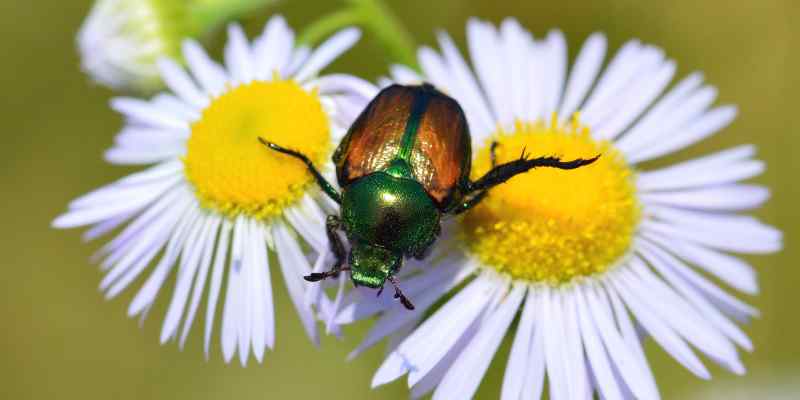
The Japanese beetle measures about 10 to 12 mm in length. Its small size can lead to confusion with other beetles found in France. However, it is distinguished by its metallic green head and thorax, its copper-brown elytra, and the five tufts of white bristles located on the sides of its abdomen, along with two more at the end of it.
Finally, the Japanese beetle is smaller than other common European beetles. Its body shape is compact and slightly rounded, with short, segmented antennae that end in club-like tips. These antennae are often retracted when it is resting but can be visible when it is moving or feeding.
Life Cycle of the Popillia japonica
The life cycle of the Popillia japonica, or Japanese beetle, is annual and consists of four stages: egg, larva, pupa, and adult. Females lay their eggs in the soil during summer, from which the larvae emerge after about two weeks and feed on plant roots, causing damage until autumn. They then hibernate deep in the soil until spring, where they pupate and transform into adults. Adults are present in summer, feeding on leaves and flowers, before reproducing, thus completing the cycle.
What is its Impact on Plants?
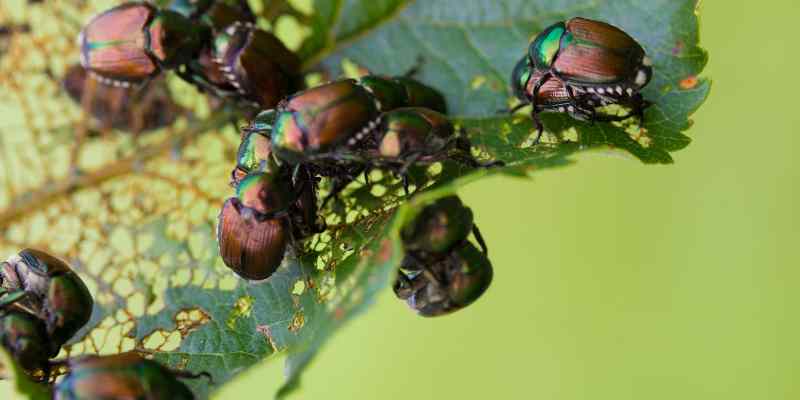
This insect is polyphagous, meaning it feeds on multiple plant species (about 300 species). Adults feed on foliage, flowers, and fruits, leaving the leaves in a skeletal state after their passage. The larvae, on the other hand, cause damage by feeding on the roots of plants, particularly grasses like lawns. Among the most affected plants are grapevines, fruit trees, roses, and many other ornamental and agricultural plants.
In Italy, where the Japanese beetle has been present since 2014, vineyards are particularly vulnerable. The beetles devour grape leaves, thereby reducing the leaf area necessary for photosynthesis and thus for grape ripening. Corn and soybean crops are also severely affected by the Japanese beetle.
Roses are among the most affected ornamental plants. Japanese beetles devour the leaves and flowers, which can lead to complete defoliation. The larvae of the Japanese beetle, which feed on the roots of grasses, also pose a serious problem for lawns.
Obviously, like all invasive species, the Popillia japonica seriously threatens local biodiversity by competing with native beetles for food resources and disrupting natural ecosystems.
Estimation of Agricultural Yield Loss Costs
Precise figures regarding the economic impacts of the Japanese beetle in Europe are still being evaluated, due to the recent introduction of the insect to the continent. However, American experience provides insight into the potential extent of the damage. In the United States, direct and indirect costs (yield losses, treatments, management) related to the Japanese beetle exceed $450 million per year.
With the continued expansion of the Japanese beetle in Europe, economic impacts are expected to increase, particularly if the insect manages to establish itself in France, one of the main wine and agricultural crop-producing countries in Europe. Early prevention and control are therefore essential to minimise damage.
Additionally, there are costs associated with control measures, including expenses for installing pheromone traps, purchasing chemical or biological products, and mobilising teams to monitor and treat infested areas.
Spread of the Popillia japonica
The Japanese beetle is nicknamed "the hitchhiker" due to its ability to travel long distances by clinging to various supports, such as plants, pots, objects, and even modes of transport (trucks, trains, cars, planes). This facilitates its rapid expansion across different territories. Since its introduction in Italy in 2014 and in Switzerland in 2017, the Japanese beetle has seen its population increase, with new outbreaks detected regularly, including in Zurich and Basel in 2023 and 2024.
Coming Soon to France?
Although the Japanese beetle has not yet been detected in France, it is crucial to remain vigilant. In the event of suspected detection, it is recommended to capture the insect (if possible alive) and report it immediately to the Regional Directorate for Food, Agriculture and Forestry (DRAAF). Early reporting will allow for the implementation of appropriate control measures to prevent its establishment in the territory.
Proposed Control Measures and Awareness
In Italy, where the Popillia japonica has been present since 2014, rigorous monitoring and trapping measures have been implemented, including the use of pheromone traps to capture adults and limit their spread. Switzerland, facing the invasion since 2017, has adopted a similar strategy, intensifying monitoring in border areas and using biological control methods, such as introducing nematodes to target larvae in the soil.
The fight against the establishment of the Popillia japonica in France relies on early detection and rapid eradication of initial outbreaks. State services have set up traps equipped with mixed lures (sexual pheromones and floral attractants) along French borders and in strategic areas such as ports and airports. If the insect is detected, an infested area is then delineated and will be subject to enhanced monitoring using a combination of biological, physical, and, as a last resort, chemical methods.
However, everyone can contribute to limiting the spread of this insect by remaining vigilant when purchasing plants or during plant exchanges, as well as by regularly monitoring the plants in their garden.
The Popillia japonica, commonly known as the Japanese beetle, poses an increasing threat to agriculture and gardens in Europe, particularly in France, where it may soon establish itself. This insect, native to Asia, is classified as a priority quarantine organism by the European Union due to its devastating economic and environmental impacts. Indeed, it attacks […]
When discussing reforestation or the planting of new trees, the images that come to mind are often those of young shoots, symbols of hope and renewal for our environment. However, while planting new trees is essential for many ecological reasons, it cannot replace the value and ecological functions of old trees. These green giants, often forgotten or neglected in favour of their younger successors, possess irreplaceable attributes that deserve special attention.
Old trees are true ecological pillars in their ecosystems. Their imposing size, the result of decades or even centuries of growth, allows them to play a crucial role in absorbing carbon dioxide, far exceeding that of young trees. Their complex structure provides a rich and diverse habitat for many animal and plant species, thus contributing to robust and resilient biodiversity.
The ecological benefits of old trees
Carbon storage capacity
Old trees are champions in the fight against climate change due to their remarkable ability to store carbon. Over their long lives, they accumulate a significant amount of carbon in their wood, which reduces the amount of carbon dioxide, a greenhouse gas, in the atmosphere. An old tree can contain hundreds of kilograms of carbon, stored not only in its trunk but also in its branches and roots. This carbon sequestration capacity is much higher in old trees than in young ones, as they have greater standing crop and more stabilised growth.
For example: a large pedunculate oak 20 m tall and around a hundred years old can store over 1 tonne of carbon in its structure, which is equivalent to absorbing about 3.67 tonnes of carbon dioxide from the atmosphere. A young tree (let's say, 10 years old) of the same species can store about 9.5 kg of carbon per year. If we consider a small wood composed of 100 individuals of these young trees, the total would be 950 kg of carbon stored annually, nearly the same as a single old oak.
Biodiversity associated with old trees
In addition to their role in carbon storage, old trees are ecosystems in their own right. Their size and structural complexity provide varied habitats for many species. Cavities in aging trunks and branches can serve as nests for birds and refuges for small mammals and insects. Their broad canopies provide shade and an essential micro-habitat for different varieties of plants, mosses, and ferns. This diversity of habitats contributes to greater species diversity, making old trees true pillars of local biodiversity.
Role in microclimatic regulation
Old trees also influence the microclimate of their environment. Their broad canopy helps to moderate local temperatures, providing shade and reducing the urban heat island effect. This shade lowers the temperature of the ground and surrounding air, which can be particularly beneficial in urban areas where concrete and asphalt absorb and re-emit the sun's heat. Additionally, the transpiration of old trees adds moisture to the air, which can improve air quality and contribute to a more pleasant and healthier environment.
Aesthetic and cultural importance of ancient trees
Landscape and heritage value
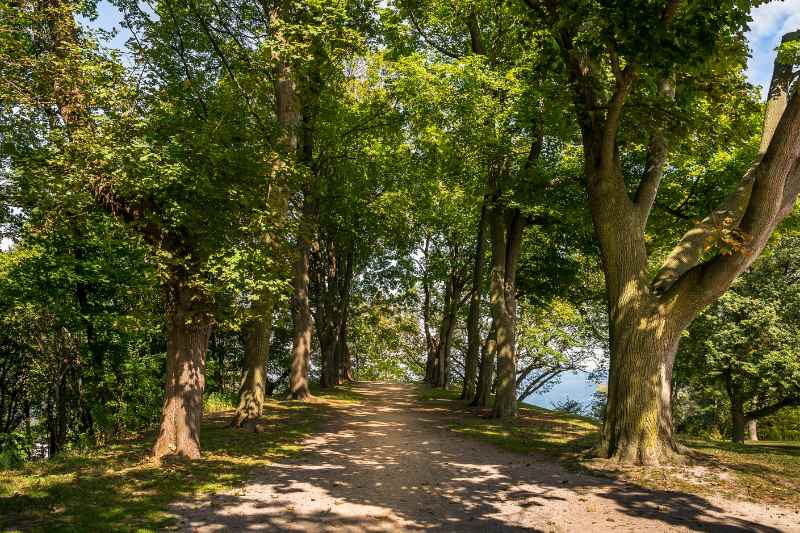
Ancient trees play a crucial role in the landscape, bringing majestic beauty that is often the result of decades or centuries of growth. Their size, the shape of their canopy, and textured bark attract the eye and serve as focal points in various landscaping designs, offering character and continuity. These trees are at the heart of natural heritage conservation efforts, as they represent a living link to the past and are valued for their contribution to the identity and beauty of a region.
Trees as witnesses to local and global history
Ancient trees are also witnesses to history. Each of these trees can tell stories of the past, having survived major historical events or having witnessed significant changes in their immediate environment. For example, specific trees can be identified as sites where historical events took place, serving as landmarks for local communities and historians. They can also represent historical or cultural symbols, linked to legends, poems, or cultural practices.
Beyond their role as silent witnesses to human history, these trees often hold spiritual or religious significance, embedded in local practices and beliefs. They are sometimes regarded as sacred or as protectors by communities, reinforcing their role in the cultural fabric of society.
The challenges associated with the growth of young trees
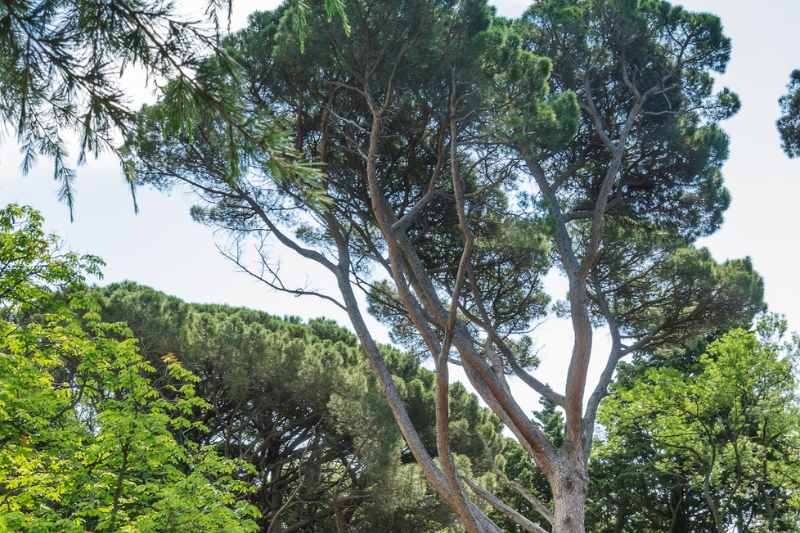
Unlike annual plants or bushes, trees typically require several decades to fully develop their root structure, trunk, and canopy. During this growth period, they do not yet have the capacity to provide the same ecological services as mature trees, such as significant carbon sequestration, support for high biodiversity, and effective microclimate regulation. This long delay before they become fully "functional" in the ecosystem can be seen as a long-term investment, but one that does not immediately compensate for the loss of old trees.
Young trees also face relatively low survival rates, particularly in urban or disturbed environments. Challenges include competition for resources such as light, water, and nutrients, especially if space is limited or if the soil is of poor quality. Young trees are more vulnerable to environmental stresses such as droughts, floods, extreme temperatures, and diseases. Furthermore, they can be damaged by human activities, such as construction and pollution. In other words, it is not always a given, and it is therefore better to keep older trees.
Conservation strategies for old trees
Effective conservation of old trees requires appropriate care and sustainable management policies that value their ecological and cultural importance in urban and rural environments. These strategies include regular inspections, careful pruning, structural support, and adjustments in irrigation and soil quality, as well as integration into urban planning, legal protection, public awareness, and adequate funding for conservation programmes. These joint efforts are essential to preserve these trees, which are crucial elements of our natural heritage and vital contributors to biodiversity and environmental well-being.
When discussing reforestation or the planting of new trees, the images that come to mind are often those of young shoots, symbols of hope and renewal for our environment. However, while planting new trees is essential for many ecological reasons, it cannot replace the value and ecological functions of old trees. These green giants, often […]
Climate change is one of the greatest challenges of our time. The increase in carbon dioxide (CO2) in the atmosphere is one of the main contributors to this phenomenon. Fortunately, nature offers us a solution: carbon sinks.
Carbon sinks are natural or artificial reservoirs that absorb CO2 from the atmosphere and store it permanently. In this article, we will explore the different types of carbon sinks, how they work, and how we might use them to attempt to reverse the trend of climate change.
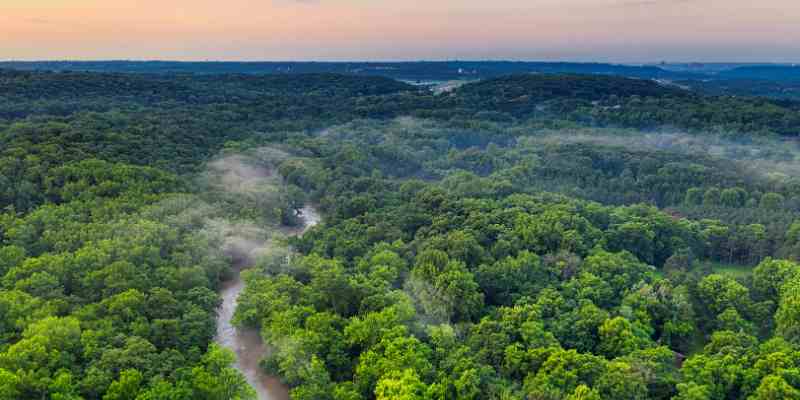
What is a carbon sink?
In simple terms, a carbon sink refers to any natural or artificial system capable of absorbing carbon dioxide (CO2) from the atmosphere and storing it for an extended period. These systems play a crucial role in regulating atmospheric CO2 levels and, by extension, in combating climate change. Forests, oceans, and soils are among the most important natural carbon sinks, capturing significant amounts of CO2 each year through the photosynthesis of plants and other biological and chemical processes.
The diversity of ecosystems plays a crucial role in enhancing carbon sinks, making their protection essential. Forests, with their variety of trees and plants, effectively capture CO2, storing carbon in their biomass and soil. Oceans, through their marine ecosystems such as mangroves and coral reefs, absorb a large amount of CO2, thus contributing to climate regulation. Varied terrestrial areas, including meadows and turf moors, also act as important carbon sinks, capturing and storing CO2 through vegetation and organic-rich soil. Protecting the diversity of these ecosystems ensures not only the health of our planet but also its ability to combat climate change through effective carbon sequestration.
Artificial carbon sinks (see below) include various technologies and practices designed to capture and store CO2 directly from the air or at the source of pollution before it reaches the atmosphere. The development and improvement of these technologies are essential for reducing the impact of human activities on the climate.
Main types of carbon sinks
Natural carbon sinks
- Forests and turf moors absorb CO2 from the atmosphere through photosynthesis, a process by which plants convert CO2 into oxygen and glucose. Trees and vegetation store this carbon in their biomass (leaves, branches, trunks) and in the soil.
- Oceans are the largest carbon sink on the planet, absorbing about 30% of the CO2 emitted by human activities. They absorb atmospheric CO2 directly from the air or indirectly through marine organisms that use carbon for photosynthesis. The CO2 is then stored in seawater in various chemical forms or in the seabed.
- Soils retain carbon through decomposed organic matter, including dead plants and microorganisms. Land management practices, such as regenerative agriculture and reforestation, can increase the amount of carbon stored in soils.
Artificial carbon sinks
- Carbon capture and storage (CCS), which involves capturing CO2 emitted by industries and power plants before it is released into the atmosphere, and then storing it underground in geological formations.
- Bioenergy with carbon capture and storage (BECCS) combines energy production from biomass with CO2 capture and storage, thereby reducing net CO2 emissions.
- Carbon mineralisation accelerates the natural transformation of CO2 into stable minerals, providing a safe and permanent storage method.
- CO2 utilisation converts captured CO2 into useful products, thereby reducing emissions while creating value.
How do carbon sinks work?
Natural carbon sinks, such as forests, oceans, and soils, absorb CO2 directly from the atmosphere. Plants, through photosynthesis, convert CO2 and water into glucose and oxygen, using solar energy. This natural process not only produces oxygen but also stores carbon in plant biomass and soil. Oceans, on their part, absorb atmospheric CO2 through physical and biological processes, with dissolved CO2 being transformed into carbonates or consumed by plankton.
In the realm of artificial carbon sinks, several technologies stand out for their innovative approach to capturing and managing carbon dioxide (CO2). Carbon Capture and Storage (CCS) perfectly illustrates this advancement. This process begins with capturing CO2 at its source, such as industrial facilities or power plants, where it is separated from other gases emitted during fossil fuel combustion. After capture, CO2 is compressed and transported, often via pipelines, to sites where it can be stored away from the atmosphere. These sites typically include deep geological formations, such as depleted oil or natural gas reservoirs or deep saline layers, where CO2 can be injected and securely trapped.
Bioenergy with Carbon Capture and Storage (BECCS) represents another promising technology. It integrates renewable energy production from biomass, such as agricultural residues or wood, with the capture of CO2 resulting from its combustion or transformation. The captured CO2 is then stored in the same manner as in the CCS process, making this approach particularly attractive for its ability not only to generate energy without emitting CO2 but also to actively remove CO2 from the atmosphere.
Regarding carbon mineralisation, this technique accelerates a natural process where CO2 reacts with certain minerals to form new stable mineral compounds, such as calcium carbonate. This natural chemical reaction is exploited and optimised to capture CO2 permanently, offering a sustainable and ecologically safe storage solution.
Finally, CO2 utilisation constitutes another strategy aimed at converting captured CO2 into useful resources such as synthetic fuels, construction materials like aggregates for concrete, or various industrial chemicals. Not only does this method help reduce CO2 emissions, but it also promotes a circular economy by creating business opportunities and reducing dependence on fossil fuels.
These artificial carbon sink technologies, alongside natural systems, form an essential component of the overall strategy to combat climate change, effectively reducing atmospheric CO2 levels and exploring new pathways for sustainable carbon management.
How to create a carbon sink?
Reforestation plays a crucial role in this process by planting trees on land where forests have been destroyed or degraded. This action is not limited to planting new trees but also includes restoring forest ecosystems, thereby significantly increasing CO2 capture through photosynthesis.
Improving agricultural practices also contributes to the creation of carbon sinks by optimising soil management. Methods such as agroforestry, no-till farming, and maintaining crop residues in fields increase the amount of organic carbon in the soil, transforming agricultural land into significant carbon reservoirs.
Moreover, industrial carbon storage types such as bioenergy with carbon capture and storage (BECCS) represent a modern approach that combines energy production from biomass with the capture and storage of CO2 produced during the combustion or conversion of this biomass.
Specifically, the reforestation project in Costa Rica has transformed degraded land into lush forests, increasing biodiversity and capturing CO2, demonstrating the positive impact of reforestation on the environment and the local economy. In France, agroforestry has successfully combined agriculture and tree cultivation on the same land, improving soil health and increasing its capacity to store carbon. The BECCS project at the Drax bioenergy plant in the UK captures CO2 emitted during energy production from biomass, demonstrating how technology can effectively reduce greenhouse gas emissions from the energy industry.
Please note: The fight against climate change through carbon sinks requires global cooperation, as decisions made affect the climate on a planetary scale. Agreements like the Paris Agreement play a key role in setting CO2 reduction targets and pushing for environmentally friendly methods. It is crucial that these efforts are fair and involve all communities, ensuring that developed countries support developing ones and that benefits are shared equitably. However, this is unfortunately not yet the case...
If there are carbon sinks, then everything is fine, right?
It is never that simple, unfortunately.
First, here are some key figures:
- Oceans: 38,000 billion tonnes of carbon stored
- Forests: 800 billion tonnes of carbon stored
- Soils: 1,500 billion tonnes of carbon stored
- Turf moors: 400 billion tonnes of carbon stored (showing that turf moors are far from being anecdotal on this subject)
It is important to note that the capacity of natural carbon sinks to absorb CO2 is not unlimited. If CO2 emissions continue to rise, carbon sinks could become saturated and no longer be able to absorb them. This could lead to an even faster increase in climate change.
It is therefore essential to reduce our CO2 emissions and protect existing natural carbon sinks.
Artificial carbon sinks are not a panacea
From a technological standpoint, one of the main challenges lies in the ability to capture CO2 efficiently and store it safely and sustainably. Current technologies, such as carbon capture and storage (CCS), require complex and costly infrastructures, as well as a large amount of energy, which can reduce their net effectiveness in terms of reducing greenhouse gas emissions.
Economically, the high cost of these technologies limits their adoption and large-scale deployment. Funding for research, development, and implementation of CO2 capture and storage solutions represents a considerable investment for governments, businesses, and organisations, often requiring financial incentives or subsidies to be viable.
Ecologically, even though the goal is to reduce CO2 emissions, there are concerns regarding the environmental impact of underground CO2 storage, particularly the risk of leaks that could affect groundwater and geostability. Moreover, the focus on technological solutions to mitigate carbon emissions could divert attention and resources from nature-based solutions and reducing dependence on fossil fuels.
Climate change is one of the greatest challenges of our time. The increase in carbon dioxide (CO2) in the atmosphere is one of the main contributors to this phenomenon. Fortunately, nature offers us a solution: carbon sinks. Carbon sinks are natural or artificial reservoirs that absorb CO2 from the atmosphere and store it permanently. In […]
If you buy potting soil commercially, there is a very high probability that it contains peat. Indeed, it is almost systematically integrated into substrates for its physical qualities, in terms of lightness and water retention. However, the widespread use of peat has a significant environmental impact! This involves the destruction of wetlands that are ecologically important. Fortunately, there are solutions to preserve them. Let’s take a look at the advantages of peat in the garden, the consequences of its use, and discover how to preserve this resource!
1- What is peat and where does it come from?
Peat is a fossil organic material that results from a slow accumulation of organic matter in an acidic, water-saturated environment that is very low in oxygen. These conditions prevent microorganisms, bacteria, and fungi from decomposing the organic matter, which therefore accumulates gradually. These particular environments are known as peat bogs.
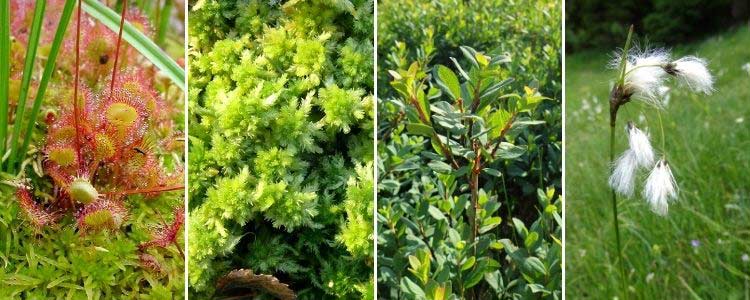
As the organic matter is not decomposed, these environments are very low in mineral elements, leading to the development of specific fauna and flora. Many carnivorous plants (such as sundews and Sarracenia) can be found in peat bogs: they capture insects to supplement their nutritional needs, as they cannot draw nutrients from the soil, which is too poor.
Peat can take between 1,000 and 7,000 years to form. Therefore, it is not renewable on a human timescale. Ultimately, after a million years, the organic matter constituting peat bogs transforms into coal.
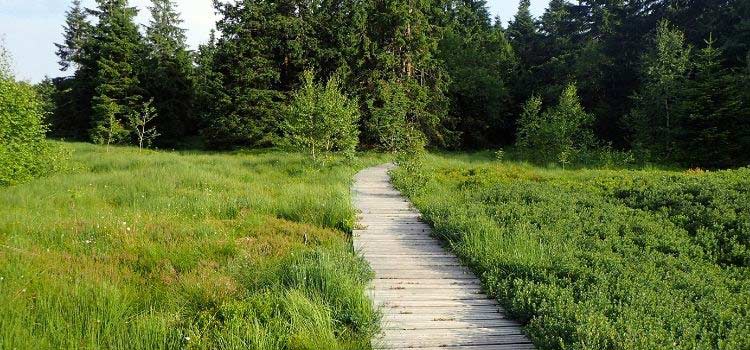
There are different types of peat:
- Blonde peat: it comes from sphagnum moss. It is relatively young (between 3,000 and 4,000 years) and fibrous. This is the layer that is found closest to the surface in a peat bog. It has an excellent water retention capacity, as sphagnum absorbs water. It is the most commonly used peat in horticulture and gardening.
- Brown peat: it originates from woody plants (trees, bushes), sedges, reeds, and Ericaceae. It is older (about 5,000 years) and found deeper down. It can also be used in the garden, although its use is less frequent.
- There is also black peat, which is older (up to 12,000 years). It is mainly used for wastewater treatment.
Thus, the darker the peat, the older it is.
2 - The advantages of peat in the garden
Peat has many qualities that plants need, to the point that it is difficult to replace. It is no coincidence that its presence has become almost systematic in marketed potting soils.
Peat acts like a sponge: it stores water and mineral elements, preventing the substrate from drying out too quickly. It has an excellent water retention capacity. Peat is therefore ideal for potted plants: as it stores water, watering can be spaced out or occasionally forgotten without the plants suffering too much. It is a particularly light and airy material that does not compact: thus, it is ideal for good root development. Indeed, in pots, the substrate can quickly tend to compact and suffocate the roots. Peat also has the advantage of providing a stable substrate that does not decompose or deteriorate.
Peat is particularly useful for substrates intended for repotting indoor plants, flowering plants for the terrace, etc. It is also widely used for growing carnivorous plants, as it perfectly matches their natural environment.
Dehydrated peat pellets are also available, used particularly for sowing. They swell as soon as they are rehydrated. Peat is also used to make biodegradable compressed peat pots.
3 - What problems are posed by the use of peat?
As peat bogs are very particular environments (acidic, saturated with moisture, low in oxygen), over time, a specific flora and fauna develop that cannot be found elsewhere. Many rare and protected species live in peat bogs and cannot adapt to other environments. These are mainly plants of wet and acidic soils. Sphagnum is very characteristic of peat bogs: it is a type of moss that absorbs water and tends to acidify the environment. It is the basis for the formation of peat bogs. In these wetlands, one can also find carnivorous plants, as well as Ericaceae, Cyperaceae, cotton grass, and reeds... Similarly, some plants (royal fern, molinia, Carex...) form tussocks: these plants grow on their old roots and dead leaves because these cannot decompose, thus forming clumps or micro-mounds.
In addition to their great biological diversity, peat bogs act as a true sponge... not only at the substrate or potting soil level, but the same happens on a regional scale. They limit the risk of flooding and also release water during dry periods. They play a crucial role in the hydrological balance of certain regions. Moreover, peat bogs store a significant amount of carbon (as they can be composed of 50% carbon), thus limiting global warming. They help regulate the climate on a global scale and also create cool microclimates. Peat bogs also have the advantage of filtering water: they purify it by removing various pollutants, thus acting as a natural purification station! The waters they release into the environment are therefore particularly pure.
Peat forms at a very slow rate of about 1 mm per year, or even less, which means it is not renewable on a human timescale. It takes thousands of years to form!
The importance of peat bogs is not "only" environmental; they also have a genuine historical interest. As peat forms very slowly and the material does not decompose, objects as well as plant or animal remains remain intact, allowing for a faithful tracing of a region's history. They are true archaeological archives! Human mummies in perfect condition, dating back thousands of years, have been found in peat bogs. Similarly, pollen grains are very well preserved in peat, allowing for the reconstruction of the vegetation and climate of a region thousands of years ago.
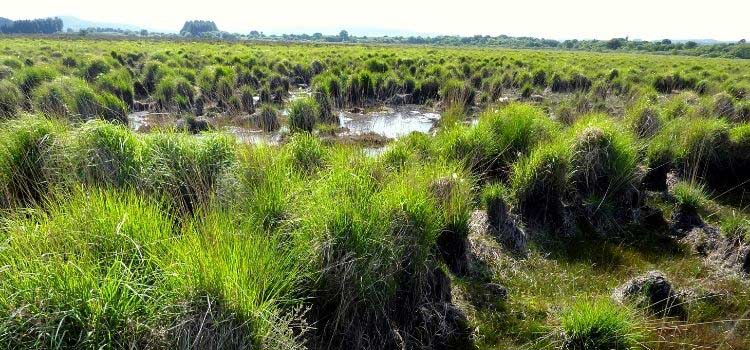
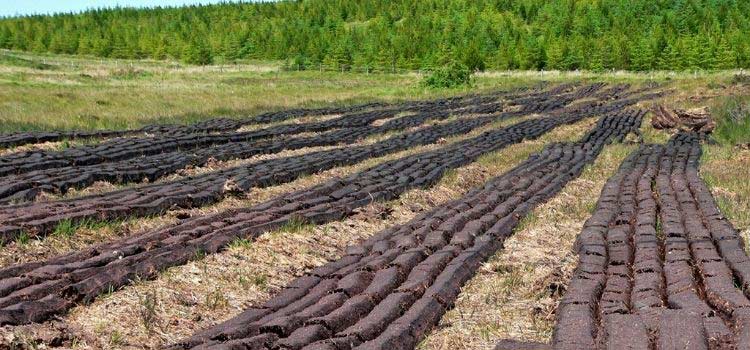
The exploitation of peat bogs is a true ecological disaster. They are drained and dried to extract peat. Generally, the soil then becomes dry and poor, and the typical plants of peat bogs will not be able to return.
The destruction of peat bogs is unfortunately not new. In the past, they were often considered useless and unexploitable environments, so they were drained to create agricultural land.
The figures are staggering: in France, half of the peat bogs have disappeared over the last 50 years. Fortunately, those that remain are now protected, which does not prevent the exploitation of peat bogs in other countries. Nearly 70% of the peat used in France for horticulture comes from the Baltic States (Estonia, Latvia, Lithuania) or Ireland. Thus, the problem remains the same, as it is the peat bogs of these countries that are now threatened.
4 - Our tips and best practices to preserve this resource
Fortunately, there are alternatives to peat, with some materials having the advantage of being light and airy while retaining water and nutrients: these include coconut fibres, composted bark, wood fibres, and pine bark... Similarly, vermiculite is ideal for lightening the substrate. There are also patented substitutes that are real alternatives, such as Turbofibre® (conifer bark fibre, replacing blonde peat) or Hortifibre® (wood fibre).
If you are growing acidophilous plants, we recommend using composted pine needles or bark.
Leaf compost is also a good alternative to peat, which has the added advantage of being rich in mineral elements and microorganisms. You can make your own potting soil by mixing well-decomposed compost, garden soil, and coarse sand.
Today, there are more and more peat-free potting soils on the market, often composed of coconut fibres, bark, wood fibres... They are quite effective. For example, check out Père François Or Brun universal potting soil. or Ecolabel universal potting soil.
However, be wary of the "Organic" certification, which does not guarantee the absence of peat; on the contrary! Indeed, peat, by definition, is a natural and organic material, so it can very well be included in the composition of "organic" potting soils. Read labels carefully and analyse the composition before purchasing. Prefer Ecolabel certification, which certifies peat-free potting soil.
If you continue to use potting soils with peat, do so sparingly. Limit your use by reserving it for indoor plants and the most sensitive plants, grown in small pots with low water and mineral reserves, or those that cannot tolerate drought. For less fragile outdoor plants in large containers, you can create your own substrate composed of compost, garden soil, and coarse sand.
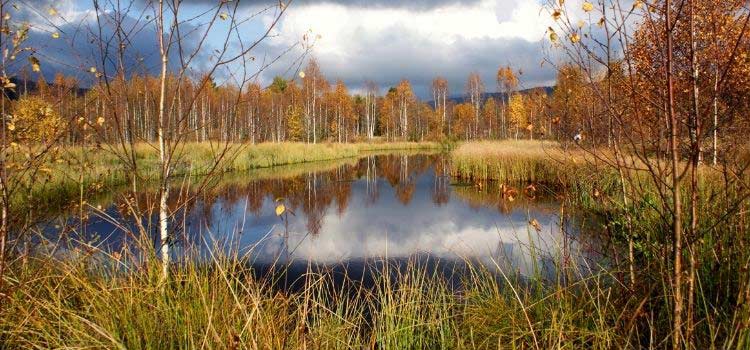
If you buy potting soil commercially, there is a very high probability that it contains peat. Indeed, it is almost systematically integrated into substrates for its physical qualities, in terms of lightness and water retention. However, the widespread use of peat has a significant environmental impact! This involves the destruction of wetlands that are ecologically […]