
Does snow really protect plants from frost?
Find out when to keep it or remove it
Contents
Indeed, a layer of light, powdery snow effectively protects plants’ roots and above-ground parts from frost by acting as a natural thermal insulator. The air trapped between its crystals keeps the soil temperature close to 0 °C, even when the outside air drops to -15 °C. However, heavy, wet, sticky snow can also cause considerable damage. So should you leave snow on plants, or always remove it?
The essentials of snow and frost on plants
|
Why and how does snow protect plants from frost?
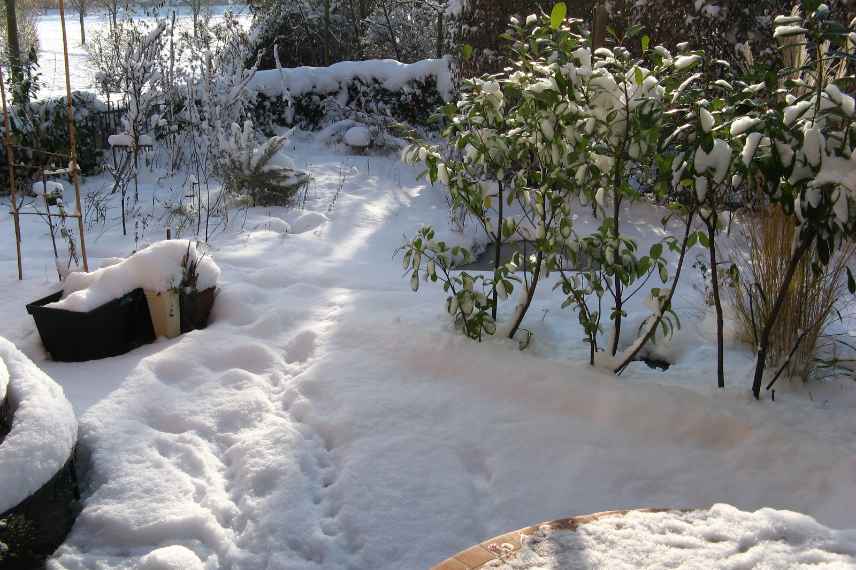
A light covering of snow protects low-growing plants, while heavy snow can break the branches of trees and evergreen shrubs.
Paradoxical as it may seem, a thick layer of snow often protects plants very effectively from the cold. In fact, snow acts as an insulating cover thanks to the air trapped between its ice crystals. A layer of 10 to 20 cm of fresh snow therefore prevents intense cold from penetrating the soil, keeping the soil surface between 0 °C and -2 °C even when the air temperature falls as low as -15 °C. Naturally, this figure is variable and indicative, depending on the soil’s initial temperature, the type of snow and how long the cold lasts.
Snow also protects plants from icy, drying winds and buffers often sudden temperature fluctuations between freezing nights and sunny days in late winter. As a result, snow prevents freeze-thaw cycles, which are very harmful to plants.
So, clearly, snow does not warm plants, but it slows their cooling. It helps protect their root systems and crowns, including those of perennial plants and spring bulbs.
Which plants benefit most from snow cover?
Perennial plants, bulbs, small plants, winter vegetables in the vegetable garden, lawns and groundcovers are the main beneficiaries of snow. Their survival organs are generally underground or very close to the soil surface.
| Types of plants | Protective effect of snow | Possible precautions |
| Herbaceous perennials with crowns or low-growing buds (hostas, peonies, daylilies, hardy geraniums…) | Protects dormant buds and the crown from desiccating frost and sudden temperature changes. | Leave the snow cover in place until it melts naturally. |
| Spring-flowering bulbs (tulips, daffodils, crocuses, hyacinths, snowdrops…) | Keeps the soil at around 0 °C, preventing it from freezing deeply while the bulbs take root. | Do not walk on beds where bulbs are planted. |
| Hardy groundcover and rock garden plants (saxifrages, houseleeks, aubrietas, pachysandra, creeping thyme, ivy…) | Insulates stems and leaves from the cold and reduces dehydration. | Make sure the soil drains well as the snow melts. |
| Lawns | Acts as a windbreak and prevents scorching caused by the winter sun. | Above all, do not walk on it. |
| Trees and shrubs | Protects surface roots, but not branches. | Shake the snow off the branches. |
| Winter vegetables in the vegetable garden (leeks, cabbages, lamb’s lettuce, carrots left in the ground…) | Protects foliage from icy winds and prevents the soil from freezing. | Clear only as much snow as needed when harvesting. |
Good to know: snow does not make a plant hardier than it naturally is. A plant that is sensitive to frost can still be damaged, particularly if its above-ground parts protrude above the snow cover.
When can snow damage plants?
Snow becomes damaging when temperatures are close to 0 °C to +2 °C. It absorbs water and weighs down branches. Unlike powdery snow formed in very cold conditions, this wet, sticky snow weighs several hundred kilograms per cubic metre and puts considerable pressure on plants. As it builds up on branches, it can make them bend, become misshapen or break.
The plants most affected are naturally shrubs and evergreen trees with broad leaves, such as photinia, laurustinus, Mexican orange blossom, camellia… Conifers with a columnar or spreading habit such as thujas, cypresses, yews… and bamboos are also vulnerable to this heavy snow. Their leaves trap snowflakes in compact clumps, which can make main branches bend, spread apart or break. Young trees with branches that are still fragile may also suffer.
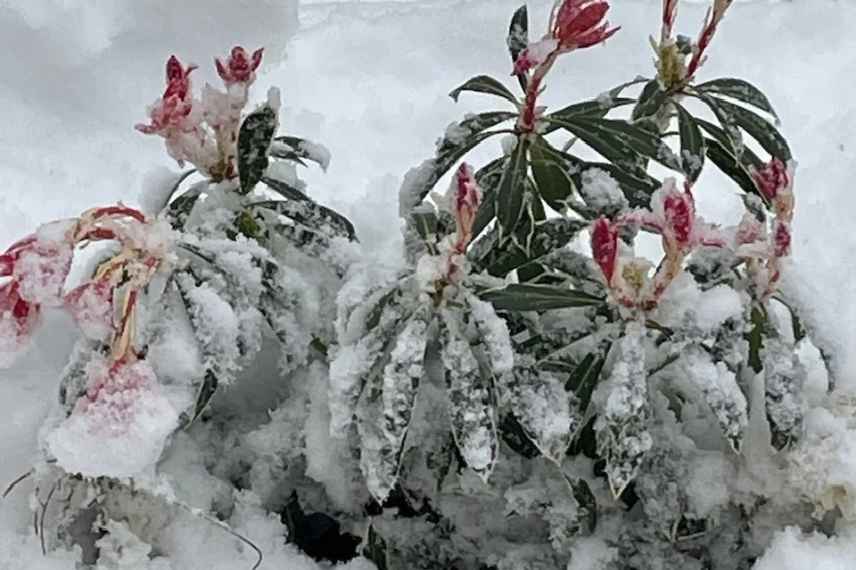
Heavy snow could break the branches of this photinia.
Compacted snow or snow that has turned to ice poses another risk: it insulates less effectively than light snow and can put considerable pressure on plants.
Finally, persistent snow cover can encourage certain moisture-related problems, particularly in poorly drained soil. Plants that are sensitive to excess water in winter, such as some Mediterranean species, may suffer when the soil remains waterlogged for a long time as the snow melts.
What should you do in the garden when it snows?
First of all, it is important to note that snow should not always be removed from plants. In many situations, it is better to let it provide natural protection:
- Leave the blanket of snow on perennial borders, ground-cover plants, bulbs, the lawn and in the vegetable garden, where it effectively complements the protection provided by organic mulch. However, avoid walking on snow-covered plants, as this can crush their stems.
- Gently shake snow-laden conifers and shrubs using a broom. Always make light movements from the bottom upwards.
- Do not try to break the ice that may encase plants: frozen branches are particularly brittle. Wait for the thaw!
- Clear only paths and walkways, brushing clean snow onto the lawn. If you use de-icing salt on a paved path, never push the salted snow onto the base of hedges or into borders: sodium chloride burns roots and sterilises the soil.
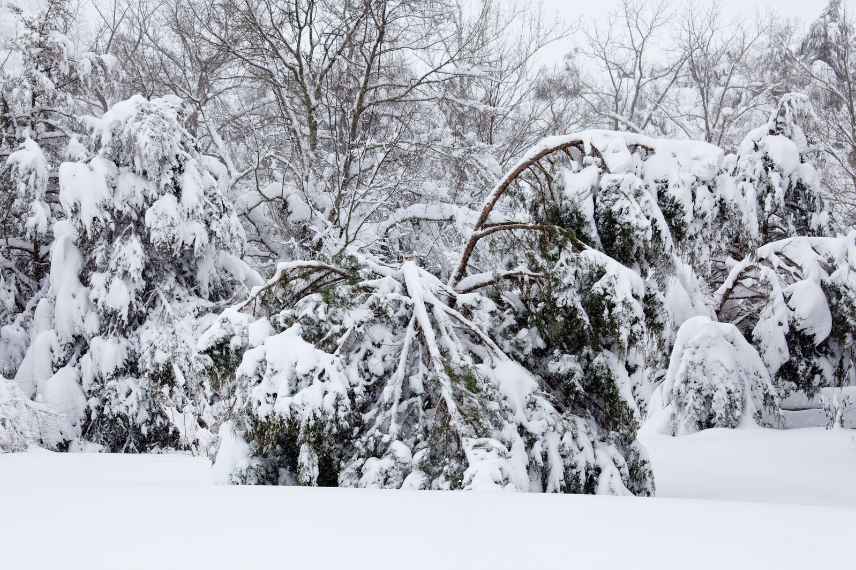
In the garden, it is best to remove heavy snow from the branches of trees and shrubs using a broom.
In short, leave snow where it provides protection and remove it only when it threatens to cause mechanical damage.
Frequently asked questions about snow and plants in winter
Can snow cause bulbs to rot?
Snow does not directly cause hardy bulbs to rot. The risk mainly arises when meltwater remains in heavy, poorly drained soil. Tulips, daffodils and crocuses generally cope well with a covering of winter snow when their growing conditions are suitable.
Can plants freeze after the snow melts?
Yes, when the snow disappears, plants can become more vulnerable to another cold snap. Young shoots that emerge during a mild spell are particularly susceptible to late frosts. Temporary protection may then be necessary.
Should you remove snow from plants in pots?
You do not generally need to remove a light layer of snow from the potting compost. However, remove any build-up that could break branches. Less hardy plants in pots still need extra protection from the cold.
Should you remove snow from garden fleece?
Yes, it is best to gently remove any snow that has built up on garden fleece. The weight of wet snow can make the fleece sag and press against the foliage, risking broken branches or transferring cold through direct contact. Gently shake the fabric from the outside to restore its insulating layer of air.
- Subscribe!
- Contents
This form is protected by reCAPTCHA - the Google Privacy Policy and Terms of Service apply.

































Comments