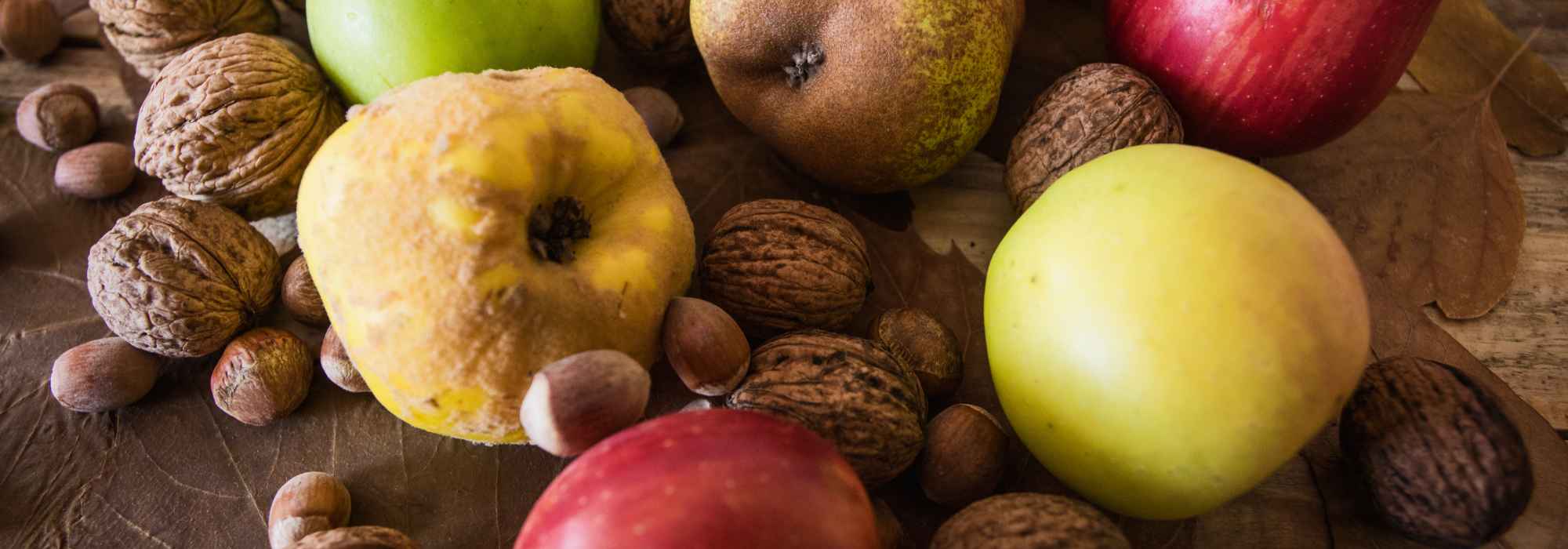
Which fruits can be stored all winter?
A selection of fruits that store well and can be enjoyed during the colder months
Contents
Of course, nowadays you can enjoy almost any fruit at any time of year. But these fruits, often lacking in flavour, sometimes come from the other side of the world. Yet it is perfectly possible to bite into a lovely juicy apple or pear, or even pick a few grapes, all from your own orchard or garden, throughout the winter. In the past, storing seasonal fruit was even an age-old tradition in farm cellars. Why not extend your enjoyment of your fruit until next spring? Discover which fruits can be stored over winter and our advice on how to do so in the best conditions.
Storage apples to extend the season into spring
Late-keeping apples are the undisputed stars of the orchard. Both delicious and easy to store, they ensure that fruit remains on the table until spring.
Harvested late, often just before the first frosts, these late-season or winter apple varieties can continue ripening once they have been picked. This happens slowly, provided they are kept in the dark and cool. In practical terms, these apples often have thicker skins, which help to limit evaporation and dehydration. In addition, their flesh, often firmer, more acidic and richer in tannins at harvest time, tends to become sweeter and softer. Most of these apples, with their complex flavours and varied textures, can be stored until early spring. This provides a fruity transition to the first fruits of spring.
Among these late-keeping apples, some stand out:
- The Reinette family, particularly ‘Reinette Clochard’, a superb late-keeping apple with a rough skin and fragrant flesh. ‘Reinette grise du Canada’ is also a reliable choice, ready to eat from December to March. Not forgetting ‘Reinette de Caux’, to be harvested from mid-October to early November and eaten from January to April.
- ‘Belle de Boskoop’ is another classic late-keeping apple. This large, irregular apple, with a rough, bronze-tinged skin, has sharp, fragrant flesh that holds its shape exceptionally well when cooked, making it ideal for tarts and generous servings of stewed apple.
- Less well known but very old, the variety ‘Court-Pendu’, recognisable by its deeply sunken stalk and flattened shape, flowers very late, enabling it to escape spring frosts. Its apples have dense, crisp, sweet and highly fragrant flesh.
- ‘Belle fille‘ de l’Indre, from Salins, and from Creuse are old local varieties that are particularly hardy. They produce pretty small apples, with red-tinged skins and flesh that is both firm and juicy.
- The variety ‘Patte de loup’ is an intriguing curiosity. It gets its name from the paw-shaped scar on its stalk. This is a vigorous apple tree, resistant to diseases and pests, which produces beautiful yellow apples washed with grey. They conceal yellow-green flesh that is very fine, juicy, pleasantly fragrant and exceptionally well suited to winter storage.
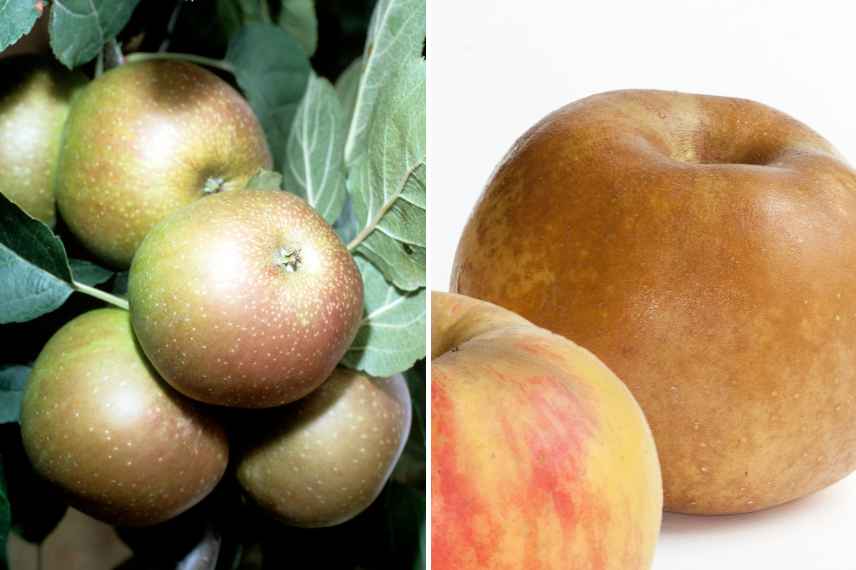
Belle de Boskoop and Reinette grise du Canada, two late-keeping apples with excellent flavour
We could also have mentioned the ‘Calville rouge d’hiver’ and ‘Api étoilé’ varieties, with their astonishing star-shaped apples.
Read also
6 late apple varietiesStorage pears: treasures of flavour and melt-in-the-mouth texture
Like apples, late-season pears can be stored until spring. These varieties are “programmed” to be harvested in autumn before they are fully ripe and stored in the fruit store, where they soften and develop their flavours during the cold months.
When discussing pears for keeping, it is difficult to overlook Passe-Crassane. This emblematic pear, large and stocky, with yellow skin and melting, very juicy flesh, can often be stored until January-February. Unfortunately, as this pear tree is highly susceptible to fire blight, it is now rarely found in orchards, as its sale was regulated for many years and its propagation prohibited. The pear tree ‘Saint-Rémy’ also produces excellent pears for keeping. This heritage variety of long-keeping pear is noted for its hardiness. Very firm at harvest, its pears improve in storage and are ideal for slow-cooked dishes or poaching in wine.
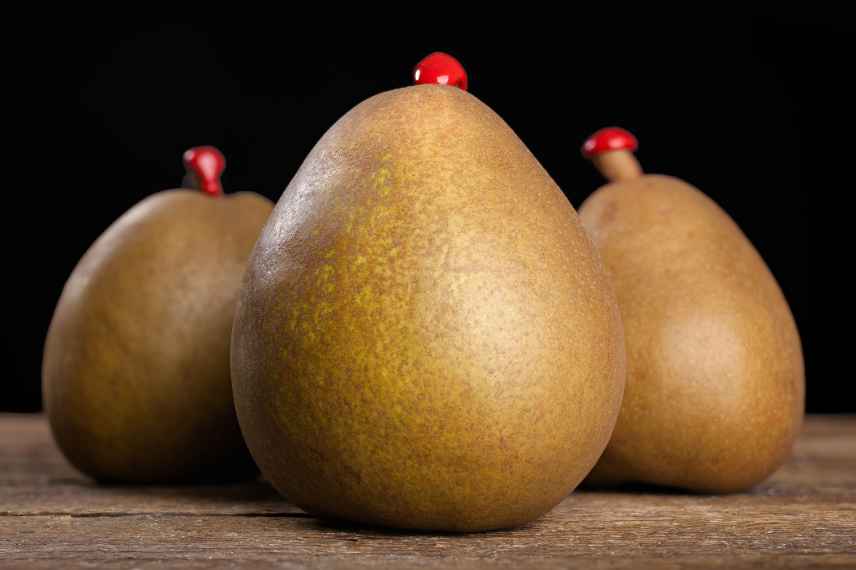
Pears for keeping
Marion also recommends in her articles the 7 best pears for long-term storage and 5 late-season pear varieties, ideal for storing.
Quince, to fill the house with fragrance
Quinces, usually harvested in October, can be stored for 2 to 3 months over winter. Simply keep them in a cool place at a temperature between 10 and 15 °C, somewhere dry, dark and well ventilated. A cellar is perfectly suitable. Place them flat without letting them touch, in a wooden crate or cardboard boxes. However, do not store quinces with other fruit, as their very intense fragrance may permeate it.
Read also
The 7 best apples for long-term storageGrapes, to be kept in a bottle of water
Often harvested as early as the end of summer, grapes can also be stored for almost the whole of winter. You could even put bunches of your own grapes on the Christmas table! To do this, grape bunches must be stored using a particular, very old fruit-preservation method known as storage in a bottle of water.
This method involves harvesting the bunches in autumn while retaining a long section of the current season’s woody climbing stem. The end of this wood is inserted into or immersed in a bottle or small-necked container filled with water, traditionally with a piece of charcoal added to keep the water clear. The bottle is then simply placed at an angle in a cool, frost-free place such as a cellar. The woody climbing stem continues to supply the bunch with water and mineral salts, allowing the grapes to keep. 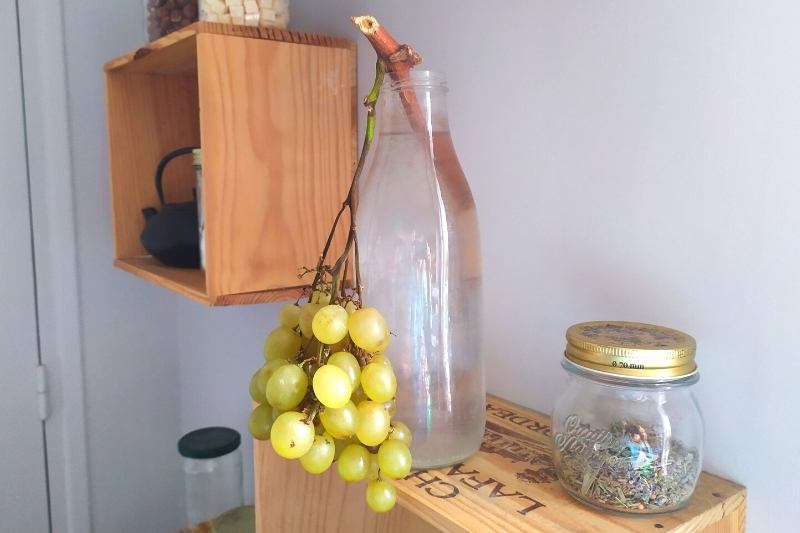
As with apples and pears, the grape varieties best suited to this storage technique are late varieties with thick skins and good hardiness:
- ‘Chasselas’ is often the variety mentioned for this type of storage. These grapes are eaten in autumn. Very fertile, it produces large bunches made up of small, round grapes with green, juicy, sweet and pleasantly fragrant flesh. It is the grape traditionally found on festive tables at the end of the year.
- The heritage variety ‘Alphonse Lavallée’ is a black table grape with large grapes, thick skin and sweet flesh.
Dried fruit: good for your health and your taste buds
Autumn also marks the season for nuts, a real concentrate of energy. Rich in plant proteins and fibre, nuts are therefore harvested around October-November and can be stored in a sheltered place throughout the winter. They provide a valuable nutritional reserve for the cold season. Walnuts remain the undisputed stars among nuts, whether it is the famous Grenoble walnut (AOC), represented by the ‘Franquette’ and ‘Parisienne’ varieties, appreciated for their pale flesh and subtly bitter notes, or hardier varieties such as ‘Corne’. Harvest walnuts as soon as the husk opens, then dry them carefully on racks in a dry, well-ventilated room. This reduces their moisture content and prevents mould from developing. Once dry, they can be stored for months in cloth bags or nets, ready to be cracked by the fireside.
Alongside walnuts, hazelnuts also have their place. Ideally, harvest them shortly before they fall naturally, to keep them out of the reach of rodents. And, of course, like walnuts, hazelnuts must be dried carefully. Several varieties vie for attention, beginning with ‘Merveille de Bollwiller’, which produces large, round hazelnuts with a relatively soft shell. The ‘Fertile de Coutard’ is certainly the variety that produces the largest hazelnuts. It is also highly productive, but early-flowering and sensitive to frost.
Hazelnuts keep very well throughout the winter
Further south, the almond tree produces kernels, a tender food rich in calcium and magnesium, perfect for winter baking or eating fresh.
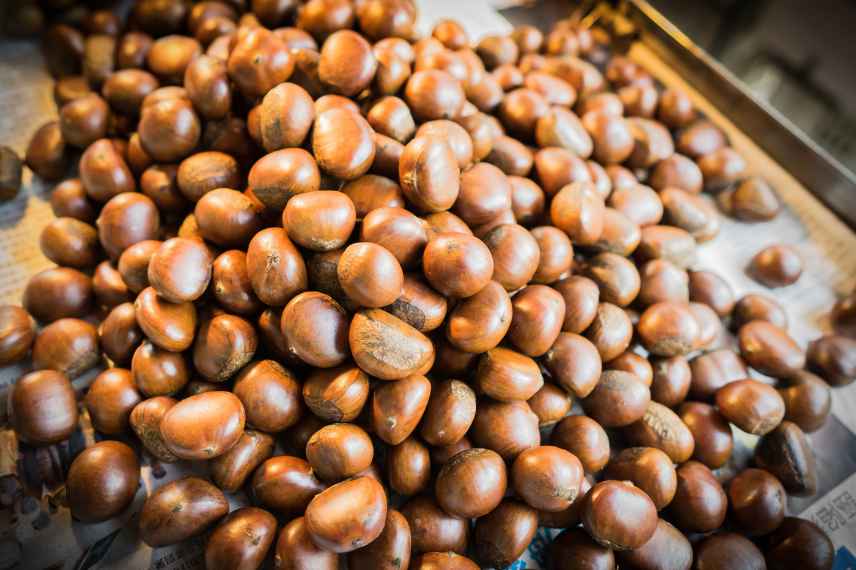
As for chestnuts, the fruits of the chestnut tree, although they are not true nuts, they can also be stored during the coldest months. These generous fruits, protected by a spiny husk, can be eaten roasted, boiled or mashed. They are comforting and filling, helping you get through the winter.
How can you store this fruit to best effect?
Winter storage of fruit requires methods suited to each type of fruit to preserve its flavour and nutritional qualities throughout the cold months. For apples and pears intended for storage, the best method is to keep them in a fruit store or in a cool, dark and well-ventilated cellar. Arrange the fruit flat on slatted shelves or in crates, without allowing it to touch, to prevent contamination if any fruit begins to rot. Its thick epidermis and late harvesting allow it to continue ripening very slowly, gradually softening while developing complex aromas.
For pears, there is a traditional storage method involving a small dab of melted wax on the end of the stalk. This little stopper has two purposes: to prevent evaporation, and therefore stop the pear drying out and becoming wrinkled, and to create a barrier against fungal diseases.
As for nuts, they require thorough drying on racks in a dry, well-ventilated room to reduce their moisture content. Once perfectly dehydrated, store them away from damp in cloth bags, nets or airtight jars.
- Subscribe!
- Contents
This form is protected by reCAPTCHA - the Google Privacy Policy and Terms of Service apply.

































Comments