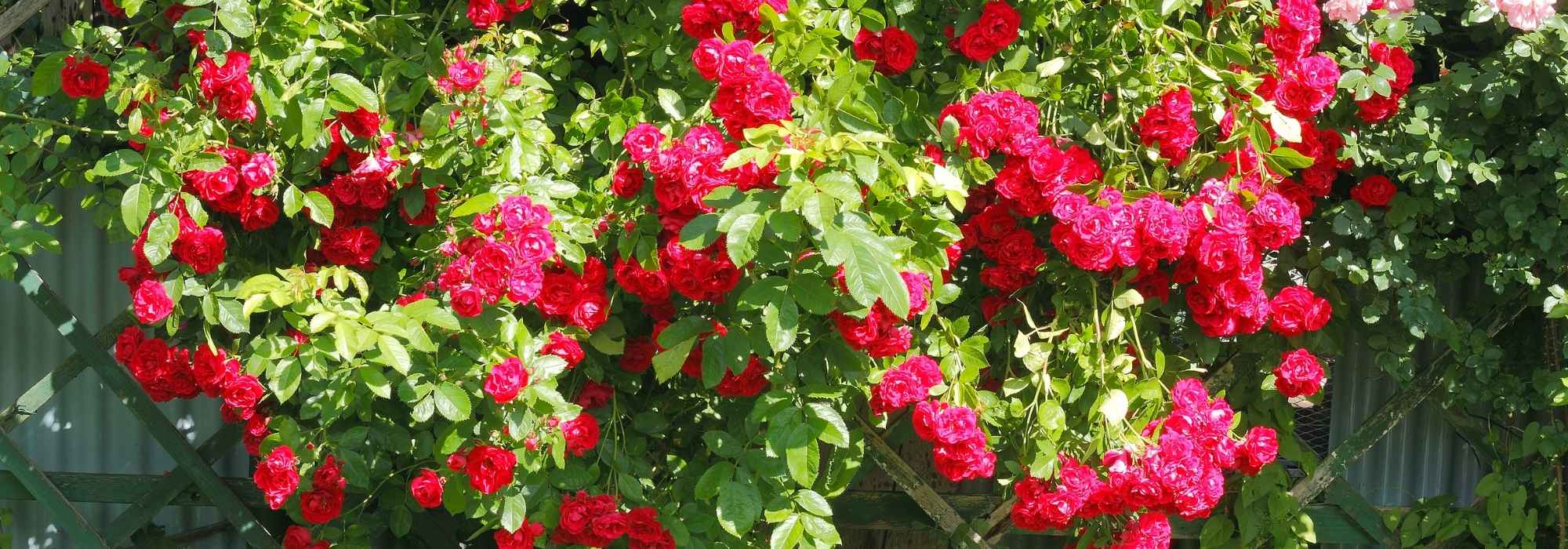
Climbing and repeat-flowering roses put to the test: our top 10!
10 repeat-flowering climbing roses under the microscope
Contents
Choosing a climbing rose that will delight us for months on end is no easy task, given the sheer choice available. Repeat-flowering climbing roses have the advantage over rambling roses of flowering several times until autumn. In this review, our aim is to help you compare 10 climbing roses for your garden using five criteria.
We put ten iconic or lesser-known roses to the same test — abundance of flowers, disease resistance, fragrance and repeat flowering — scoring each out of 5 and detailing its particular strengths. Discover our top 10!

Criteria and scoring system for the special trial of repeat-flowering climbing roses
Our editorial team has chosen four criteria that we consider essential in climbing and repeat-flowering roses, to help guide you in your choice:
- Floriferousness: we prefer roses that produce flushes of flowers rather than just a few scattered blooms.
- Disease resistance: an important criterion in any garden, and even more so when it comes to roses.
- Fragrance: roses and the search for fragrance often go hand in hand.
- Repeat flowering: quite simply, so you can enjoy them for many months.
All these roses are climbers. Two could even be classed as rambling roses, but we have included them in this selection for their particular qualities. They can cover small pergolas or arches, or be planted against the façades of buildings or walls if they are larger. We take a closer look at them in this article.
| Rose (breeder, country, year) |
colour | Floriferousness /5 |
Disease resistance /5 | Fragrance /5 |
Repeat flowering /5 | Score /20 |
|---|---|---|---|---|---|---|
| 1. ‘Mme Alfred Carrière’ (Schwartz, France, 1879) |
pinkish white | 5 | 4.5 | 4.5 | 5 | 19 |
|
2. Le Grand Huit® ‘Adabaring’
(Michel Adam, France, 2004) |
red | 4.5 | 5 | 5 | 4.5 | 19 |
| 3. ‘Belle de Londres’ (Harkness, United Kingdom, 1972) |
pink | 4 | 4 | 4.5 | 4.5 | 17 |
| 4. Climbing ‘Iceberg’ (Kordes, Germany, 1968) |
white | 5 | 4 | 2.5 | 5 | 16.5 |
| 5. ‘The Generous gardener’ (David Austin, United Kingdom, 2002) |
pale pink | 3.5 | 4.5 | 4.5 | 4 | 16.5 |
| 6. ‘Sourire d’Orchidée’ (Croix, France, 1985) |
pinkish white | 4.5 | 4.5 | 2.5 | 5 | 16.5 |
| 7. ‘New Dawn’ (Somes, United States, 1930) |
pale pink | 4.5 | 4.5 | 2.5 | 4.5 | 16 |
|
8. ‘Clair Matin’
(Meilland, France, 1960) |
salmon pink | 4.5 | 5 | 2.5 | 4 | 16 |
| 9. ‘Ghislaine de Féligonde’ (Turbat, France, 1916) |
yellow | 4 | 4 | 2.5 | 3 | 13.5 |
| 10. ‘Pierre de Ronsard’ (Meilland, France, 1985) |
pale pink | 3 | 4 | 2.5 | 2.5 | 12 |
Read also
What is a perpetual rose?Mme Alfred Carrière: the undisputed queen of climbing roses
The rose ‘Mme Alfred Carrière’ comes out top in our trial. This ranking is richly deserved: this Noisette rose has so many qualities, and has reigned over European gardens for 150 years!
” Perhaps the best of the repeat-flowering climbing roses,” we say frankly in our description of this magnificent rose at Promesse de fleurs. Created by Schwartz in 1879, this Noisette rose flowers from June to October, for around five months, sometimes from May when the winter has been mild. It flowers almost without interruption, even in partial shade and poor soil, where so many others fall short. Its large ivory-white, cup-shaped flowers with pink centres, borne in clusters of five to seven, give off a strong fruity fragrance that fills the garden paths. Add almost unarmed stems, hardiness down to −18 °C and one of the strongest constitutions in its class — black spot affects it only in very damp climates, and powdery mildew only when it is planted against a scorching wall — and you have a plant that never disappoints. 3.50 m and more, enough to cover an entire wall.
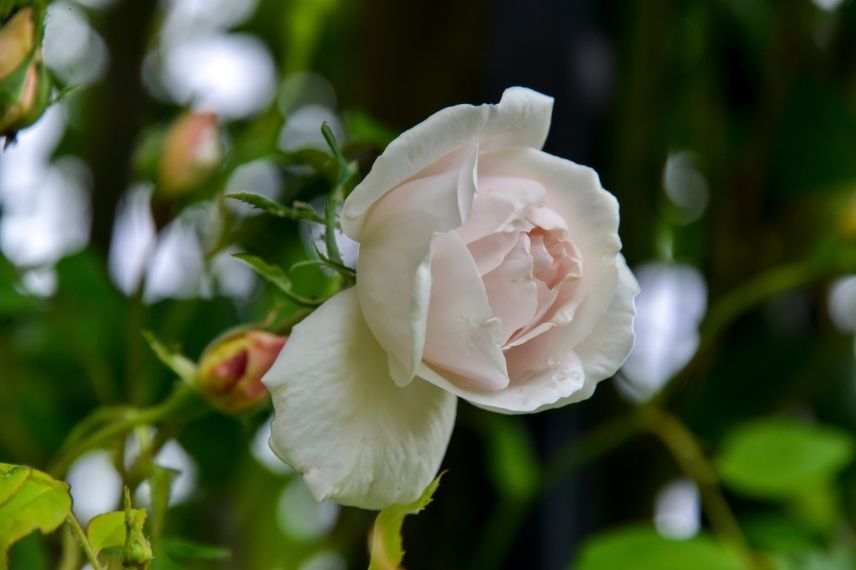
‘Mme Alfred Carrière’ rose
Grand Huit® 'Adabaring': a repeat-flowering climbing rose with intense red flowers
Finding a red climbing rose that is highly fragrant, truly repeat flowering and in excellent health is no easy task. Michel Adam solved this puzzle in 2004 with ‘Le Grand Huit‘, a dark red velvet rose with exemplary health, which has won numerous international awards for its fragrance. From May-June to October, a good five months, its large roses measuring 10 to 12 cm, with 26 to 40 petals, appear in generous flushes against particularly healthy, glossy, dark green foliage. Its heady, powerful fragrance has fruity notes.
There are two limitations to bear in mind, however: at 2 to 3 m, it remains compact, better suited to arches and pergolas than to large façades; and it is a hungry plant — in dry or poorly fed soil, it flowers less prolifically. In the intense light of southern France, it is truly spectacular.
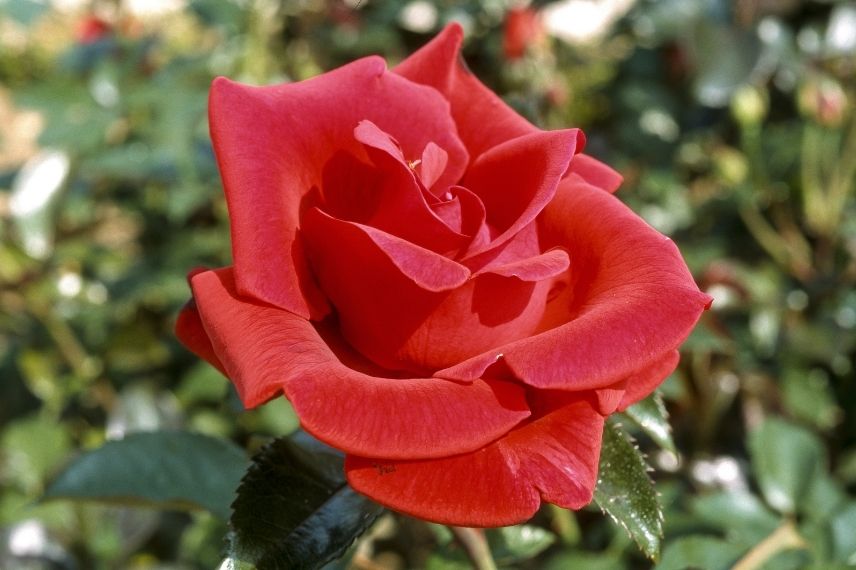
Rose ‘Le Grand Huit’
Read also
Climbing roses: the 10 best varieties'Belle de Londres': a climbing rose with "so British" elegance
Sold in France as ‘Belle de Londres‘® (also known as ‘Compassion’), this 1972 creation by British rose breeder Harkness remains to this day one of the most award-winning roses, from Bagatelle to Madrid. Its large, fully double flowers, in shades of apricot and salmon nuanced with pink and gold depending on the light, bloom from June to October with remarkable reliability, provided you remove the faded flowers. Its rich, fruity fragrance evokes old tea.
It is healthy and robust, although it still needs monitoring for black spot in wet summers. Its 3 to 4 m of flexible stems are easily trained over an arch or along a fence. This rose ages beautifully in bouquets.
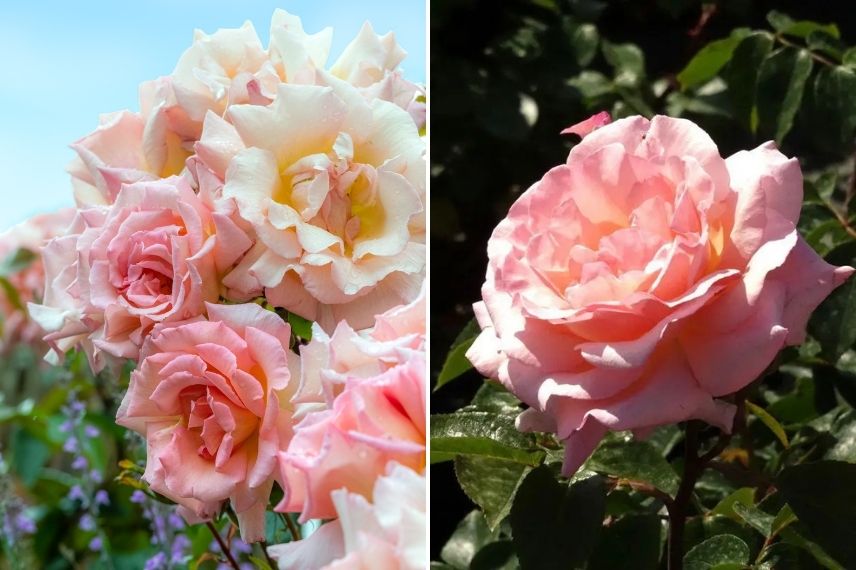
‘Belle de Londres’ rose
'Climbing Iceberg': a white climbing rose that flowers profusely
Named the world’s best rose in 1983, Kordes’ ‘Iceberg’ has reigned over white roses since 1958. ‘Climbing Iceberg‘, its climbing form, which appeared ten years later, is one of the most reliable roses in our trial. From late May until the first frosts, for around five and a half months, it produces corymbs of pure white flowers, needing no more than proper watering. It deserves its 5/5 ratings for both flower production and repeat flowering. The fragrance is light and green, and does not claim to rival the most strongly scented roses. Late in the season, in damp climates, black spot can speckle the foliage.
Hardy, easy-going and tolerant, growing to 3 to 4 m, this is the climbing rose we recommend to beginners, as it thrives almost anywhere.
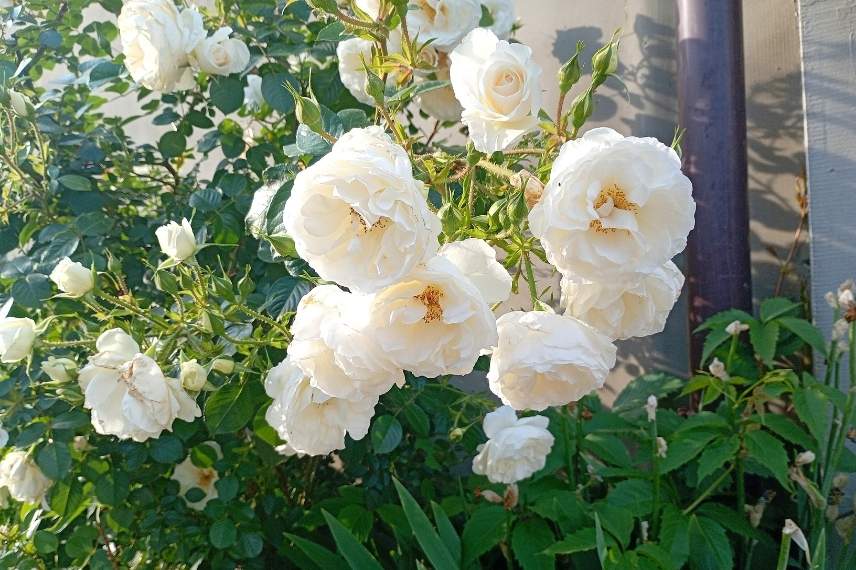
‘Climbing Iceberg’ rose
'The Generous Gardener': a climbing English rose with romantic charm
Created by David Austin, rose ‘The Generous Gardener’ bears double, pink-tinged white flowers with a wonderful fragrance. It earns its place on our podium for excellent reasons. See for yourself: vigorous, with a graceful, flexible habit and large flowers that droop beautifully, releasing an intense fragrance.
David Austin aptly named it: created in 2002, ‘The Generous Gardener’ is a generous rose. Its double, pale pink roses, with a slightly flushed centre, open into water-lily-like flowers that offer their golden stamens to the bees, with the musky fragrance of old roses for which the nursery is renowned. It flowers from June until the first frosts — at least five months — provided the soil remains moist. In dry, hot soil, it flowers much less frequently. The glossy, dark green foliage is highly resistant to disease in the right growing conditions.
Allow up to 4.50 m when trained against a support, with a narrower spread, or grow it as a magnificent 2 m shrub if left to its own devices. One thing to note: this is a rose for the connoisseur, best planted near a bench so you can enjoy its fragrance rather than to make an impact in a border. It is ideal for arches, walls, fences and south- or west-facing façades.
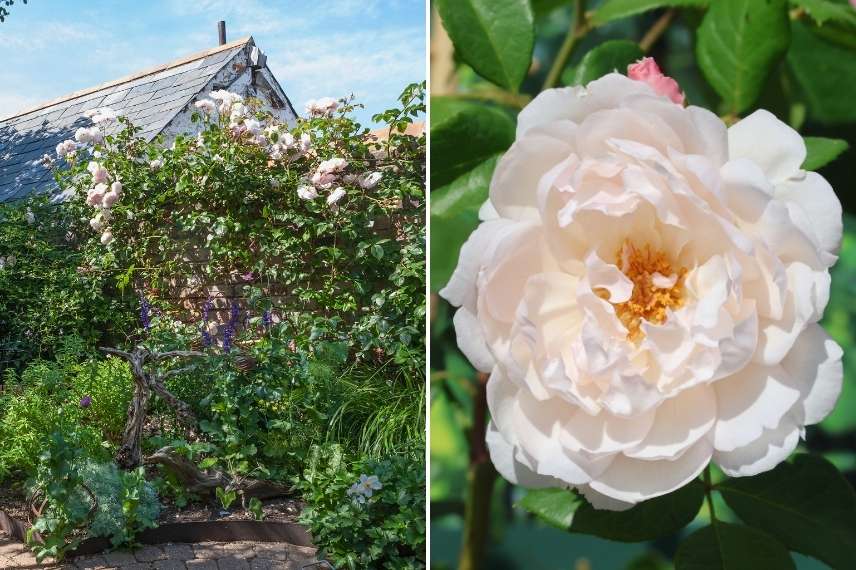
‘The Generous Gardener’ rose
'Sourire d'Orchidée': a climbing rose with delicate pearly blooms
Its name says it all: in ‘Sourire d’Orchidée‘, a compact climbing rose bred by Paul Croix in 1985, the flowers have the delicate lightness of an orchid. Bouquets of single and semi-double flowers, pearly white flushed with pink, fading almost to white as they finish flowering, dance all summer on healthy, glossy foliage, with a lovely second flush in autumn, from June to October – around five months of pure grace. The light, tangy fragrance recalls fresh apple. At just 1.50 to 2.50 m, this is the climber for small gardens, narrow arches and patio containers, and one of the few roses that works equally well trained as a free-standing shrub or grown against a support. Healthy, understated and tireless, it embodies the French school of modern roses with old-fashioned charm.
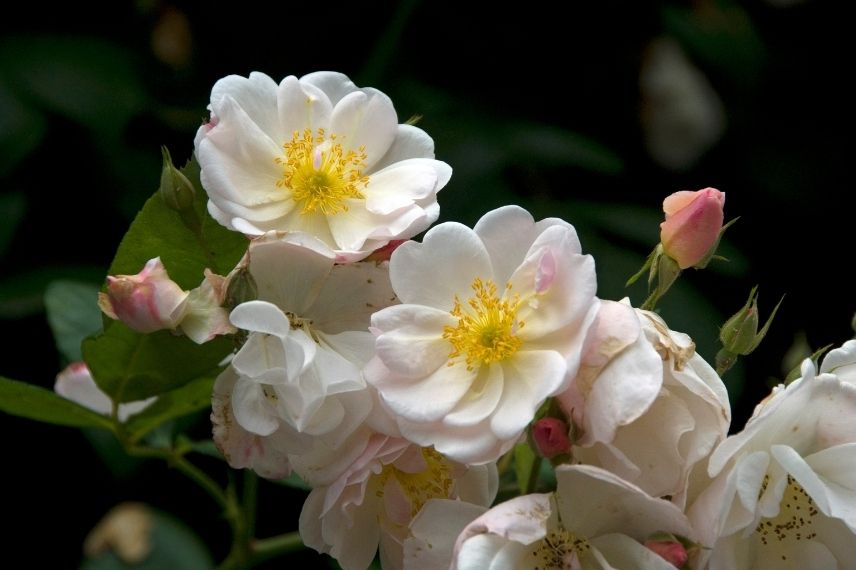
Rose ‘Sourire d’Orchidée’
'New Dawn': a climbing rose with such delicate flowers
‘New Dawn‘, the genetic ancestor of countless modern climbing roses, takes seventh place in our ranking.
This Wichuraiana rose became the first plant in the world to be protected by a plant patent in 1930. This “new dawn”, as the name means in French, passed its remarkable health on to countless descendants. Its pearly pink flowers last for a remarkably long time, from June to October, with a second flush almost guaranteed if the climate is mild and you remove the faded flowers.
In the sunshine of southern France or in partial shade, it adapts to anything. Its light apple-and-cinnamon fragrance is a subtle delight. With its 4 to 6 m-long flexible stems, it adorns pergolas and old trees with a slightly wild elegance that made it legendary across the Atlantic. It is hard to find a more mythical rose.
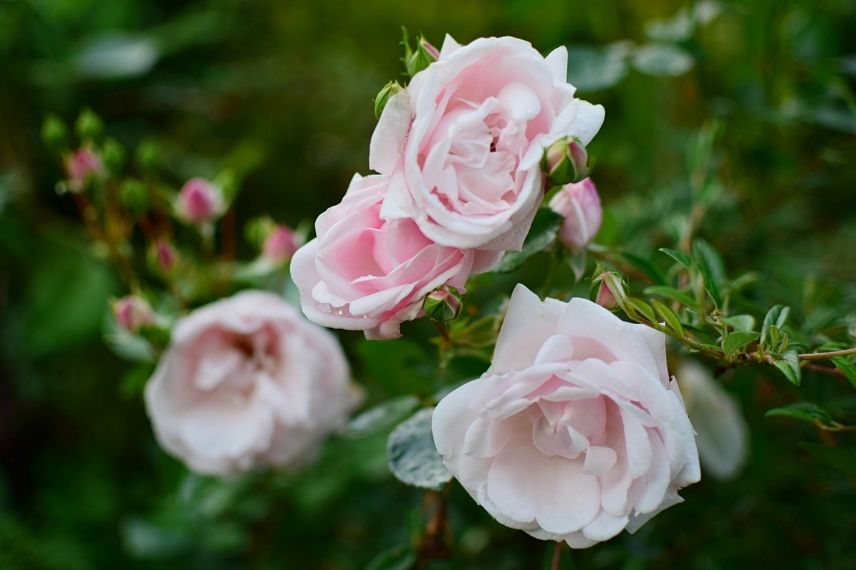
‘New Dawn’ rose
'Clair Matin': Meilland's tirelessly flowering climbing rose
A rose that is still flowering as profusely in the same Anjou gardener’s garden thirty-five years after planting deserves its place in this ranking. ‘Clair Matin‘, a climbing floribunda bred by Meilland in 1960 has never left specialist nursery catalogues, and for good reason: its bouquets of semi-double flowers in shades of salmon pink to pale pink, measuring 8 cm across and with just fifteen petals, keep appearing from June until the frosts – around five months – with a regularity few varieties can match. The matte, dark green foliage is highly resistant to disease, even in the humid climate of the Loire valley. Its fragrance is light and fruity. Growing to 2 to 3 m, it is pliable and easy to train on an arch, cover a fence or grow as a large shrub. Easy, robust and tireless: these are the qualities of a rose of infinite grace.
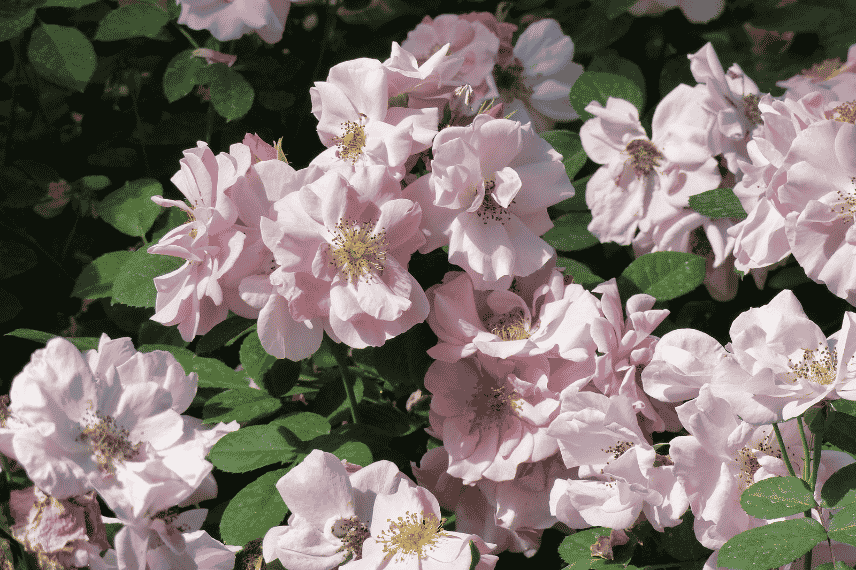
‘Clair Matin’ rose
'Ghislaine de Féligonde': an old-fashioned rose with apricot and cream blooms
The Ghislaine de Féligonde rose is one of the best-known old roses, a gem from the famous French rose breeder Turbat.
Introduced in 1916, it is now one of the most sought-after old roses, less for its performance than for a charm no modern rose can imitate. Its fully double pompon flowers open ochre, blush apricot, then fade to ivory. In June, the main flush produces around a month of multicoloured bouquets, followed by a more modest repeat flowering from September to October. That gives it two months of actual flowering during the season — more in a cool climate, less if the summer has been scorching. Its fragrance is light and its disease resistance very good, provided you avoid a very sunny wall where black spot can strike. ‘Ghislaine de Féligond’ earns its fine place in our ranking despite its average repeat flowering.
Its real strengths are its changing colours and its hardiness in partial shade. Finally, its slightly bohemian beauty, fresh foliage and tolerance of partial shade make it a timeless rose, equally suited to being left to grow freely or trained against a support. 2.50 to 3 m.
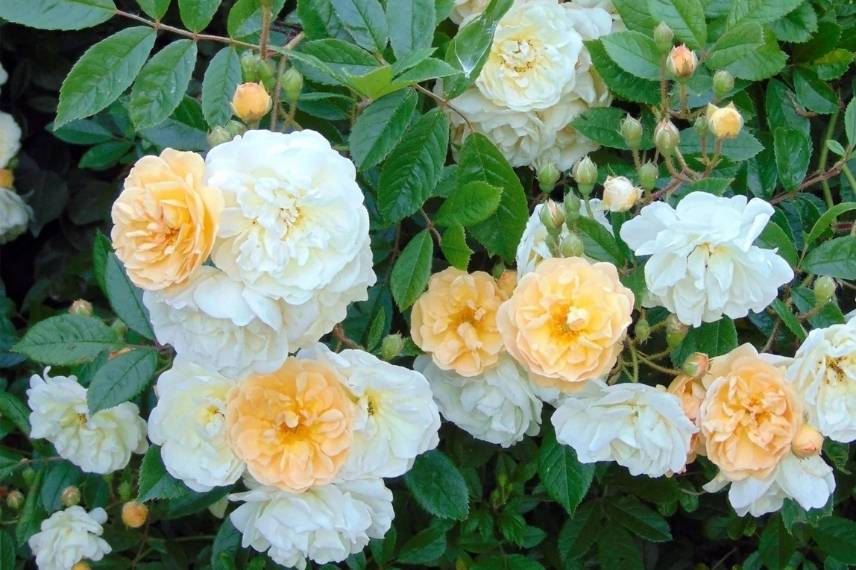
‘Ghislaine de Féligonde’ rose
'Pierre de Ronsard': the climbing rose, a worldwide icon with romantic blooms
Last… but unmistakable and much loved, here is ‘Pierre de Ronsard‘, the global star, the WFRS’s “World Favourite Rose” of 2006, and certainly one of the most photographed roses from one end of France to the other.
A ranking we embrace, paradoxical as it may seem: this rose has never claimed to be a flowering machine. Its spectacular main flowering takes place in June; repeat flowering is then slower and more sparse, with a few bouquets from September to October, amounting to just two or three months of flowering in the season. Its huge, old-fashioned ivory roses edged with carmine need a mild climate to open fully: in cool or rainy regions, the flowers wither where they are. Its very good disease resistance and subtle fragrance complete the portrait of this world-famous rose. What a presence on a romantic garden arch or trained against a wall, reaching 2.50-3 m! It will continue to be planted for many years to come for its unique charm.
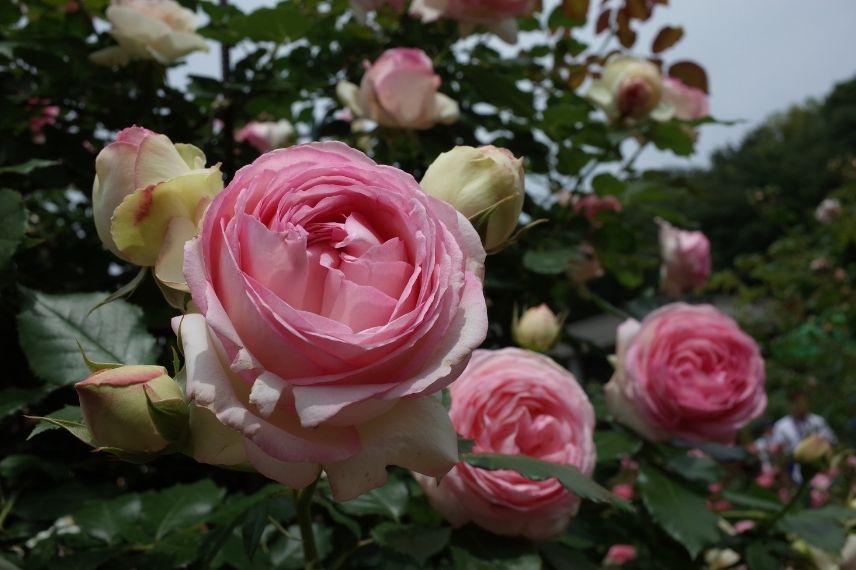
Rose ‘Pierre de Ronsard’
Frequently asked questions about repeat-flowering climbing roses
Which climbing rose should you choose for a wall in partial shade?
Without hesitation, ‘Mme Alfred Carrière’: it is the only one in our trial to flower abundantly in partial shade, even in poor soil. ‘New Dawn’ also copes very well, although it prefers partial shade in a warm climate. By contrast, avoid ‘Pierre de Ronsard’ and ‘Le Grand Huit’, which thrive in full sun.
Which roses in this selection are genuinely fragrant climbing roses?
Four roses stand out for their fragrance: ‘Le Grand Huit’ (a dark, fruity fragrance, award-winning internationally), ‘Mme Alfred Carrière’ (intensely fruity), ‘The Generous Gardener’ (an old rose and musk fragrance) and ‘Compassion/Belle de Londres’ (fruity tea). ‘Ghislaine de Féligonde’, often sold for its charm, has only a light fragrance, which is worth knowing before you buy.
Does a repeat-flowering climbing rose really flower all summer?
Yes: ‘Climbing Iceberg’, ‘Mme Alfred Carrière’, ‘Le Grand Huit’, ‘Sourire d’Orchidée’ and ‘New Dawn’ provide around five months of flowers, from May-June until the frosts, as long as you water and feed them, and remove the faded flowers. ‘Clair Matin’ is also one of these particularly repeat-flowering roses. But the ability to flower again depends greatly on the climate: in a cool climate, the intervals between flushes grow longer; in the warm climate of the south of France, flowering becomes more prolific. ‘Albéric Barbier’, not included in the selection but worth knowing about, barely flowers again in the north of France, yet produces a few autumn bouquets in the Midi. We could also mention ‘Sympathie’, a red rose with exemplary floribundity.
- Subscribe!
- Contents
This form is protected by reCAPTCHA - the Google Privacy Policy and Terms of Service apply.

































Comments