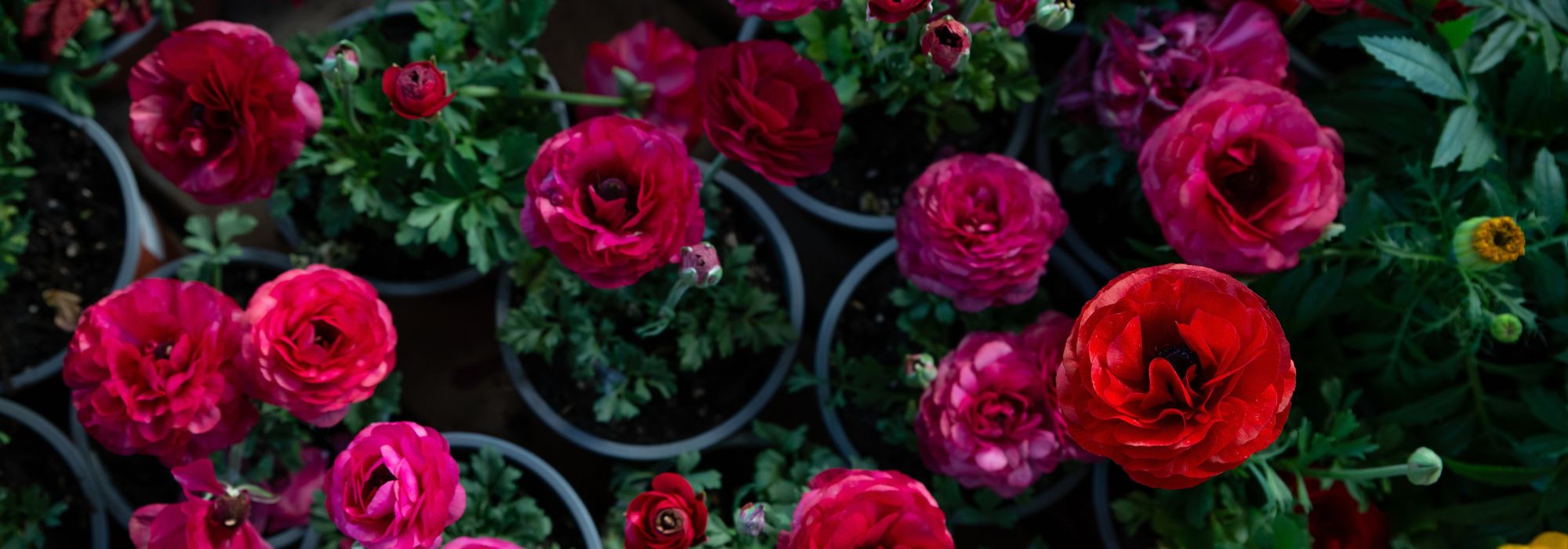
How to get potted ranunculus to flower again?
Our tips and advice!
Contents
With their generous flowers and tightly packed petals resembling little roses, ranunculuses have a knack for turning a simple pot into a spring bouquet. But once flowering is over, can you hope to see them looking just as beautiful the following year? It is perfectly possible to get potted ranunculuses to flower again, although success is not always guaranteed. To give yourself the best chance, everything depends on the care you give them after flowering, how you store the corms and how you get them growing again. Here are the steps to try for another flush of flowers the following spring.

What should you do with ranunculuses in pots after flowering?
Have your ranunculuses lost their last flowers? It’s not time to forget about them in a corner of the garden just yet! The care you give them after flowering is just as important if you want to see them flower again the following year.
So don’t put the watering can away straight away and, above all, don’t cut everything back! Keep the foliage for as long as it stays green and continue watering moderately. Even after flowering has finished, the plant continues to develop: thanks to its leaves, it produces and stores the reserves it will need in its claws to flower again the following year. Stopping watering or cutting back the foliage too soon could therefore compromise next year’s flowering.
When the foliage starts to turn yellow naturally, usually as summer approaches, gradually reduce watering.
Once the foliage has dried out completely, stop watering altogether, then remove the dried leaves. The ranunculus then enters dormancy: it disappears above ground, but its claws remain alive beneath the soil, ready to start growing again after their dormant period, provided they have been stored properly.
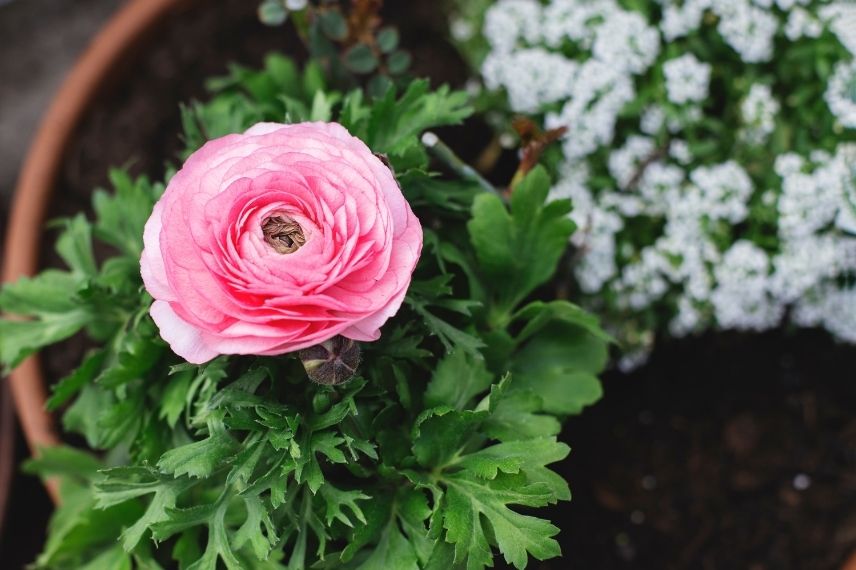
A pink ranunculus flower grown in a pot
How should you store ranunculus corms while they are dormant?
While they are dormant, ranunculus tubers mainly need to be kept dry. Too much moisture can cause them to rot before they flower again. Depending on your climate and the shelter available, you can leave them in their pot or dig them up.
In regions with mild winters, you can leave the tubers in their pot while they are dormant. Place it somewhere sheltered from the rain, such as under a covered pergola or a roof overhang. Make sure you protect it from frost too. This is also possible in colder regions, provided you can bring the pot indoors to a dry, frost-free place.
If you cannot protect the pot from moisture or frost, it is better to dig up the tubers. Once the foliage has died back completely, carefully remove them from the potting compost, brush off any excess soil and leave them to dry for several days in a shady, well-ventilated place. Then store them in a dry, cool, frost-free place away from the light, in a small crate or paper bag. Take the opportunity to discard any soft or damaged tubers.
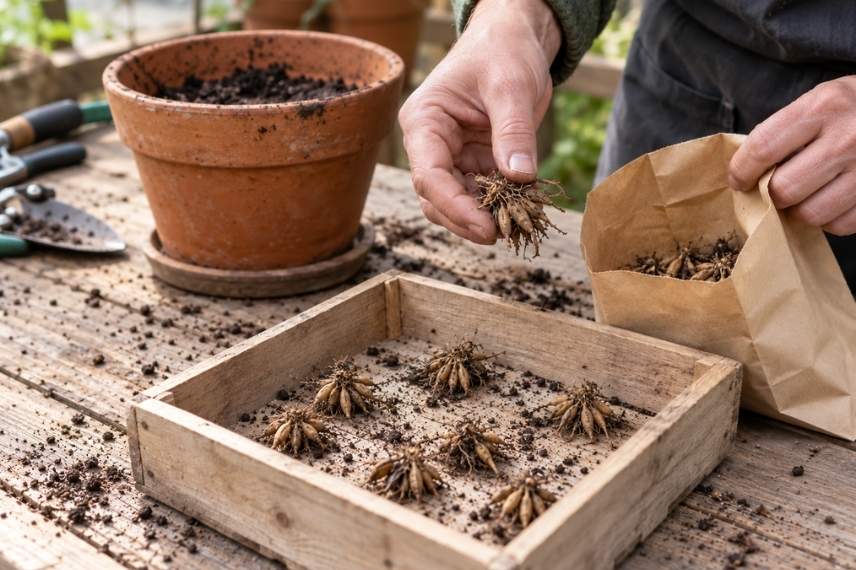
Ranunculus tubers can be stored in a paper bag, somewhere dry and frost-free. (AI-generated illustration)
When and how should you replant potted ranunculus to get them to flower again?
After a few months of dormancy, it’s time to prepare your ranunculus for another flowering season! In regions with mild winters, you can start growing them again in autumn. In colder regions, plant them in spring, around March-April, or start them off under cover from January-February, protected from frost.
If you have lifted the claws, check that they are still firm and healthy, then soak them for 3 to 4 hours in water at room temperature to rehydrate them.
Next, choose a pot with drainage holes and potting compost for flowering plants or containers. You can also improve drainage by adding a handful of coarse river sand or perlite to the compost, to prevent water from collecting around the tubers.
Plant them about 4 to 5 cm deep, with the tips pointing downwards.
If the claws have remained in their pot, there’s no need to lift them: simply refresh a little of the potting compost on the surface and gradually resume watering when you start growing them again.
Place your ranunculus in a bright spot with a few hours of gentle sunshine, sheltered from strong winds. In warm regions, choose a spot that gets morning sun. If you start growing them in winter, keep the pots in a frost-free cold greenhouse or an unheated, bright conservatory, then move them outside once the risk of frost has passed.
For all the planting steps, see our guide: How to plant ranunculus corms?
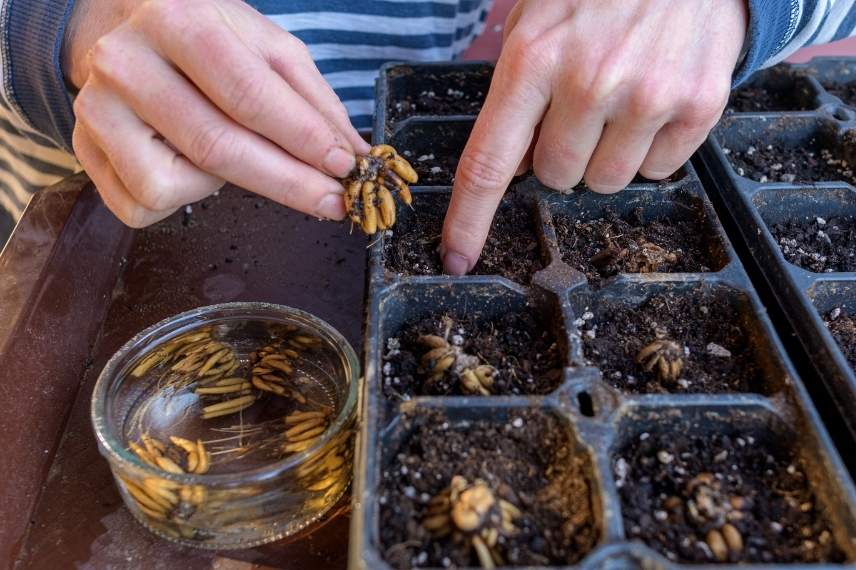
Planting ranunculus claws in a pot
Read also
Choosing a Ranunculus: our buying guideWhat care will encourage ranunculus in pots to flower again?
If you want your ranunculuses to flower again the following year, you’ll need to keep them healthy during their growing season! A few simple steps will encourage flowering while helping them replenish their reserves.
When and how should you water ranunculuses?
Ranunculuses like cool conditions but dislike excess moisture! During growth and flowering, water as soon as the potting compost begins to dry out on the surface, without letting the entire rootball dry out.
To check when to water, simply push a finger into the potting compost. If it is still damp, wait. If not, water until it starts to drain from the bottom of the pot. Always empty the saucer after about 20 minutes to prevent the corms from rotting. Also avoid wetting the foliage to limit the development of diseases.
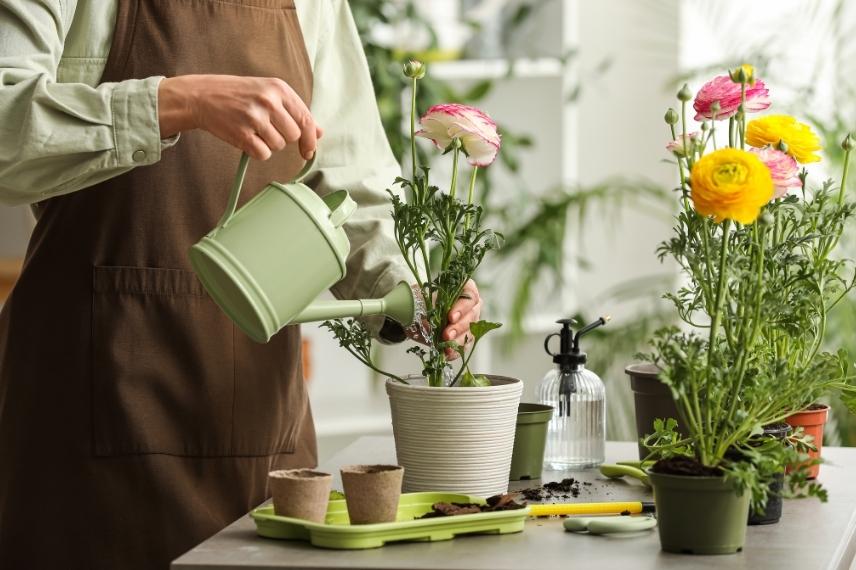
Water your potted ranunculus correctly, allowing the water to drain into the saucer.
Should you feed them and remove faded flowers?
If your ranunculuses are growing in fresh, good-quality potting compost, they generally do not need feeding during flowering. However, in depleted compost, you can use a fertiliser for flowering plants during the growing season, following the recommended doses.
Remove faded flowers and check your ranunculuses are healthy
To enjoy the flowers for longer, regularly cut faded flower stems back to their base with clean secateurs, without damaging the foliage. This simple step encourages new flowers to appear.
While you’re at it, look out for aphids and for a white, powdery coating on the leaves, which may be a sign of powdery mildew.
Why aren't my potted ranunculuses flowering again?
Your ranunculuses flowered beautifully in their first year, but are reluctant to flower the following year? Several factors could explain why they have failed to flower.
- The most common cause is the corms rotting because of excess moisture during the growing season or the dormant period.
- Severe frosts can also damage them.
- Cutting back the foliage too soon after flowering can also prevent the plant from building up enough reserves to flower again.
- Finally, too much shade or excessively high temperatures during growth can compromise flowering.
- Also check the condition of the corms: if they are still healthy, they may make a fresh start in better conditions.
- Subscribe!
- Contents
This form is protected by reCAPTCHA - the Google Privacy Policy and Terms of Service apply.

































Comments