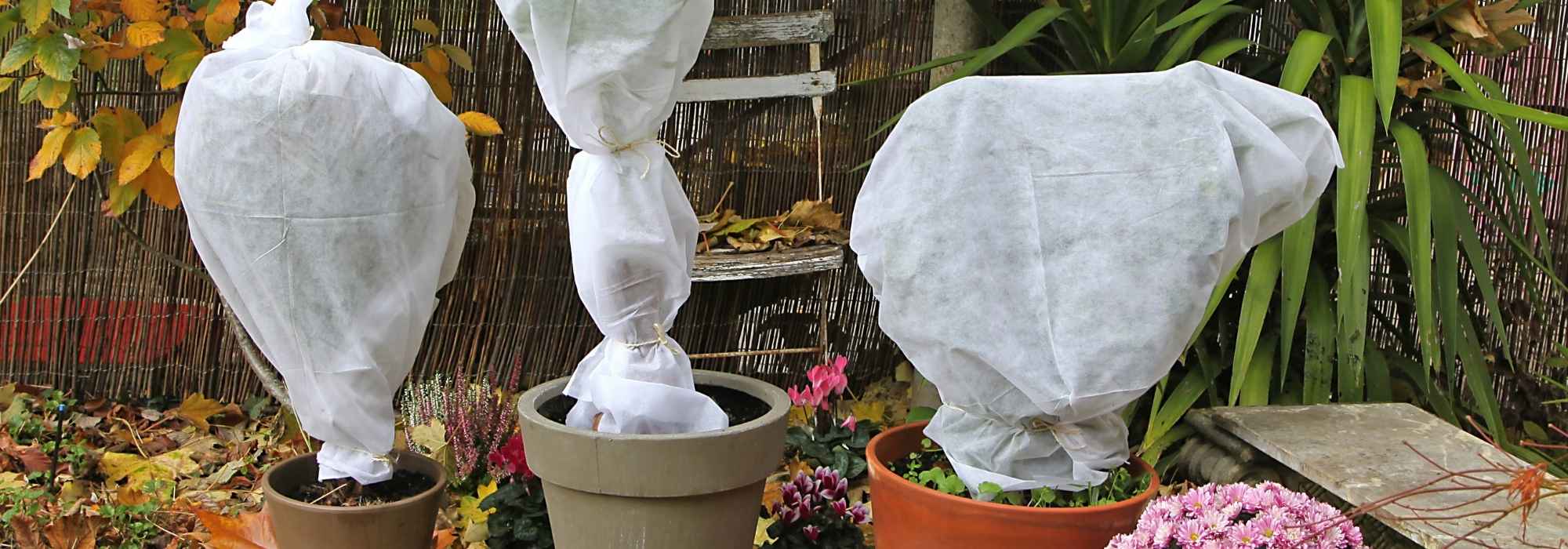
At what temperature should you put fleece in place?
Our tips for putting protection in place at the right time
Contents
The nights are getting colder, the first frosts are forecast and you’re wondering whether it’s time to get your fleece out. When temperatures approach 0 °C, it’s time to keep an eye on plants that are sensitive to frost. But do they all need protecting? Certainly not! It all depends on their hardiness. Discover our tips on when to put fleece in place, which plants to protect and how to avoid common overwintering mistakes.
The key points to remember
|
Read also
10 plants to protect in winterAt what temperature should you cover plants with fleece?
As a general rule, when night-time temperatures approach 0 °C, it’s time to think about protecting your most frost-sensitive plants. But bear in mind that this is only a guide! Some plants suffer with the first frosts, or even below +5 °C if they are particularly sensitive, while others can easily withstand temperatures well below freezing.
It all depends on their hardiness, or ability to withstand the cold. A lemon tree, an oleander and a rose clearly don’t all have the same needs!
Bear in mind, too, that a newly planted plant may be more sensitive to the cold than one that is well established. Similarly, plants in pots are far more vulnerable to the cold than those planted in the ground. And don’t forget that excess moisture in winter can also make a plant more sensitive to the cold and reduce its hardiness.
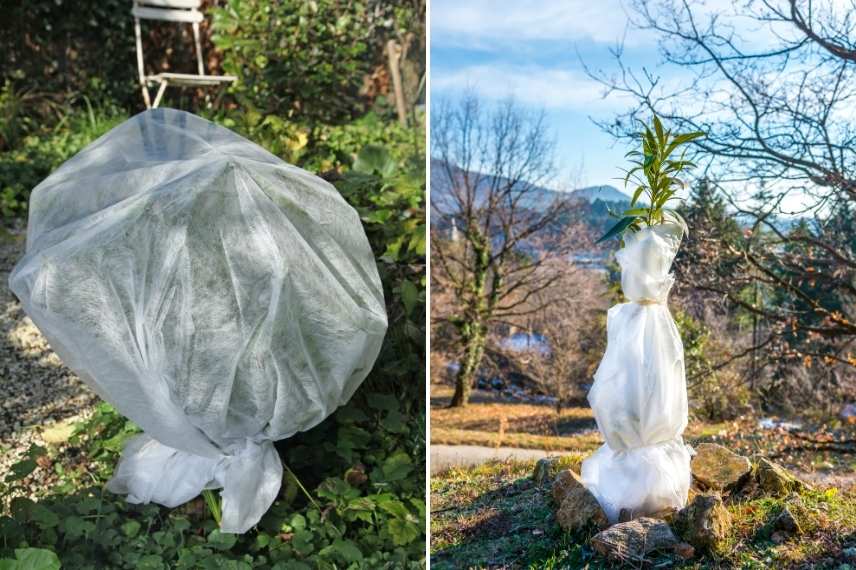
Protect tender plants with fleece as soon as temperatures approach 0 °C.
To help you decide when to take action, here are a few examples:
| Type of plant | Examples | When to protect them | How to protect them |
|---|---|---|---|
| Frost-tender plants | Pelargoniums, mandevillas, tender fuchsias, lantanas, brugmansias | As soon as night-time temperatures approach 5 °C | Move pots to a bright, frost-free place: a greenhouse, conservatory, unheated room, etc. |
| Tender plants | Tender citrus, oleanders, bougainvilleas, cordylines, evergreen agapanthus | As soon as the first frosts are forecast, around 0 °C | Cover them with fleece in light frosts. In cold regions, bring the most tender potted plants indoors. |
| Moderately hardy plants | Olive trees, silver wattles, evergreen California lilacs, some palms, Japanese bananas | Before severe frosts, around -5 °C for some species and sometimes earlier for others. | Protect sensitive parts with fleece and insulate the base with mulch if necessary. |
| Hardy plants | Roses, hydrangeas, lilacs, forsythias, mock oranges, peonies, Japanese maples, hardy hibiscus | No winter protection is needed in most regions. Exception: young plants put in just before winter. | Leave them uncovered. Mulch can be useful for some young plants. |
Our tip: the temperatures in this table are given as a guide. Cold hardiness can vary considerably from one species or variety to another. Unsure how hardy your plant is? Check its page on our Promesse de Fleurs website: you’ll find its cold hardiness there and can see when to protect it. Remember to take the plant’s age, aspect and climate into account, too!
→ For further reading, watch our video on plant hardiness:
Frost is forecast: when should you put horticultural fleece in place?
It is best to put your fleece on during the day, if possible when the temperature is at its highest, and in any case before nightfall when frost is forecast.
Get into the habit of checking the forecast minimum temperatures for your area, too. But beware: frost can occur in your garden even when the forecast still says 1 or 2 °C. On a clear, still night, the temperature around your plants can fall below the temperature forecast for a sheltered spot.
You probably know the coldest spots in your garden: the bottom of a sloping plot, a hollow where cold air gathers, a particularly exposed patio… These are the places to keep the closest eye on.
My tip: keep your fleece close to hand from autumn onwards. That way, you can act quickly when frost is forecast!
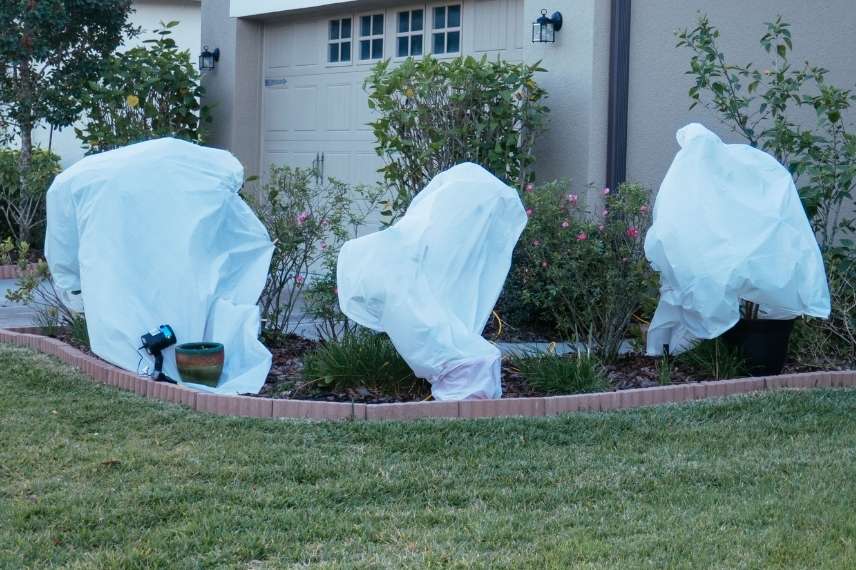
Keep an eye on overnight temperature forecasts so you can put your fleece in place.
Why is it better to avoid covering your plants too early?
At the first autumn chills, when temperatures have not yet fallen below +5 °C, there is no need to rush to put fleece over your plants! Hardy plants need to get used to the cold gradually. This natural acclimatisation, known as hardening off, helps them withstand winter temperatures.
For example, there is no need to wrap your oleander as soon as night-time temperatures drop to 5 °C. If it is well established and suited to your climate, wait until the first frosts are forecast before protecting it.
Covering your shrubs too early can also keep the air around the foliage too damp, particularly on days that are still mild. This persistent dampness can encourage certain diseases.
The best approach? Let your plants enjoy the autumn, and save the fleece for periods when the cold poses a real risk of frost.
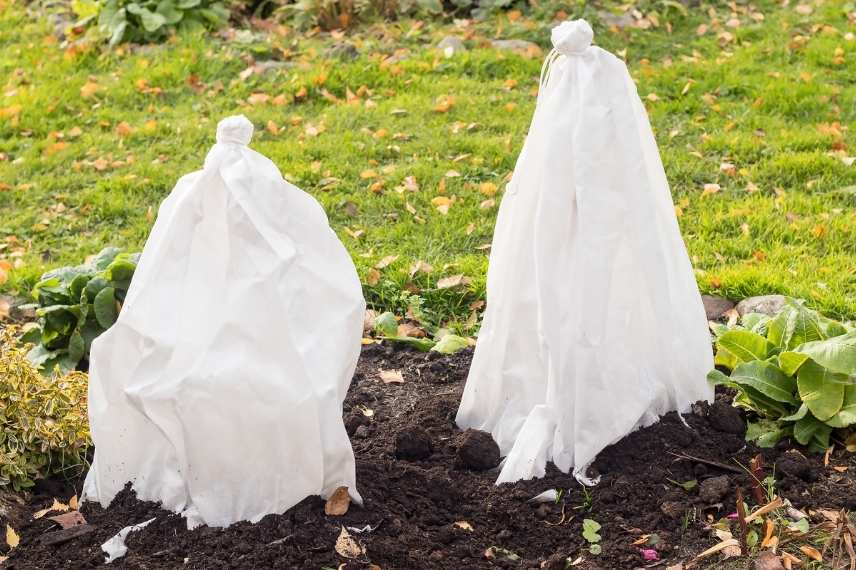
Fleece protects your plants from frost, but take care not to put it on too early.
What should you do with fleece when temperatures rise?
After several nights of frost, the sun returns and temperatures rise? Make the most of the milder days to open or temporarily remove the garden fleece, especially if it is wrapped around evergreen shrubs.
For example, if the thermometer reaches 12 °C during the day, open up the covers to let air circulate around the foliage. This will prevent excessive moisture and heat building up under the fleece. If another frost is forecast, put the covers back in place before evening.
However, when temperatures stay below freezing for several days, it is best to leave the covers in place, checking regularly that they are secure.
You can remove them for good once the risk of damaging frosts has passed.
→ To find out more about how to put on and remove garden fleece correctly, see our guide: How to install garden fleece?
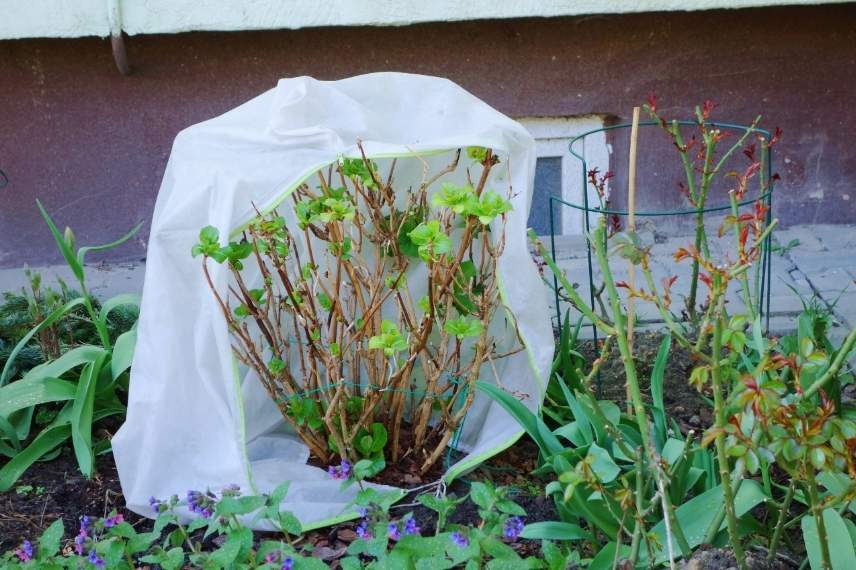
Remember to open up the garden fleece a little on mild, sunny days to improve ventilation and reduce moisture around the plants.
Frequently asked questions about using fleece
Is fleece enough to protect a plant at -5 °C?
Not always! Not all fleece offers the same protection against the cold. Fleece is available in different thicknesses, measured in grams per square metre (g/m²). A thicker P30 fleece (30 g/m²) generally offers better protection against frost than a lighter P17 fleece (17 g/m²). So choose your fleece according to how hardy your plants are and the forecast temperatures.
Also bear in mind how long the frost lasts: one night at -5 °C followed by a mild day is less hard on a plant than several days of continuous frost. Even a thick fleece may then be insufficient for a tender plant.
Do potted plants need extra protection?
Yes, potted plants are more vulnerable to frost, as their roots are less insulated from the cold than those in the ground. As well as covering them with fleece, protect the pot with insulating material and place it against a sheltered wall. For the most tender plants, keep them somewhere frost-free over winter.
→ For more information, read our article on overwintering potted plants.
Can you put fleece on plants when it is raining?
Yes, you can put fleece on plants in the rain, especially if frost is forecast. Fleece lets water and air through, so rain does not stop it from protecting plants from the cold. Just make sure it does not rest against the foliage, especially when it is wet.
- Subscribe!
- Contents
This form is protected by reCAPTCHA - the Google Privacy Policy and Terms of Service apply.

































Comments