Are you watching colour trends, and do you like to experiment not only indoors but also in your garden or on your terrace?
The very latest is Transformative Teal, often described as teal or turquoise. Some plants naturally display this colour, mainly in their foliage and more rarely in their flowers. This <strong shade that sits between blue and green can be used in the garden with a few colourful pots set against a more neutral palette.
See how to introduce this teal outside the home!
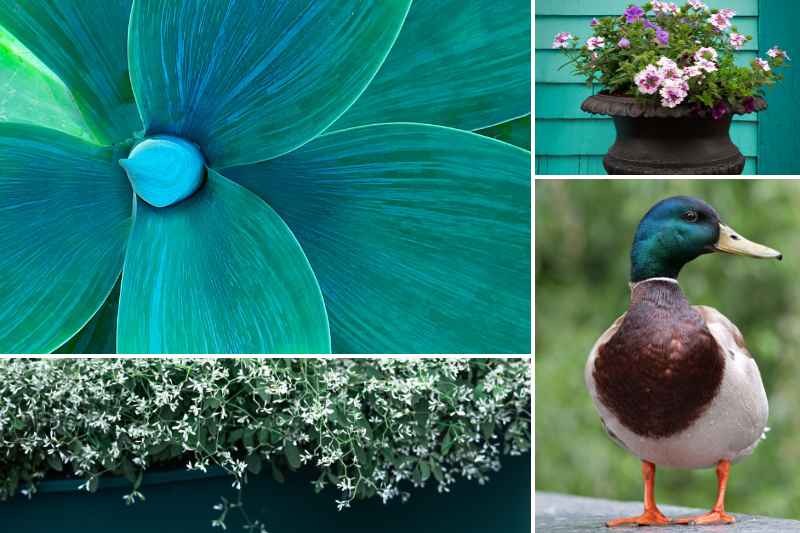
What is this new trend? How to use it in the garden?
Blue and green are cool colours on the colour wheel. Combining the two gives a very aquatic note, which can almost seem artificial in a garden setting. The English term 'teal' appears from the 1950s in interior design, where it is most often seen. This blue‑green is the colour that highlights the eyes of teals, the small freshwater ducks. Here, the expression 'bleu canard' seems best to express this intense shade.
It is mainly foliage that approaches this colour, described in botany as a glaucous blue: it is often found in hostas, many blue‑tinged conifers or some perennials, and in the pruinose leaves of certain shrubs. Among the rare flowers, look to distant beauties such as the Chilean Puya or the Asian Strongylodon macrobotrys.
The most flattering combinations for flowers or pots are white, very soft yellows and orange or brick tones, as well as all shades flirting with chartreuse green (see green flowers).
Avoid saturating the scene with overly cool tones like grey or silver; instead, enliven it with neighbouring colours on the colour wheel such as sulphur yellow, acid green or jade green.
Finally, rely on accessories: choose glazed pots in matching hues to reflect the light effectively, or furniture and seating in aniseed tones.
In an exotic‑style garden
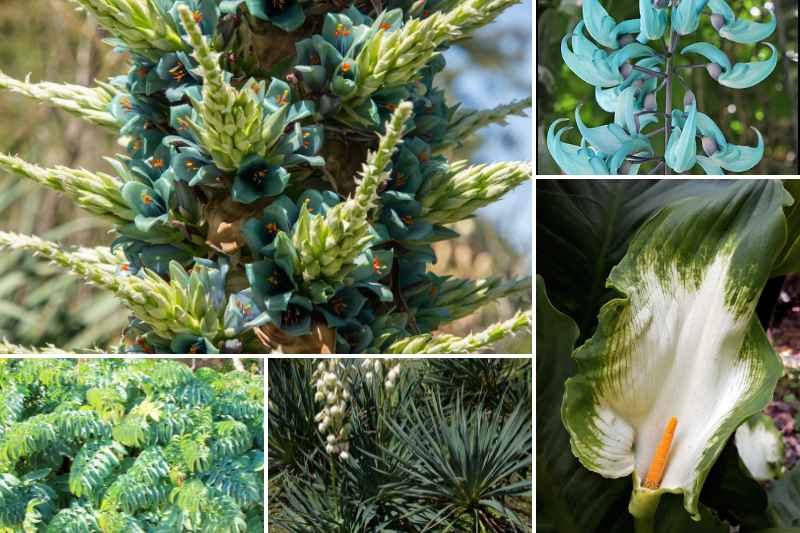
This is perhaps the easiest way to reveal the subtleties of teal, since the exotic plant palette – tropical or dry exotic – offers several options for sunny areas. With centre stage given to the extraordinary flowers of Puya berteroniana, Puya alpestris or the jade vine in the least frost‑prone gardens, and the white spikes on glaucous foliage of some Yucca (notably Yucca aloifolia or Yucca rostrata), count on the striking blue‑green foliage of Melianthus major and the bluer, greyer leaves of Eucalyptus and Pinus parviflora. A bicolour arum, white and green, Zantedeschia 'Green Goddess' planted in sufficiently cool soil will wrap the scene in its refreshing trumpets.
In a dry exotic garden, an unusually blue senecio, Senecio serpens 'Dwarf Blue', can take pride of place and nearly steal the show from Dasylirion, such as Dasylirion glaucophyllum.
In a mixed border or English garden
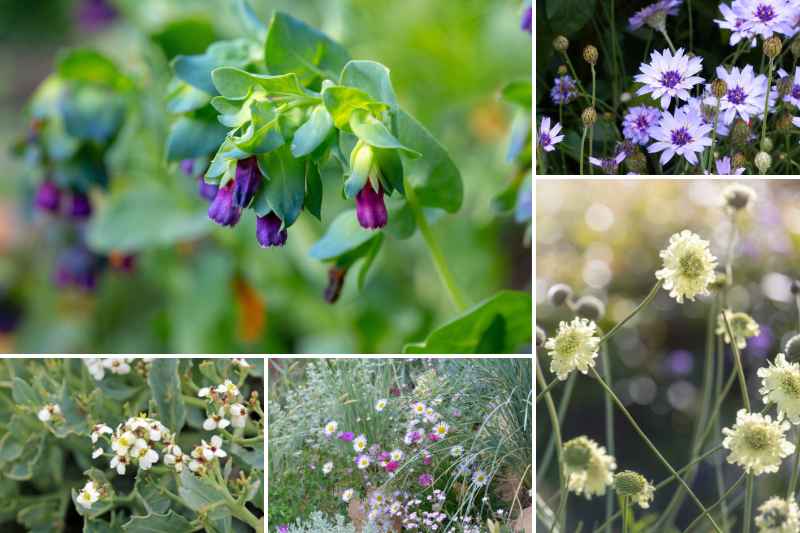
Different mood, different style: a cottage‑style garden planted with large borders is also well suited to playing the teal note, as several attractive perennials carry this almost turquoise shade, often in a lighter tone. Representative plants include Mertensia maritima (also called oysterleaf), Crambe beloved in cottage gardens, rue (Ruta graveolens) and Cerinthe major.
A few selected flowers in soft tones, from white to mauve‑pink, will provide the necessary link so the planting does not slip into a dull bluish monochrome: catananche for a rustic touch, Erigeron karvinskianus, mauve or white hosta spikes, etc.
Bring in almond‑green and yellow‑greens such as the downy Ballota pseudodictamnus or the inflorescences of giant Cephalaria. A graceful grass such as Sesleria nitida will add the lightness suited to this ambience.
In a pot garden of succulents
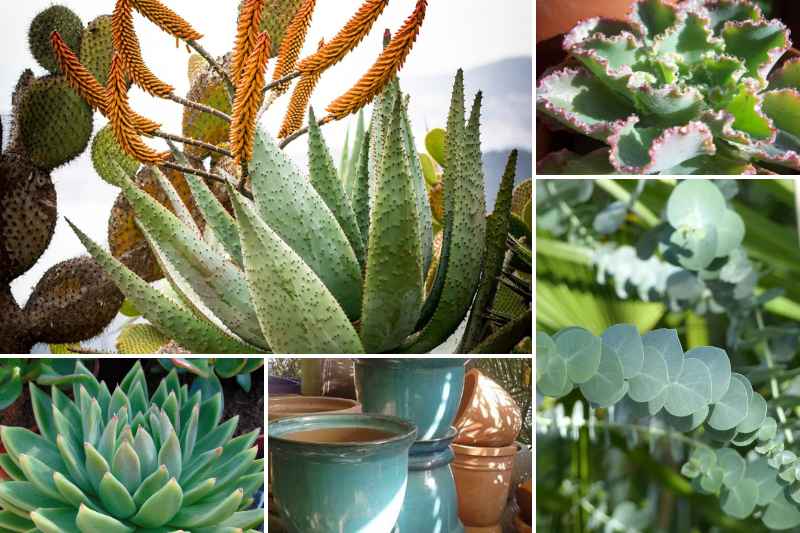
Here, opt for tone‑on‑tone plants in matching pots. The result is perfect on a south‑facing balcony or a terrace that basks in hot summer sun. Many cacti and succulents have that characteristic pruinose blue that protects them from heat. Start with agaves and some handsome echeverias, such as Echeveria 'Miranda', Echeveria peacockii 'Urban Orange' and Echeveria 'Blue Curls'. Don't forget Euphorbia x pseudovirgata 'Redwing' 'Charam' with its bluish young shoots.
An aloe completes this mini dry garden perfectly, for example Aloe marlothii, or, for small spaces, a dwarf aloe such as 'Aloe nain' (Aloe aristata).
Terracotta pots, raw or glazed, will provide either a flattering orange contrast or a very chic monochrome. In this small world, adding a few orange blooms is perfect: Bulbine or dwarf day‑lilies, for example.
In shade for an aquatic feel
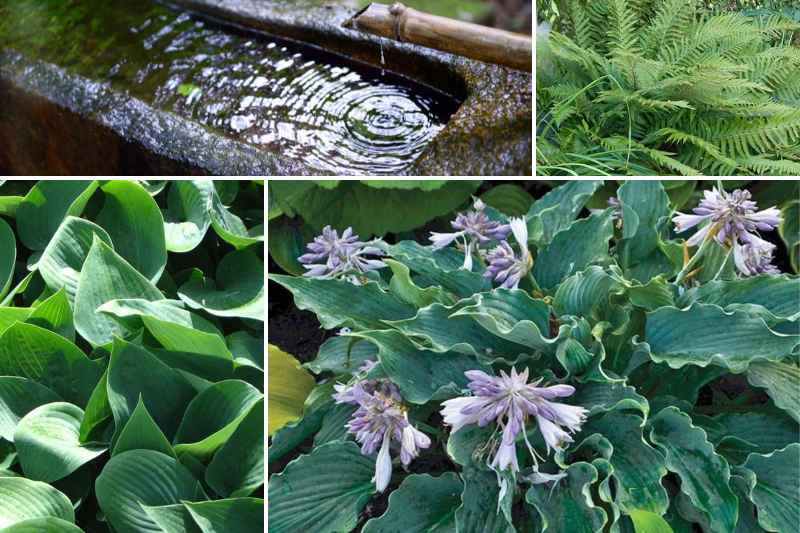
It is in shade or partial shade that glaucous green holds up best against heat in certain perennials such as hostas. There they show colours whose subtle nuances are especially highlighted in standout varieties like Hosta 'Canadian Blue', Hosta 'Drinking Gourd' and Hosta 'Waterslide' with greyer tones. Add some equally bluish sedges (Carex 'Bunny Blue'), evergreen ferns (Polystichum polyblepharum), white flower spikes to pair ideally with astilbes, a water trough used as a drinking bowl or fountain… and enjoy this very relaxing atmosphere.
Discover many more plants to achieve this turquoise palette in our "Transformative Teal" selection online, and in our 2026 trend booklet!
Do you love blue and green in the garden? Great — we explain everything you need to know about designing a blue garden and using blue in Elevate your garden with indigo blue. Marion also shares useful tips in How to create the illusion of water with plants?


































Comments