We love our houseplants, we pamper them, and sometimes we would like to have many more! They multiply just like perennial plants grown outdoors, allowing you to create a green haven at little cost. All you need to do is choose the right time of year and use suitable techniques, such as division or propagation in water.
In this tutorial, we explain how to divide your houseplants.
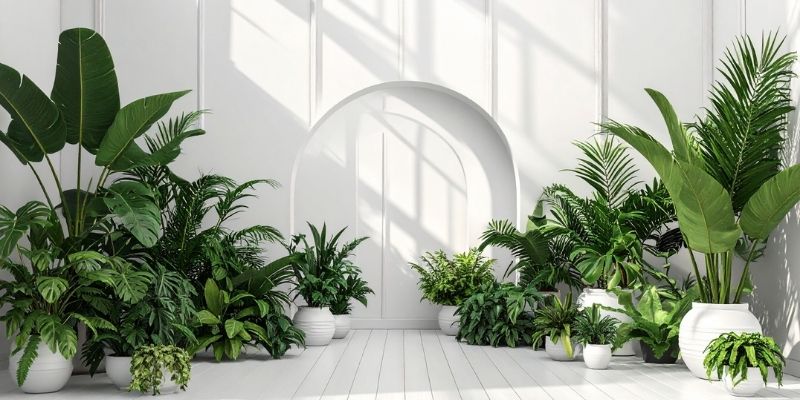
Which houseplants can be divided?
Many exotic plants grown indoors are easy to propagate in water. Others respond better to propagation by dividing the crown or rootball, that is, duplicating the parent plant by separating its clump while retaining its own root system. This applies to some of the most commonly grown plants in our flats and houses:
- Those that grow in clumps or produce offsets : Sansevieria (snake plant), Asparagus, Chlorophytum, Spathiphyllum, Clivia, Dracaena, Fittonia, Saintpaulia, Tillandsia, etc.
- as well as plants with rootstocks: calathea, Boston fern, Alocasia, etc.
When should you divide a houseplant?
As with dividing a garden plant, you should intervene in spring for most plants. This is the ideal season because the plant is actively growing and has time to recover well before entering its dormant phase a few months later.
There are three situations:
- We like to see our houseplants looking their best, but sometimes they lose their lustre: division will rejuvenate them and give them a new lease of life.
- Conversely, it is also when a plant becomes too cramped in its pot that you should consider dividing it to obtain two or three plants.
- You water the plant but it does not retain the water, because the growing medium dries out too quickly? It is time to divide!
Generally speaking, you can therefore divide your plants when repotting them. The frequency varies according to the growing conditions and the plant, but allow for one division every 3 to 4 years for most houseplants.
However, only consider dividing a plant if it is healthy and showing no signs of disease.
How do you propagate a houseplant by division?
Equipment
- Gloves (optional)
- A sharp knife or pruning saw (for large plants)
- A new, slightly larger pot
- Potting compost for houseplants and clay pebbles
- A watering can
The step-by-step technique
- Water the plant moderately the day before to limit the stress to come;
- Take the plant out of its pot: when pulled gently, it should come out without force. If it does not come out easily, roots have grown through the drainage holes. In this case, cut open the plastic pot, or, if it is made of terracotta, carefully run a knife around the edge of the pot to remove the plant;
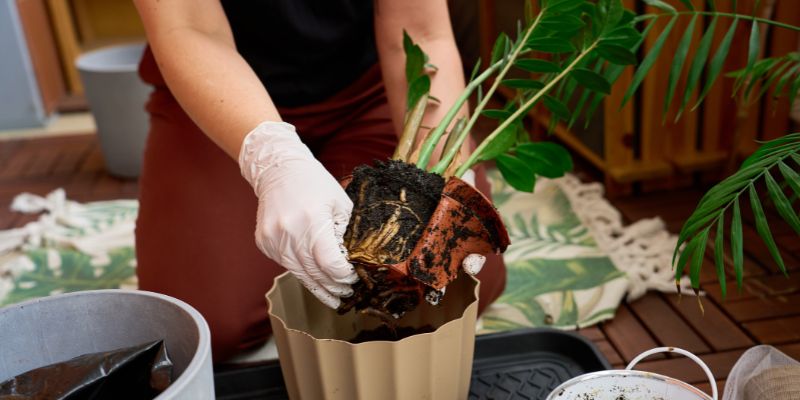
- Separate the visible sections around the clump using a disinfected knife or a pruning saw for large plants: the young shoot must have clearly visible roots or a rootstock; divide the plant into two or more pieces according to its size, or simply remove the plantlets or lateral suckers;
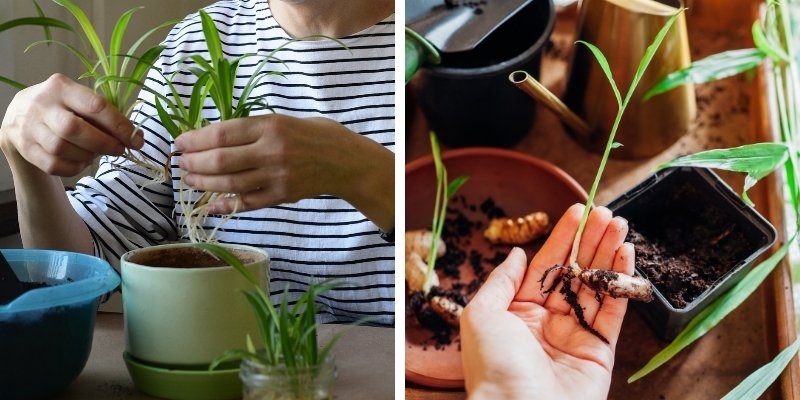
- Carefully untangle the roots and remove some of the old growing medium, taking off any dry leaves and damaged roots;
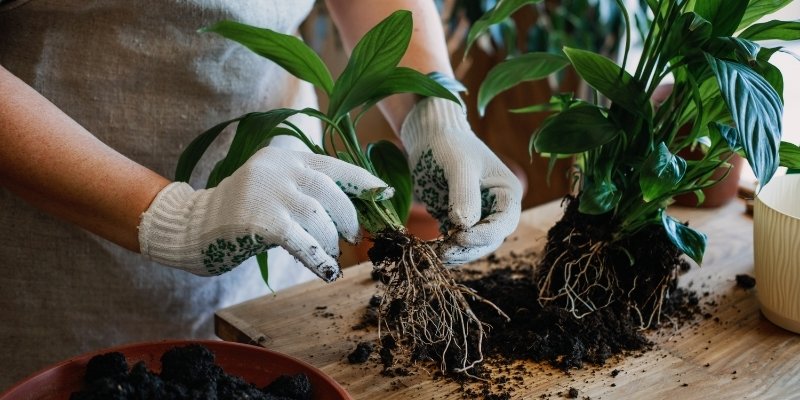
- Repot each section immediately in a slightly larger pot (about 2cm) that has first been filled with fresh potting compost for houseplants and clay pebbles at the bottom;
- Firm it down lightly;
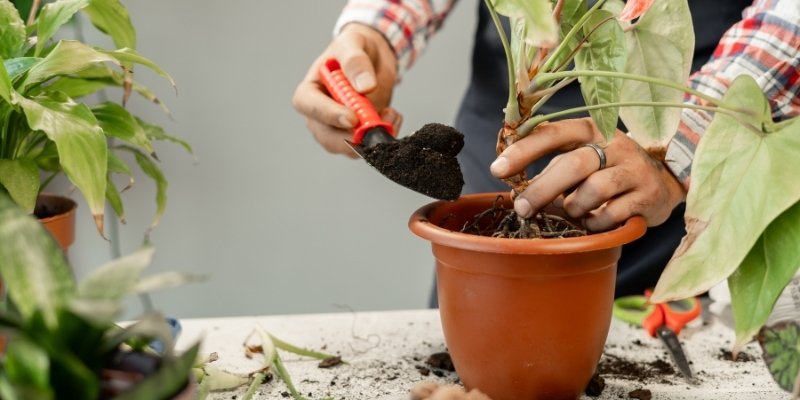
- Place this new baby plant in a partially shaded spot indoors, away from direct sunlight;
- Water it to ensure good establishment;
- Continue watering regularly but sparingly, allowing the growing medium to dry out between waterings, and resume the plant's specific watering frequency after three weeks.


































Comments