Each summer, same ritual starts in my kitchen: I take out my food processor or mortar and, with the beautiful bunches of basil, make homemade pesto. This year, small change of plan: I decided to replace traditional pine nuts with sunflower seeds. Here is my summer pesto recipe!
Which basil for pesto?
Usually, according to cookery books (my bible for Italian cooking is the indispensable On va déguster l'Italie), preference goes to a small‑leaved basil with intense flavour, although large‑leaved varieties are handy too, like 'Grand Vert' or 'Géant Monstrueux Mammouth', lettuce‑leafed and very fragrant, or 'Genovese' basil which should be used for the famous pesto alla genovese. If you have a perennial basil with smaller leaves, you can of course use it, and for longer in the season.
In any case, prefer a green‑leaved basil to keep the typical colour and the pronounced, indulgent flavour of pesto as in Genoa, Italy! Keep purple, Thai, minty or lemon basils for other recipes…
When to harvest?
Available in pots or in the herb garden all summer, basil of any variety is harvested from June through to October. If you use lots during summer, like me, look for a good local producer at markets!
If you grow it, harvest as needed according to growth, avoid picking once it has flowered, or better, pinch out flower heads to encourage bushiness and vigour.
The pesto alla genovese... revisited
There are five ingredients if you stick to pure Genoese tradition.
Here I simply tried replacing pine nuts, rather pricey, with another neutral‑tasting oilseed, sunflower seeds. It was while writing about these seeds I usually use for granola or bread, and on a day when I had run out of pine nuts, that I attempted this rather unorthodox swap — Ligurians, forgive me… But do let me know what you think!
Ingredients
- a large bunch of fresh basil (about 60 g)
- extra virgin olive oil (5 tbsp)
- white garlic (1 large clove)
- coarse salt (a pinch)
- sunflower seeds (30 g)
- parmesan (50 g)
- a cheese grater
- a mortar or a small food processor
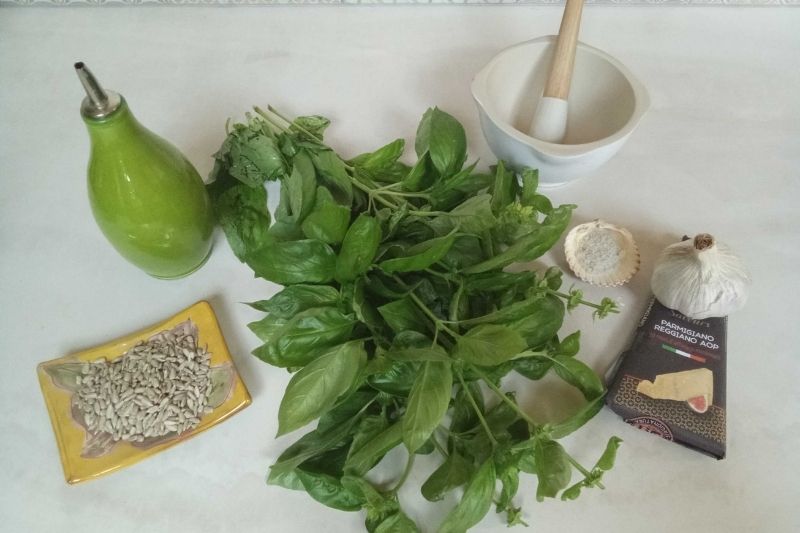
Basil pesto recipe
Purists swear by the mortar when it comes to pesto. It is indispensable, true, and the word pesto comes from the verb "pestare" – to crush. However I often prefer the practicality of a food processor; my small porcelain mortar heats up too quickly compared with large marble mortars with ears.
So I sometimes trade tradition for convenience when I'm not up to pestare like an Italian — it is rather physical! But if you have a good marble mortar, that's the ultimate of course.
Here is the recipe using a food processor:
- Chill bowl and blade of food processor in fridge for 20–30 minutes to avoid heating during blending;
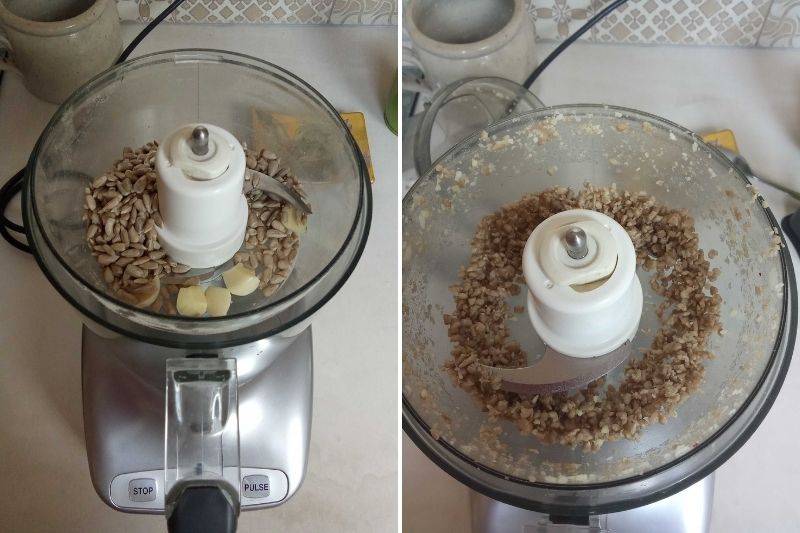
- Put sunflower seeds and peeled garlic clove into processor bowl and blend until well crushed (coarse salt helps to break everything down);
- Quickly rinse basil bunch and strip leaves (use leaves only);
- Add coarse salt and basil leaves: blend again then add grated parmesan;
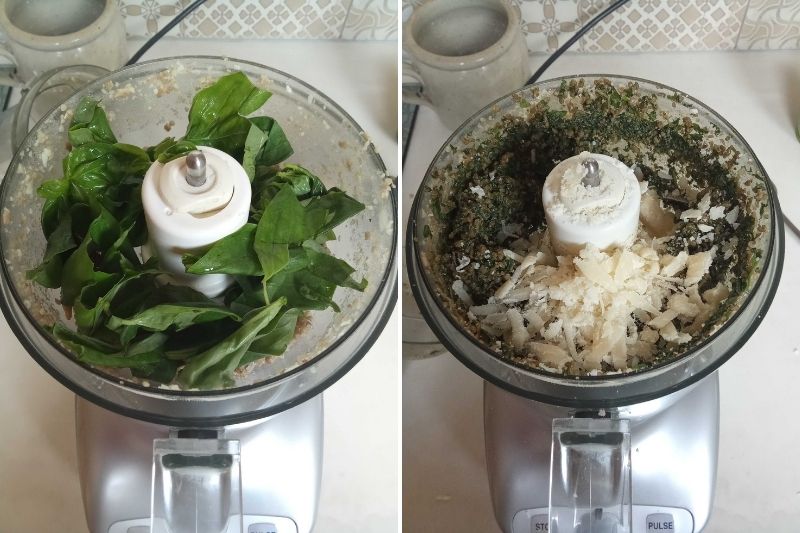
- Mix until well combined: then drizzle in olive oil to emulsify and make sauce creamy. Avoid overheating the processor at this stage to prevent excessive oxidation of basil;
- Adjust seasoning and add fine salt or fleur de sel if needed.
... and the mortar technique
Marble mortar has the advantage of heating leaves less; coarse salt helps by absorbing essential oils and reducing oxidation, preserving greener colour as chlorophyll is better maintained. Proceed in same order as with processor, cutting garlic into small pieces to help, then crushing each ingredient with a wooden pestle in a circular motion against the sides.
N.B.: I kept the same weight proportion for sunflower seeds as for pine nuts, but because their fat content is lower I used a little more olive oil. I process ingredients in two batches to make this quantity, my mini food processor being quite small.
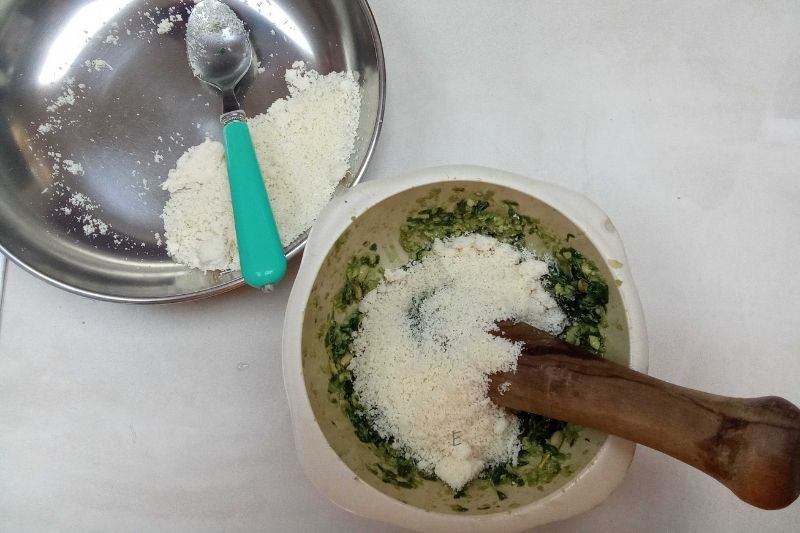
To store pesto well, cover terrine with a good layer of olive oil. Once jar is sealed hermetically, it keeps for about 3 weeks, and if you have made a large quantity you can use some, then top up again with oil.
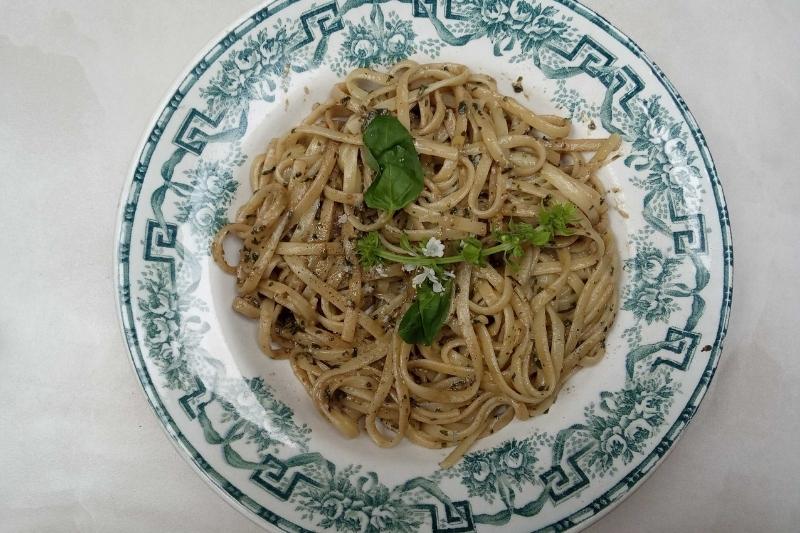
Pesto is a sauce used cold. Prepare it at the last minute or keep chilled to add to drained pasta, loosened with a little cooking water that contains starch.
Choose short pasta such as trofie (easy to find in France) or trenette to feel like you're in Liguria, or more classic — and equally delicious — linguine.
Variations
For me, you absolutely must use a basil that tastes of basil, as I said at the start of this tutorial. Keep lemony or other varieties for recipes with Asian influence, for example.
As I do here, you can substitute pine nuts with other nuts or oilseeds, notably cashews or almonds. Walnut has a much stronger flavour, less suitable in my view. Try also Sicilian pesto, which replaces pine nuts with pistachios, another way to vary pleasures !
You can also replace parmesan alone with a mix of two thirds parmesan and one third pecorino (sheep's‑milk cheese, harder to find, especially the version without peppercorns, except in Italian delicatessens). This blend is in fact the traditional mixture in Liguria, the homeland of green pesto. But avoid Grana Padano for pesto. I prefer a good piece of parmesan to grate, though pre‑grated parmesan from the supermarket is also fine for this recipe.
Pesto recipes are almost endlessly adaptable: earlier or later in season you can use Tulbaghia, radish tops, rocket or wild garlic in spring, amaranth through to autumn, and even nettle pesto. Basil pesto remains, in my opinion, the most flavoursome of all — an Italian summer explosion on the palate. 🙂
Feel free to respond to this article by sharing your own cooking secrets!

































Comments