Culinary fans of edible seeds particularly appreciate sunflower seeds — tasty and packed with health benefits. Learn how to harvest and store them for use in the kitchen… or to feed birds in winter!
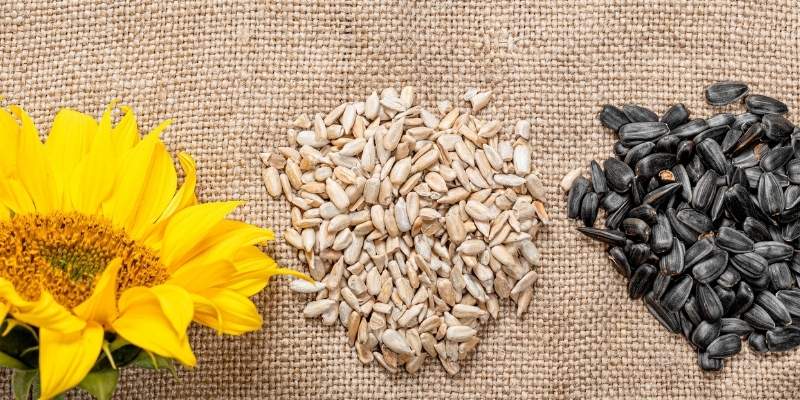
Nutritional benefits of sunflower seeds
A truly sun-like flower, sunflower produces a large number of seeds at its centre. They are often called pips, the plant itself sometimes described as a seed-vegetable. The fruits of sunflower are oleaginous seeds, like sesame or flax seeds. The primary use of the seeds is to produce sunflower oil — the most consumed in France — with a neutral flavour; after cold extraction and pressing of the seeds, sunflower meal, a horticultural by-product, is produced for livestock.
An excellent source of fats, rich in polyunsaturated fatty acids that are very good for health, sunflower seed is also rich in nutrients: omega‑3, omega‑6 and vitamin E, the antioxidant vitamin! And, less well known, phosphorus, magnesium and protein.
Just remember that it is an oleaginous seed and therefore, like tree nuts such as almond, walnut or hazelnut, should be eaten in moderation (nutritionists recommend a maximum of 15 g/day).
When to harvest sunflower seeds?
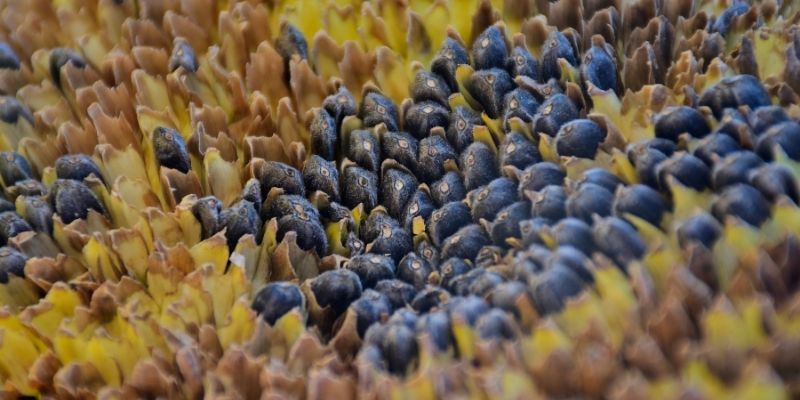
Plants must be completely dry before harvesting the seeds. The sunflower then turns yellow (head and stem). The seeds are black for Helianthus annuus, or striped in some species or varieties.
Harvest usually takes place in August, but sometimes it is necessary to wait until September depending on how dry the summer has been. Simply cut off the large heads.
If you grow a few sunflowers in the garden, watch the flower heads closely — birds will be after them early!
How to prepare and store them?
Once the large head has been cut off, remove the seeds by hand. If they are fully dry, they will fall out easily. If not, leave them to dry in an attic or any dark, dry place, hanging them by the stems. Put the husks on the compost or use as mulch!
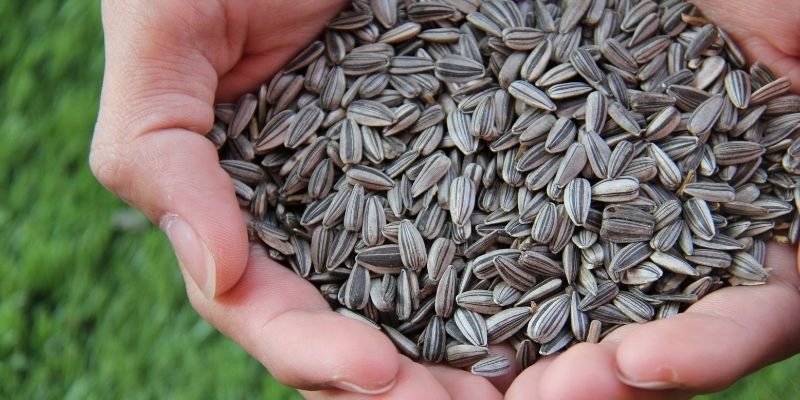
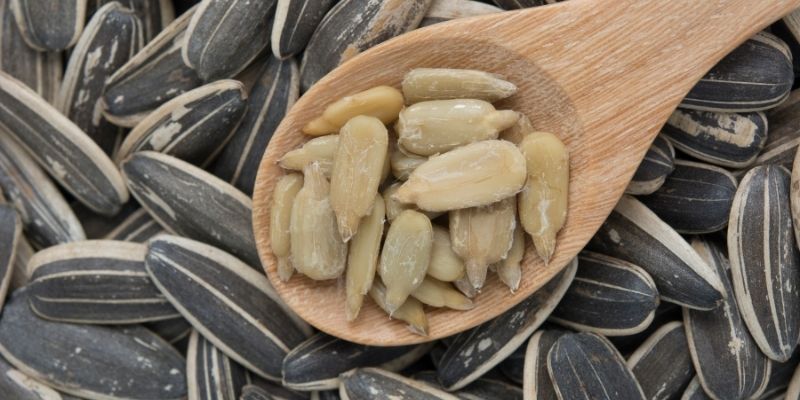
Unlike other edible seeds such as pumpkin, poppy or sesame, sunflower seeds must be prepared before eating. They are surrounded by a hard, black husk. To eat them, the husk must be removed. This husk is thinner on black seeds, striped seeds by contrast tending to be lower in lipids.
You can either shell them — that is, remove the black husk — or keep them whole if you want to feed birds. You can also roast whole seeds in their husks and salt them.
As with tree nuts, always store seeds in an airtight jar in a dry place away from light (a cupboard or pantry). Shelled sunflower seeds keep for about 2 to 3 months in an airtight jar away from light, humidity and heat (for example in a cupboard or pantry). Poorly stored seeds become rancid. If kept in the fridge or freezer, their shelf life can extend to 6 months to 1 year without loss of quality.
For birds, whole seeds, better protected, can be kept for up to 1 year in a dry, airy place, protected from rodents.
How to use them?
In recipes
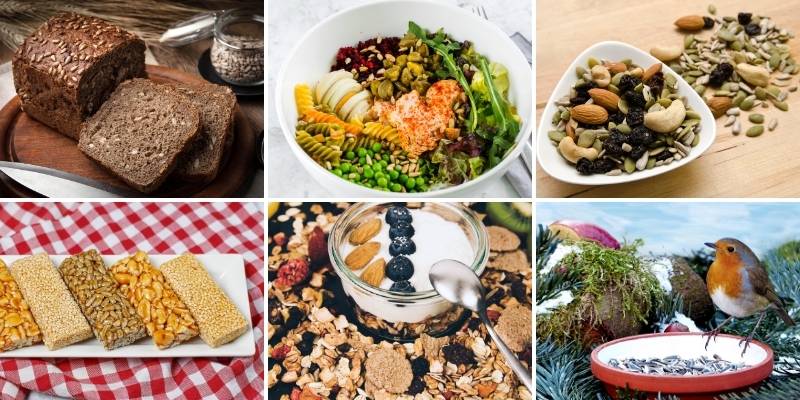
Extremely handy, sunflower seeds can be taken to work in a small glass jar to nibble on as a mid-morning or afternoon snack. Beyond this simple snack, sunflower seeds fit into many plant-based sweet or savoury dishes, preferably raw to benefit from their nutritional qualities.
- In granola and muesli
- In cereal bars; and in kozinaks — Slavic sweets made from roasted sunflower seeds and honey
- In biscuits and cakes
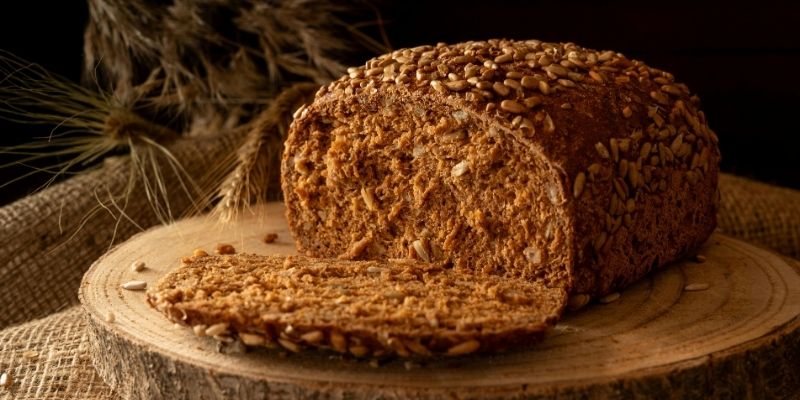
- In all kinds of bread: incorporated into the dough like poppy seeds, or sprinkled on wholemeal loaves
- In salads, sprinkled over like pumpkin seeds or kasha (toasted buckwheat); lightly toasted in a pan, they add crunch to buddha bowls or poke bowls
- Ground, they make a good substitute for pine nuts in pesto
- On hummus
- In a crumble
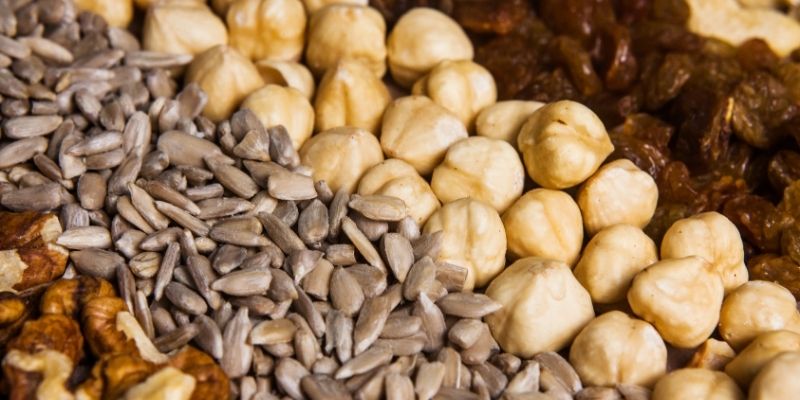
- In a snack mix with raisins, pistachios, etc.
Did you know? In Spain, un-shelled seeds are called pipas and are very common and popular as a snack or aperitif. They are roasted and salted and eaten much like pistachios.
For seed-eating birds
The other use for sunflower seeds, this time whole, is as food for birds that love them, notably Eurasian nuthatches, greenfinches, tits, finches and grosbeaks. During very cold periods, birds find the fats they need to withstand winter. Seeds can simply be mixed with others such as millet in a dish, or used to make fat balls for the winter season.
Our tutorials on how to make bird seed balls with a pine cone and how to make a hanging seed feeder for birds in winter are waiting for you in our Advice section!































Comments