Cortaderia selloana Evita - Pampas Grass
Cortaderia selloana Evita - Pampas Grass
Cortaderia selloana Evita
Pampas Grass
Pot arrived quickly and in good condition. Planted directly next to another young plant of pampas grass purchased previously on the website.
Souricette , 24/09/2023
Back-to-school special offer!
Get €10 off for every €50 you spend! And get up to €40 off on a single order.
How does it work?
1. Shop your favourites
Add your favourite plants to your basket. For every €50 you spend (excluding delivery charges, store credit and the plastic-free option), you’ll receive a €10 voucher.
€50 spent = €10 voucher
€100 spent = €20 voucher
€150 spent = €30 voucher
€200 spent = €40 voucher
2. Place your order
Once your basket reaches one of the spending thresholds, place your order. You can even choose your delivery date!
3. Receive your voucher
As soon as your order has been shipped, you’ll receive an email containing your personal voucher code and its value.
4. Use it on your next order
Your voucher is valid for 90 days from the date you receive it. It can be used once only, on a new order worth at least the value of the voucher, excluding delivery charges.
Please note: Vouchers can be combined with other offers, but cannot be split or refunded.
Why not try an alternative variety in stock?
View all →
Available in 1 sizes
Available in 1 sizes
Available in 1 sizes
Available in 1 sizes
Available in 1 sizes
Available in 1 sizes

Available in 1 sizes
Available in 1 sizes
Available in 1 sizes
Available in 2 sizes
This plant carries a 12 months recovery warranty
More information
We guarantee the quality of our plants for a full growing cycle, and will replace at our expense any plant that fails to recover under normal climatic and planting conditions.


Would this plant suit my garden?
Set up your Plantfit profile →
Description
IMPORTANT: for the preservation of our natural ecosystems, we have removed this plant from our catalogue as it is considered invasive. Therefore, it is no longer available for sale.
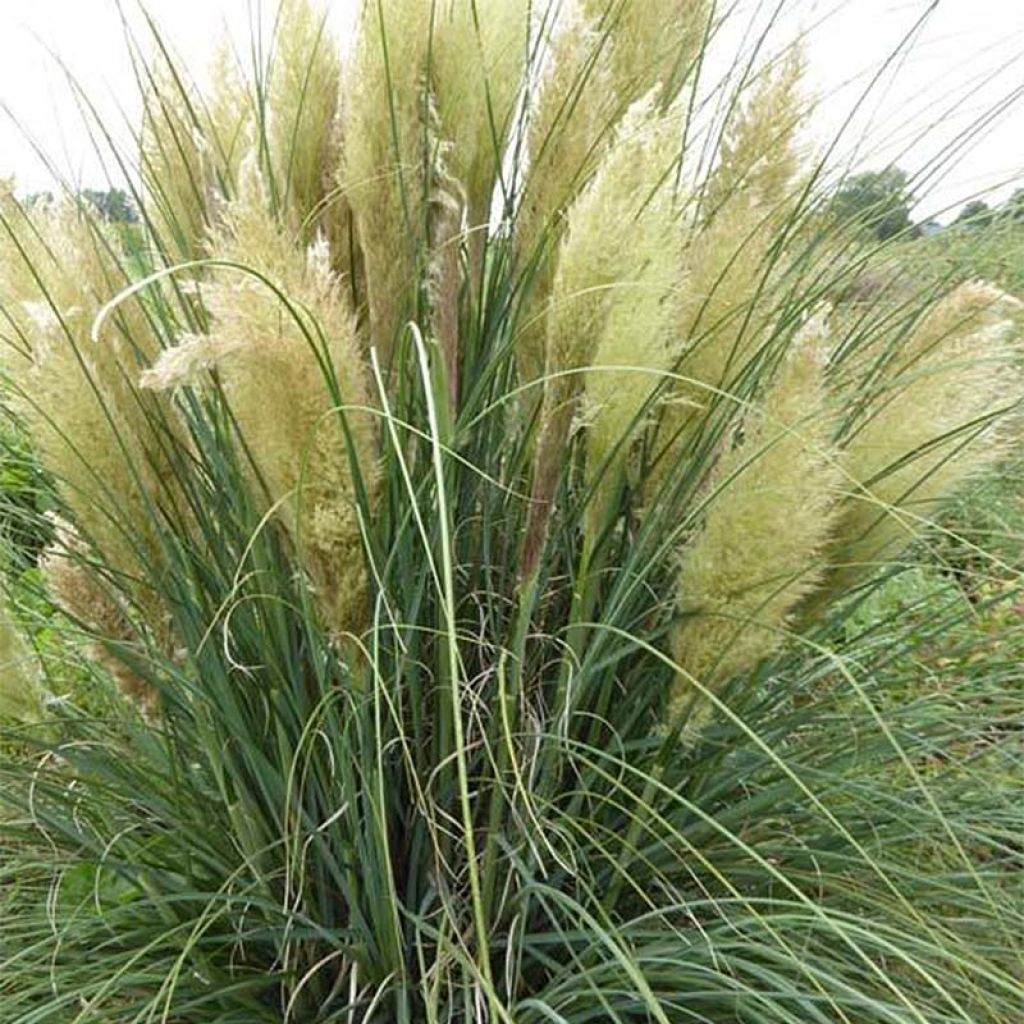
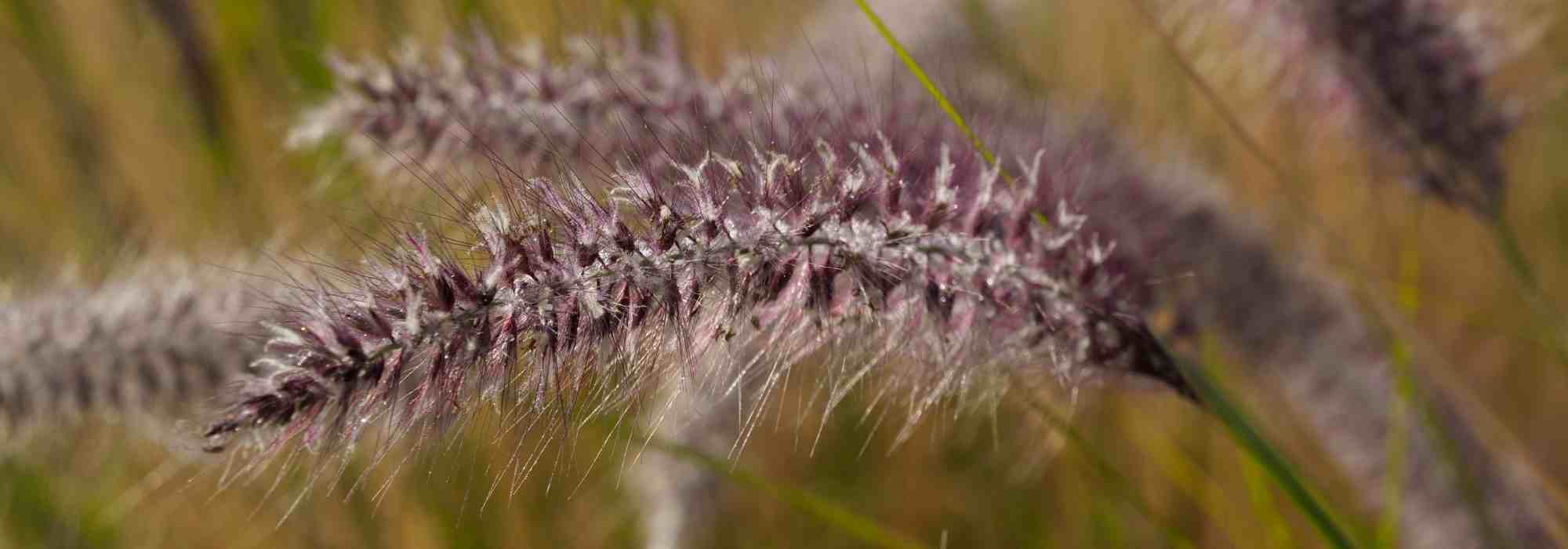
Cortaderia selloana 'Evita', better known as 'Evita' Pampas Grass, is an excellent variety with moderate growth and a more compact habit, which stands out for its early flowering, often starting in June. From summer to autumn, you will appreciate its remarkable feathery and silky panicles in a tender pale silver-blond colour. This beautiful perennial grass, awarded the RHS Award of Garden Merit in 2009, is easy to grow in the sun, even in salty soil. As such, it is perfect for coastal gardens.
Cortaderia selloana, also known as Gynerium or Cortaderia argentea, is a large and highly ornamental grass belonging to the Poaceae family. It is native to South America, specifically Argentina and Brazil, where it extensively colonises roadsides, trailsides, stream banks, and fallow areas in disturbed zones by self-seeding abundantly. This plant is characterised by its great adaptability to the soil in which it grows, even tolerating the semi-arid conditions of subtropical climates. It is a dioecious plant, meaning that there are male and female plants. It has given rise to numerous cultivars, with varying levels of hardiness.
The 'Evita' variety distinguishes itself from the typical species mainly by its lower and more compact habit, as well as its early flowering. This grass forms a clump of linear, evergreen foliage, which remains intact during mild winters. The leaves are sharp, tough, and rustling. The mature plant reaches a height of 1.50 m (5ft) when in flower, with a spread of approximately 1.20 m (4ft). Its slightly arched habit somewhat resembles that of a fountain. The leaves have a fairly intense grey-green-blue colour. Its splendid flower heads appear in late summer, in August-September, at the centre of the tuft, in the form of large feathery panicles, measuring 30 to 50 cm (12 to 20in) in length, which remain on the plant at least until November, while acquiring intense silver reflections. They are borne on sturdy cylindrical stems that are highly wind-resistant. When male and female individuals are present, the female plants produce a large quantity of seeds that are dispersed by the wind.
This large grass has been present in our gardens since the 1960s, so it needs no introduction. The only point that can perhaps be emphasised is the misuse that has been made of it. It is true that it looks a bit ridiculous when planted all alone in the middle of a lawn, while it is so beautiful when used en masse or in a flower bed among shrubs. The Cortaderia selloana 'Evita' is a very exotic plant and forms large tufts. However, it is essential to carefully consider before planting it in the garden. This grass is not demanding and can adapt to any garden except the smallest ones. It is best suited for large borders where its strong presence brings structure and grace, provided it has enough space to grow. Plant it among asters, behind chrysanthemums or perpetual roses, and let it grow and fill out. It looks mesmerising in a wild and tousled ambiance or modern and sleek settings when it plays with the wind and bends under the rain showers. In urban areas, pastel-coloured pampas grasses integrate well and soften the edges without clashing. They look magnificent near water features when accompanied by vernonias in well-drained soil.
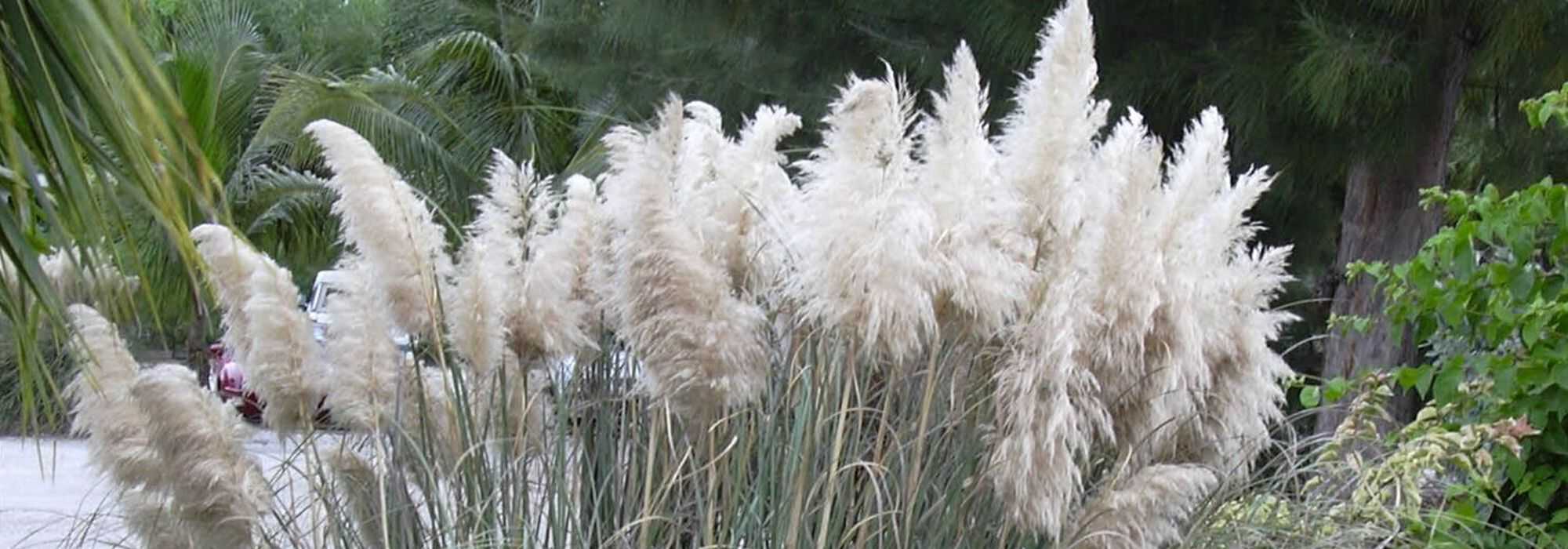
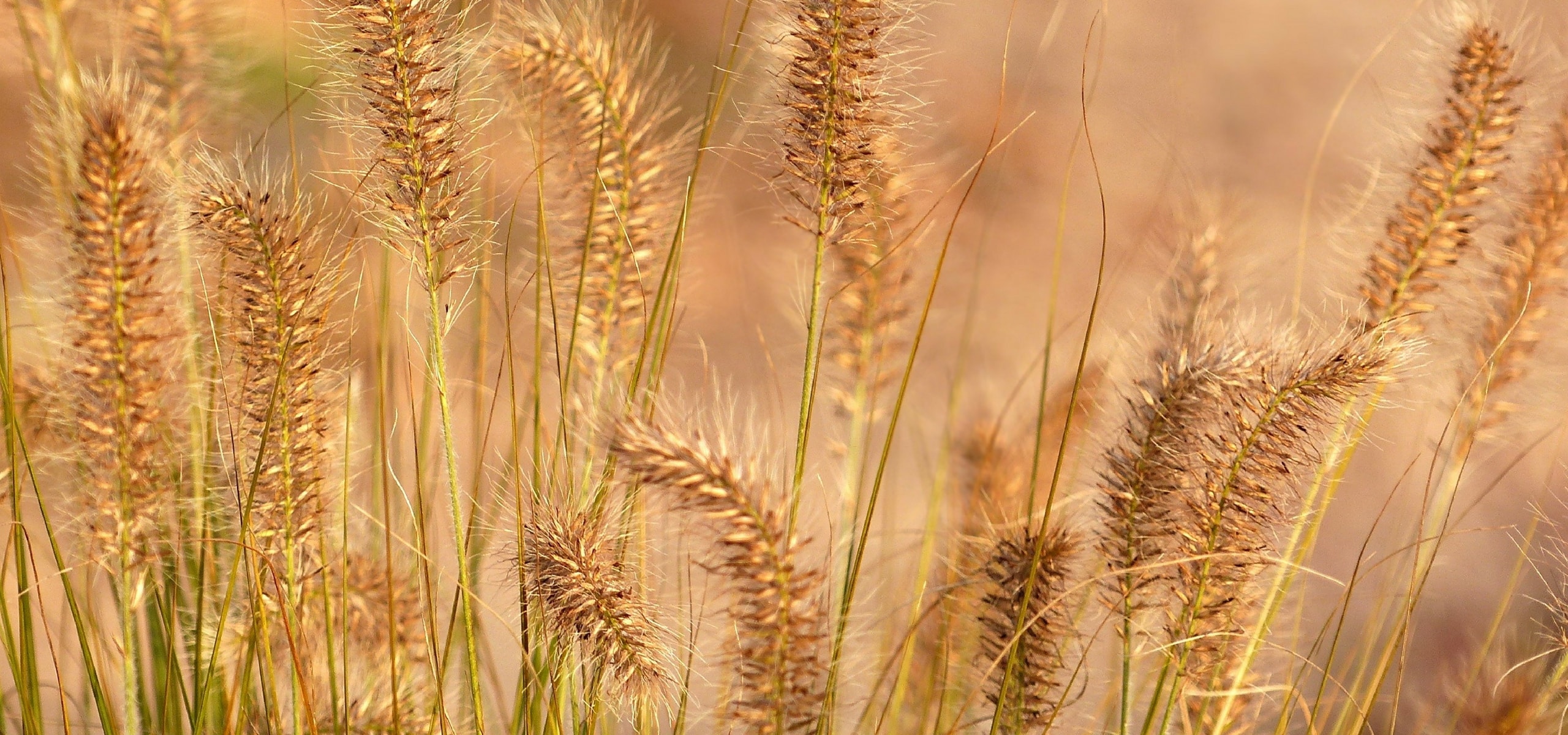
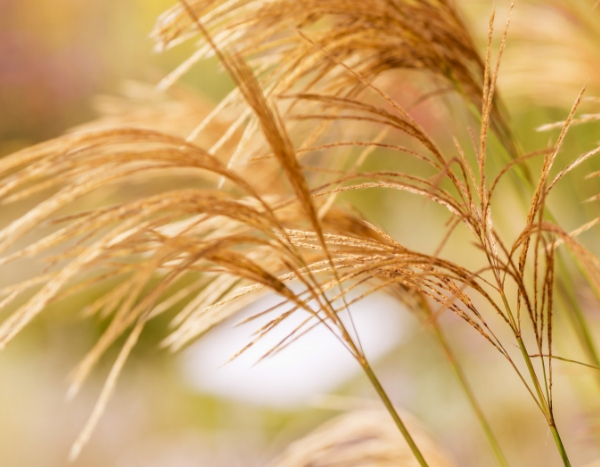
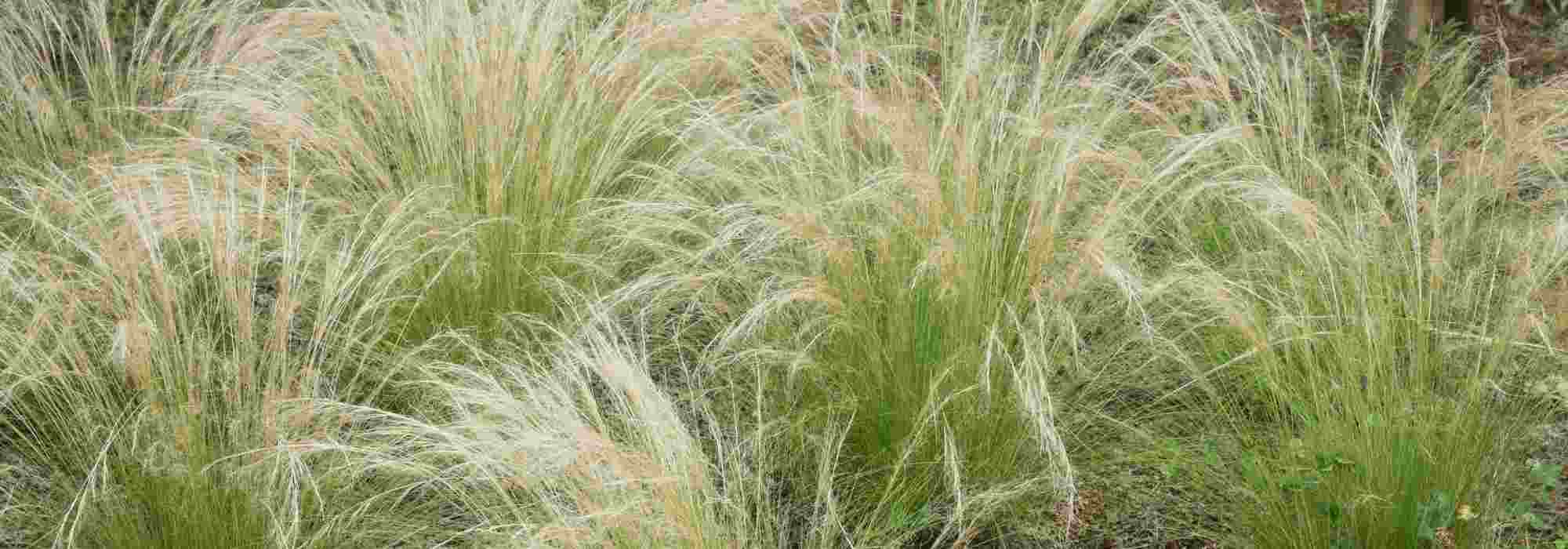
Cortaderia selloana Evita - Pampas Grass in pictures
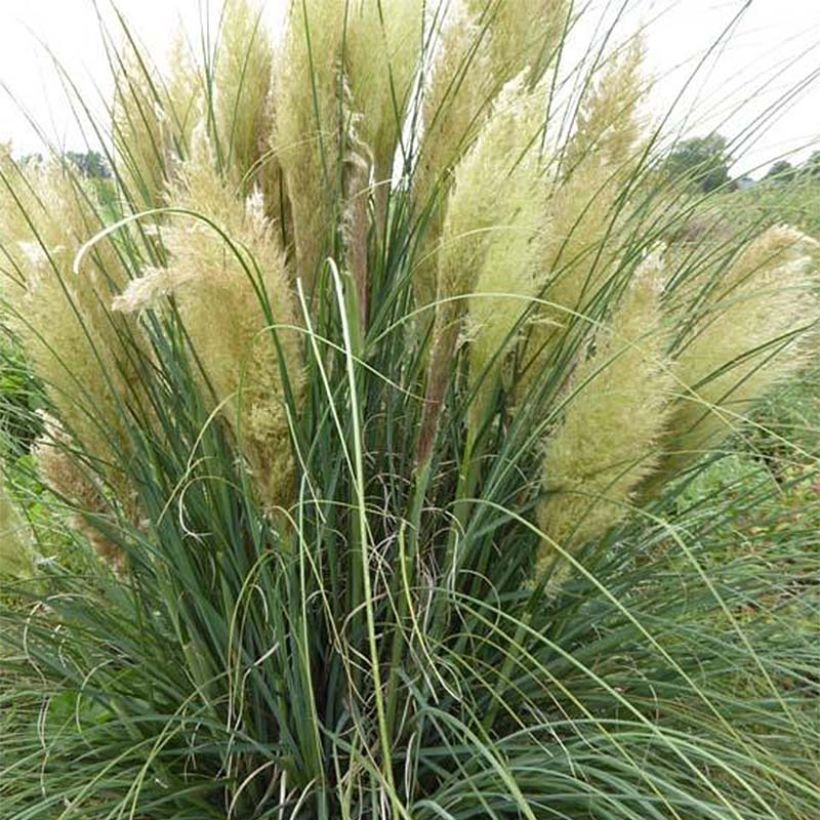
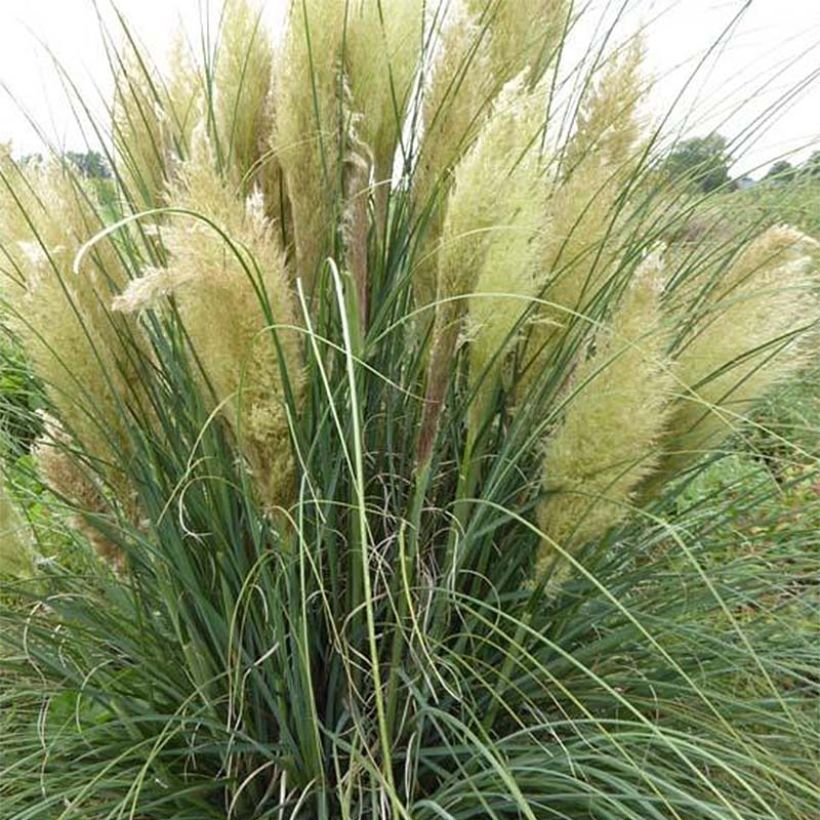
Flowering
Foliage
Plant habit
Botanical data
Cortaderia
selloana
Evita
Poaceae
Pampas Grass
Cultivar or hybrid
Planting and care
If you want to care for a Cortaderia selloana 'Evita', it needs a lot of sunlight and good drainage. It grows best in rich, fresh soil but can survive in less fertile or salty soil. However, it doesn't like heavy or compact soil that's wet in winter. It's easy to care for, but make sure it doesn't get too wet in winter. After planting, water it well and regularly for the first year. Remove any dead leaves in early spring (March to April), but don't cut all the leaves down. The leaves are sharp, so wear gloves when you prune them. A mature 'Evita' can handle temperatures as low as -20°C (1°F). If you live in a cold area, plant it in a sheltered spot with good draining soil in the spring to help it survive the cold.
Planting period
Intended location
Care
Planting & care advice
-

-
-

-

-
-
-
-

-
, onOrder confirmed
Reply from on Promesse de fleurs
Recently viewed products
Haven't found what you were looking for?
Hardiness is the lowest winter temperature a plant can endure without suffering serious damage or even dying. However, hardiness is affected by location (a sheltered area, such as a patio), protection (winter cover) and soil type (hardiness is improved by well-drained soil).

The flowering period indicated on our website applies to countries and regions located in USDA zone 8 (France, the United Kingdom, Ireland, the Netherlands, etc.)
It will vary according to where you live:- In zones 9 to 10 (Italy, Spain, Greece, etc.), flowering will occur about 2 to 4 weeks earlier.
- In zones 6 to 7 (Germany, Poland, Slovenia, and lower mountainous regions), flowering will be delayed by 2 to 3 weeks.
- In zone 5 (Central Europe, Scandinavia), blooming will be delayed by 3 to 5 weeks.
In temperate climates, pruning of spring-flowering shrubs (forsythia, spireas, etc.) should be done just after flowering.
Pruning of summer-flowering shrubs (Indian Lilac, Perovskia, etc.) can be done in winter or spring.
In cold regions as well as with frost-sensitive plants, avoid pruning too early when severe frosts may still occur.
The planting period indicated on our website applies to countries and regions located in USDA zone 8 (France, United Kingdom, Ireland, Netherlands).
It will vary according to where you live:
- In Mediterranean zones (Marseille, Madrid, Milan, etc.), autumn and winter are the best planting periods.
- In continental zones (Strasbourg, Munich, Vienna, etc.), delay planting by 2 to 3 weeks in spring and bring it forward by 2 to 4 weeks in autumn.
- In mountainous regions (the Alps, Pyrenees, Carpathians, etc.), it is best to plant in late spring (May-June) or late summer (August-September).
The harvesting period indicated on our website applies to countries and regions in USDA zone 8 (France, England, Ireland, the Netherlands).
In colder areas (Scandinavia, Poland, Austria...) fruit and vegetable harvests are likely to be delayed by 3-4 weeks.
In warmer areas (Italy, Spain, Greece, etc.), harvesting will probably take place earlier, depending on weather conditions.
The sowing periods indicated on our website apply to countries and regions within USDA Zone 8 (France, UK, Ireland, Netherlands).
In colder areas (Scandinavia, Poland, Austria...), delay any outdoor sowing by 3-4 weeks, or sow under glass.
In warmer climes (Italy, Spain, Greece, etc.), bring outdoor sowing forward by a few weeks.
Shipping country and language
Your country of residence may be:
Your country of residence is:
For a better user experience on our website, you can select:
Your shipping country:
-
 Austria
-
 Belgium
-
 Bosnia & Herzegovina
-
 Bulgaria
-
 Croatia
-
 Cyprus
-
 Czechia
-
 Denmark
-
 Estonia
-
 Finland
-
 France
-
 Germany
-
 Greece
-
 Hungary
-
 Iceland
-
 Ireland
-
 Italy
Italy
-
 Latvia
-
 Liechtenstein
-
 Lithuania
-
 Luxembourg
-
 Malta
Malta
-
 Netherlands
-
 Poland
-
 Portugal
-
 Romania
-
 Serbia
-
 Slovakia
-
 Slovenia
-
 Spain
Spain
-
 Sweden
-
 Switzerland
Language:
-
French
-
 English
-
Spanish
-
Italian
-
German
-
Portuguese
-
Dutch
-
Finnish
My Account
Hello
My wish lists
My cart
Log in / Register
Existing customer?
This form is protected by reCAPTCHA - the Google Privacy Policy and Terms of Service apply.
New customer?
Create an account to track your orders, access our customer service and, if you wish, make the most of our upcoming offers.