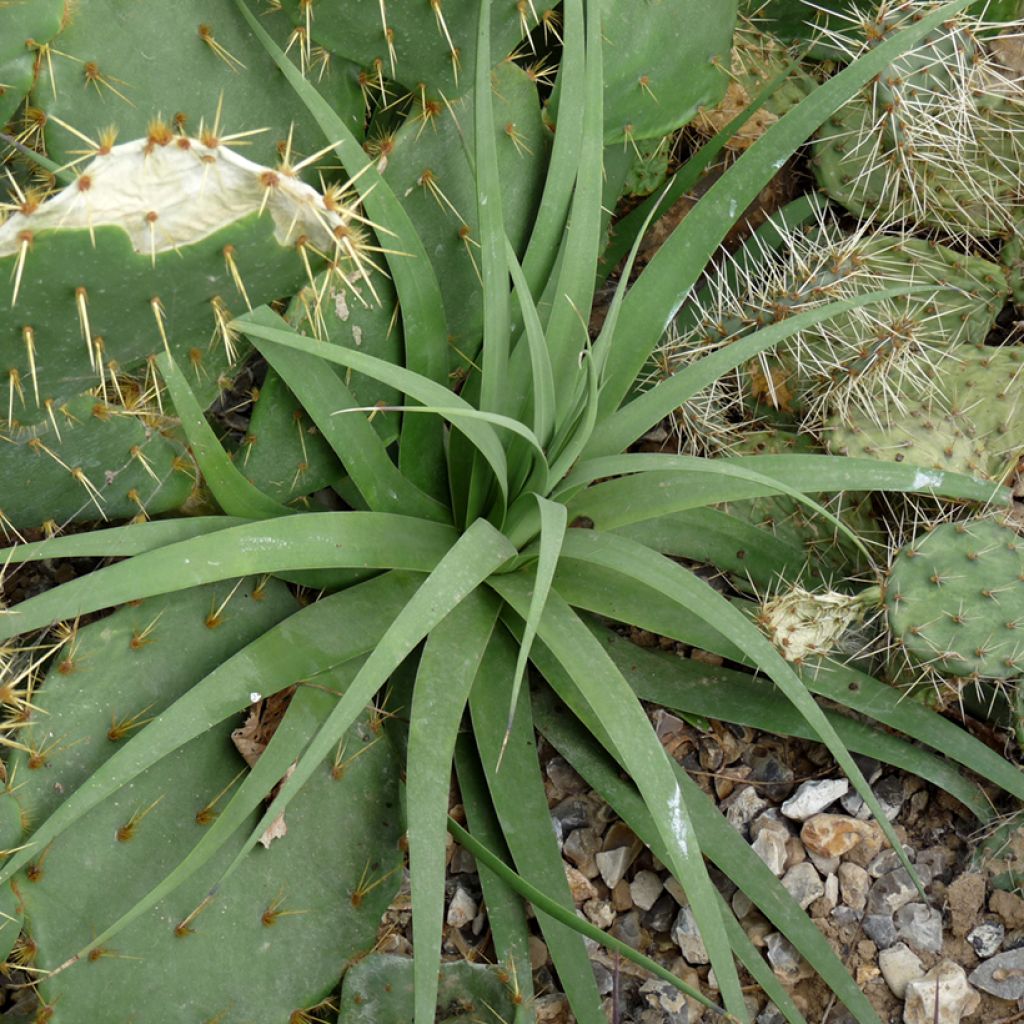
Agave bracteosa
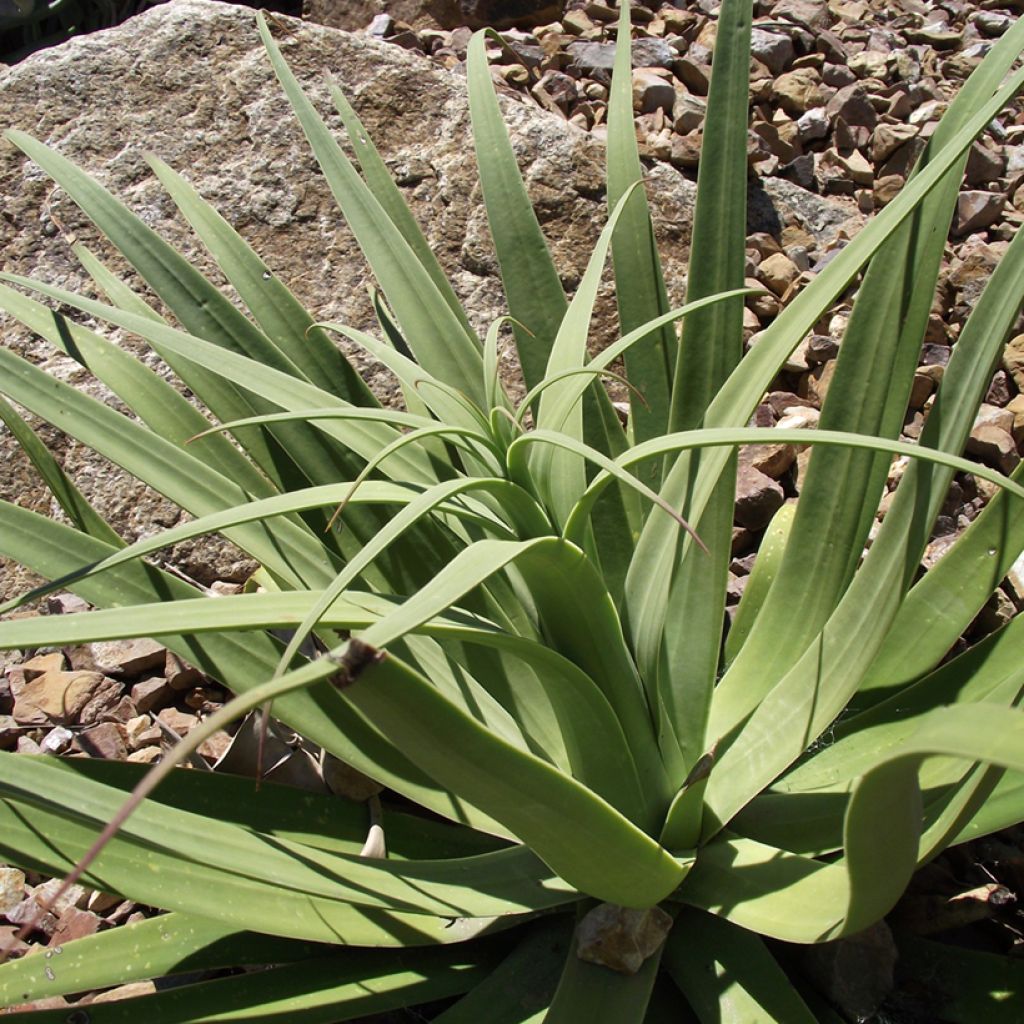
Agave bracteosa
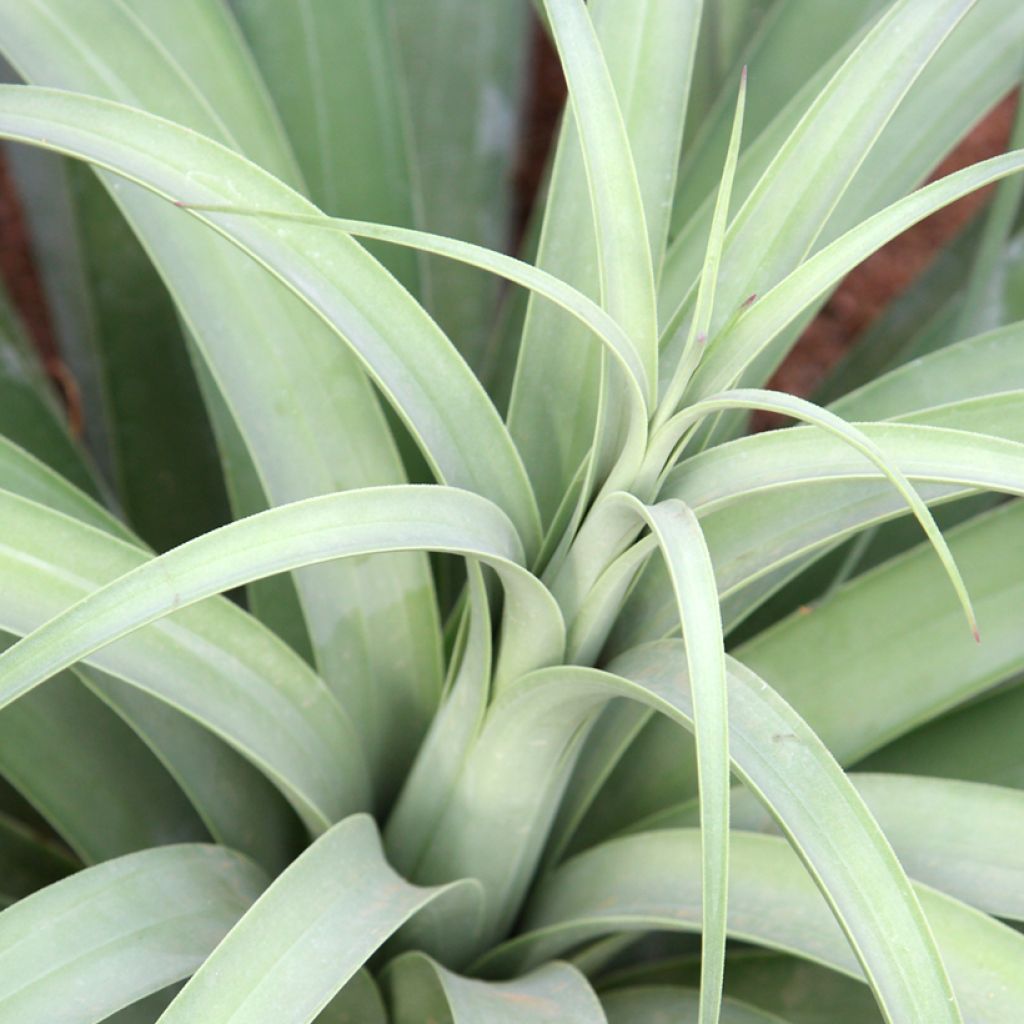
Agave bracteosa
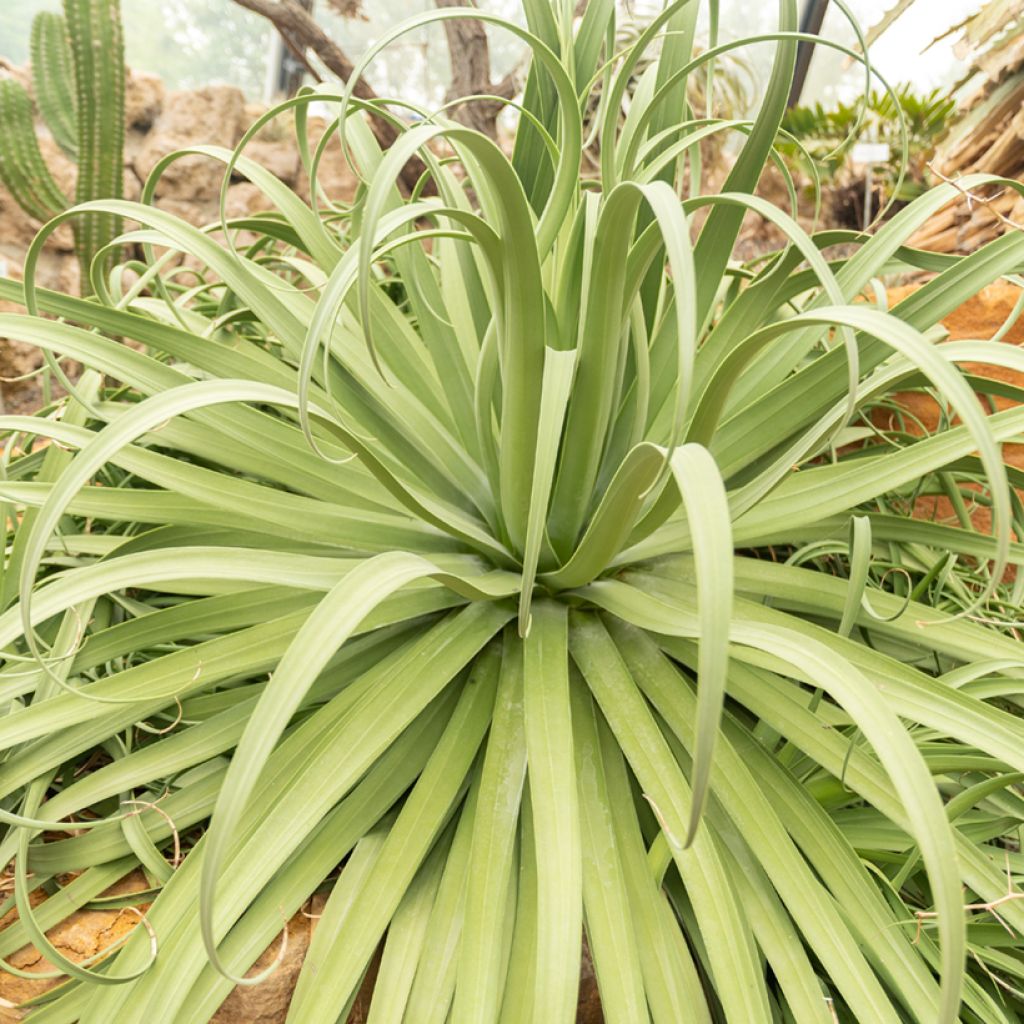
Agave bracteosa
Agave bracteosa
Agave bracteosa
Agave bracteosa
Spider Agave, Squid Agave
Back-to-school special offer!
Get €10 off for every €50 you spend! And get up to €40 off on a single order.
How does it work?
1. Shop your favourites
Add your favourite plants to your basket. For every €50 you spend (excluding delivery charges, store credit and the plastic-free option), you’ll receive a €10 voucher.
€50 spent = €10 voucher
€100 spent = €20 voucher
€150 spent = €30 voucher
€200 spent = €40 voucher
2. Place your order
Once your basket reaches one of the spending thresholds, place your order. You can even choose your delivery date!
3. Receive your voucher
As soon as your order has been shipped, you’ll receive an email containing your personal voucher code and its value.
4. Use it on your next order
Your voucher is valid for 90 days from the date you receive it. It can be used once only, on a new order worth at least the value of the voucher, excluding delivery charges.
Please note: Vouchers can be combined with other offers, but cannot be split or refunded.
Home or relay delivery (depending on size and destination)
Important: You may be charged customs duties by your country’s customs authorities upon delivery.
Schedule delivery date
and select date in basket
This plant carries a 12 months recovery warranty
More information
We guarantee the quality of our plants for a full growing cycle, and will replace at our expense any plant that fails to recover under normal climatic and planting conditions.
Would this plant suit my garden?
Set up your Plantfit profile →
Description
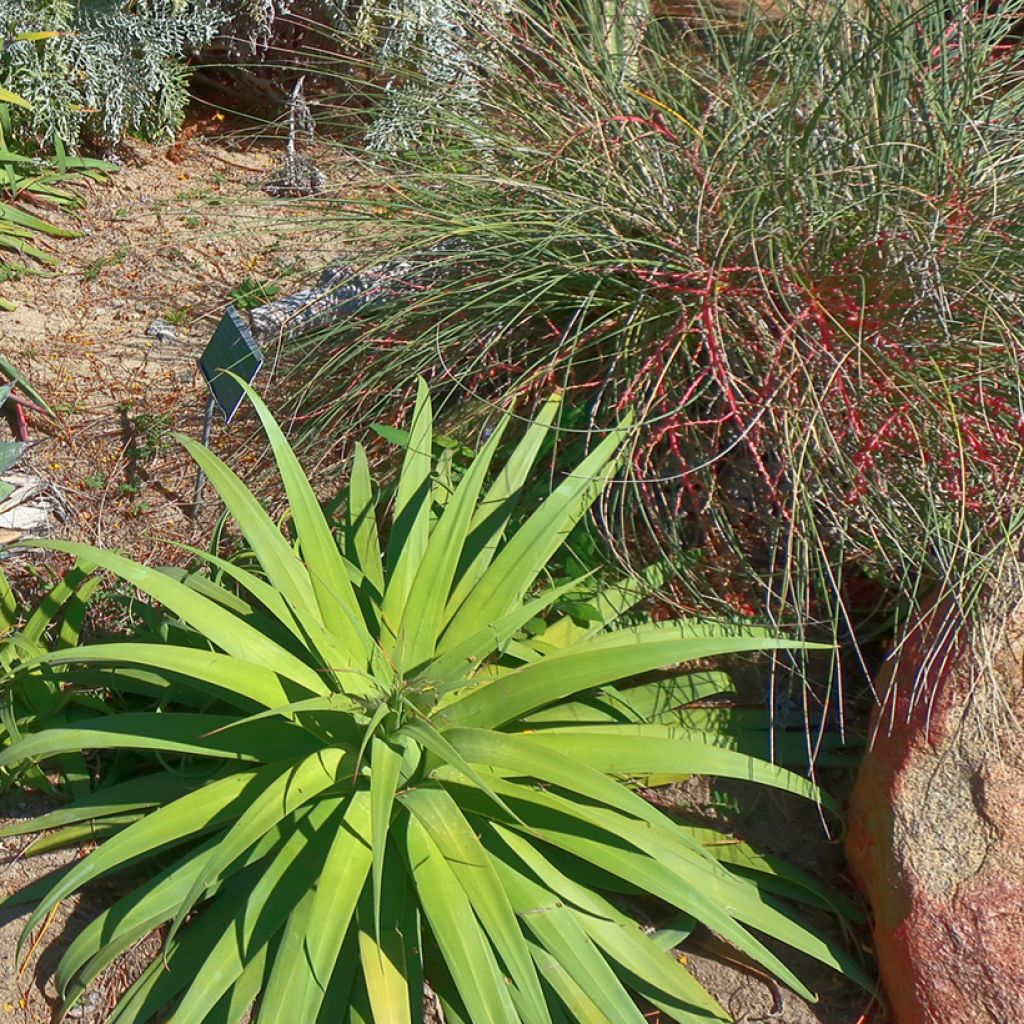
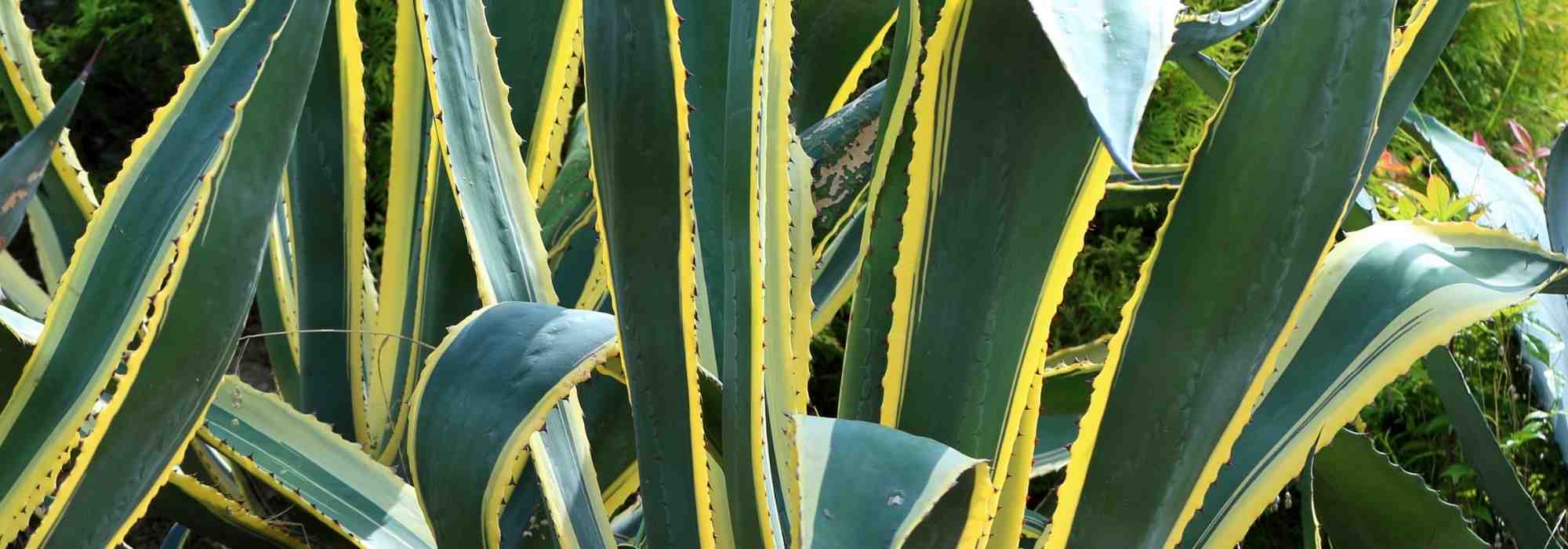
Agave bracteosa is a botanical species which is extremely interesting both for its aesthetics and its hardiness. Nicknamed the Octopus Agave due to its flexible leaves whose tips curl gracefully, it forms a dense and compact clump. The foliage is devoid of thorns. This Agave rarely flowers, but when it does, what a spectacle! Its flower spikes rise to head height, displaying a multitude of small, slightly yellowish-white flowers. Hardy down to -10°C, or even more, it can be grown in the ground well beyond the Mediterranean region.
The Agave genus now belongs to the Asparagaceae family. There are several hundred species of Agaves, native to the American continent, with leaves arranged in rosettes, ranging from dwarf species about ten centimetres in diameter to giants reaching 3 metres. The rosette most often develops at ground level, but some species form a short trunk.
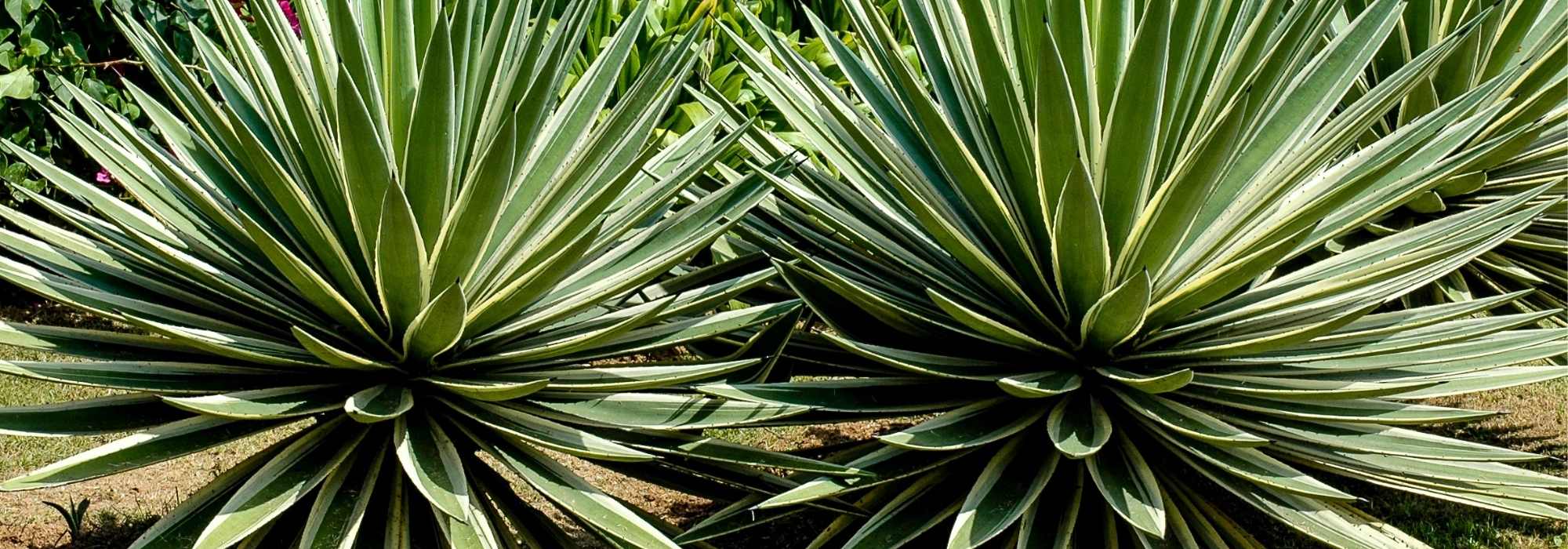
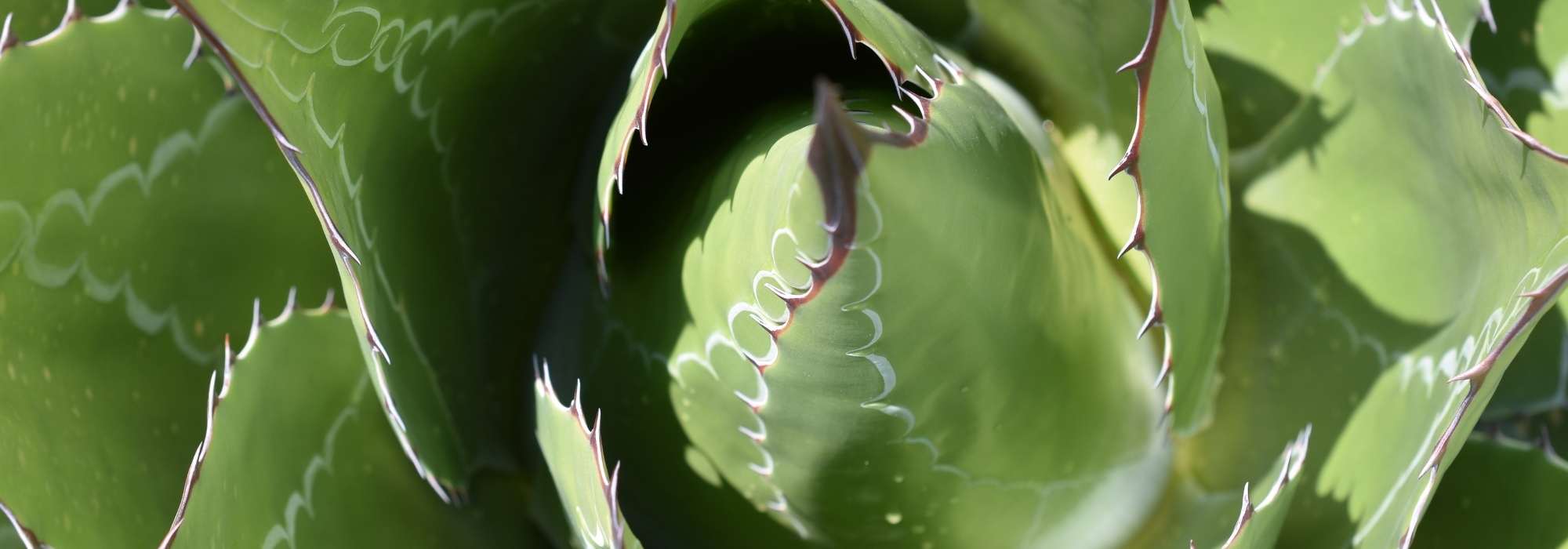
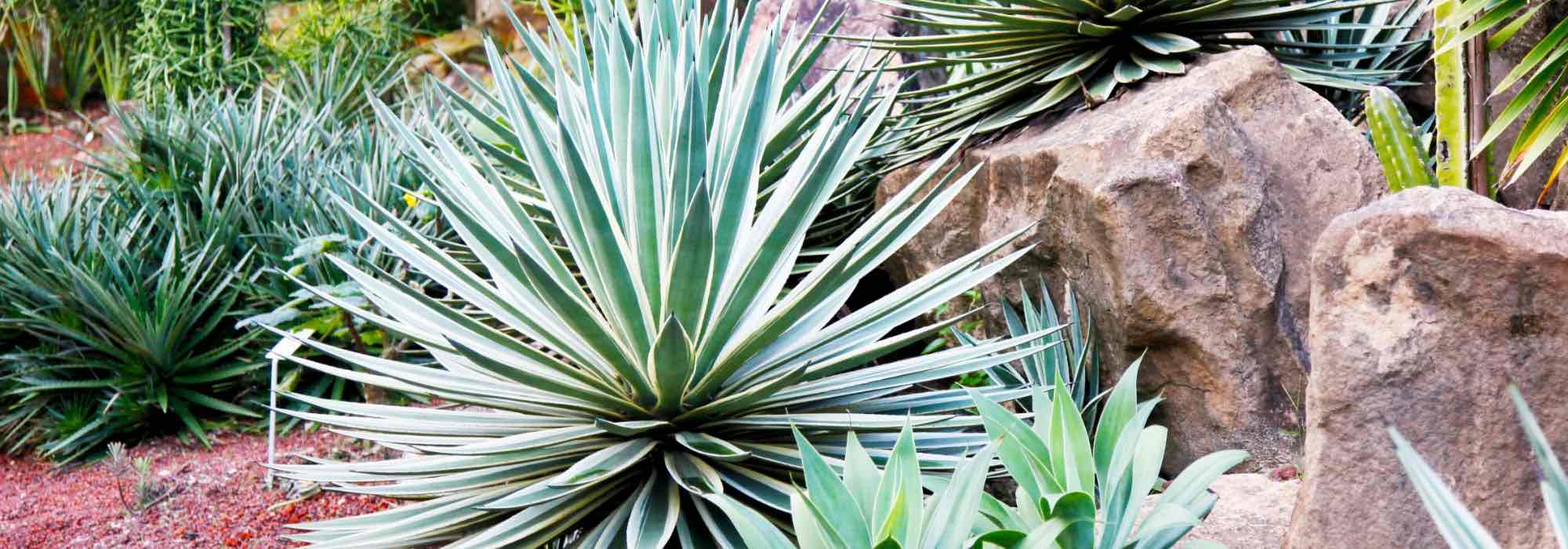
Agave bracteosa is native to northeastern Mexico, from the state of Nuevo Leon, located between the Sierra Madre Oriental and the sea. This fragile-looking succulent plant actually withstands cold very well. In well-drained soil and sunny exposure, it can endure -10 to -12°C. Its overall appearance is more reminiscent of an Aloe than an Agave, especially since its leaves are not prickly at their tips. The leaf lamina is triangular, with a matte, slightly rough surface of a fairly light green and finely serrated edges. The flexible to semi-rigid leaves are arranged in a rosette, overlapping each other. Their tips taper very long and bend towards the ground, curling gracefully. It resembles a large spider or an octopus with flexible tentacles. The plant does not form a trunk, but the central part of the rosette rises slightly over time, somewhat like a pineapple tuft. With moderate growth (slower if grown in a pot), Spider Agave reaches 60 to 70 cm in diameter, for 50 to 60 cm in height, with individual leaves generally not exceeding 40 cm. It forms a dense, very decorative clump, which gradually expands through the formation of offsets around the initial rosette.
Its exceptionally beautiful flowering is rare in our climates. In summer, a flower spike quickly rises to a height of 1.50 to 1.80 m, well above the rosette. The upper half of the flower spike is adorned with hundreds of small flowers of a creamy white to yellow colour. The tightly packed flowers, which are only 2 to 2.5 cm long, display a profusion of stamens and much longer pistils, which overall form a continuous sleeve about a dozen centimetres in diameter. This truly spectacular flowering marks the death of the rosette... which perpetuates itself through the formation of offsets at its base.
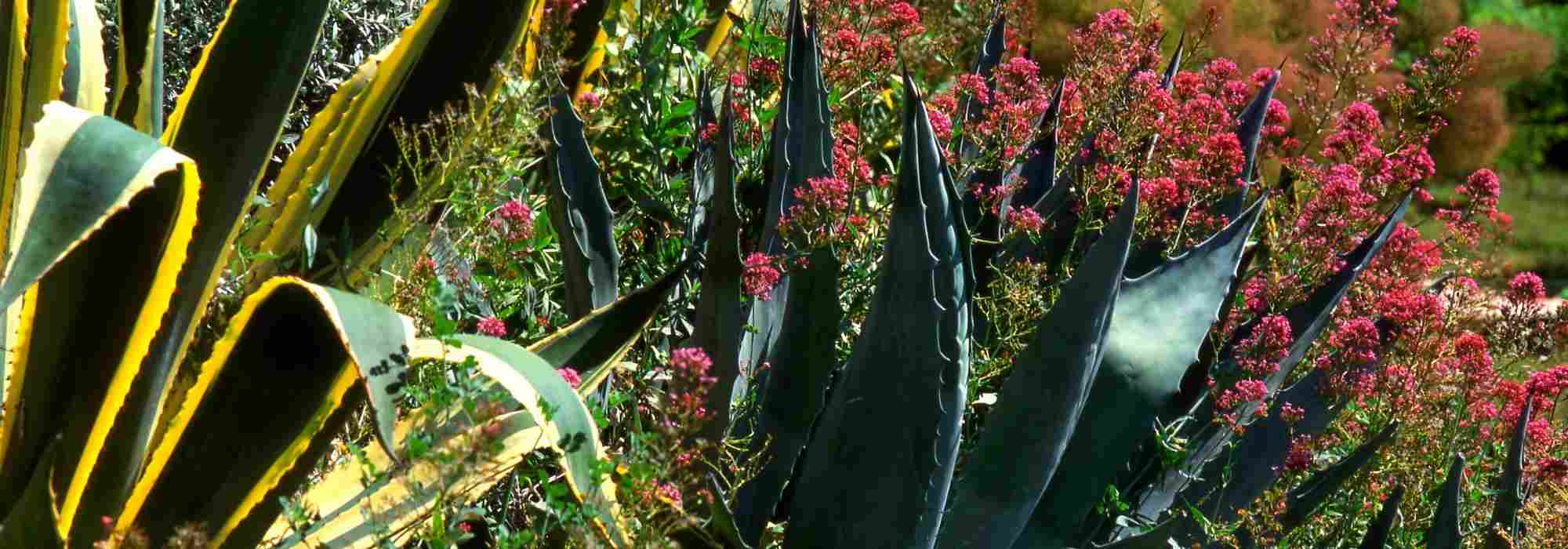
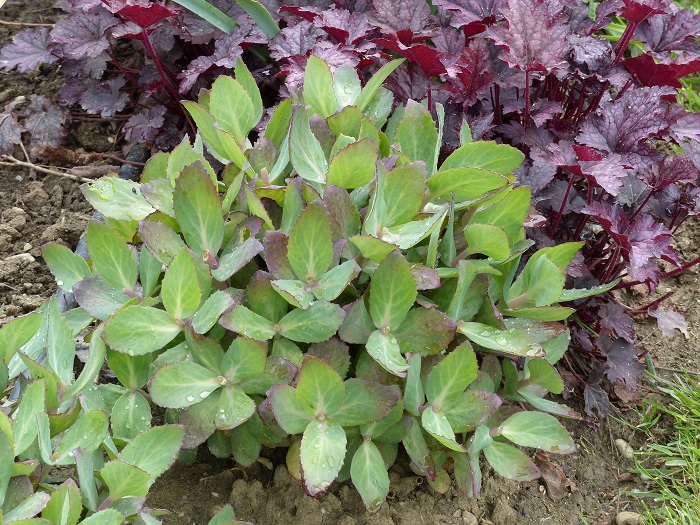
Agave bracteosa is an excellent choice for creating an exotic rock garden outside the Mediterranean region. It's true that other Agaves show even better frost resistance, such as Agave montana or Agave havardiana, which will also be excellent companions, but Agave bracteosa can be attempted in many regions with good chances of success. Its lack of terminal spines is a big advantage if you are concerned for your children, or your hands and eyes, and its silhouette is truly very attractive. Plant alongside it Aloe striatula, which will offer you a superb exotic orange-yellow flowering each summer. You can also add a few Kniphofias, which will provide you with colourful spikes in cream, yellow, orange, red, or bicolour tones depending on the cultivars. And to cover the ground, you can easily "cheat" by playing on the falsely exotic aspect of Houseleeks (Sempervivum) and other Sedums (Stonecrops), which are actually extremely hardy...
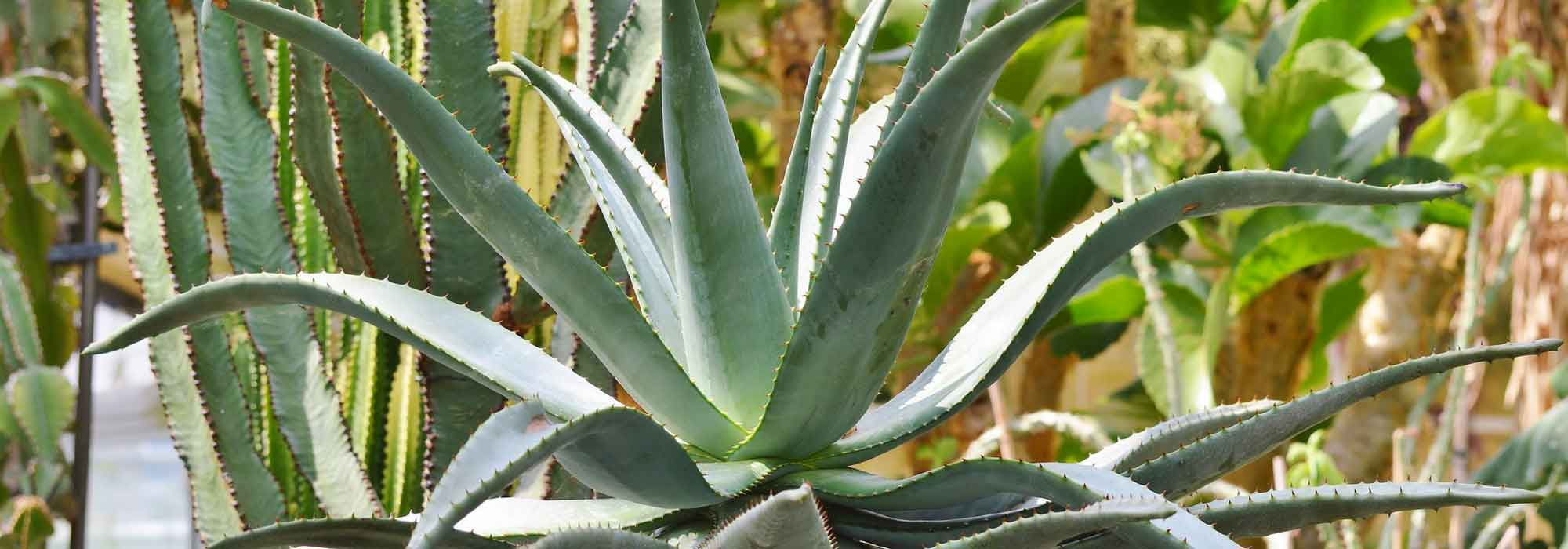
Agave bracteosa in pictures
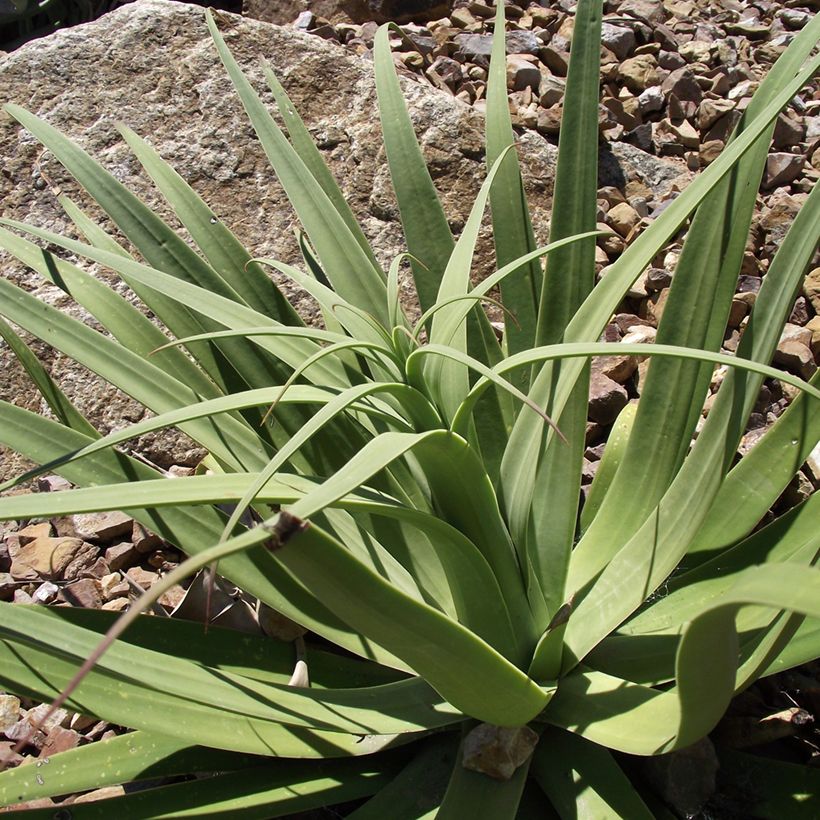
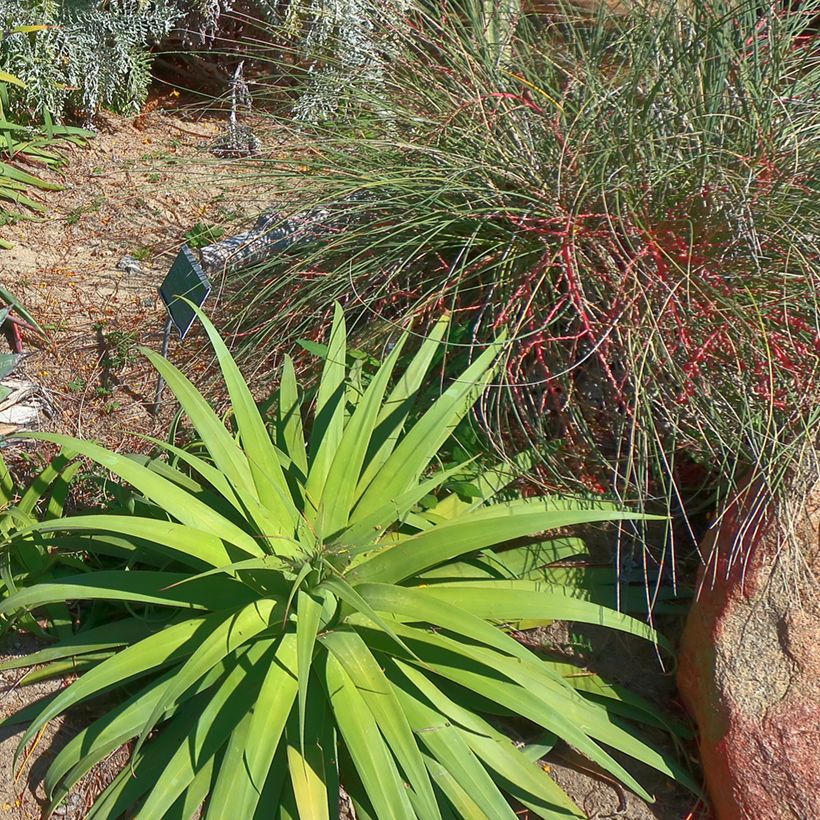
Flowering
Foliage
Plant habit
Botanical data
Agave
bracteosa
Asparagaceae
Spider Agave, Squid Agave
Central America
Planting and care
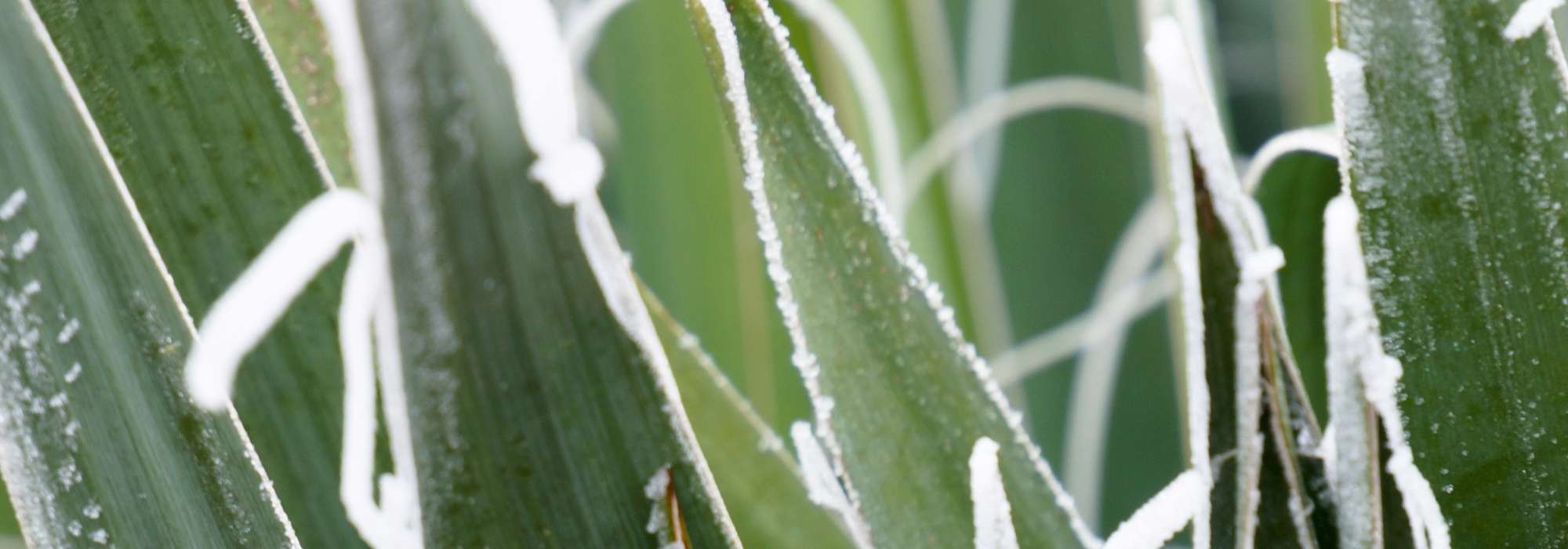
Plant Agave bracteosa in full sun, or even in partial shade in Mediterranean regions. This agave is very hardy, down to -10°C or even -12°C once well-rooted, and can be planted in many areas. In regions where frost is frequent, choose a south-facing slope to ensure good drainage and a warm exposure. Planting in a rockery setting is ideal and also very aesthetically pleasing. This species prefers poor soils, even stony or very calcareous ones. You can mix the existing soil with gravel to ensure good drainage, as it dislikes excess water more than cold. However, there is no risk on the sun side, which it loves, even though it surprisingly tolerates partial shade well (though this should be avoided outside the Mediterranean region).
In regions that are too cold, you can plant it in a large container, as this Agave produces long roots (up to 40 cm), both laterally and in depth. Therefore, it is not the best choice for long-term pot cultivation.
Planting period
Intended location
Care
Planting & care advice

This item has not been reviewed yet - be the first to leave a review about it.
Recently viewed products
Haven't found what you were looking for?
Hardiness is the lowest winter temperature a plant can endure without suffering serious damage or even dying. However, hardiness is affected by location (a sheltered area, such as a patio), protection (winter cover) and soil type (hardiness is improved by well-drained soil).

The flowering period indicated on our website applies to countries and regions located in USDA zone 8 (France, the United Kingdom, Ireland, the Netherlands, etc.)
It will vary according to where you live:- In zones 9 to 10 (Italy, Spain, Greece, etc.), flowering will occur about 2 to 4 weeks earlier.
- In zones 6 to 7 (Germany, Poland, Slovenia, and lower mountainous regions), flowering will be delayed by 2 to 3 weeks.
- In zone 5 (Central Europe, Scandinavia), blooming will be delayed by 3 to 5 weeks.
In temperate climates, pruning of spring-flowering shrubs (forsythia, spireas, etc.) should be done just after flowering.
Pruning of summer-flowering shrubs (Indian Lilac, Perovskia, etc.) can be done in winter or spring.
In cold regions as well as with frost-sensitive plants, avoid pruning too early when severe frosts may still occur.
The planting period indicated on our website applies to countries and regions located in USDA zone 8 (France, United Kingdom, Ireland, Netherlands).
It will vary according to where you live:
- In Mediterranean zones (Marseille, Madrid, Milan, etc.), autumn and winter are the best planting periods.
- In continental zones (Strasbourg, Munich, Vienna, etc.), delay planting by 2 to 3 weeks in spring and bring it forward by 2 to 4 weeks in autumn.
- In mountainous regions (the Alps, Pyrenees, Carpathians, etc.), it is best to plant in late spring (May-June) or late summer (August-September).
The harvesting period indicated on our website applies to countries and regions in USDA zone 8 (France, England, Ireland, the Netherlands).
In colder areas (Scandinavia, Poland, Austria...) fruit and vegetable harvests are likely to be delayed by 3-4 weeks.
In warmer areas (Italy, Spain, Greece, etc.), harvesting will probably take place earlier, depending on weather conditions.
The sowing periods indicated on our website apply to countries and regions within USDA Zone 8 (France, UK, Ireland, Netherlands).
In colder areas (Scandinavia, Poland, Austria...), delay any outdoor sowing by 3-4 weeks, or sow under glass.
In warmer climes (Italy, Spain, Greece, etc.), bring outdoor sowing forward by a few weeks.
Shipping country and language
Your country of residence may be:
Your country of residence is:
For a better user experience on our website, you can select:
Your shipping country:
-
 Austria
-
 Belgium
-
 Bosnia & Herzegovina
-
 Bulgaria
-
 Croatia
-
 Cyprus
-
 Czechia
-
 Denmark
-
 Estonia
-
 Finland
-
 France
-
 Germany
-
 Greece
-
 Hungary
-
 Iceland
-
 Ireland
-
 Italy
Italy
-
 Latvia
-
 Liechtenstein
-
 Lithuania
-
 Luxembourg
-
 Malta
Malta
-
 Netherlands
-
 Poland
-
 Portugal
-
 Romania
-
 Serbia
-
 Slovakia
-
 Slovenia
-
 Spain
Spain
-
 Sweden
-
 Switzerland
Language:
-
French
-
 English
-
Spanish
-
Italian
-
German
-
Portuguese
-
Dutch
-
Finnish
My Account
Hello
My wish lists
My cart
Log in / Register
Existing customer?
This form is protected by reCAPTCHA - the Google Privacy Policy and Terms of Service apply.
New customer?
Create an account to track your orders, access our customer service and, if you wish, make the most of our upcoming offers.