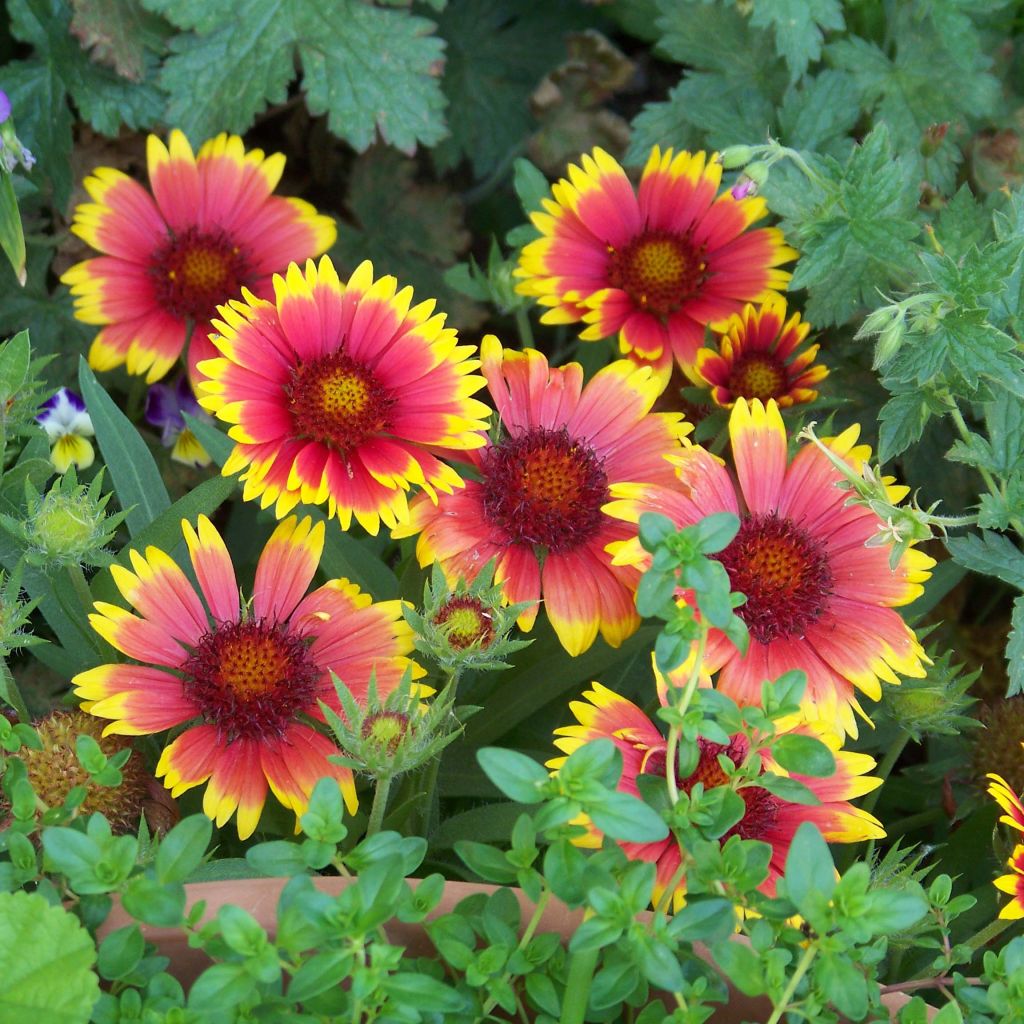
Gaillardia Lutin
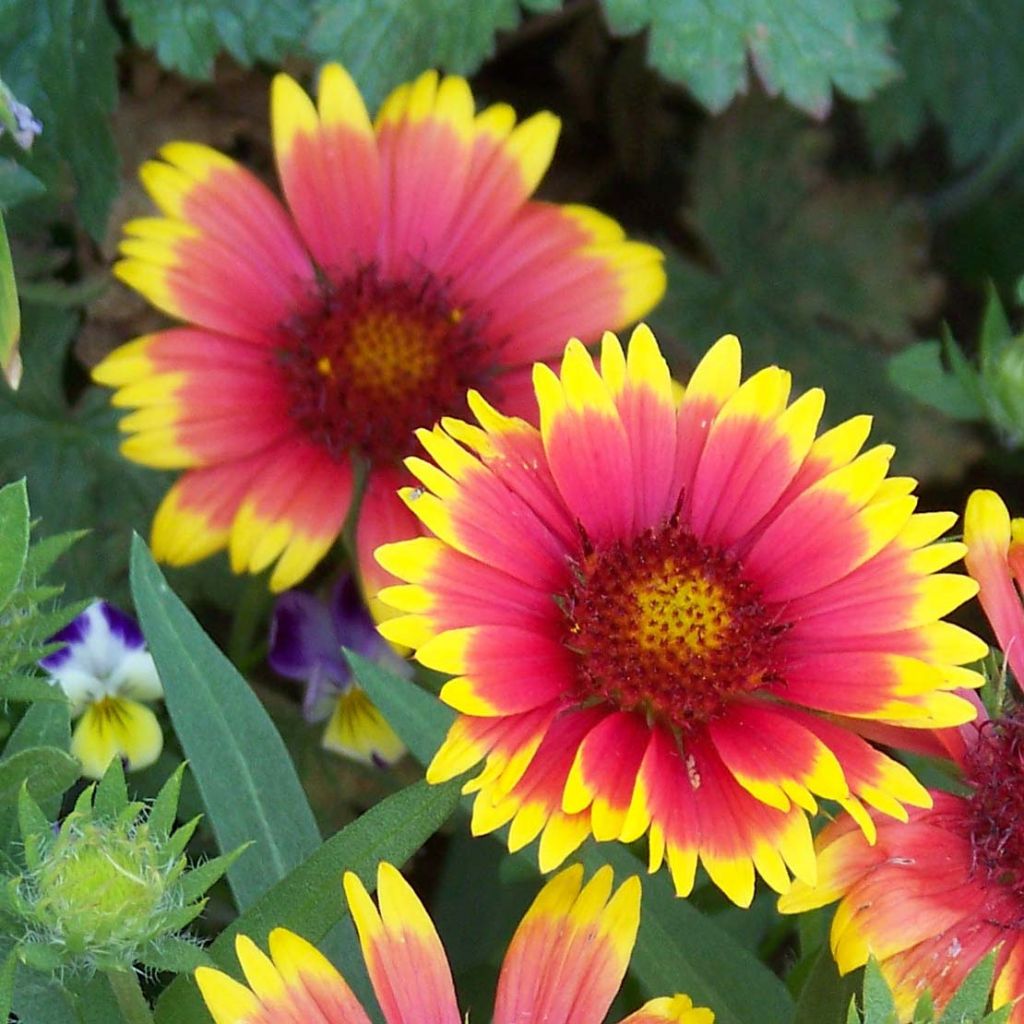
Gaillardia Lutin
Gaillardia Lutin
Gaillardia aristata x pulchella Lutin
Blanket Flower, Common Gaillardia
Pretty flowers.
Au top., 22/06/2025
Back-to-school special offer!
Get €10 off for every €50 you spend! And get up to €40 off on a single order.
How does it work?
1. Shop your favourites
Add your favourite plants to your basket. For every €50 you spend (excluding delivery charges, store credit and the plastic-free option), you’ll receive a €10 voucher.
€50 spent = €10 voucher
€100 spent = €20 voucher
€150 spent = €30 voucher
€200 spent = €40 voucher
2. Place your order
Once your basket reaches one of the spending thresholds, place your order. You can even choose your delivery date!
3. Receive your voucher
As soon as your order has been shipped, you’ll receive an email containing your personal voucher code and its value.
4. Use it on your next order
Your voucher is valid for 90 days from the date you receive it. It can be used once only, on a new order worth at least the value of the voucher, excluding delivery charges.
Please note: Vouchers can be combined with other offers, but cannot be split or refunded.
Why not try an alternative variety in stock?
View all →
Available in 0 sizes
Available in 2 sizes

Available in 2 sizes
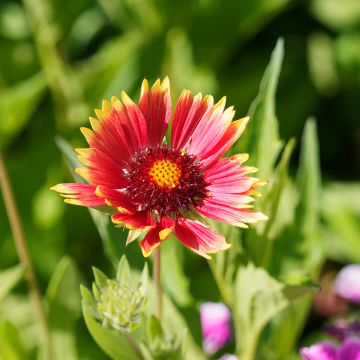
Available in 3 sizes
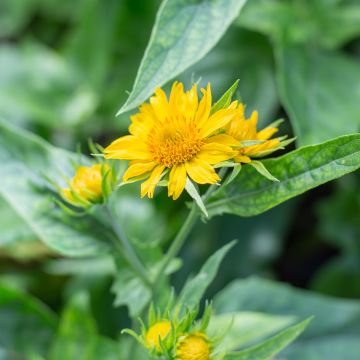
Available in 1 sizes

Available in 1 sizes
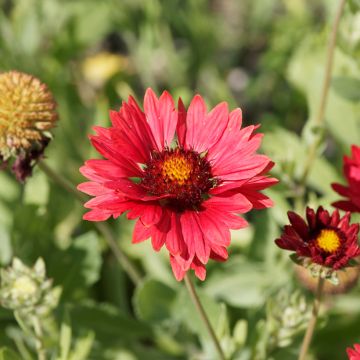
Available in 1 sizes

Available in 1 sizes

Available in 1 sizes

Available in 1 sizes
This plant carries a 12 months recovery warranty
More information
We guarantee the quality of our plants for a full growing cycle, and will replace at our expense any plant that fails to recover under normal climatic and planting conditions.
Would this plant suit my garden?
Set up your Plantfit profile →
Description
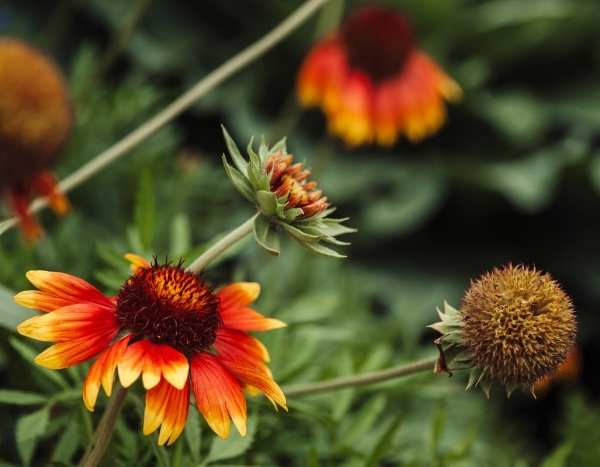
Gaillardia aristata x pulchella 'Lutin' ('elf') is, as its name suggests, a particularly compact gaillardia full of contagious cheerfulness. It offers two-tone and flamboyant flowering from June to September, in the form of red daisies widely surrounded by yellow, and centred on a beautiful rounded yellow and brown-red heart. The plant forms beautiful small clumps of stems and fuzzy green-grey foliage. This short-lived perennial has excellent resilience, tolerating cold, heat, drought, and poor, rocky soils, but hates excessive moisture. It is one of those almost foolproof plants which find their place in all gardens, regardless of their style!
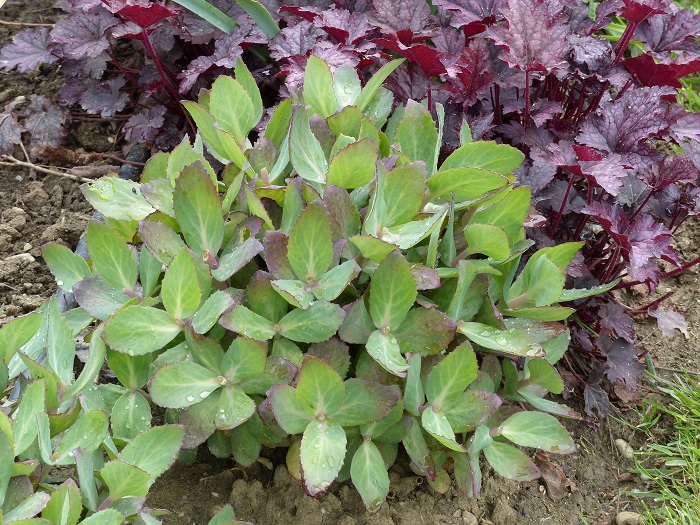
Gaillardia aristata x pulchella is a horticultural hybrid resulting from the cross-breeding between Gaillardia aristata, a perennial native to the great central plains of North America, and Gaillardia pulchella, an almost annual plant native to northern Mexico and the south and centre of the United States. Belonging, like its two parents and like the sunflower, to the large family of Asteraceae, this hybrid has inherited from its first parent a beautiful hardiness and increased longevity, and from the second its extraordinary floriferousness, rapid growth, and extremely undemanding nature. The lovely 'Lutin' forms a clump of 30 to 40 cm (12 to 16in) in all directions, covered from June to September with large flower heads measuring 4 to 6 cm (2in), where pollinating insects gather. Like a colourful target, the flowering seems to be made up of concentric discs of different tones, from the yellow periphery to the brown-red centre at ripeness. The centre of the head is a rounded disc whose colour changes from the periphery to the centre, at the same time as the seeds form. The foliage, mainly basal, is composed of narrow, slightly lobed or deeply cut, fuzzy green-grey leaves.
A little outdated today, Gaillardias, along with Coreopsis grandiflora and other Gaura, are nevertheless among the champions in terms of floral abundance and an undemanding nature. Even the wild form G. aristata proves to be very floriferous. Their only flaw is their poor tolerance to stagnant moisture, even in well-drained soil. In gardens in warmer, more southern regions, especially in poor soils, this plant is truly a bargain : it will accompany lavenders, perennial blood-red or ash geraniums, artemisias and grasses, which are equally frugal and floriferous plants. Its flowers hold up very well in bouquets.

Gaillardia Lutin in pictures
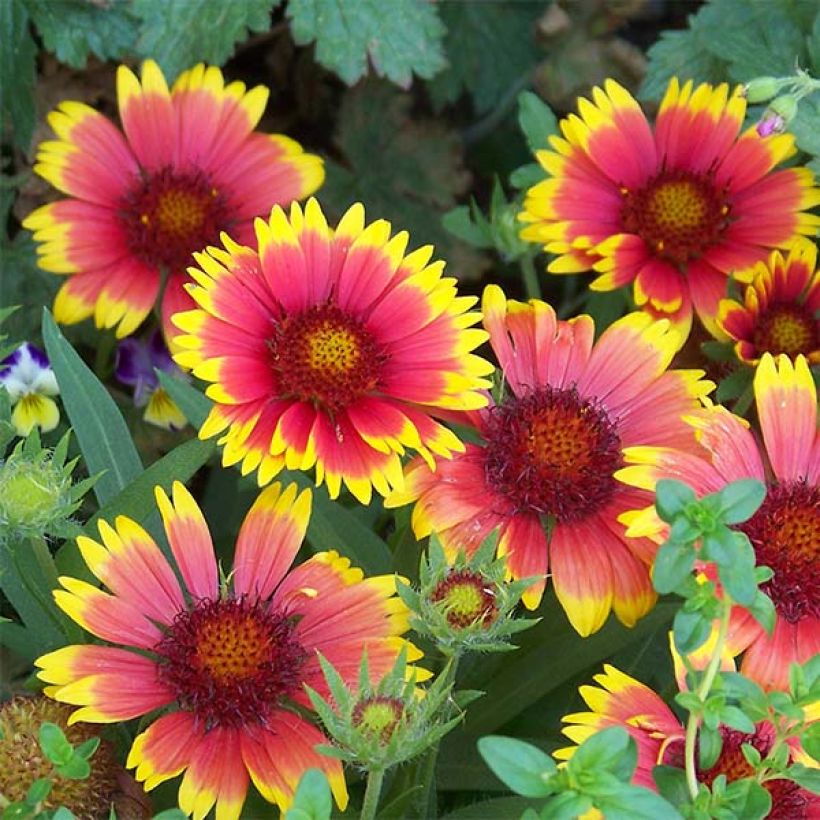

Flowering
Foliage
Plant habit
Botanical data
Gaillardia
aristata x pulchella
Lutin
Asteraceae
Blanket Flower, Common Gaillardia
Cultivar or hybrid
Planting and care
Resilient, the 'Lutin' blanketflower withstands intense heat, cold, drought, strong winds, and poor soils. In summer, even a little rain or minimal watering during extended dry periods will revive the flowering. Plant blanketflowers in well-drained soil, in full sun, and stake the taller varieties if necessary. In cooler climates, the plants gain in strength what you sacrifice in flowers: cut back the stems in late September, to 10 cm (0 to 4in) above the ground, to help them survive the winter.
Planting period
Intended location
Care
Planting & care advice
-

-
-

-
-
-
-
-

-
, onOrder confirmed
Reply from on Promesse de fleurs
Recently viewed products
Haven't found what you were looking for?
Hardiness is the lowest winter temperature a plant can endure without suffering serious damage or even dying. However, hardiness is affected by location (a sheltered area, such as a patio), protection (winter cover) and soil type (hardiness is improved by well-drained soil).

The flowering period indicated on our website applies to countries and regions located in USDA zone 8 (France, the United Kingdom, Ireland, the Netherlands, etc.)
It will vary according to where you live:- In zones 9 to 10 (Italy, Spain, Greece, etc.), flowering will occur about 2 to 4 weeks earlier.
- In zones 6 to 7 (Germany, Poland, Slovenia, and lower mountainous regions), flowering will be delayed by 2 to 3 weeks.
- In zone 5 (Central Europe, Scandinavia), blooming will be delayed by 3 to 5 weeks.
In temperate climates, pruning of spring-flowering shrubs (forsythia, spireas, etc.) should be done just after flowering.
Pruning of summer-flowering shrubs (Indian Lilac, Perovskia, etc.) can be done in winter or spring.
In cold regions as well as with frost-sensitive plants, avoid pruning too early when severe frosts may still occur.
The planting period indicated on our website applies to countries and regions located in USDA zone 8 (France, United Kingdom, Ireland, Netherlands).
It will vary according to where you live:
- In Mediterranean zones (Marseille, Madrid, Milan, etc.), autumn and winter are the best planting periods.
- In continental zones (Strasbourg, Munich, Vienna, etc.), delay planting by 2 to 3 weeks in spring and bring it forward by 2 to 4 weeks in autumn.
- In mountainous regions (the Alps, Pyrenees, Carpathians, etc.), it is best to plant in late spring (May-June) or late summer (August-September).
The harvesting period indicated on our website applies to countries and regions in USDA zone 8 (France, England, Ireland, the Netherlands).
In colder areas (Scandinavia, Poland, Austria...) fruit and vegetable harvests are likely to be delayed by 3-4 weeks.
In warmer areas (Italy, Spain, Greece, etc.), harvesting will probably take place earlier, depending on weather conditions.
The sowing periods indicated on our website apply to countries and regions within USDA Zone 8 (France, UK, Ireland, Netherlands).
In colder areas (Scandinavia, Poland, Austria...), delay any outdoor sowing by 3-4 weeks, or sow under glass.
In warmer climes (Italy, Spain, Greece, etc.), bring outdoor sowing forward by a few weeks.
Shipping country and language
Your country of residence may be:
Your country of residence is:
For a better user experience on our website, you can select:
Your shipping country:
-
 Austria
-
 Belgium
-
 Bosnia & Herzegovina
-
 Bulgaria
-
 Croatia
-
 Cyprus
-
 Czechia
-
 Denmark
-
 Estonia
-
 Finland
-
 France
-
 Germany
-
 Greece
-
 Hungary
-
 Iceland
-
 Ireland
-
 Italy
Italy
-
 Latvia
-
 Liechtenstein
-
 Lithuania
-
 Luxembourg
-
 Malta
Malta
-
 Netherlands
-
 Poland
-
 Portugal
-
 Romania
-
 Serbia
-
 Slovakia
-
 Slovenia
-
 Spain
Spain
-
 Sweden
-
 Switzerland
Language:
-
French
-
 English
-
Spanish
-
Italian
-
German
-
Portuguese
-
Dutch
-
Finnish
My Account
Hello
My wish lists
My cart
Log in / Register
Existing customer?
This form is protected by reCAPTCHA - the Google Privacy Policy and Terms of Service apply.
New customer?
Create an account to track your orders, access our customer service and, if you wish, make the most of our upcoming offers.