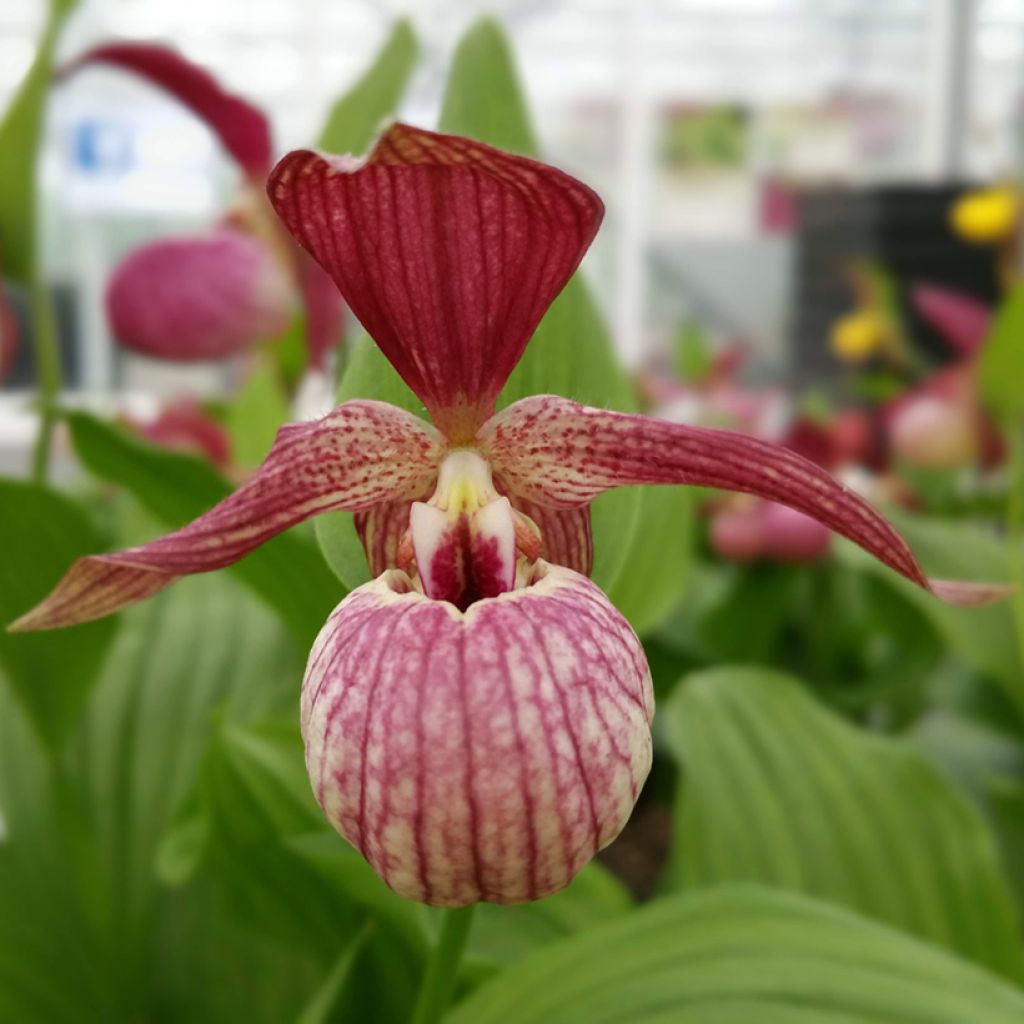
Cypripedium x ventricosum Red - Lady Slipper Orchid
Cypripedium x ventricosum Red - Lady Slipper Orchid
Cypripedium macranthos (x) calceolus ventricosum Red
Large-flowered Cypripedium, Large Yellow Lady's Slipper, Greater Yellow Lady's Slipper
Back-to-school special offer!
Get €10 off for every €50 you spend! And get up to €40 off on a single order.
How does it work?
1. Shop your favourites
Add your favourite plants to your basket. For every €50 you spend (excluding delivery charges, store credit and the plastic-free option), you’ll receive a €10 voucher.
€50 spent = €10 voucher
€100 spent = €20 voucher
€150 spent = €30 voucher
€200 spent = €40 voucher
2. Place your order
Once your basket reaches one of the spending thresholds, place your order. You can even choose your delivery date!
3. Receive your voucher
As soon as your order has been shipped, you’ll receive an email containing your personal voucher code and its value.
4. Use it on your next order
Your voucher is valid for 90 days from the date you receive it. It can be used once only, on a new order worth at least the value of the voucher, excluding delivery charges.
Please note: Vouchers can be combined with other offers, but cannot be split or refunded.
Why not try an alternative variety in stock?
View all →
Available in 1 sizes
Available in 1 sizes
Available in 1 sizes
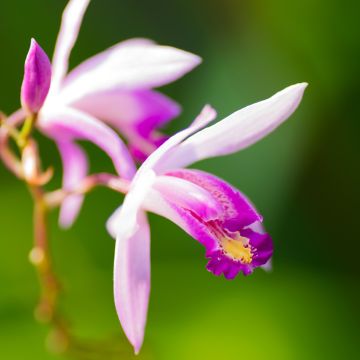
Available in 2 sizes
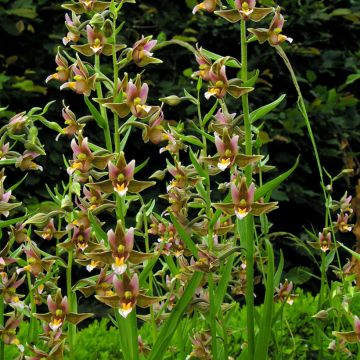
Available in 1 sizes
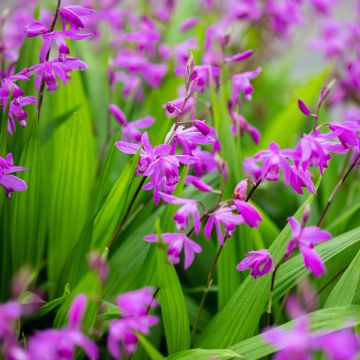
Available in 1 sizes
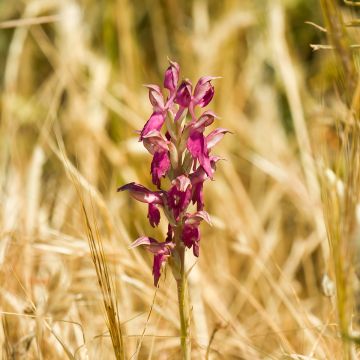
Available in 1 sizes
Available in 2 sizes
Available in 1 sizes
Available in 2 sizes
This plant carries a 12 months recovery warranty
More information
We guarantee the quality of our plants for a full growing cycle, and will replace at our expense any plant that fails to recover under normal climatic and planting conditions.
Would this plant suit my garden?
Set up your Plantfit profile →
Description
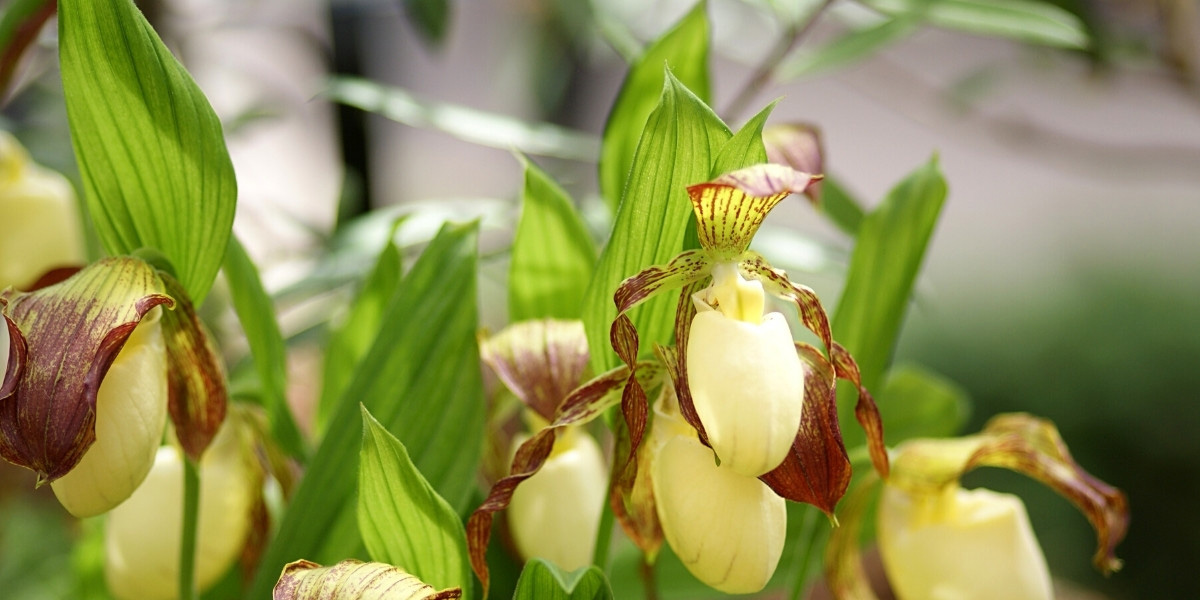
The Cypripedium x ventricosum 'Red' is a variety of Lady's Slipper that is vigorous and easy to grow, provided its requirements are met. It produces flowers in May-June, consisting of a prominent yellow lip, maculated and streaked with purple-pink, topped with twisted yellow petals streaked with the same purple-pink. The overall impression is more purple-pink than yellow. Give it a semi-shaded position in light, well-draining, humus-bearing soil but not too rich, moist, or slightly damp.
Cypripedium x ventricosum is a natural hybrid between Cypripedium macranthos and Cypripedium calceolus. The former is found in the undergrowth and fields of Siberia, Korea, Japan, China, and Taiwan. The latter is a spectacular species in Europe, the most well-known species on our continent. It has become rare in its natural habitat but is still found in a few rare Alps locations or mountain ranges.
The Cypripedium x ventricosum 'Red' has a perennial sucker-forming rootstock. Its thick underground rhizome elongates and divides over the years, allowing the plant to spread in colonies. Its roots penetrate deeply into the soil. They are mycorrhizal, meaning they live in symbiosis with specific fungi. Absent in winter, the deciduous vegetation emerges from the ground between April and May. This Cypripedium forms small clumps of 2 to 6 leafy stems, reaching about 45 cm in height. Each hairy stem bears 3 to 5 sheathing leaves at the base, broadly ovate, marked by parallel solid veins, light green in colour, and slightly hairy on the underside. Flowering occurs in May-June, earlier or later, depending on the climate and the year. Each individual produces only one or two flowers in the axils of bracts. Each flower, measuring up to 10 cm wide, consists of 3 sepals and three petals. These tepals are elongated, tapered, lanceolate in shape, slightly twisted. Their colour is a yellow-washed purple-pink. The swollen lip, shaped like a 'slipper', is yellow streaked and washed with purple-pink. The fruit capsule can persist on the plant for a year.
The Cypripedium x ventricosum 'Red' is a perfectly hardy variety that multiplies rapidly in pots and the garden as long as the conditions are suitable. It thrives in forest edges, preferring light soil that retains some moisture without being waterlogged. Plant it in a location that receives not too intense shade, in a cool rockery, an ideal habitat for it to thrive and enhance your garden with its unique presence. Pair it with a simple fern-like Polypodium vulgare and the flowering of Trilliums and Lamium orvala. It also thrives in containers and unheated greenhouses. It is a plant that dislikes heat, drought, and strong winds.
When you receive your orchids, handle them with care: these plants produce few roots and are delicate!
Flowering
Foliage
Plant habit
Botanical data
Cypripedium
macranthos (x) calceolus
ventricosum Red
Orchidaceae
Large-flowered Cypripedium, Large Yellow Lady's Slipper, Greater Yellow Lady's Slipper
Cultivar or hybrid
Planting and care
Planting: in spring
Cypripedium x ventricosum 'Red' prefers well-drained soils low in organic matter. Air the soil by adding sand, pumice, or lava stone up to 50%. Also, add some finely shredded pine bark, leaf compost, and coconut fibre-based compost.
The rootstocks should not dry out in summer and should not be waterlogged in winter. If you need to water during the growth and flowering season, avoid using hard water.
Exposure:
In the garden, Cypripediums prefer slightly damp, not too hot places, slightly shaded but not entirely in the shade, as they like some brightness. Avoid exposure to direct sunlight during the hottest hours of the day.
In winter, the plant returns to its rootstocks and requires no special protection.
New shoots emerge from the ground in April, usually. The growth of the vegetation is very rapid. At the end of summer, the foliage turns yellow and then withers before completely disappearing.
Planting period
Intended location
Care
Planting & care advice
-
-
-
-
-
-
-
-
This item has not been reviewed yet - be the first to leave a review about it.
Recently viewed products
Haven't found what you were looking for?
Hardiness is the lowest winter temperature a plant can endure without suffering serious damage or even dying. However, hardiness is affected by location (a sheltered area, such as a patio), protection (winter cover) and soil type (hardiness is improved by well-drained soil).

The flowering period indicated on our website applies to countries and regions located in USDA zone 8 (France, the United Kingdom, Ireland, the Netherlands, etc.)
It will vary according to where you live:- In zones 9 to 10 (Italy, Spain, Greece, etc.), flowering will occur about 2 to 4 weeks earlier.
- In zones 6 to 7 (Germany, Poland, Slovenia, and lower mountainous regions), flowering will be delayed by 2 to 3 weeks.
- In zone 5 (Central Europe, Scandinavia), blooming will be delayed by 3 to 5 weeks.
In temperate climates, pruning of spring-flowering shrubs (forsythia, spireas, etc.) should be done just after flowering.
Pruning of summer-flowering shrubs (Indian Lilac, Perovskia, etc.) can be done in winter or spring.
In cold regions as well as with frost-sensitive plants, avoid pruning too early when severe frosts may still occur.
The planting period indicated on our website applies to countries and regions located in USDA zone 8 (France, United Kingdom, Ireland, Netherlands).
It will vary according to where you live:
- In Mediterranean zones (Marseille, Madrid, Milan, etc.), autumn and winter are the best planting periods.
- In continental zones (Strasbourg, Munich, Vienna, etc.), delay planting by 2 to 3 weeks in spring and bring it forward by 2 to 4 weeks in autumn.
- In mountainous regions (the Alps, Pyrenees, Carpathians, etc.), it is best to plant in late spring (May-June) or late summer (August-September).
The harvesting period indicated on our website applies to countries and regions in USDA zone 8 (France, England, Ireland, the Netherlands).
In colder areas (Scandinavia, Poland, Austria...) fruit and vegetable harvests are likely to be delayed by 3-4 weeks.
In warmer areas (Italy, Spain, Greece, etc.), harvesting will probably take place earlier, depending on weather conditions.
The sowing periods indicated on our website apply to countries and regions within USDA Zone 8 (France, UK, Ireland, Netherlands).
In colder areas (Scandinavia, Poland, Austria...), delay any outdoor sowing by 3-4 weeks, or sow under glass.
In warmer climes (Italy, Spain, Greece, etc.), bring outdoor sowing forward by a few weeks.
Shipping country and language
Your country of residence may be:
Your country of residence is:
For a better user experience on our website, you can select:
Your shipping country:
-
 Austria
-
 Belgium
-
 Bosnia & Herzegovina
-
 Bulgaria
-
 Croatia
-
 Cyprus
-
 Czechia
-
 Denmark
-
 Estonia
-
 Finland
-
 France
-
 Germany
-
 Greece
-
 Hungary
-
 Iceland
-
 Ireland
-
 Italy
Italy
-
 Latvia
-
 Liechtenstein
-
 Lithuania
-
 Luxembourg
-
 Malta
Malta
-
 Netherlands
-
 Poland
-
 Portugal
-
 Romania
-
 Serbia
-
 Slovakia
-
 Slovenia
-
 Spain
Spain
-
 Sweden
-
 Switzerland
Language:
-
French
-
 English
-
Spanish
-
Italian
-
German
-
Portuguese
-
Dutch
-
Finnish
My Account
Hello
My wish lists
My cart
Log in / Register
Existing customer?
This form is protected by reCAPTCHA - the Google Privacy Policy and Terms of Service apply.
New customer?
Create an account to track your orders, access our customer service and, if you wish, make the most of our upcoming offers.