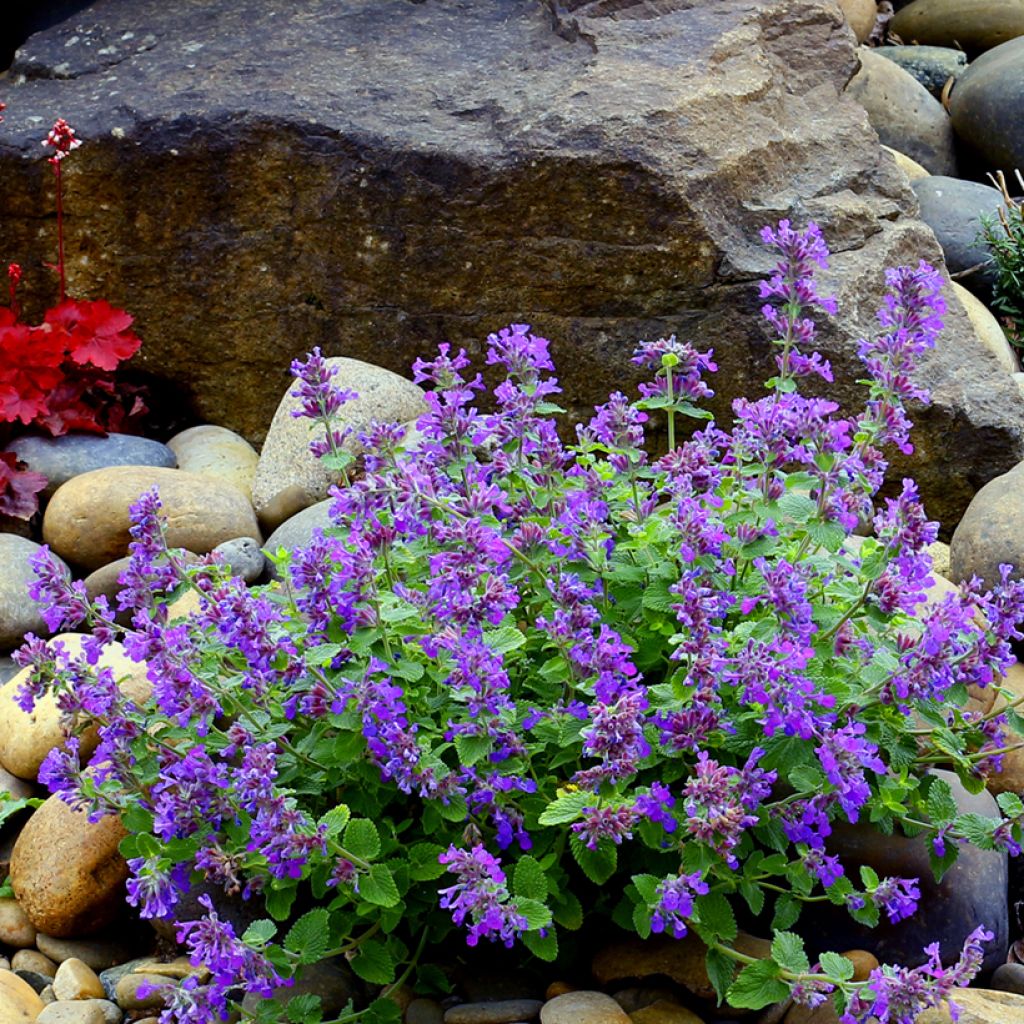
Nepeta faassenii Nova® Blue - Catnip
Nepeta faassenii Nova® Blue - Catnip
Nepeta x faassenii Nova® Blue (PP16,068)
Faassen's catnip, Catmint
Back-to-school special offer!
Get €10 off for every €50 you spend! And get up to €40 off on a single order.
How does it work?
1. Shop your favourites
Add your favourite plants to your basket. For every €50 you spend (excluding delivery charges, store credit and the plastic-free option), you’ll receive a €10 voucher.
€50 spent = €10 voucher
€100 spent = €20 voucher
€150 spent = €30 voucher
€200 spent = €40 voucher
2. Place your order
Once your basket reaches one of the spending thresholds, place your order. You can even choose your delivery date!
3. Receive your voucher
As soon as your order has been shipped, you’ll receive an email containing your personal voucher code and its value.
4. Use it on your next order
Your voucher is valid for 90 days from the date you receive it. It can be used once only, on a new order worth at least the value of the voucher, excluding delivery charges.
Please note: Vouchers can be combined with other offers, but cannot be split or refunded.
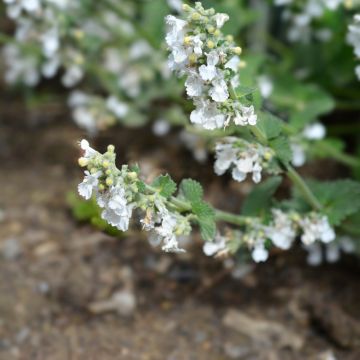
Why not try an alternative variety in stock?
View all →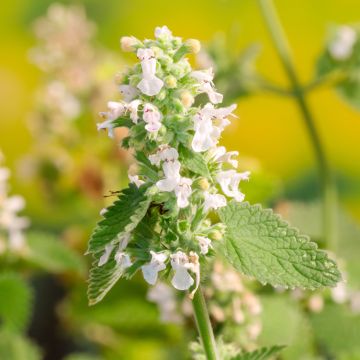
Available in 2 sizes
Available in 3 sizes

Available in 2 sizes
Available in 3 sizes
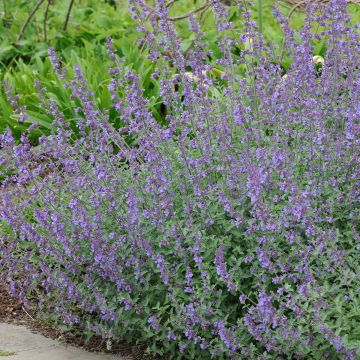
Available in 2 sizes
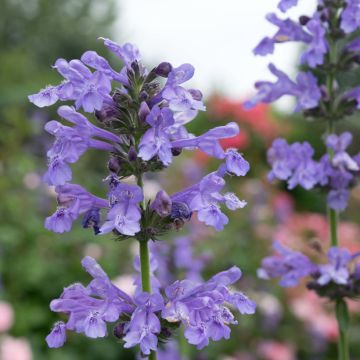
Available in 2 sizes

Available in 1 sizes

Available in 1 sizes

Available in 2 sizes
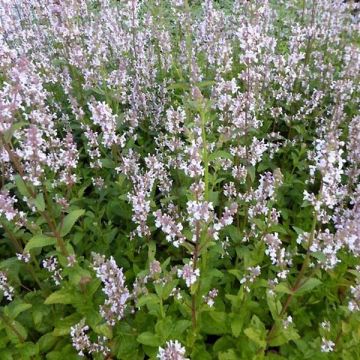
Available in 1 sizes
This plant carries a 12 months recovery warranty
More information
We guarantee the quality of our plants for a full growing cycle, and will replace at our expense any plant that fails to recover under normal climatic and planting conditions.
Would this plant suit my garden?
Set up your Plantfit profile →
Description
Nepeta faassenii Nova® 'Blue' is a compact perennial that stands out for its neat habit, prolonged flowering and ease of cultivation. From spring, it produces lavender-blue flowers of good size for a catmint. Its flowering brings a touch of freshness and lightness to border edges, rock gardens and planters, while attracting many pollinators. It is also an excellent variety for hanging baskets. Drought-tolerant amd very hardy, it appreciates well-drained soils, in full sun, and requires little maintenance.
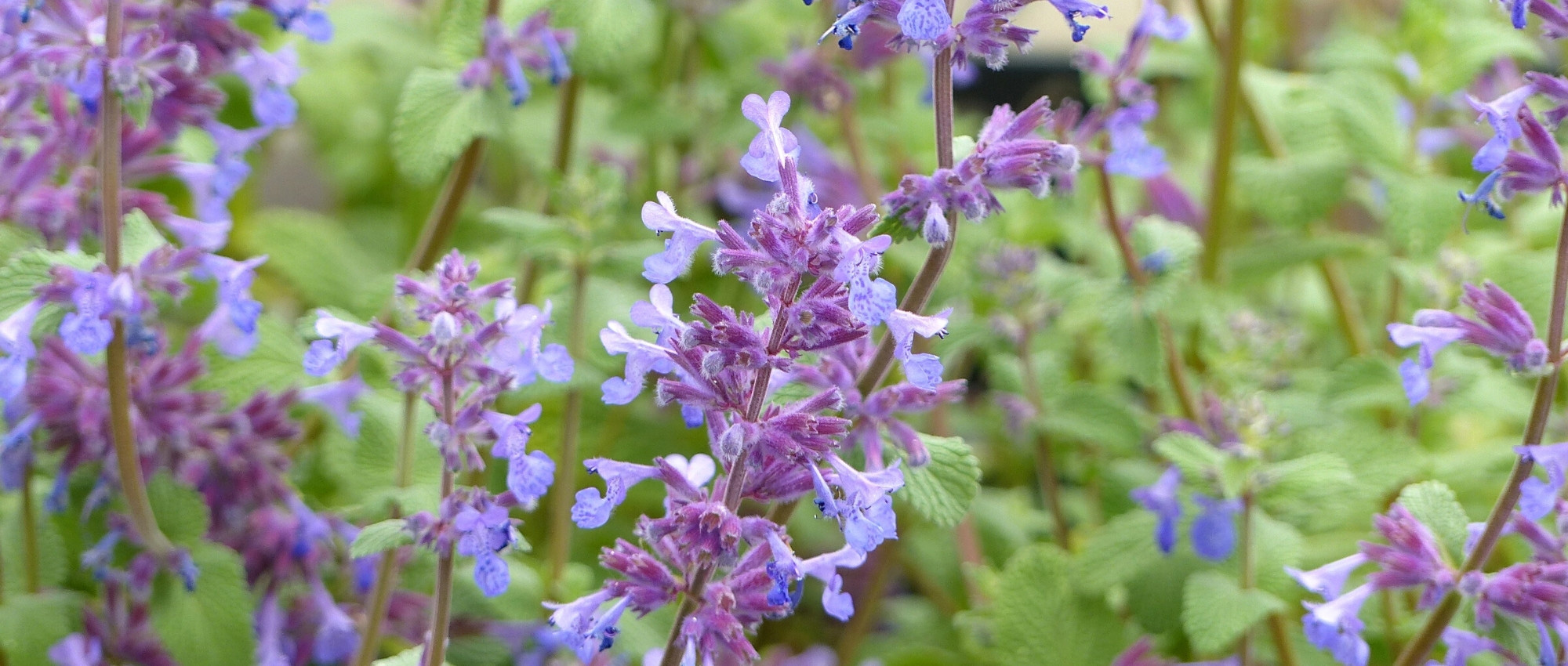
Belonging to the botanical family Lamiaceae, Nepeta faassenii Nova® ‘Blue’, commonly called catmint or catnip, is a herbaceous perennial with a semi-erect and slightly spreading habit. It is a cultivar recently introduced in Israel through Danziger's URC programme. It is a sterile hybrid, resulting from the cross between Nepeta racemosa and N. nepetella. Nova® Blue is distinguished by its very early flowering, more abundant, larger flowers and a more structured habit. This plant shows finely toothed grey-green foliage, dense and aromatic when crushed. It quickly forms a compact clump of 20cm in height and 50-60cm in spread. The foliage does not become bare in the centre of the clump and effectively covers the ground. The tubular, two-lipped flowers, borne in spikes above the foliage, are bright lavender blue. They appear between May and June and can repeat until autumn (September/October). The foliage is deciduous.
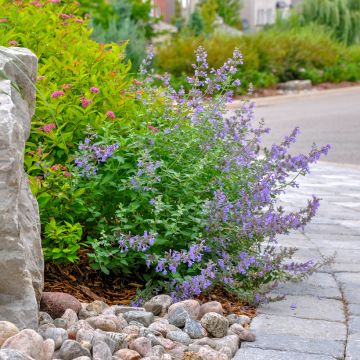
Nepeta Nova® ‘Blue’ is a little gem for enlivening natural scenes, as well as terraces and balconies. In border edges, it highlights stepping stones or gravel paths. In pots or hanging baskets, its soft habit and generous flowering are every bit as good as those of calibrachoas or mini petunias. It loves sun and well-drained soils, making it an ideal companion for ornamental grasses for dry soil, as well as dwarf gauras, baby sages or lavandins. It is a beautiful foil for landscape roses. It can also be integrated into a dry garden among Corsican spurges or artemisias.
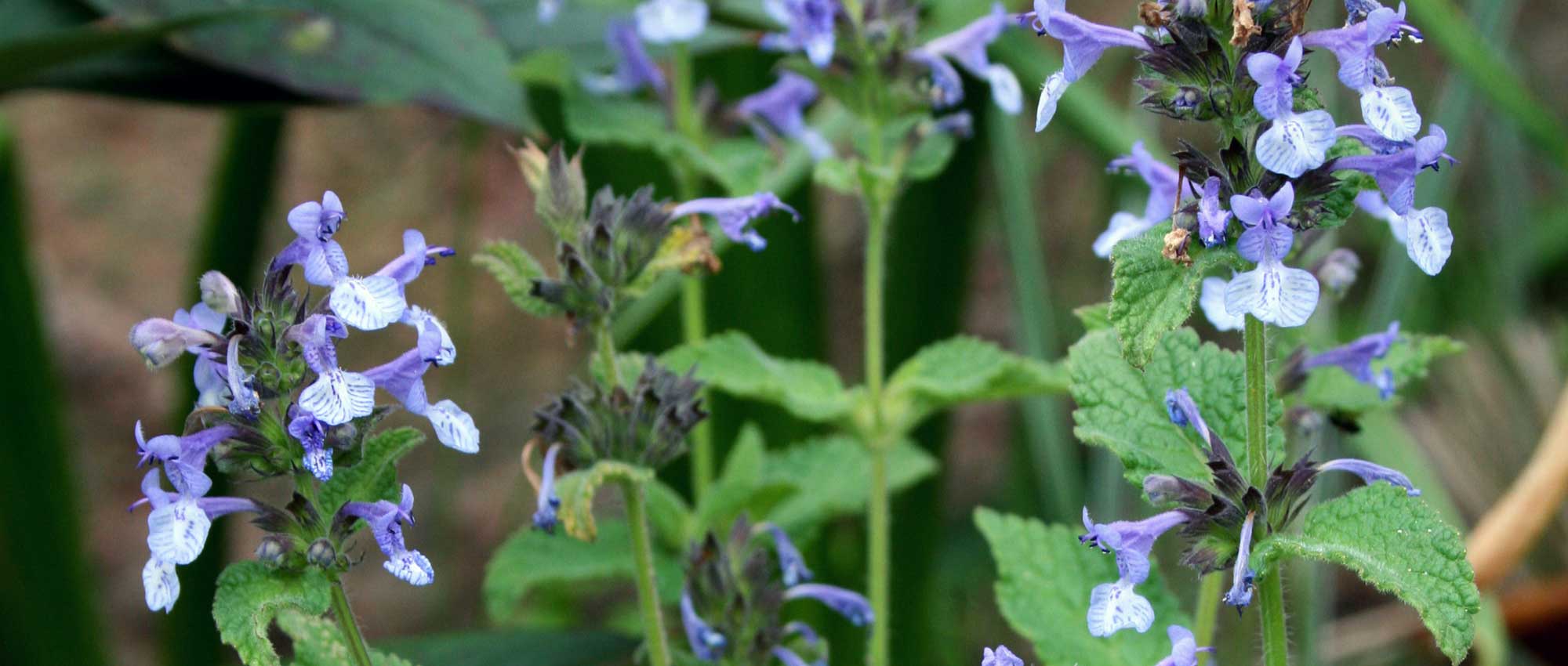
Nepeta faassenii Nova® Blue - Catnip in pictures
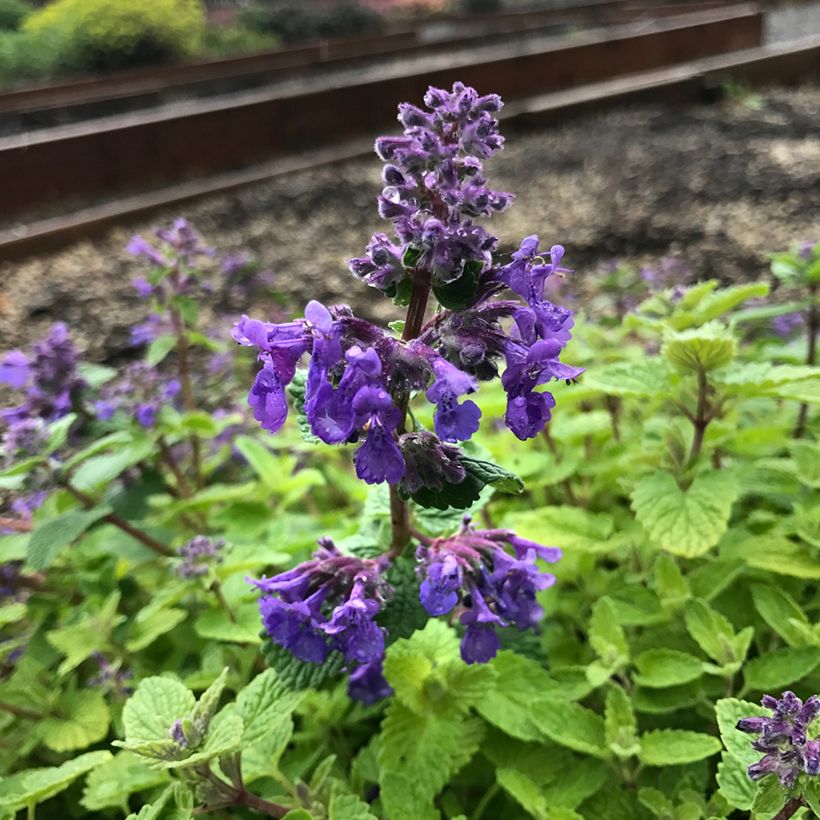
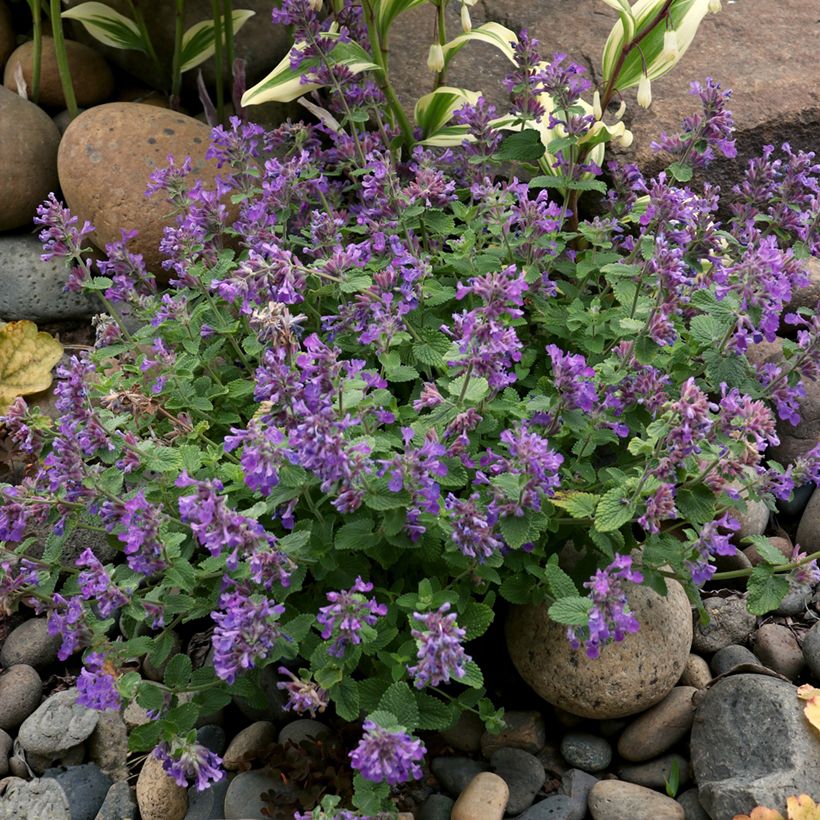
Flowering
Foliage
Plant habit
Botanical data
Nepeta
x faassenii
Nova® Blue (PP16,068)
Lamiaceae
Faassen's catnip, Catmint
Nepeta x faassenii 'Nova Blue'
Cultivar or hybrid
Planting and care
Plant Nepeta Nova® ‘Blue’ in spring or early autumn, in well-drained soil that is light to stony, even poor. In open ground, position it in full sun, spacing the plants about 40 to 50 cm apart to allow them room to thrive. Regular watering at planting encourages rooting, but the plant quickly becomes drought-tolerant.
In a pot, use a container at least 25 cm in diameter, with a draining substrate such as potting soil mixed with sand or pumice. Remember to raise the pot to ensure good water drainage. Flowering will be more abundant if you remove spent spikes throughout the season. Nova® ‘Blue’ is very hardy, easily tolerating temperatures down to –25 °C (zone 5). This plant requires neither winter mulch nor special protection, but you should avoid excess moisture in winter.
In heavy soils, dig a hole 3 times larger than the volume of the pot and mix into your topsoil 1/3 gravel and 1/3 sand to lighten the soil while avoiding water stagnation in winter.
Planting period
Intended location
Care
Planting & care advice
-

-
-
-
-
-
-

-

This item has not been reviewed yet - be the first to leave a review about it.
Recently viewed products
Haven't found what you were looking for?
Hardiness is the lowest winter temperature a plant can endure without suffering serious damage or even dying. However, hardiness is affected by location (a sheltered area, such as a patio), protection (winter cover) and soil type (hardiness is improved by well-drained soil).

The flowering period indicated on our website applies to countries and regions located in USDA zone 8 (France, the United Kingdom, Ireland, the Netherlands, etc.)
It will vary according to where you live:- In zones 9 to 10 (Italy, Spain, Greece, etc.), flowering will occur about 2 to 4 weeks earlier.
- In zones 6 to 7 (Germany, Poland, Slovenia, and lower mountainous regions), flowering will be delayed by 2 to 3 weeks.
- In zone 5 (Central Europe, Scandinavia), blooming will be delayed by 3 to 5 weeks.
In temperate climates, pruning of spring-flowering shrubs (forsythia, spireas, etc.) should be done just after flowering.
Pruning of summer-flowering shrubs (Indian Lilac, Perovskia, etc.) can be done in winter or spring.
In cold regions as well as with frost-sensitive plants, avoid pruning too early when severe frosts may still occur.
The planting period indicated on our website applies to countries and regions located in USDA zone 8 (France, United Kingdom, Ireland, Netherlands).
It will vary according to where you live:
- In Mediterranean zones (Marseille, Madrid, Milan, etc.), autumn and winter are the best planting periods.
- In continental zones (Strasbourg, Munich, Vienna, etc.), delay planting by 2 to 3 weeks in spring and bring it forward by 2 to 4 weeks in autumn.
- In mountainous regions (the Alps, Pyrenees, Carpathians, etc.), it is best to plant in late spring (May-June) or late summer (August-September).
The harvesting period indicated on our website applies to countries and regions in USDA zone 8 (France, England, Ireland, the Netherlands).
In colder areas (Scandinavia, Poland, Austria...) fruit and vegetable harvests are likely to be delayed by 3-4 weeks.
In warmer areas (Italy, Spain, Greece, etc.), harvesting will probably take place earlier, depending on weather conditions.
The sowing periods indicated on our website apply to countries and regions within USDA Zone 8 (France, UK, Ireland, Netherlands).
In colder areas (Scandinavia, Poland, Austria...), delay any outdoor sowing by 3-4 weeks, or sow under glass.
In warmer climes (Italy, Spain, Greece, etc.), bring outdoor sowing forward by a few weeks.
Shipping country and language
Your country of residence may be:
Your country of residence is:
For a better user experience on our website, you can select:
Your shipping country:
-
 Austria
-
 Belgium
-
 Bosnia & Herzegovina
-
 Bulgaria
-
 Croatia
-
 Cyprus
-
 Czechia
-
 Denmark
-
 Estonia
-
 Finland
-
 France
-
 Germany
-
 Greece
-
 Hungary
-
 Iceland
-
 Ireland
-
 Italy
Italy
-
 Latvia
-
 Liechtenstein
-
 Lithuania
-
 Luxembourg
-
 Malta
Malta
-
 Netherlands
-
 Poland
-
 Portugal
-
 Romania
-
 Serbia
-
 Slovakia
-
 Slovenia
-
 Spain
Spain
-
 Sweden
-
 Switzerland
Language:
-
French
-
 English
-
Spanish
-
Italian
-
German
-
Portuguese
-
Dutch
-
Finnish
My Account
Hello
My wish lists
My cart
Log in / Register
Existing customer?
This form is protected by reCAPTCHA - the Google Privacy Policy and Terms of Service apply.
New customer?
Create an account to track your orders, access our customer service and, if you wish, make the most of our upcoming offers.