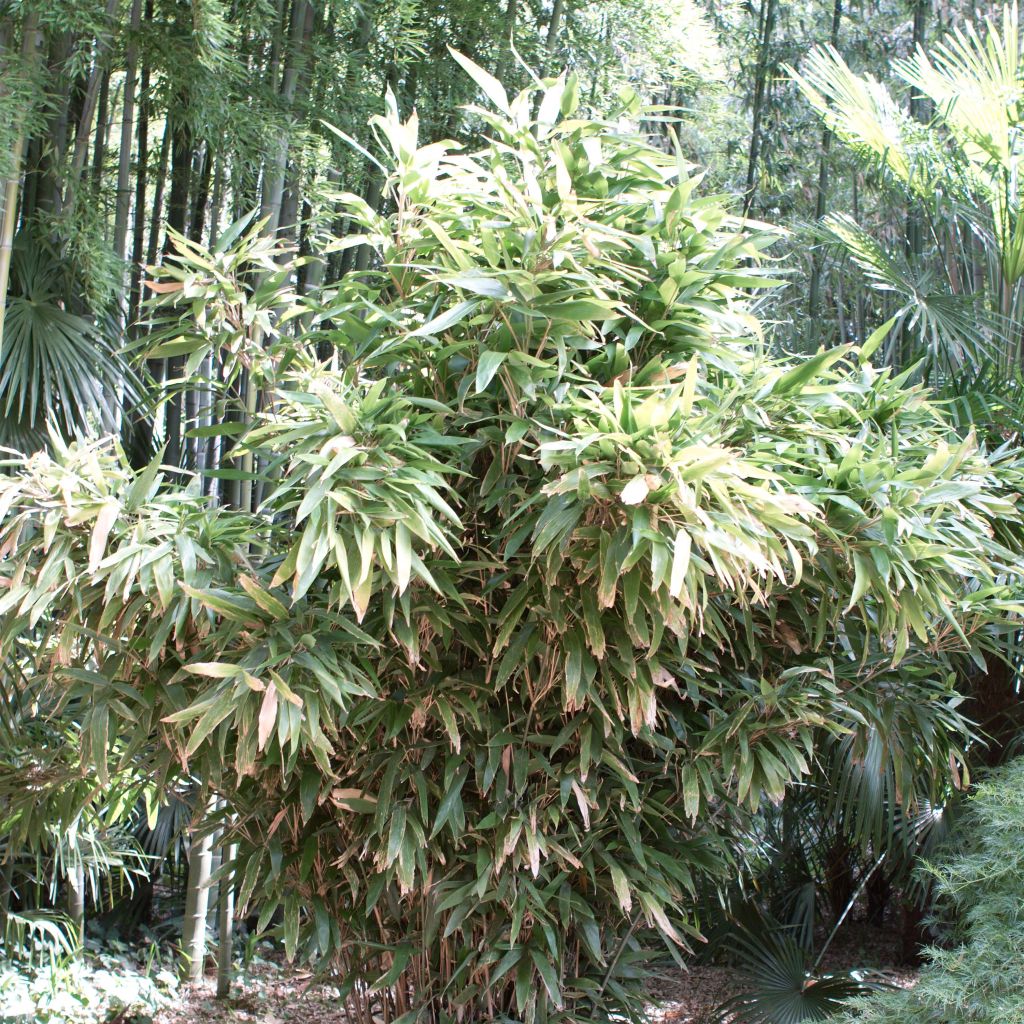
Indocalamus latifolius
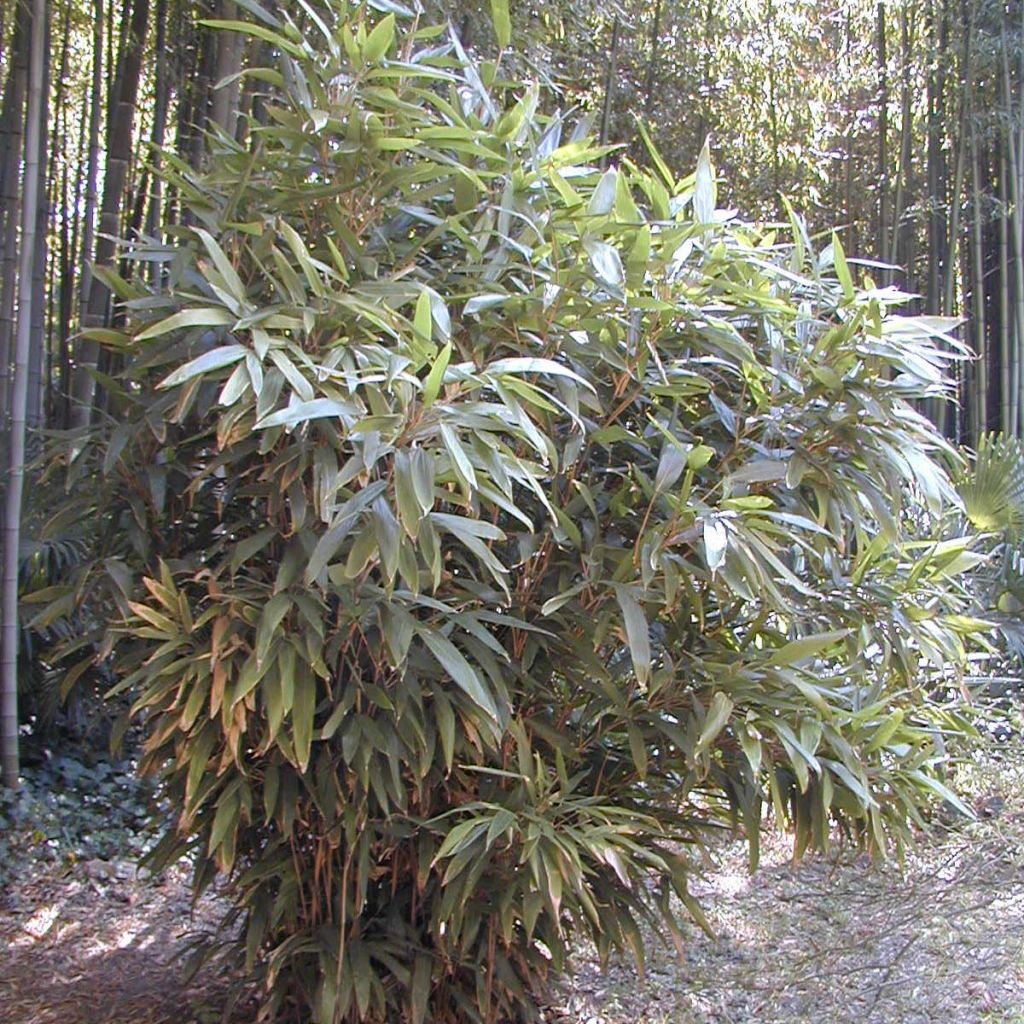
Indocalamus latifolius
Indocalamus latifolius
Indocalamus latifolius
Broad-leaved Bamboo
I am very pleased with my purchase, it's the best price I found during my search. The plant is as described, well packaged, and the delivery was done within the normal timeframe. I hope this young plant will thrive in my garden :)
Yuna, 09/10/2024
Back-to-school special offer!
Get €10 off for every €50 you spend! And get up to €40 off on a single order.
How does it work?
1. Shop your favourites
Add your favourite plants to your basket. For every €50 you spend (excluding delivery charges, store credit and the plastic-free option), you’ll receive a €10 voucher.
€50 spent = €10 voucher
€100 spent = €20 voucher
€150 spent = €30 voucher
€200 spent = €40 voucher
2. Place your order
Once your basket reaches one of the spending thresholds, place your order. You can even choose your delivery date!
3. Receive your voucher
As soon as your order has been shipped, you’ll receive an email containing your personal voucher code and its value.
4. Use it on your next order
Your voucher is valid for 90 days from the date you receive it. It can be used once only, on a new order worth at least the value of the voucher, excluding delivery charges.
Please note: Vouchers can be combined with other offers, but cannot be split or refunded.
Home or relay delivery (depending on size and destination)
Important: You may be charged customs duties by your country’s customs authorities upon delivery.
Schedule delivery date
and select date in basket
This plant carries a 24 months recovery warranty
More information
We guarantee the quality of our plants for a full growing cycle, and will replace at our expense any plant that fails to recover under normal climatic and planting conditions.

Would this plant suit my garden?
Set up your Plantfit profile →
Description
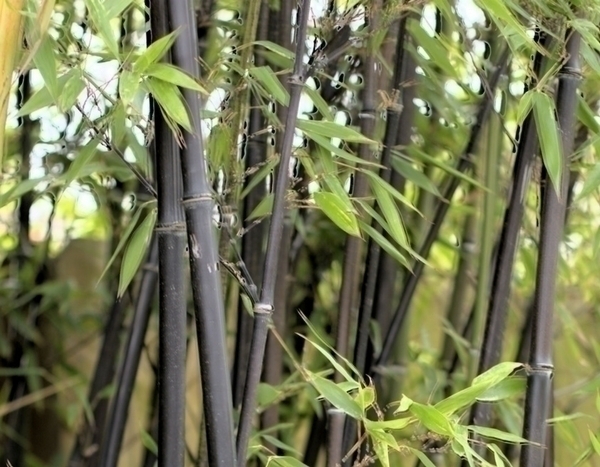
Indocalamus latifolius, sometimes called Arundinaria or Sasa latifolia, is a small bamboo with a particularly dense habit. It naturally forms a ball and is adorned with large shiny and trailing leaves, which are extremely decorative all year round. Barely spreading, it is perfect for creating an elegant and almost maintenance-free privacy screen in a small garden or on a terrace. Also highlight it as an isolated clump, at the curve of a path, and, of course, in a Japanese garden. Perfectly resistant to cold, it however requires a sheltered and semi-shaded situation, as its superb foliage fears dry and cold winds and scorching sun.
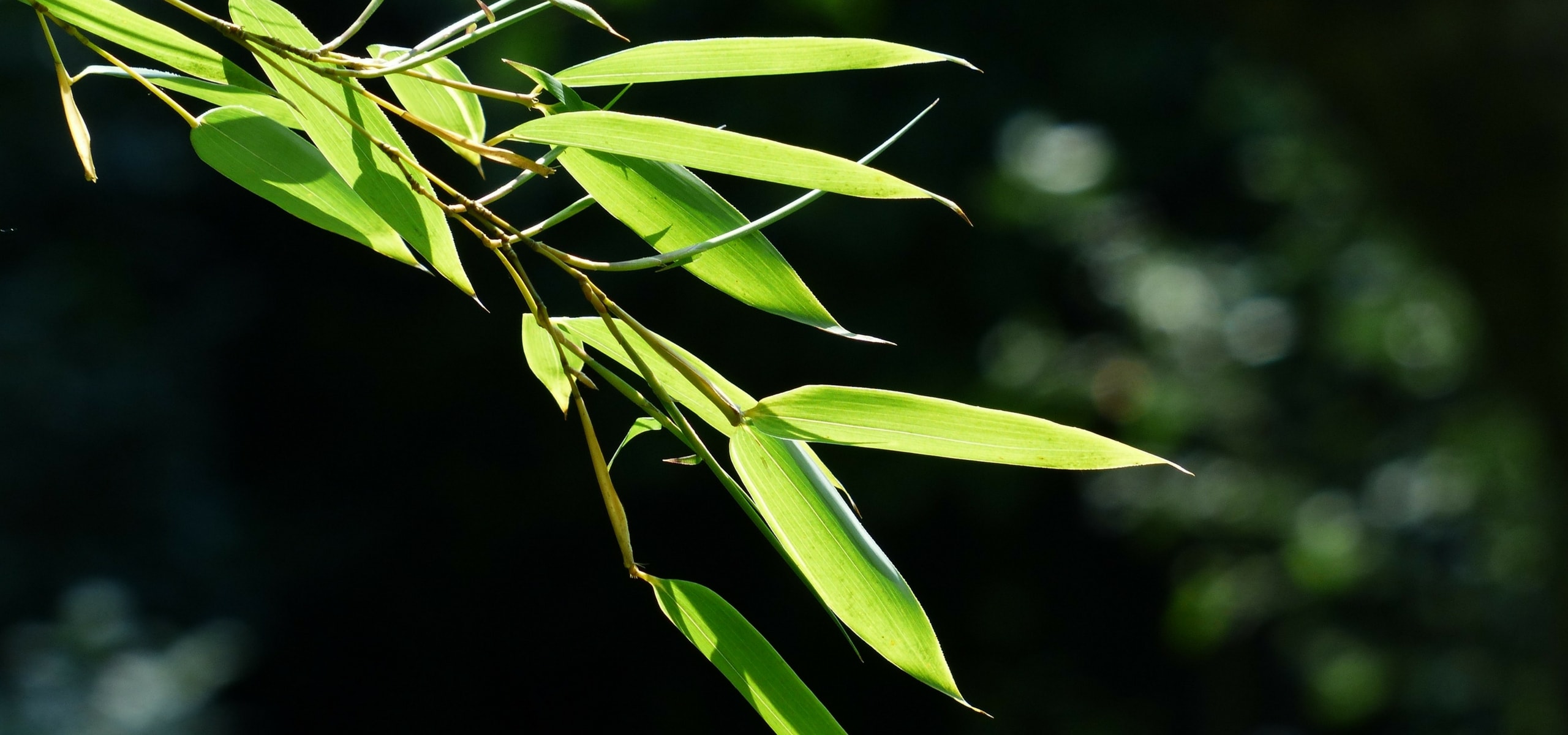
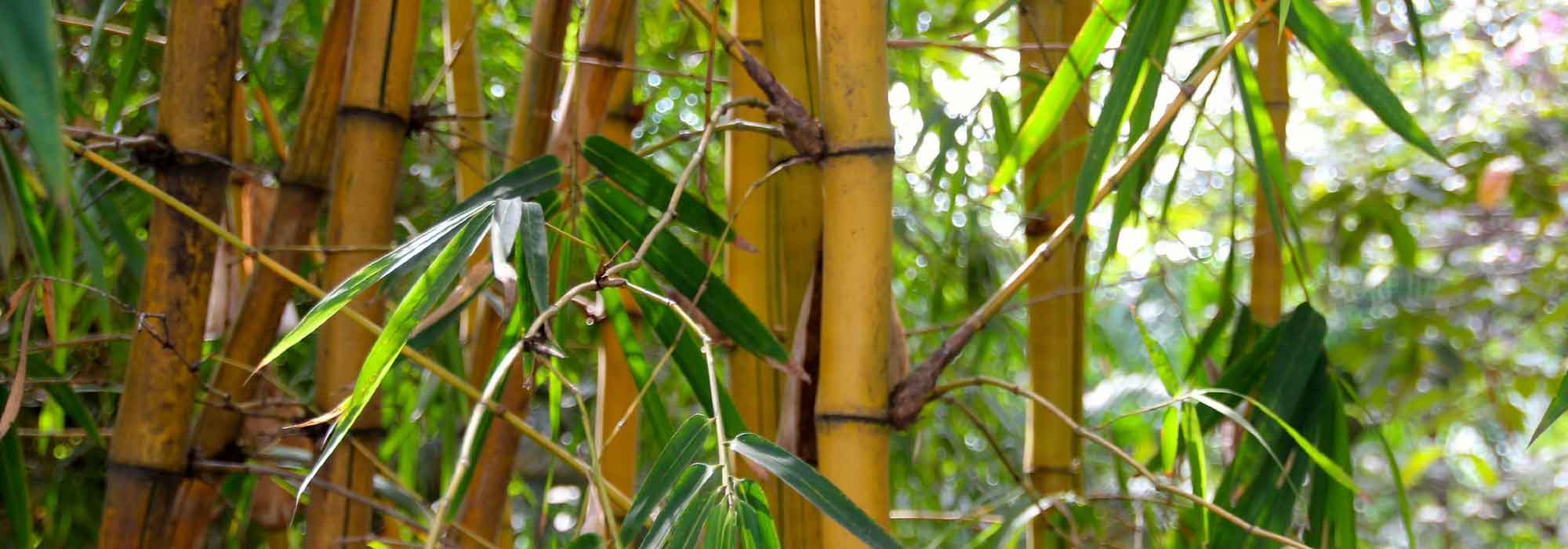
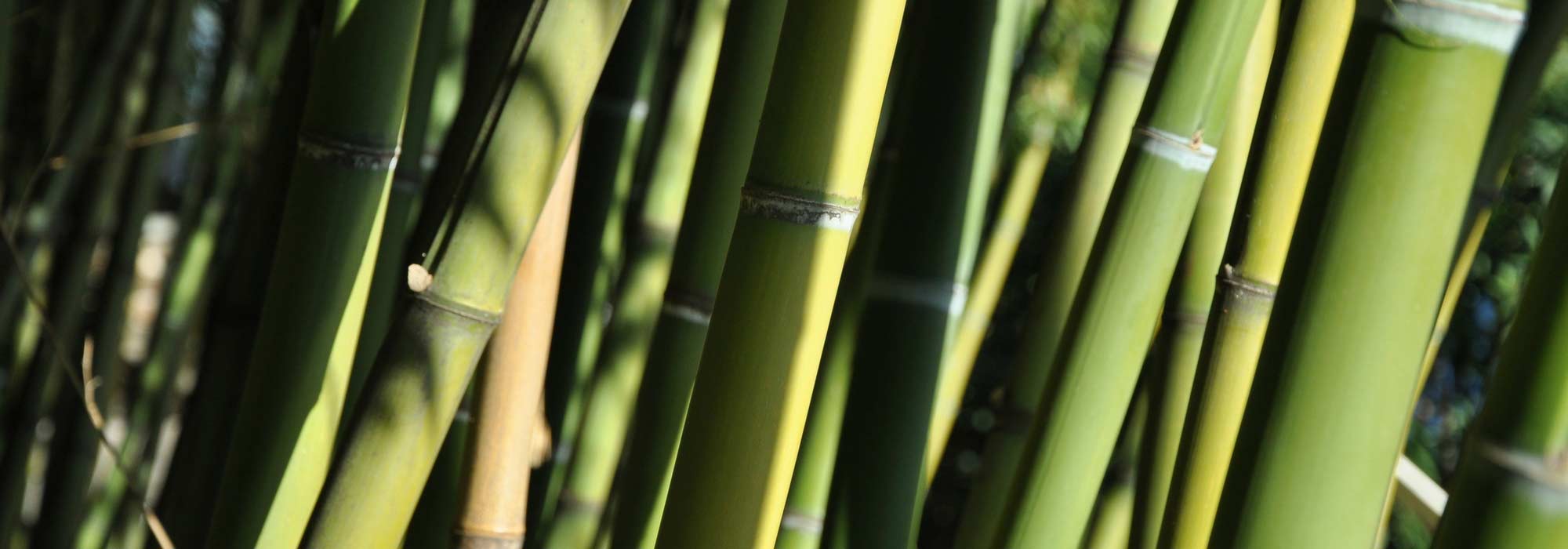
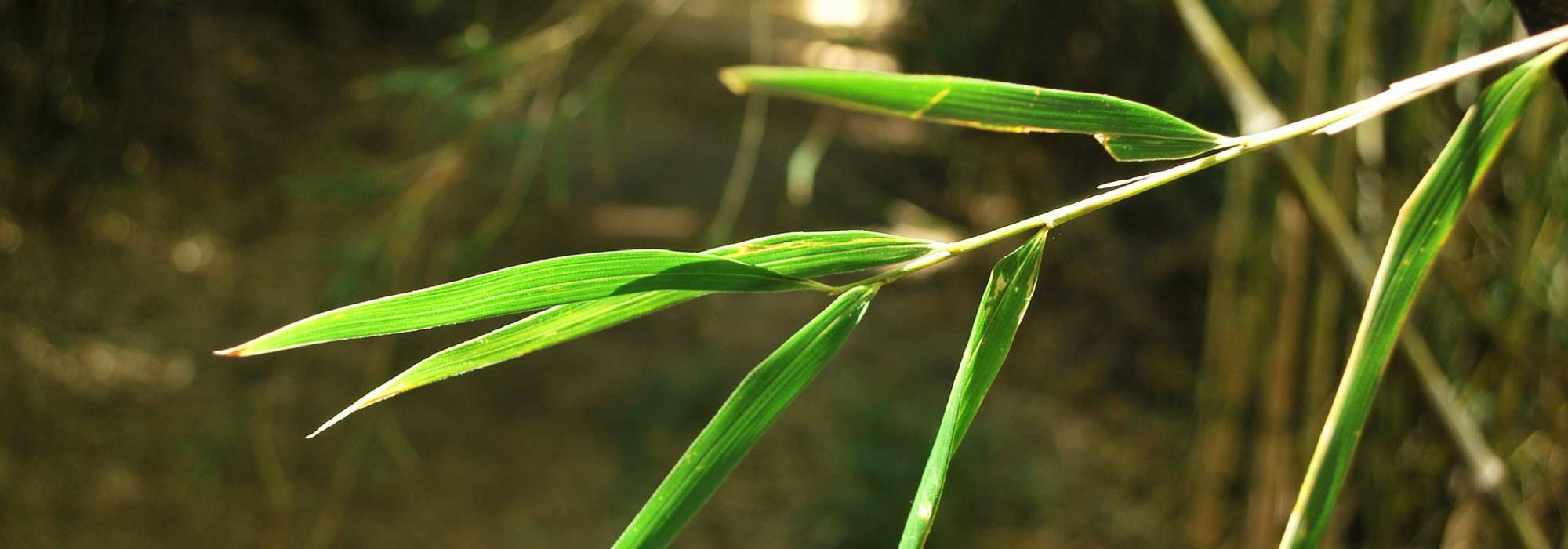
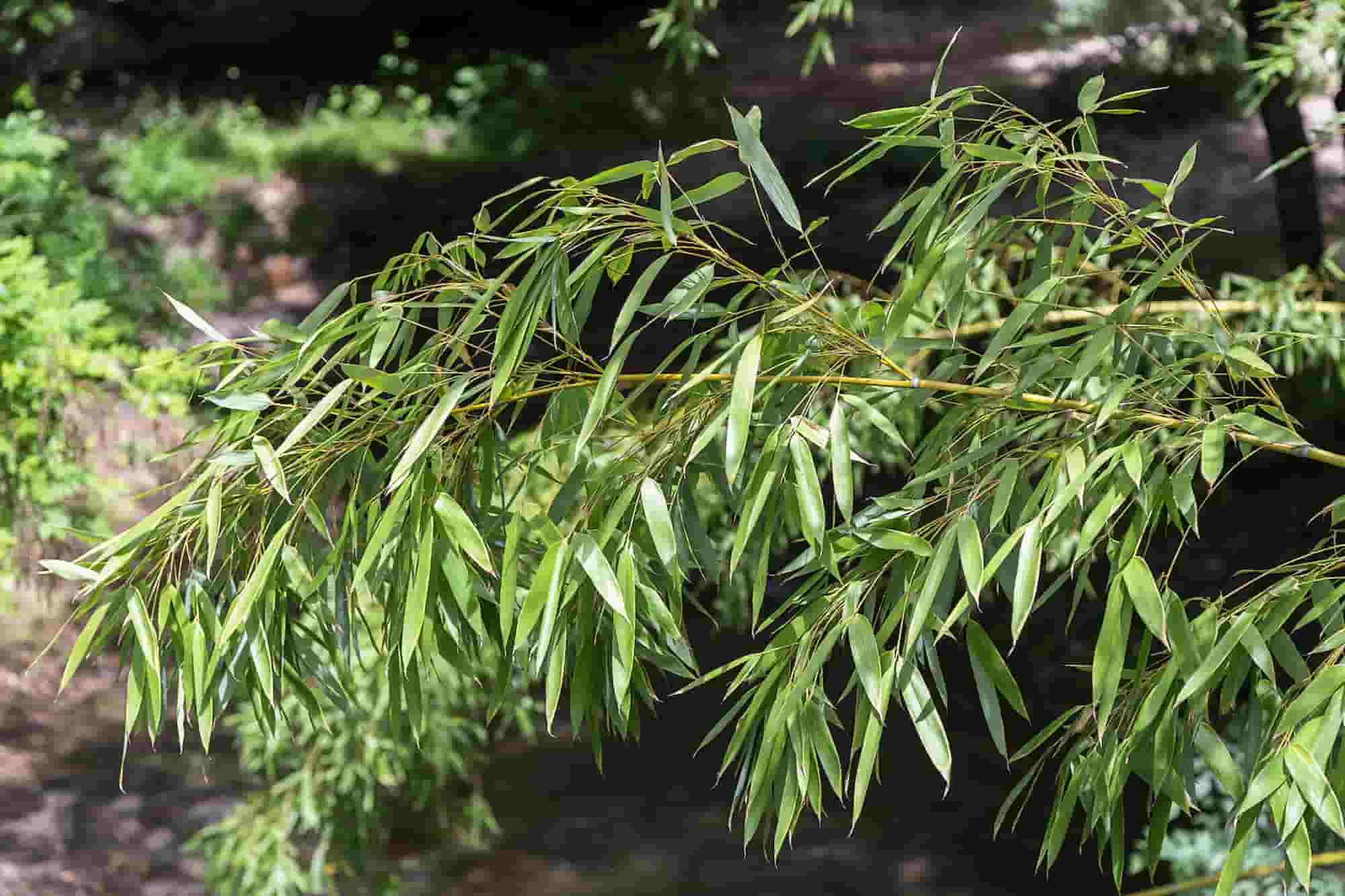
Indocalamus latifolius is a plant of the Poaceae family; it is a kind of giant grass with woody stems. This botanical species is native to the north and east of China. It is well adapted to our temperate climates; it is hardy to -18°C (-0.4°F). Its rootstocks are weakly spreading in moist to wet soil, but more so in dry soil. They then develop in straight lines and at shallow depth, which allows them to be pulled out or cut as soon as they appear near the mother plant. This operation promotes the development of young canes at the level of the main stump, thus helping to maintain a dense and vigorous clump. This bamboo has a rapid growth rate and shows a bushy and ornamental ball habit from a young age. It develops thin canes or culms, 5 to 8mm (0.2 to 0.3in) in diameter, culminating at an average height of 3m (10ft), sometimes more depending on cultivation: a potted plant will develop less than in open ground. The canes are green, completely hidden by abundant and spectacular evergreen foliage. It consists of long and wide trailing leaves measuring up to 30cm (12in) in length. Their colour is a beautiful bright green, with a glossy finish.
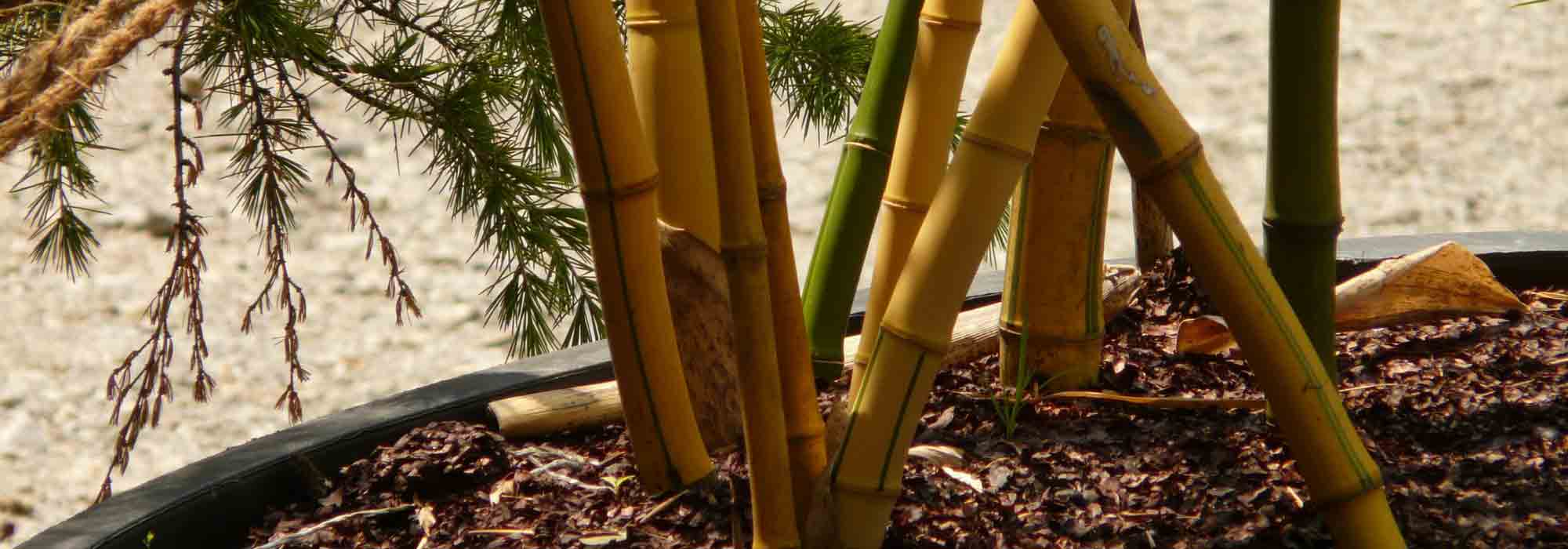
Indocalamus latifolius excels in a Japanese garden, particularly in the cool, shady atmosphere of a forest floor, in the company of Japanese maples or Japanese azaleas, for example. Use it to create an elegant green screen, in the open ground as well as in pots. It is perfectly adapted to Zen, exotic or contemporary style gardens. Avoid planting it in the burning sun, in dry soil, and in windy situations. Highlight it as an isolated clump at the edge of a path or in the centre of a bed where it will brilliantly play its role as a sentinel plant. It integrates quite easily into the garden, alongside the sacred bamboo, Japanese euonymus, dwarf Pinus mugo, loropetalum or sarcococca. It adapts quite well to cultivation in a non or little heated conservatory, provided it has light and not too dry atmosphere.

Indocalamus latifolius in pictures
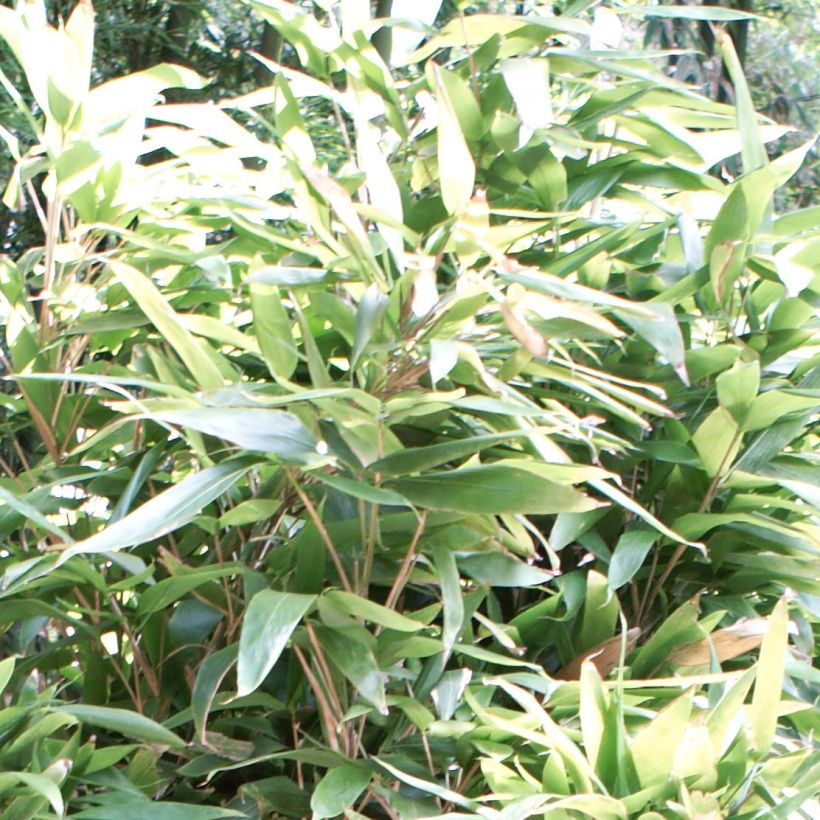
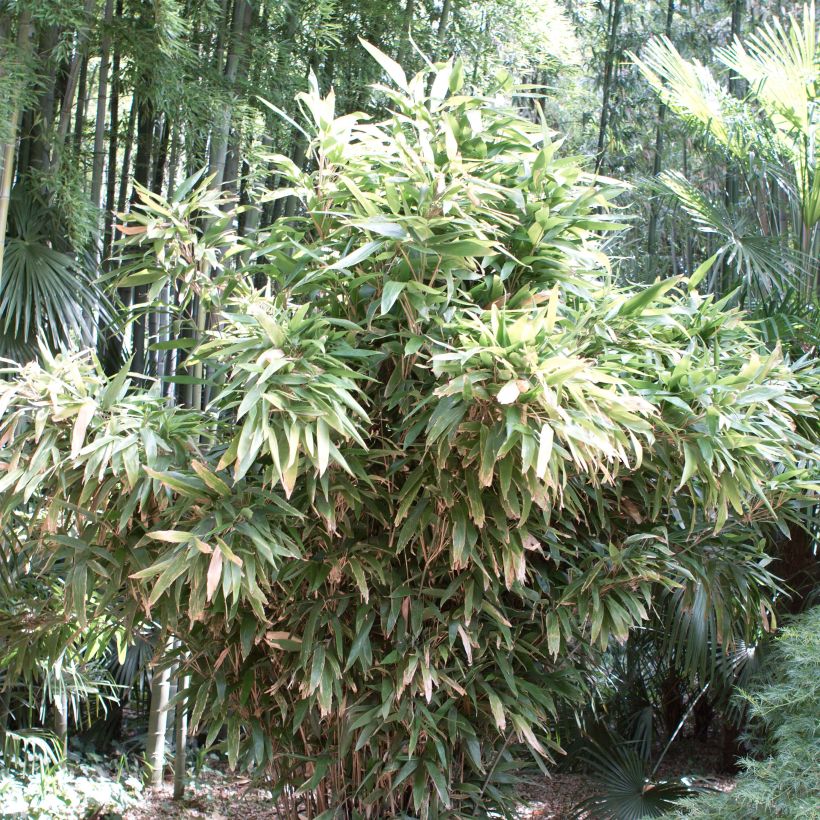
Plant habit
Foliage
Botanical data
Indocalamus
latifolius
Gramineae
Broad-leaved Bamboo
China
Planting and care
Cultivated in containers, Indocalamus latifolius can be planted in any season, except in case of frost. However, the best planting period is at the end of summer and in autumn, when the soil is warmed and the rains are more frequent.
The planting distance depends on the use you will make of your bamboo: in a bed, plan a gap of 1.8 to 2.2m (6 to 7ft) between each young plant. In a hedge, this distance is reduced to 1 to 1.4m (3 to 5ft).
Generally, bamboo appreciates rich, deep, well-drained soils while remaining moist, acidic or neutral. They can tolerate slightly chalky soil depending on the varieties. Indocalamus latifolia is a plant of humus-rich, moist and preferably non-chalky soil, which fears scorching exposures as well as cold and dry winds. Plant it in semi-shade, or in filtered sun, ideally in woodland. Its spreading habit is not very marked under such cultivation conditions.
During planting, loosen the soil and thoroughly moisten the root ball by soaking it. You can rake well-decomposed compost onto the soil surface. Water for the first year in the ground and permanently if your bamboos are grown in pots. The installation time can sometimes seem a bit long, but don't panic!
For bamboos with spreading rootstocks, a rhizome barrier (thick and resistant polypropylene film) is essential because these varieties can quickly colonise large spaces. The rhizome barrier must be buried vertically, leaving a height of 10cm (4in) protruding which must be inclined 15° towards the plant.
On the maintenance side, bamboo is not demanding: remember to weed the base at least initially until its dead leaves, left on the ground, constitute a natural mulch. A contribution of nitrogenous fertiliser (well-decomposed manure or liquid fertiliser) in spring and autumn can be beneficial.
Planting period
Intended location
Care
Planting & care advice
-
-
-
-
-

-
-
-
-
, onOrder confirmed
Reply from on Promesse de fleurs
Recently viewed products
Haven't found what you were looking for?
Hardiness is the lowest winter temperature a plant can endure without suffering serious damage or even dying. However, hardiness is affected by location (a sheltered area, such as a patio), protection (winter cover) and soil type (hardiness is improved by well-drained soil).

The flowering period indicated on our website applies to countries and regions located in USDA zone 8 (France, the United Kingdom, Ireland, the Netherlands, etc.)
It will vary according to where you live:- In zones 9 to 10 (Italy, Spain, Greece, etc.), flowering will occur about 2 to 4 weeks earlier.
- In zones 6 to 7 (Germany, Poland, Slovenia, and lower mountainous regions), flowering will be delayed by 2 to 3 weeks.
- In zone 5 (Central Europe, Scandinavia), blooming will be delayed by 3 to 5 weeks.
In temperate climates, pruning of spring-flowering shrubs (forsythia, spireas, etc.) should be done just after flowering.
Pruning of summer-flowering shrubs (Indian Lilac, Perovskia, etc.) can be done in winter or spring.
In cold regions as well as with frost-sensitive plants, avoid pruning too early when severe frosts may still occur.
The planting period indicated on our website applies to countries and regions located in USDA zone 8 (France, United Kingdom, Ireland, Netherlands).
It will vary according to where you live:
- In Mediterranean zones (Marseille, Madrid, Milan, etc.), autumn and winter are the best planting periods.
- In continental zones (Strasbourg, Munich, Vienna, etc.), delay planting by 2 to 3 weeks in spring and bring it forward by 2 to 4 weeks in autumn.
- In mountainous regions (the Alps, Pyrenees, Carpathians, etc.), it is best to plant in late spring (May-June) or late summer (August-September).
The harvesting period indicated on our website applies to countries and regions in USDA zone 8 (France, England, Ireland, the Netherlands).
In colder areas (Scandinavia, Poland, Austria...) fruit and vegetable harvests are likely to be delayed by 3-4 weeks.
In warmer areas (Italy, Spain, Greece, etc.), harvesting will probably take place earlier, depending on weather conditions.
The sowing periods indicated on our website apply to countries and regions within USDA Zone 8 (France, UK, Ireland, Netherlands).
In colder areas (Scandinavia, Poland, Austria...), delay any outdoor sowing by 3-4 weeks, or sow under glass.
In warmer climes (Italy, Spain, Greece, etc.), bring outdoor sowing forward by a few weeks.
Shipping country and language
Your country of residence may be:
Your country of residence is:
For a better user experience on our website, you can select:
Your shipping country:
-
 Austria
-
 Belgium
-
 Bosnia & Herzegovina
-
 Bulgaria
-
 Croatia
-
 Cyprus
-
 Czechia
-
 Denmark
-
 Estonia
-
 Finland
-
 France
-
 Germany
-
 Greece
-
 Hungary
-
 Iceland
-
 Ireland
-
 Italy
Italy
-
 Latvia
-
 Liechtenstein
-
 Lithuania
-
 Luxembourg
-
 Malta
Malta
-
 Netherlands
-
 Poland
-
 Portugal
-
 Romania
-
 Serbia
-
 Slovakia
-
 Slovenia
-
 Spain
Spain
-
 Sweden
-
 Switzerland
Language:
-
French
-
 English
-
Spanish
-
Italian
-
German
-
Portuguese
-
Dutch
-
Finnish
My Account
Hello
My wish lists
My cart
Log in / Register
Existing customer?
This form is protected by reCAPTCHA - the Google Privacy Policy and Terms of Service apply.
New customer?
Create an account to track your orders, access our customer service and, if you wish, make the most of our upcoming offers.