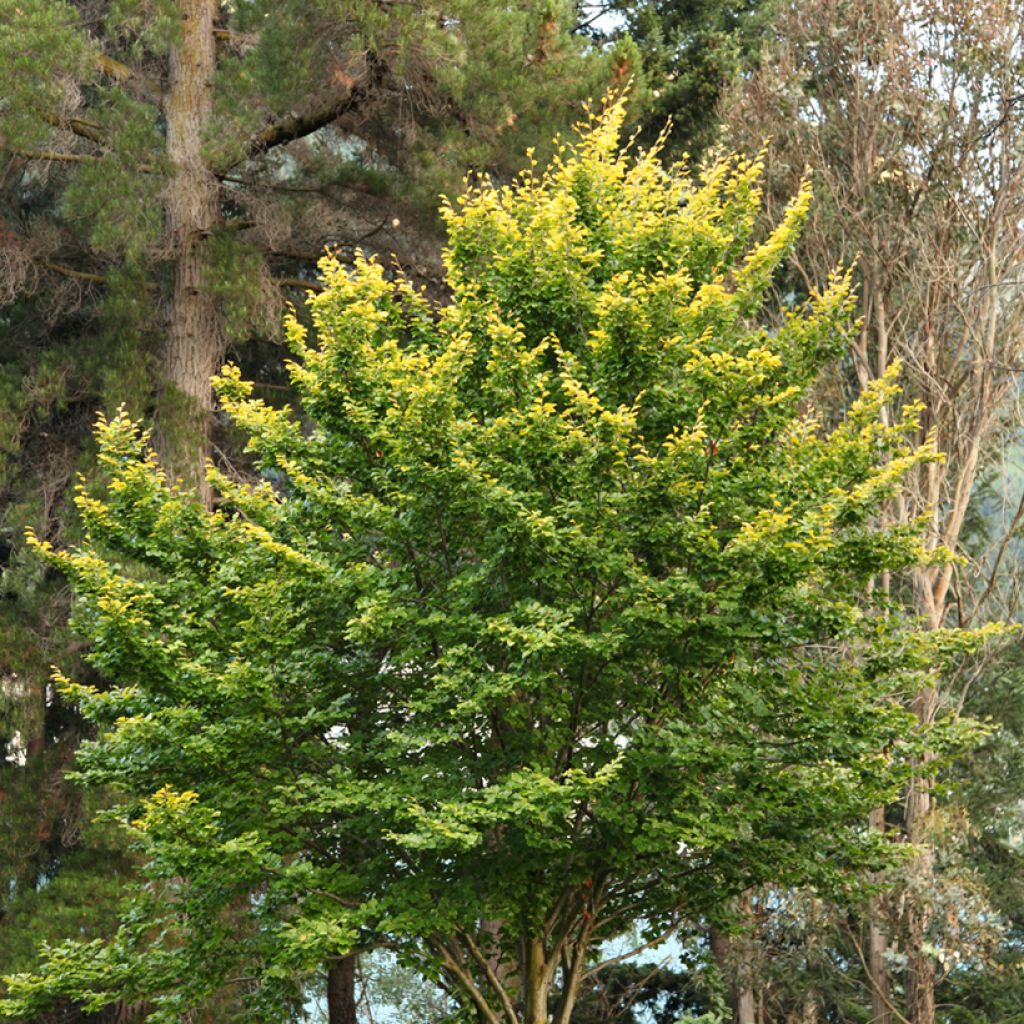
Fagus sylvatica Zlatia
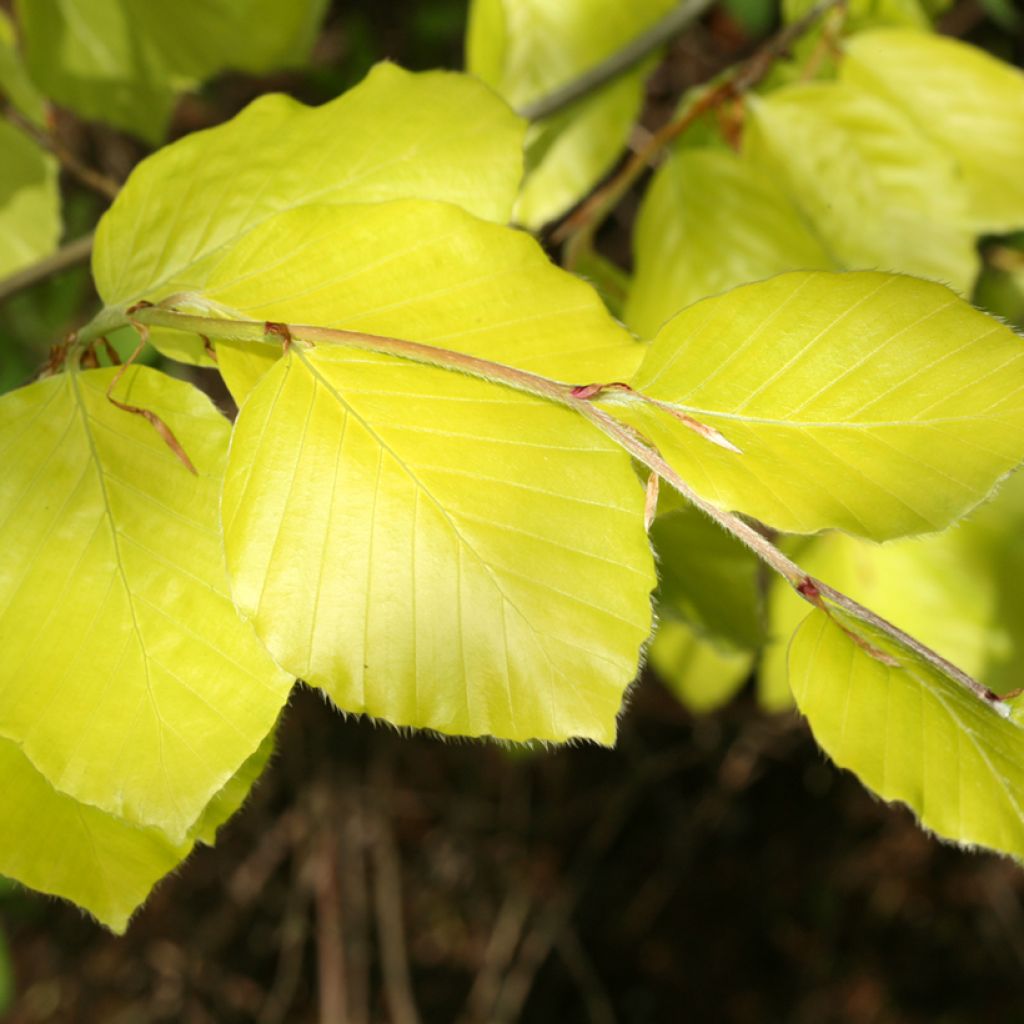
Fagus sylvatica Zlatia
Fagus sylvatica Zlatia
Fagus sylvatica Zlatia
European Beech, Common Beech
Back-to-school special offer!
Get €10 off for every €50 you spend! And get up to €40 off on a single order.
How does it work?
1. Shop your favourites
Add your favourite plants to your basket. For every €50 you spend (excluding delivery charges, store credit and the plastic-free option), you’ll receive a €10 voucher.
€50 spent = €10 voucher
€100 spent = €20 voucher
€150 spent = €30 voucher
€200 spent = €40 voucher
2. Place your order
Once your basket reaches one of the spending thresholds, place your order. You can even choose your delivery date!
3. Receive your voucher
As soon as your order has been shipped, you’ll receive an email containing your personal voucher code and its value.
4. Use it on your next order
Your voucher is valid for 90 days from the date you receive it. It can be used once only, on a new order worth at least the value of the voucher, excluding delivery charges.
Please note: Vouchers can be combined with other offers, but cannot be split or refunded.
Why not try an alternative variety in stock?
View all →
Available in 5 sizes

Available in 5 sizes
Available in 1 sizes
Available in 1 sizes
Available in 1 sizes
Available in 1 sizes
Available in 1 sizes

Available in 1 sizes
Available in 1 sizes

Available in 1 sizes
This plant carries a 24 months recovery warranty
More information
We guarantee the quality of our plants for a full growing cycle, and will replace at our expense any plant that fails to recover under normal climatic and planting conditions.
Would this plant suit my garden?
Set up your Plantfit profile →
Description
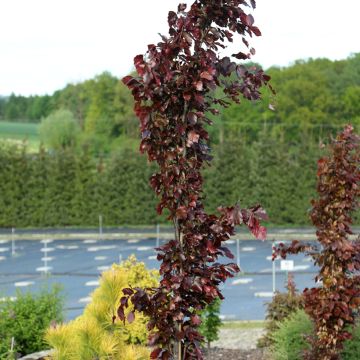
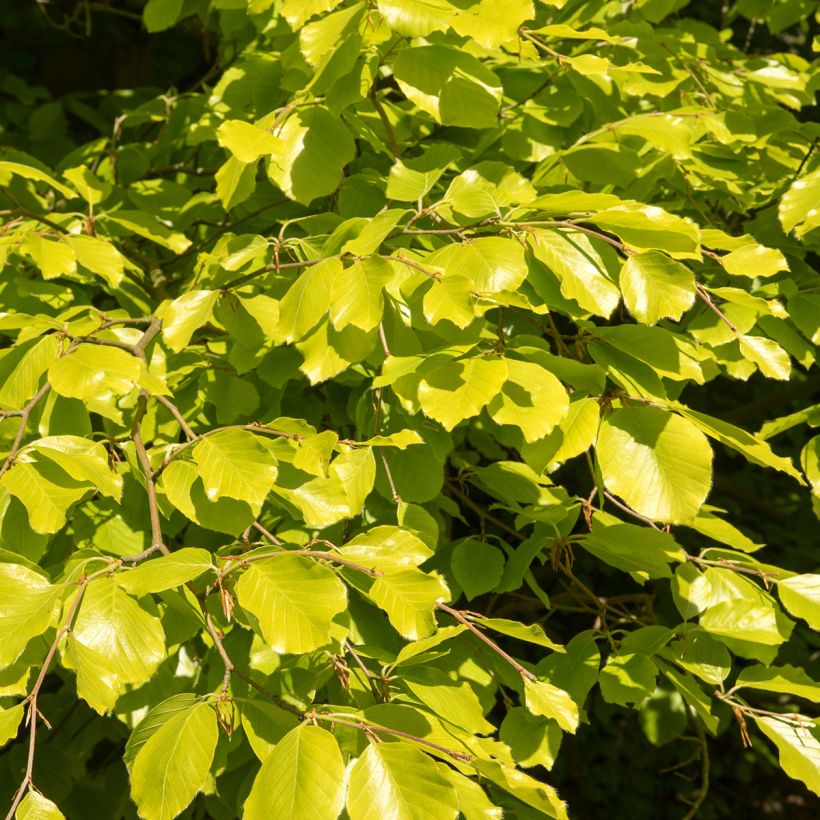
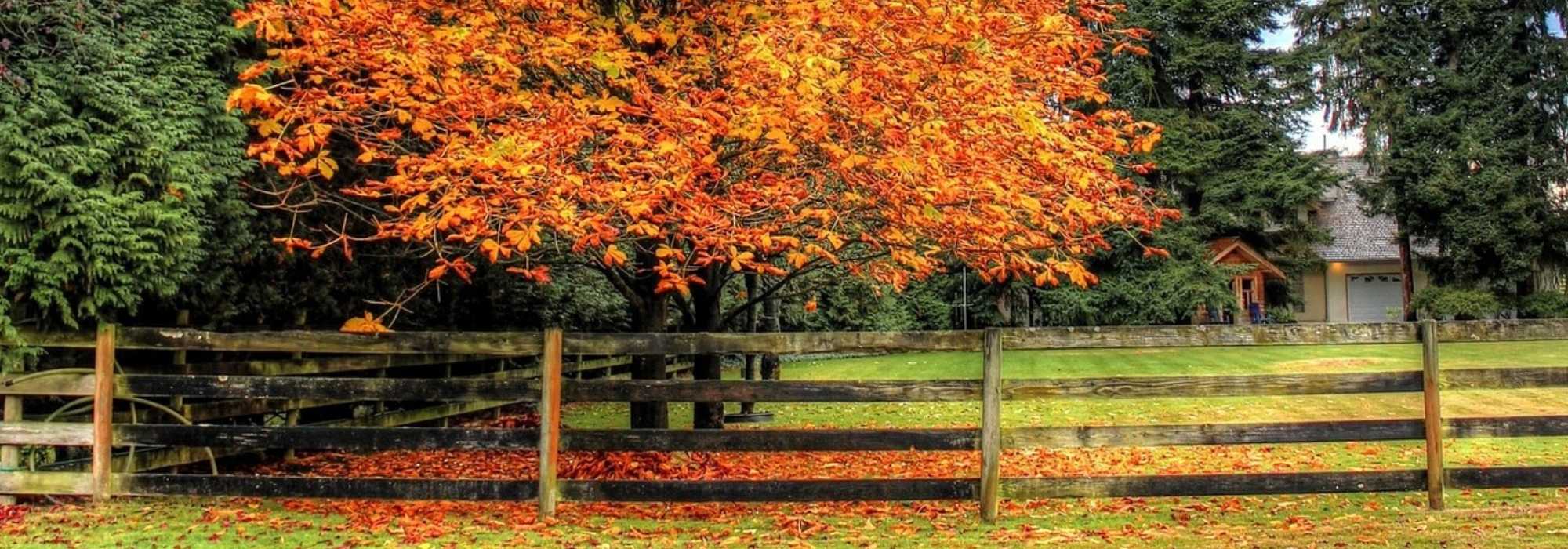
Fagus sylvatica 'Zlatia', more commonly known as the Golden Beech, is a superb, conical and rounded ornamental tree that is very attractive. It is particularly attractive in spring when its foliage takes on a very bright golden hue. This gradually fades and the leaves eventually turn green in summer. In autumn, the leaves take on a coppery colour and persist on the tree for a long time as it is marcescent. Of medium size and with balanced proportions, this beautiful tree can be planted as a specimen or in a mixed border. It is hardy growing in full sun or partial shade, it tolerates most soils as long as they are sufficiently rich, moist, and well-drained.
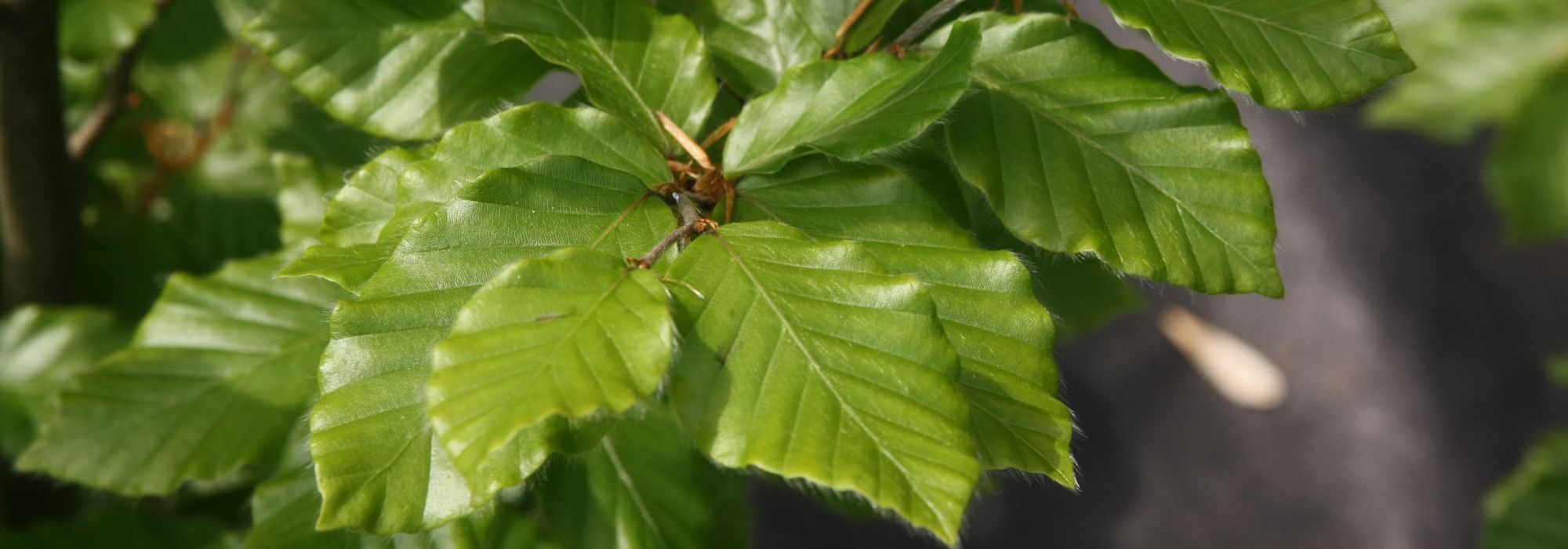
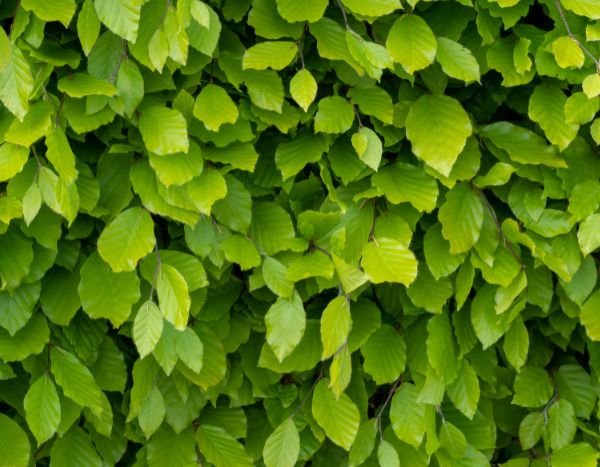
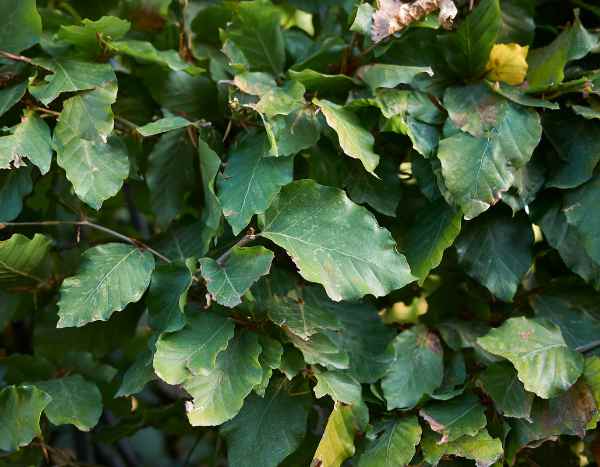
The Beech or Fagus has given its name to the small family of Fagaceae, which includes less than ten genera, the most well-known being the Oak (Quercus) and our common Chestnut tree (Castanea sativa). Around ten species of Beech are found in America, Asia, and Europe, including Fagus sylvatica, the common Beech. Capable of reaching heights of up to 30m, it develops a massive, straight trunk reaching 2m in diameter, covered with a beautiful smooth grey bark. Its foliage is fairly dark green, glossy, and velvety, usually marcescent (persisting on the tree in winter before falling). Numerous horticultural varieties bring diversity to this species, both in terms of habit (dwarf, fastigiate, weeping...) and leaf colour.
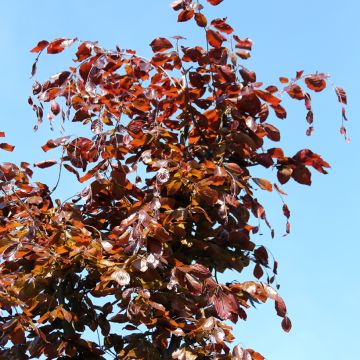
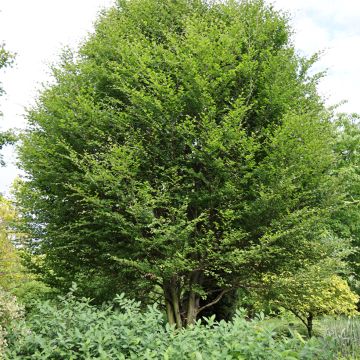
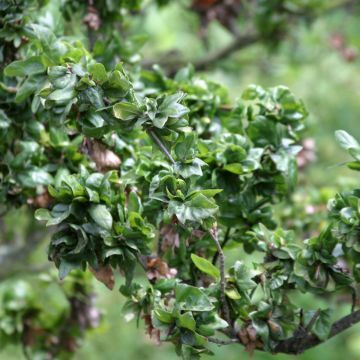
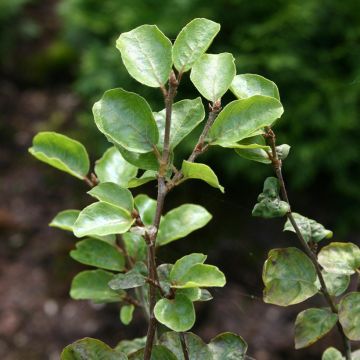
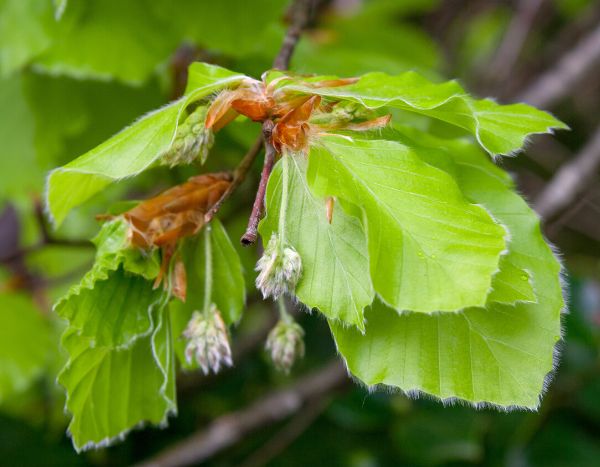
This is the case with 'Zlatia', a very old selection (1890) made in Serbia, near Vranje in the south of the country, and introduced to the market the following year. Zlatia means "gold" or "golden" in Serbian, which perfectly illustrates the main interest of this Beech. With a moderate to slow growth rate, the tree eventually reaches a height of 10 to 15m with a width of 8 to 10m. Its habit is very regular and balanced, with a conical to rounded silhouette. It is often branched almost to the ground, which highlights its architectural appearance. In spring, the slender and pointed buds burst open to reveal bright golden yellow, oval leaves. The edge of the leaf blade is velvety while its glossy surface shines in the sun, attracting all eyes in spring. Gradually, the colour of the foliage changes to chartreuse green, but never becomes as dark as the species. When autumn arrives, the leaves take on a copper to bronze-yellow colour, bringing a noticeable light touch to this season when the days shorten and usually darken as well.
The yellow-green flowering in April-May is too discreet to be ornamental, as are the brown fruits. The beautiful light grey bark, is truly decorative, especially in winter when the leaves do not hide it, and even more so when highlighted in rainy weather.
Fagus sylvatica 'Zlatia' is one of those classic varieties that is always appreciated, combining the natural elegance of common Beech with the brightness of golden foliage, all in a size more suitable for medium-sized gardens than the imposing botanical species reserved for parks. You can plant it as a specimen on a lawn to fully enjoy both its well-defined silhouette and the beauty of its foliage, or integrate it into a large mixed border to create colour contrasts. Plant a Sambucus nigra 'Black Lace' at its base, a superb Elderberry with finely cut foliage of almost black-purple, which will strongly contrast with the golden foliage of your Beech. This stylish shrub will also reward you with beautiful pinkish-white spring flowers, perfectly highlighted by the dark foliage. If you have enough space, an Acer cappadocicum 'Rubrum', or Red Colchis Maple, will allow you to create a magnificent scene. Competing in size with your Beech, this Maple displays red-purple foliage in spring that turns coppery green in summer before finally turning golden yellow in autumn. And for a surprise, why not a Eucalyptus with blue foliage? Eucalyptus pauciflora sbsp. niphophila Mt Bogong is not only one of the hardiest, but its highly decorative bark will perfectly complement that of Zlatia.
Fagus sylvatica Zlatia in pictures
Plant habit
Flowering
Foliage
Botanical data
Fagus
sylvatica
Zlatia
Fagaceae
European Beech, Common Beech
Cultivar or hybrid
Planting and care
Fagus sylvatica 'Zlatia' enjoys partial shade and non-scorching sun. It thrives in cool and temperate climates. The soil should be moist and well-drained and always maintain a constant level of humidity, as it does not tolerate drought. However, it is undemanding in terms of the chemical nature of the soil, growing equally well in slightly acidic, neutral, or limestone soils, as long as they are rich in humus. Soak the root ball in a bucket of water for fifteen minutes before planting. Dig a hole with sides and bottom measuring 50 or 60 cm and mix planting compost with the existing soil. Position the root ball in the hole, with the top level with the surrounding soil, fill in around it, and water thoroughly. Water regularly during the first two years, and hot periods thereafter.
In February-March, when the tree is dormant, remove any branches that compromise symmetry or are tangled, to maintain a harmonious habit.
Planting period
Intended location
Care
Planting & care advice
-
-
-
-

-
-

-
-
This item has not been reviewed yet - be the first to leave a review about it.
Recently viewed products
Haven't found what you were looking for?
Hardiness is the lowest winter temperature a plant can endure without suffering serious damage or even dying. However, hardiness is affected by location (a sheltered area, such as a patio), protection (winter cover) and soil type (hardiness is improved by well-drained soil).

The flowering period indicated on our website applies to countries and regions located in USDA zone 8 (France, the United Kingdom, Ireland, the Netherlands, etc.)
It will vary according to where you live:- In zones 9 to 10 (Italy, Spain, Greece, etc.), flowering will occur about 2 to 4 weeks earlier.
- In zones 6 to 7 (Germany, Poland, Slovenia, and lower mountainous regions), flowering will be delayed by 2 to 3 weeks.
- In zone 5 (Central Europe, Scandinavia), blooming will be delayed by 3 to 5 weeks.
In temperate climates, pruning of spring-flowering shrubs (forsythia, spireas, etc.) should be done just after flowering.
Pruning of summer-flowering shrubs (Indian Lilac, Perovskia, etc.) can be done in winter or spring.
In cold regions as well as with frost-sensitive plants, avoid pruning too early when severe frosts may still occur.
The planting period indicated on our website applies to countries and regions located in USDA zone 8 (France, United Kingdom, Ireland, Netherlands).
It will vary according to where you live:
- In Mediterranean zones (Marseille, Madrid, Milan, etc.), autumn and winter are the best planting periods.
- In continental zones (Strasbourg, Munich, Vienna, etc.), delay planting by 2 to 3 weeks in spring and bring it forward by 2 to 4 weeks in autumn.
- In mountainous regions (the Alps, Pyrenees, Carpathians, etc.), it is best to plant in late spring (May-June) or late summer (August-September).
The harvesting period indicated on our website applies to countries and regions in USDA zone 8 (France, England, Ireland, the Netherlands).
In colder areas (Scandinavia, Poland, Austria...) fruit and vegetable harvests are likely to be delayed by 3-4 weeks.
In warmer areas (Italy, Spain, Greece, etc.), harvesting will probably take place earlier, depending on weather conditions.
The sowing periods indicated on our website apply to countries and regions within USDA Zone 8 (France, UK, Ireland, Netherlands).
In colder areas (Scandinavia, Poland, Austria...), delay any outdoor sowing by 3-4 weeks, or sow under glass.
In warmer climes (Italy, Spain, Greece, etc.), bring outdoor sowing forward by a few weeks.
Shipping country and language
Your country of residence may be:
Your country of residence is:
For a better user experience on our website, you can select:
Your shipping country:
-
 Austria
-
 Belgium
-
 Bosnia & Herzegovina
-
 Bulgaria
-
 Croatia
-
 Cyprus
-
 Czechia
-
 Denmark
-
 Estonia
-
 Finland
-
 France
-
 Germany
-
 Greece
-
 Hungary
-
 Iceland
-
 Ireland
-
 Italy
Italy
-
 Latvia
-
 Liechtenstein
-
 Lithuania
-
 Luxembourg
-
 Malta
Malta
-
 Netherlands
-
 Poland
-
 Portugal
-
 Romania
-
 Serbia
-
 Slovakia
-
 Slovenia
-
 Spain
Spain
-
 Sweden
-
 Switzerland
Language:
-
French
-
 English
-
Spanish
-
Italian
-
German
-
Portuguese
-
Dutch
-
Finnish
My Account
Hello
My wish lists
My cart
Log in / Register
Existing customer?
This form is protected by reCAPTCHA - the Google Privacy Policy and Terms of Service apply.
New customer?
Create an account to track your orders, access our customer service and, if you wish, make the most of our upcoming offers.