
Organic Escarole Cornet de Bordeaux coated seeds - Cichorium endivia var. latifolium
Organic Escarole Cornet de Bordeaux coated seeds - Cichorium endivia var. latifolium
Cichorium endivia var. latifolium Cornet de Bordeaux
Broad-leaved endive, Escarole
Very disappointed. RESPONSE FROM PROMESSE DE FLEURS We are sorry because we attach great importance to the quality of our plants and their growth. If you encounter any issues, please do not hesitate to contact us at 03.61.76.08.10 and we will proceed with replacement or refund if necessary.
sylviane depraz, 10/04/2016
Back-to-school special offer!
Get €10 off for every €50 you spend! And get up to €40 off on a single order.
How does it work?
1. Shop your favourites
Add your favourite plants to your basket. For every €50 you spend (excluding delivery charges, store credit and the plastic-free option), you’ll receive a €10 voucher.
€50 spent = €10 voucher
€100 spent = €20 voucher
€150 spent = €30 voucher
€200 spent = €40 voucher
2. Place your order
Once your basket reaches one of the spending thresholds, place your order. You can even choose your delivery date!
3. Receive your voucher
As soon as your order has been shipped, you’ll receive an email containing your personal voucher code and its value.
4. Use it on your next order
Your voucher is valid for 90 days from the date you receive it. It can be used once only, on a new order worth at least the value of the voucher, excluding delivery charges.
Please note: Vouchers can be combined with other offers, but cannot be split or refunded.
Why not try an alternative variety in stock?
View all →
Available in 1 sizes

Available in 1 sizes

Available in 1 sizes

Available in 1 sizes

Available in 1 sizes

Available in 1 sizes
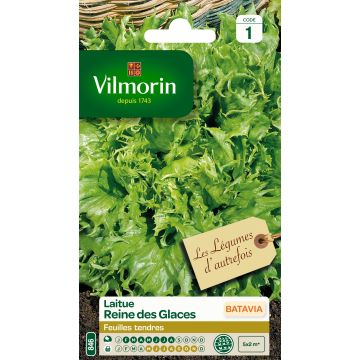
Available in 1 sizes

Available in 1 sizes

Available in 1 sizes
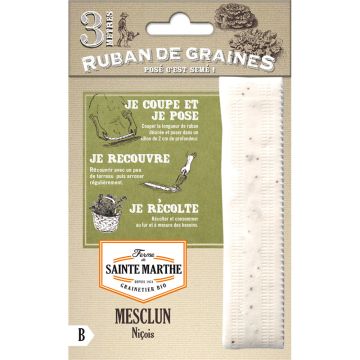
Available in 1 sizes
This plant carries a 6 months recovery warranty
More information
We guarantee the quality of our plants for a full growing cycle, and will replace at our expense any plant that fails to recover under normal climatic and planting conditions.
Description
'Cornet de Bordeaux' Escarole is a popular French variety that is particularly cold-resistant, ideal for autumn and winter crops! This Batavian endive produces handsome, upright, full-hearted rosettes of curled, crisp leaves. Delicious eaten raw in salads or cooked like spinach. Sow from July to August for harvests 3 months later. Easy-to-sow pelleted seeds.
Escarole is a herbaceous plant that belongs to the Asteraceae family. It bears the Latin name Cichorium endivia latifolium and is also known as broad-leaved endive, Batavian endive or chicory. Along with Frisée endive, it is a “true” endive as opposed to the a closely related species, Cichorium endivia (examples of which include radicchio, witloof and sugarloaf).
Escarole produces rosettes of large, green wavy leaves surrounding a pale yellow to white heart. Whilst some varieties are naturally self-blanching, others need to be deprived of light or “blanched” to subdue some of their bitterness. Blanching also results in a more tender leaf texture. Escarole is not as cold hardy as wild chicory. In colder regions, provide winter crop covers such as fleece or polythene sheeting. It prefers moderately rich, cool, well-drained soil.
Escarole brings a lovely, bitter edge to mixed salads; it is delicious sautéed, braised or cooked in bechamel sauce. Chicory boasts numerous health benefits, including boosting the immune system, easing digestion and reducing inflammation.
Harvesting: pick the leaves as and when required
Storage: escarole greens will keep for a few days in the refrigerator
Good to know: hoeing and weeding around your plants regularly will help keep the weeds in check. Mulching is a great way to keep the soil moist, especially during dry spells.
NB. Organic seeds (in French "AB" for "Agriculture Biologique") are produced from plants that aren't treated with phytosanitary products (insecticides, weed killers). The seeds do not undergo post-harvest treatment. They carry the AB label and are approved by Ecocert, an independent structure.

Harvest
Plant habit
Foliage
Botanical data
Cichorium
endivia var. latifolium
Cornet de Bordeaux
Asteraceae
Broad-leaved endive, Escarole
Cultivar or hybrid
Biennial
Planting and care
Sowing:
Sow lightly in shallow flat-bottomed drills, about 5cm wide and 2cm deep. Leave 30cm between each row. Cover the seeds lightly and water. Germination takes 8 days on average. Thin out the seedlings, keeping one every 30cm. If necessary, they can be transplanted when the seedlings reach the 7-8 leaf stage.
Care:
To avoid diseases such as downy mildew or leaf spot, weed and hoe around your plants regularly and make sure to rotate your crops every 3 to 4 years. Given that Escarole endive is less frost-resistant than common chicory, its best to protect your plants with crop covers during the colder winter months.
Seedlings
Care
Intended location
Planting & care advice








-
, onOrder confirmed
Reply from on Promesse de fleurs
Recently viewed products
Haven't found what you were looking for?
Hardiness is the lowest winter temperature a plant can endure without suffering serious damage or even dying. However, hardiness is affected by location (a sheltered area, such as a patio), protection (winter cover) and soil type (hardiness is improved by well-drained soil).

The flowering period indicated on our website applies to countries and regions located in USDA zone 8 (France, the United Kingdom, Ireland, the Netherlands, etc.)
It will vary according to where you live:- In zones 9 to 10 (Italy, Spain, Greece, etc.), flowering will occur about 2 to 4 weeks earlier.
- In zones 6 to 7 (Germany, Poland, Slovenia, and lower mountainous regions), flowering will be delayed by 2 to 3 weeks.
- In zone 5 (Central Europe, Scandinavia), blooming will be delayed by 3 to 5 weeks.
In temperate climates, pruning of spring-flowering shrubs (forsythia, spireas, etc.) should be done just after flowering.
Pruning of summer-flowering shrubs (Indian Lilac, Perovskia, etc.) can be done in winter or spring.
In cold regions as well as with frost-sensitive plants, avoid pruning too early when severe frosts may still occur.
The planting period indicated on our website applies to countries and regions located in USDA zone 8 (France, United Kingdom, Ireland, Netherlands).
It will vary according to where you live:
- In Mediterranean zones (Marseille, Madrid, Milan, etc.), autumn and winter are the best planting periods.
- In continental zones (Strasbourg, Munich, Vienna, etc.), delay planting by 2 to 3 weeks in spring and bring it forward by 2 to 4 weeks in autumn.
- In mountainous regions (the Alps, Pyrenees, Carpathians, etc.), it is best to plant in late spring (May-June) or late summer (August-September).
The harvesting period indicated on our website applies to countries and regions in USDA zone 8 (France, England, Ireland, the Netherlands).
In colder areas (Scandinavia, Poland, Austria...) fruit and vegetable harvests are likely to be delayed by 3-4 weeks.
In warmer areas (Italy, Spain, Greece, etc.), harvesting will probably take place earlier, depending on weather conditions.
The sowing periods indicated on our website apply to countries and regions within USDA Zone 8 (France, UK, Ireland, Netherlands).
In colder areas (Scandinavia, Poland, Austria...), delay any outdoor sowing by 3-4 weeks, or sow under glass.
In warmer climes (Italy, Spain, Greece, etc.), bring outdoor sowing forward by a few weeks.
Shipping country and language
Your country of residence may be:
Your country of residence is:
For a better user experience on our website, you can select:
Your shipping country:
-
 Austria
-
 Belgium
-
 Bosnia & Herzegovina
-
 Bulgaria
-
 Croatia
-
 Cyprus
-
 Czechia
-
 Denmark
-
 Estonia
-
 Finland
-
 France
-
 Germany
-
 Greece
-
 Hungary
-
 Iceland
-
 Ireland
-
 Italy
Italy
-
 Latvia
-
 Liechtenstein
-
 Lithuania
-
 Luxembourg
-
 Malta
Malta
-
 Netherlands
-
 Poland
-
 Portugal
-
 Romania
-
 Serbia
-
 Slovakia
-
 Slovenia
-
 Spain
Spain
-
 Sweden
-
 Switzerland
Language:
-
French
-
 English
-
Spanish
-
Italian
-
German
-
Portuguese
-
Dutch
-
Finnish
My Account
Hello
My wish lists
My cart
Log in / Register
Existing customer?
This form is protected by reCAPTCHA - the Google Privacy Policy and Terms of Service apply.
New customer?
Create an account to track your orders, access our customer service and, if you wish, make the most of our upcoming offers.