Lychnis coronaria Atrosanguineas - Rose campion seed
Lychnis coronaria Atrosanguineas - Rose campion seed
Lychnis coronaria Atrosanguinea
Rose Campion, Dusty Miller, Mullein-pink
Back-to-school special offer!
Get €10 off for every €50 you spend! And get up to €40 off on a single order.
How does it work?
1. Shop your favourites
Add your favourite plants to your basket. For every €50 you spend (excluding delivery charges, store credit and the plastic-free option), you’ll receive a €10 voucher.
€50 spent = €10 voucher
€100 spent = €20 voucher
€150 spent = €30 voucher
€200 spent = €40 voucher
2. Place your order
Once your basket reaches one of the spending thresholds, place your order. You can even choose your delivery date!
3. Receive your voucher
As soon as your order has been shipped, you’ll receive an email containing your personal voucher code and its value.
4. Use it on your next order
Your voucher is valid for 90 days from the date you receive it. It can be used once only, on a new order worth at least the value of the voucher, excluding delivery charges.
Please note: Vouchers can be combined with other offers, but cannot be split or refunded.
Home or relay delivery (depending on size and destination)
Important: You may be charged customs duties by your country’s customs authorities upon delivery.
Schedule delivery date
and select date in basket
This plant carries a 6 months recovery warranty
More information
We guarantee the quality of our plants for a full growing cycle, and will replace at our expense any plant that fails to recover under normal climatic and planting conditions.
Would this plant suit my garden?
Set up your Plantfit profile →
Description
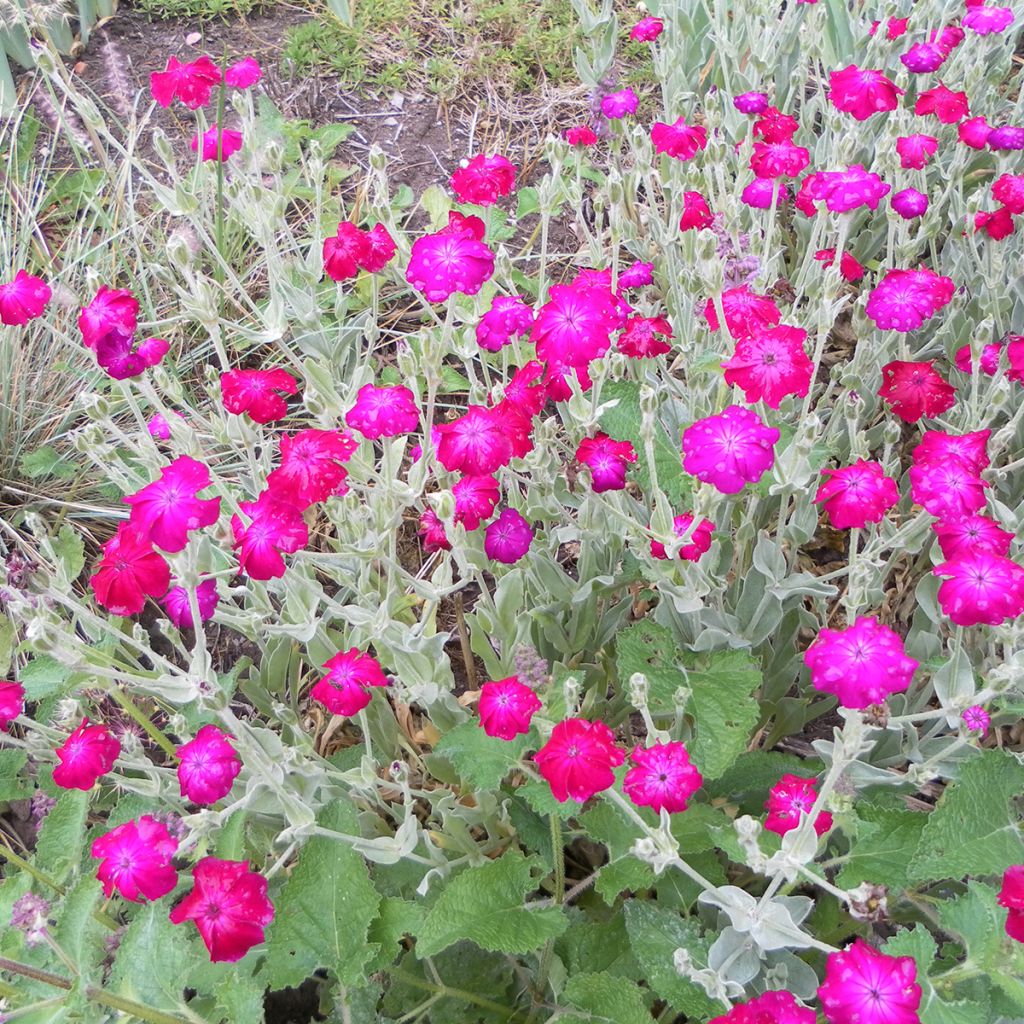
Lychnis coronaria 'Atrosanguinea' is a selection of carmine-red rose campion. The flowers form a beautiful contrast with the silvery-green, downy foliage. This short-lived perennial is often grown as a biennial. Capable of flowering from its second year, it keeps a presence in the garden by self-seeding. It is a reliable companion for natural gardens, cottage gardens, or dry gardens. It is grown as much for its brilliance in summer borders as for its flowers, which last surprisingly well in flower arrangements.
Rose Campion 'Atrosanguinea' belongs to the Caryophyllaceae family. The botanical species Silene coronaria is native to central and south-eastern Europe, Turkey, and Iran, extending to central Asia and the western Himalayas, where it grows naturally on dry slopes, stony banks, and sunny fallow land. It is known by the names rose campion, coronaria campion, or crown campion.
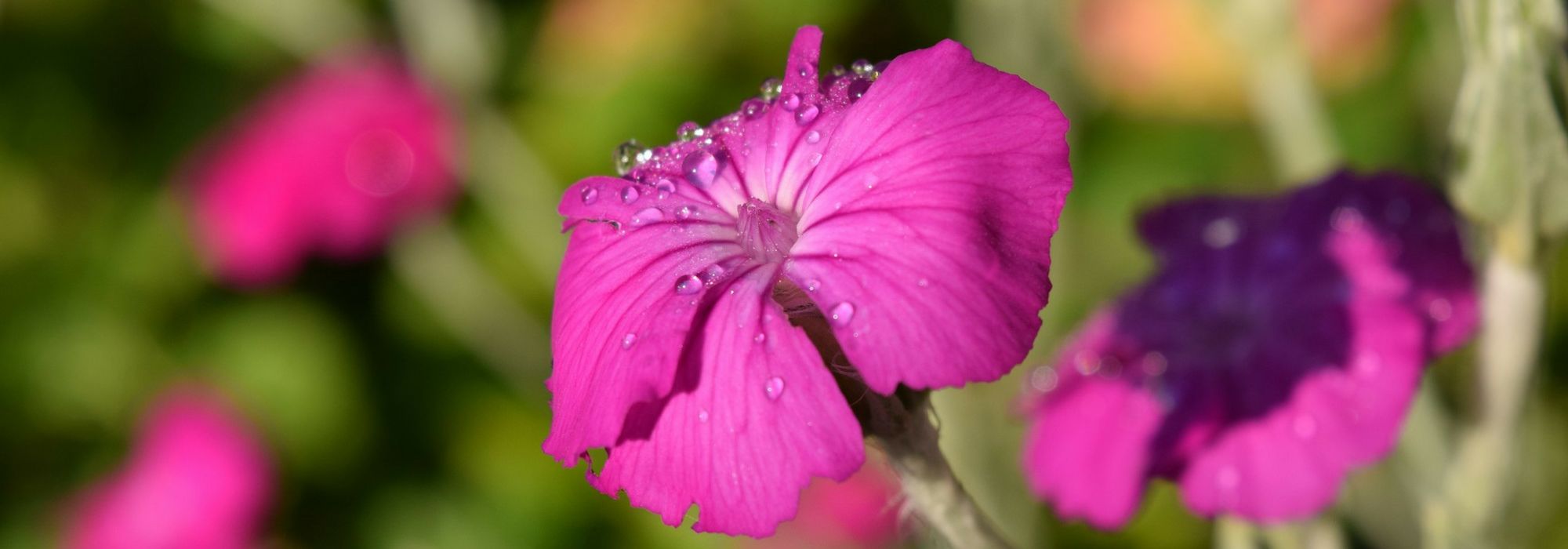
'Atrosanguinea' refers to a horticultural group selected for the intensity of its colour, marketed under the names Silene coronaria Atrosanguinea Group or Lychnis coronaria 'Atrosanguinea'; some older synonyms are still found, such as Lychnis atropurpurea or Lychnis coronaria atropurpurea. The plant forms a dense basal rosette, then a bushy clump 40 to 50cm wide. The foliage, semi-evergreen in mild climates, is composed of opposite, oval to lanceolate, 5 to 12cm long, thick leaves covered in dense hairs that give them a silky, silvery-grey appearance. From this base, well-branched flowering stems rise, slender but sturdy, bringing the plant's total height to between 60 and 90cm. The flowering period extends from June to August, and can continue into September if faded flowers are regularly removed. Each flower measures 2.5 to 3cm in diameter and has a tubular calyx surrounded by five rounded petals, slightly notched at the tip. In the 'Atrosanguinea' group, these petals take on shades ranging from carmine red to deep magenta. The flowers are highly nectar-rich and visited by numerous butterflies and pollinators. The capsules that follow release a multitude of small brown seeds which self-seed, appreciated in natural gardens.
Rose Campion 'Atrosanguinea' has a rightful place in country borders, scree gardens, sun-drenched mixed borders, and dry gardens. Its silvery foliage weaves a thread of light between other perennials. Sow it in small groups, on top of banks, along the edge of low walls, among medium ornamental grasses or baby sages. Its carmine colour pairs well with blues and purples, as well as with white, soft yellows, or brick red yarrows.
Its former genus name, Lychnis, is said to derive from the Greek "lychnos", meaning oil lamp; the very hairy stems and leaves were once reportedly used as natural wicks, once dried and impregnated with grease.
Flowering
Foliage
Plant habit
Botanical data
Lychnis
coronaria
Atrosanguinea
Caryophyllaceae
Rose Campion, Dusty Miller, Mullein-pink
Silene coronaria, Agrostemma coronaria, Coronaria coriacea, Coronaria tomentosa
Cultivar or hybrid, Central Europe, Southern Europe, Central Asia, Himalayas
Planting and care
Sowing Lychnis coronaria Atrosanguinea:
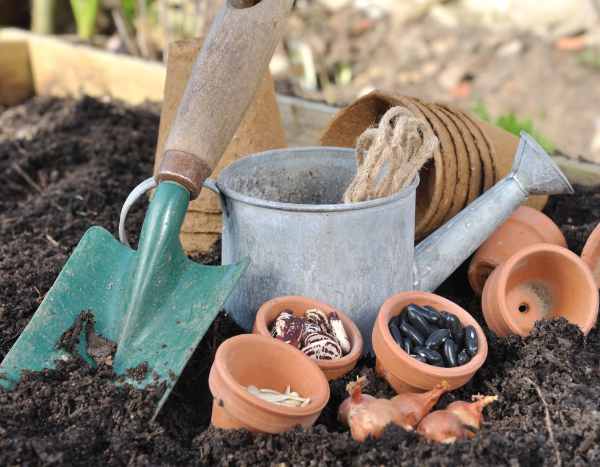
Like other perennials, sow Lychnis coronaria in summer for transplanting into open ground in autumn.
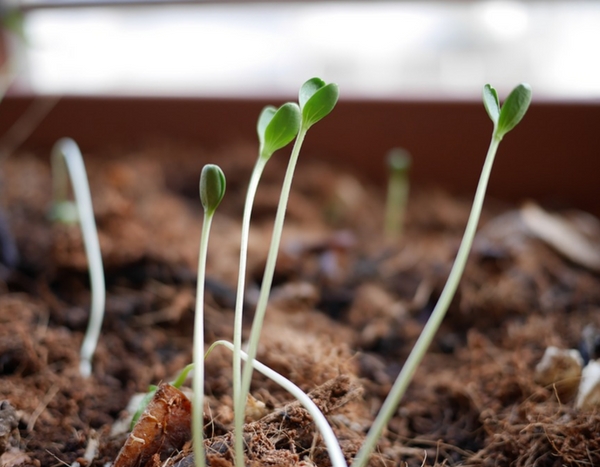
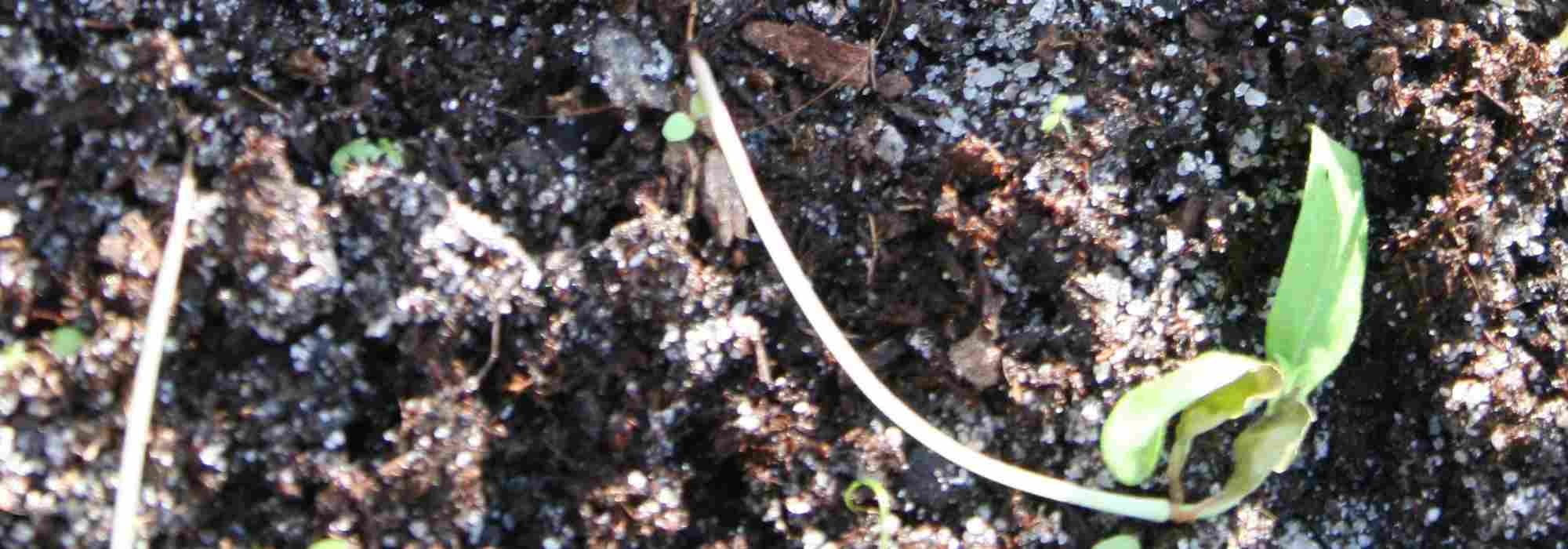
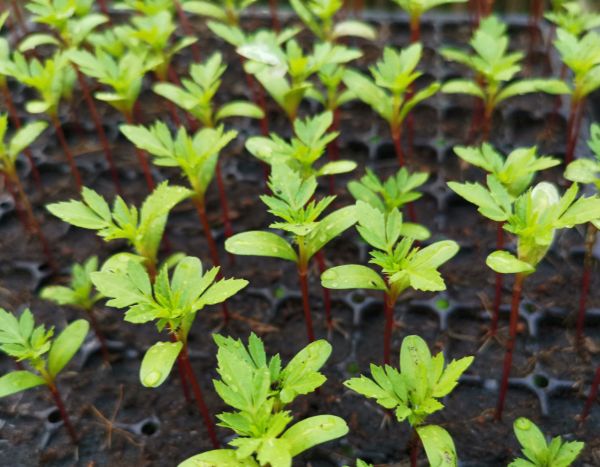
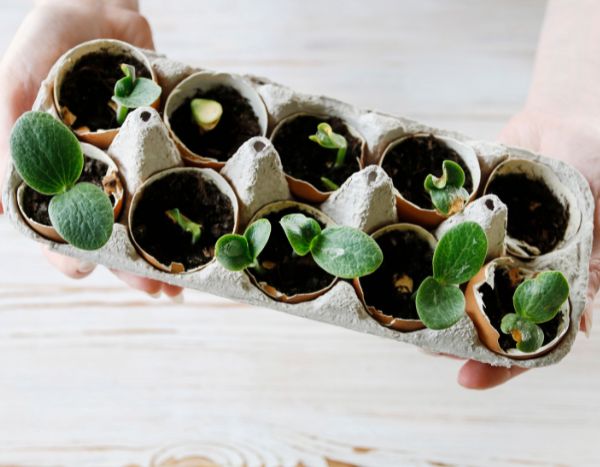
In a seed tray and under ventilated cover, cover the seeds with a light layer of potting compost and vermiculite, keeping them moist and in sunlight (essential for germination). The seeds will germinate within 15 to 21 days. As soon as the seedlings are large enough to be moved, you can plant them out in September and October, depending on their development and the climate. Alternatively, you can pot them up (8cm pots) and keep them under cover to overwinter (monitor watering and avoid hard frosts). The young plants can then be planted out in spring.
The other option is to sow the seeds directly into open ground, scattering them broadcast in late summer. Thin out the young plants in spring if necessary. Ensure the soil is loosened and water the sowings.
In both cases, watch out for snails and slugs.
Cultivation:
Evergreen down to -20°C (Zones 5 to 8), Lychnis coronaria thrives in sunny or partially shaded positions. This plant is naturally found in uncultivated, rocky ground. Plant it in porous, dry to moist but well-drained soil, neutral to slightly lime-bearing, from February to April in the north and from September to November in more southerly regions. This lychnis tolerates drought well and requires little care or watering. Prune it after flowering to remove dry parts, encourage new growth and repeat flowering. The plant self-seeds abundantly.
Sowing period
Intended location
Planting & care advice
-
-
-
-
-

-
-
-
This item has not been reviewed yet - be the first to leave a review about it.
Recently viewed products
Haven't found what you were looking for?
Hardiness is the lowest winter temperature a plant can endure without suffering serious damage or even dying. However, hardiness is affected by location (a sheltered area, such as a patio), protection (winter cover) and soil type (hardiness is improved by well-drained soil).

The flowering period indicated on our website applies to countries and regions located in USDA zone 8 (France, the United Kingdom, Ireland, the Netherlands, etc.)
It will vary according to where you live:- In zones 9 to 10 (Italy, Spain, Greece, etc.), flowering will occur about 2 to 4 weeks earlier.
- In zones 6 to 7 (Germany, Poland, Slovenia, and lower mountainous regions), flowering will be delayed by 2 to 3 weeks.
- In zone 5 (Central Europe, Scandinavia), blooming will be delayed by 3 to 5 weeks.
In temperate climates, pruning of spring-flowering shrubs (forsythia, spireas, etc.) should be done just after flowering.
Pruning of summer-flowering shrubs (Indian Lilac, Perovskia, etc.) can be done in winter or spring.
In cold regions as well as with frost-sensitive plants, avoid pruning too early when severe frosts may still occur.
The planting period indicated on our website applies to countries and regions located in USDA zone 8 (France, United Kingdom, Ireland, Netherlands).
It will vary according to where you live:
- In Mediterranean zones (Marseille, Madrid, Milan, etc.), autumn and winter are the best planting periods.
- In continental zones (Strasbourg, Munich, Vienna, etc.), delay planting by 2 to 3 weeks in spring and bring it forward by 2 to 4 weeks in autumn.
- In mountainous regions (the Alps, Pyrenees, Carpathians, etc.), it is best to plant in late spring (May-June) or late summer (August-September).
The harvesting period indicated on our website applies to countries and regions in USDA zone 8 (France, England, Ireland, the Netherlands).
In colder areas (Scandinavia, Poland, Austria...) fruit and vegetable harvests are likely to be delayed by 3-4 weeks.
In warmer areas (Italy, Spain, Greece, etc.), harvesting will probably take place earlier, depending on weather conditions.
The sowing periods indicated on our website apply to countries and regions within USDA Zone 8 (France, UK, Ireland, Netherlands).
In colder areas (Scandinavia, Poland, Austria...), delay any outdoor sowing by 3-4 weeks, or sow under glass.
In warmer climes (Italy, Spain, Greece, etc.), bring outdoor sowing forward by a few weeks.
Shipping country and language
Your country of residence may be:
Your country of residence is:
For a better user experience on our website, you can select:
Your shipping country:
-
 Austria
-
 Belgium
-
 Bosnia & Herzegovina
-
 Bulgaria
-
 Croatia
-
 Cyprus
-
 Czechia
-
 Denmark
-
 Estonia
-
 Finland
-
 France
-
 Germany
-
 Greece
-
 Hungary
-
 Iceland
-
 Ireland
-
 Italy
Italy
-
 Latvia
-
 Liechtenstein
-
 Lithuania
-
 Luxembourg
-
 Malta
Malta
-
 Netherlands
-
 Poland
-
 Portugal
-
 Romania
-
 Serbia
-
 Slovakia
-
 Slovenia
-
 Spain
Spain
-
 Sweden
-
 Switzerland
Language:
-
French
-
 English
-
Spanish
-
Italian
-
German
-
Portuguese
-
Dutch
-
Finnish
My Account
Hello
My wish lists
My cart
Log in / Register
Existing customer?
This form is protected by reCAPTCHA - the Google Privacy Policy and Terms of Service apply.
New customer?
Create an account to track your orders, access our customer service and, if you wish, make the most of our upcoming offers.