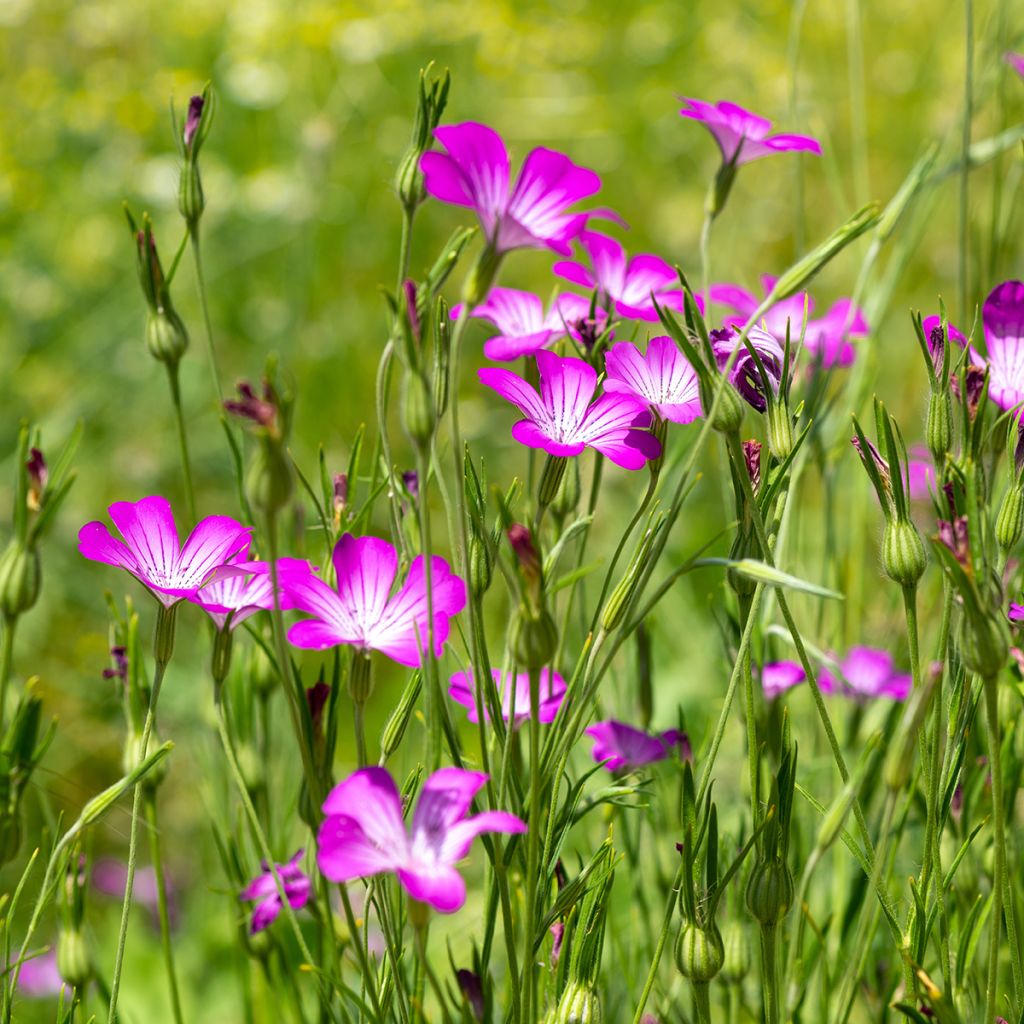
Corncockle organic seeds - Agrostemma githago
Corncockle organic seeds - Agrostemma githago
Agrostemma githago
Corncockle
Back-to-school special offer!
Get €10 off for every €50 you spend! And get up to €40 off on a single order.
How does it work?
1. Shop your favourites
Add your favourite plants to your basket. For every €50 you spend (excluding delivery charges, store credit and the plastic-free option), you’ll receive a €10 voucher.
€50 spent = €10 voucher
€100 spent = €20 voucher
€150 spent = €30 voucher
€200 spent = €40 voucher
2. Place your order
Once your basket reaches one of the spending thresholds, place your order. You can even choose your delivery date!
3. Receive your voucher
As soon as your order has been shipped, you’ll receive an email containing your personal voucher code and its value.
4. Use it on your next order
Your voucher is valid for 90 days from the date you receive it. It can be used once only, on a new order worth at least the value of the voucher, excluding delivery charges.
Please note: Vouchers can be combined with other offers, but cannot be split or refunded.
Why not try an alternative variety in stock?
View all →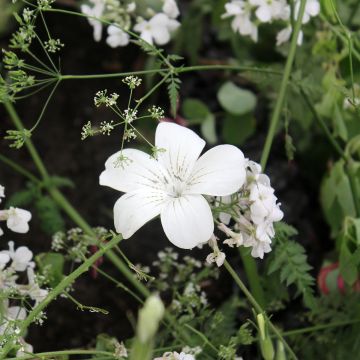
Available in 1 sizes
Available in 1 sizes
Available in 2 sizes

Available in 1 sizes
Available in 1 sizes
Available in 1 sizes
Available in 1 sizes
This plant carries a 6 months recovery warranty
More information
We guarantee the quality of our plants for a full growing cycle, and will replace at our expense any plant that fails to recover under normal climatic and planting conditions.
Would this plant suit my garden?
Set up your Plantfit profile →
Description
Corncockle is an annual wildflower that is now regaining its place in gardens after long being considered a weed of cornfields. With its mauve to pink flowers borne at the top of slender stems, it brings a touch of flowery meadow to borders and bouquets. These organic seeds come from a crop grown without chemical treatment, respecting beneficial wildlife and pollinators. Corncockle self-seeds spontaneously, year after year.
Agrostemma githago belongs to the Caryophyllaceae family. It bears many common names: corncockle, corn campion, common corncockle, corn pink, crown-of-the-field or field pink. Its main botanical synonyms are Githago segetum, Lychnis githago, Lychnis segetum and Silene githago. It is an annual meadow species, native to southern and eastern Europe as far as northern Iran and more widely across Europe, temperate Asia and North Africa; it was subsequently carried with sacks of grain to almost every continent. In the wild, it is found in cornfields, poor meadows and sunny roadsides, on neutral to lime-bearing, light and well-drained soil. This plant completes its cycle within one season: rapid germination, vigorous growth, flowering from late spring to summer, then seed production ensuring its persistence through self-seeding.
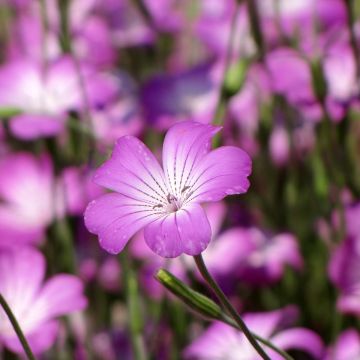
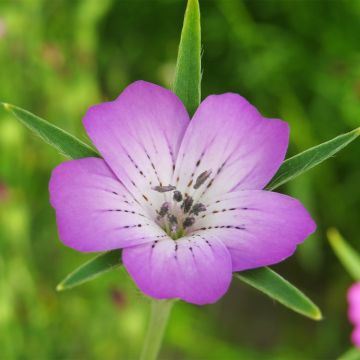
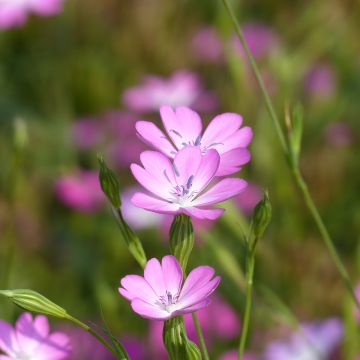
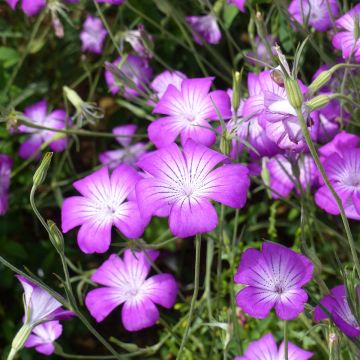
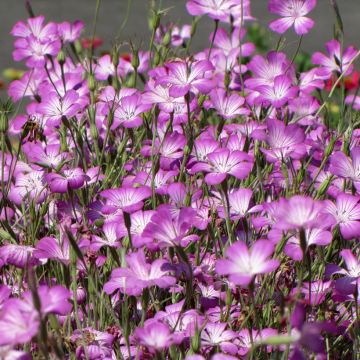
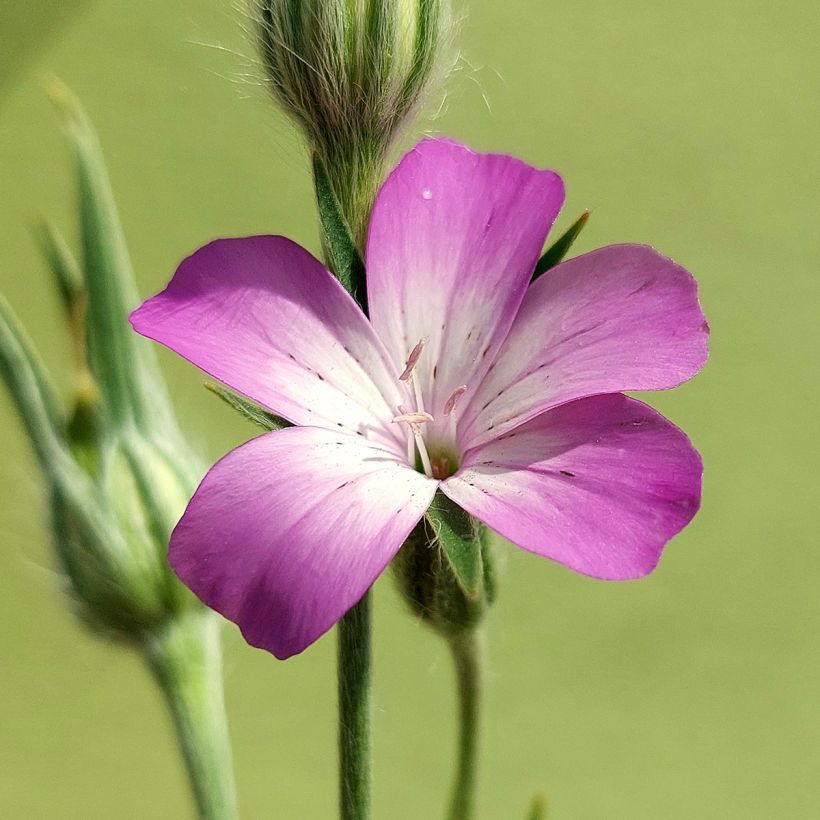
Corncockle forms a loose clump of erect stems, often branched in their upper part, with very fine, silky grey hairs. Plants reach 60 to 80cm in height and 20 to 30cm in width. The leaves are narrow, linear to lanceolate, 4 to 13cm long and 5 to 10mm wide, greyish-green, also covered with a light down. The flowers, solitary at the top of long stalks, measure about 3cm in diameter. They have a swollen tubular calyx ending in five long, very pointed leaf-like sepals that extend well beyond the corolla. The five petals are purplish pink to violet mauve, often paler at the base, with darker veins forming fine radiating stripes. White forms exist, though they are rarer. The nectar-rich flowering occurs from May-June to August depending on sowing date and region. The fruit is an ovoid capsule containing many grey to black, kidney-shaped, rough seeds, which readily self-sow if the soil is somewhat bare. All parts, particularly the seeds rich in saponins, are toxic to humans and animals. Once dreaded in wheat fields, where it could contaminate flour, it has become rare with seed sorting and the use of weedkillers, to the point of now being protected or monitored in several regions.
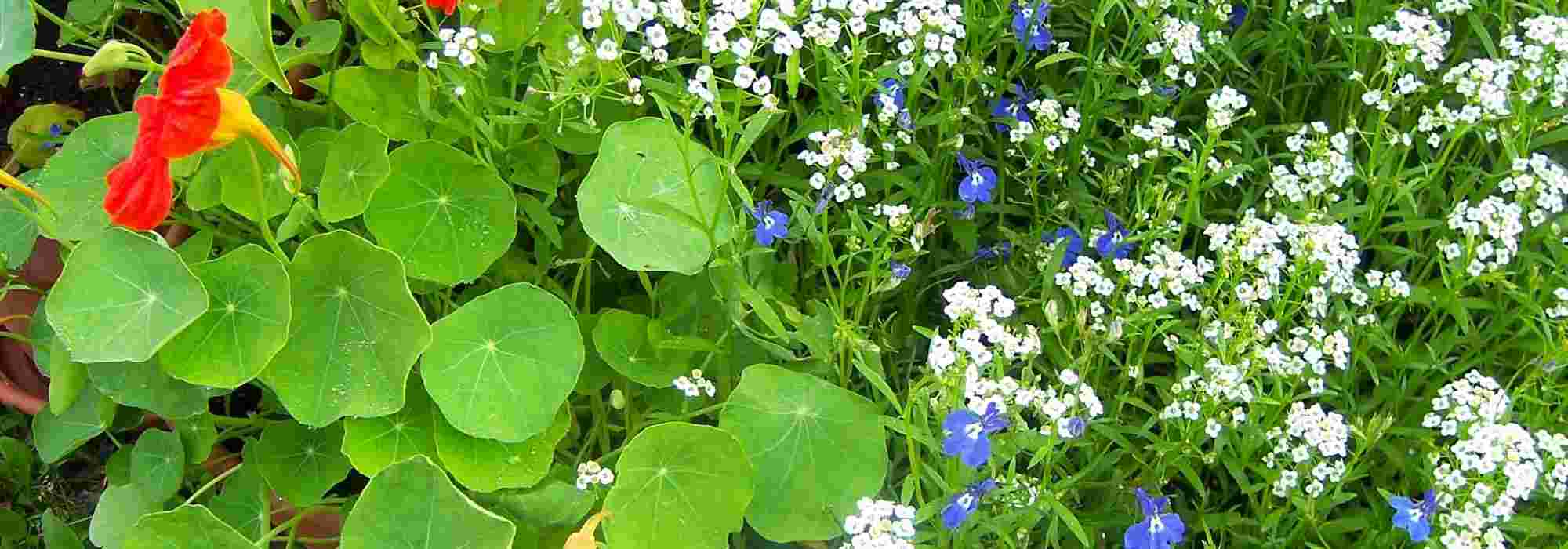
The organic Corncockle is essential in naturalistic or cottage gardens, and its flowers make charming arrangements to decorate the home. It pairs perfectly with plants such as ‘Falling in Love’ poppies, the double cornflowers of organic Centaurea cyanus ‘Blue Boy’, Nigella damascena ‘Miss Jekyll Alba’ and the large orange discs of Cosmos sulphureus ‘Crest Orange’. Together, these annuals form a colourful profusion that attracts a host of pollinators and provides armfuls of cut flowers.
Report an error about the product description
Corncockle organic seeds - Agrostemma githago in pictures
Flowering
Foliage
Plant habit
Botanical data
Agrostemma
githago
Caryophyllaceae
Corncockle
Githago segetum, Lychnis githago, Lychnis segetum, Silene githago
Eastern Europe, Southern Europe, North Africa, West Asia
Planting and care
Sowing:
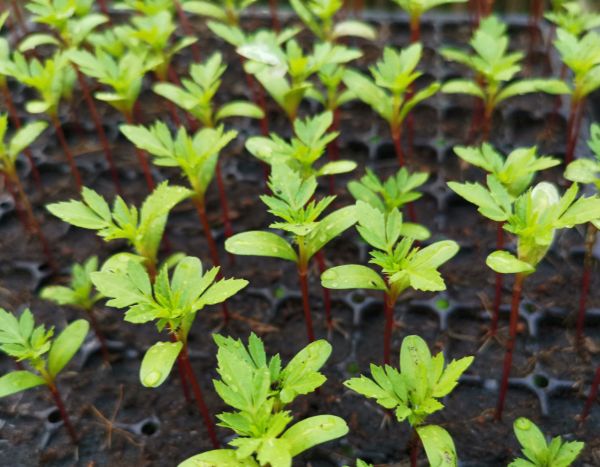
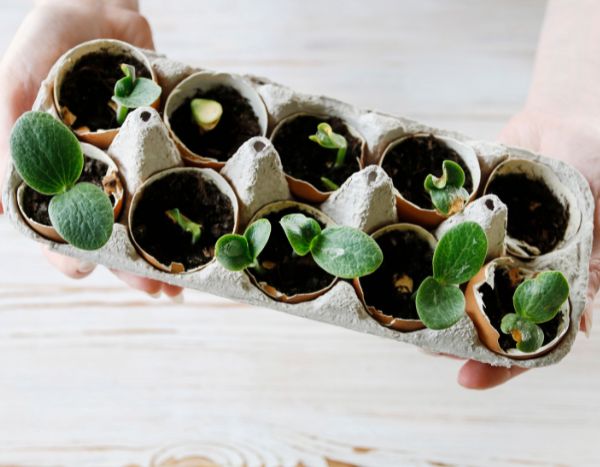
Sow organic corncockle seeds from March to May directly into open ground or in pots or seed trays, without covering the seeds (light is beneficial for their germination). Maintain a temperature of 18°C.
Transplant into open ground as soon as the young plants are manageable. Can be sown directly in place as soon as any risk of frost has passed by scattering, fairly thinly, and thinning out to 20 to 25cm. Spacing for sowing: 25 to 30 cm between plants. Recommended minimum sowing temperature: 18°C to 20°C.
Seeds can also be sown at the end of summer in regions that are not too cold, in September, for flowering the following year, at 16°/21°C.
Prick out into pots, plant in place at a distance of 30cm between each plant.
Cultivation:
Corncockle is an undemanding plant for any ordinary soil, preferably fertile and well-drained. It should be sown in place, in a very sunny position. In poor, dry soil, it will be smaller, but it will still flower abundantly.
Sowing period
Intended location
Planting & care advice
-

-
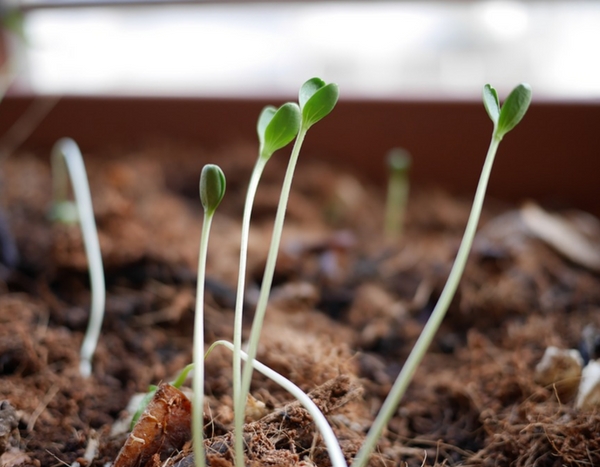
-
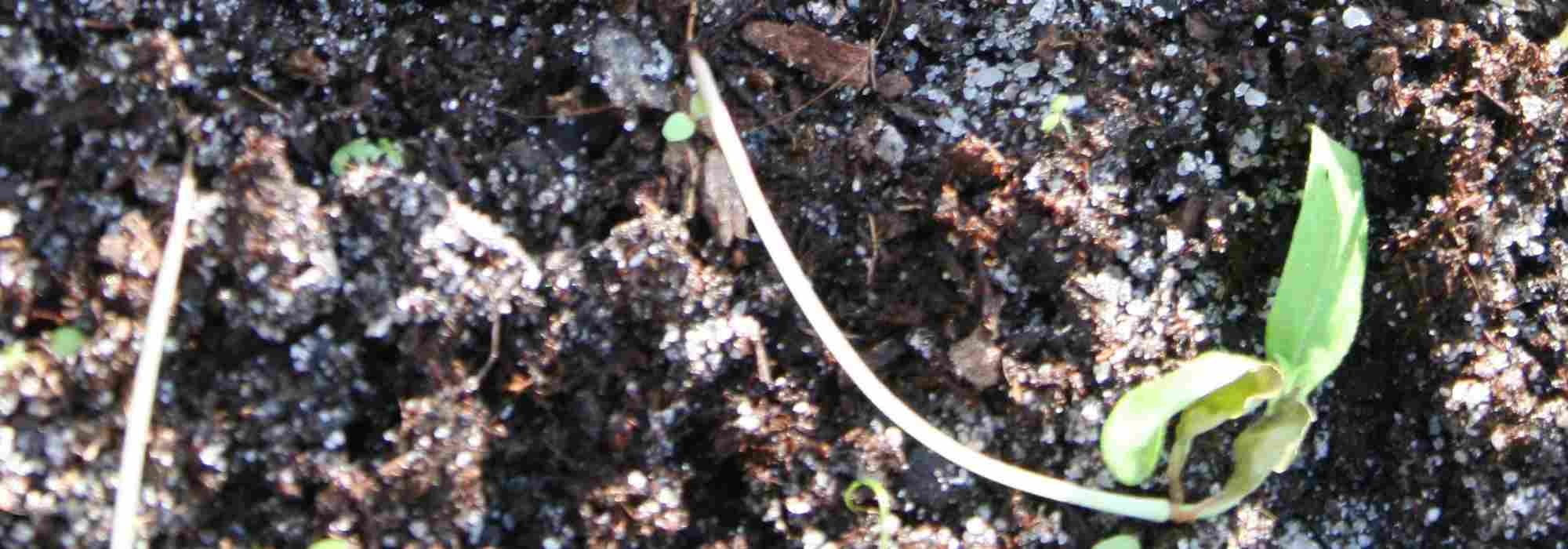
-
-

-
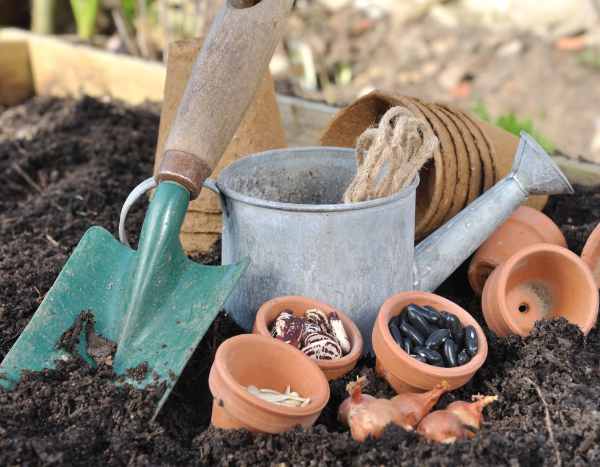
-
-
This item has not been reviewed yet - be the first to leave a review about it.
Recently viewed products
Haven't found what you were looking for?
Hardiness is the lowest winter temperature a plant can endure without suffering serious damage or even dying. However, hardiness is affected by location (a sheltered area, such as a patio), protection (winter cover) and soil type (hardiness is improved by well-drained soil).

The flowering period indicated on our website applies to countries and regions located in USDA zone 8 (France, the United Kingdom, Ireland, the Netherlands, etc.)
It will vary according to where you live:- In zones 9 to 10 (Italy, Spain, Greece, etc.), flowering will occur about 2 to 4 weeks earlier.
- In zones 6 to 7 (Germany, Poland, Slovenia, and lower mountainous regions), flowering will be delayed by 2 to 3 weeks.
- In zone 5 (Central Europe, Scandinavia), blooming will be delayed by 3 to 5 weeks.
In temperate climates, pruning of spring-flowering shrubs (forsythia, spireas, etc.) should be done just after flowering.
Pruning of summer-flowering shrubs (Indian Lilac, Perovskia, etc.) can be done in winter or spring.
In cold regions as well as with frost-sensitive plants, avoid pruning too early when severe frosts may still occur.
The planting period indicated on our website applies to countries and regions located in USDA zone 8 (France, United Kingdom, Ireland, Netherlands).
It will vary according to where you live:
- In Mediterranean zones (Marseille, Madrid, Milan, etc.), autumn and winter are the best planting periods.
- In continental zones (Strasbourg, Munich, Vienna, etc.), delay planting by 2 to 3 weeks in spring and bring it forward by 2 to 4 weeks in autumn.
- In mountainous regions (the Alps, Pyrenees, Carpathians, etc.), it is best to plant in late spring (May-June) or late summer (August-September).
The harvesting period indicated on our website applies to countries and regions in USDA zone 8 (France, England, Ireland, the Netherlands).
In colder areas (Scandinavia, Poland, Austria...) fruit and vegetable harvests are likely to be delayed by 3-4 weeks.
In warmer areas (Italy, Spain, Greece, etc.), harvesting will probably take place earlier, depending on weather conditions.
The sowing periods indicated on our website apply to countries and regions within USDA Zone 8 (France, UK, Ireland, Netherlands).
In colder areas (Scandinavia, Poland, Austria...), delay any outdoor sowing by 3-4 weeks, or sow under glass.
In warmer climes (Italy, Spain, Greece, etc.), bring outdoor sowing forward by a few weeks.
Shipping country and language
Your country of residence may be:
Your country of residence is:
For a better user experience on our website, you can select:
Your shipping country:
-
 Austria
-
 Belgium
-
 Bosnia & Herzegovina
-
 Bulgaria
-
 Croatia
-
 Cyprus
-
 Czechia
-
 Denmark
-
 Estonia
-
 Finland
-
 France
-
 Germany
-
 Greece
-
 Hungary
-
 Iceland
-
 Ireland
-
 Italy
Italy
-
 Latvia
-
 Liechtenstein
-
 Lithuania
-
 Luxembourg
-
 Malta
Malta
-
 Netherlands
-
 Poland
-
 Portugal
-
 Romania
-
 Serbia
-
 Slovakia
-
 Slovenia
-
 Spain
Spain
-
 Sweden
-
 Switzerland
Language:
-
French
-
 English
-
Spanish
-
Italian
-
German
-
Portuguese
-
Dutch
-
Finnish
My Account
Hello
My wish lists
My cart
Log in / Register
Existing customer?
This form is protected by reCAPTCHA - the Google Privacy Policy and Terms of Service apply.
New customer?
Create an account to track your orders, access our customer service and, if you wish, make the most of our upcoming offers.