
Matthiola incana 'Milla Aubergine' - Grande giroflée Milla Aubergine, Giroflée des jardins, Giroflée des fleuristes, Giroflée quarantaine
Matthiola incana 'Milla Aubergine' - Grande giroflée Milla Aubergine, Giroflée des jardins, Giroflée des fleuristes, Giroflée quarantaine
Matthiola incana 'Milla Aubergine' - Grande giroflée Milla Aubergine, Giroflée des jardins, Giroflée des fleuristes, Giroflée quarantaine
Matthiola incana 'Milla Aubergine'
Back-to-school special offer!
Get €10 off for every €50 you spend! And get up to €40 off on a single order.
How does it work?
1. Shop your favourites
Add your favourite plants to your basket. For every €50 you spend (excluding delivery charges, store credit and the plastic-free option), you’ll receive a €10 voucher.
€50 spent = €10 voucher
€100 spent = €20 voucher
€150 spent = €30 voucher
€200 spent = €40 voucher
2. Place your order
Once your basket reaches one of the spending thresholds, place your order. You can even choose your delivery date!
3. Receive your voucher
As soon as your order has been shipped, you’ll receive an email containing your personal voucher code and its value.
4. Use it on your next order
Your voucher is valid for 90 days from the date you receive it. It can be used once only, on a new order worth at least the value of the voucher, excluding delivery charges.
Please note: Vouchers can be combined with other offers, but cannot be split or refunded.
Home or relay delivery (depending on size and destination)
Important: You may be charged customs duties by your country’s customs authorities upon delivery.
Schedule delivery date
and select date in basket
This plant carries a 6 months recovery warranty
More information
We guarantee the quality of our plants for a full growing cycle, and will replace at our expense any plant that fails to recover under normal climatic and planting conditions.
Would this plant suit my garden?
Set up your Plantfit profile →
Description
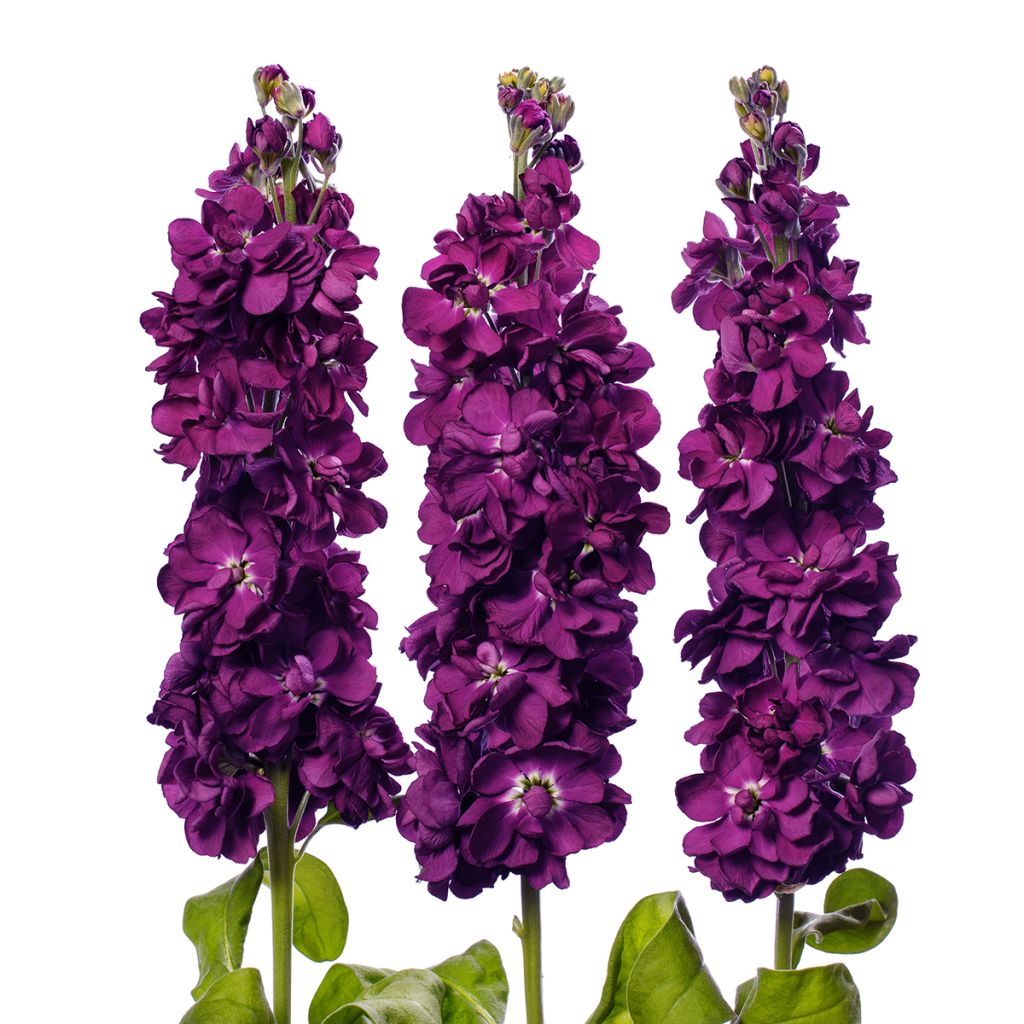
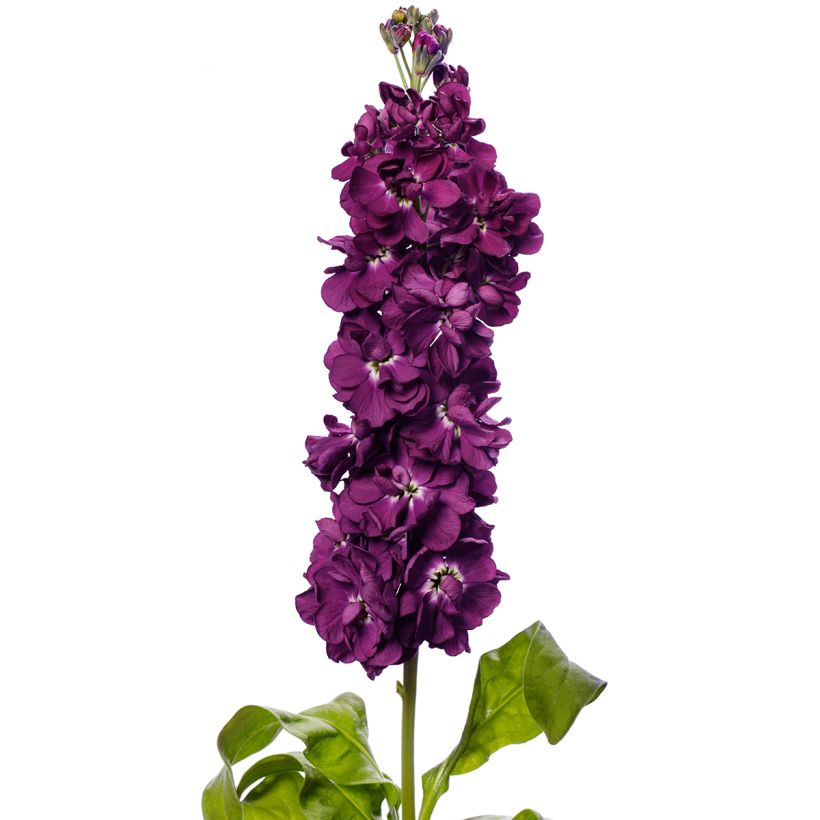
La Matthiola incana Milla ‘Aubergine’ est une variété de giroflée quarantaine de dernière génération. Elle produit des épis denses d’un violet aubergine profond, au parfum sucré. Sélectionnée pour ses tiges régulières et bien droites, elle convient aussi bien en massif qu’en potée et fournit d’excellentes fleurs à couper pour la maison. Le calendrier de semis, assez étendu, permet d’ajuster la culture selon le climat, du jardin de bord de mer aux terrasses urbaines ensoleillées. Le semis donne jusqu'à 100% de plants à fleurs doubles.
La Matthiola incana appartient à la famille des Brassicacées. On rencontre encore les synonymes Cheiranthus incanus et Hesperis incana pour cette espèce. À l’état spontané, elle croît sur les rivages et falaises calcaires du bassin méditerranéen (Péninsule Ibérique, Italie, Balkans, Grèce). Plante herbacée vivace de courte vie, elle est traditionnellement cultivée en bisannuelle sous les climats doux et comme annuelle dans la plupart des jardins et pour la production de fleur coupée.
La série Milla regroupe plusieurs cultivars récents, sélectionnés pour leurs hampes florales longues, une bonne homogénéité en culture et un parfum marqué. 'Aubergine’ correspond à la teinte violet foncé. Les plantes montrent un port dressé, compact à la base et une croissance rapide. En pleine terre, comptez 60 à 80 cm de haut pour 30 à 45 cm d’étalement ; en pot de 3 à 5 litres, la hauteur se situe entre 30 et 50 cm. Les feuilles, alternes, lancéolées, marge entière, mesurent 6 à 12 cm. Elles sont d'un gris-vert et couvertes d’un fin duvet. Le feuillage est caduc à semi-persistant selon la douceur de l’hiver. La période de floraison dépend de la date du semis, elle s'étend d’avril-mai jusqu’au début ou au milieu de l’été. Les inflorescences sont des grappes terminales serrées ; les fleurs, de 2 à 3 cm de diamètre, sont généralement doubles dans cette série et dégagent un parfum sucré-épicé perceptible en fin de journée. Capable de supporter de courtes gelées, la plante préfère des nuits fraîches et supporte mal la chaleur sèche prolongée.
Au jardin, installez la giroflée Milla ‘Aubergine’ en bordure de massif, en ruban le long d’une allée pour profiter du parfum au passage, ou en potées sur la terrasse. Associez-la à des bulbes de printemps et des vivaces légères qui aiment les sols drainés : tulipes tardives blanches ou rose pâle, myosotis bleu tendre qui sert de couvre-sol de saison ou ancolies à fleurs doubles. Mariez-la avec d'autres variétés de giroflée double très parfumées comme ‘Cinderella’, qui propose un mélange de 5 coloris. Pour les bouquets, coupez quand un tiers à la moitié des fleurs de l’épi sont ouvertes ; placez-les rapidement dans une eau propre et fraîche.
Matthiola incana 'Milla Aubergine' - Grande giroflée Milla Aubergine, Giroflée des jardins, Giroflée des fleuristes, Giroflée quarantaine in pictures
Flowering
Foliage
Plant habit
Botanical data
Matthiola
incana
'Milla Aubergine'
Brassicaceae
Cheiranthus incanus 'Milla Aubergine'
Cultivar or hybrid
Planting and care
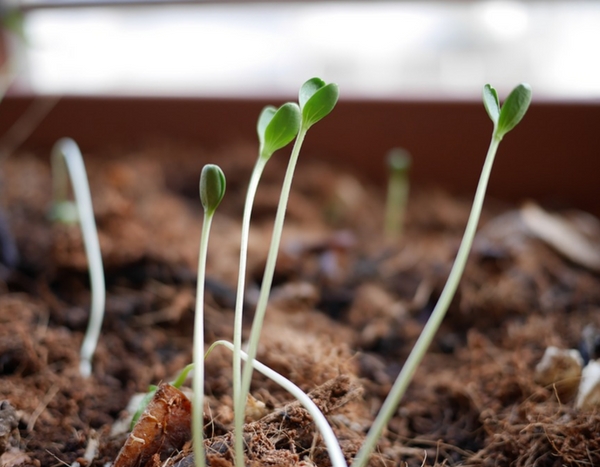
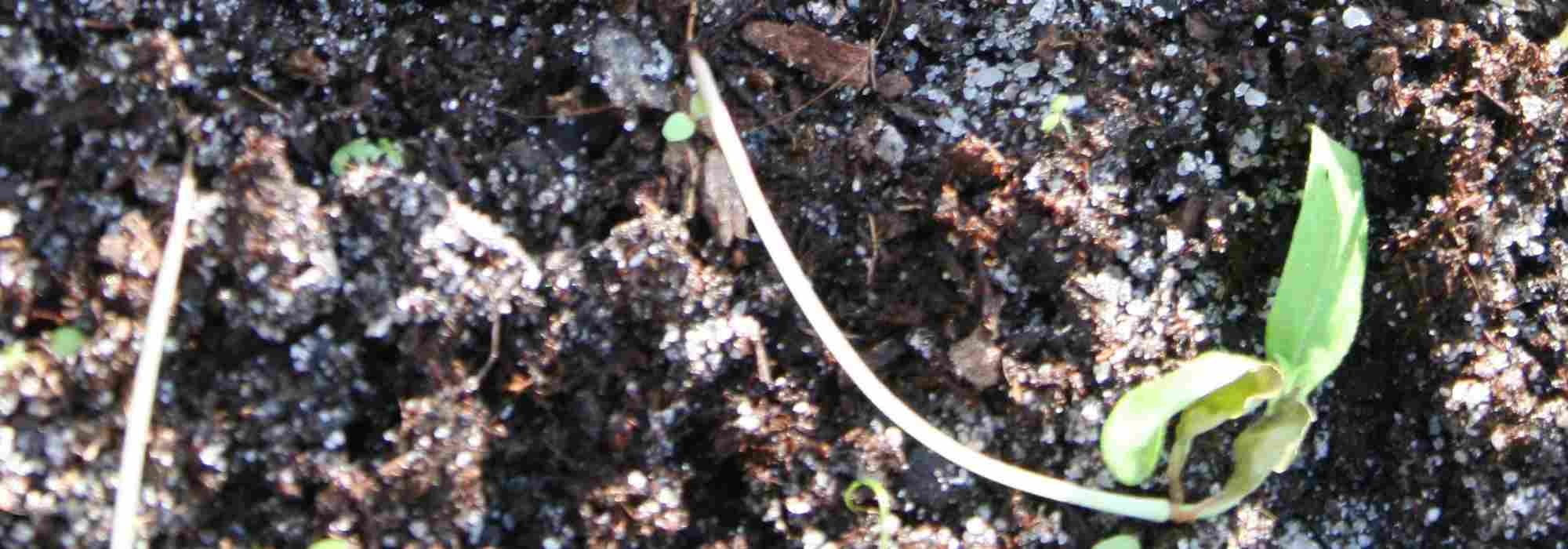
Sow 'Milla Aubergine' wallflowers from February to April or in late summer (in mild climates). Sow the seeds on the surface of moist compost, in pots or trays, and lightly cover the seeds with a thin layer of vermiculite. Place in a propagator or enclose the containers in a clear plastic bag, kept in a warm place at a temperature between 20-25°C. Keep the sowing close to a light source, as this encourages germination. Keep the surface of the compost moist, but not waterlogged; germination will usually take 10 to 21 days.
When the young plants are sufficiently developed, transplant them into 7.5 cm pots or trays. Gradually acclimatise the plants to cooler conditions for a few days before planting out, after all risk of frost, spacing them 30 cm apart. Choose a sunny spot and well-draining soil, or pots filled with a rich, free-draining mixture.
In dry soil and sunny positions, remember to water your plants frequently in summer, so the soil never completely dries out between waterings.
Sowing period
Intended location
Planting & care advice
-

-
-
-

-

-
-

-
This item has not been reviewed yet - be the first to leave a review about it.
Recently viewed products
Haven't found what you were looking for?
Hardiness is the lowest winter temperature a plant can endure without suffering serious damage or even dying. However, hardiness is affected by location (a sheltered area, such as a patio), protection (winter cover) and soil type (hardiness is improved by well-drained soil).

The flowering period indicated on our website applies to countries and regions located in USDA zone 8 (France, the United Kingdom, Ireland, the Netherlands, etc.)
It will vary according to where you live:- In zones 9 to 10 (Italy, Spain, Greece, etc.), flowering will occur about 2 to 4 weeks earlier.
- In zones 6 to 7 (Germany, Poland, Slovenia, and lower mountainous regions), flowering will be delayed by 2 to 3 weeks.
- In zone 5 (Central Europe, Scandinavia), blooming will be delayed by 3 to 5 weeks.
In temperate climates, pruning of spring-flowering shrubs (forsythia, spireas, etc.) should be done just after flowering.
Pruning of summer-flowering shrubs (Indian Lilac, Perovskia, etc.) can be done in winter or spring.
In cold regions as well as with frost-sensitive plants, avoid pruning too early when severe frosts may still occur.
The planting period indicated on our website applies to countries and regions located in USDA zone 8 (France, United Kingdom, Ireland, Netherlands).
It will vary according to where you live:
- In Mediterranean zones (Marseille, Madrid, Milan, etc.), autumn and winter are the best planting periods.
- In continental zones (Strasbourg, Munich, Vienna, etc.), delay planting by 2 to 3 weeks in spring and bring it forward by 2 to 4 weeks in autumn.
- In mountainous regions (the Alps, Pyrenees, Carpathians, etc.), it is best to plant in late spring (May-June) or late summer (August-September).
The harvesting period indicated on our website applies to countries and regions in USDA zone 8 (France, England, Ireland, the Netherlands).
In colder areas (Scandinavia, Poland, Austria...) fruit and vegetable harvests are likely to be delayed by 3-4 weeks.
In warmer areas (Italy, Spain, Greece, etc.), harvesting will probably take place earlier, depending on weather conditions.
The sowing periods indicated on our website apply to countries and regions within USDA Zone 8 (France, UK, Ireland, Netherlands).
In colder areas (Scandinavia, Poland, Austria...), delay any outdoor sowing by 3-4 weeks, or sow under glass.
In warmer climes (Italy, Spain, Greece, etc.), bring outdoor sowing forward by a few weeks.
Shipping country and language
Your country of residence may be:
Your country of residence is:
For a better user experience on our website, you can select:
Your shipping country:
-
 Austria
-
 Belgium
-
 Bosnia & Herzegovina
-
 Bulgaria
-
 Croatia
-
 Cyprus
-
 Czechia
-
 Denmark
-
 Estonia
-
 Finland
-
 France
-
 Germany
-
 Greece
-
 Hungary
-
 Iceland
-
 Ireland
-
 Italy
Italy
-
 Latvia
-
 Liechtenstein
-
 Lithuania
-
 Luxembourg
-
 Malta
Malta
-
 Netherlands
-
 Poland
-
 Portugal
-
 Romania
-
 Serbia
-
 Slovakia
-
 Slovenia
-
 Spain
Spain
-
 Sweden
-
 Switzerland
Language:
-
French
-
 English
-
Spanish
-
Italian
-
German
-
Portuguese
-
Dutch
-
Finnish
My Account
Hello
My wish lists
My cart
Log in / Register
Existing customer?
This form is protected by reCAPTCHA - the Google Privacy Policy and Terms of Service apply.
New customer?
Create an account to track your orders, access our customer service and, if you wish, make the most of our upcoming offers.