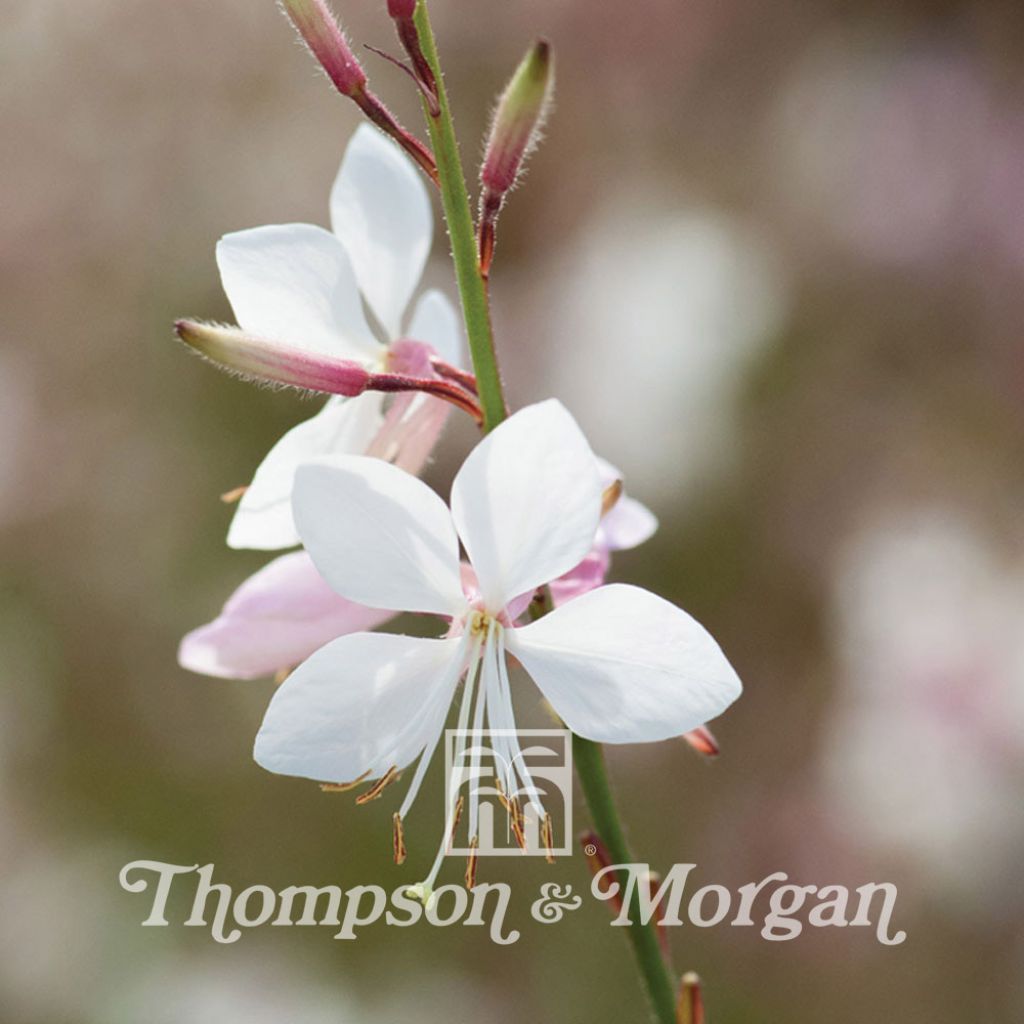
Gaura lindheimeri Sparkle White - Lindheimer's Beeblossom seeds
Gaura lindheimeri Sparkle White - Lindheimer's Beeblossom seeds
Gaura lindheimeri Sparkle White
Lindheimer's Beeblossom, Indian Feather, White Gaura
Despite being well exposed, no results...
chrystel, 20/01/2016
Back-to-school special offer!
Get €10 off for every €50 you spend! And get up to €40 off on a single order.
How does it work?
1. Shop your favourites
Add your favourite plants to your basket. For every €50 you spend (excluding delivery charges, store credit and the plastic-free option), you’ll receive a €10 voucher.
€50 spent = €10 voucher
€100 spent = €20 voucher
€150 spent = €30 voucher
€200 spent = €40 voucher
2. Place your order
Once your basket reaches one of the spending thresholds, place your order. You can even choose your delivery date!
3. Receive your voucher
As soon as your order has been shipped, you’ll receive an email containing your personal voucher code and its value.
4. Use it on your next order
Your voucher is valid for 90 days from the date you receive it. It can be used once only, on a new order worth at least the value of the voucher, excluding delivery charges.
Please note: Vouchers can be combined with other offers, but cannot be split or refunded.
Why not try an alternative variety in stock?
View all →
Available in 1 sizes
Available in 1 sizes
Available in 1 sizes
Available in 1 sizes
Available in 1 sizes
Available in 2 sizes
Available in 2 sizes

Available in 2 sizes
Available in 1 sizes
Available in 1 sizes
This plant carries a 6 months recovery warranty
More information
We guarantee the quality of our plants for a full growing cycle, and will replace at our expense any plant that fails to recover under normal climatic and planting conditions.
Would this plant suit my garden?
Set up your Plantfit profile →
Description
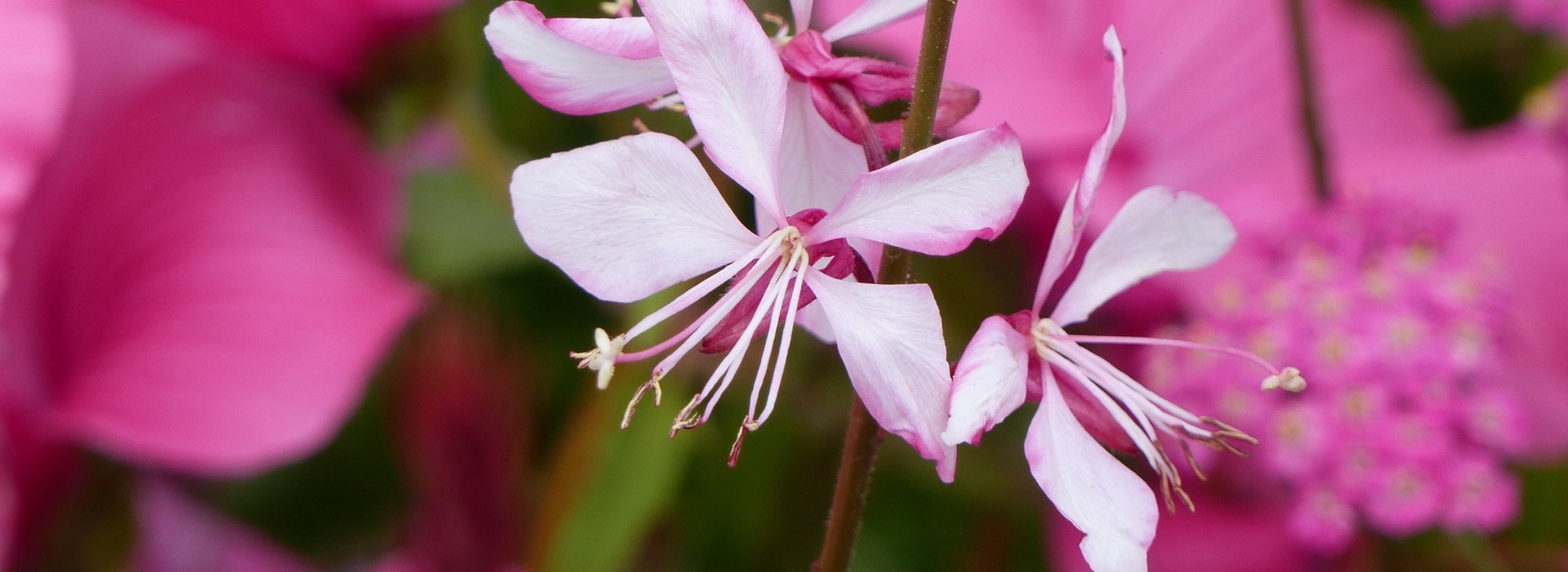
Gaura lindheimeri Sparkle White offers a denser and earlier flowering than most other varieties. It develops thin stems, topped with a whirl of dazzling star-shaped white flowers until the end of summer. This variety forms well-regulated clusters, neat-looking until late in the season, perfect for the front of borders or to line pathways. This plant is short-lived but elegant and proud, indispensable in a flower garden. Ideal in dry to moist, even poor soil, in full sun. Sowing is easy, it grows fast and flowers quickly.
Gaura lindheimeri Sparkle White belongs to the onagraceae family, it is a cousin of evening primroses. The natural range of Gaura lindheimeri, from which it originates, is located on the border between Mexico and the United States (Prairies and pine forests of Louisiana and Texas, Houston). It is one of the most floriferous plants. 'Sparkle White' has a compact tufted habit. It is a perennial with a taproot, forming a bushy, slightly spreading clump, 40 to 50 cm (16 to 20in) high, with a spread of 20 to 30 cm (8 to 12in). It is the numerous, slender branched floral stems that give the plant its bushy appearance. Flowering occurs in successive waves, from mid-spring to autumn. The flowers look like butterflies and mix with the purple buds, grouped in paniculate spikes 20 to 50 cm (8 to 20in) long. They are white, barely tinged with pale pink and slightly salmon-coloured on the outside. The medium green foliage is deciduous. These small leaves are downy on both sides. The root system is a taproot that allows the plant to anchor itself in poor, even rocky soils.
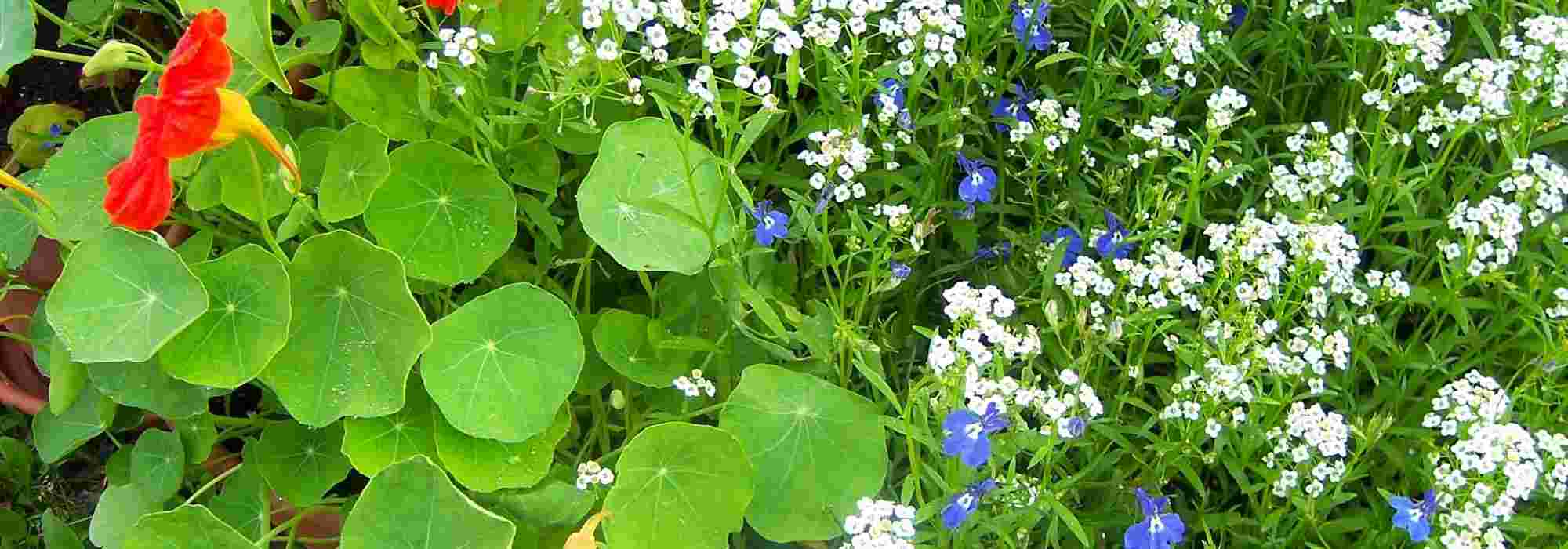
Gauras have quickly become the stars of urban flower beds and gardens. This success is explained by their incredible floribundance and the speed at which they develop. These plants seem unaffected by the wind and quickly become indispensable for anyone who has tried them. No matter where they are planted, they bring lightness and grace. Gaura lindheimeri 'Sparkle White' fits well at the forefront of herbaceous borders or flower bed and highlights the curve of a pathway. It goes well with roses, grows between shrubs like abelias and deutzias and accompanies perennials like daylilies, catmints, Scabiosa Moon Dance, Asclepias Ice Ballet, and Oenothera versicolor. Gaura also thrives in pots and containers.
The species name comes from the Greek 'gauros' which means magnificent, proud, alluding to its astonishing flowering resembling butterflies clinging to its stems.
Flowering
Foliage
Plant habit
Botanical data
Gaura
lindheimeri
Sparkle White
Onagraceae
Lindheimer's Beeblossom, Indian Feather, White Gaura
Cultivar or hybrid
Planting and care
Sow Gaura seeds from January to May or in September to October.
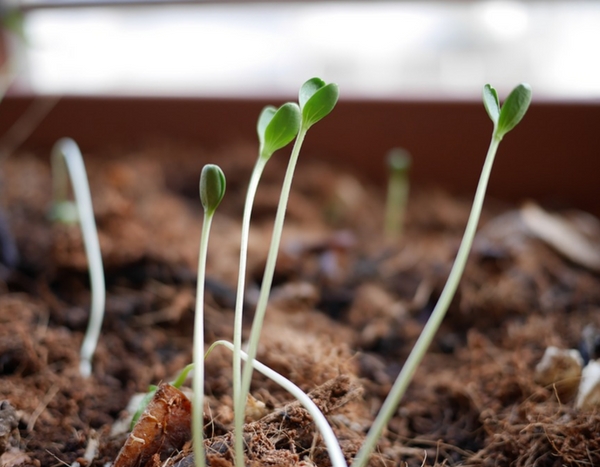
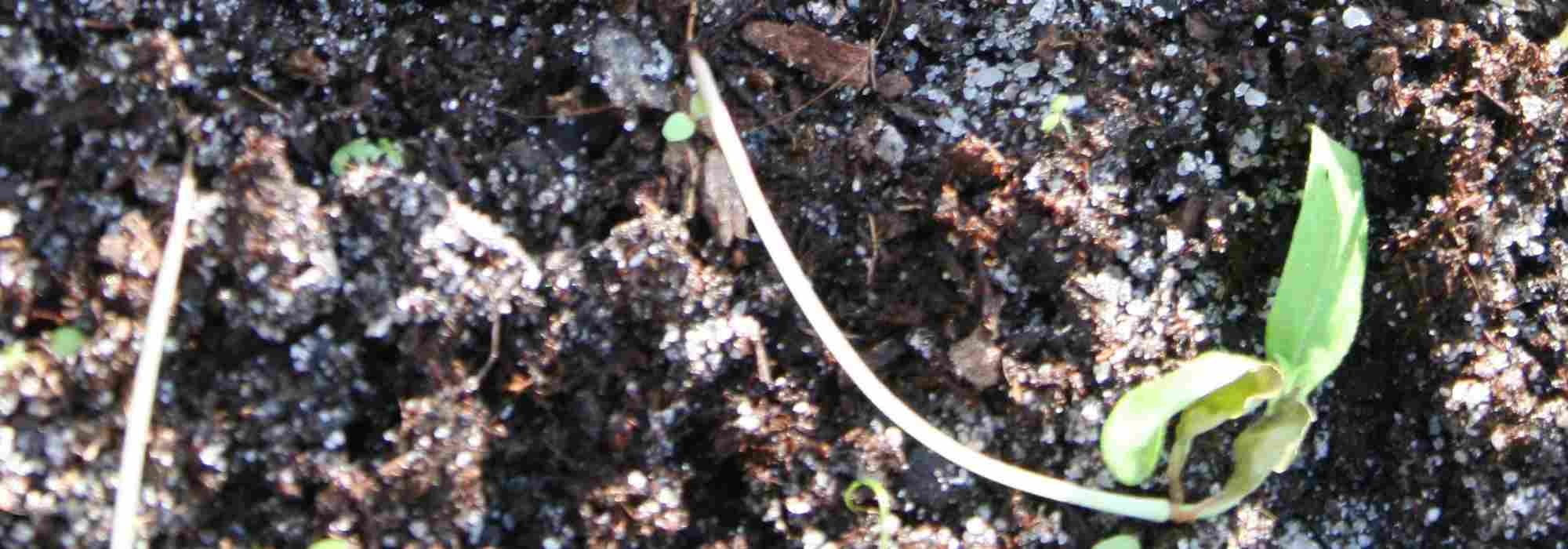
January to May seems to be the most favourable period for sowing. You can then plant the young plants in the ground in summer. Sow the seeds in a seed tray or pot filled with compost. Sow the seeds 2mm (0in) deep and cover with a pinch of sieved soil or a thin layer of vermiculite. Water lightly. Keep at 18 - 24° C, in a sheltered place. You can also cover the seed tray or pots with a plastic bag, which you should turn over every 3 days to prevent excessive condensation. Place on the windowsill, away from direct sunlight. Germination takes 15 to 30 days, sometimes longer. Take the seedlings out of their bag as soon as they germinate. When the plants are large enough to handle, transplant them into 9cm (4in) pots. Harden them off before planting them outside in May.
If you have sown late, towards the end of the year, let the plants grow until they enter winter dormancy. Keep them dry and frost-free in a well-lit and cool place during winter. Once green shoots appear, water the young plants and keep them frost-free in a well-lit place, ready to transplant them in May.
Gaura lindheimeri is not fussy about the nature of the soil, as long as it is very well-drained and will tolerate even poor and dry soil. The only enemy of this plant is stagnant moisture, even more so than the cold, so incorporate draining materials such as gravel and river sand into the garden soil. These conditions will enable it to live for several years. Pruning is essential after each flowering wave to encourage new flowering shoots and can achieve multiple flowerings from June until November without interruption (do not prune all clumps in the garden at the same time). Pruning at the start of vegetation (March-April) will give the plant a harmonious shape.
Sowing period
Intended location
Planting & care advice
-
-
-
-
-
-

-

-

-
, onOrder confirmed
Reply from on Promesse de fleurs
Recently viewed products
Haven't found what you were looking for?
Hardiness is the lowest winter temperature a plant can endure without suffering serious damage or even dying. However, hardiness is affected by location (a sheltered area, such as a patio), protection (winter cover) and soil type (hardiness is improved by well-drained soil).

The flowering period indicated on our website applies to countries and regions located in USDA zone 8 (France, the United Kingdom, Ireland, the Netherlands, etc.)
It will vary according to where you live:- In zones 9 to 10 (Italy, Spain, Greece, etc.), flowering will occur about 2 to 4 weeks earlier.
- In zones 6 to 7 (Germany, Poland, Slovenia, and lower mountainous regions), flowering will be delayed by 2 to 3 weeks.
- In zone 5 (Central Europe, Scandinavia), blooming will be delayed by 3 to 5 weeks.
In temperate climates, pruning of spring-flowering shrubs (forsythia, spireas, etc.) should be done just after flowering.
Pruning of summer-flowering shrubs (Indian Lilac, Perovskia, etc.) can be done in winter or spring.
In cold regions as well as with frost-sensitive plants, avoid pruning too early when severe frosts may still occur.
The planting period indicated on our website applies to countries and regions located in USDA zone 8 (France, United Kingdom, Ireland, Netherlands).
It will vary according to where you live:
- In Mediterranean zones (Marseille, Madrid, Milan, etc.), autumn and winter are the best planting periods.
- In continental zones (Strasbourg, Munich, Vienna, etc.), delay planting by 2 to 3 weeks in spring and bring it forward by 2 to 4 weeks in autumn.
- In mountainous regions (the Alps, Pyrenees, Carpathians, etc.), it is best to plant in late spring (May-June) or late summer (August-September).
The harvesting period indicated on our website applies to countries and regions in USDA zone 8 (France, England, Ireland, the Netherlands).
In colder areas (Scandinavia, Poland, Austria...) fruit and vegetable harvests are likely to be delayed by 3-4 weeks.
In warmer areas (Italy, Spain, Greece, etc.), harvesting will probably take place earlier, depending on weather conditions.
The sowing periods indicated on our website apply to countries and regions within USDA Zone 8 (France, UK, Ireland, Netherlands).
In colder areas (Scandinavia, Poland, Austria...), delay any outdoor sowing by 3-4 weeks, or sow under glass.
In warmer climes (Italy, Spain, Greece, etc.), bring outdoor sowing forward by a few weeks.
Shipping country and language
Your country of residence may be:
Your country of residence is:
For a better user experience on our website, you can select:
Your shipping country:
-
 Austria
-
 Belgium
-
 Bosnia & Herzegovina
-
 Bulgaria
-
 Croatia
-
 Cyprus
-
 Czechia
-
 Denmark
-
 Estonia
-
 Finland
-
 France
-
 Germany
-
 Greece
-
 Hungary
-
 Iceland
-
 Ireland
-
 Italy
Italy
-
 Latvia
-
 Liechtenstein
-
 Lithuania
-
 Luxembourg
-
 Malta
Malta
-
 Netherlands
-
 Poland
-
 Portugal
-
 Romania
-
 Serbia
-
 Slovakia
-
 Slovenia
-
 Spain
Spain
-
 Sweden
-
 Switzerland
Language:
-
French
-
 English
-
Spanish
-
Italian
-
German
-
Portuguese
-
Dutch
-
Finnish
My Account
Hello
My wish lists
My cart
Log in / Register
Existing customer?
This form is protected by reCAPTCHA - the Google Privacy Policy and Terms of Service apply.
New customer?
Create an account to track your orders, access our customer service and, if you wish, make the most of our upcoming offers.