
Eucalyptus kruseana seeds - Fine leaf Mallee
Eucalyptus kruseana seeds - Fine leaf Mallee
Eucalyptus kruseana
Fine leaf Mallee
Back-to-school special offer!
Get €10 off for every €50 you spend! And get up to €40 off on a single order.
How does it work?
1. Shop your favourites
Add your favourite plants to your basket. For every €50 you spend (excluding delivery charges, store credit and the plastic-free option), you’ll receive a €10 voucher.
€50 spent = €10 voucher
€100 spent = €20 voucher
€150 spent = €30 voucher
€200 spent = €40 voucher
2. Place your order
Once your basket reaches one of the spending thresholds, place your order. You can even choose your delivery date!
3. Receive your voucher
As soon as your order has been shipped, you’ll receive an email containing your personal voucher code and its value.
4. Use it on your next order
Your voucher is valid for 90 days from the date you receive it. It can be used once only, on a new order worth at least the value of the voucher, excluding delivery charges.
Please note: Vouchers can be combined with other offers, but cannot be split or refunded.
Home or relay delivery (depending on size and destination)
Important: You may be charged customs duties by your country’s customs authorities upon delivery.
Schedule delivery date
and select date in basket
This plant carries a 6 months recovery warranty
More information
We guarantee the quality of our plants for a full growing cycle, and will replace at our expense any plant that fails to recover under normal climatic and planting conditions.
Would this plant suit my garden?
Set up your Plantfit profile →
Description
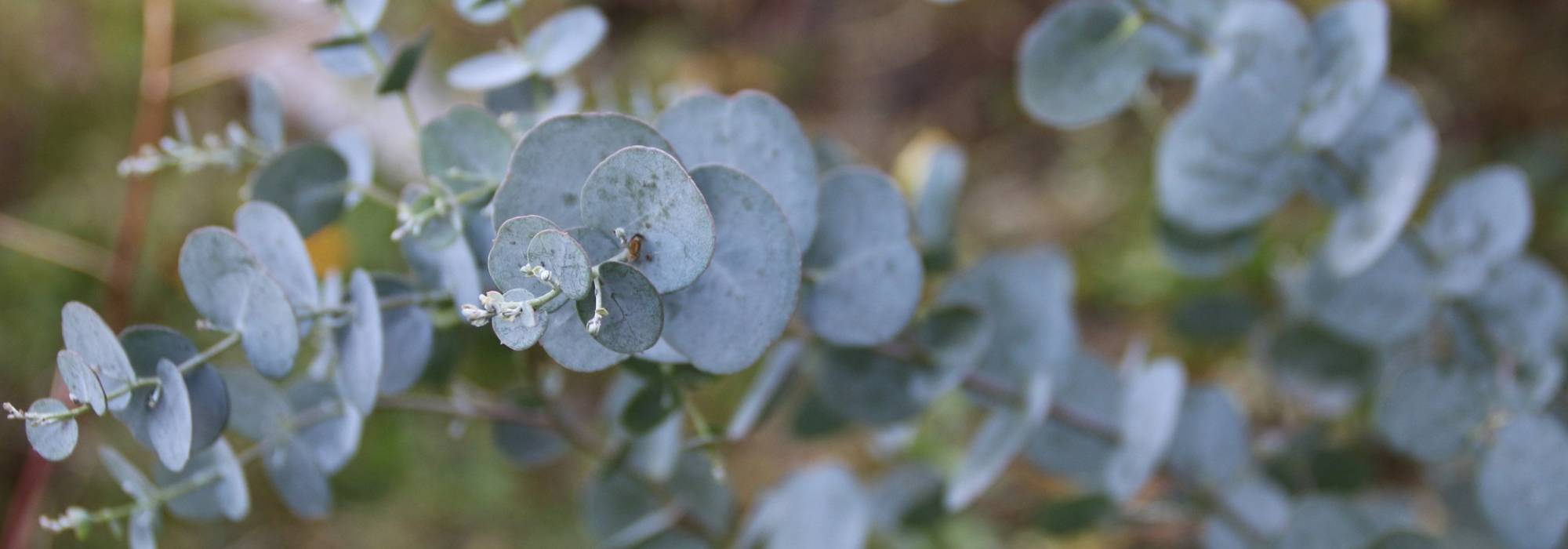
Eucalyptus kruseana is a Mallee-type eucalyptus with a multi-trunked, bushy habit. This Australian shrub with evergreen foliage is particularly prized for its compact habit and unique blue-grey leaves. Its common English name, "Bookleaf Mallee," comes from the dense, symmetrical arrangement of its small, round leaves, which closely cover its stems, giving the plant a structured and decorative appearance. Its distinctive foliage and adaptation to arid conditions make it an ideal plant for dry gardens and for growing in containers.
Eucalyptus kruseana belongs to the Myrtaceae family, which includes many Eucalyptus species with similar characteristics. It is endemic to Western Australia, where it grows naturally in arid regions, often on rocky, granitic soils. It is mainly found around Kalgoorlie and Coolgardie, where it adapts to extreme climatic conditions, with limited rainfall and high summer temperatures. With a bushy, compact habit, this shrub develops several erect, branched stems from the base, giving it a dense, tufted appearance. Its height generally ranges from 2 to 3 metres, with a similar spread. Its smooth, coppery-brown bark peels off in fine strips, revealing a lighter shade underneath. The evergreen foliage is one of its most prized characteristics: the leaves are small, round, and thick, measuring about 2.5cm in diameter, and are arranged in opposite pairs along the branches. Their blue-grey, sometimes slightly silvery, colour gives them a bright, slightly powdery look. Unlike other Eucalyptus species, its juvenile leaves persist throughout the life of the plant, giving it a constant, uniform appearance. Flowering occurs mainly in winter and early spring, presenting as small, globular clusters of yellow-green flowers in the leaf axils. The nectar-rich flowers, arranged in groups of seven waxy buds, are topped with erect petals that release long, golden stamens. After flowering, the plant produces woody capsules containing small seeds, adapted for germination in dry conditions. This gum tree possesses a lignotuber (a swollen storage organ with many dormant buds) highly developed at the collar, which allows it to resprout vigorously after frost, fire, or severe pruning.
Thanks to its resistance to drought, poor soils, and intense heat, this shrub is an excellent choice for Mediterranean and dry gardens. It is also used in floral art, its leafy branches being prized for their unique texture and longevity in cut flower arrangements. Eucalyptus kruseana is ideal for small gardens or container planting, due to its moderate size and decorative foliage. It prefers a full sun position and tolerates a variety of soils, provided they are well-drained. Once established, it is drought-resistant and tolerates frost. To maintain a compact shape and prevent sparse growth, it is recommended to prune it from a young age. It brings a touch of exoticism to the garden, planted as a hedge with other shrubs like Callistemons or Leptospermums, in groups or as a specimen. It is not very hardy, only tolerating cold down to -6 to -8°C. The ideal climate for this small tree is coastal (at least 100m from the shore) or somewhere cold spells are light and short-lived. Elsewhere, it is safer to overwinter it like an orange tree, in a cool, bright room.
```
Flowering
Foliage
Plant habit
Botanical data
Eucalyptus
kruseana
Myrtaceae
Fine leaf Mallee
Australia
Planting and care
Sowing:
Sow the seeds of Eucalyptus kruseana at any time of year.
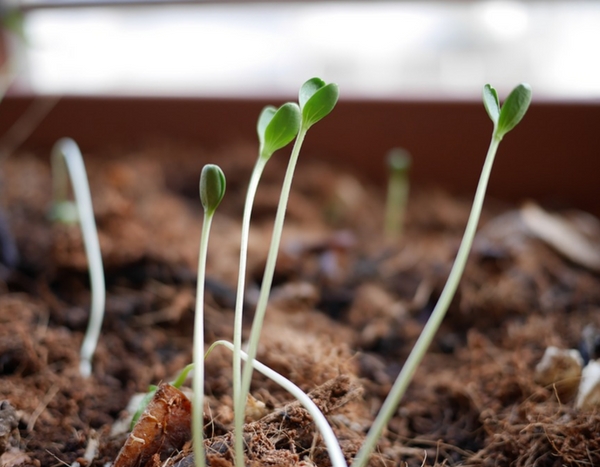
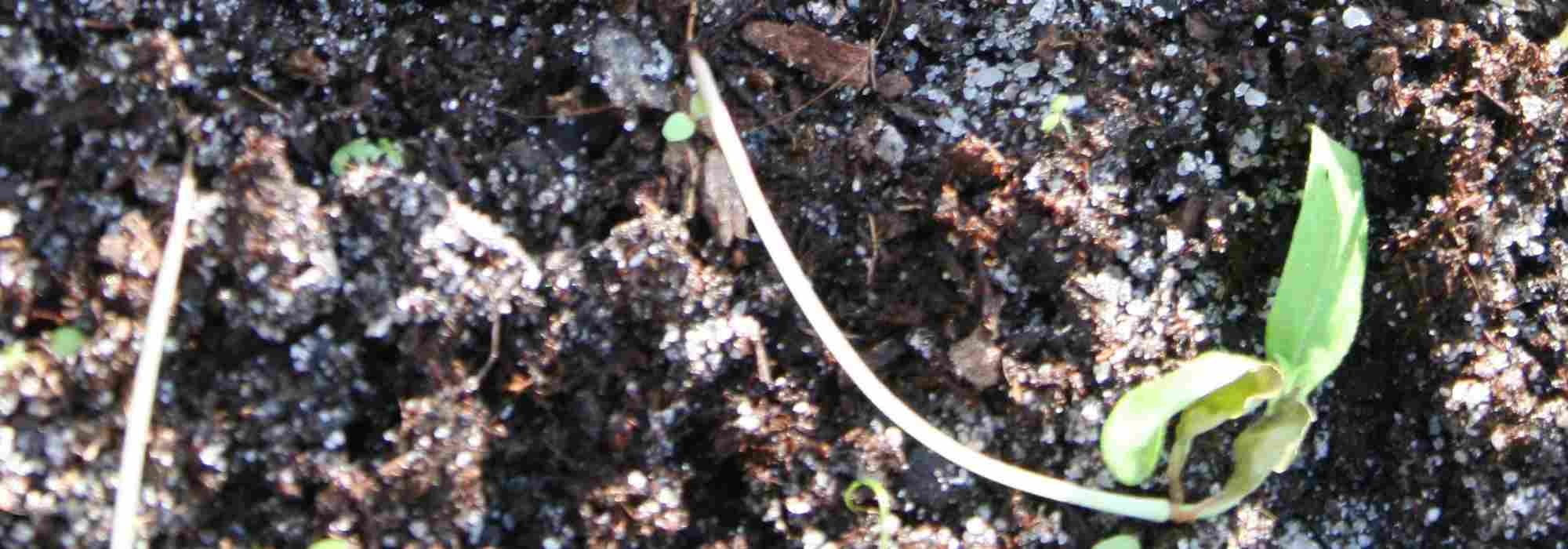
Sow the seeds on the surface of a moistened seed-sowing compost, in trays or pots. Light is necessary for germination, so barely cover the seeds with a fine layer of vermiculite or do not cover them at all. Enclose your sowings in clear plastic and keep them at a temperature of between 20 and 25°C. Keep the surface of the compost moist, but not waterlogged. Germination can be slow and erratic, generally taking between 14 and 90 days.
Some gardeners recommend soaking the seeds in cold water for 3 days before sowing them in trays in warmth (20-22°C).
When they are large enough to handle, transplant your young eucalyptus into 7.5cm pots in a soilless substrate, rich in compost and sand. Grow them on for a while, then pot them on again into 13cm pots until your young plants have reached a sufficient size (40 to 60cm) to be transplanted outdoors or into large pots. Gradually acclimatise your young eucalyptus to cooler growing conditions for a few weeks before planting them out, once the frosts have passed. The young plants must be protected from frost in winter during their first 2 or 3 years of life.
The growth of the seedlings is slow until they reach 20cm in height. Once this size is reached, it accelerates noticeably.
Growing:
Eucalyptus is best planted in early spring, in well-drained, dry soil, not too lime-bearing, in a warm, sunny position, but sheltered from strong, cold winds. In mild climates, plant it in open ground, taking care with drainage by adding coarse sand, lava rock or non-calcareous gravel. Then let nature take its course; growth is fairly rapid. No pruning is necessary. Water regularly for the first two years, then the shrub requires no watering at all in summer once well established. Fertilisation is not recommended. In March, you can cut it back to ground level to form a fine, bushy shrub, well branched and 2m tall. It grows well in pots, which should be fairly large and filled with a light yet rich substrate. Pay attention to watering. Store in a cold greenhouse, or in an unheated, bright room in winter, such as an orangery.
Sowing period
Intended location
Planting & care advice
-

-
-
-
-

-
-
-

This item has not been reviewed yet - be the first to leave a review about it.
Recently viewed products
Haven't found what you were looking for?
Hardiness is the lowest winter temperature a plant can endure without suffering serious damage or even dying. However, hardiness is affected by location (a sheltered area, such as a patio), protection (winter cover) and soil type (hardiness is improved by well-drained soil).

The flowering period indicated on our website applies to countries and regions located in USDA zone 8 (France, the United Kingdom, Ireland, the Netherlands, etc.)
It will vary according to where you live:- In zones 9 to 10 (Italy, Spain, Greece, etc.), flowering will occur about 2 to 4 weeks earlier.
- In zones 6 to 7 (Germany, Poland, Slovenia, and lower mountainous regions), flowering will be delayed by 2 to 3 weeks.
- In zone 5 (Central Europe, Scandinavia), blooming will be delayed by 3 to 5 weeks.
In temperate climates, pruning of spring-flowering shrubs (forsythia, spireas, etc.) should be done just after flowering.
Pruning of summer-flowering shrubs (Indian Lilac, Perovskia, etc.) can be done in winter or spring.
In cold regions as well as with frost-sensitive plants, avoid pruning too early when severe frosts may still occur.
The planting period indicated on our website applies to countries and regions located in USDA zone 8 (France, United Kingdom, Ireland, Netherlands).
It will vary according to where you live:
- In Mediterranean zones (Marseille, Madrid, Milan, etc.), autumn and winter are the best planting periods.
- In continental zones (Strasbourg, Munich, Vienna, etc.), delay planting by 2 to 3 weeks in spring and bring it forward by 2 to 4 weeks in autumn.
- In mountainous regions (the Alps, Pyrenees, Carpathians, etc.), it is best to plant in late spring (May-June) or late summer (August-September).
The harvesting period indicated on our website applies to countries and regions in USDA zone 8 (France, England, Ireland, the Netherlands).
In colder areas (Scandinavia, Poland, Austria...) fruit and vegetable harvests are likely to be delayed by 3-4 weeks.
In warmer areas (Italy, Spain, Greece, etc.), harvesting will probably take place earlier, depending on weather conditions.
The sowing periods indicated on our website apply to countries and regions within USDA Zone 8 (France, UK, Ireland, Netherlands).
In colder areas (Scandinavia, Poland, Austria...), delay any outdoor sowing by 3-4 weeks, or sow under glass.
In warmer climes (Italy, Spain, Greece, etc.), bring outdoor sowing forward by a few weeks.
Shipping country and language
Your country of residence may be:
Your country of residence is:
For a better user experience on our website, you can select:
Your shipping country:
-
 Austria
-
 Belgium
-
 Bosnia & Herzegovina
-
 Bulgaria
-
 Croatia
-
 Cyprus
-
 Czechia
-
 Denmark
-
 Estonia
-
 Finland
-
 France
-
 Germany
-
 Greece
-
 Hungary
-
 Iceland
-
 Ireland
-
 Italy
Italy
-
 Latvia
-
 Liechtenstein
-
 Lithuania
-
 Luxembourg
-
 Malta
Malta
-
 Netherlands
-
 Poland
-
 Portugal
-
 Romania
-
 Serbia
-
 Slovakia
-
 Slovenia
-
 Spain
Spain
-
 Sweden
-
 Switzerland
Language:
-
French
-
 English
-
Spanish
-
Italian
-
German
-
Portuguese
-
Dutch
-
Finnish
My Account
Hello
My wish lists
My cart
Log in / Register
Existing customer?
This form is protected by reCAPTCHA - the Google Privacy Policy and Terms of Service apply.
New customer?
Create an account to track your orders, access our customer service and, if you wish, make the most of our upcoming offers.