Scotch broom seeds - Cytisus scoparius seeds
Scotch broom seeds - Cytisus scoparius seeds
Scotch broom seeds - Cytisus scoparius seeds
Scotch broom seeds - Cytisus scoparius seeds
Scotch broom seeds - Cytisus scoparius seeds
Scotch broom seeds - Cytisus scoparius seeds
Scotch broom seeds - Cytisus scoparius seeds
Scotch broom seeds - Cytisus scoparius seeds
Scotch broom seeds - Cytisus scoparius seeds
Scotch broom seeds - Cytisus scoparius seeds
Cytisus scoparius
Common Broom, Scotch Broom, European Broom
Back-to-school special offer!
Get €10 off for every €50 you spend! And get up to €40 off on a single order.
How does it work?
1. Shop your favourites
Add your favourite plants to your basket. For every €50 you spend (excluding delivery charges, store credit and the plastic-free option), you’ll receive a €10 voucher.
€50 spent = €10 voucher
€100 spent = €20 voucher
€150 spent = €30 voucher
€200 spent = €40 voucher
2. Place your order
Once your basket reaches one of the spending thresholds, place your order. You can even choose your delivery date!
3. Receive your voucher
As soon as your order has been shipped, you’ll receive an email containing your personal voucher code and its value.
4. Use it on your next order
Your voucher is valid for 90 days from the date you receive it. It can be used once only, on a new order worth at least the value of the voucher, excluding delivery charges.
Please note: Vouchers can be combined with other offers, but cannot be split or refunded.
Home or relay delivery (depending on size and destination)
Important: You may be charged customs duties by your country’s customs authorities upon delivery.
Schedule delivery date
and select date in basket
This plant carries a 6 months recovery warranty
More information
We guarantee the quality of our plants for a full growing cycle, and will replace at our expense any plant that fails to recover under normal climatic and planting conditions.
Would this plant suit my garden?
Set up your Plantfit profile →
Description
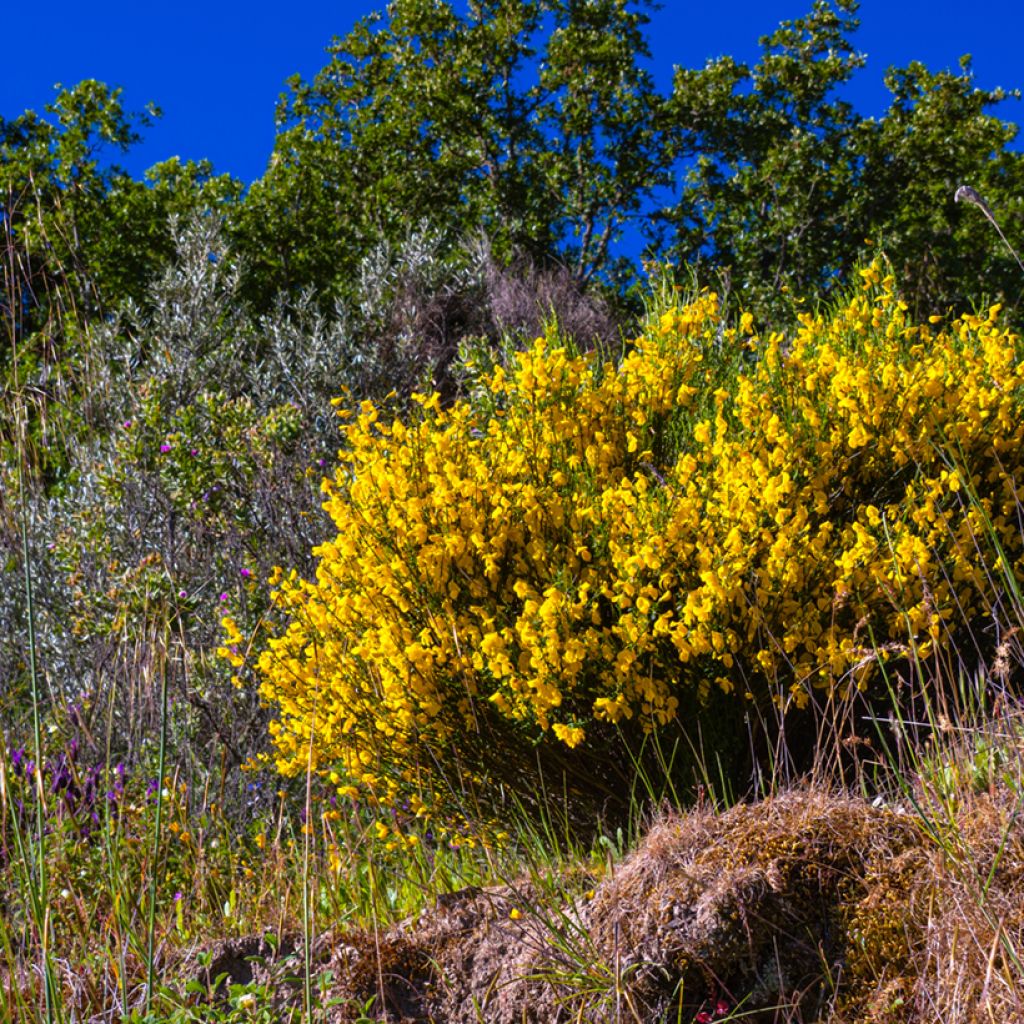
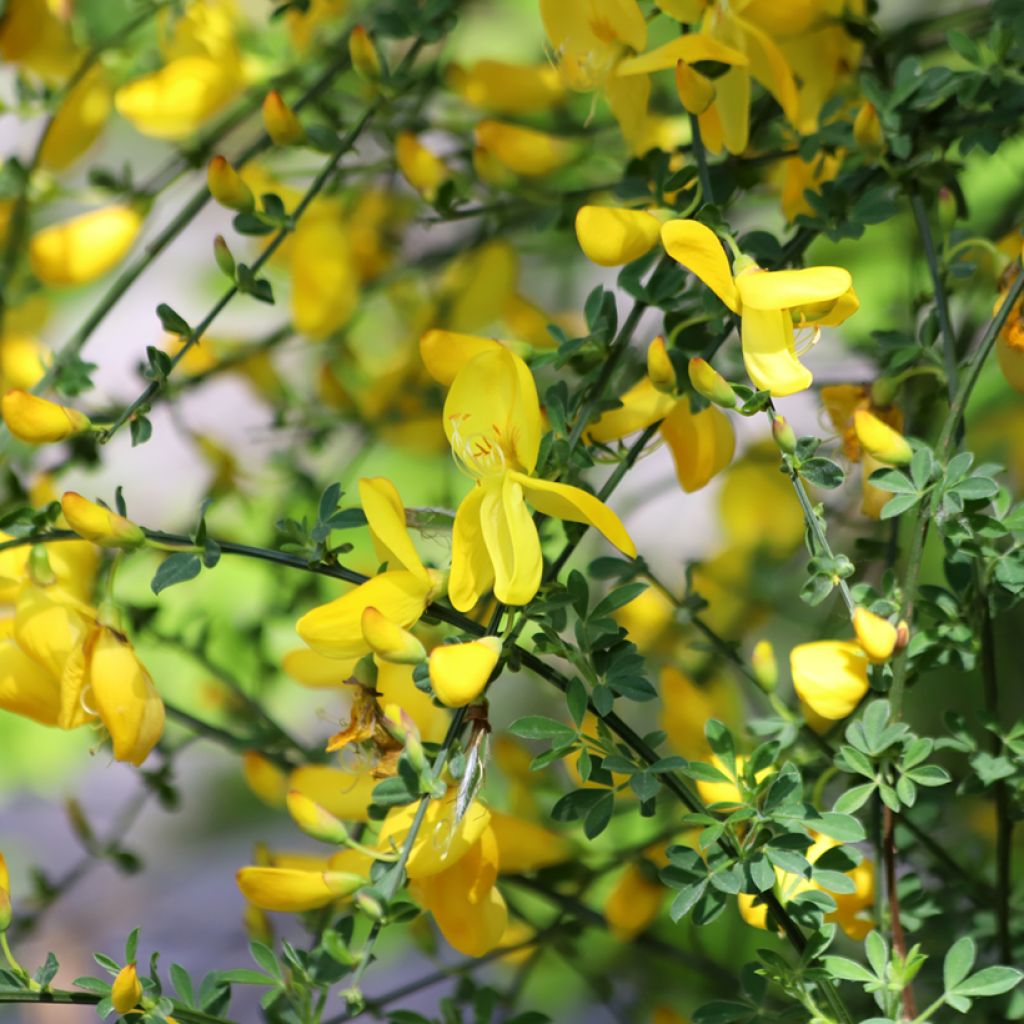
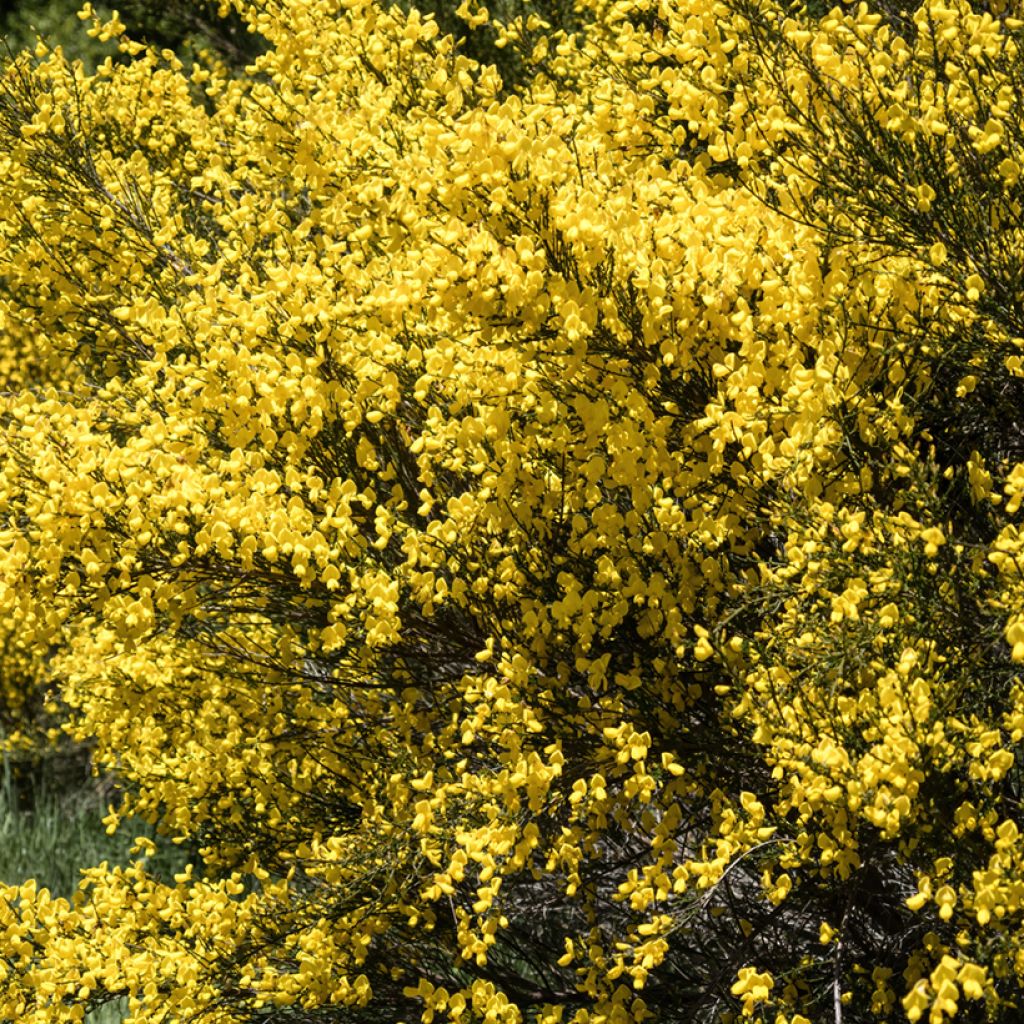
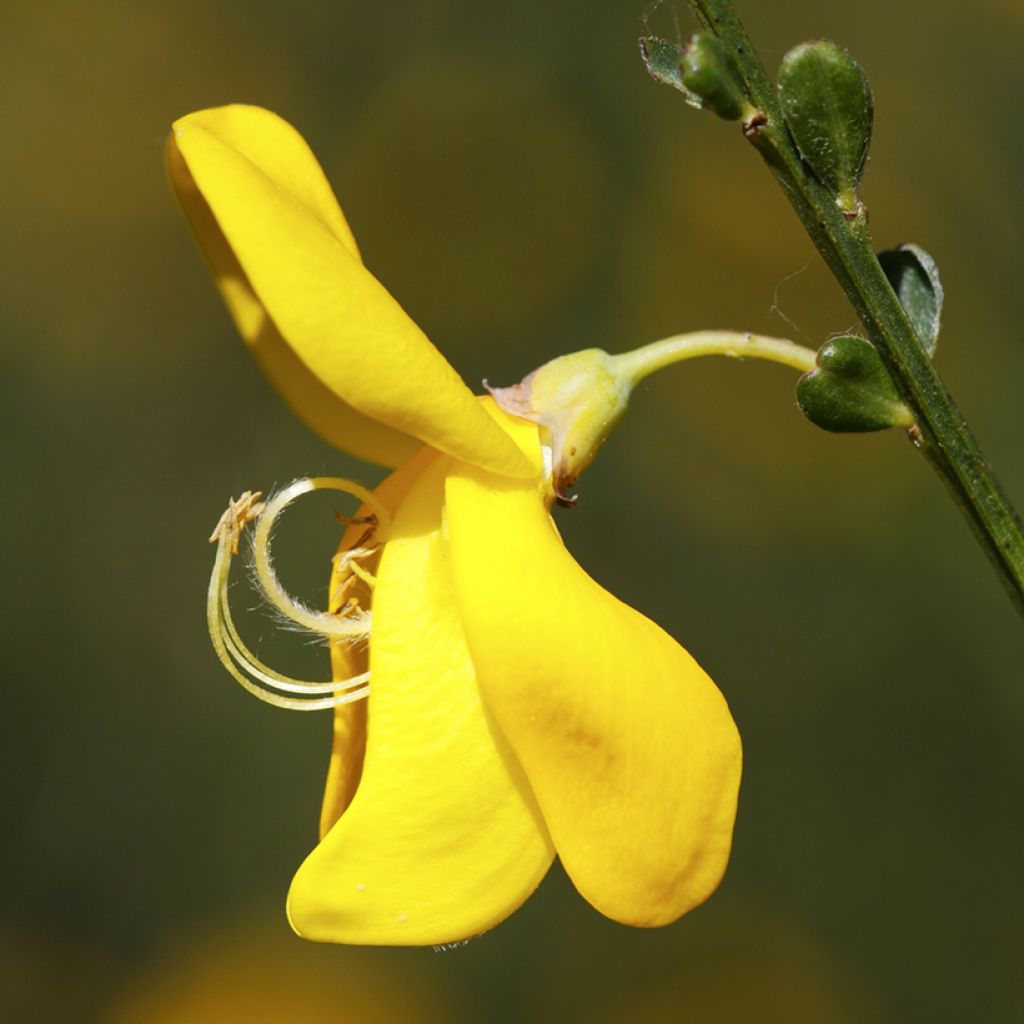
Common Broom, or Cytisus scoparius, is an iconic bush of European landscapes, prized for its sunny flowering and ease of cultivation. Its bright yellow flowering adds a beautiful splash of colour to the garden in late spring, particularly in natural gardens or country hedgerows. Its rapid growth and ability to thrive in poor soils make it an ally for restoring degraded land, in acidic to slightly calcareous terrain.
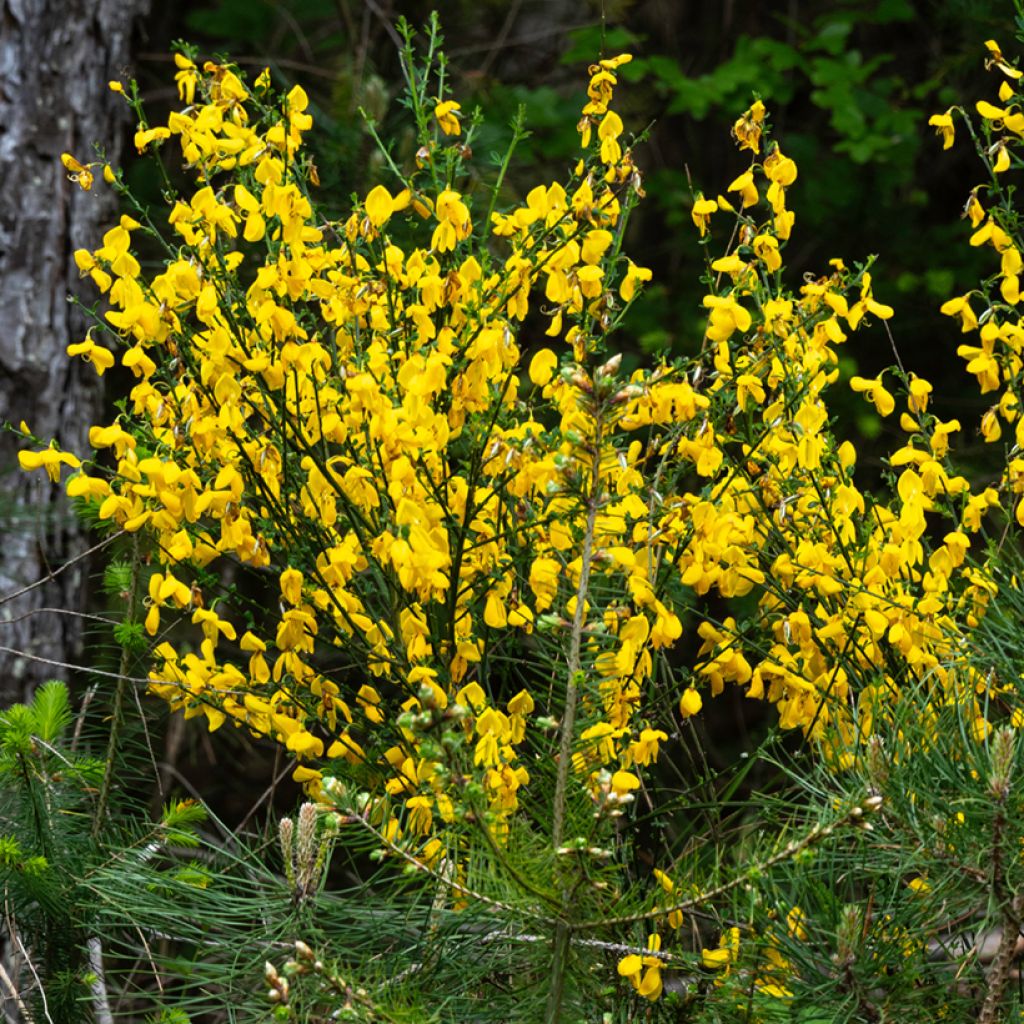
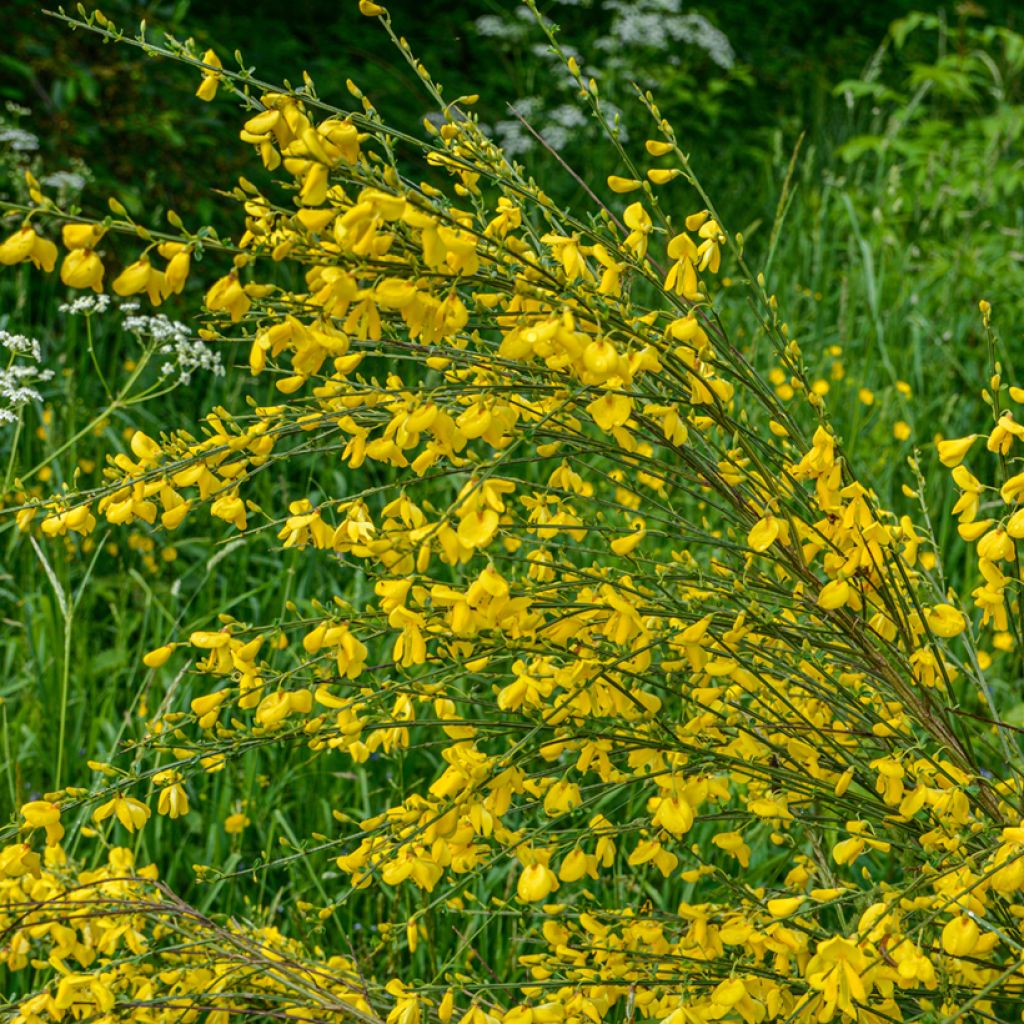
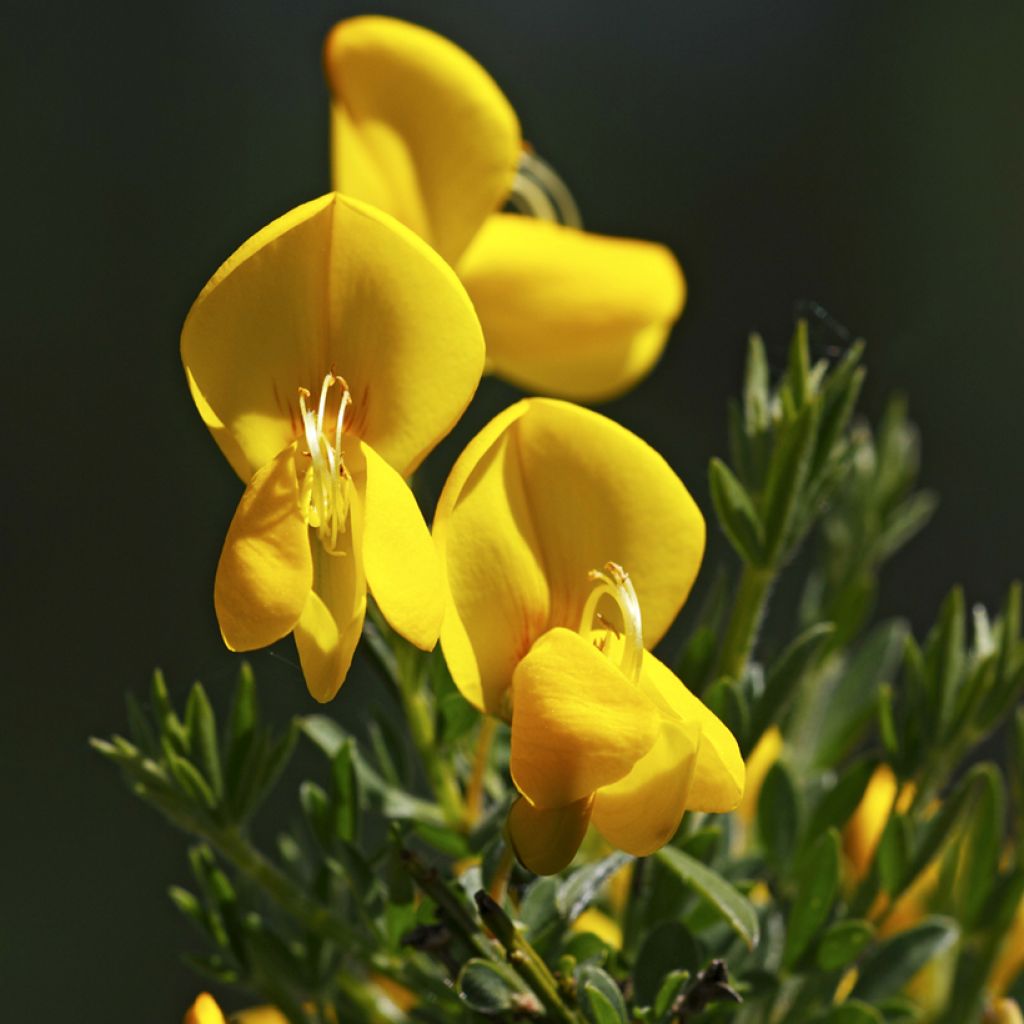
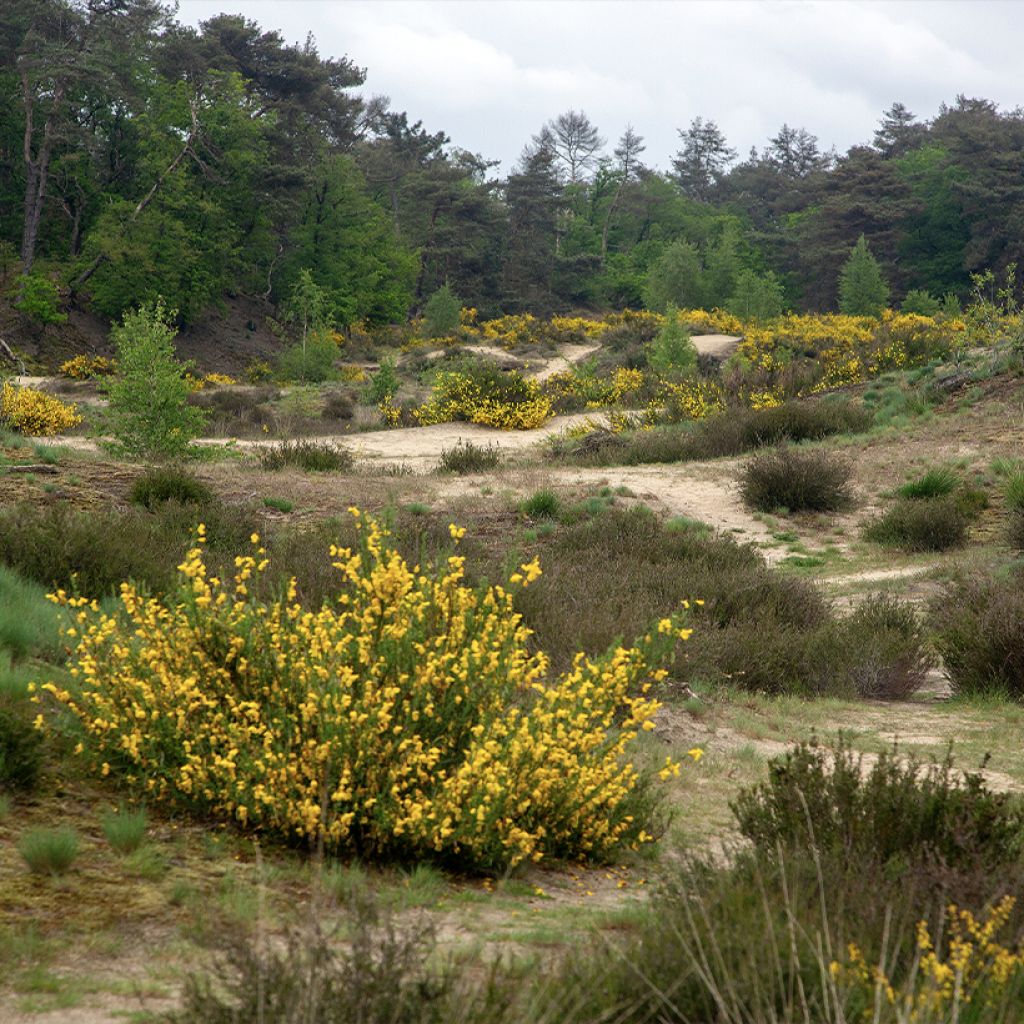
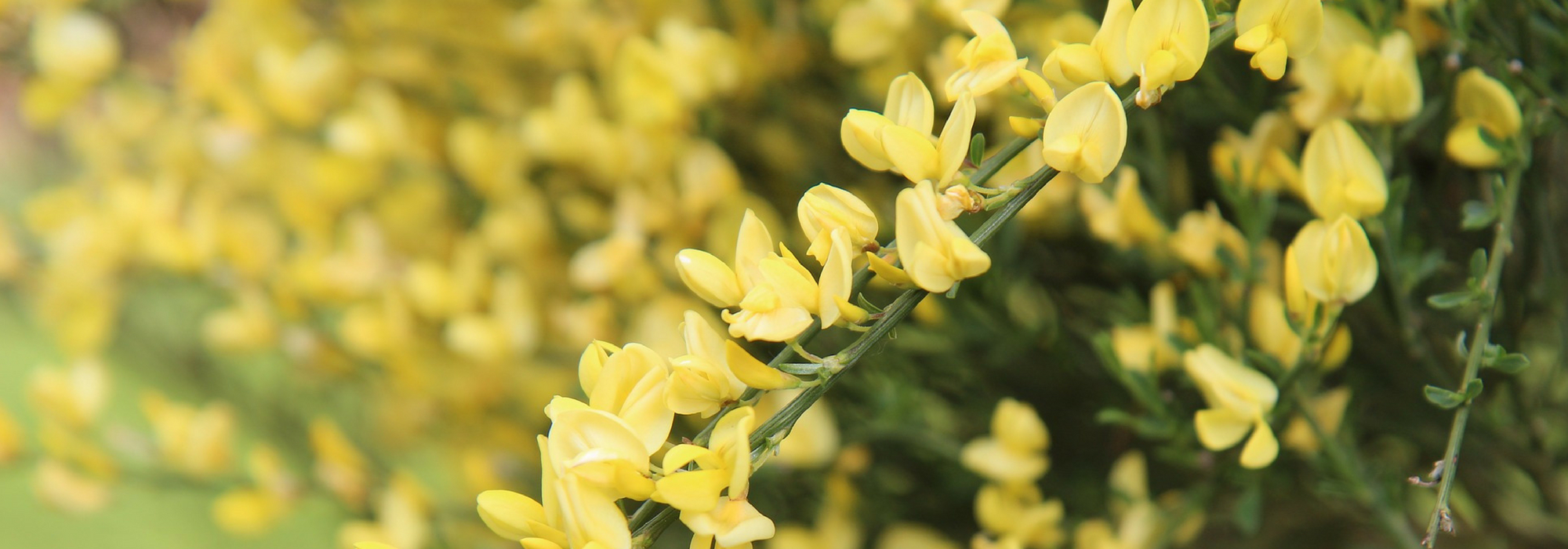
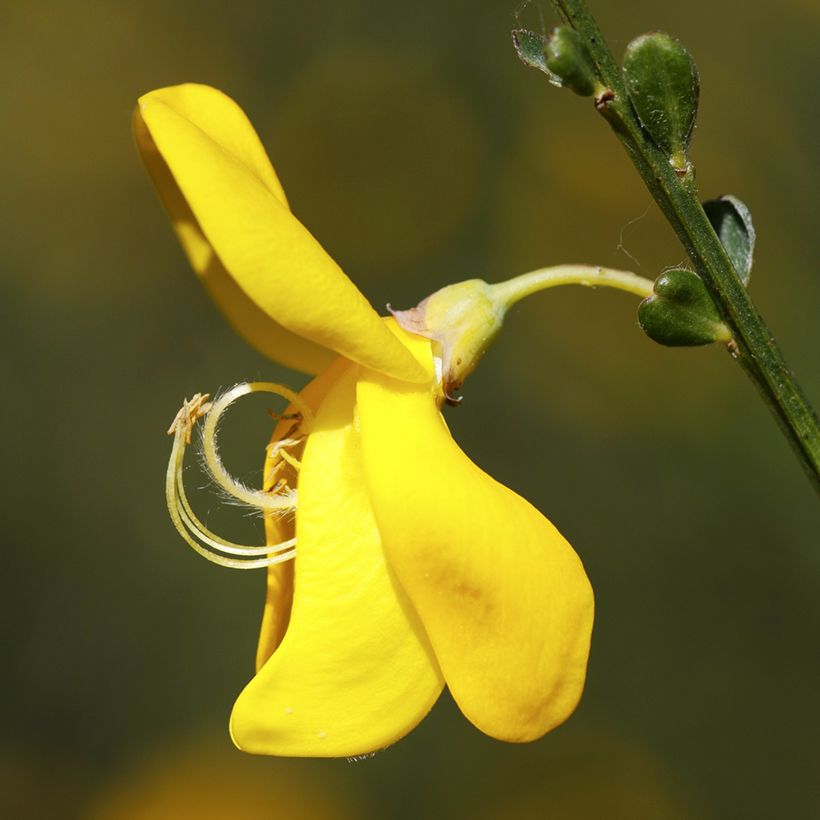
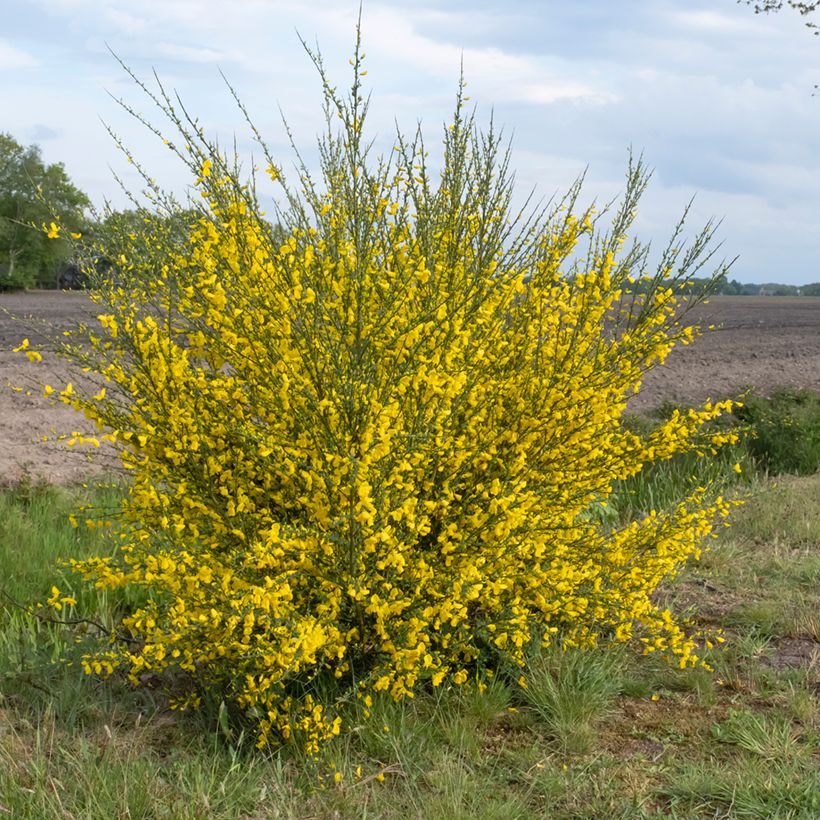
Belonging to the Fabaceae family, Cytisus scoparius is native to Western and Central Europe, with its range extending from North Africa to Scandinavia, including the British Isles and Ukraine. In its natural habitat, it is commonly found in heathlands, forest clearings, and roadsides, often on acidic, well-drained soils. The name "scoparius" derives from the Latin "scopa," meaning "broom," referencing the traditional use of its branches for making brooms. Common Broom has an upright habit with main stems reaching up to 5 cm in diameter. It typically grows to an average height of 2 m with a spread of about 1.5 m. Its growth is rapid, around 30 to 50 cm per year. Its green, angular, smooth branches are characteristic, as are its very small trifoliate leaves with 0.5 to 2 cm long leaflets, usually hairy on the underside. The leaves drop early in the season, before the summer heat arrives. The flowering period, spanning from May to June, produces bright yellow flowers measuring 2 to 2.5 cm long, arranged singly or in pairs at the leaf axils. The flowering is visited intensely by bees and other pollinating insects. The fruits are flat, black pods, up to 6 cm long, hairy only along the edges, which burst when ripe to disperse the seeds. This bush has a taproot, allowing it to draw water from deep underground. It is also capable of fixing atmospheric nitrogen thanks to symbiotic nodules. Broom enriches the surrounding soil. Its lifespan varies depending on environmental conditions and care, generally living between 10 and 20 years.
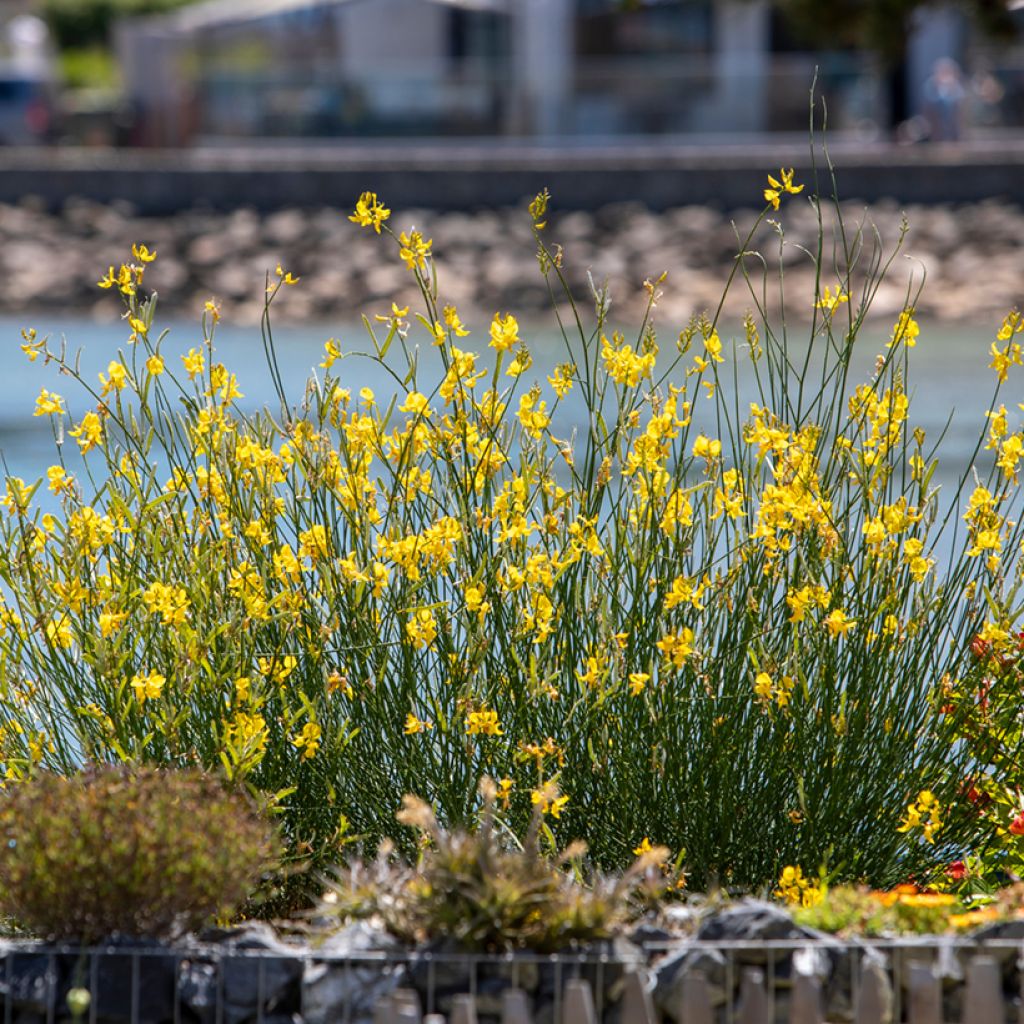
In the garden, Common Broom is ideal for creating informal hedges or stabilising slopes. It pairs beautifully in shrub borders alongside the White Butterfly Bush Buddleja davidii 'White Profusion', Kolkwitzia amabilis 'Pink Cloud', which blooms pink at the same time as the broom, and Oleaster (Elaeagnus ebbingei), valued for its evergreen foliage and hardiness. These combinations create attractive, low-maintenance displays while promoting garden biodiversity.
Scotch broom seeds - Cytisus scoparius seeds in pictures
Flowering
Foliage
Plant habit
Botanical data
Cytisus
scoparius
Fabaceae
Common Broom, Scotch Broom, European Broom
Cytisus scoparius var. prostratus, Cytisus scoparius var. sulphureus, Sarothamnus vulgaris, Sarothamnus scoparius var. prostratus, Genista andreana, Sarothamnus scoparius, Cytisus scoparius subsp. andreanus, Genista scoparia
Western Europe, Central Europe
Planting and care
Sow Broom (Cytisus scoparius) in spring.
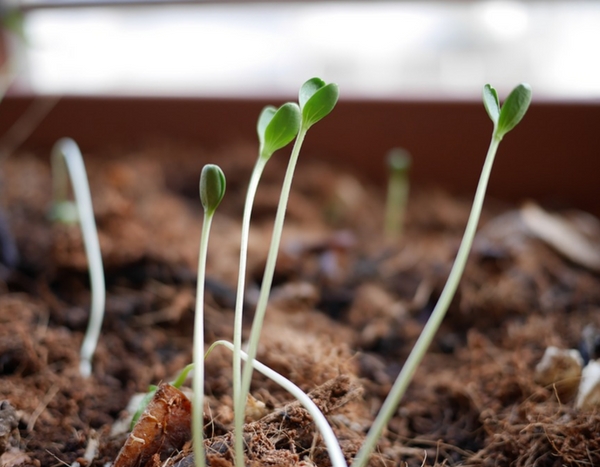
The seeds need to be scarified before sowing to break their dormancy. This involves lightly rubbing the seeds on sandpaper or soaking them in hot water, then leaving them in cold water for 48 hours. Afterwards, the seeds should be sown in individual pots or seed trays filled with a light, well-draining substrate, such as a mix of compost and sand. Place the sowings in a bright location and keep the substrate slightly moist. Germination usually occurs within 2 to 4 weeks, but it can sometimes take up to 6 weeks depending on temperature and humidity conditions.
When the young plants reach about 10 cm in height and the risk of frost has passed, they can be transplanted into the ground. Choose a sunny spot in well-drained, acidic to neutral, or even slightly alkaline soil. Once established, Broom tolerates drought well, but regular watering during the first few months after planting will encourage root development. It requires little maintenance, apart from light pruning after flowering to maintain a compact habit and stimulate the following year's blooms.
Sowing period
Intended location
Planting & care advice
-

-
-
-
-

-
-

-

This item has not been reviewed yet - be the first to leave a review about it.
Recently viewed products
Haven't found what you were looking for?
Hardiness is the lowest winter temperature a plant can endure without suffering serious damage or even dying. However, hardiness is affected by location (a sheltered area, such as a patio), protection (winter cover) and soil type (hardiness is improved by well-drained soil).

The flowering period indicated on our website applies to countries and regions located in USDA zone 8 (France, the United Kingdom, Ireland, the Netherlands, etc.)
It will vary according to where you live:- In zones 9 to 10 (Italy, Spain, Greece, etc.), flowering will occur about 2 to 4 weeks earlier.
- In zones 6 to 7 (Germany, Poland, Slovenia, and lower mountainous regions), flowering will be delayed by 2 to 3 weeks.
- In zone 5 (Central Europe, Scandinavia), blooming will be delayed by 3 to 5 weeks.
In temperate climates, pruning of spring-flowering shrubs (forsythia, spireas, etc.) should be done just after flowering.
Pruning of summer-flowering shrubs (Indian Lilac, Perovskia, etc.) can be done in winter or spring.
In cold regions as well as with frost-sensitive plants, avoid pruning too early when severe frosts may still occur.
The planting period indicated on our website applies to countries and regions located in USDA zone 8 (France, United Kingdom, Ireland, Netherlands).
It will vary according to where you live:
- In Mediterranean zones (Marseille, Madrid, Milan, etc.), autumn and winter are the best planting periods.
- In continental zones (Strasbourg, Munich, Vienna, etc.), delay planting by 2 to 3 weeks in spring and bring it forward by 2 to 4 weeks in autumn.
- In mountainous regions (the Alps, Pyrenees, Carpathians, etc.), it is best to plant in late spring (May-June) or late summer (August-September).
The harvesting period indicated on our website applies to countries and regions in USDA zone 8 (France, England, Ireland, the Netherlands).
In colder areas (Scandinavia, Poland, Austria...) fruit and vegetable harvests are likely to be delayed by 3-4 weeks.
In warmer areas (Italy, Spain, Greece, etc.), harvesting will probably take place earlier, depending on weather conditions.
The sowing periods indicated on our website apply to countries and regions within USDA Zone 8 (France, UK, Ireland, Netherlands).
In colder areas (Scandinavia, Poland, Austria...), delay any outdoor sowing by 3-4 weeks, or sow under glass.
In warmer climes (Italy, Spain, Greece, etc.), bring outdoor sowing forward by a few weeks.
Shipping country and language
Your country of residence may be:
Your country of residence is:
For a better user experience on our website, you can select:
Your shipping country:
-
 Austria
-
 Belgium
-
 Bosnia & Herzegovina
-
 Bulgaria
-
 Croatia
-
 Cyprus
-
 Czechia
-
 Denmark
-
 Estonia
-
 Finland
-
 France
-
 Germany
-
 Greece
-
 Hungary
-
 Iceland
-
 Ireland
-
 Italy
Italy
-
 Latvia
-
 Liechtenstein
-
 Lithuania
-
 Luxembourg
-
 Malta
Malta
-
 Netherlands
-
 Poland
-
 Portugal
-
 Romania
-
 Serbia
-
 Slovakia
-
 Slovenia
-
 Spain
Spain
-
 Sweden
-
 Switzerland
Language:
-
French
-
 English
-
Spanish
-
Italian
-
German
-
Portuguese
-
Dutch
-
Finnish
My Account
Hello
My wish lists
My cart
Log in / Register
Existing customer?
This form is protected by reCAPTCHA - the Google Privacy Policy and Terms of Service apply.
New customer?
Create an account to track your orders, access our customer service and, if you wish, make the most of our upcoming offers.