Finger Lime Caviar Rose (pink) - Microcitrus australasica
Finger Lime Caviar Rose (pink) - Microcitrus australasica
Finger Lime Caviar Rose (pink) - Microcitrus australasica
Microcitrus australasica Caviar Rose
Australian finger lime, Caviar lime
Back-to-school special offer!
Get €10 off for every €50 you spend! And get up to €40 off on a single order.
How does it work?
1. Shop your favourites
Add your favourite plants to your basket. For every €50 you spend (excluding delivery charges, store credit and the plastic-free option), you’ll receive a €10 voucher.
€50 spent = €10 voucher
€100 spent = €20 voucher
€150 spent = €30 voucher
€200 spent = €40 voucher
2. Place your order
Once your basket reaches one of the spending thresholds, place your order. You can even choose your delivery date!
3. Receive your voucher
As soon as your order has been shipped, you’ll receive an email containing your personal voucher code and its value.
4. Use it on your next order
Your voucher is valid for 90 days from the date you receive it. It can be used once only, on a new order worth at least the value of the voucher, excluding delivery charges.
Please note: Vouchers can be combined with other offers, but cannot be split or refunded.
Why not try an alternative variety in stock?
View all →
Available in 3 sizes
This plant carries a 12 months recovery warranty
More information
We guarantee the quality of our plants for a full growing cycle, and will replace at our expense any plant that fails to recover under normal climatic and planting conditions.
Description
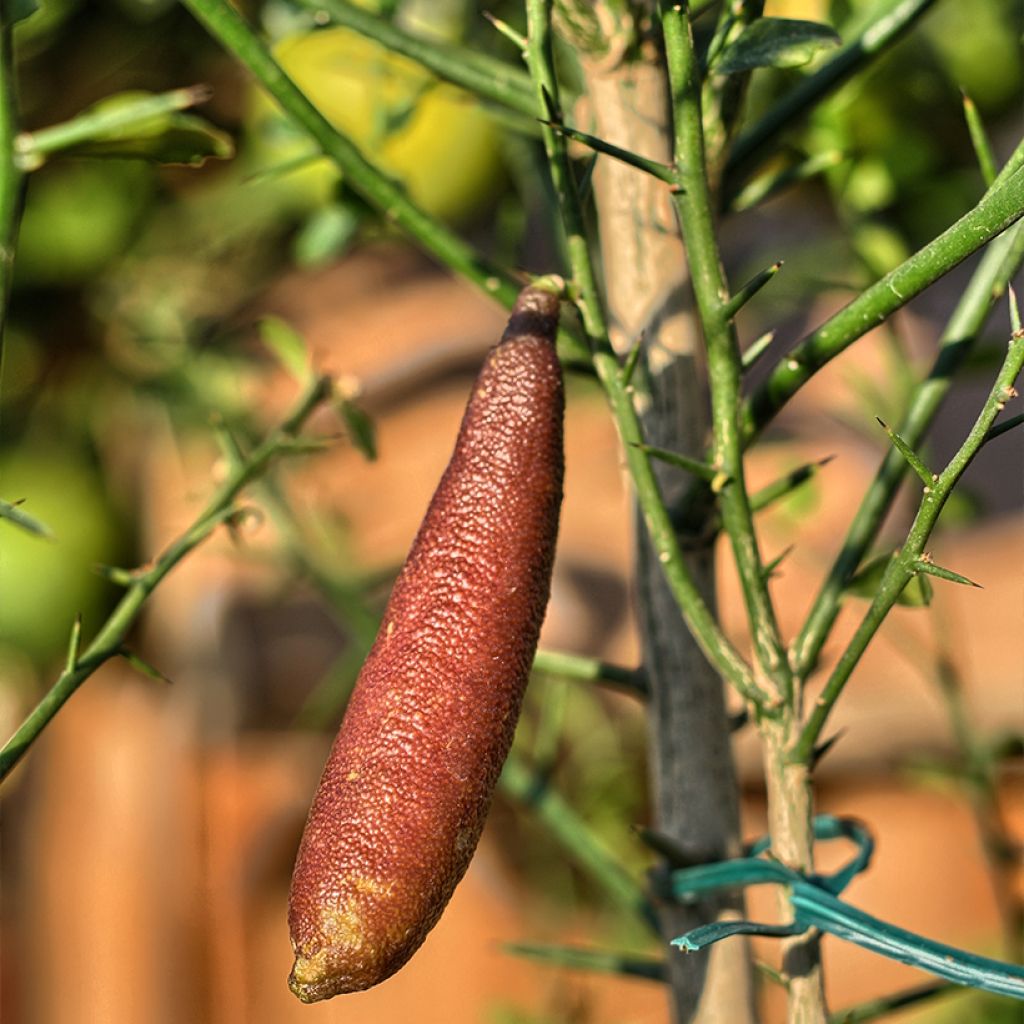
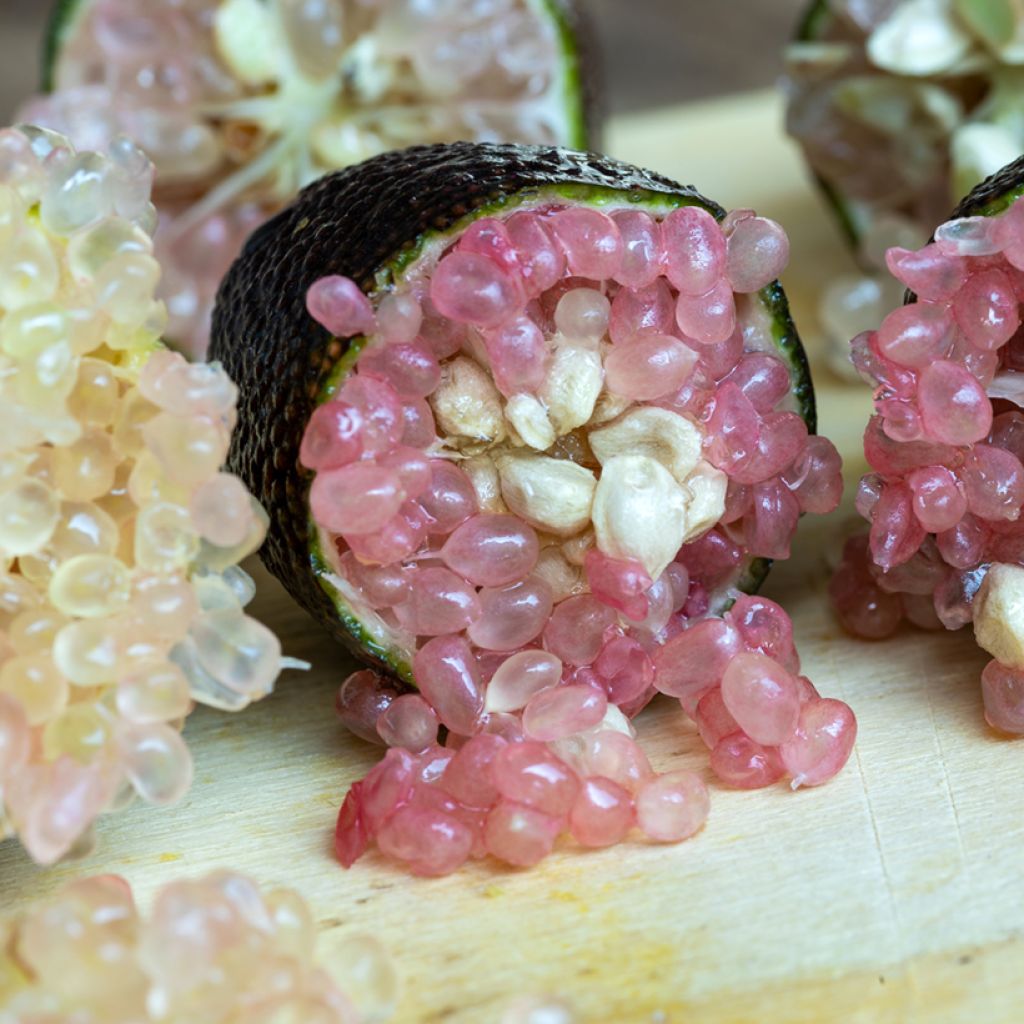
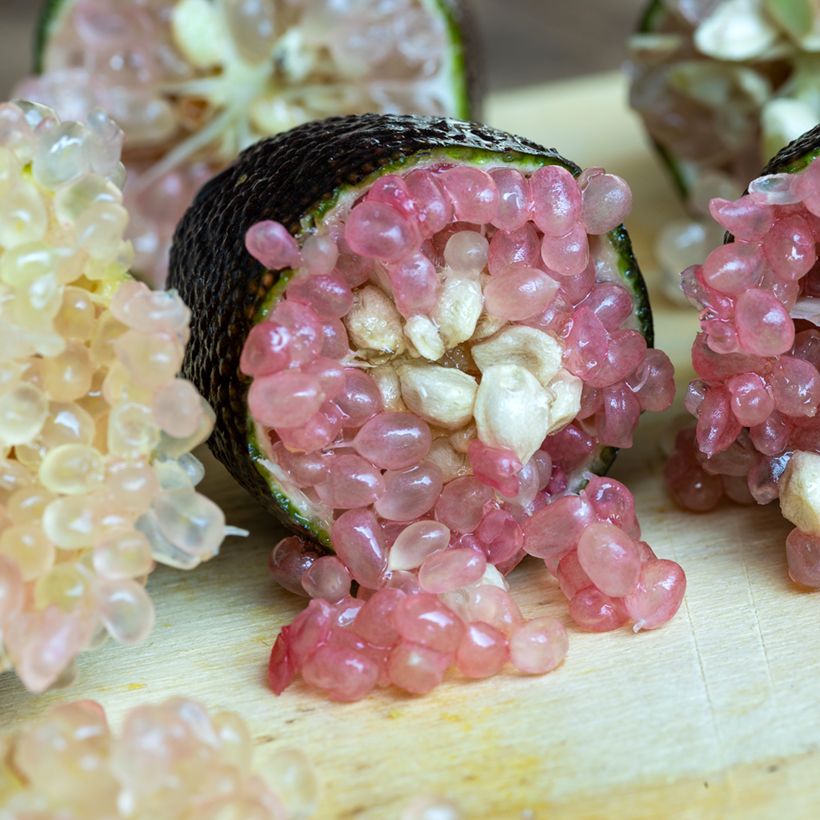
The Pink Caviar Lime, or Microcitrus australasica with pink pearls, is an Australian citrus tree whose fruit contains a "vegetable caviar" for gastronomes, formed of juicy, crunchy pink pearls with a sharp, tangy taste. Compact, ornamental, and suitable for growing in pots, the caviar lime offers lovely, small, fragrant white flowers, followed by cylindrical fruits with aromatic skin that turn reddish-brown when ripe. Beneath this skin hides a treasure: translucent beads rich in flavour, perfect for enhancing fish dishes, desserts, cocktails, or tartares. It is not very hardy and usually grows in a container to be overwintered indoors.
The 'Caviar Rose' Lime is a selection of Microcitrus australasica or Citrus australasica, a small Australian citrus tree of the Rutaceae family. It is also known by the evocative name "finger lime" due to the slender, elongated shape of its fruits, resembling small gherkins or fingers. Native to eastern Australia, more precisely the rainforests of New South Wales and Queensland, it grows naturally in the understorey, in temperate, rainy, sheltered areas.
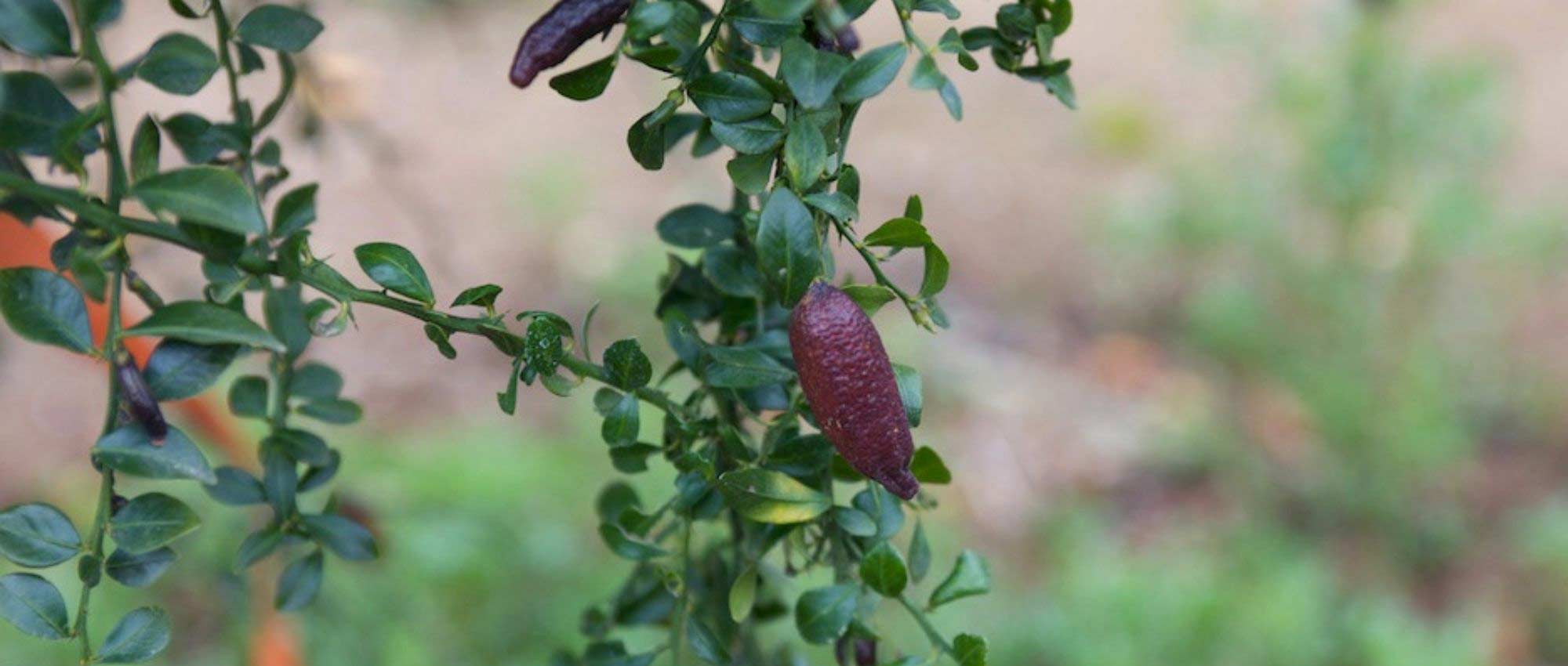
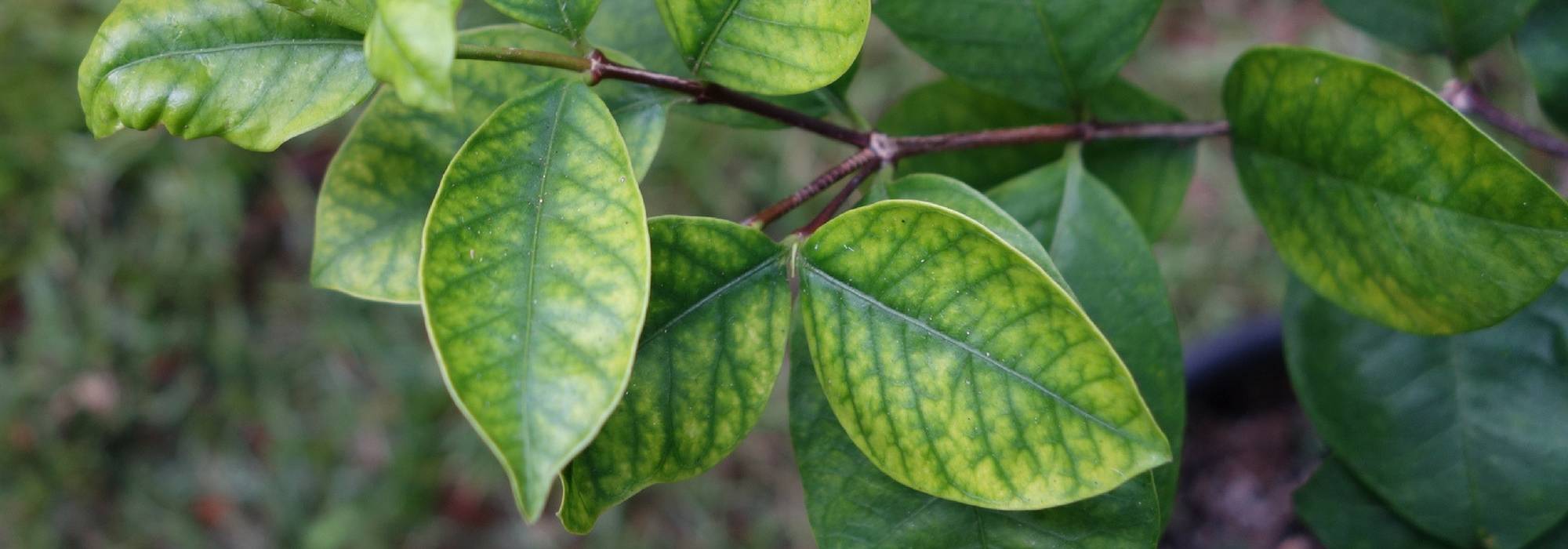
'Caviar Rose' is a horticultural selection known for its pink pulp, composed of small, juicy and crunchy pearls with a sharp, lemony taste and a slightly floral aroma. It forms a small, bushy and thorny shrub with an upright to slightly spreading habit. In open ground, it can reach 2 to 3 m in height with a spread of about 2m, while in a pot it remains more compact, around 1.20 m to 1.50 m. It bears very small, slender, evergreen leaves in winter (1 to 6 cm long), glossy green, with slightly crenate edges, which release a lemony scent when crushed. These leaves can be used as a spice, in the same way as those of kaffir lime or yuzu. Flowering occurs in spring, between March and April. Pretty pinkish buds give rise to small white flowers, sometimes tinged with pink, very fragrant, reminiscent of neroli and typical of Citrus. Fruit set can be quite slow, particularly in young plants, which take time to reach productive maturity.
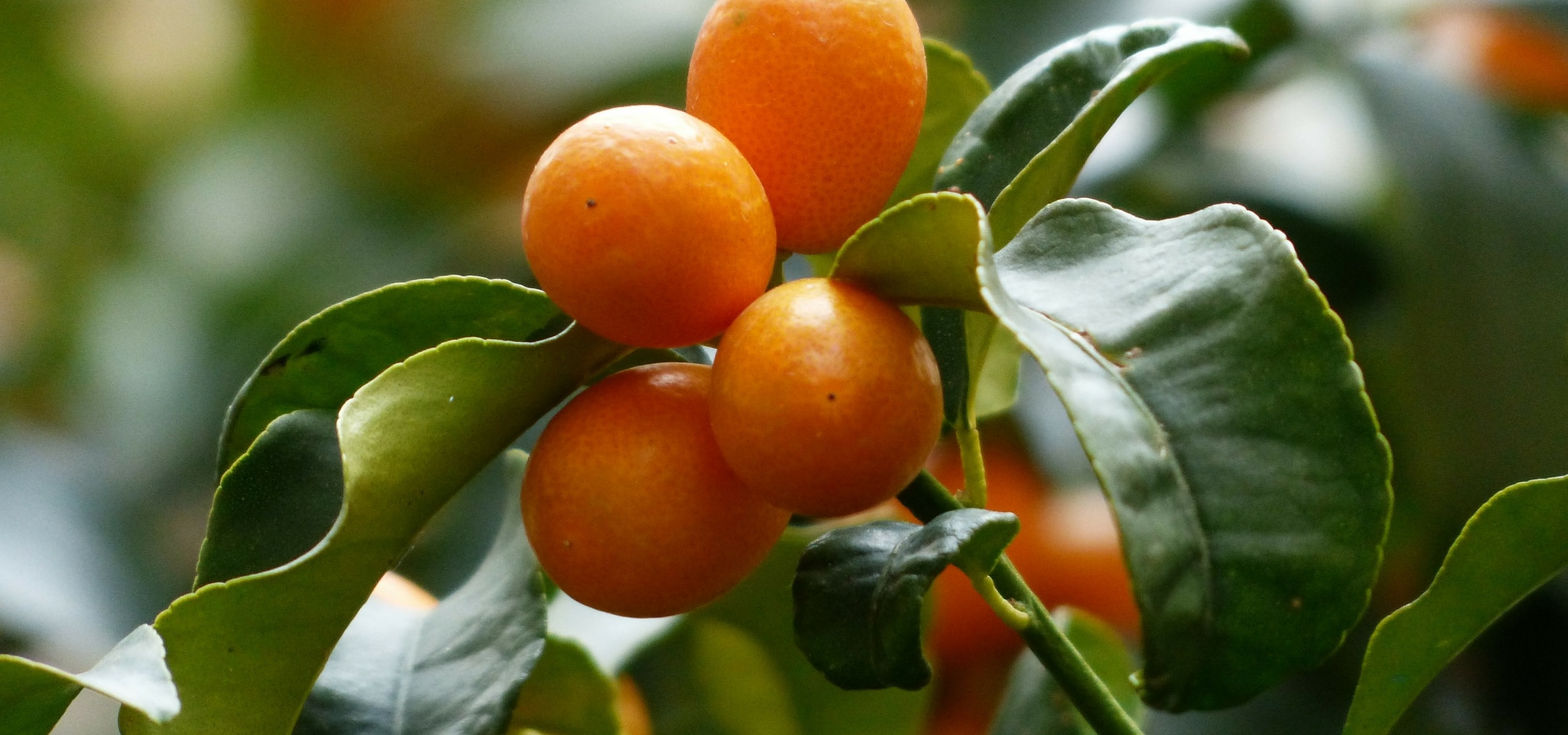
The elongated and slightly curved fruits measure between 4 and 8 cm long. Their thin skin turns reddish when ripe, sometimes purple, depending on growing conditions. Fruits can be harvested from October to December, when they begin to soften, and their colour deepens. The caviar lime begins to suffer from cold at 0 °C. It is a self-fertile shrub, meaning a single plant is sufficient for complete pollination and to ensure fruiting.
You can grow Pink Caviar Lime in pots or in open ground in regions with very mild winters; it will not survive temperatures below -3 °C to -5 °C. Frost-free overwintering is therefore necessary in most regions. Growing in pots also allows better control of watering, exposure, and drainage. In a pot, it will appreciate a good citrus potting compost, a light surface mulch, and an application of organic fertiliser in spring and summer. Prune after fruiting to encourage branching.
The pink pearls of the 'Caviar Rose' are a true gastronomic delight. They enhance a dish without overpowering its flavours. Highly prized in haute cuisine, this exceptional condiment is used in small touches, a bit like truffles. It elevates seafood (oysters, clams, scallops), raw fish (salmon or sea bream carpaccios), tartares, ceviches, and sushi, fruit salads, citrus or chocolate desserts, and even cocktails, for a festive and aromatic touch. Its rarity and seasonal nature make it a premium product, with prices that can reach several hundred euros per kilo fresh.
This small Australian lime will delight fans of unusual citrus trees!
Finger Lime Caviar Rose (pink) - Microcitrus australasica in pictures
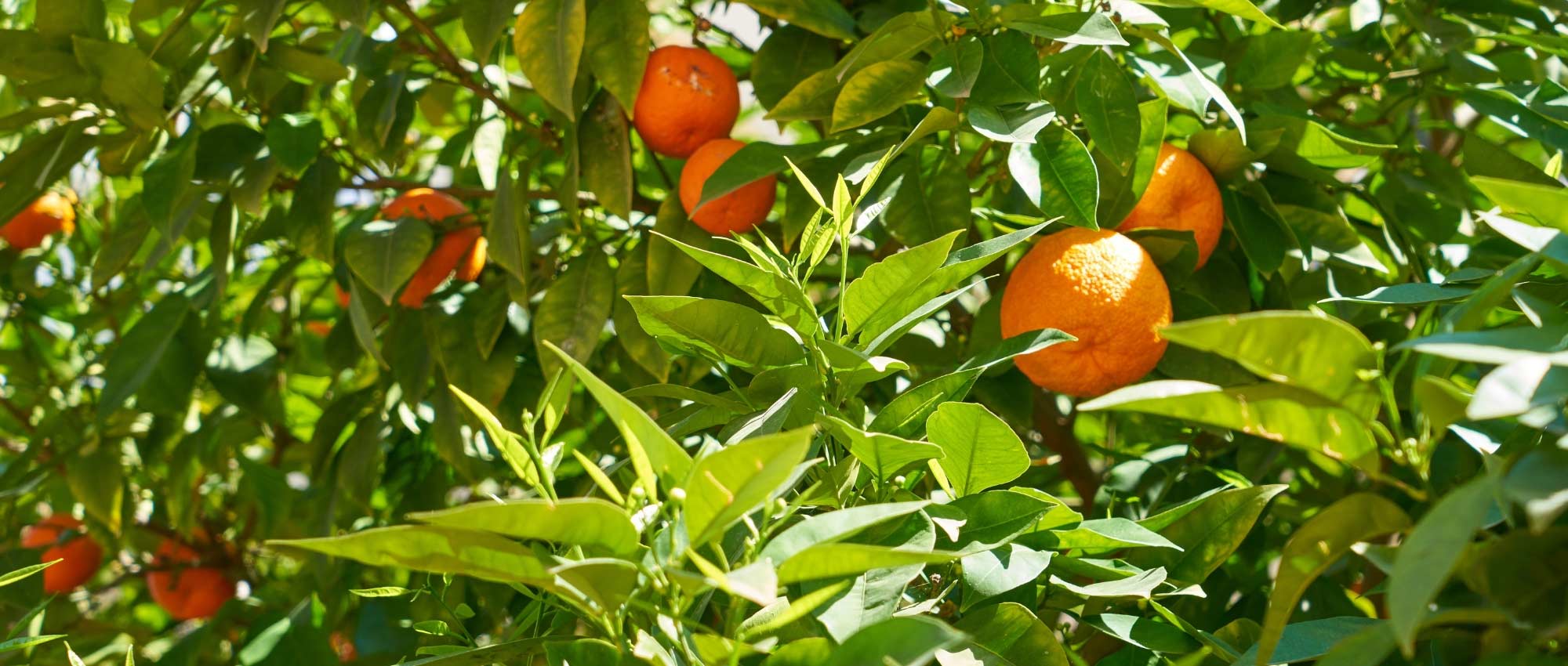
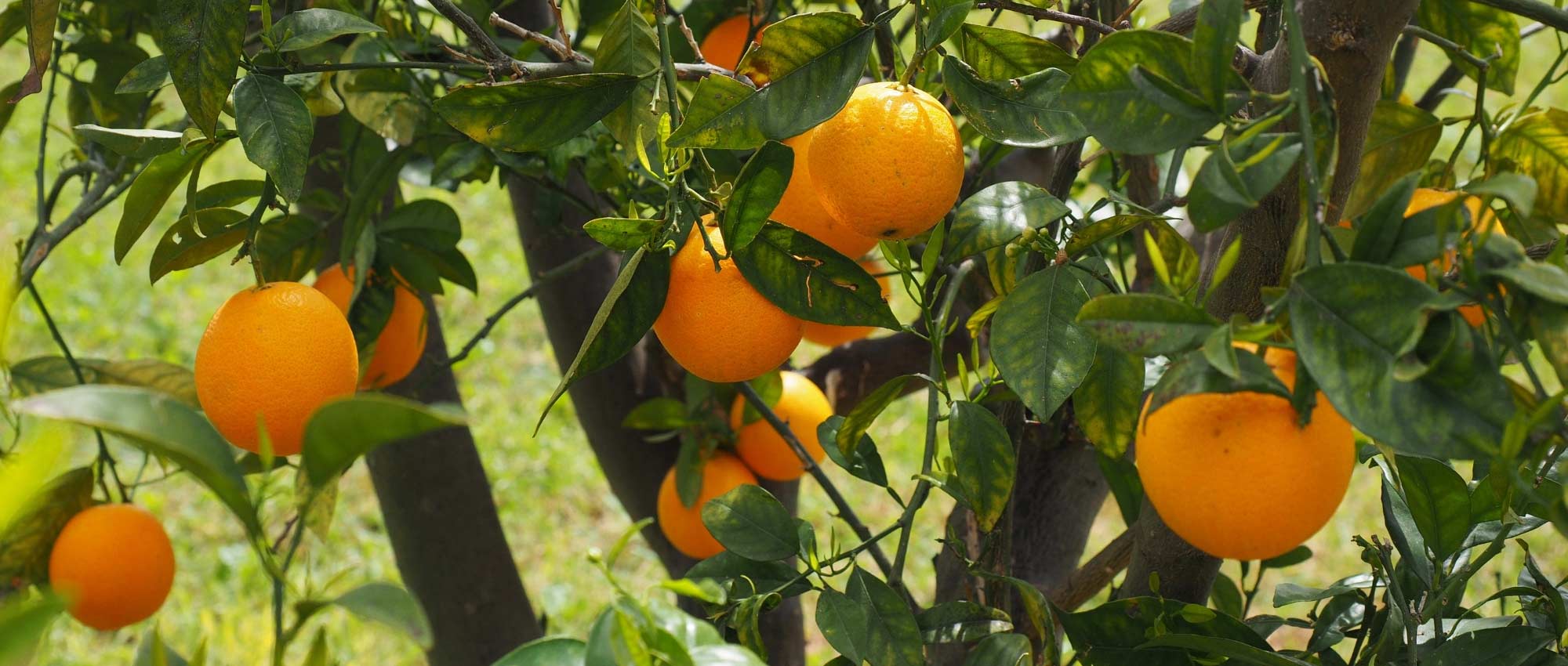
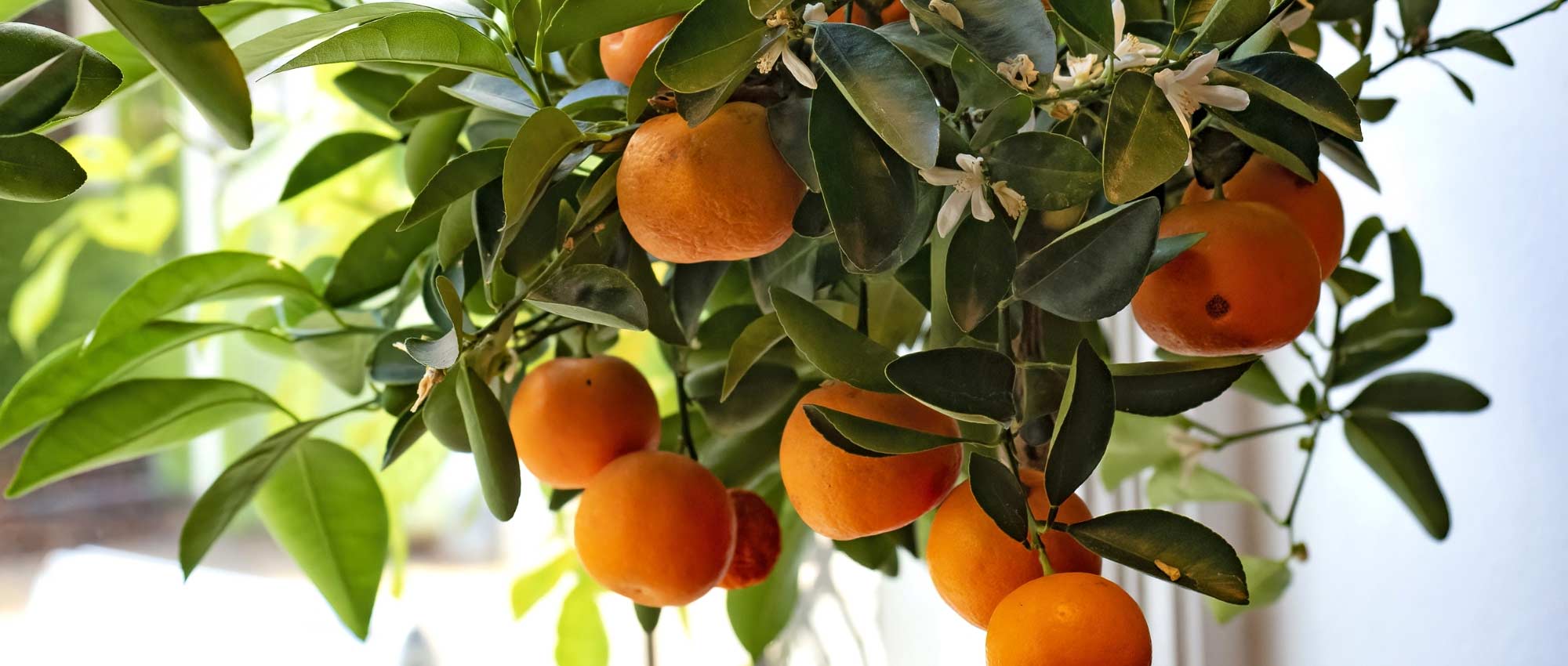
Plant habit
Fruit
Flowering
Foliage
Botanical data
Microcitrus
australasica
Caviar Rose
Rutaceae
Australian finger lime, Caviar lime
Citrus australasica Caviar Rose
Australia
Planting and care
Planting in the ground: The pink finger lime enjoys moist, neutral to slightly acidic, non-calcareous but fertile soils. It is only possible to grow it in the ground in a very sheltered garden where frosts do not drop below -4°C. The best time for planting is early spring, in March and April. Be careful not to bury the collar. Citrus trees are naturally greedy and require water to fruit well; in any case, consider adding well-rotted compost or a 'special citrus tree' fertiliser. Choose a sunny but not scorching location for your shrub, in a spot sheltered from the wind to prevent the foliage from drying out and young developing fruit from dropping. Place it in a position sheltered from sea spray.
Planting in a pot: In all other regions, plant Microcitrus in a pot that can be kept in a greenhouse or a very lightly heated conservatory, with an atmosphere that is not too dry, but permanently frost-free. It will appreciate being outdoors in summer. Plant in a pot or repot at the end of summer. Choose a pot slightly larger than the root system, as citrus trees do not like to feel cramped. Moisten the root ball well. To increase the drainage capacity of the mix, line the bottom of the pot with clay pebbles. Loosen the root ball and make a mixture of two-thirds garden soil (if possible, non-calcareous) and one-third 'special citrus tree' potting compost. Water generously. Choose terracotta pots or those made of breathable material.
Citrus trees need plenty of water to thrive. Your finger lime must be watered daily with low-lime or non-calcareous water, and the soil should remain constantly moist. Similarly, ensure you regularly provide it with the fertiliser it needs: every 6 months for a slow-release granular fertiliser or every 3 waterings for a liquid fertiliser.
Be wary of attacks by the cottony cushion scale (Icerya purchasi), which has reached milder regions via plants imported from Australia.
Planting period
Intended location
Care
Planting & care advice
-
-
-
-
-
-
-

-

This item has not been reviewed yet - be the first to leave a review about it.
Recently viewed products
Haven't found what you were looking for?
Hardiness is the lowest winter temperature a plant can endure without suffering serious damage or even dying. However, hardiness is affected by location (a sheltered area, such as a patio), protection (winter cover) and soil type (hardiness is improved by well-drained soil).

The flowering period indicated on our website applies to countries and regions located in USDA zone 8 (France, the United Kingdom, Ireland, the Netherlands, etc.)
It will vary according to where you live:- In zones 9 to 10 (Italy, Spain, Greece, etc.), flowering will occur about 2 to 4 weeks earlier.
- In zones 6 to 7 (Germany, Poland, Slovenia, and lower mountainous regions), flowering will be delayed by 2 to 3 weeks.
- In zone 5 (Central Europe, Scandinavia), blooming will be delayed by 3 to 5 weeks.
In temperate climates, pruning of spring-flowering shrubs (forsythia, spireas, etc.) should be done just after flowering.
Pruning of summer-flowering shrubs (Indian Lilac, Perovskia, etc.) can be done in winter or spring.
In cold regions as well as with frost-sensitive plants, avoid pruning too early when severe frosts may still occur.
The planting period indicated on our website applies to countries and regions located in USDA zone 8 (France, United Kingdom, Ireland, Netherlands).
It will vary according to where you live:
- In Mediterranean zones (Marseille, Madrid, Milan, etc.), autumn and winter are the best planting periods.
- In continental zones (Strasbourg, Munich, Vienna, etc.), delay planting by 2 to 3 weeks in spring and bring it forward by 2 to 4 weeks in autumn.
- In mountainous regions (the Alps, Pyrenees, Carpathians, etc.), it is best to plant in late spring (May-June) or late summer (August-September).
The harvesting period indicated on our website applies to countries and regions in USDA zone 8 (France, England, Ireland, the Netherlands).
In colder areas (Scandinavia, Poland, Austria...) fruit and vegetable harvests are likely to be delayed by 3-4 weeks.
In warmer areas (Italy, Spain, Greece, etc.), harvesting will probably take place earlier, depending on weather conditions.
The sowing periods indicated on our website apply to countries and regions within USDA Zone 8 (France, UK, Ireland, Netherlands).
In colder areas (Scandinavia, Poland, Austria...), delay any outdoor sowing by 3-4 weeks, or sow under glass.
In warmer climes (Italy, Spain, Greece, etc.), bring outdoor sowing forward by a few weeks.
Shipping country and language
Your country of residence may be:
Your country of residence is:
For a better user experience on our website, you can select:
Your shipping country:
-
 Austria
-
 Belgium
-
 Bosnia & Herzegovina
-
 Bulgaria
-
 Croatia
-
 Cyprus
-
 Czechia
-
 Denmark
-
 Estonia
-
 Finland
-
 France
-
 Germany
-
 Greece
-
 Hungary
-
 Iceland
-
 Ireland
-
 Italy
Italy
-
 Latvia
-
 Liechtenstein
-
 Lithuania
-
 Luxembourg
-
 Malta
Malta
-
 Netherlands
-
 Poland
-
 Portugal
-
 Romania
-
 Serbia
-
 Slovakia
-
 Slovenia
-
 Spain
Spain
-
 Sweden
-
 Switzerland
Language:
-
French
-
 English
-
Spanish
-
Italian
-
German
-
Portuguese
-
Dutch
-
Finnish
My Account
Hello
My wish lists
My cart
Log in / Register
Existing customer?
This form is protected by reCAPTCHA - the Google Privacy Policy and Terms of Service apply.
New customer?
Create an account to track your orders, access our customer service and, if you wish, make the most of our upcoming offers.