Are your perennial vegetables producing less than they used to? Have the clumps become unwieldy, the leaves smaller or the harvests meagre? There’s no need to replace your plants! Dividing perennial vegetables rejuvenates ageing plants, boosts their vigour and gives you new plants for free. All you need are a few tools, good timing and a little know-how. But first, you need to know which vegetables can be divided: not all perennial vegetables in the vegetable garden are propagated in the same way!
Why divide perennial vegetables?
Perennial doesn’t mean productive for ever! Over the years, some perennial vegetable plants form very dense clumps. Their roots compete with one another, the centre of the crown ages and harvests can decline.
Division means splitting a plant into several sections, each with roots and buds capable of starting into growth again. By keeping the most vigorous sections, you rejuvenate the plants and get more to expand your vegetable garden or share with your neighbours.
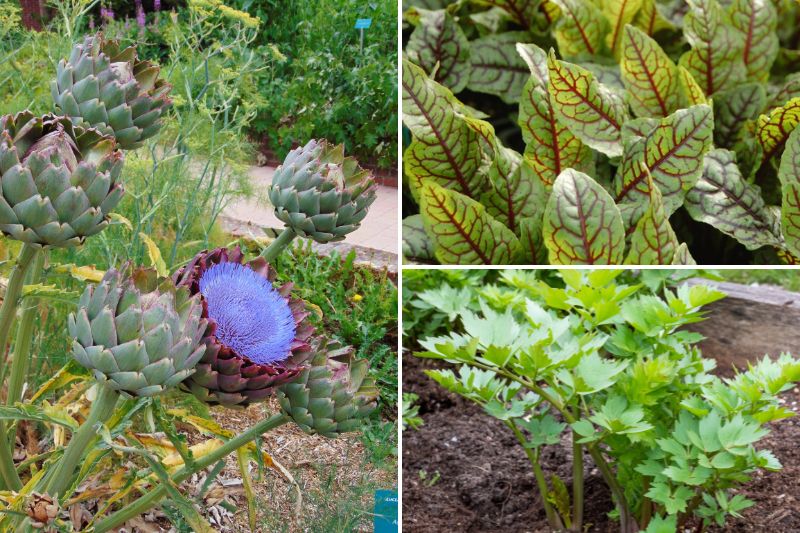
Which perennial vegetables can be divided, and when?
Several perennial vegetables can be divided, but the method varies according to their root system. Here are the main ones.
| Perennial vegetable | How to propagate it | When to do it |
|---|---|---|
| Sorrel | Divide the clumps | Early spring or autumn |
| Rhubarb | Divide the crown into sections, each with at least one bud | From autumn to early spring, when the ground is not frozen and the plant is dormant |
| Lovage | Divide large clumps | Spring |
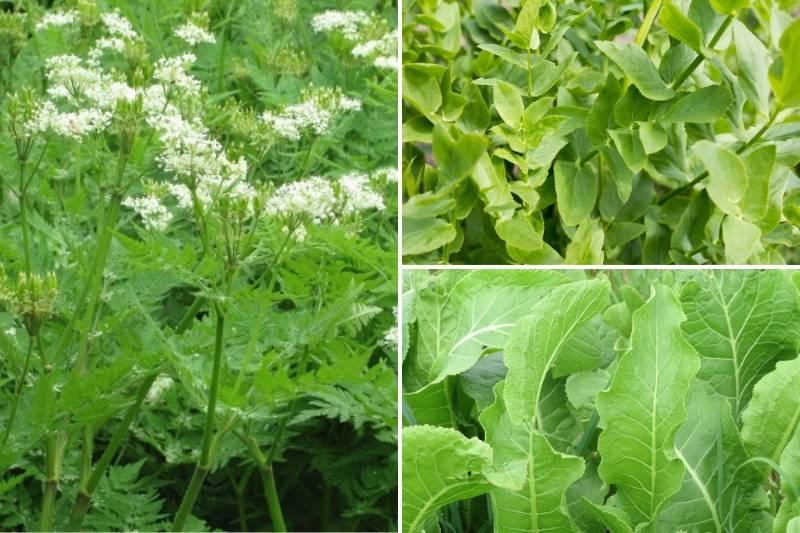
| Sweet cicely (Myrrhis odorata) | Divide the crown, preserving the roots | Spring or autumn |
| Skirret (Sium sisarum) | Remove young shoots rooted at the root collar | March-April |
| Horseradish (Armoracia rusticana) | Divide the crown or take root cuttings | Spring or autumn |
| Globe artichoke | Remove rooted offsets, known as suckers | Spring, usually March-April |
| Cardoon | Divide the perennial plants | Spring |
| Perpetual leek (Allium ampeloprasum) | Separate the small underground bulbs | Late June-July, once the foliage has died back |
| St James's Welsh onion | Separate the bulbs in a clump | Spring, or possibly autumn |
Comfrey can also be divided in spring. Although it isn’t a vegetable for eating, it deserves a place near the vegetable garden, as its leaves can be used as mulch or to make liquid feed.
Note: Daubenton’s kale is mainly propagated by taking cuttings, while Jerusalem artichoke is replanted using its tubers. Garlic and tree onions produce aerial bulbils, which can be used to grow new plants.
How to divide perennial vegetables: the right way to do it
- Choose a day without frost or excessive heat. The ground should be slightly moist, but not waterlogged. If the soil is very dry, water it the day before to make it easier to lift the roots.
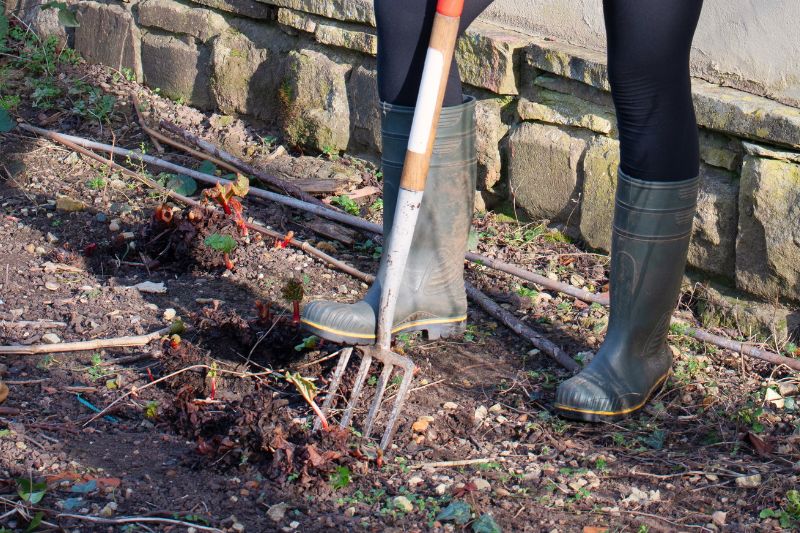
- Carefully lift the clump with a garden fork. Push the fork into the ground a few centimetres from the plant, far enough away to avoid unnecessarily severing the roots. Gradually lever it up to loosen the crown.
- Split the crown into several sections, each with plenty of roots and buds. Pull small clumps apart by hand, or use a clean knife for tougher crowns, such as rhubarb. Choose vigorous sections from the outside of the clump.
For globe artichokes, simply remove the rooted offsets, known as suckers, without digging up the parent plant.
For bulbous vegetables, separate the small bulbs without cutting them. - Replant the sections promptly in loosened, weed-free soil. Allow for each vegetable’s needs and spacing, and don’t bury the buds too deeply. If necessary, take the opportunity to incorporate some well-rotted compost, particularly for hungry vegetables.
Links to our step-by-step guides for individual plants:
Aftercare: how to help plants settle in
Once you’ve divided and replanted your perennial vegetables, don’t leave them to fend for themselves just yet! Water them generously after planting, then keep the soil slightly moist for the first few weeks, without overwatering. The new roots need time to settle in.
Apply a light mulch (hay, straw, wood chips, etc.) around the plants to reduce evaporation and competition from weeds. Just take care not to cover the buds or the root collar of plants that are sensitive to damp.
Finally, give young divisions time to recover before harvesting. This is particularly important for rhubarb, as it’s best not to harvest the leaf stalks during the first year after division.
Our tip: if a few leaves go limp just after dividing, don’t panic! A little wilting can happen when the roots have been disturbed. Keep an eye on watering and watch for new shoots to appear.


































Comments