Ferocactus schwarzii - Barrel cactus
Ferocactus schwarzii - Barrel cactus
Ferocactus schwarzii - Barrel cactus
Ferocactus schwarzii - Barrel cactus
Ferocactus schwarzii - Barrel cactus
Ferocactus schwarzii - Barrel cactus
Ferocactus schwarzii - Barrel cactus
Ferocactus schwarzii - Barrel cactus
Ferocactus schwarzii - Barrel cactus
Ferocactus schwarzii
Barrel cactus
Back-to-school special offer!
Get €10 off for every €50 you spend! And get up to €40 off on a single order.
How does it work?
1. Shop your favourites
Add your favourite plants to your basket. For every €50 you spend (excluding delivery charges, store credit and the plastic-free option), you’ll receive a €10 voucher.
€50 spent = €10 voucher
€100 spent = €20 voucher
€150 spent = €30 voucher
€200 spent = €40 voucher
2. Place your order
Once your basket reaches one of the spending thresholds, place your order. You can even choose your delivery date!
3. Receive your voucher
As soon as your order has been shipped, you’ll receive an email containing your personal voucher code and its value.
4. Use it on your next order
Your voucher is valid for 90 days from the date you receive it. It can be used once only, on a new order worth at least the value of the voucher, excluding delivery charges.
Please note: Vouchers can be combined with other offers, but cannot be split or refunded.
Home or relay delivery (depending on size and destination)
Important: You may be charged customs duties by your country’s customs authorities upon delivery.
Schedule delivery date
and select date in basket
This plant carries a 12 months recovery warranty
More information
We guarantee the quality of our plants for a full growing cycle, and will replace at our expense any plant that fails to recover under normal climatic and planting conditions.
Would this plant suit my garden?
Set up your Plantfit profile →
Description
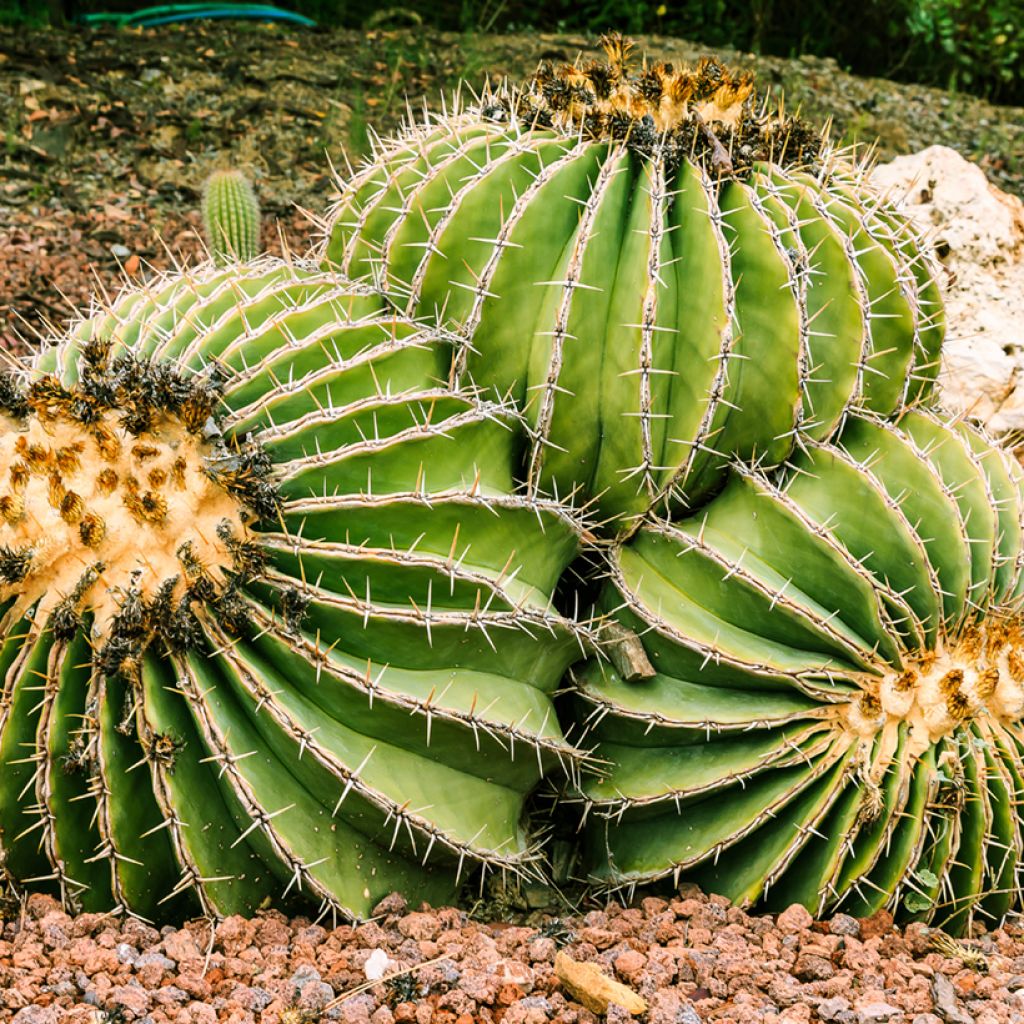
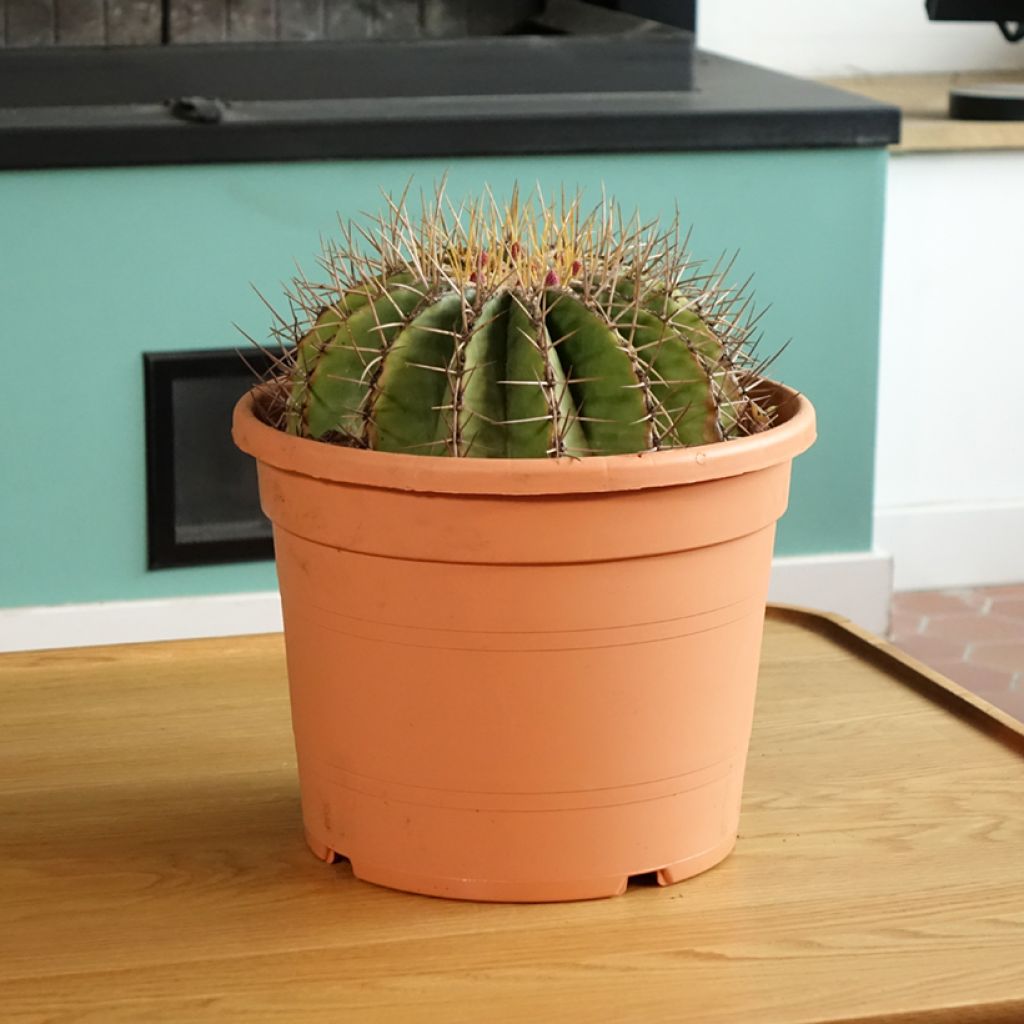
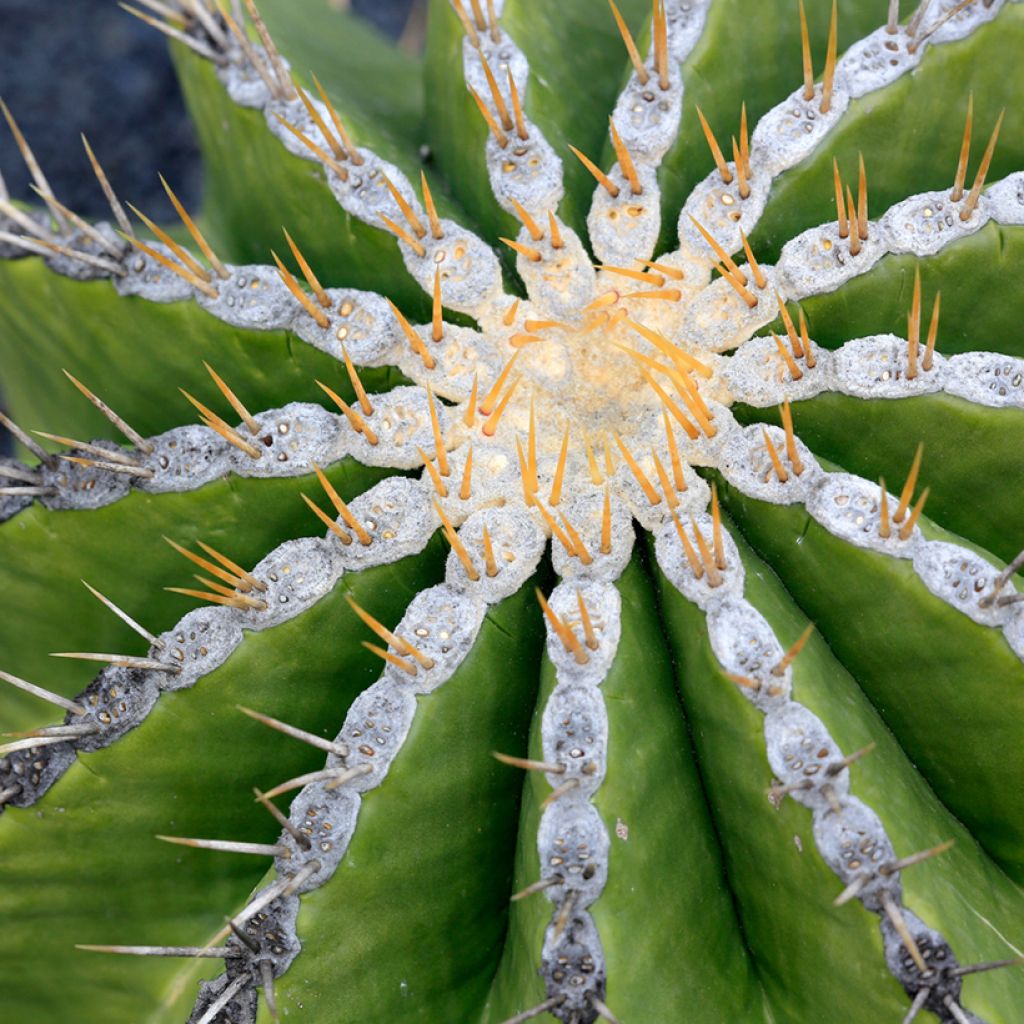
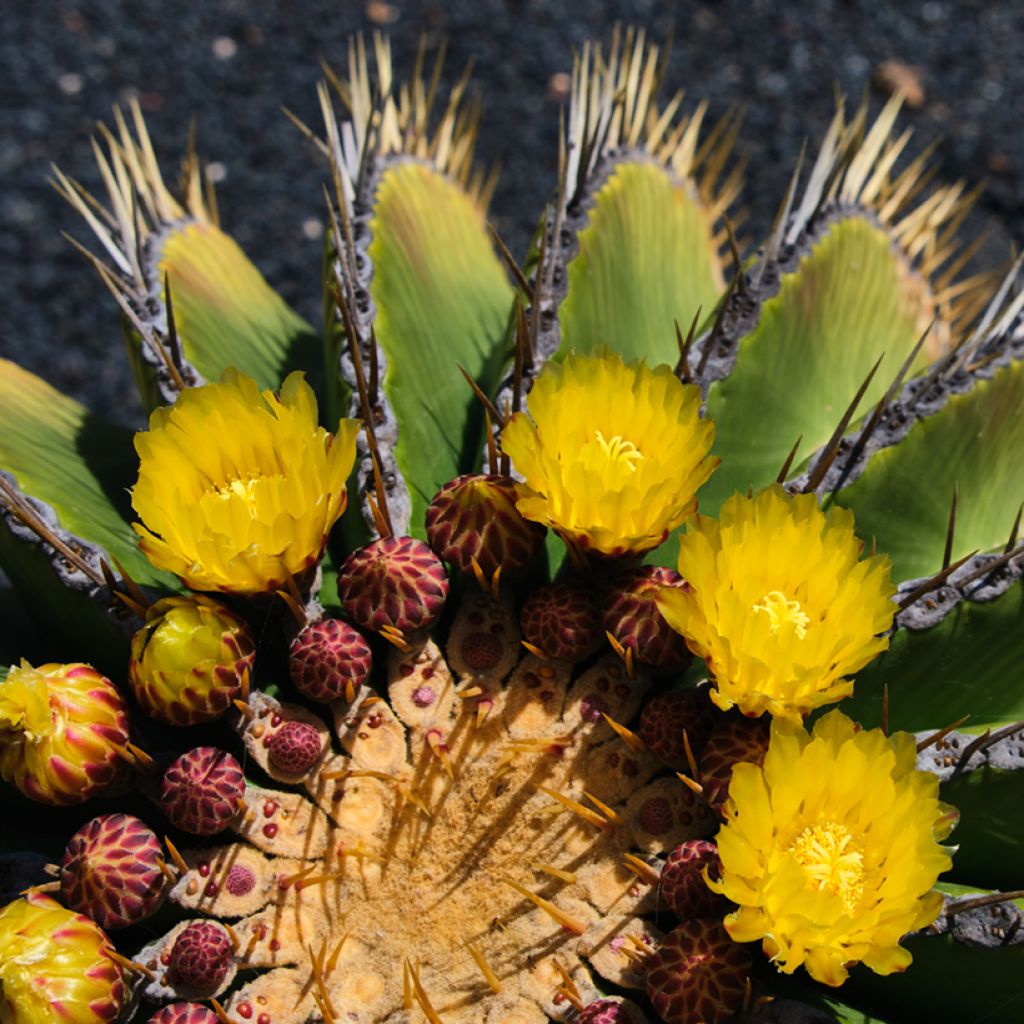
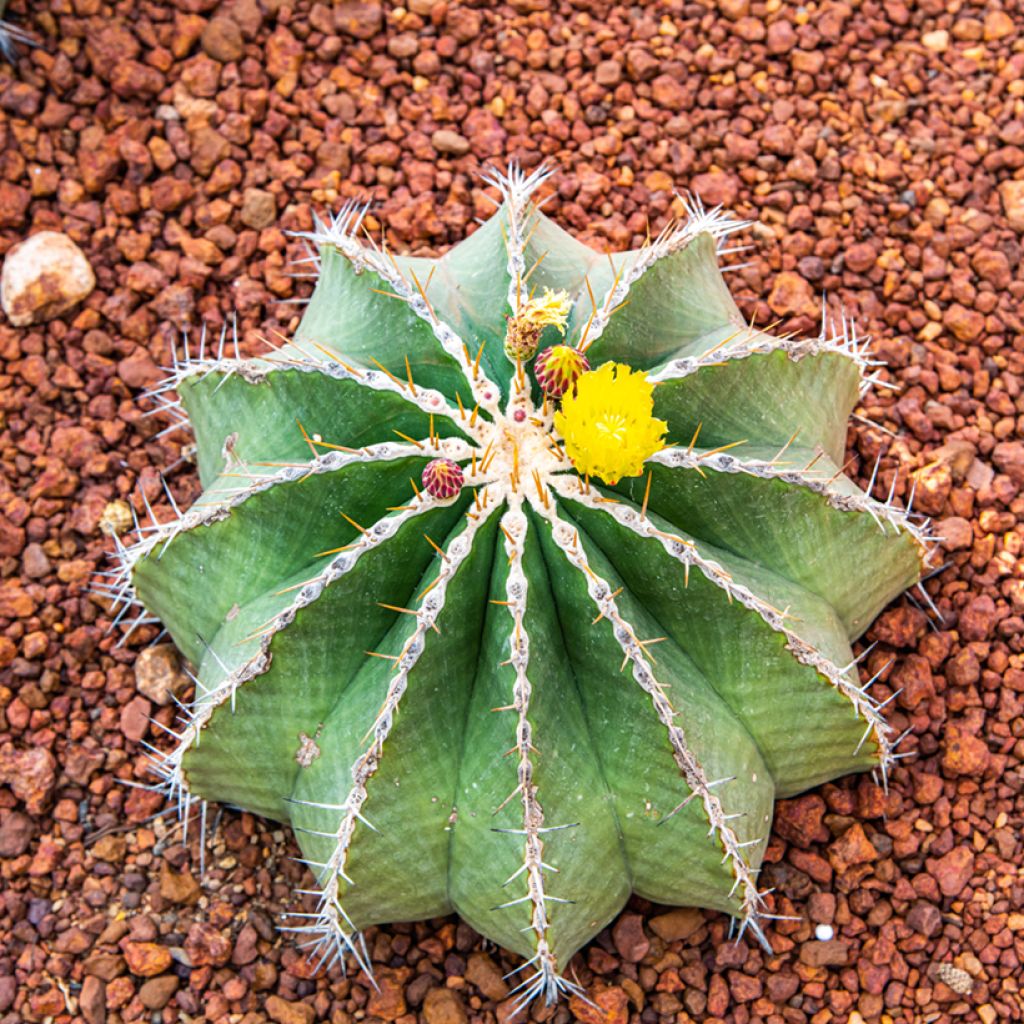
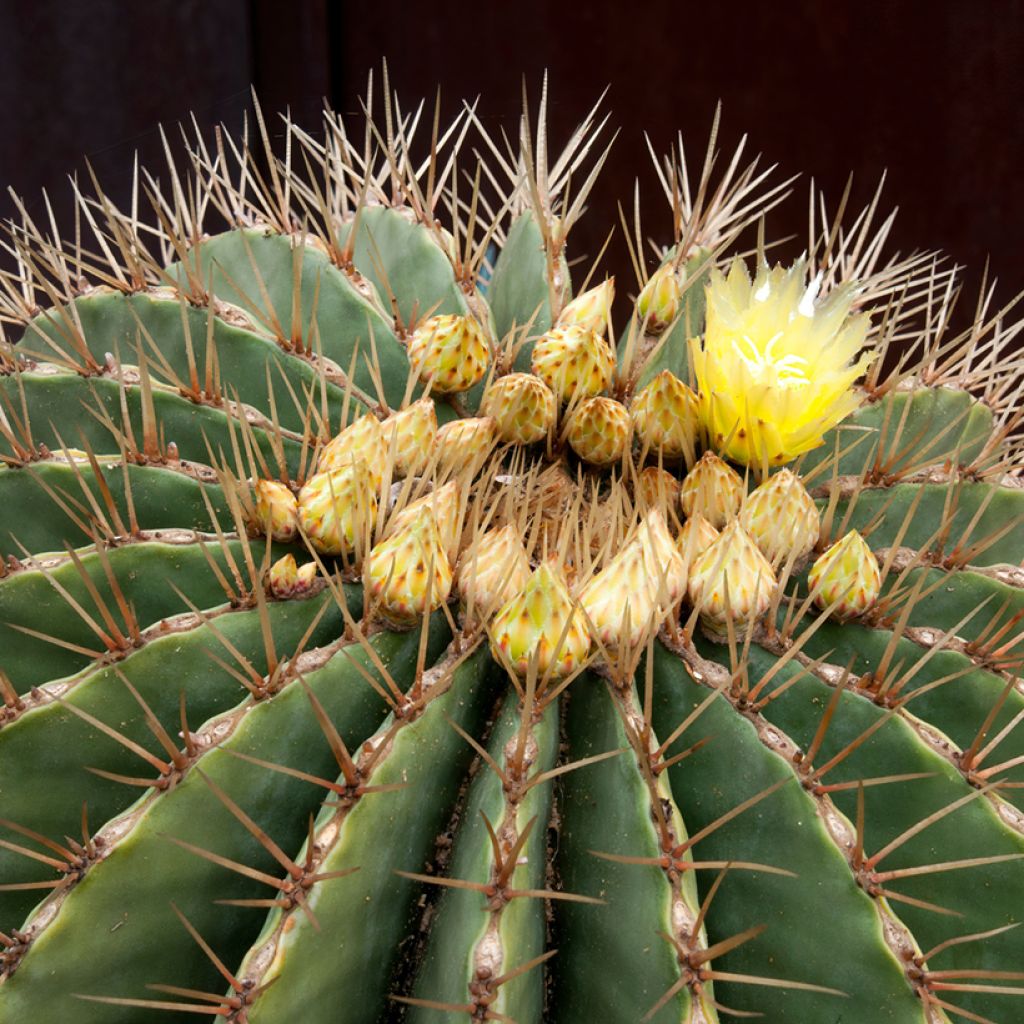
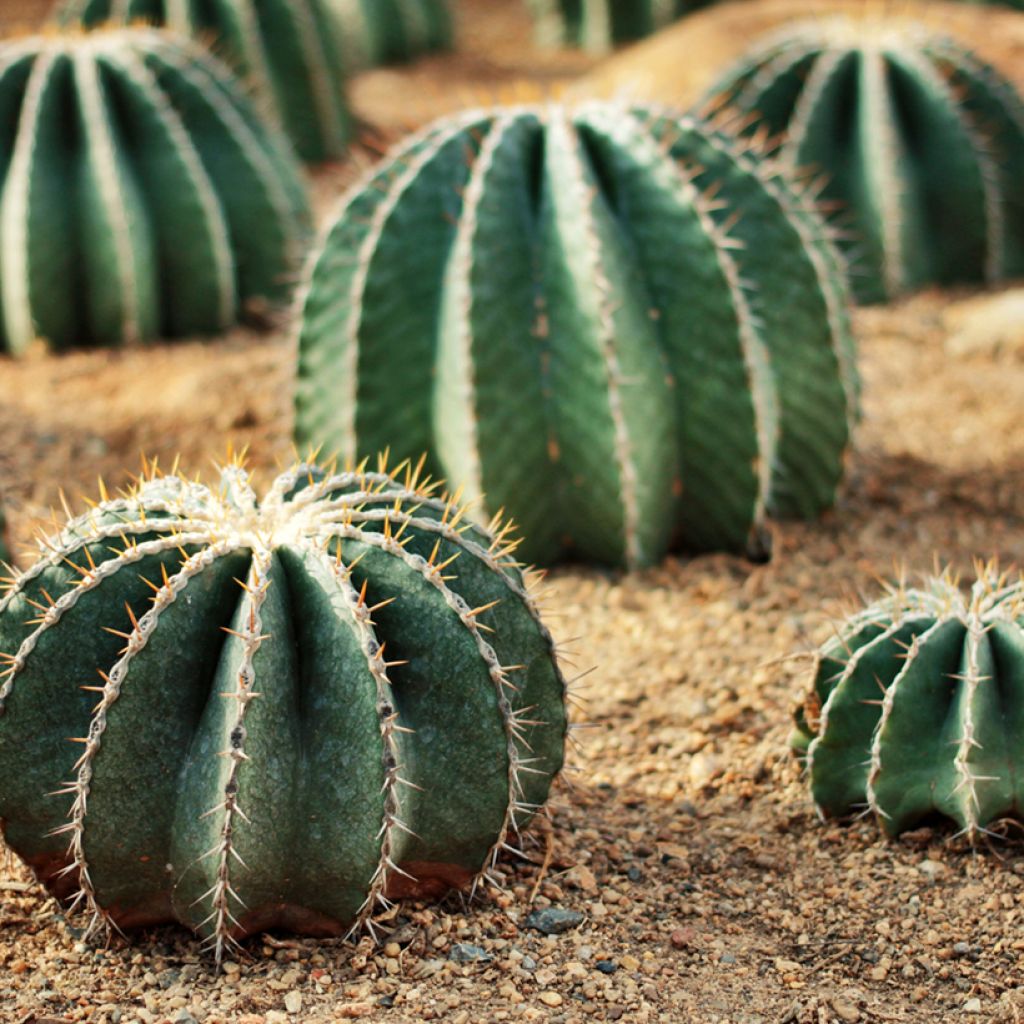
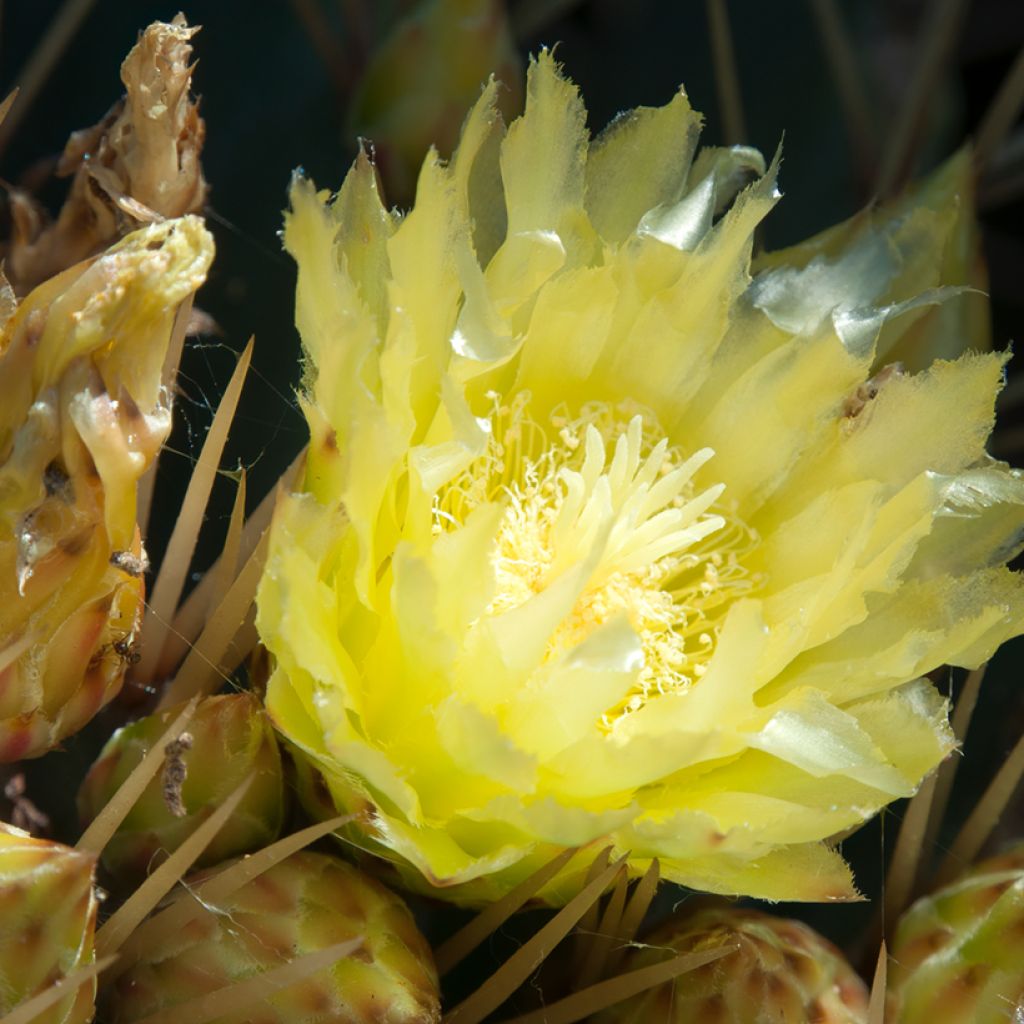
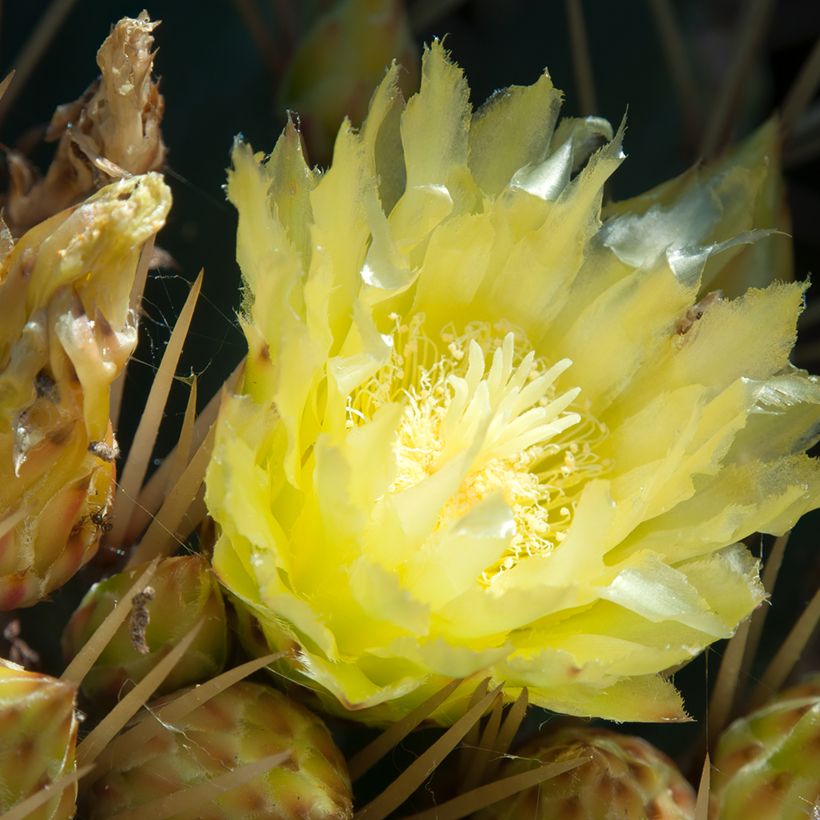
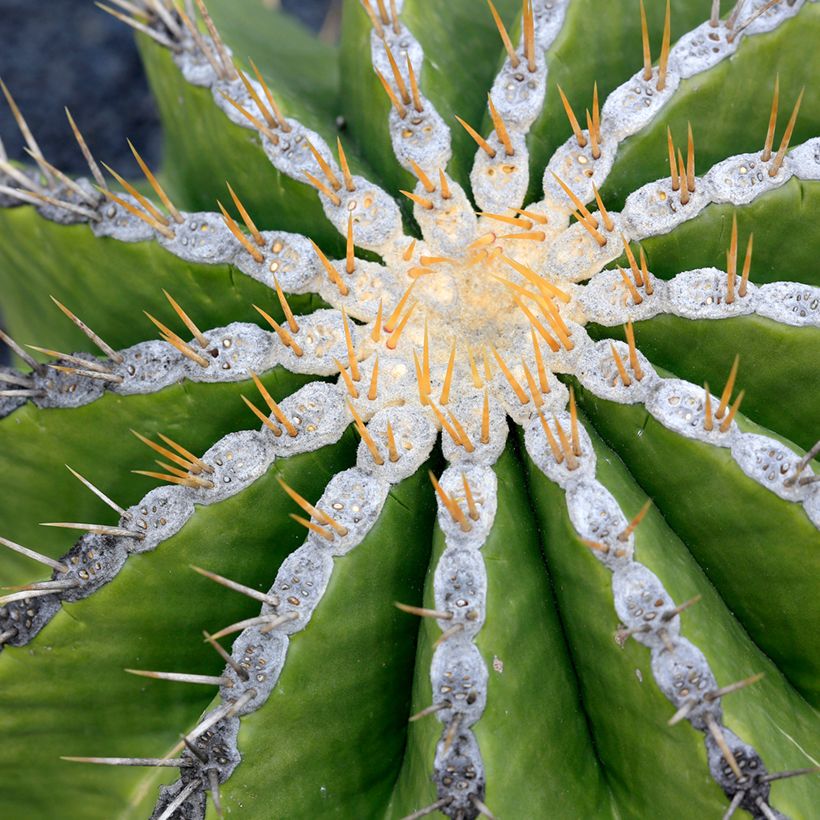
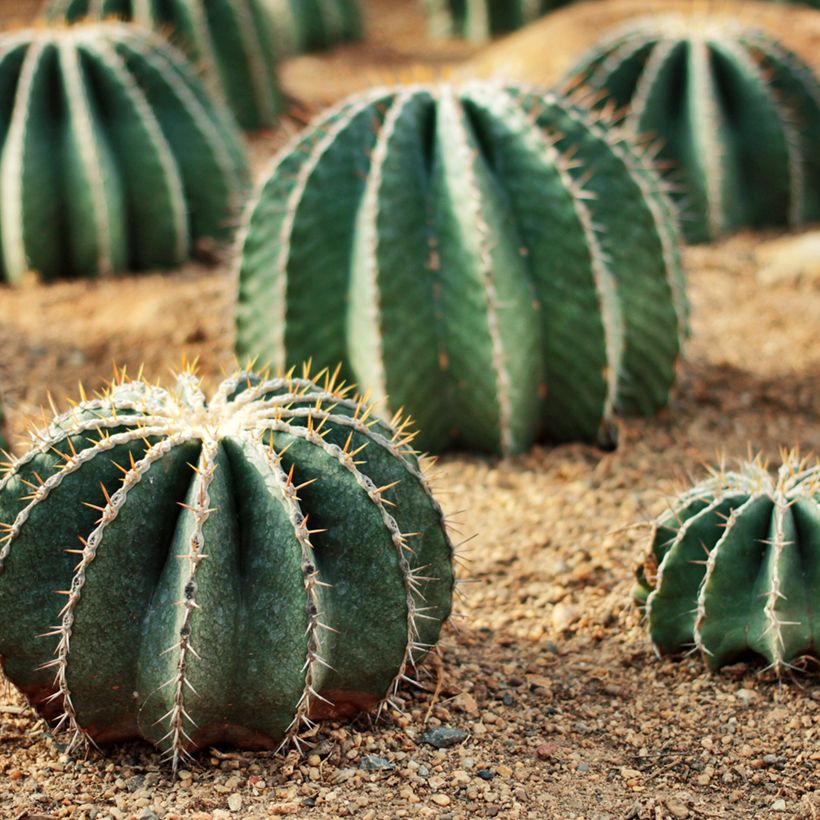
Ferocactus schwarzii, also known as Schwarz's Barrel Cactus, is a species of cactus native to Mexico. This indoor cactus, or outdoor cactus during the warmer months, is distinguished by its globose or slightly elongated form. Its bright green epidermis features numerous well-defined midribs. Young specimens typically display 4 to 5 golden thorns, which tend to decrease in number over time, making mature specimens almost devoid of thorns. The vibrant lemon yellow flowers measure about 10 cm in diameter and appear in a crown around the apex of the cactus, quite rarely indoors.
Ferocactus schwarzii is a rare species native to Mexico, specifically the state of Sinaloa, where it grows in semi-arid areas with rocky, well-drained soil. It belongs to the Cactaceae family, known for plants adapted to dry climates due to their water storage capacity. Unlike other Ferocactus with impressive thorns, this species is distinguished by a reduced number of thorns in mature specimens, giving it a softer and more decorative appearance. In its natural habitat, this cactus can reach 80 cm in height and 50 cm in diameter, but when grown indoors, it generally remains more compact, not exceeding 40 to 50 cm in height after many years. Its globose to slightly cylindrical body displays between 13 and 19 well-defined midribs. The bright green epidermis highlights its yellow flowers, which can reach 10 cm in diameter and appear in a crown around the apex. Flowering occurs relatively early, as soon as the plant reaches about 12 cm in diameter, a rare advantage among Ferocactus. The olive green fruits are spherical and dry out by cracking longitudinally.
When grown indoors, the flowering of Ferocactus schwarzii depends on several factors. This cactus requires a very bright exposure, ideally in full sun, and a well-marked winter rest period with cool temperatures (around 10°C) and a completely dry substrate. Without these conditions, it is unlikely to flower indoors. Place it in a very bright exposure, ideally in full sun, behind a window or outdoors during the warmer months. It requires a well-draining substrate, composed of a cactus mix supplemented with sand or pumice. Its care is simple: spaced watering in summer, ensuring the substrate dries out well between waterings, and a dry winter rest. Keep it above 5°C.
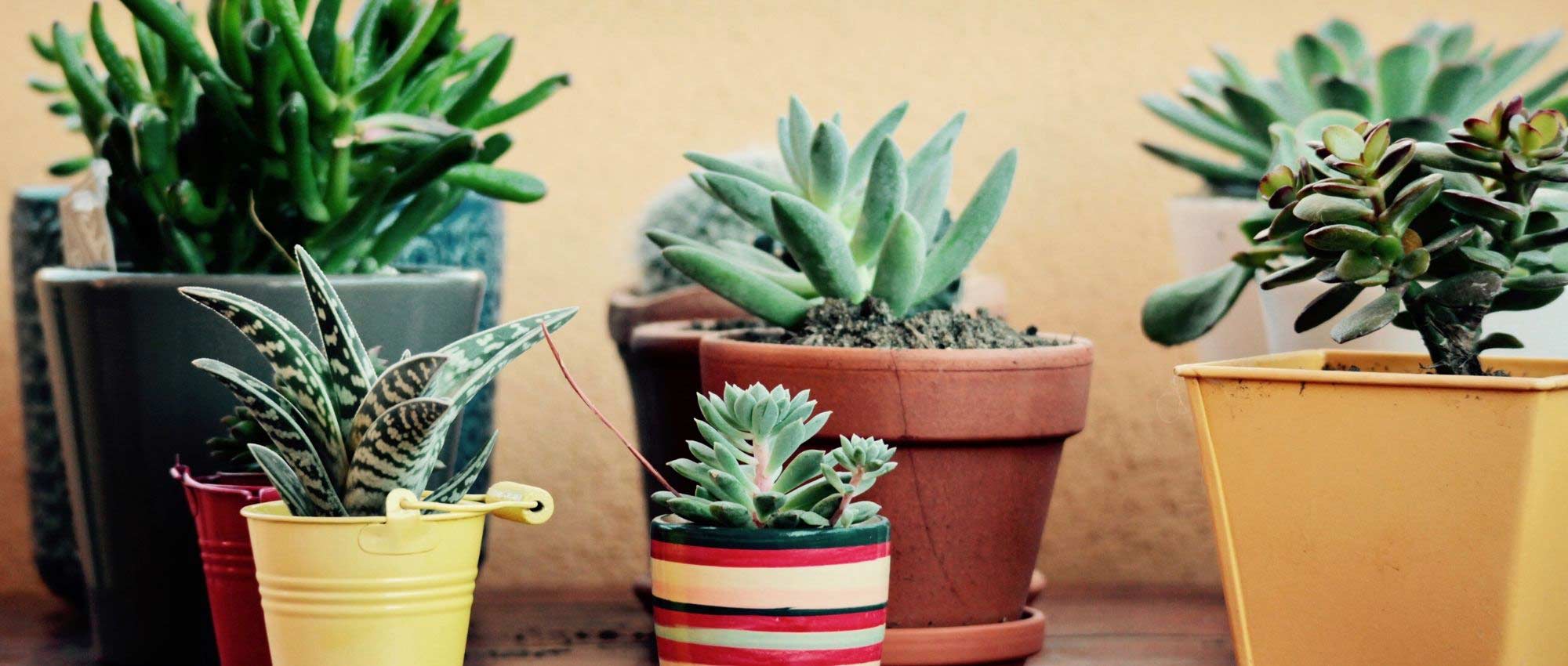
To showcase Ferocactus schwarzii in your interior, consider pairing it with other succulent plants. For example, species like Echeveria elegans with its silvery foliage, Sedum morganianum with its trailing stems, Haworthia fasciata with its distinctive zebra-like patterns, or Graptopetalum paraguayense with its fleshy, pink-tinged leaves, will create an aesthetically pleasing ensemble. These combinations play with contrasts in shapes and textures.
The specific name "schwarzii" pays tribute to the cactus collector Fritz Schwarz, who contributed to the discovery and classification of many Mexican species.
Ferocactus schwarzii - Barrel cactus in pictures
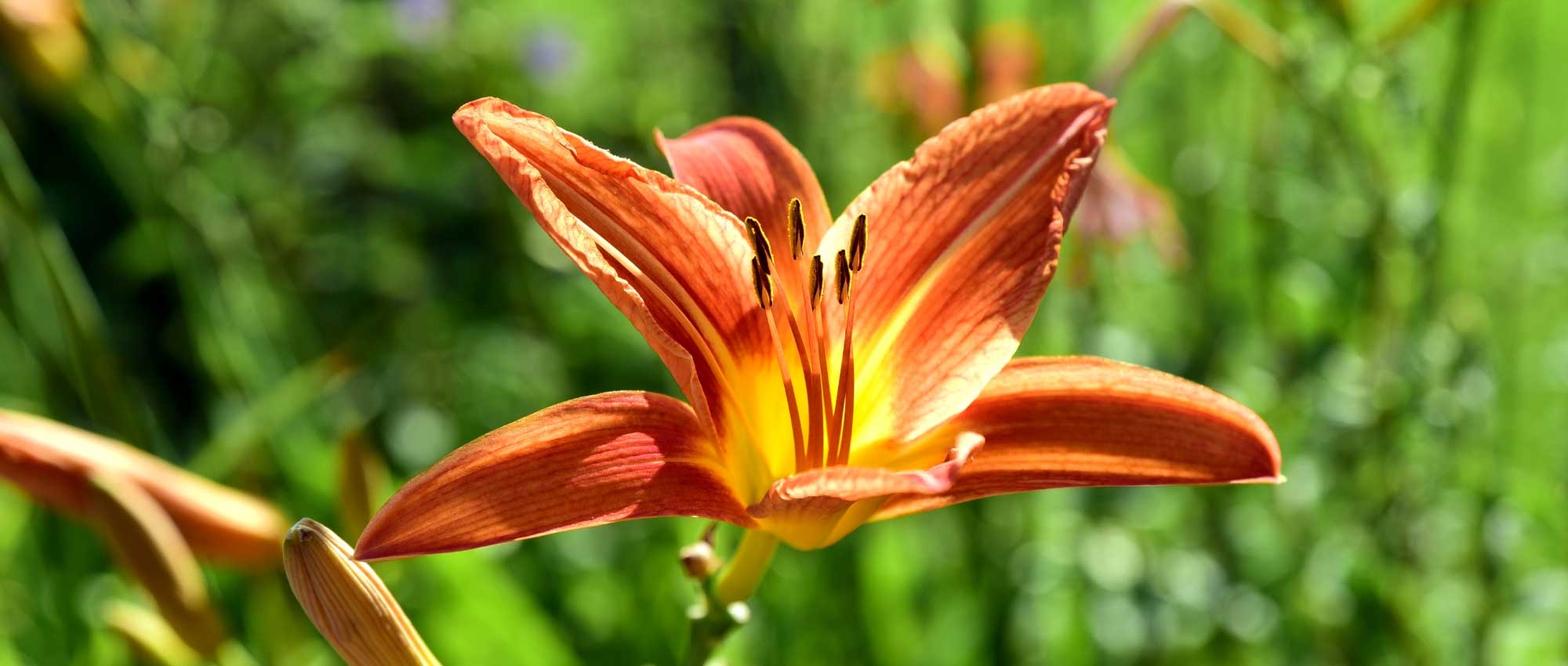
Flowering
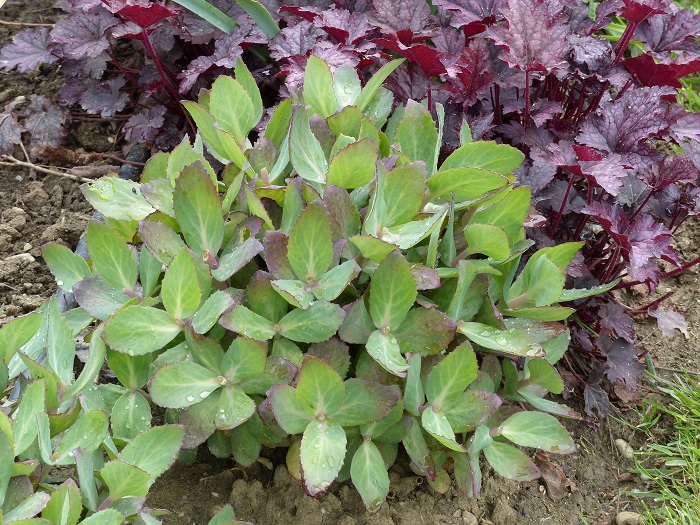
Foliage
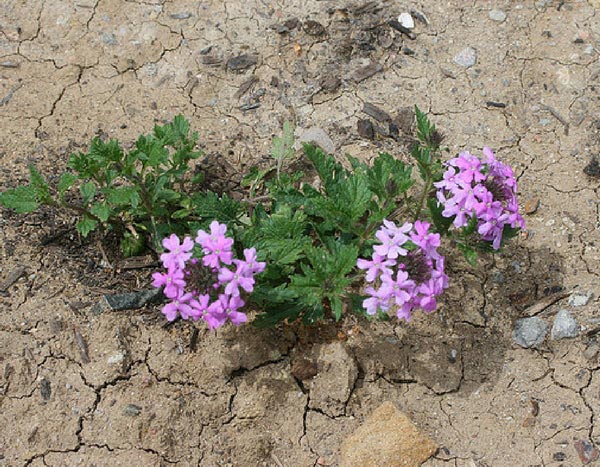
Plant habit
Botanical data
Ferocactus
schwarzii
Cactaceae
Barrel cactus
Parrycactus schwarzii
Central America
Planting and care
Ferocactus schwarzii should be handled with gloves due to its thorns.
Pot cultivation: Choose a container with drainage holes and use a light, well-draining substrate, such as a mixture of garden soil, coarse sand, and compost. Place the pot in a location with direct sunlight, as this species requires at least 6 to 8 hours of sunlight per day for optimal growth. Water moderately during the active growth period, allowing the substrate to dry completely between waterings, and reduce to a minimum in winter to avoid any risk of rot.
In the ground: Ferocactus schwarzii can be planted in regions with very mild winters (hardiness zones 10-11), where temperatures do not drop below -4/-5°C. It is essential to place it in extremely well-drained soil, ideally on a mound or slope, to prevent water accumulation around the roots. Full sun exposure is essential for its health and flowering. Although drought-tolerant, occasional watering during periods of intense heat will promote better growth. In winter, ensure the soil remains dry to increase its cold resistance.
Planting period
Intended location
Care
Planting & care advice
-
-
-
-
-

-

-
-
This item has not been reviewed yet - be the first to leave a review about it.
Recently viewed products
Haven't found what you were looking for?
Hardiness is the lowest winter temperature a plant can endure without suffering serious damage or even dying. However, hardiness is affected by location (a sheltered area, such as a patio), protection (winter cover) and soil type (hardiness is improved by well-drained soil).

The flowering period indicated on our website applies to countries and regions located in USDA zone 8 (France, the United Kingdom, Ireland, the Netherlands, etc.)
It will vary according to where you live:- In zones 9 to 10 (Italy, Spain, Greece, etc.), flowering will occur about 2 to 4 weeks earlier.
- In zones 6 to 7 (Germany, Poland, Slovenia, and lower mountainous regions), flowering will be delayed by 2 to 3 weeks.
- In zone 5 (Central Europe, Scandinavia), blooming will be delayed by 3 to 5 weeks.
In temperate climates, pruning of spring-flowering shrubs (forsythia, spireas, etc.) should be done just after flowering.
Pruning of summer-flowering shrubs (Indian Lilac, Perovskia, etc.) can be done in winter or spring.
In cold regions as well as with frost-sensitive plants, avoid pruning too early when severe frosts may still occur.
The planting period indicated on our website applies to countries and regions located in USDA zone 8 (France, United Kingdom, Ireland, Netherlands).
It will vary according to where you live:
- In Mediterranean zones (Marseille, Madrid, Milan, etc.), autumn and winter are the best planting periods.
- In continental zones (Strasbourg, Munich, Vienna, etc.), delay planting by 2 to 3 weeks in spring and bring it forward by 2 to 4 weeks in autumn.
- In mountainous regions (the Alps, Pyrenees, Carpathians, etc.), it is best to plant in late spring (May-June) or late summer (August-September).
The harvesting period indicated on our website applies to countries and regions in USDA zone 8 (France, England, Ireland, the Netherlands).
In colder areas (Scandinavia, Poland, Austria...) fruit and vegetable harvests are likely to be delayed by 3-4 weeks.
In warmer areas (Italy, Spain, Greece, etc.), harvesting will probably take place earlier, depending on weather conditions.
The sowing periods indicated on our website apply to countries and regions within USDA Zone 8 (France, UK, Ireland, Netherlands).
In colder areas (Scandinavia, Poland, Austria...), delay any outdoor sowing by 3-4 weeks, or sow under glass.
In warmer climes (Italy, Spain, Greece, etc.), bring outdoor sowing forward by a few weeks.
Shipping country and language
Your country of residence may be:
Your country of residence is:
For a better user experience on our website, you can select:
Your shipping country:
-
 Austria
-
 Belgium
-
 Bosnia & Herzegovina
-
 Bulgaria
-
 Croatia
-
 Cyprus
-
 Czechia
-
 Denmark
-
 Estonia
-
 Finland
-
 France
-
 Germany
-
 Greece
-
 Hungary
-
 Iceland
-
 Ireland
-
 Italy
Italy
-
 Latvia
-
 Liechtenstein
-
 Lithuania
-
 Luxembourg
-
 Malta
Malta
-
 Netherlands
-
 Poland
-
 Portugal
-
 Romania
-
 Serbia
-
 Slovakia
-
 Slovenia
-
 Spain
Spain
-
 Sweden
-
 Switzerland
Language:
-
French
-
 English
-
Spanish
-
Italian
-
German
-
Portuguese
-
Dutch
-
Finnish
My Account
Hello
My wish lists
My cart
Log in / Register
Existing customer?
This form is protected by reCAPTCHA - the Google Privacy Policy and Terms of Service apply.
New customer?
Create an account to track your orders, access our customer service and, if you wish, make the most of our upcoming offers.