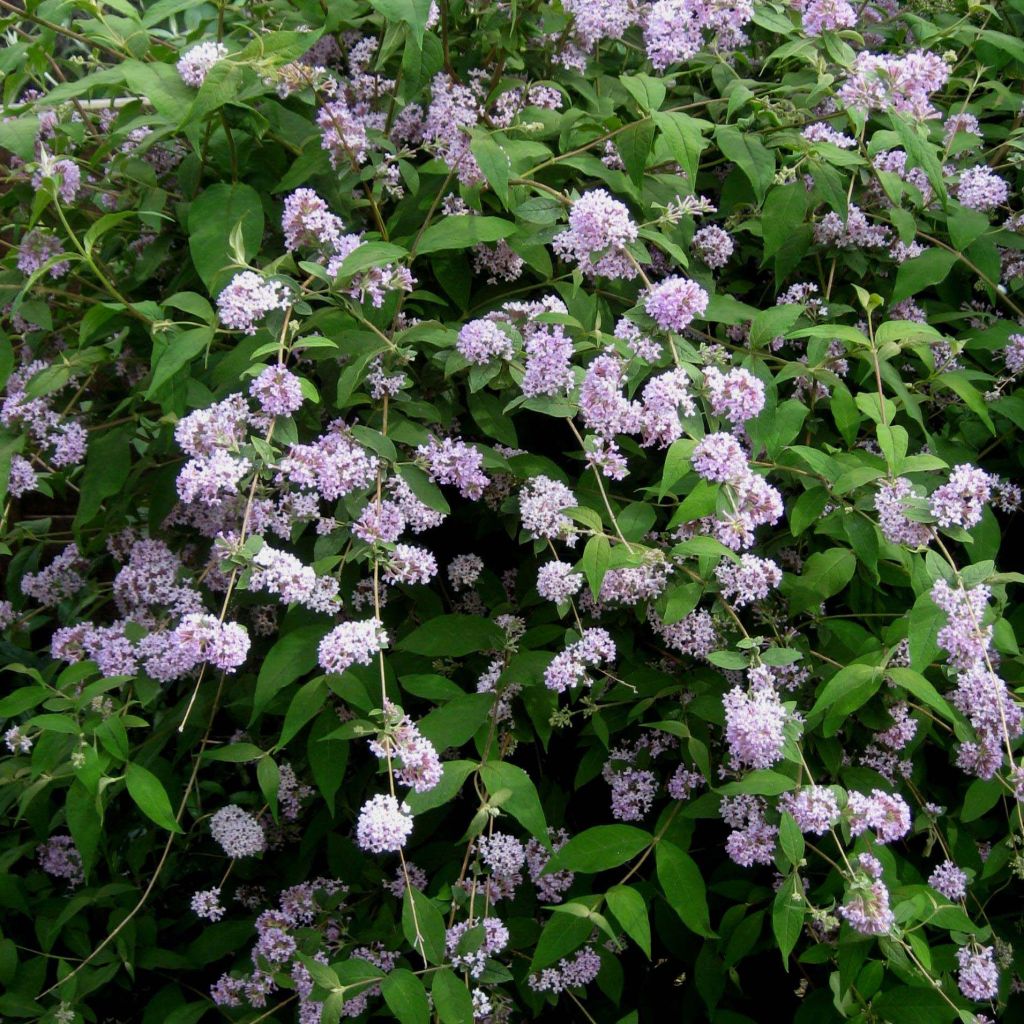
Buddleja delavayi - Butterfly Bush
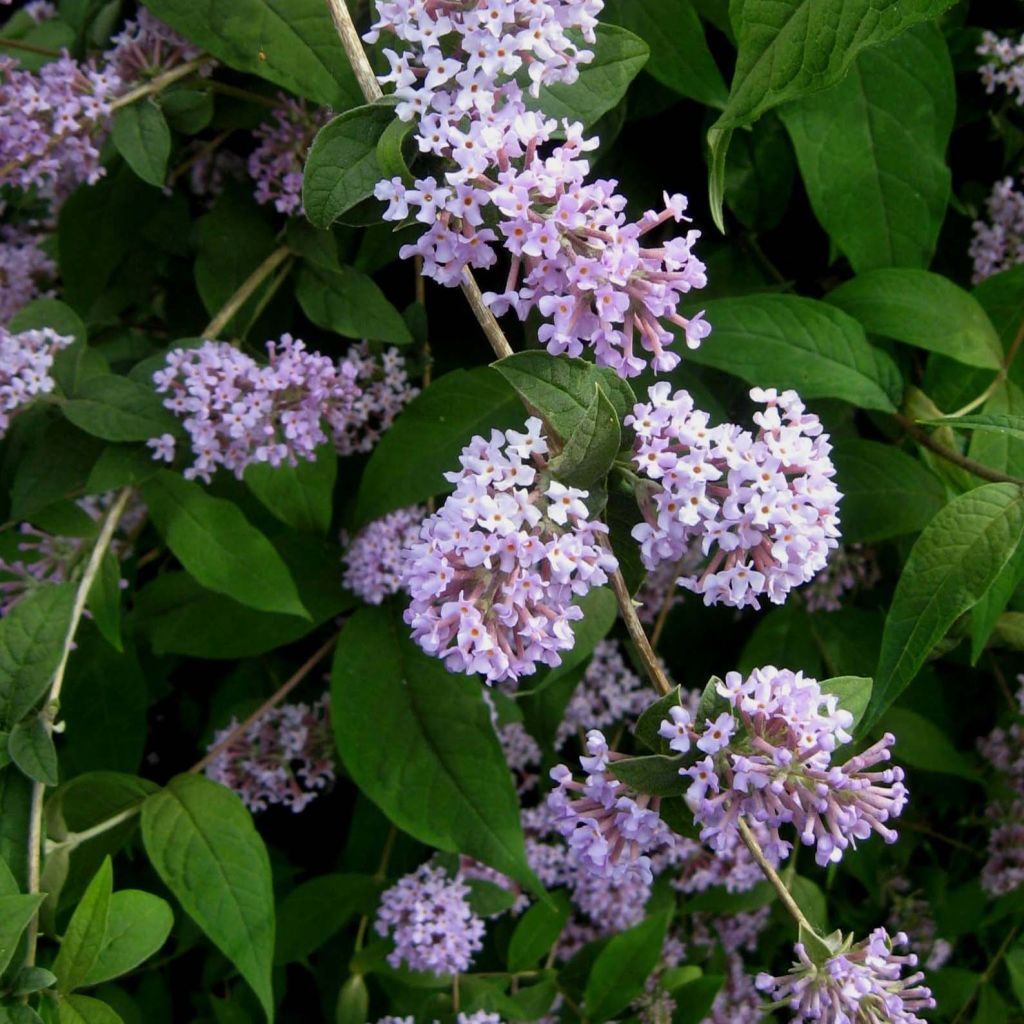
Buddleja delavayi - Butterfly Bush
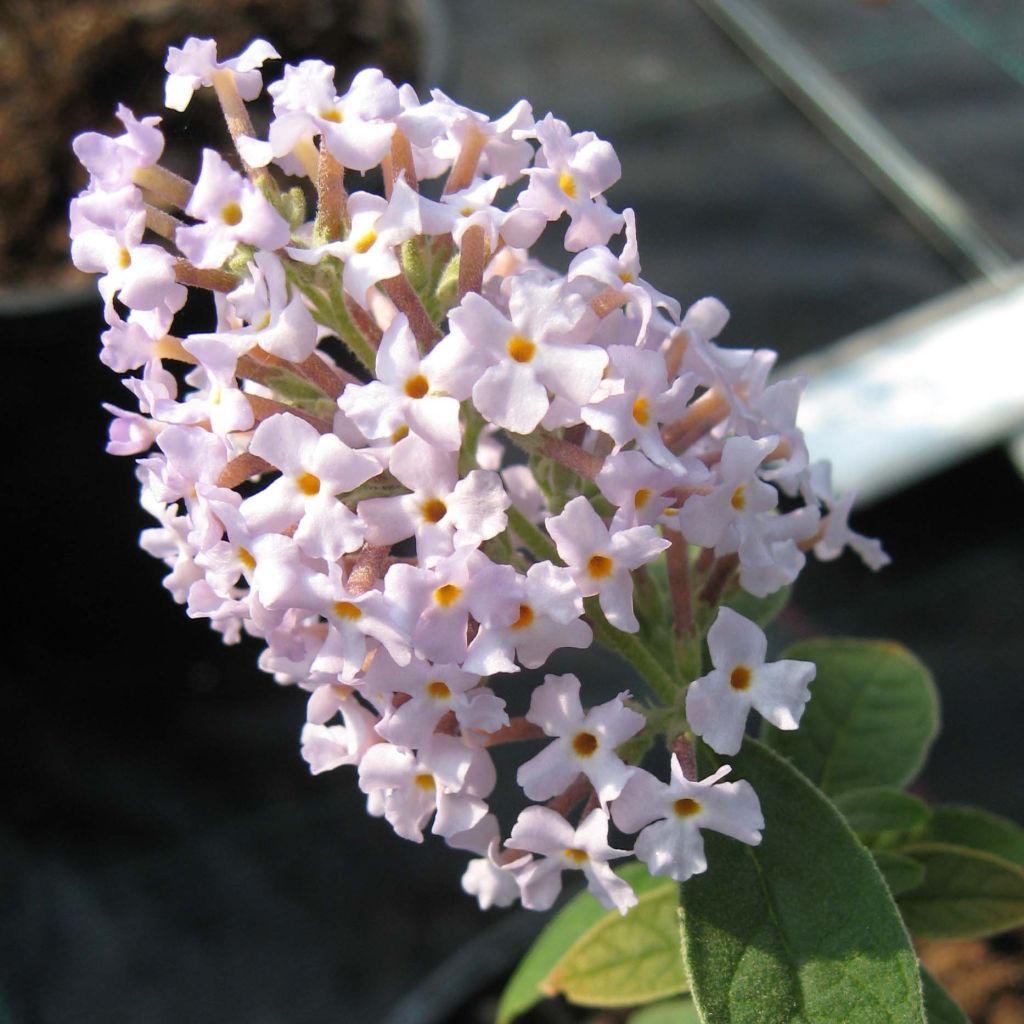
Buddleja delavayi - Butterfly Bush
Buddleja delavayi - Butterfly Bush
Buddleja delavayi
Delavay's Butterfly Bush
Back-to-school special offer!
Get €10 off for every €50 you spend! And get up to €40 off on a single order.
How does it work?
1. Shop your favourites
Add your favourite plants to your basket. For every €50 you spend (excluding delivery charges, store credit and the plastic-free option), you’ll receive a €10 voucher.
€50 spent = €10 voucher
€100 spent = €20 voucher
€150 spent = €30 voucher
€200 spent = €40 voucher
2. Place your order
Once your basket reaches one of the spending thresholds, place your order. You can even choose your delivery date!
3. Receive your voucher
As soon as your order has been shipped, you’ll receive an email containing your personal voucher code and its value.
4. Use it on your next order
Your voucher is valid for 90 days from the date you receive it. It can be used once only, on a new order worth at least the value of the voucher, excluding delivery charges.
Please note: Vouchers can be combined with other offers, but cannot be split or refunded.
Why not try an alternative variety in stock?
View all →
Available in 3 sizes
Available in 1 sizes
Available in 2 sizes
Available in 1 sizes
Available in 2 sizes
Available in 2 sizes
Available in 3 sizes
Available in 2 sizes
Available in 2 sizes
Available in 1 sizes
This plant carries a 24 months recovery warranty
More information
We guarantee the quality of our plants for a full growing cycle, and will replace at our expense any plant that fails to recover under normal climatic and planting conditions.
Would this plant suit my garden?
Set up your Plantfit profile →
Description
Buddleia delavayi is a rarely cultivated wild butterfly tree that deserves a place of honour in the garden of a collector and lover of fragrant plants. This beautiful bush charms with the scent of honey and rose from its clusters of pink-lilac flowers. It often blooms in late spring in our climates. Theoretically, it will bloom twice a year, with the second flowering in September being more decorative. Moderately hardy, this beautiful deciduous species is grown in open ground and in full sun in mild regions. You can also plant it in a container which can be protected from heavy frost in cold climates.
Originating from the Chinese provinces of Xizang and Yunnan, Buddleja delavayi (synonym B. heliophila) is a sun-loving botanical species, hardy up to -10 to -12°C (14 to 10.4°F) at its coldest). In its native lands, it is found growing on the edge of forests, in valleys, and along mountain trails at an altitude between 2000 and 3000 m (6562 and 9843 ft). It is a deciduous bush that loses its leaves in winter. It belongs to the Scrophulariaceae (buddlejaceae) family. It was introduced into cultivation by the Scottish plant hunter George Forrest in 1910, but remains rare in our gardens.
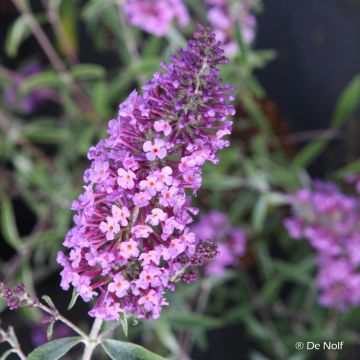
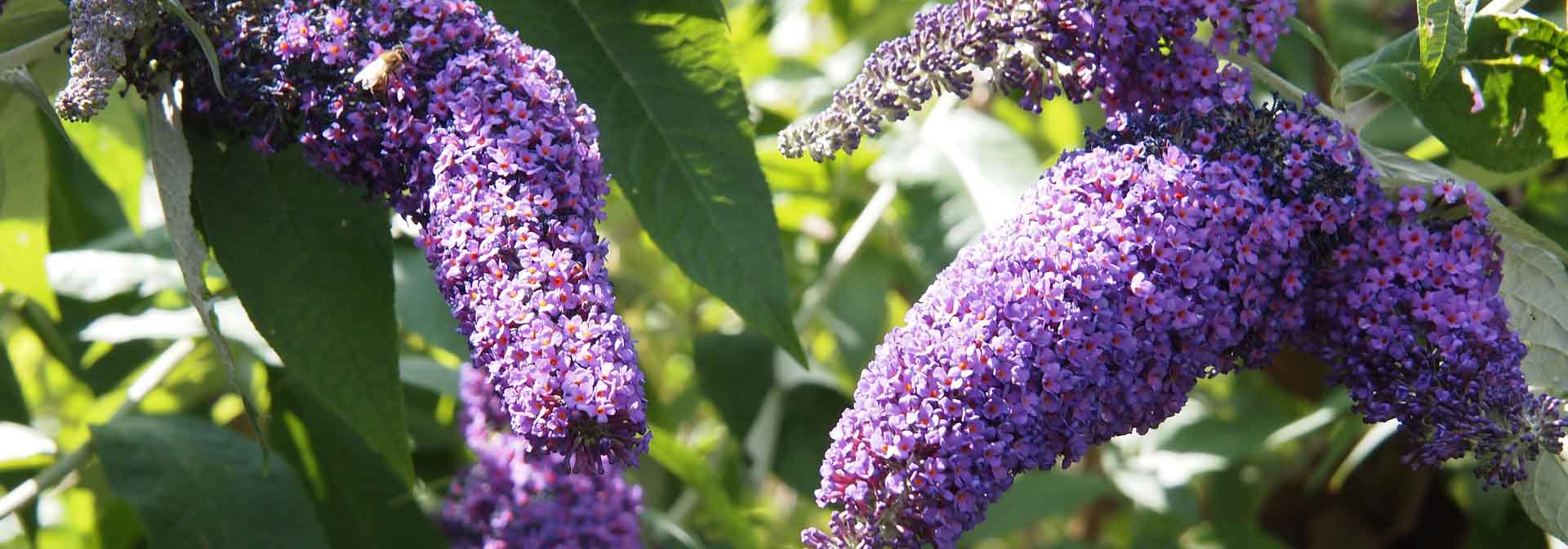
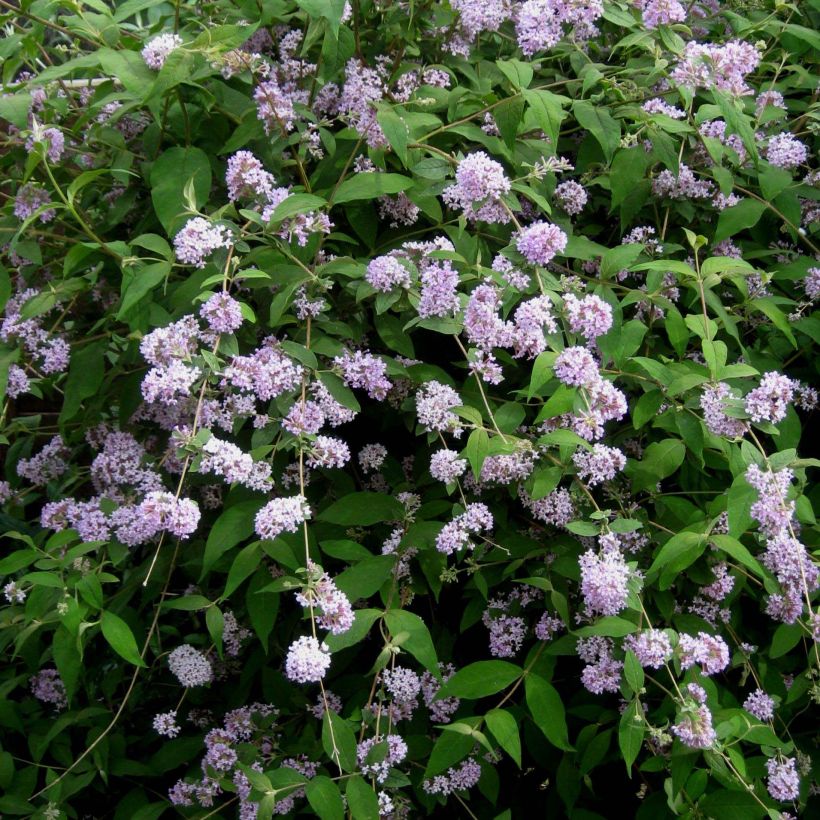
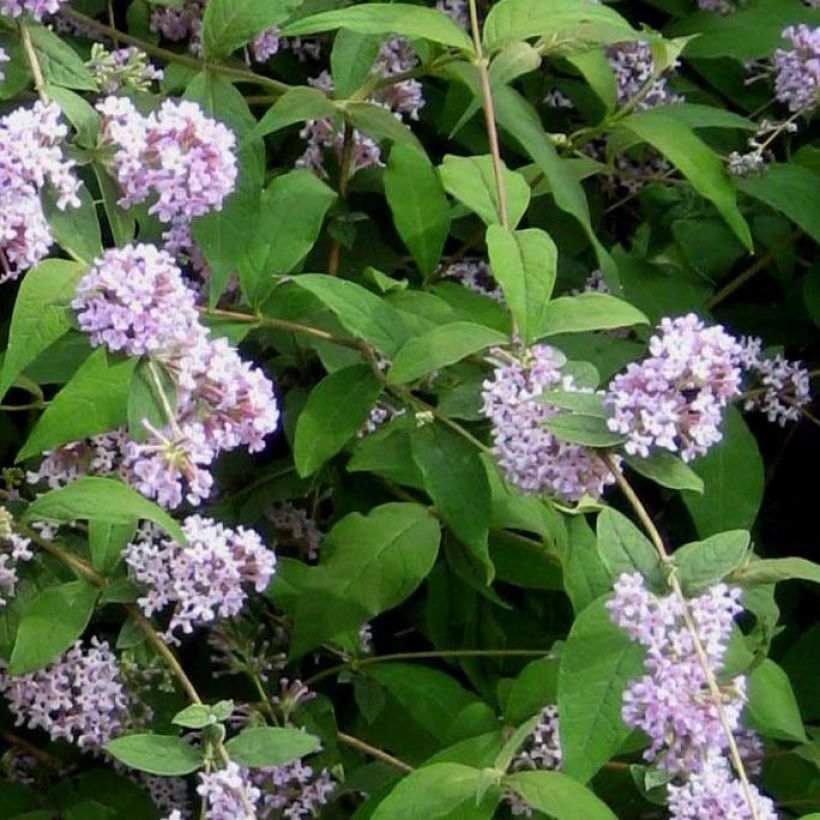
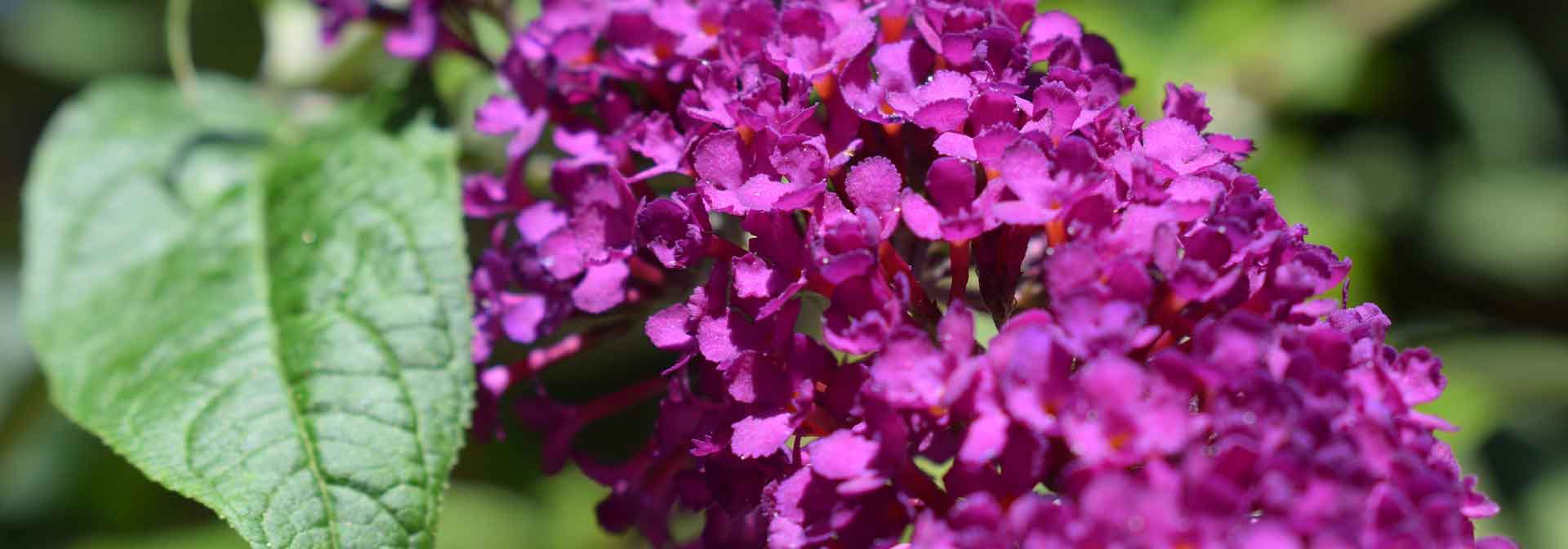
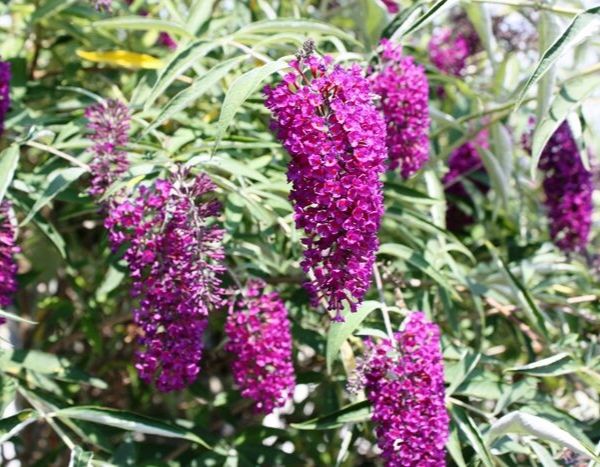
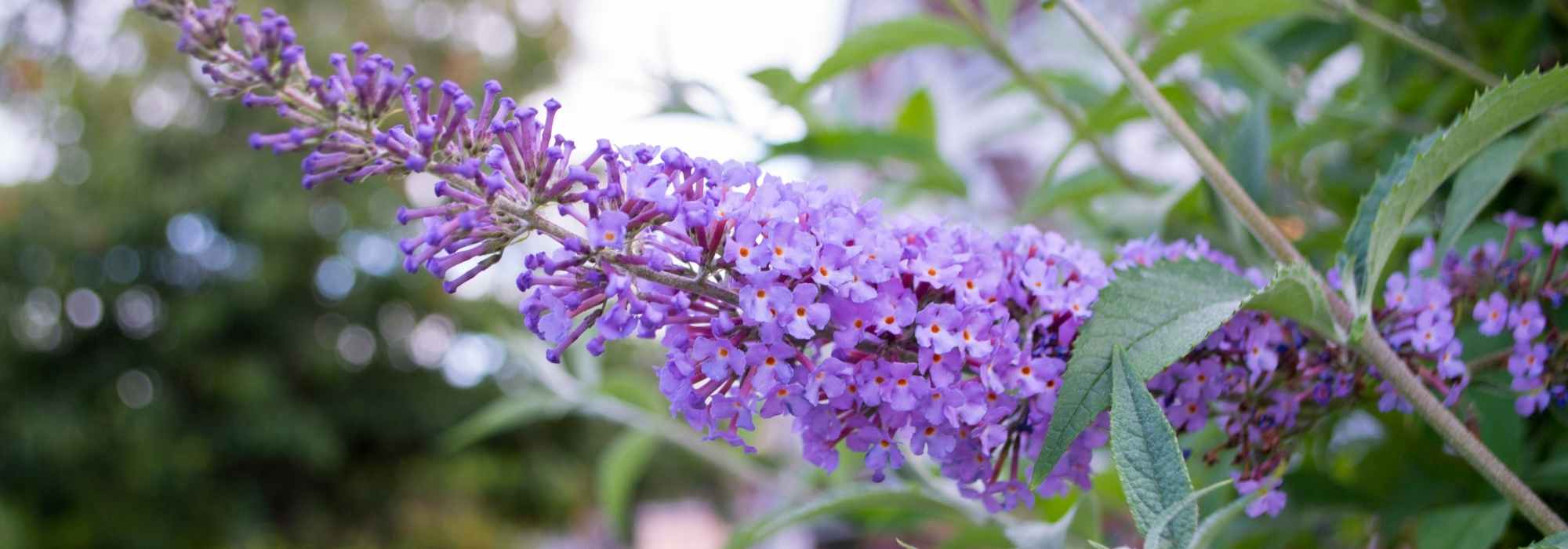
Its bushy habit is flexible and slightly spreading. It is also elegant thanks to its slightly arched long branches. It grows quite rapidly and reaches approximately 2 m (7 ft) in height and 1.5 m (5 ft) in width at maturity in open ground, slightly less if grown in a pot. Its abundant foliage is composed of elliptical, pointed leaves, 1.5 to 6 cm (1 to 2 in) long, generally with short petioles, showing toothed or smooth edges. Their green colour is masked by a fine grey-blue veil, particularly when they are young. In nature or in favourable climates, this species offers 2 flowerings per year, with a very different appearance: the first in April, consisting of small pink-lilac panicles not exceeding 12 cm (5 in) in diameter, then a second in late summer, taking the form of long clusters of deep salmon-pink colour that can measure up to 25 cm (10 in) in length. The spring flowering is already present in the form of flower buds forming in autumn, protected from the cold by small brown and dry scales. In cooler, temperate climates, the singular flowering occurs in late spring. These inflorescences are composed of quite large multiple tubular flowers, (10 mm (0.4 in) long and 8 mm (0.3 in) wide), with a pink-lilac colour and an orange throat. They emit a strong honey scent, comparable to that of Buddleia officinalis, which blooms in February. They open at the same time at the terminal part of the stems and in the axils of the leaves, on the wood of the previous year.
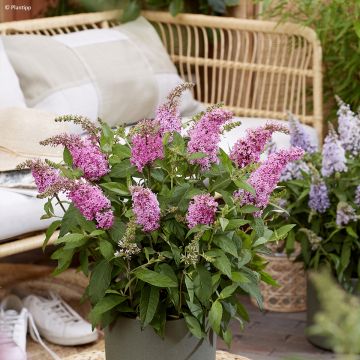
This buddleia will delight enthusiasts of rare and collectible bushes. You can plant it against a south-facing wall to enjoy its magnificent scent, or mix it with other bushes to create beautiful flowering hedges in mild climates. To create a mixed hedge, choose other buddleias (B. 'Lochinch', B. officinalis, B. alternifolia), and old or English roses (old rose Cuisse de Nymphe Emue and Complicata, English rose Spirit of Freedom). Reblooming dwarf lilacs or summer lilacs make good companions for this beautiful bush. It is superb on terraces and balconies, placed in a pretty container next to a French Cabaret Althea, Pink Chiffon, etc.
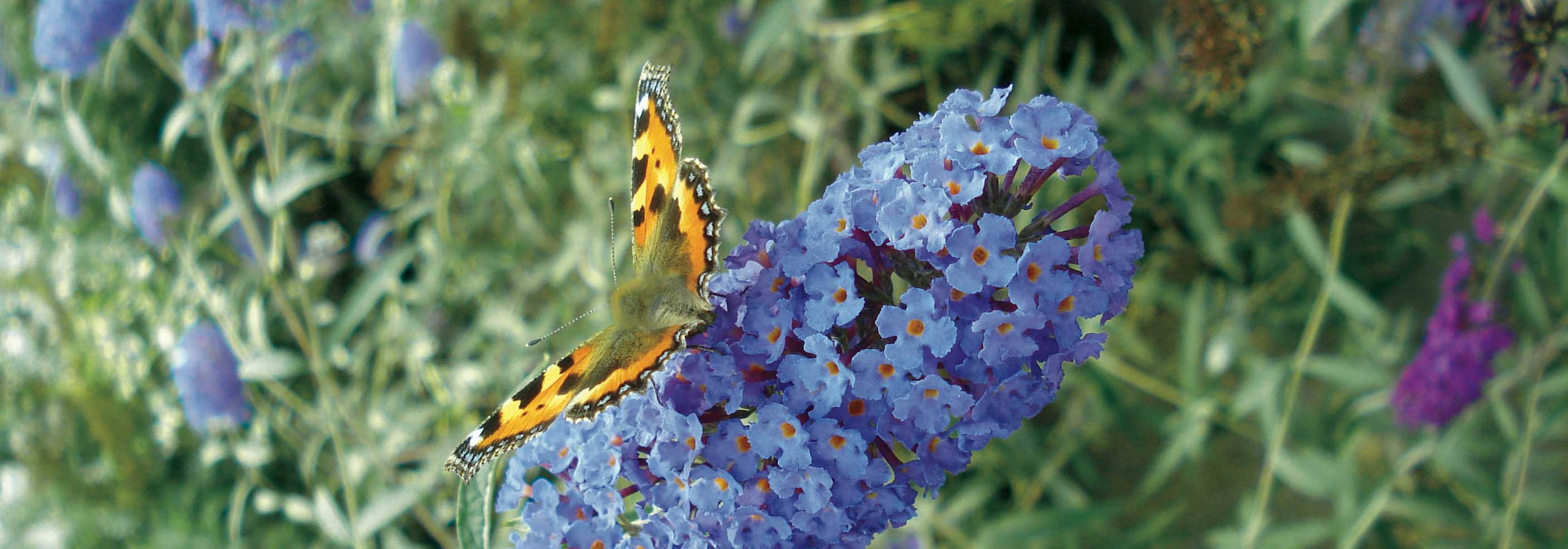
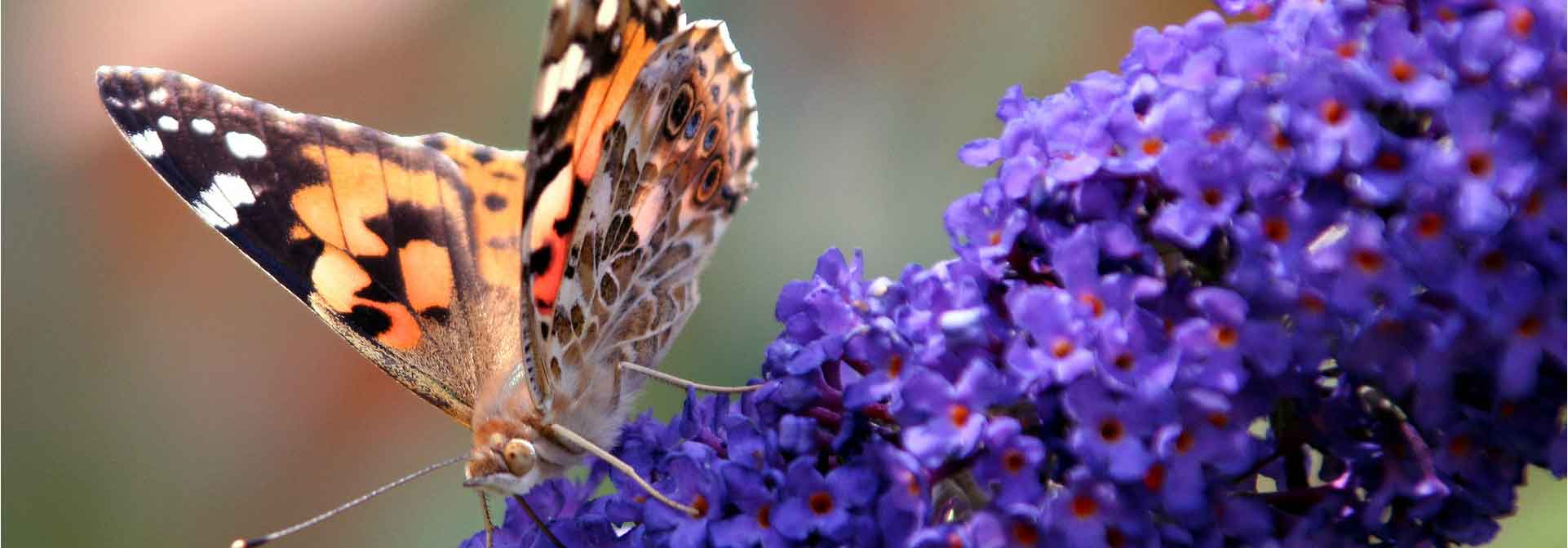
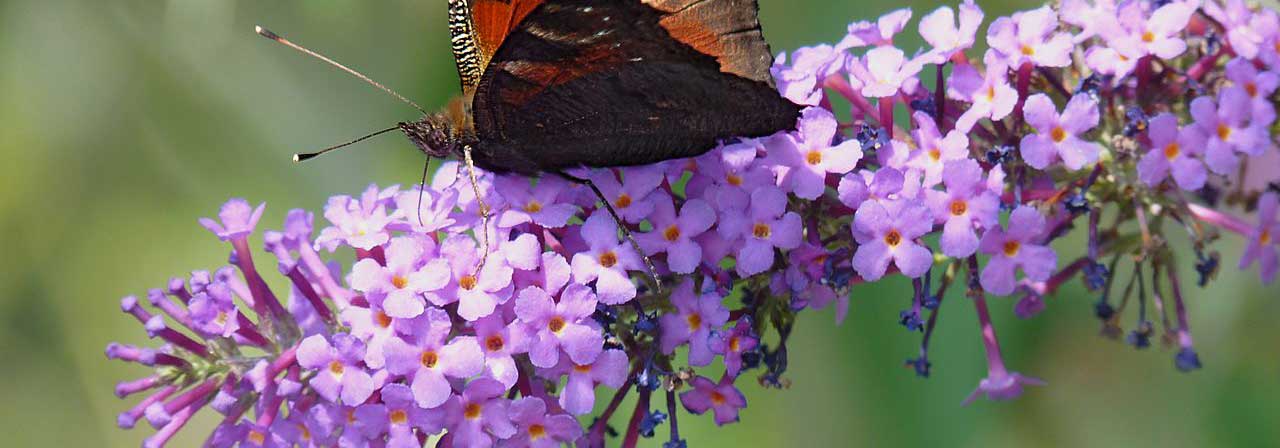
This bush produces a good amount of nectar, which will attract certain butterflies. Buddleia or Buddleja comes from the name of its discoverer, Reverend Adam Buddle, an English botanist of the 19th century.
Buddleja delavayi - Butterfly Bush in pictures
Plant habit
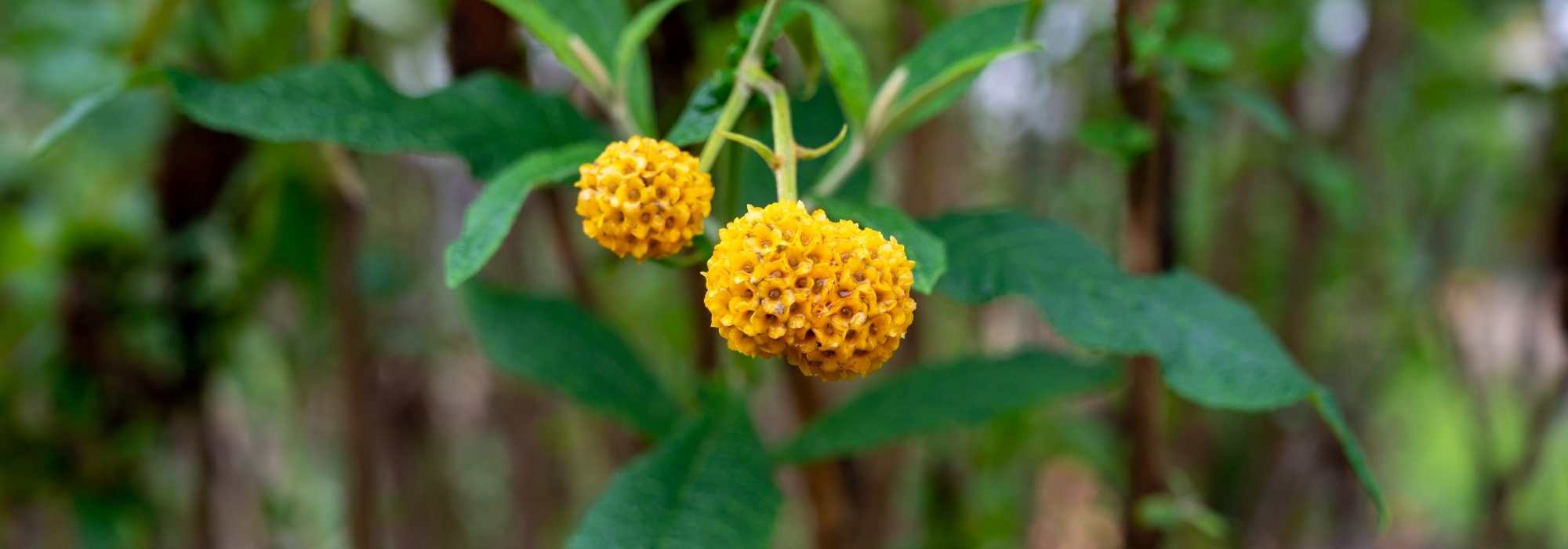
Flowering
Foliage
Botanical data
Buddleja
delavayi
Scrophulariaceae
Delavay's Butterfly Bush
China
Planting and care
Easy to grow in any deep, ordinary, fertile, and well-drained soil that is neither too dry nor too poor, Buddleia delavayi only fears strong frosts. However, it can withstand temperatures of -10 to -12°C (14 to 10.4 °F) once mature and well established, if it is sheltered from the wind. It appreciates very sunny spots. If pruning is necessary, it should be done just after flowering, as this species blooms on the previous year's branches.
Planting period
Intended location
Care
Planting & care advice
-
-
-

-
-
-
-
-
This item has not been reviewed yet - be the first to leave a review about it.
Recently viewed products
Haven't found what you were looking for?
Hardiness is the lowest winter temperature a plant can endure without suffering serious damage or even dying. However, hardiness is affected by location (a sheltered area, such as a patio), protection (winter cover) and soil type (hardiness is improved by well-drained soil).

The flowering period indicated on our website applies to countries and regions located in USDA zone 8 (France, the United Kingdom, Ireland, the Netherlands, etc.)
It will vary according to where you live:- In zones 9 to 10 (Italy, Spain, Greece, etc.), flowering will occur about 2 to 4 weeks earlier.
- In zones 6 to 7 (Germany, Poland, Slovenia, and lower mountainous regions), flowering will be delayed by 2 to 3 weeks.
- In zone 5 (Central Europe, Scandinavia), blooming will be delayed by 3 to 5 weeks.
In temperate climates, pruning of spring-flowering shrubs (forsythia, spireas, etc.) should be done just after flowering.
Pruning of summer-flowering shrubs (Indian Lilac, Perovskia, etc.) can be done in winter or spring.
In cold regions as well as with frost-sensitive plants, avoid pruning too early when severe frosts may still occur.
The planting period indicated on our website applies to countries and regions located in USDA zone 8 (France, United Kingdom, Ireland, Netherlands).
It will vary according to where you live:
- In Mediterranean zones (Marseille, Madrid, Milan, etc.), autumn and winter are the best planting periods.
- In continental zones (Strasbourg, Munich, Vienna, etc.), delay planting by 2 to 3 weeks in spring and bring it forward by 2 to 4 weeks in autumn.
- In mountainous regions (the Alps, Pyrenees, Carpathians, etc.), it is best to plant in late spring (May-June) or late summer (August-September).
The harvesting period indicated on our website applies to countries and regions in USDA zone 8 (France, England, Ireland, the Netherlands).
In colder areas (Scandinavia, Poland, Austria...) fruit and vegetable harvests are likely to be delayed by 3-4 weeks.
In warmer areas (Italy, Spain, Greece, etc.), harvesting will probably take place earlier, depending on weather conditions.
The sowing periods indicated on our website apply to countries and regions within USDA Zone 8 (France, UK, Ireland, Netherlands).
In colder areas (Scandinavia, Poland, Austria...), delay any outdoor sowing by 3-4 weeks, or sow under glass.
In warmer climes (Italy, Spain, Greece, etc.), bring outdoor sowing forward by a few weeks.
Shipping country and language
Your country of residence may be:
Your country of residence is:
For a better user experience on our website, you can select:
Your shipping country:
-
 Austria
-
 Belgium
-
 Bosnia & Herzegovina
-
 Bulgaria
-
 Croatia
-
 Cyprus
-
 Czechia
-
 Denmark
-
 Estonia
-
 Finland
-
 France
-
 Germany
-
 Greece
-
 Hungary
-
 Iceland
-
 Ireland
-
 Italy
Italy
-
 Latvia
-
 Liechtenstein
-
 Lithuania
-
 Luxembourg
-
 Malta
Malta
-
 Netherlands
-
 Poland
-
 Portugal
-
 Romania
-
 Serbia
-
 Slovakia
-
 Slovenia
-
 Spain
Spain
-
 Sweden
-
 Switzerland
Language:
-
French
-
 English
-
Spanish
-
Italian
-
German
-
Portuguese
-
Dutch
-
Finnish
My Account
Hello
My wish lists
My cart
Log in / Register
Existing customer?
This form is protected by reCAPTCHA - the Google Privacy Policy and Terms of Service apply.
New customer?
Create an account to track your orders, access our customer service and, if you wish, make the most of our upcoming offers.