Grevillea prostrata Aurea
Grevillea prostrata Aurea
Grevillea prostrata Aurea
Grevillea prostrata Aurea
Grevillea prostrata Aurea
Back-to-school special offer!
Get €10 off for every €50 you spend! And get up to €40 off on a single order.
How does it work?
1. Shop your favourites
Add your favourite plants to your basket. For every €50 you spend (excluding delivery charges, store credit and the plastic-free option), you’ll receive a €10 voucher.
€50 spent = €10 voucher
€100 spent = €20 voucher
€150 spent = €30 voucher
€200 spent = €40 voucher
2. Place your order
Once your basket reaches one of the spending thresholds, place your order. You can even choose your delivery date!
3. Receive your voucher
As soon as your order has been shipped, you’ll receive an email containing your personal voucher code and its value.
4. Use it on your next order
Your voucher is valid for 90 days from the date you receive it. It can be used once only, on a new order worth at least the value of the voucher, excluding delivery charges.
Please note: Vouchers can be combined with other offers, but cannot be split or refunded.
Home or relay delivery (depending on size and destination)
Important: You may be charged customs duties by your country’s customs authorities upon delivery.
Schedule delivery date
and select date in basket
This plant carries a 24 months recovery warranty
More information
We guarantee the quality of our plants for a full growing cycle, and will replace at our expense any plant that fails to recover under normal climatic and planting conditions.
Would this plant suit my garden?
Set up your Plantfit profile →
Description
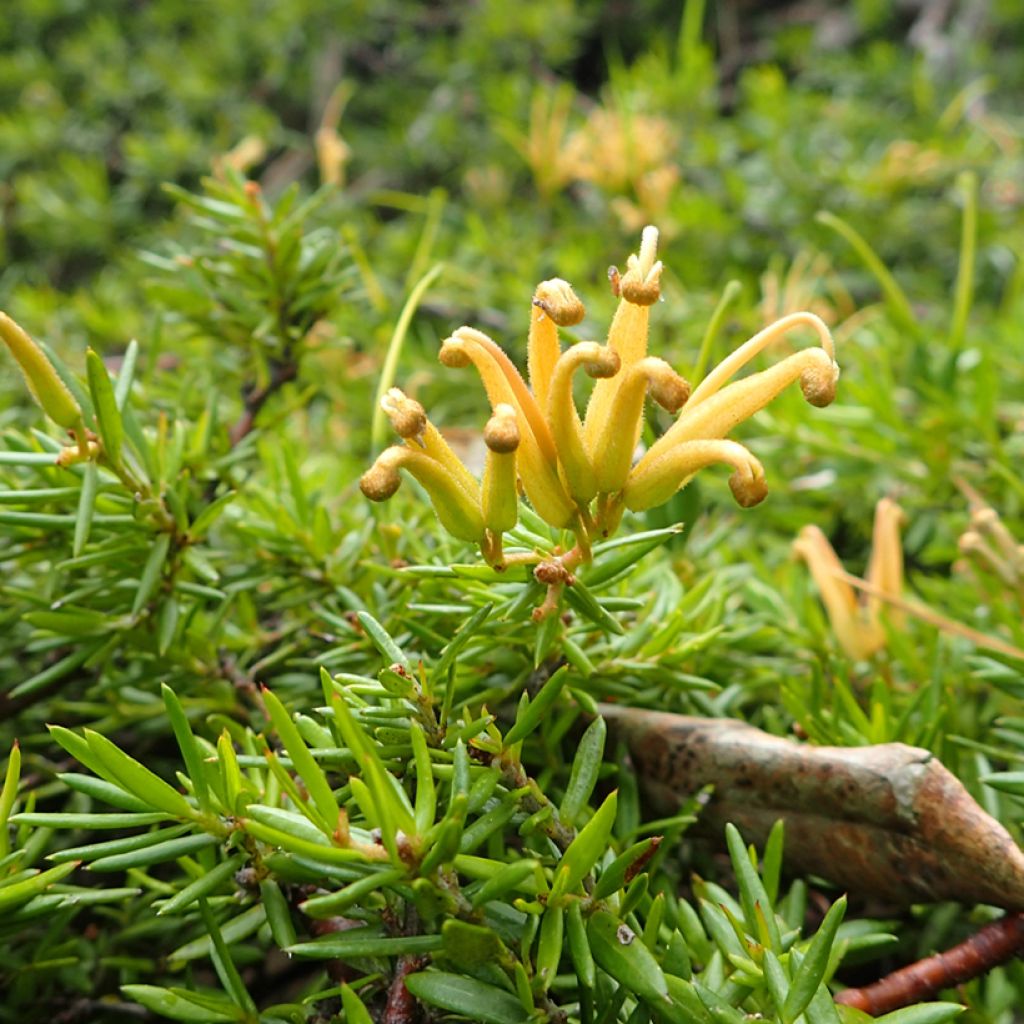
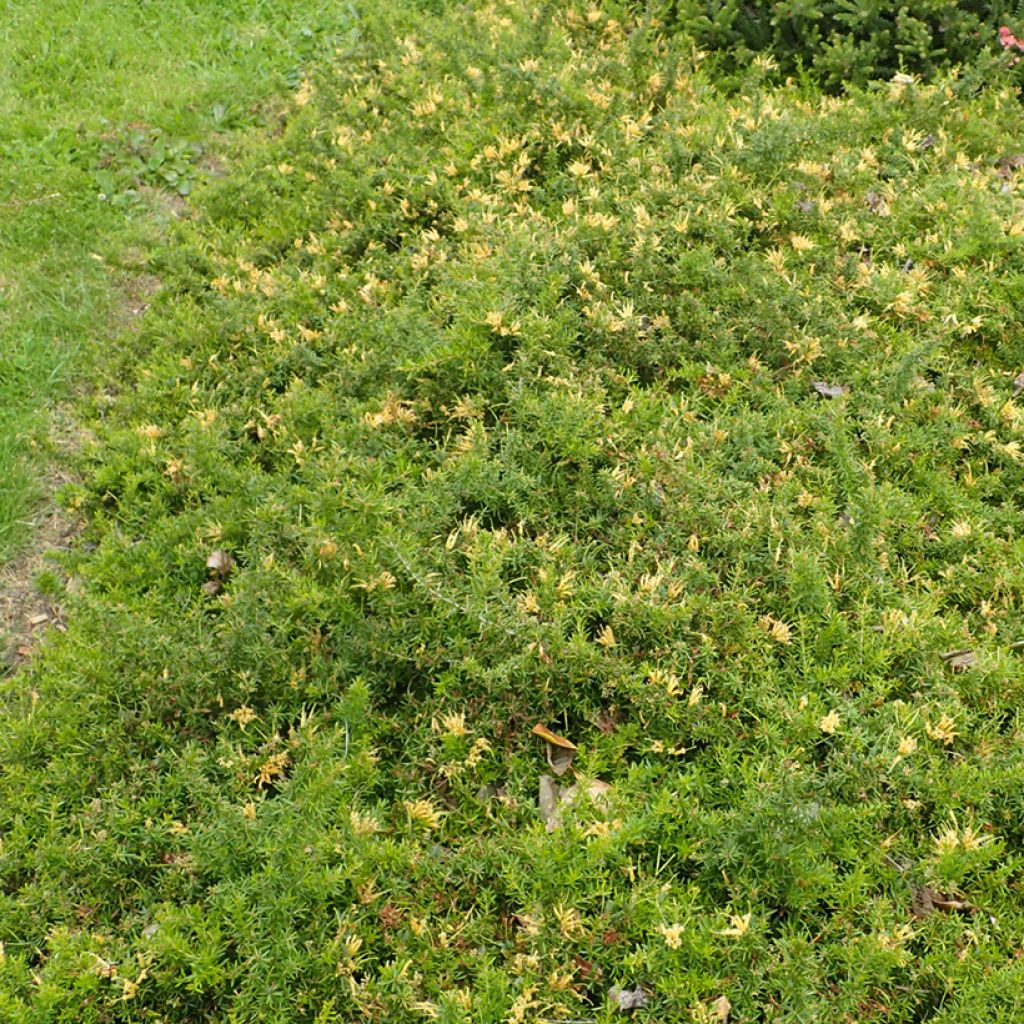
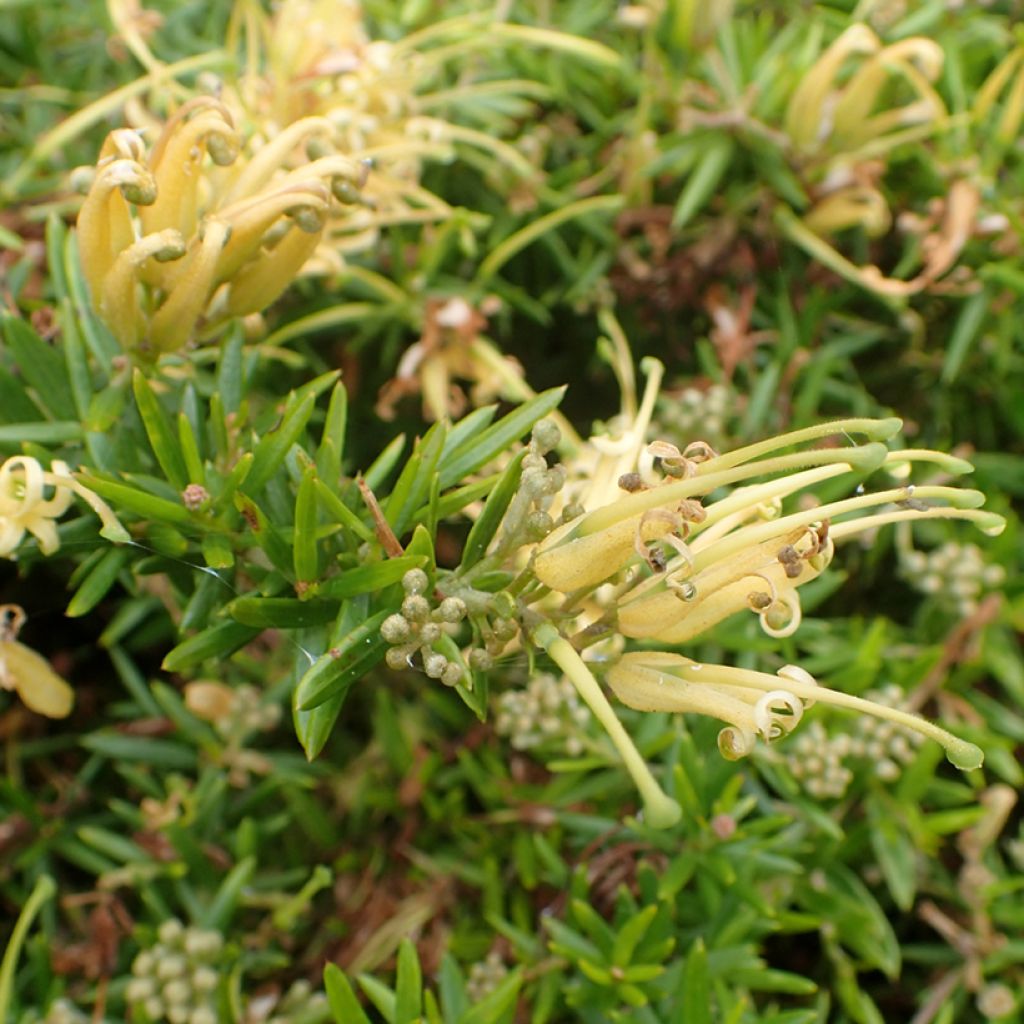
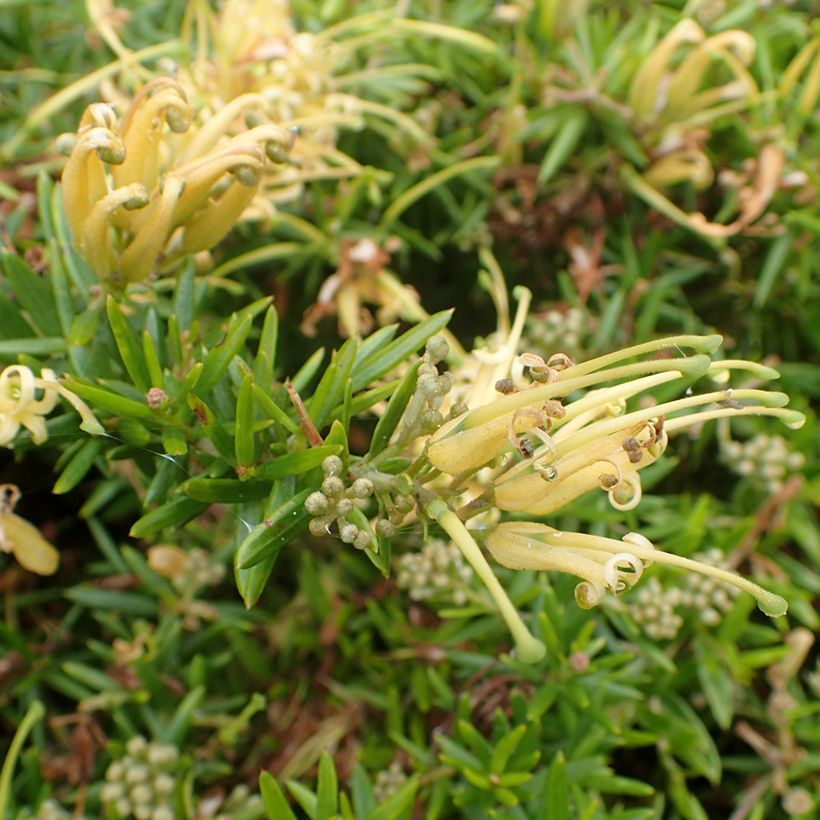
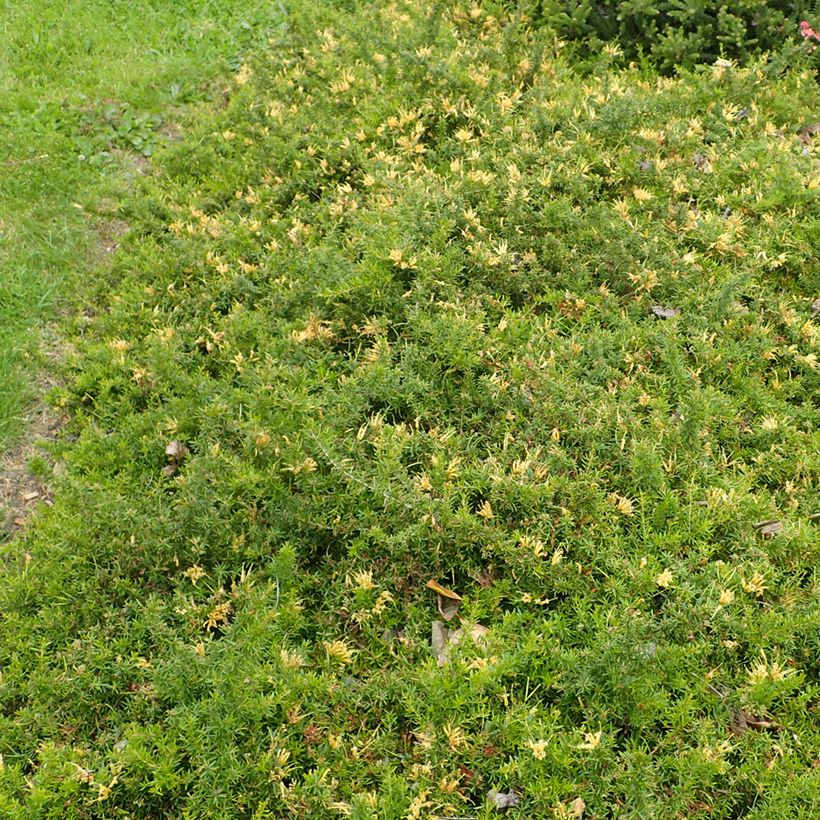
Grevillea prostrata ‘Aurea’ is the yellow-flowered form of an Australian botanical species. This bush with moderate growth forms a superb ground cover in mild climates. Its dense vegetation consists of thin branches adorned with small narrow leaves of a beautiful light green that persist in winter. From March onwards, numerous clusters of sulphur-yellow flowers bloom for several months, sometimes even flowering again in summer. The inflorescences have a spider-like grace and their colour harmonises very well with that of the foliage. The bush grows in non-calcareous soil, low in phosphorus, well-drained and tolerates drought once well established, even tolerating some sea spray. However, it is sensitive to frost from -6°C and will therefore be best in coastal gardens, where it will gracefully carpet slopes and easily fit into a rockery or the foreground of a flower bed.
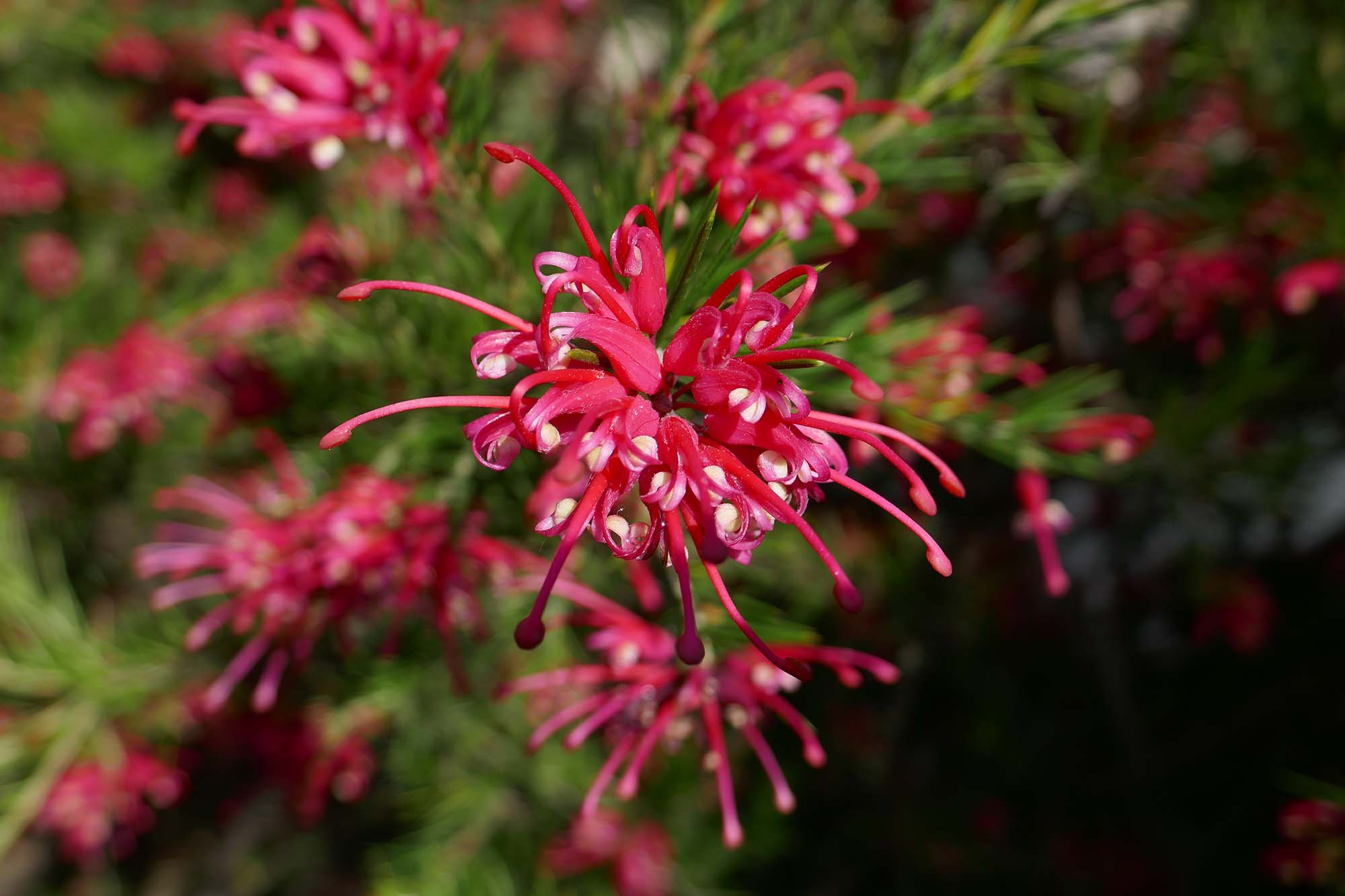
With around 250 species, the Grevillea genus is the most prolific within the Proteaceae family, which comprises nearly 80 species. It includes highly diversified forms, ranging from low-growing shrubs to 50-metre tall trees, with many genera popular among garden enthusiasts, such as Leucadendron. The Grevillea genus, named in honour of Charles Francis Greville (1749-1809), one of the founders of the prestigious Royal Horticultural Society, is mainly found in its natural state in Australia, with a few exceptions spread across Papua New Guinea, the Celebes and New Caledonia.
Grevillea prostrata is a botanical species endemic to a small area in southwestern Australia, subject to a Mediterranean-type climate. In these conditions, it forms a low mat, not exceeding 10 cm in height and spreading about 1 m wide. The prostrate bush produces a relatively insignificant white and pale pink flowering. Grevillea prostrata 'Aurea' has a noticeably different appearance and proves more appealing from an ornamental point of view. Growing rapidly, it forms a spreading cushion rising to 40 cm, even 50 cm high, with a diameter of 1 m to 1.20 m 5 to 10 years after planting. Its habit is quite irregular, giving it a natural look that blends easily into a rockery. It forms numerous thin stems, greenish at their tips and browning as they turn woody. They are somewhat stiff, adorned with very narrow leaves, measuring 2-3 cm long and only a few millimetres wide, resembling those of rosemary or Westringia. This reduced leaf surface allows the plant to withstand drought well by limiting transpiration. Ending in points, the leaves are slightly prickly, but less so than those of Grevillea juniperina. From March onwards, the plant produces a typical flowering for the species in terms of flower design, tubular and with protruding pistils, giving them a truly aesthetic spider-like appearance. A distinctive feature of the variety is that the flowers take on a sulphur-yellow colour, unlike many other species that bloom in pink or red tones. The very ornamental flowering harmonises perfectly with the foliage and lasts until June, often flowering again in summer in mild climates. Moreover, the flowers are honey-producing, adding biodiversity interest to this decorative plant.
Well-suited to Mediterranean climates, Grevillea prostrata 'Aurea' will thrive in a rockery, where it will spread comfortably, or in an exotic-inspired flower bed. Plant alongside the stunning Coprosma 'Pacific Sunset', with its warm red hues contrasting with the light green of your Grevillea. In the background, place a Callistemon, the famous bottlebrush, with unmistakable brush-like flowers. A Lagerstroemia indica 'Black Solitaire Best Red' with its dark purple foliage and long-lasting bright red summer blooms will also be a good companion, and to create a strong foliage contrast, plant a Ceanothus impressus 'Cool Blue' alongside it. This Californian Lilac stands out with its dark green leaves variegated with cream, and in spring produces remarkable light blue panicles of flowers.
Grevillea prostrata Aurea in pictures
Plant habit
Flowering
Foliage
Botanical data
Grevillea
prostrata
Aurea
Proteaceae
Cultivar or hybrid
Planting and care
Cultivation:
Grevillea is best planted in spring, after the last frosts. In a Mediterranean climate, however, planting in October is preferable to take advantage of winter rainfall. It prefers soil with an acidic to neutral pH, sandy, gritty, loamy, or slightly clayey, but very well-drained and not too rich. The presence of limestone in the soil causes yellowing of the foliage, chlorosis, which significantly weakens the bush to the point of death. This condition can be corrected by regular application of iron in its chelated form (sequestrene). In regions where the soil and subsoil are limestone, it is advisable to dig a large pit 60 cm in all directions, filled with ericaceous soil or peaty compost and non-limestone sand.
Grevilleas are drought-resistant plants once well established: monitor watering in summer during the first two years, this will become optional, or even unnecessary later on. In the ground, they appreciate a thick layer of mulch, but not placed too close to the crown. Use wood chips or grass clippings. Use fertiliser very low in phosphorus, as this can reduce the bush's drought resistance by destroying the thick root hairs that develop just below the soil surface. A fertiliser with an N-P-K type with proportions of 18-2-10 is well suited.
Insects and diseases:
Grevilleas may develop black leaf spots, caused by a rarely fatal fungus: a fungicidal treatment will eliminate it.
One may also observe collar rot, a deadly disease, also caused by fungi that thrive in warm, humid soil. Avoid burying the plant's collar to allow for better aeration. Refrain from watering too frequently in hot weather and let the soil dry out between waterings.
Phytophthora (cinnamomi), a disease similarly caused by a fungus, affects many plants in dry conditions. The parasite destroys roots during excessively rainy winters. The plant may suddenly wither in summer due to lack of water as a result of the destruction of part or all of its roots. Partial or total death of vegetation, or even entire branches in severe cases, can be observed. Prevention is crucial as the disease is nearly impossible to eradicate: ensure perfect soil drainage and remove dead or diseased parts.
Pruning:
Grevilleas tolerate annual pruning well, during their growth period or just after flowering. Trim the branches by a third of their length. A regularly pruned bush will be more branched and more floriferous.
Planting period
Intended location
Care
Planting & care advice
-

-
-
-
-
-
-

-
This item has not been reviewed yet - be the first to leave a review about it.
Recently viewed products
Haven't found what you were looking for?
Hardiness is the lowest winter temperature a plant can endure without suffering serious damage or even dying. However, hardiness is affected by location (a sheltered area, such as a patio), protection (winter cover) and soil type (hardiness is improved by well-drained soil).

The flowering period indicated on our website applies to countries and regions located in USDA zone 8 (France, the United Kingdom, Ireland, the Netherlands, etc.)
It will vary according to where you live:- In zones 9 to 10 (Italy, Spain, Greece, etc.), flowering will occur about 2 to 4 weeks earlier.
- In zones 6 to 7 (Germany, Poland, Slovenia, and lower mountainous regions), flowering will be delayed by 2 to 3 weeks.
- In zone 5 (Central Europe, Scandinavia), blooming will be delayed by 3 to 5 weeks.
In temperate climates, pruning of spring-flowering shrubs (forsythia, spireas, etc.) should be done just after flowering.
Pruning of summer-flowering shrubs (Indian Lilac, Perovskia, etc.) can be done in winter or spring.
In cold regions as well as with frost-sensitive plants, avoid pruning too early when severe frosts may still occur.
The planting period indicated on our website applies to countries and regions located in USDA zone 8 (France, United Kingdom, Ireland, Netherlands).
It will vary according to where you live:
- In Mediterranean zones (Marseille, Madrid, Milan, etc.), autumn and winter are the best planting periods.
- In continental zones (Strasbourg, Munich, Vienna, etc.), delay planting by 2 to 3 weeks in spring and bring it forward by 2 to 4 weeks in autumn.
- In mountainous regions (the Alps, Pyrenees, Carpathians, etc.), it is best to plant in late spring (May-June) or late summer (August-September).
The harvesting period indicated on our website applies to countries and regions in USDA zone 8 (France, England, Ireland, the Netherlands).
In colder areas (Scandinavia, Poland, Austria...) fruit and vegetable harvests are likely to be delayed by 3-4 weeks.
In warmer areas (Italy, Spain, Greece, etc.), harvesting will probably take place earlier, depending on weather conditions.
The sowing periods indicated on our website apply to countries and regions within USDA Zone 8 (France, UK, Ireland, Netherlands).
In colder areas (Scandinavia, Poland, Austria...), delay any outdoor sowing by 3-4 weeks, or sow under glass.
In warmer climes (Italy, Spain, Greece, etc.), bring outdoor sowing forward by a few weeks.
Shipping country and language
Your country of residence may be:
Your country of residence is:
For a better user experience on our website, you can select:
Your shipping country:
-
 Austria
-
 Belgium
-
 Bosnia & Herzegovina
-
 Bulgaria
-
 Croatia
-
 Cyprus
-
 Czechia
-
 Denmark
-
 Estonia
-
 Finland
-
 France
-
 Germany
-
 Greece
-
 Hungary
-
 Iceland
-
 Ireland
-
 Italy
Italy
-
 Latvia
-
 Liechtenstein
-
 Lithuania
-
 Luxembourg
-
 Malta
Malta
-
 Netherlands
-
 Poland
-
 Portugal
-
 Romania
-
 Serbia
-
 Slovakia
-
 Slovenia
-
 Spain
Spain
-
 Sweden
-
 Switzerland
Language:
-
French
-
 English
-
Spanish
-
Italian
-
German
-
Portuguese
-
Dutch
-
Finnish
My Account
Hello
My wish lists
My cart
Log in / Register
Existing customer?
This form is protected by reCAPTCHA - the Google Privacy Policy and Terms of Service apply.
New customer?
Create an account to track your orders, access our customer service and, if you wish, make the most of our upcoming offers.