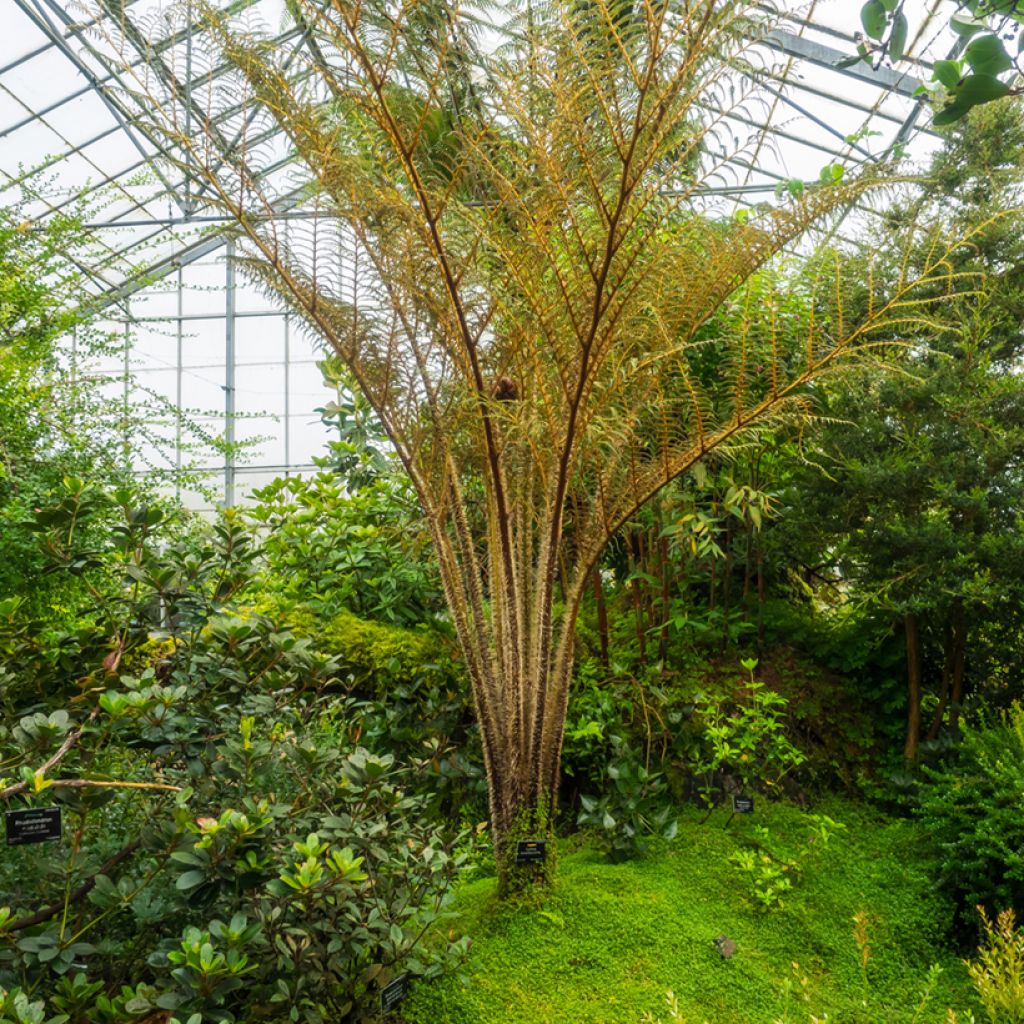
Cyathea tomentosissima - Tree fern
Cyathea tomentosissima - Tree fern
Cyathea tomentosissima
Tree fern
Back-to-school special offer!
Get €10 off for every €50 you spend! And get up to €40 off on a single order.
How does it work?
1. Shop your favourites
Add your favourite plants to your basket. For every €50 you spend (excluding delivery charges, store credit and the plastic-free option), you’ll receive a €10 voucher.
€50 spent = €10 voucher
€100 spent = €20 voucher
€150 spent = €30 voucher
€200 spent = €40 voucher
2. Place your order
Once your basket reaches one of the spending thresholds, place your order. You can even choose your delivery date!
3. Receive your voucher
As soon as your order has been shipped, you’ll receive an email containing your personal voucher code and its value.
4. Use it on your next order
Your voucher is valid for 90 days from the date you receive it. It can be used once only, on a new order worth at least the value of the voucher, excluding delivery charges.
Please note: Vouchers can be combined with other offers, but cannot be split or refunded.
Why not try an alternative variety in stock?
View all →
Available in 1 sizes

Available in 4 sizes
This plant carries a 24 months recovery warranty
More information
We guarantee the quality of our plants for a full growing cycle, and will replace at our expense any plant that fails to recover under normal climatic and planting conditions.
Would this plant suit my garden?
Set up your Plantfit profile →
Description
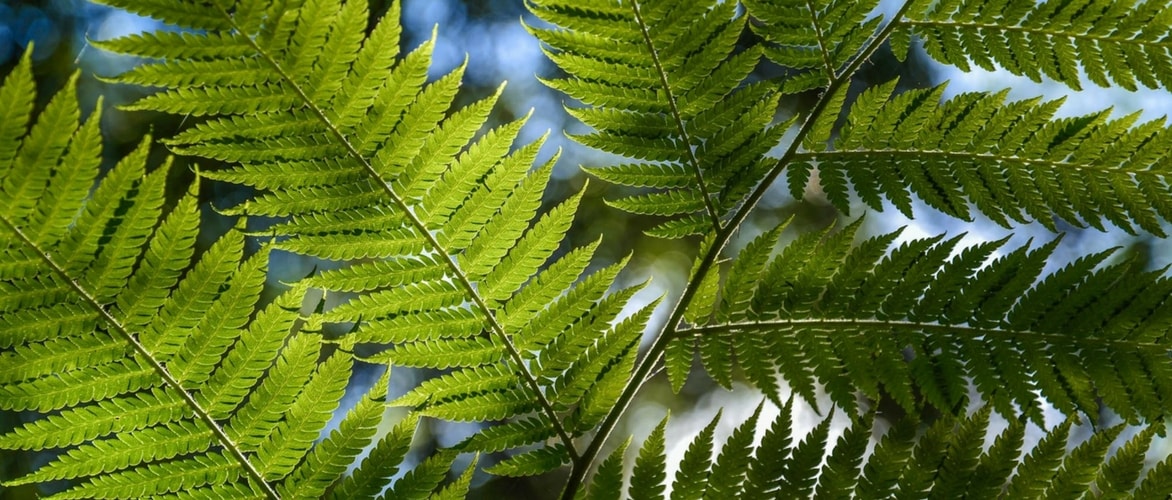
Cyathea tomentosissima is a little-known small tree fern, native to the misty forests of New Guinea, ideal for recreating a lush tropical atmosphere. It is distinguished by its slender trunk covered with brown hairs, topped with a symmetrical crown of very upright, long, bright green fronds with fine, graceful divisions. It prefers soils that are always damp to moist but well-drained, rather acidic and rich, in partial shade or non-scorching sun. It is tender and only tolerates short frosts down to -4/5°C.
Cyathea tomentosissima belongs to the Cyatheaceae family and is a typical tree fern of the Cyathea genus. Its botanical synonym is Sphaeropteris tomentosissima. Native to the cloud forests and mountain meadows of New Guinea (Papua New Guinea), it grows between 1,500 and 3,000m altitude in cool, humid climates. Its propagation is by spores, as with typical ferns. Compared to other species in the genus, it is distinguished by its compact habit and delicate, upright foliage. The plant has an erect habit with a single trunk covered with reddish scales or finely woolly hairs, supporting a dense crown of deeply cut and very upright fronds. The growth rate is very slow, generally around 2 to 3cm of height per year. In open ground or optimal conditions, it reaches about 2 to 4m in height (exceptionally up to 5m) with a maximum spread of 1 to 2m. The leaf crown comprises simple but finely divided, dark to tender green fronds, measuring up to 1.2 m depending on conditions, borne on hairy petioles. The supple, elegant fronds are covered with reddish hairs. Like all ferns, it does not produce flowers or fruit, but mature spores appear as a fine brown powder under the fronds, distributed under the pinnules, protected by a small cup-shaped indusium typical of the Cyathea genus. Fertilisation is anemophilous (spores dispersed by wind) and therefore dependent on a humid environment. The root system consists of a trunk formed of compressed aerial rootstocks, not dense, accompanied by superficial fibrous roots that retain moisture around the base without invading the soil. The bark is rough, dotted with old leaf scars, forming a compact and solid structure. Despite its high-altitude origin, Cyathea tomentosissima displays surprising heat tolerance when kept moist, making it one of the few able to tolerate hot summers if its water needs are met.
Native to very mild subtropical regions, Cyathea tomentosissima should be reserved for gardens with a climate without extremes. It requires a humus-bearing, acid soil, always moist but well-drained, and dislikes marked temperature variations: neither too hot in summer nor too cold in winter; its fronds wilt at 0°C, and it can die between –3 and –5°C. Partial shade exposure ideally suits it, but it tolerates light sun if ambient humidity is sufficient. In a pot, it is best overwintered in a conservatory; in open ground, a fleece is essential. Its cultivation requires experience, making it unsuitable for novice gardeners. But in the right conditions, its botanical majesty becomes a true spectacle. In the humid shade of a garden of tropical undergrowth, Cyathea tomentosissima raises its woolly trunk and supple fronds like vegetal architecture.
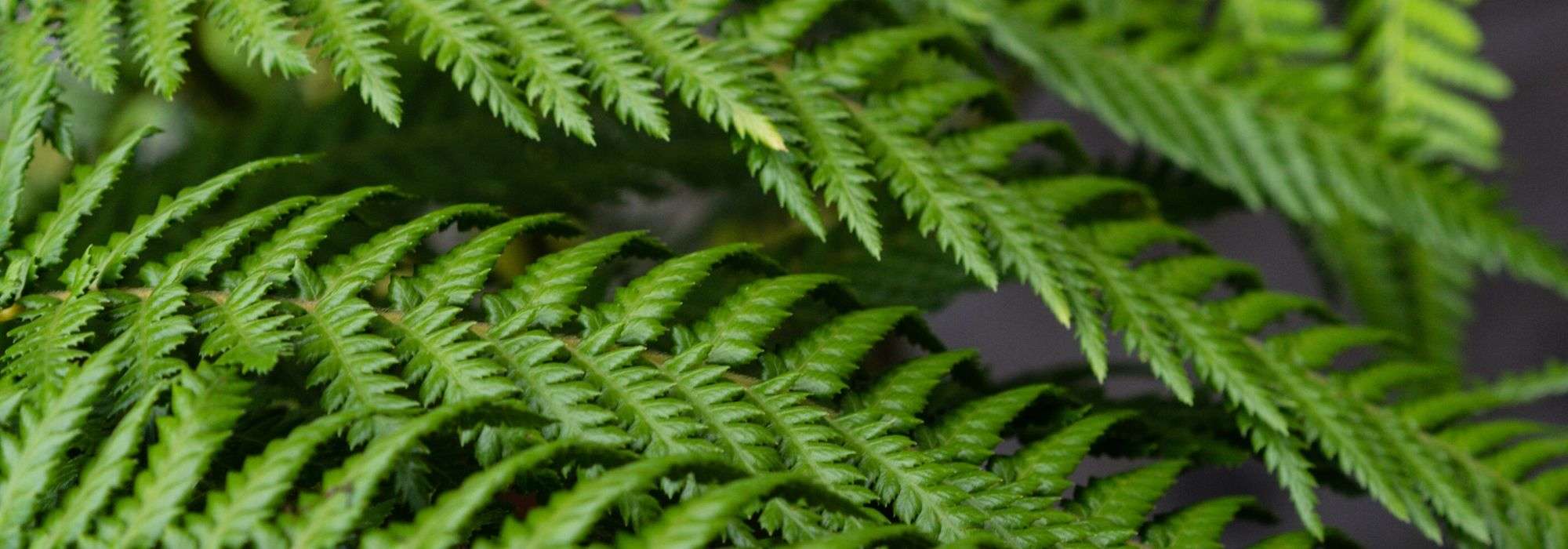
Cyathea tomentosissima - Tree fern in pictures
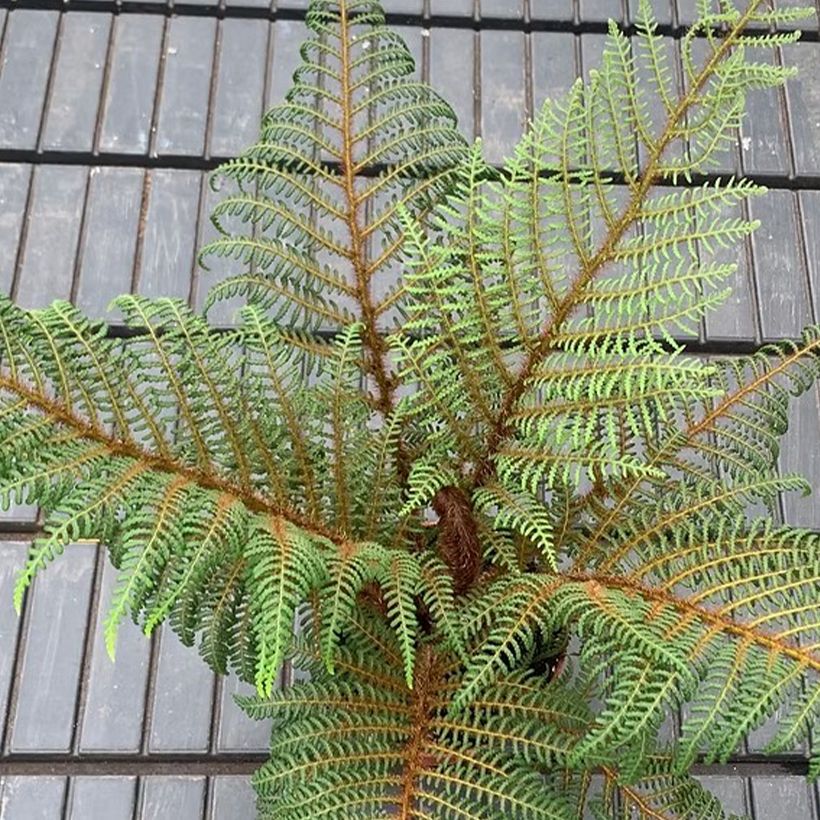
Plant habit
Foliage
Botanical data
Cyathea
tomentosissima
Cyatheaceae
Tree fern
Sphaeropteris tomentosissima
Oceania
Planting and care
Cyatheas grow in partial shade and tolerate non-scorching sun in a sheltered position within a humid atmosphere; they require the highest possible air humidity as they fear drying winds. They prefer moist, light, acidic soils with no trace of lime and do not tolerate watering with lime-bearing water. However, Cyathea tomentosissima tolerates heat better if watered properly.
Growing in open ground is primarily intended for very mild oceanic or Mediterranean climates (zones 9 and above); elsewhere, they should be grown in pots and brought indoors in winter to a frost-free conservatory. Tree ferns are not known for their great hardiness. Cyathea tomentosissima is hardy without protection down to about -4°C for a very short period, provided it is in a calm, windless location. Beyond that, winter protection is essential. Fertiliser and watering: this tree fern responds very well to the application of liquid fertiliser for green plants, purely mineral. Halve the prescribed dose in water that is absolutely not lime-bearing, and water the heart of the plant once or twice a week between March and November. On the other hand, it reacts very badly to organic fertilisers (derived from decomposed living matter, animal or vegetable), which burn its roots and cause it to perish within a few days. The plant's death is signalled by the symptom of limp, drooping leaves.
Planting period
Intended location
Care
Planting & care advice
-
-

-

-
-
-
-
-
This item has not been reviewed yet - be the first to leave a review about it.
Recently viewed products
Haven't found what you were looking for?
Hardiness is the lowest winter temperature a plant can endure without suffering serious damage or even dying. However, hardiness is affected by location (a sheltered area, such as a patio), protection (winter cover) and soil type (hardiness is improved by well-drained soil).

The flowering period indicated on our website applies to countries and regions located in USDA zone 8 (France, the United Kingdom, Ireland, the Netherlands, etc.)
It will vary according to where you live:- In zones 9 to 10 (Italy, Spain, Greece, etc.), flowering will occur about 2 to 4 weeks earlier.
- In zones 6 to 7 (Germany, Poland, Slovenia, and lower mountainous regions), flowering will be delayed by 2 to 3 weeks.
- In zone 5 (Central Europe, Scandinavia), blooming will be delayed by 3 to 5 weeks.
In temperate climates, pruning of spring-flowering shrubs (forsythia, spireas, etc.) should be done just after flowering.
Pruning of summer-flowering shrubs (Indian Lilac, Perovskia, etc.) can be done in winter or spring.
In cold regions as well as with frost-sensitive plants, avoid pruning too early when severe frosts may still occur.
The planting period indicated on our website applies to countries and regions located in USDA zone 8 (France, United Kingdom, Ireland, Netherlands).
It will vary according to where you live:
- In Mediterranean zones (Marseille, Madrid, Milan, etc.), autumn and winter are the best planting periods.
- In continental zones (Strasbourg, Munich, Vienna, etc.), delay planting by 2 to 3 weeks in spring and bring it forward by 2 to 4 weeks in autumn.
- In mountainous regions (the Alps, Pyrenees, Carpathians, etc.), it is best to plant in late spring (May-June) or late summer (August-September).
The harvesting period indicated on our website applies to countries and regions in USDA zone 8 (France, England, Ireland, the Netherlands).
In colder areas (Scandinavia, Poland, Austria...) fruit and vegetable harvests are likely to be delayed by 3-4 weeks.
In warmer areas (Italy, Spain, Greece, etc.), harvesting will probably take place earlier, depending on weather conditions.
The sowing periods indicated on our website apply to countries and regions within USDA Zone 8 (France, UK, Ireland, Netherlands).
In colder areas (Scandinavia, Poland, Austria...), delay any outdoor sowing by 3-4 weeks, or sow under glass.
In warmer climes (Italy, Spain, Greece, etc.), bring outdoor sowing forward by a few weeks.
Shipping country and language
Your country of residence may be:
Your country of residence is:
For a better user experience on our website, you can select:
Your shipping country:
-
 Austria
-
 Belgium
-
 Bosnia & Herzegovina
-
 Bulgaria
-
 Croatia
-
 Cyprus
-
 Czechia
-
 Denmark
-
 Estonia
-
 Finland
-
 France
-
 Germany
-
 Greece
-
 Hungary
-
 Iceland
-
 Ireland
-
 Italy
Italy
-
 Latvia
-
 Liechtenstein
-
 Lithuania
-
 Luxembourg
-
 Malta
Malta
-
 Netherlands
-
 Poland
-
 Portugal
-
 Romania
-
 Serbia
-
 Slovakia
-
 Slovenia
-
 Spain
Spain
-
 Sweden
-
 Switzerland
Language:
-
French
-
 English
-
Spanish
-
Italian
-
German
-
Portuguese
-
Dutch
-
Finnish
My Account
Hello
My wish lists
My cart
Log in / Register
Existing customer?
This form is protected by reCAPTCHA - the Google Privacy Policy and Terms of Service apply.
New customer?
Create an account to track your orders, access our customer service and, if you wish, make the most of our upcoming offers.