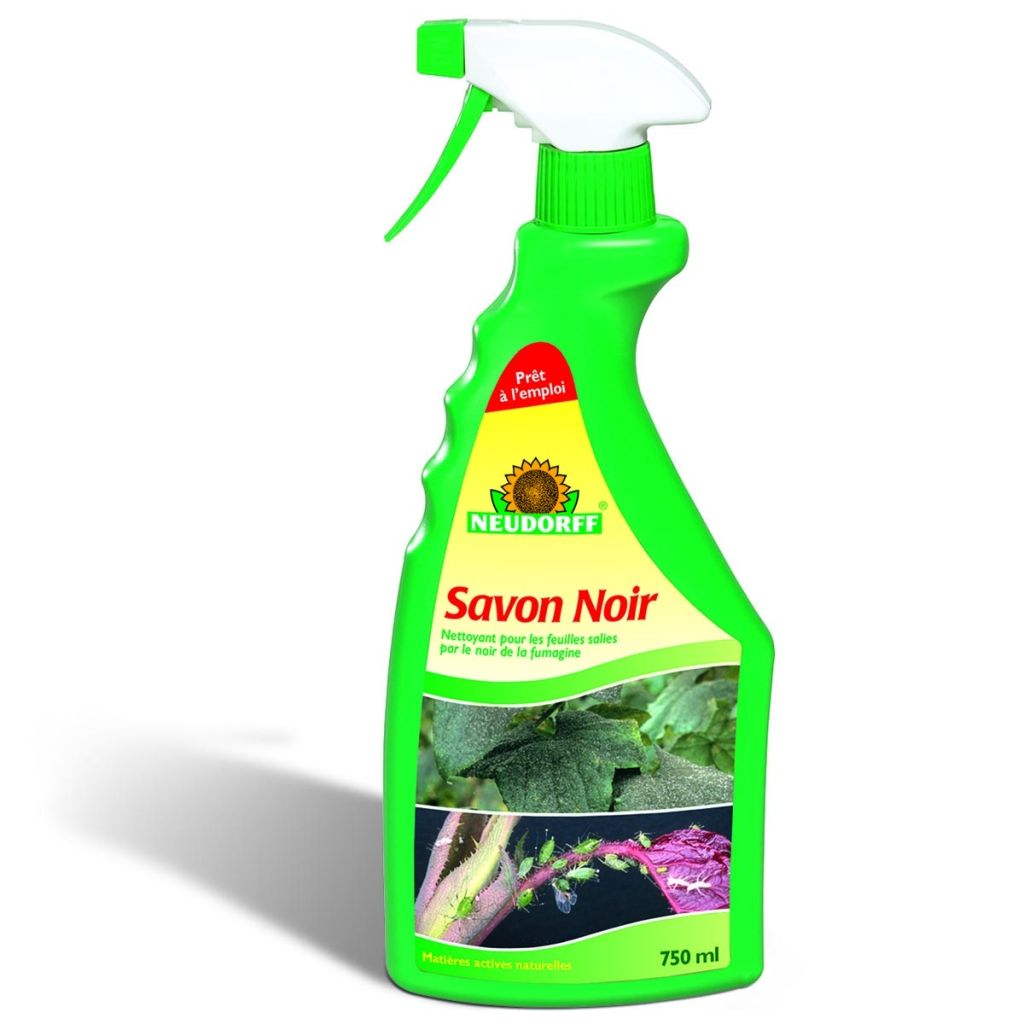
Neudorff Ready-to-use Black Soap 750 ml
Neudorff Ready-to-use Black Soap 750 ml
A very good, versatile product.
Gina, 17/05/2023
Back-to-school special offer!
Get €10 off for every €50 you spend! And get up to €40 off on a single order.
How does it work?
1. Shop your favourites
Add your favourite plants to your basket. For every €50 you spend (excluding delivery charges, store credit and the plastic-free option), you’ll receive a €10 voucher.
€50 spent = €10 voucher
€100 spent = €20 voucher
€150 spent = €30 voucher
€200 spent = €40 voucher
2. Place your order
Once your basket reaches one of the spending thresholds, place your order. You can even choose your delivery date!
3. Receive your voucher
As soon as your order has been shipped, you’ll receive an email containing your personal voucher code and its value.
4. Use it on your next order
Your voucher is valid for 90 days from the date you receive it. It can be used once only, on a new order worth at least the value of the voucher, excluding delivery charges.
Please note: Vouchers can be combined with other offers, but cannot be split or refunded.
Home or relay delivery (depending on size and destination)
Important: You may be charged customs duties by your country’s customs authorities upon delivery.
Schedule delivery date,
and select date in basket
We guarantee the quality of our plants for a full growing cycle, and will replace at our expense any plant that fails to recover under normal climatic and planting conditions.
Ready-to-use black soap cleans numerous surfaces such as tiles, stones, wood, leaves soiled by aphids and scale insects... It is multi-purpose, and it can be used in the home and garden. Packaged in a 750 ml spray bottle, it is very practical to use.
This ready-to-use spray solution contains less than 5% potassium soap, pine oil and citric acid. It possesses cleaning and degreasing properties used for years, both in the home and on outdoor terraces and paving. Black soap also has antibacterial and insecticidal effects. In the garden, apply it to leaves to eliminate certain undesirable insects: aphids, scale insects, but also mites, red spiders, whiteflies, psyllids and other thrips. It acts by contact, killing the larvae. It also cleans honeydew, a sticky, sugary exudate that promotes the development of sooty mould, that black mould which covers leaves.
Usage advice:
- To clean tiled or paved surfaces: apply the product with a sponge or by spraying onto the areas to be cleaned.
- As an insecticide, preferably use black soap in the morning, when dew is present on the vegetation, or start by lightly showering the plants, before spraying the black soap 1/2 hour later. Avoid treatment during the sunniest hours and periods of intense heat.
It can be beneficial to clean branches and bark during the plant's dormant period, from leaf fall, before the spring bud burst period. This helps eliminate certain insect larvae or spores of pathogenic fungi that overwinter on the bark, waiting for spring's return. Applying 2 to 3 preventive treatments helps limit and delay the appearance of certain pests and diseases. If you use black soap on fruit trees or shrubs or on vegetable crops, wait 5 days before harvesting. If you have treated a vine, the pre-harvest interval extends to 21 days.
Promesse de fleurs has chosen products from the company Neudorff for its 165 years of expertise in natural gardening, a leader in plant protection products on the German garden market (GFK 2018, Jan-May). It is an innovative company, at the origin of the development of active substances which exist in nature, revolutionising the market: ferric phosphate, pelargonic acid... Its highly effective products, recognised by both professionals and the general public, are usable in Organic Agriculture in accordance with regulation (EU) 2018/848.
Promesse de fleurs and Neudorff share common values and objectives: respect for the environment, and the promotion of sustainable development, including the use of on-site produced hydroelectric and solar electricity, the use of recycled raw materials, and wood from sustainably managed forests.
Uses and advantages
Technical features
Tips
Tips
-
, onOrder confirmed
Reply from on Promesse de fleurs
Recently viewed products
Haven't found what you were looking for?
Hardiness is the lowest winter temperature a plant can endure without suffering serious damage or even dying. However, hardiness is affected by location (a sheltered area, such as a patio), protection (winter cover) and soil type (hardiness is improved by well-drained soil).

The flowering period indicated on our website applies to countries and regions located in USDA zone 8 (France, the United Kingdom, Ireland, the Netherlands, etc.)
It will vary according to where you live:- In zones 9 to 10 (Italy, Spain, Greece, etc.), flowering will occur about 2 to 4 weeks earlier.
- In zones 6 to 7 (Germany, Poland, Slovenia, and lower mountainous regions), flowering will be delayed by 2 to 3 weeks.
- In zone 5 (Central Europe, Scandinavia), blooming will be delayed by 3 to 5 weeks.
In temperate climates, pruning of spring-flowering shrubs (forsythia, spireas, etc.) should be done just after flowering.
Pruning of summer-flowering shrubs (Indian Lilac, Perovskia, etc.) can be done in winter or spring.
In cold regions as well as with frost-sensitive plants, avoid pruning too early when severe frosts may still occur.
The planting period indicated on our website applies to countries and regions located in USDA zone 8 (France, United Kingdom, Ireland, Netherlands).
It will vary according to where you live:
- In Mediterranean zones (Marseille, Madrid, Milan, etc.), autumn and winter are the best planting periods.
- In continental zones (Strasbourg, Munich, Vienna, etc.), delay planting by 2 to 3 weeks in spring and bring it forward by 2 to 4 weeks in autumn.
- In mountainous regions (the Alps, Pyrenees, Carpathians, etc.), it is best to plant in late spring (May-June) or late summer (August-September).
The harvesting period indicated on our website applies to countries and regions in USDA zone 8 (France, England, Ireland, the Netherlands).
In colder areas (Scandinavia, Poland, Austria...) fruit and vegetable harvests are likely to be delayed by 3-4 weeks.
In warmer areas (Italy, Spain, Greece, etc.), harvesting will probably take place earlier, depending on weather conditions.
The sowing periods indicated on our website apply to countries and regions within USDA Zone 8 (France, UK, Ireland, Netherlands).
In colder areas (Scandinavia, Poland, Austria...), delay any outdoor sowing by 3-4 weeks, or sow under glass.
In warmer climes (Italy, Spain, Greece, etc.), bring outdoor sowing forward by a few weeks.
Shipping country and language
Your country of residence may be:
Your country of residence is:
For a better user experience on our website, you can select:
Your shipping country:
-
 Austria
-
 Belgium
-
 Bosnia & Herzegovina
-
 Bulgaria
-
 Croatia
-
 Cyprus
-
 Czechia
-
 Denmark
-
 Estonia
-
 Finland
-
 France
-
 Germany
-
 Greece
-
 Hungary
-
 Iceland
-
 Ireland
-
 Italy
Italy
-
 Latvia
-
 Liechtenstein
-
 Lithuania
-
 Luxembourg
-
 Malta
Malta
-
 Netherlands
-
 Poland
-
 Portugal
-
 Romania
-
 Serbia
-
 Slovakia
-
 Slovenia
-
 Spain
Spain
-
 Sweden
-
 Switzerland
Language:
-
French
-
 English
-
Spanish
-
Italian
-
German
-
Portuguese
-
Dutch
-
Finnish
My Account
Hello
My wish lists
My cart
Log in / Register
Existing customer?
This form is protected by reCAPTCHA - the Google Privacy Policy and Terms of Service apply.
New customer?
Create an account to track your orders, access our customer service and, if you wish, make the most of our upcoming offers.