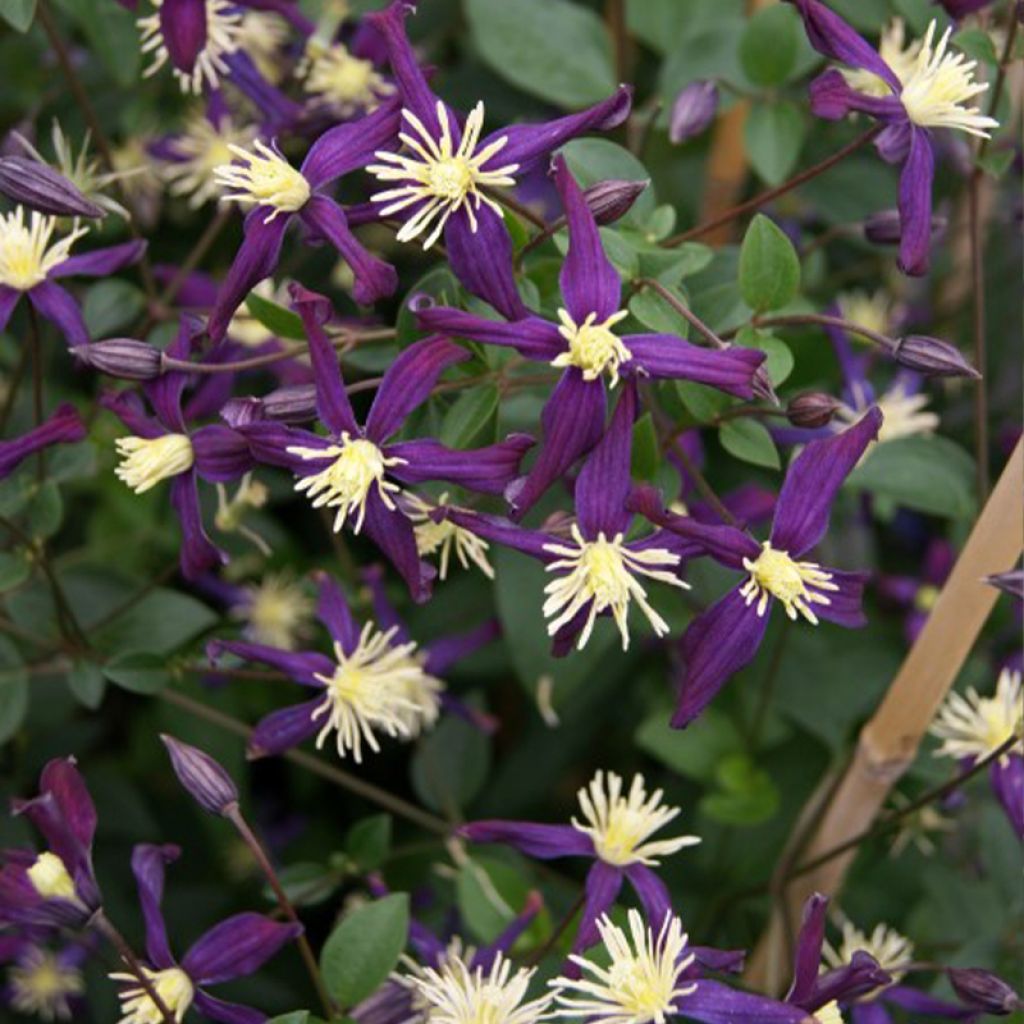
Clematis flammula Aromatica
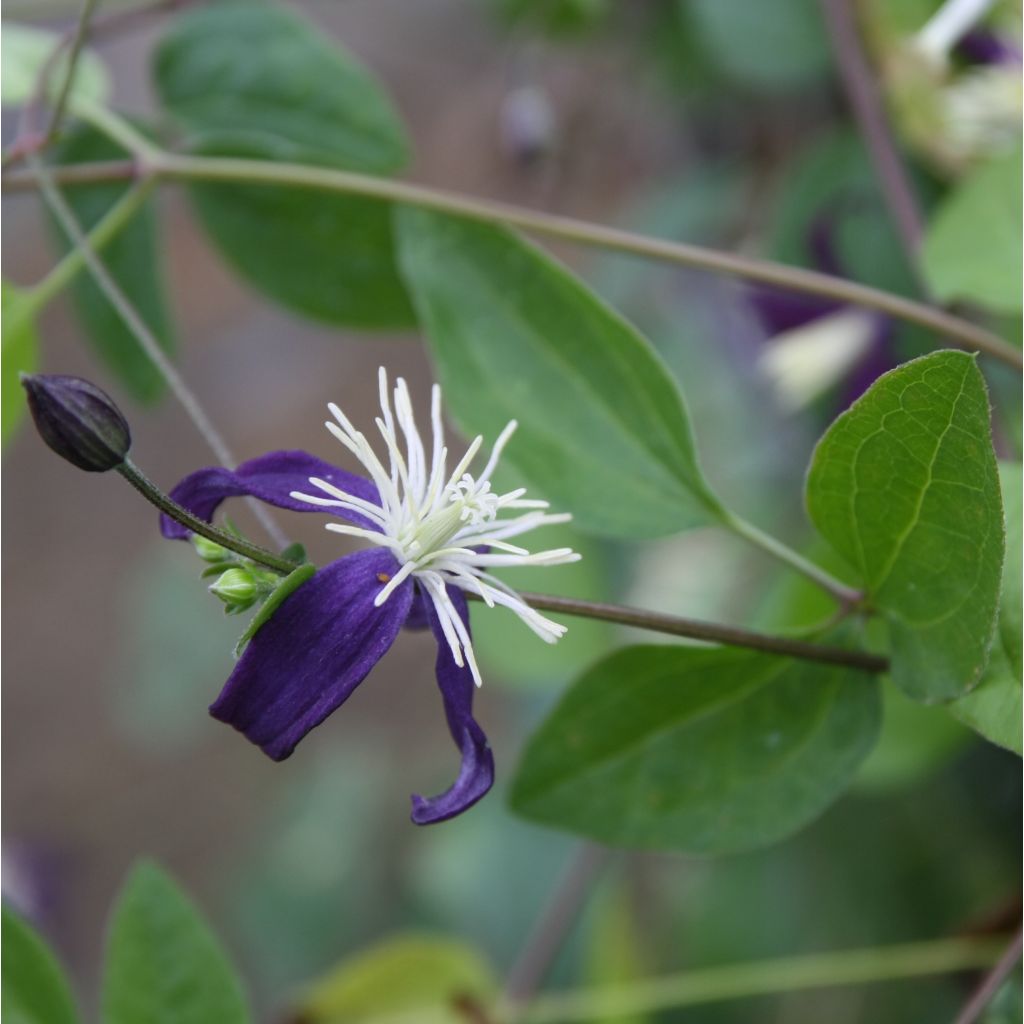
Clematis flammula Aromatica
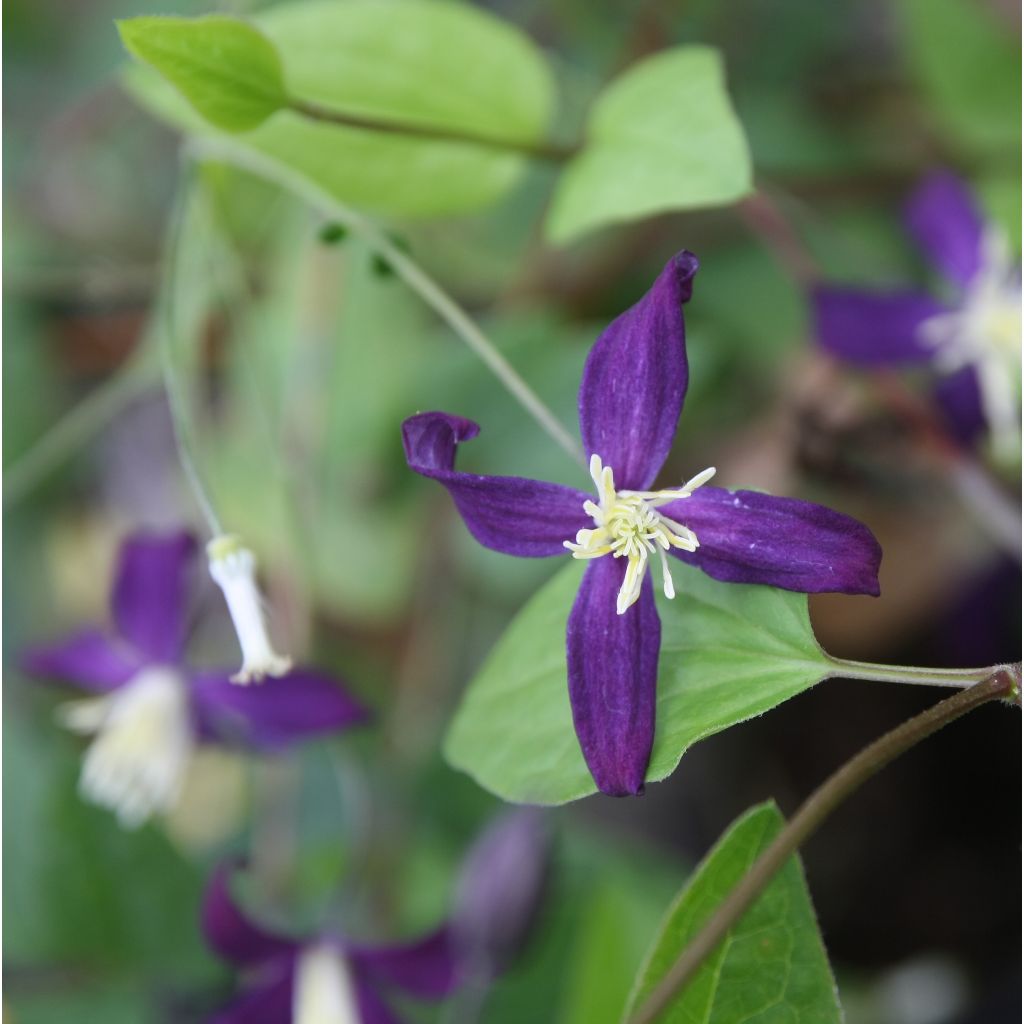
Clematis flammula Aromatica
View more pictures
Hide images
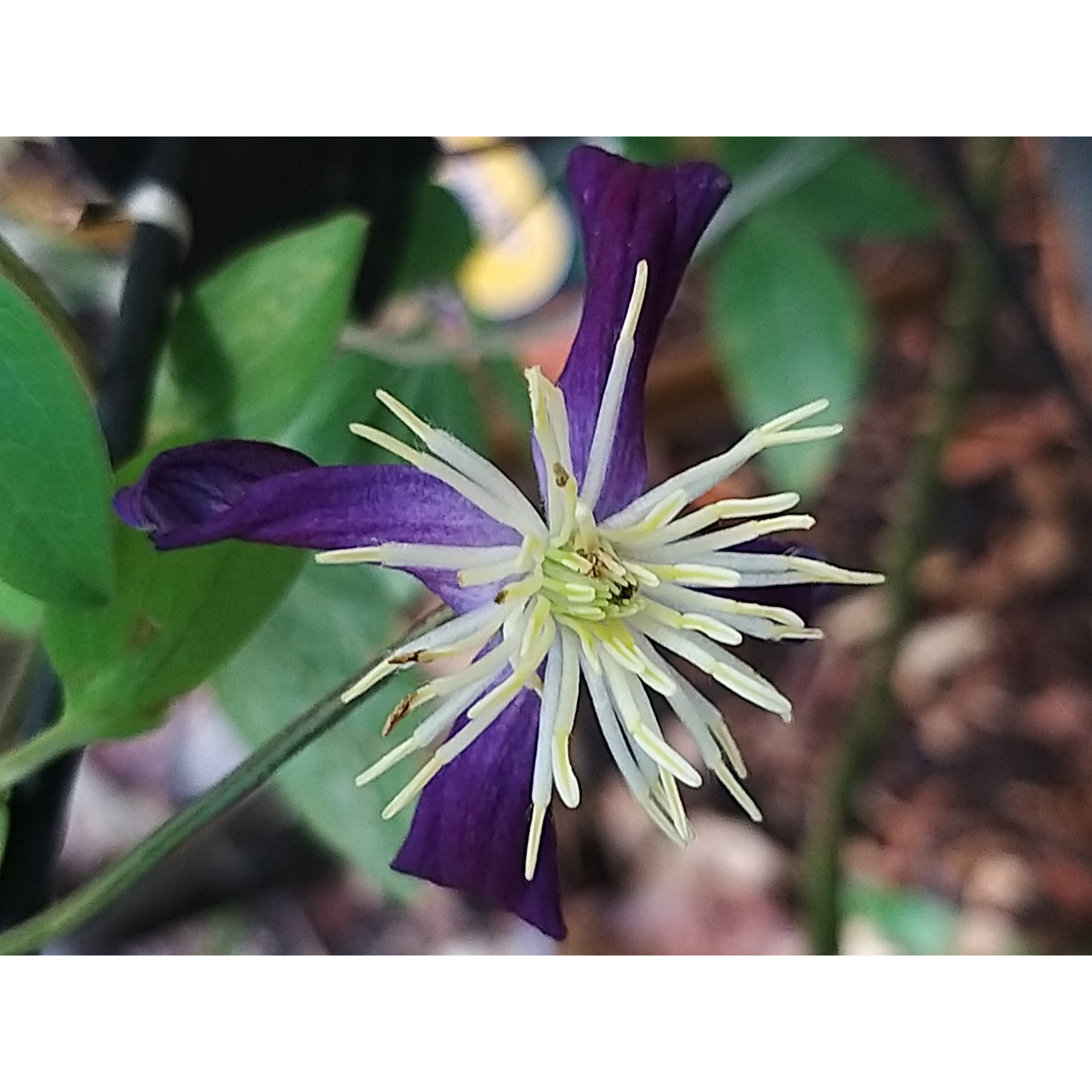
Thierry P.
Clematis flammula Aromatica
Thierry P. • 84 FR
Clematis flammula Aromatica
Clematis x poizatii
The plant was devoured in a single night by slugs, and it did not survive. This is by no means the fault of PdeF, but I don't use any slug deterrents – I refuse to – so I have plenty of failures. I will not, therefore, be having a clematis in my garden.
Gaby, 21/09/2025
Back-to-school special offer!
Get €10 off for every €50 you spend! And get up to €40 off on a single order.
How does it work?
1. Shop your favourites
Add your favourite plants to your basket. For every €50 you spend (excluding delivery charges, store credit and the plastic-free option), you’ll receive a €10 voucher.
€50 spent = €10 voucher
€100 spent = €20 voucher
€150 spent = €30 voucher
€200 spent = €40 voucher
2. Place your order
Once your basket reaches one of the spending thresholds, place your order. You can even choose your delivery date!
3. Receive your voucher
As soon as your order has been shipped, you’ll receive an email containing your personal voucher code and its value.
4. Use it on your next order
Your voucher is valid for 90 days from the date you receive it. It can be used once only, on a new order worth at least the value of the voucher, excluding delivery charges.
Please note: Vouchers can be combined with other offers, but cannot be split or refunded.
Home or relay delivery (depending on size and destination)
Important: You may be charged customs duties by your country’s customs authorities upon delivery.
Schedule delivery date
and select date in basket
This plant carries a 12 months recovery warranty
More information
We guarantee the quality of our plants for a full growing cycle, and will replace at our expense any plant that fails to recover under normal climatic and planting conditions.
Would this plant suit my garden?
Set up your Plantfit profile →
Description
The Clematis flammula 'Aromatica' or Clematis × aromatica is a small, unusual clematis, called the aromatic clematis, which stands out for its long flowering in small, dark violet stars and its intense fragrance, often compared to that of heliotrope. Its flowers renew from summer to early autumn and are clearly visible against its dark green foliage. More compact than many climbing clematis, it easily finds its place in a border, against a small trellis, or among the branches of a shrub. Hardy, floriferous, and easy to care for, it also suits gardeners unaccustomed to growing clematis.
This plant belongs to the family Ranunculaceae. Unlike large clematis that form wood, it behaves like an herbaceous perennial with a slightly woody base. Its stems die back in winter, then new shoots emerge from the stump in spring. Its official name is Clematis × aromatica. It is an old French horticultural hybrid, known since the mid-19th century, resulting from a cross-breeding between Clematis flammula and C. integrifolia. The former is a climbing clematis native to the Mediterranean basin and part of Western Asia, valued for its highly fragrant small white flowers. The latter is a perennial found from Central Europe to Asia, which passed on its more modest growth and violet flowers.
Each year, this plant produces several fine, ramified, and flexible stems that do not cling to their support on their own and benefit from being guided. They reach 1.50 to 2 m in length, and the plant occupies a spread of 50 cm to 1 m. The leaves, arranged in pairs along the stems, are divided into several ovate or oblong leaflets of a dark matt green. The vegetation of this clematis retains a light appearance. Flowering begins in June or July depending on the climate and continues until September, sometimes into October if the autumn remains mild. The single flowers measure 3 to 4 cm in diameter. They have four narrow sepals, widely opened, in a bluish-violet to purplish-violet colour, with edges that curve slightly backwards over time. In the centre, numerous cream-white stamens form a clearly visible light-coloured tuft. The flowers are gathered in ramified clusters at the ends of the stems. Their warm and sweet fragrance is especially noticeable in calm weather and in the late afternoon. After flowering, small feathery fruits appear, but they are less decorative than those of some clematis. Very hardy, the stump withstands -20°C.
This plant is still often sold under the name Clematis flammula 'Aromatica'. The name Clematis × aromatica recalls both its hybrid origin and the remarkable fragrance of its flowers.
Clematis 'Aromatica' is ideal for covering small pyramid structures. To enjoy its fragrance, train it on a trellis near a path or entrance, or grow it in a pot on the patio. It can be woven into the flexible branches of the shrub rose Frisson Frais®, which is pastel pink. Nearby, the Clematis integrifolia 'Hakuree' will form a lower clump, covered in summer with white bells slightly tinged with blue. The Geranium 'Blue Cloud', broad and flexible, will cover the ground with its pale blue flowers veined with purple. The Hydrangea arborescens BellaRagazza® Blanchetta, a small rounded bush with large inflorescences that turn white, will complete the arrangement.
Tips: avoid excessive fertiliser, which stimulates foliage at the expense of flowers. Do not mulch, to avoid excessive moisture that promotes dieback disease.
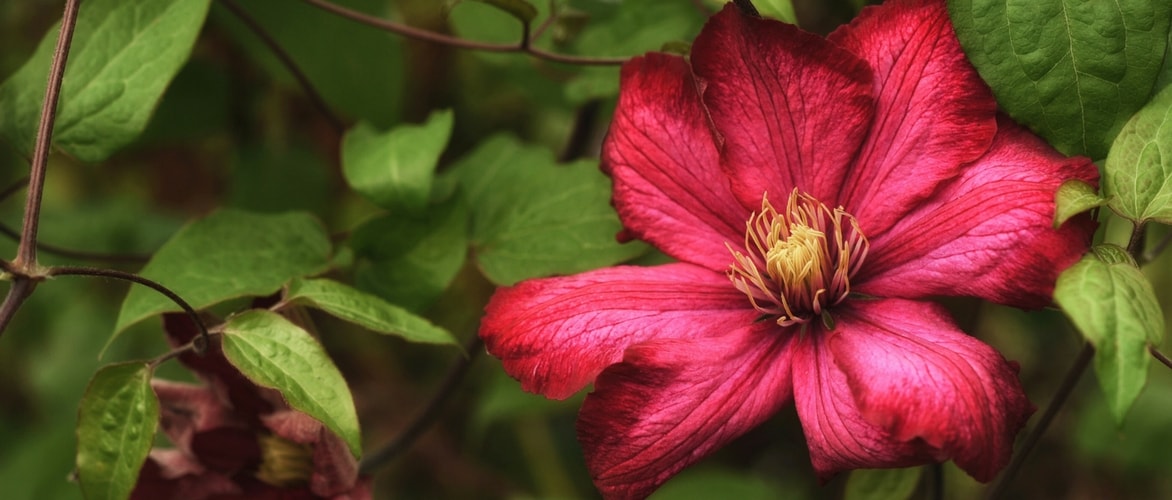
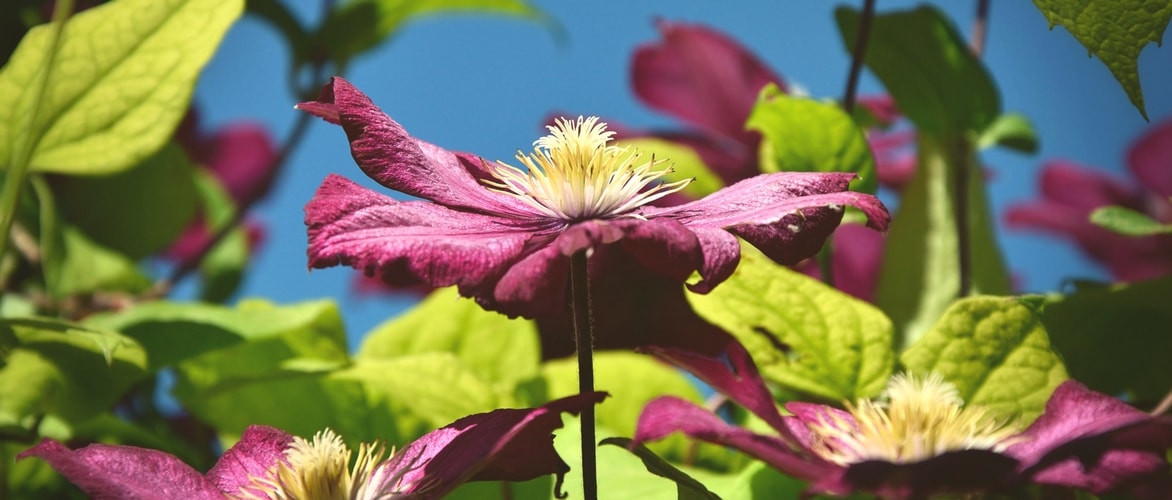
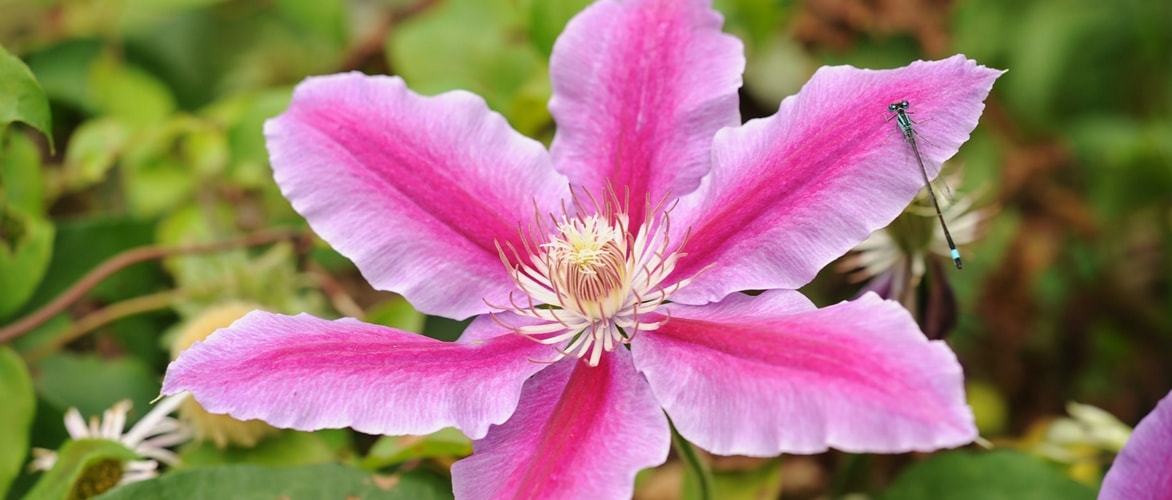
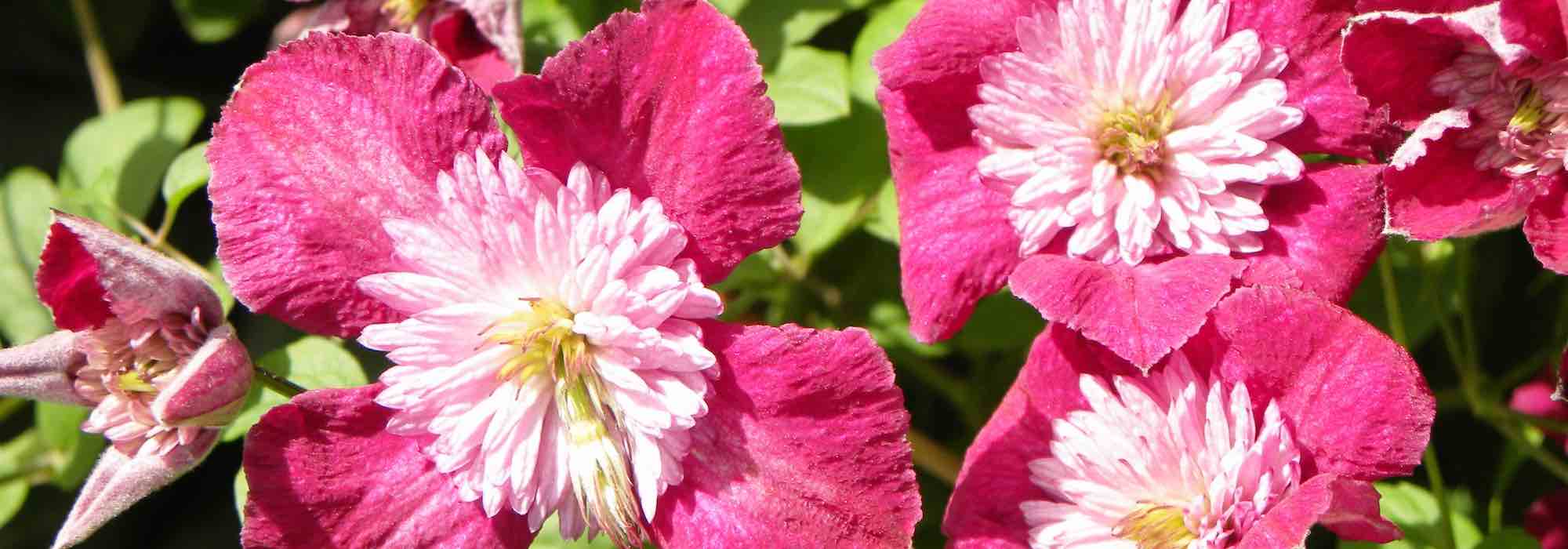
Clematis flammula Aromatica in pictures
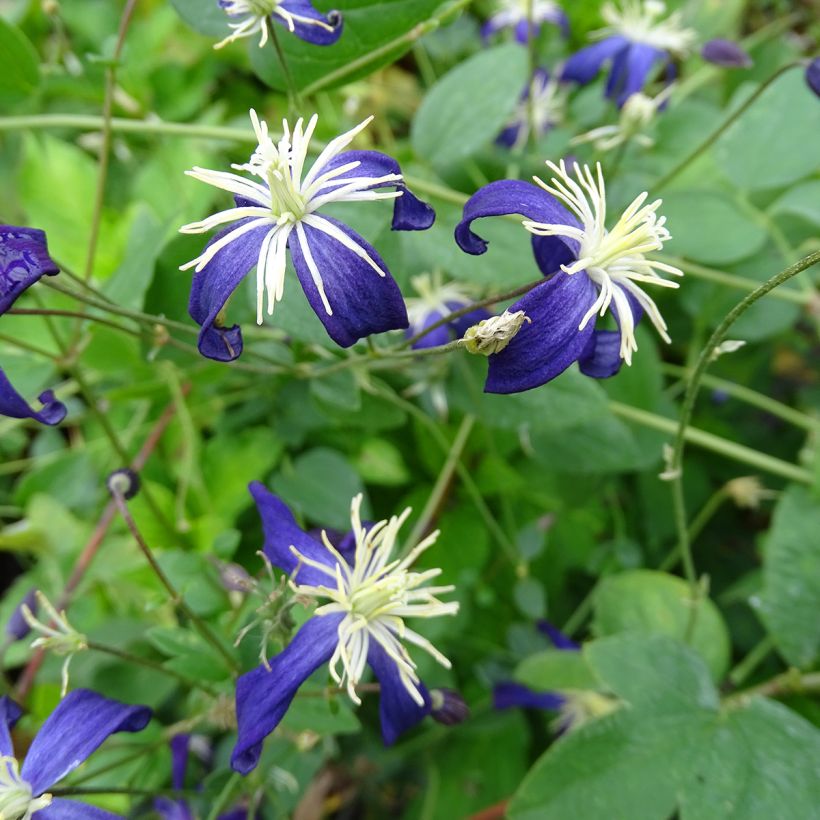
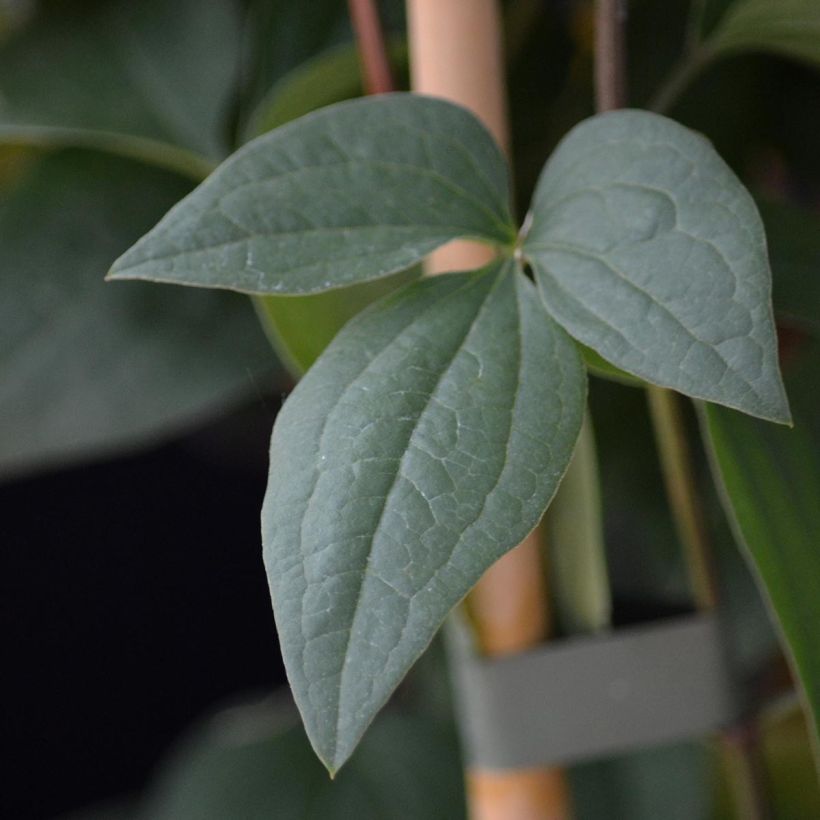
Plant habit
Flowering
Foliage
Botanical data
Clematis
x poizatii
Ranunculaceae
Clematis flammula 'Aromatica', Clematis x aromatica, Clematis x poizatii, Clematis odorata, Clematis caerulea var. odorata
Cultivar or hybrid
Planting and care
Plant the Clematis ‘Aromatica’ in spring or autumn, in full sun or light partial shade. It prefers deep, loose, well-drained soil, even chalky. Once established, it tolerates dry periods, especially in open ground, but some summer watering prolongs flowering in very hot regions. However, avoid heavy or waterlogged soils, which promote root asphyxia and rot.
In a pot, use a well-drained container proportional to the root ball, filled with a very well-draining potting mix. Allow the surface to dry slightly between waterings and never allow water to stagnate in the saucer.
Its stems do not cling on their own: guide them onto a small trellis or into a neighbouring shrub. Keep an eye on young shoots in spring, sometimes colonised by aphids.
Planting period
Intended location
Care
Planting & care advice
-
, onOrder confirmed
Reply from on Promesse de fleurs
Recently viewed products
Haven't found what you were looking for?
Hardiness is the lowest winter temperature a plant can endure without suffering serious damage or even dying. However, hardiness is affected by location (a sheltered area, such as a patio), protection (winter cover) and soil type (hardiness is improved by well-drained soil).

The flowering period indicated on our website applies to countries and regions located in USDA zone 8 (France, the United Kingdom, Ireland, the Netherlands, etc.)
It will vary according to where you live:- In zones 9 to 10 (Italy, Spain, Greece, etc.), flowering will occur about 2 to 4 weeks earlier.
- In zones 6 to 7 (Germany, Poland, Slovenia, and lower mountainous regions), flowering will be delayed by 2 to 3 weeks.
- In zone 5 (Central Europe, Scandinavia), blooming will be delayed by 3 to 5 weeks.
In temperate climates, pruning of spring-flowering shrubs (forsythia, spireas, etc.) should be done just after flowering.
Pruning of summer-flowering shrubs (Indian Lilac, Perovskia, etc.) can be done in winter or spring.
In cold regions as well as with frost-sensitive plants, avoid pruning too early when severe frosts may still occur.
The planting period indicated on our website applies to countries and regions located in USDA zone 8 (France, United Kingdom, Ireland, Netherlands).
It will vary according to where you live:
- In Mediterranean zones (Marseille, Madrid, Milan, etc.), autumn and winter are the best planting periods.
- In continental zones (Strasbourg, Munich, Vienna, etc.), delay planting by 2 to 3 weeks in spring and bring it forward by 2 to 4 weeks in autumn.
- In mountainous regions (the Alps, Pyrenees, Carpathians, etc.), it is best to plant in late spring (May-June) or late summer (August-September).
The harvesting period indicated on our website applies to countries and regions in USDA zone 8 (France, England, Ireland, the Netherlands).
In colder areas (Scandinavia, Poland, Austria...) fruit and vegetable harvests are likely to be delayed by 3-4 weeks.
In warmer areas (Italy, Spain, Greece, etc.), harvesting will probably take place earlier, depending on weather conditions.
The sowing periods indicated on our website apply to countries and regions within USDA Zone 8 (France, UK, Ireland, Netherlands).
In colder areas (Scandinavia, Poland, Austria...), delay any outdoor sowing by 3-4 weeks, or sow under glass.
In warmer climes (Italy, Spain, Greece, etc.), bring outdoor sowing forward by a few weeks.
Shipping country and language
Your country of residence may be:
Your country of residence is:
For a better user experience on our website, you can select:
Your shipping country:
-
 Austria
-
 Belgium
-
 Bosnia & Herzegovina
-
 Bulgaria
-
 Croatia
-
 Cyprus
-
 Czechia
-
 Denmark
-
 Estonia
-
 Finland
-
 France
-
 Germany
-
 Greece
-
 Hungary
-
 Iceland
-
 Ireland
-
 Italy
Italy
-
 Latvia
-
 Liechtenstein
-
 Lithuania
-
 Luxembourg
-
 Malta
Malta
-
 Netherlands
-
 Poland
-
 Portugal
-
 Romania
-
 Serbia
-
 Slovakia
-
 Slovenia
-
 Spain
Spain
-
 Sweden
-
 Switzerland
Language:
-
French
-
 English
-
Spanish
-
Italian
-
German
-
Portuguese
-
Dutch
-
Finnish
My Account
Hello
My wish lists
My cart
Log in / Register
Existing customer?
This form is protected by reCAPTCHA - the Google Privacy Policy and Terms of Service apply.
New customer?
Create an account to track your orders, access our customer service and, if you wish, make the most of our upcoming offers.